


Maasai Mara Safari: A Complete Planning Guide
Kenya's most famous wildlife area is also its most misunderstood. The decisions that shape a Mara trip are where you sleep and how long you stay, not whether to go.
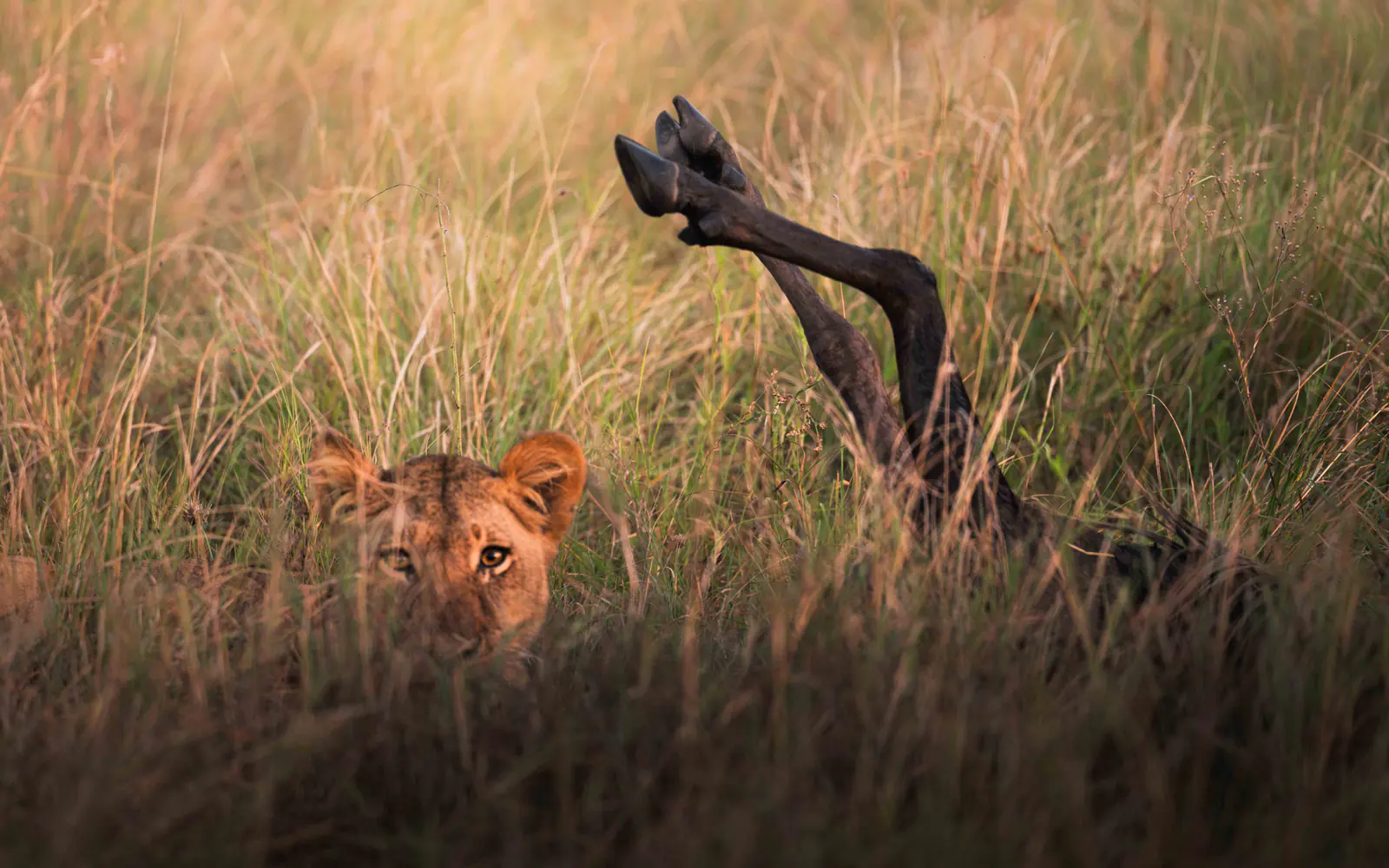
- Location
- Southwest Kenya, on the Tanzanian border
- Flight time
- About an hour from Nairobi Wilson
- Migration
- Usually July to October
- Recommended stay
- 3–4 nights
Written and maintained by the Safari Soles planning team in Arusha, Tanzania.
The Maasai Mara is Kenya's flagship big-cat and migration destination, in the southwest on the Tanzanian border and continuous with the Serengeti.
- The Mara is Kenya's strongest big-cat destination and the Kenyan half of the migration ecosystem.
- Where you sleep matters most: the reserve for density and river crossings, conservancies for space, walking and night drives.
- Three nights is the minimum and four is better, especially in migration season.
- Migration herds are usually present July to October, but timing shifts each year and crossings cannot be guaranteed.
- Fly for short trips; drive the shorter legs on longer circuits and pair the Mara with a contrasting region.
01 / 08
What the Maasai Mara actually is
The Maasai Mara National Reserve occupies the northern tip of the Serengeti–Mara ecosystem, an open landscape of rolling grassland, riverine forest along the Mara and Talek rivers, and the Oloololo escarpment rising along its western edge. There are no fences between it and the Serengeti, which is why wildlife moves freely across the border and why the Mara feels much larger than its own boundaries.
Surrounding the reserve on its northern and eastern sides is a ring of conservancies (Mara North, Naboisho, Olare Motorogi, Ol Kinyei and others) established on land owned by Maasai families who lease it to camps in return for regular income. These are not government parks. Each is a private arrangement with its own rules, its own vehicle caps and its own camp list, which is why generalisations about conservancies always need checking against the specific one you are booking.
Together the reserve and the conservancies make up a wildlife area with some of the highest predator densities in Africa. Lion are the headline, and the Mara is one of the few places where seeing several different prides over a few days is realistic. Cheetah favour the open plains; leopard hold the riverine forest along the watercourses; hyena, jackal and, with luck, wild dog fill out the picture.
The Mara by zone: what each area is good at
-
Central reserve (Musiara, Talek, Rhino Ridge)
The core of the resident wildlife and the shortest drive to the Mara River crossing points. Also the busiest ground in July to October.
-
Mara Triangle (west of the river)
Run separately from the eastern reserve, with stricter off-road enforcement and generally fewer vehicles. Access is via the Oloololo escarpment side.
-
Northern conservancies
Mara North, Naboisho, Olare Motorogi and Ol Kinyei among others. Capped vehicle numbers, and walking or night drives where the individual conservancy permits them.
-
Southern and eastern edges
Camps close to Sekenani and Talek gates suit road-based trips and lower budgets, at the cost of longer drives to the best morning ground.
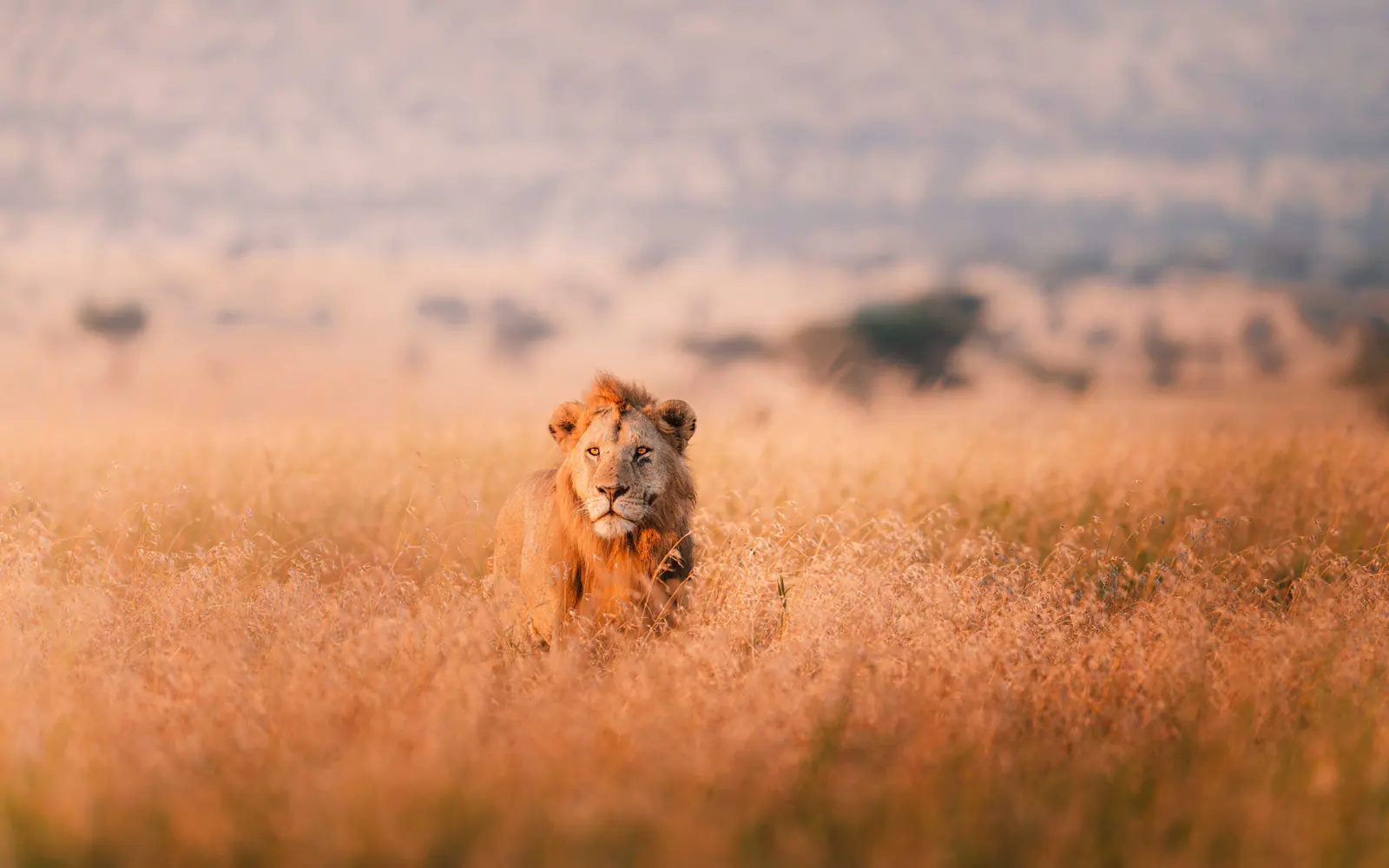
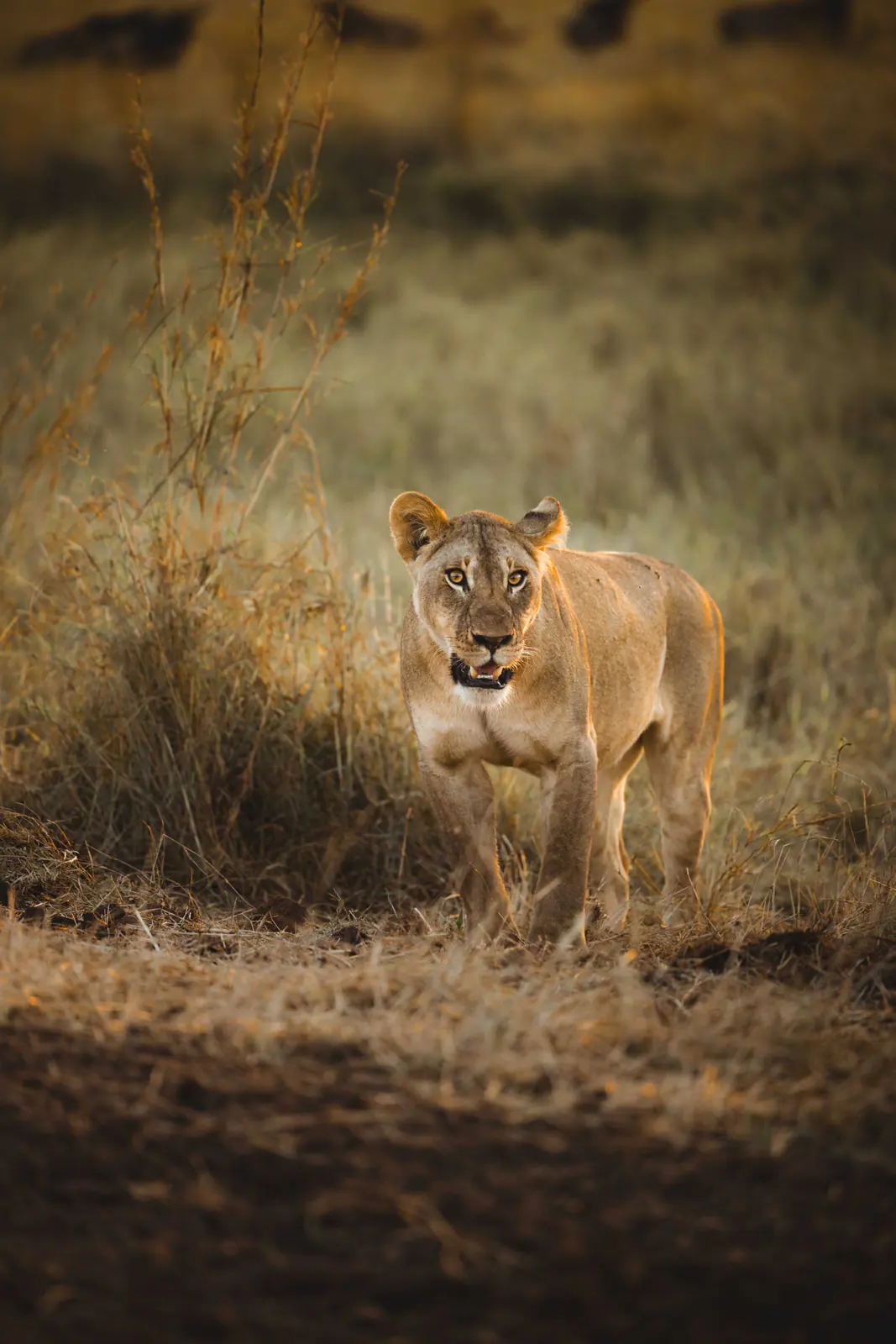
A male lion walks through tall grass toward the camera, with the plain stretching out hazily behind him.
02 / 08
Reserve or conservancy: the decision that shapes your trip
This is the choice that changes a Mara safari more than any other, and both answers are legitimate.
The national reserve holds the densest concentration of resident game and the stretch of the Mara River where crossings happen. In peak season it also carries the most vehicles, and a good sighting can attract a queue. Off-road driving is restricted, night drives are not permitted and walking is not allowed. Camps inside the reserve tend to be larger and, night for night, less expensive than conservancy equivalents.
The conservancies cap the number of camps and vehicles per area, which means sightings are usually shared with one or two other vehicles rather than fifteen. Most permit off-road approaches, guided walks and night drives: the rules genuinely differ between conservancies, so confirm before booking rather than assuming. Rates are higher because the conservancy fee funds the land leases and rangers. Many conservancy camps will drive you into the reserve for a day when the migration is on, giving you both.
For a first Kenya safari in migration season, the pragmatic answer is often a conservancy base with one or two full days into the reserve. For a shorter or more budget-led trip, a well-placed reserve camp is a perfectly good choice. The full comparison sits in reserve vs conservancy.
Reserve or conservancy, side by side
Conservancy rules are set individually. Confirm what your specific conservancy and camp permit rather than assuming.
A common way to get both
In migration months, basing in a conservancy and taking one or two full days into the reserve tends to give travellers quiet sightings for most of the trip and access to the river when the herds are there. It costs more per night than a reserve camp and adds driving on the reserve days, so it suits four nights better than three.
03 / 08
When to go, and what each season looks like
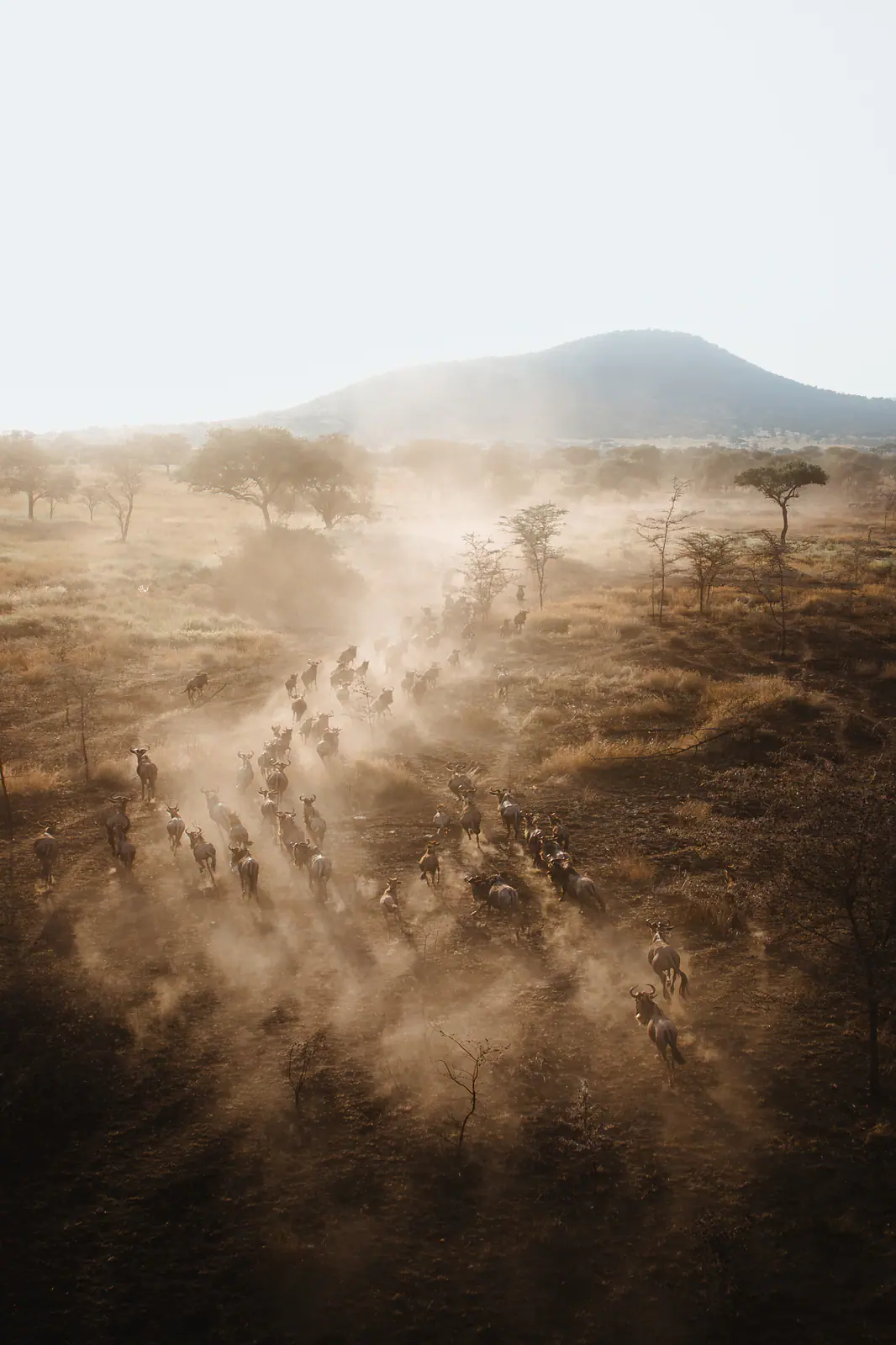
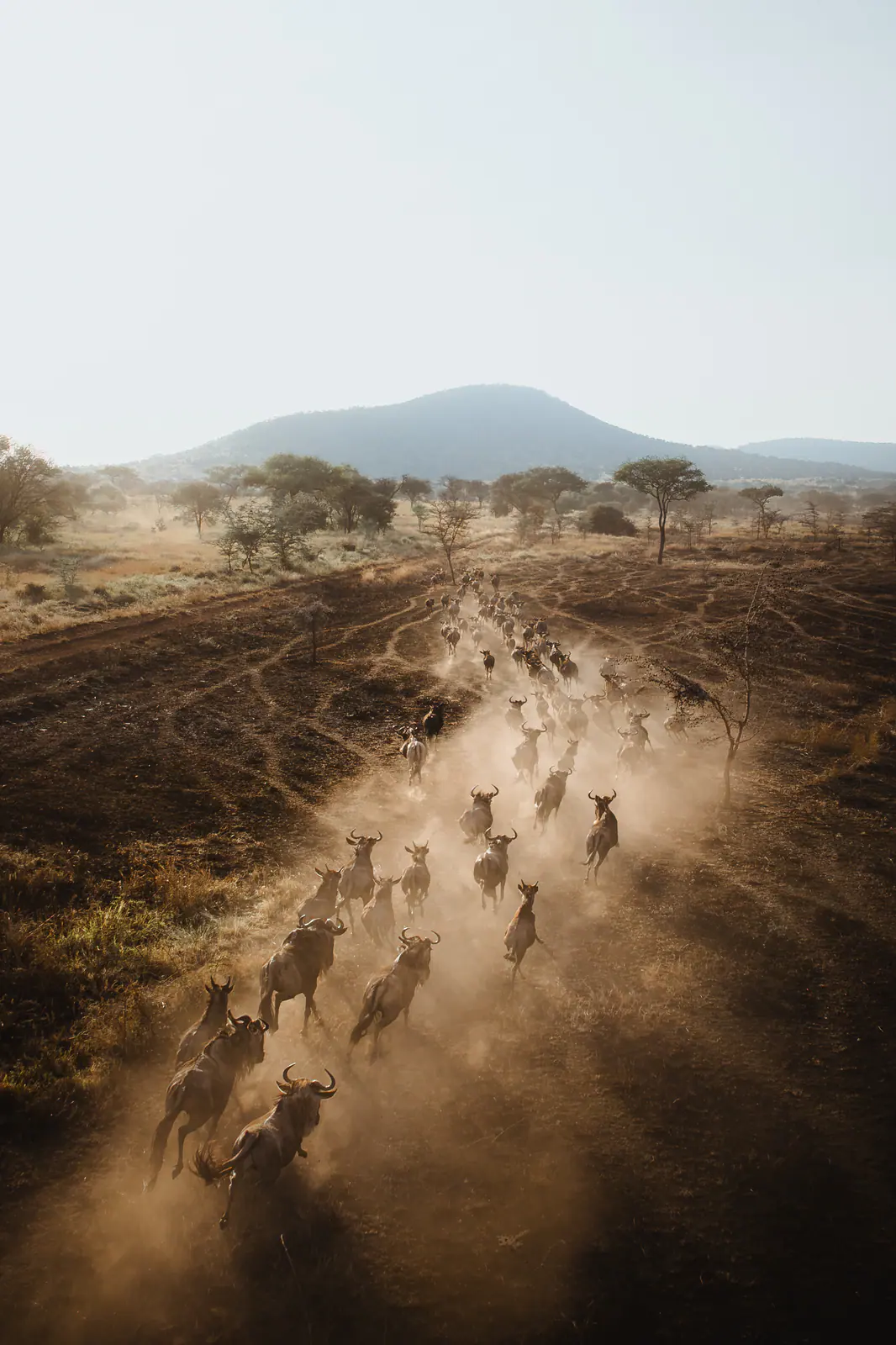
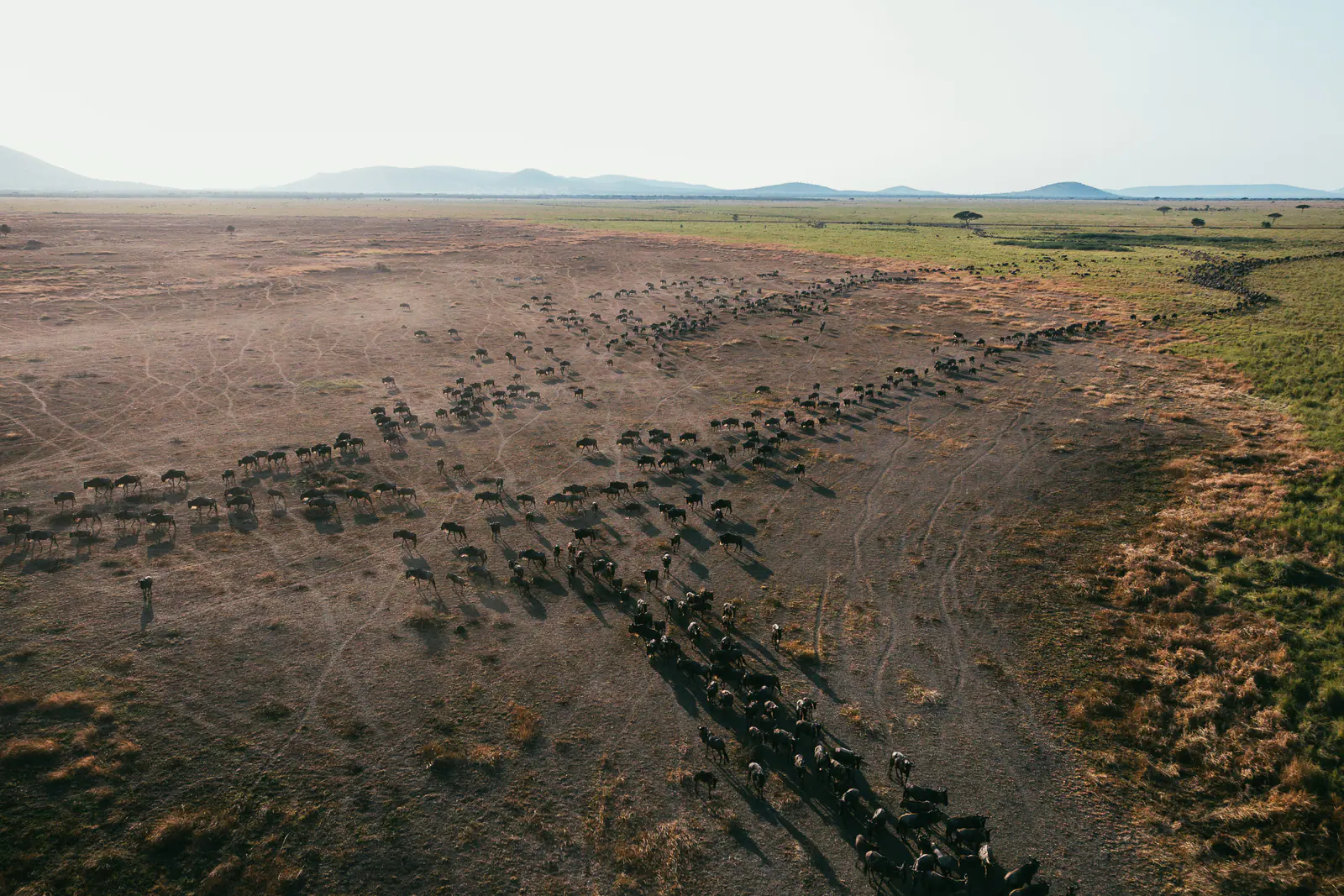
The Mara is a year-round destination with a genuine peak. Migration herds typically cross north from the Serengeti from around July, remain through August and September, and begin drifting back south during October. That window brings enormous numbers of wildebeest and zebra, heightened predator activity and the possibility of river crossings: along with the highest prices and the most vehicles of the year.
January and February are quietly excellent. The plains are green from the short rains but the grass is still short, resident predators are easy to follow without migration traffic, and rates are lower. March into May brings the long rains: lush landscapes, dramatic light, few visitors, some difficult tracks and the lowest prices Kenya offers. November's short rains are lighter and often barely disrupt a trip.
Whatever the month, mornings are cold before sunrise and afternoons can be hot, and a game drive in an open vehicle at speed magnifies both. Layers matter more here than most people expect. See the packing list.
Migration timing varies year to year with rainfall and grazing, and crossings depend on herd behaviour on the day. Reputable planners describe likelihoods, never certainties.
What you can realistically expect
- July
- Herd arrival timing varies according to rainfall and movement. Some years large numbers are in the Mara early in the month; in others the bulk are still in the northern Serengeti.
- August
- Often significant herd activity in the Mara, and the month crossings are most associated with, but crossings cannot be scheduled and may not happen on your days.
- September
- Can remain strong for herd activity depending on rainfall and movement, usually with slightly fewer vehicles than August.
- October
- Distribution may begin changing as seasonal conditions shift, with groups moving south. Resident wildlife viewing stays good throughout.
Migration timing is natural and variable. River crossings cannot be guaranteed on a particular date or game drive, and no operator can promise one.
04 / 08
How many nights the Mara justifies
Three nights is the working minimum and four is better. Wildlife viewing improves each morning as your guide builds a picture of where animals were the previous day, and the Mara rewards that continuity. Two nights gives you two morning drives and one afternoon: enough to see a great deal, but not enough to absorb a slow day.
If your trip is built around the migration, four nights materially improves your chances of witnessing a crossing, because you can spend a full day near the river without feeling you have wasted the trip if nothing happens. If your trip is built around cats, four nights lets you follow individual prides rather than collecting sightings.
The Mara pairs naturally with a second, contrasting region rather than a third similar one. Amboseli adds elephants and mountain landscape; Samburu or Laikipia add dry-country species and quiet; Lake Nakuru adds rhino and slots neatly into the drive. How those combinations fit into different trip lengths is covered in how many days.
How many nights, by what you care about most
- First safari, general wildlife
- 3 nights in the reserve or a conservancy, paired with Amboseli or Lake Nakuru.
- Migration and river crossings
- 4 nights minimum, ideally within reach of the Mara River, travelling between late July and September.
- Big cats and photography
- 4 nights in one area so your guide can follow individual prides rather than restart each morning.
- Walking, night drives, low vehicle numbers
- 3 to 4 nights in a conservancy that permits those activities, confirm before booking.
- Short trip, limited budget
- 3 nights at a well-placed reserve camp, arriving by road if the schedule allows.
This is a starting point rather than an objective ranking. The right answer changes with your dates, your nights and who is travelling.
05 / 08
Getting there: road or air
Scheduled light aircraft leave Nairobi Wilson for the Mara several times daily and take roughly 45 minutes to an hour depending on airstrip and stops. You land on a bush airstrip and your camp vehicle meets you, usually turning the transfer into a first game drive. Luggage is limited to soft bags at a strict weight, typically around 15 kilograms including hand luggage.
By road it is roughly five to six hours from Nairobi depending on the route, the gate and conditions, with the last stretch unpaved and slow. The drive takes you through the Rift Valley and past Narok, and pairs well with a night at Lake Nakuru to break the journey. A road trip also means the same guide and vehicle throughout, no luggage limit and a lower cost.
For a short trip, fly. For a week or more with two or three regions, driving the shorter legs and flying the long ones is usually the best balance. The reasoning is set out in drive vs fly.
Two ways in from Nairobi
-
Nairobi Wilson → Mara airstrip
Approximate flight time: 45 min – 1 hr 15
Trade-off: Fastest option, but soft bags only and a strict luggage allowance, typically around 15kg including hand luggage.
-
Airstrip → Camp
Approximate road time: 15–60 min
Trade-off: Often run as a first game drive; the distance depends on which airstrip your camp uses.
-
Nairobi → Maasai Mara
Approximate road time: 5–7 hrs
Trade-off: Same guide and vehicle throughout and no luggage limit, but the final unpaved stretch is slow and the day is largely lost to driving.
-
Nairobi → Lake Nakuru
Approximate road time: 3–4 hrs · Overnight: 1 night
Trade-off: Breaks the drive and adds rhino, at the cost of a night that could otherwise be spent in the Mara.
All journey times are approximate. Traffic, weather, road conditions, stops, gate choice and airstrip schedules all change them.
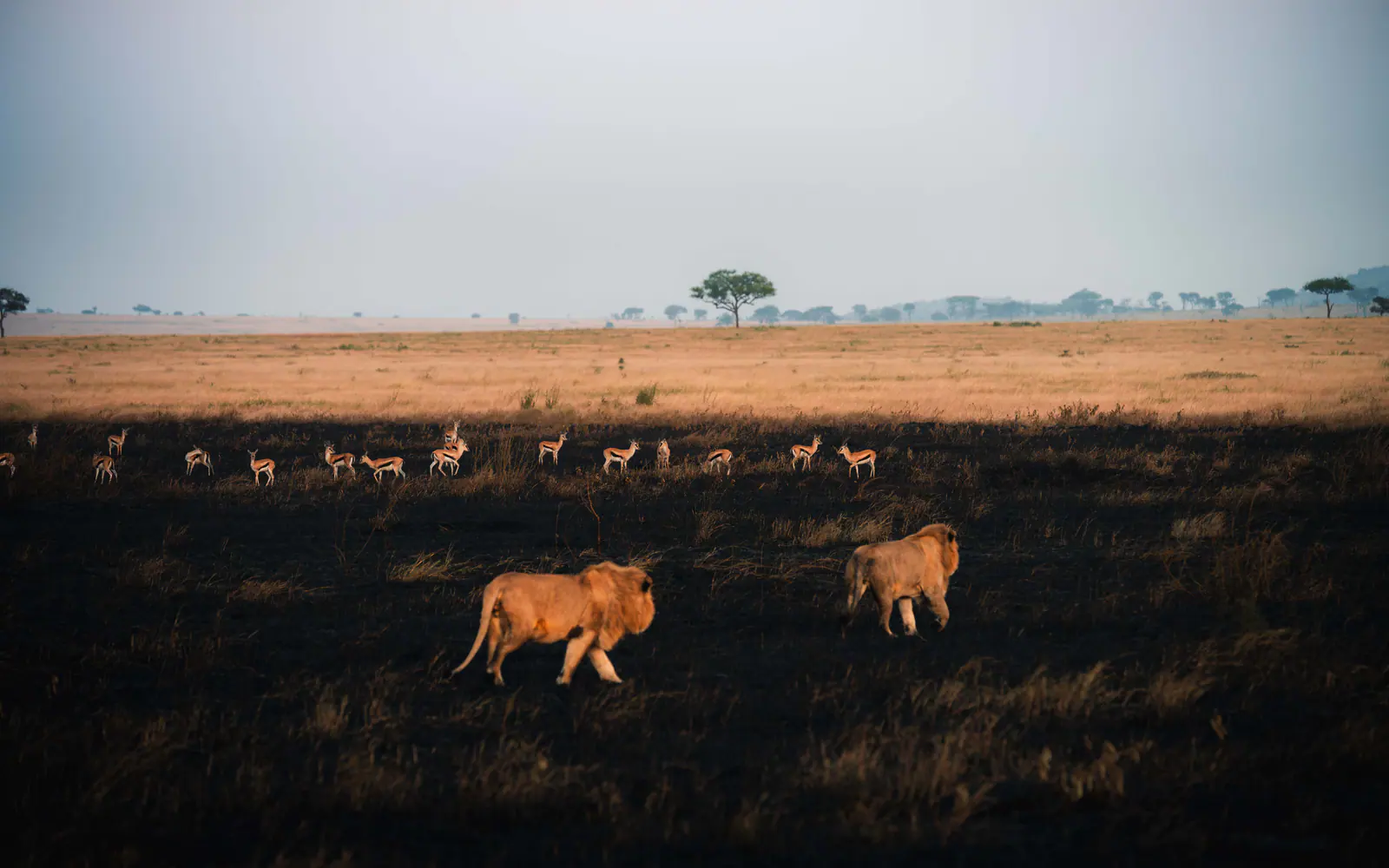
Two lions walking across a plain blackened by fire, with a herd of antelope grazing in the distance.
06 / 08
Beyond the game drive
Most Mara days follow a rhythm: an early drive from first light through mid-morning, a rest through the hot hours, and an afternoon drive until sunset. A full-day drive with a packed lunch is worth doing at least once, particularly during migration season when the best hours at the river are unpredictable.
- Balloon safari
- A dawn flight over the plains, landing to a bush breakfast. Expensive and weather-dependent, and for many travellers the highlight of the trip.
- Guided walks
- Permitted in most conservancies with an armed guide, not in the national reserve. A completely different pace and scale of experience.
- Night drives
- Conservancies only, and the way to see genets, servals, aardvark and hunting hyena. Rules vary by conservancy.
- Maasai community visits
- Worthwhile when arranged through the conservancy or camp with fair payment to the community, rather than as a roadside stop.
- Full-day river vigil
- In migration months, taking lunch to the river and waiting. No guarantee of a crossing, but this is how people see them.
07 / 08
Practicalities worth knowing
Reserve entry fees are set by the county authority and have risen substantially in recent years; conservancy fees are usually bundled into the nightly camp rate. Confirm current figures when you book rather than relying on older published numbers.
Mobile signal exists in patches and most camps have some form of wifi, though it is often slow and sometimes limited to communal areas. Power in tented camps is frequently solar with set charging hours: bring a power bank if you shoot a lot of images.
Malaria prophylaxis is generally recommended for the Mara; take medical advice well before travel. Camps in unfenced areas escort guests to tents after dark, and that rule is not decorative, follow it.
08 / 08
Where to take this next
Two questions follow almost every Mara decision. Timing sits in the Great Migration in Kenya guide and in best time to visit Kenya; where you sleep sits in reserve versus conservancy.
If you are weighing the Mara against another headline park, read Amboseli versus the Maasai Mara or Maasai Mara versus Serengeti. Couples should look at the Kenya honeymoon safari notes and, at the top end, luxury Kenya safari options. Wider context: the Kenya safari guide and the Kenya safari guides library.
Planned by people who live the route
This library exists because the same Kenya questions arrive with every safari enquiry we answer.
- Locally based in Tanzania
- Kenya and Tanzania route specialists
- Licensed and insured operator
- Fast, direct answers
- Read Safari Soles reviews on TripAdvisor
- Read Safari Soles reviews on SafariBookings
- Read Safari Soles reviews on Google
Where these facts come from (3)
- Tourism, Wildlife and Culture: Maasai Mara National Reserve oversight Narok County Government · Reserve authority · checked 2026-09-14
- Maasai Mara National Reserve Management Plan 2023–2032 Narok County Government · Reserve authority · checked 2026-09-14
- Seasonal rainfall forecasts and outlooks Kenya Meteorological Department · Meteorological · checked 2026-09-14
Related Safari Soles guides
Continue with the guides travellers usually read next.
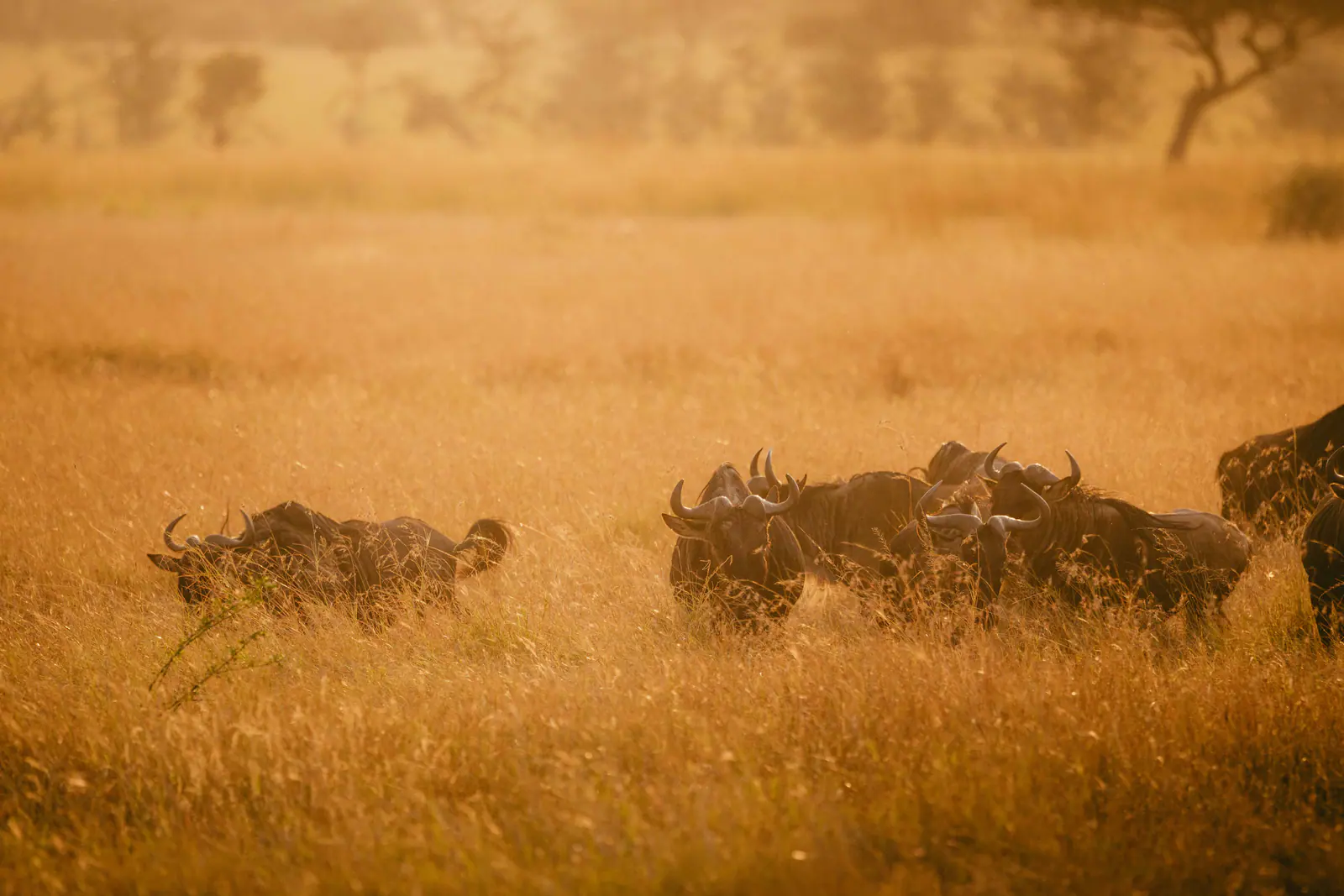 Great Migration in Kenya How the migration behaves on the Kenyan side of the ecosystem, when herds are typically in the Mara, and why crossings can never be guaranteed. Parks & Reserves
Read the guide
 Reserve vs Conservancy How national reserves and private or community conservancies differ on vehicle numbers, permitted activities, camp style and cost, and why rules vary by conservancy. Comparisons
Read the guide
 Maasai Mara vs Serengeti Two halves of one migration ecosystem: scale, vehicle density, seasonal movement, access and what each side does better at different times of year. Comparisons
Read the guide
Frequently Asked Questions
-
The reserve can be busy at good sightings during peak months. The conservancies are not, because vehicle numbers are capped. Crowding is a function of where you sleep more than of the Mara as a whole.
Build this into a real Kenya route
Send us the dates, the travellers and the wildlife you care about most, and we will turn this guide into an itinerary that actually works on the ground.