


Kenya Big Five Guide
The Big Five is a hunting term that became a checklist. It is still a useful planning shorthand, as long as you understand that no itinerary in Africa can promise you all five.
- Sightings
- No sighting anywhere is guaranteed
- Hardest two
- Leopard and rhino
- Regions
- Two or three beats one
- Recommended stay
- Seven nights is a realistic target
Written and maintained by the Safari Soles planning team in Arusha, Tanzania.
Lion, leopard, elephant, buffalo and rhino are all present in Kenya, but no single park holds reliable numbers of all five, and no operator can guarantee any sighting.
- The Big Five is a hunting-era term, not an ecological one: it excludes cheetah, giraffe and hippo.
- Lion and buffalo are commonly seen; elephant is straightforward in the right region; leopard and rhino are the hard two.
- No park, guide or operator can guarantee a sighting. Guarantees are a warning sign.
- Two or three complementary regions over six to ten nights gives the best realistic odds.
- Nakuru plus Mara by road, or Mara plus Laikipia by air, are the most efficient combinations.
- Ethical viewing (distance, patience, vehicle limits) improves both the sighting and the photograph.
01 / 07
What the Big Five actually is
The phrase comes from colonial-era hunting, where it described the five animals considered most dangerous to pursue on foot: lion, leopard, elephant, Cape buffalo and rhinoceros. It has nothing to do with size, rarity or ecological importance, which is why the list excludes cheetah, giraffe, hippo and wild dog.
It survives because it is a convenient shorthand and because it gives a trip a structure. Used well, it is a reasonable way to think about which regions to combine. Used badly, it turns a safari into a scavenger hunt where a family drives past a hunting cheetah because they have already ticked cats.
The healthier framing is that the Big Five are five very good reasons to visit different parts of Kenya, and that the trip should be built around habitats rather than around a list.
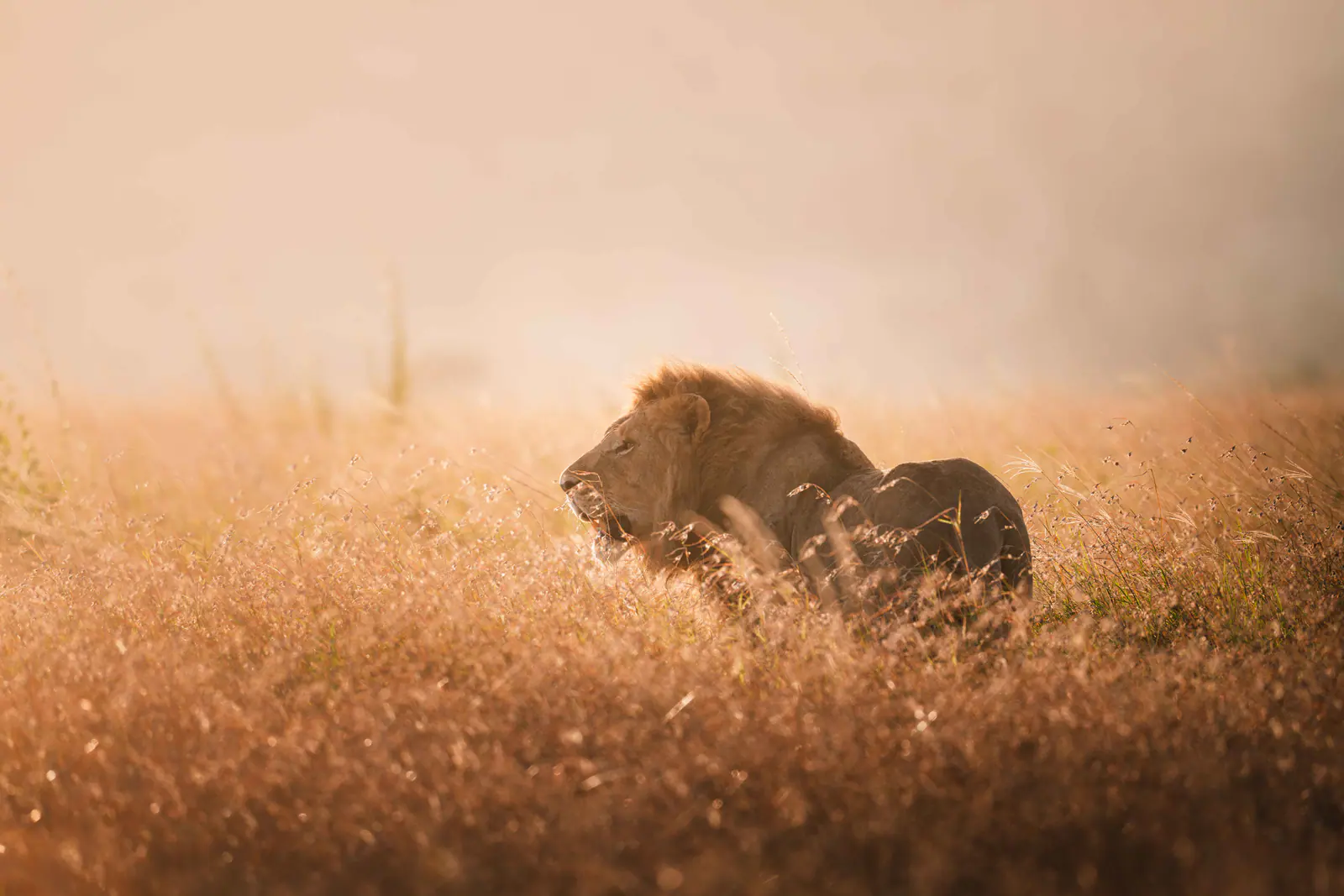
A male lion in profile, half hidden in sunlit grass with dust hanging in the air behind him.
02 / 07
Where each is commonly sought
The table below sets out where each species is most commonly looked for in Kenya, and how realistic a sighting typically is. Read the right-hand column carefully: it describes probability, not promise.
The five, and where the odds are best
-
Lion
Widespread and frequently seen in the Mara, with good populations in Tsavo, Nakuru, Amboseli, Samburu and Laikipia. The most commonly seen of the five on a multi-day trip.
-
Leopard
Present almost everywhere and seen far less often. Riverine forest in the Mara and along the Ewaso Ng'iro in Samburu give the better chances. Many visitors miss leopard entirely.
-
Elephant
Amboseli is the classic: large, well-studied herds in open ground. Tsavo has big populations across a much larger area. Also common in the Mara, Samburu and Laikipia.
-
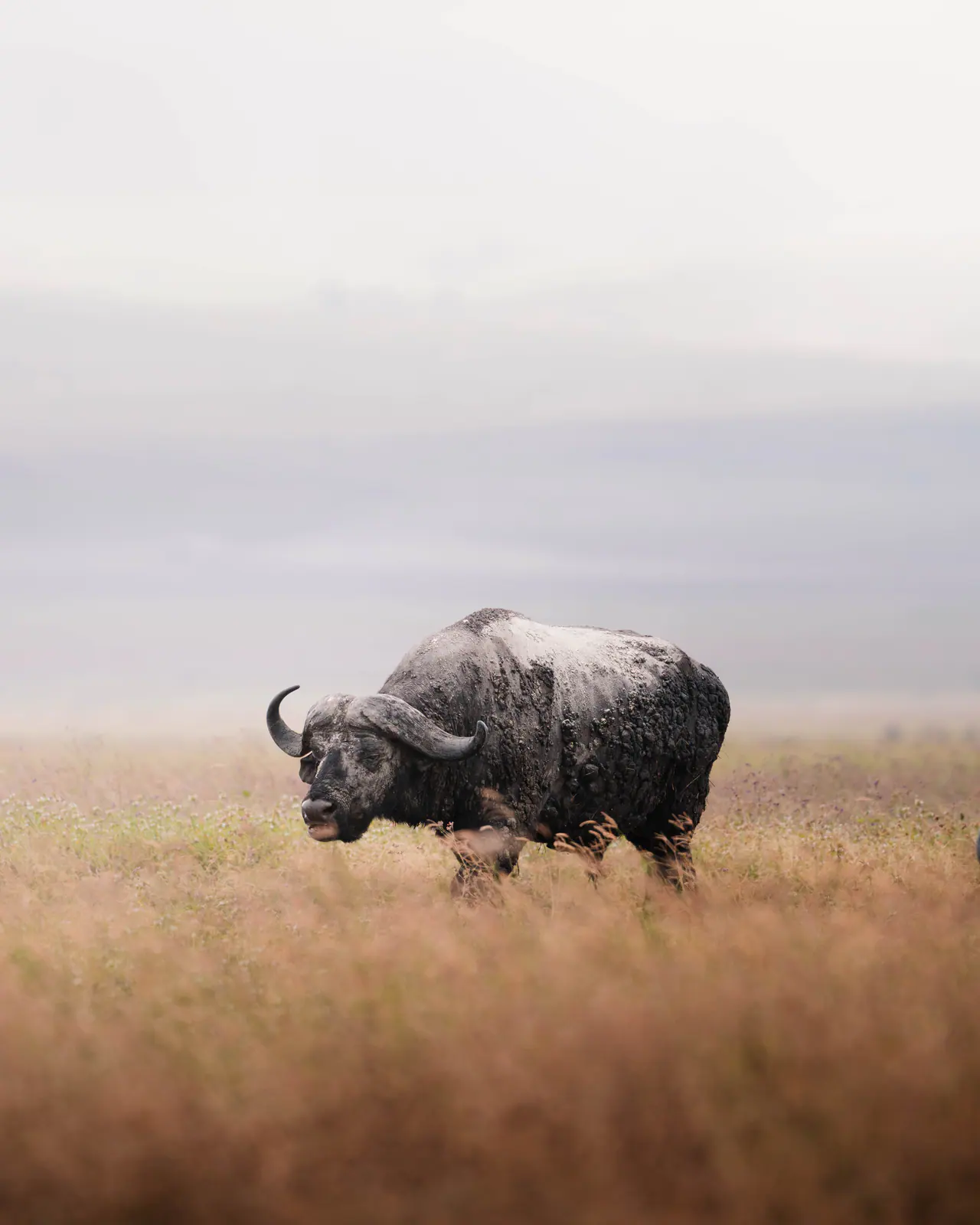
Buffalo
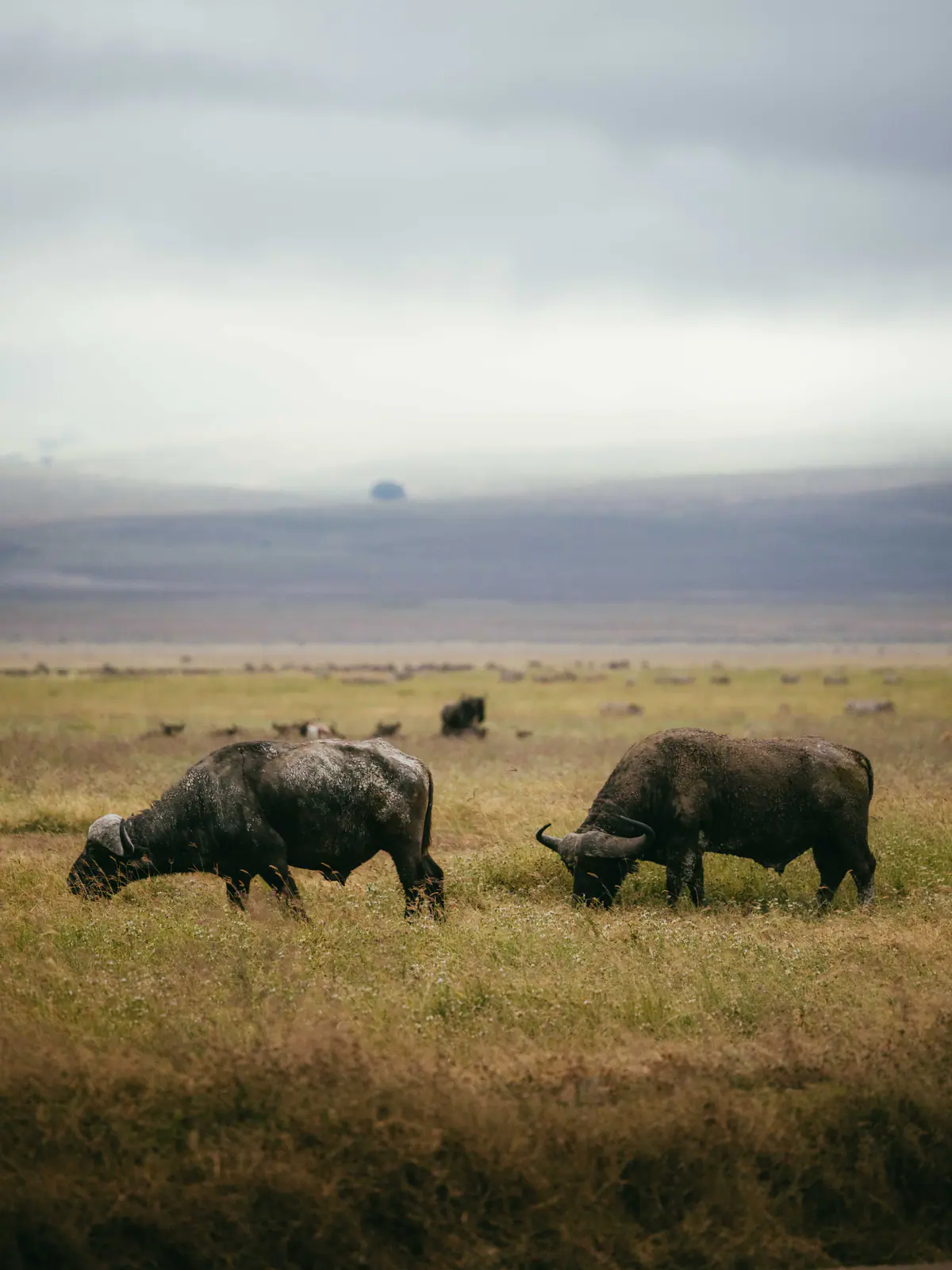
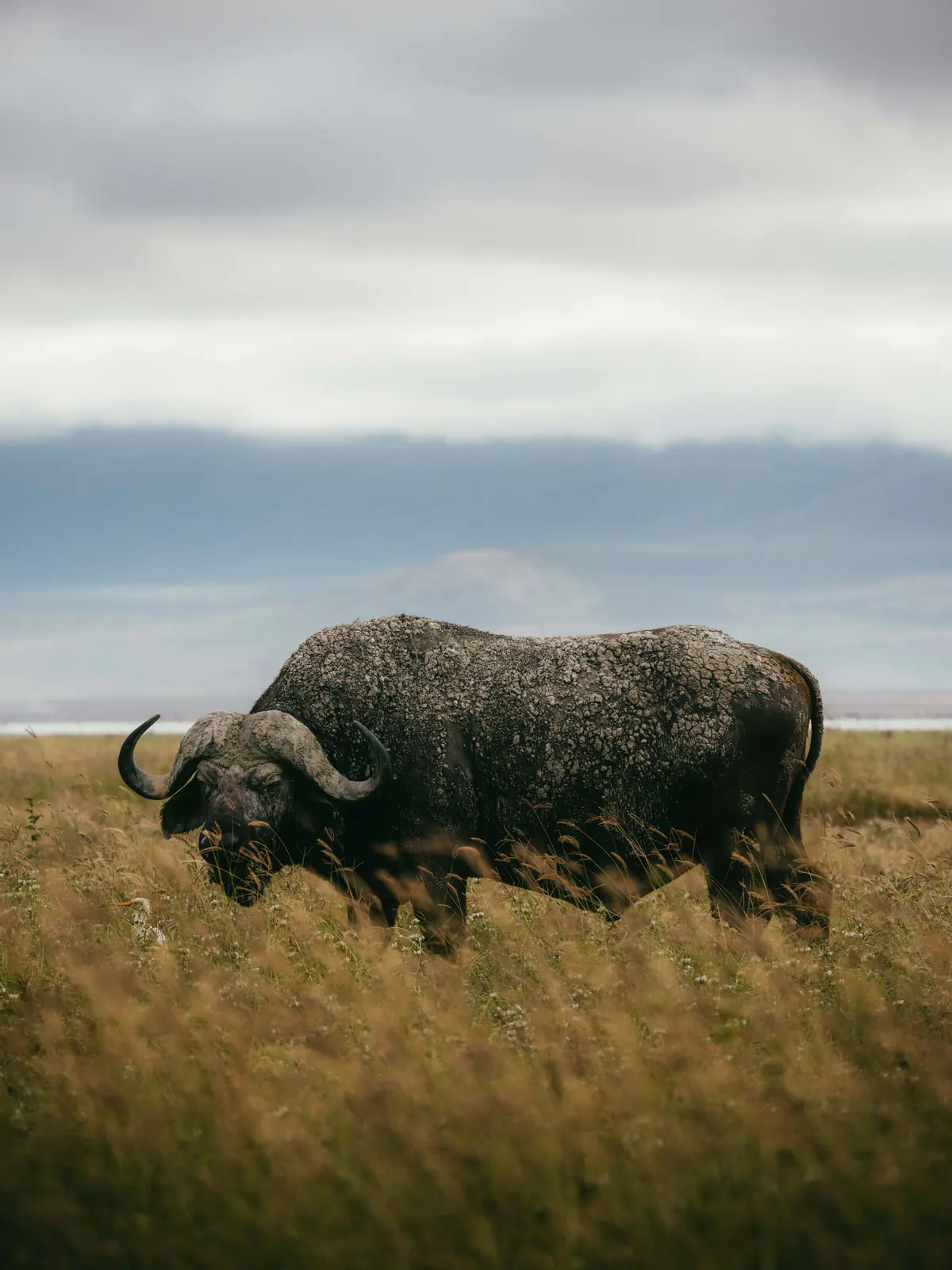
The easiest of the five. Large herds in the Mara, Nakuru, Amboseli and Tsavo, and generally seen within the first day or two of any circuit.
-
Rhino
The hardest to plan for. Kenya Wildlife Service describes Lake Nakuru as a major sanctuary for both black and white rhino, and Laikipia conservancies run significant programmes. Nairobi National Park is also a genuine option on an arrival day.
03 / 07
Why no route can guarantee all five
Wild animals move. Sightings depend on rainfall, grass height, prey movement, time of day, luck and the skill of your guide. A park with an excellent leopard population can go three days without a sighting, and a park with modest numbers can produce one in the first hour.
Two of the five are genuinely difficult. Leopard are solitary, largely nocturnal and superbly camouflaged, so even in strong leopard country a week can pass without one. Rhino are simply not present in most Kenyan parks in numbers, which is why they require a deliberate detour rather than hopeful driving.
Anyone promising all five is either selling you something or relying on you not to complain afterwards. What a good itinerary can honestly do is stack the odds: choose the right habitats, allow enough days, use skilled guides and give yourself early mornings.
No safari operator, guide or park can guarantee a sighting of any species. Treat guarantees as a warning sign rather than a selling point.
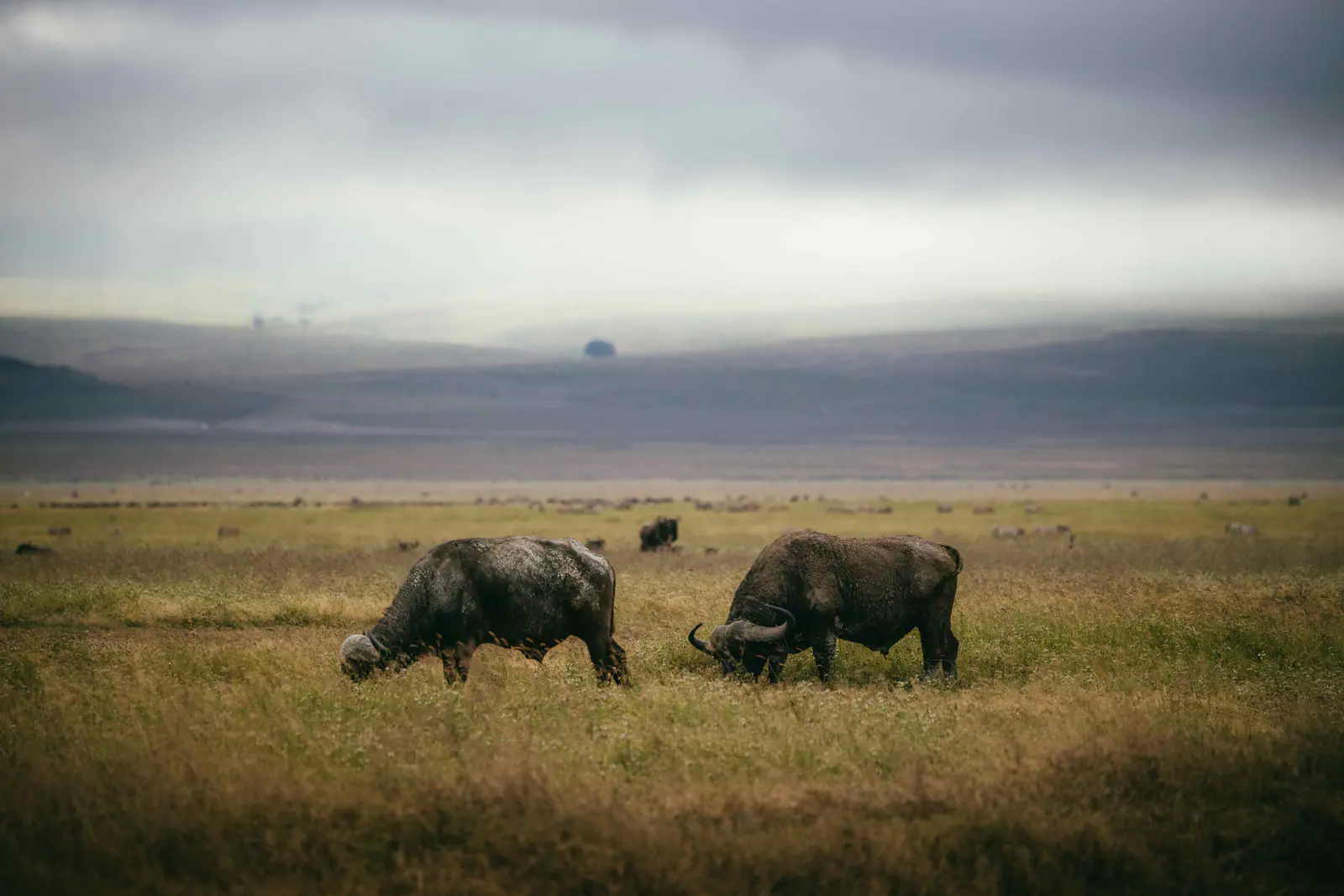
04 / 07
Building a route that gives you the best chance
The strategy is straightforward: cover the habitats rather than the checklist. Grassland and riverine forest for cats, open plains beneath a mountain or a river system for elephant, and a rhino-specific area that would not otherwise be on your route.
The most efficient Kenyan combination on a road itinerary is Nairobi to Lake Nakuru to the Maasai Mara. That gives you rhino at Nakuru, everything else in the Mara, and only one long transfer. Add Amboseli and you deepen the elephant experience considerably.
On a fly-in itinerary the equivalent is Mara plus Laikipia: predator density in one and rhino, walking and conservation depth in the other. Both routes work in seven nights and neither is a race.
Realistic Big Five odds by trip length
-
4 nights, one region
- Less suited to
- Rhino unlikely unless you choose the region for it. Leopard is a matter of luck
- Sample route
- Maasai Mara only
- Pace
- Comfortable, two drives a day
- Trade-off
- A very good safari, but not a Big Five one.
- Lion and buffalo highly likely
- Elephant likely in most regions
-
6–7 nights, two regions
- Less suited to
- Leopard still not assured
- Sample route
- Nakuru + Mara, or Mara + Laikipia
- Pace
- One transfer day
- Trade-off
- The best balance of odds against time and cost.
- Four of five is a realistic expectation
- Rhino becomes plannable via Nakuru or Laikipia
-
8–10 nights, three regions
- Less suited to
- More transfer time. Higher total cost
- Sample route
- Amboseli + Nakuru + Mara
- Pace
- Two transfer days
- Trade-off
- Broad and varied, at the cost of some depth in each place.
- Strong chance of all five
- Elephant experience deepens considerably
-
10+ nights, fly-in
- Less suited to
- Highest cost. Luggage limits on light aircraft
- Sample route
- Mara + Laikipia + Samburu or Amboseli
- Pace
- Short flights instead of long drives
- Trade-off
- Buys days back at a price, see [drive versus fly](/drive-vs-fly-kenya-safari).
- Best possible odds
- Time to return to a leopard sighting on consecutive days
05 / 07
Ethical wildlife viewing
The pressure to complete a list is exactly what produces bad behaviour at sightings: crowding, off-road driving where it is prohibited, pushing too close to a kill, or interrupting a hunt. A good guide will hold back, and you should support that rather than push against it.
Practical principles are simple. Keep noise down and stay in the vehicle unless your guide says otherwise. Accept that some sightings are watched from a distance. Do not ask a guide to break park rules for a photograph. Give animals space to move, particularly elephant with calves and cats with young.
Where you stay matters as much as how you behave. Conservancies limit vehicle numbers per sighting and channel fees into land and community programmes; national reserves have no such cap at peak times. That difference is set out in reserve versus conservancy, and it is one of the more meaningful choices you make.
- Choose a camp that limits vehicles at sightings if quality of experience matters to you
- Never ask a guide to drive off-road where it is prohibited
- Keep a respectful distance from kills, dens and animals with young
- Turn off flash photography around wildlife at night
- Judge a sighting by what the animal is doing, not by whether it completes a list
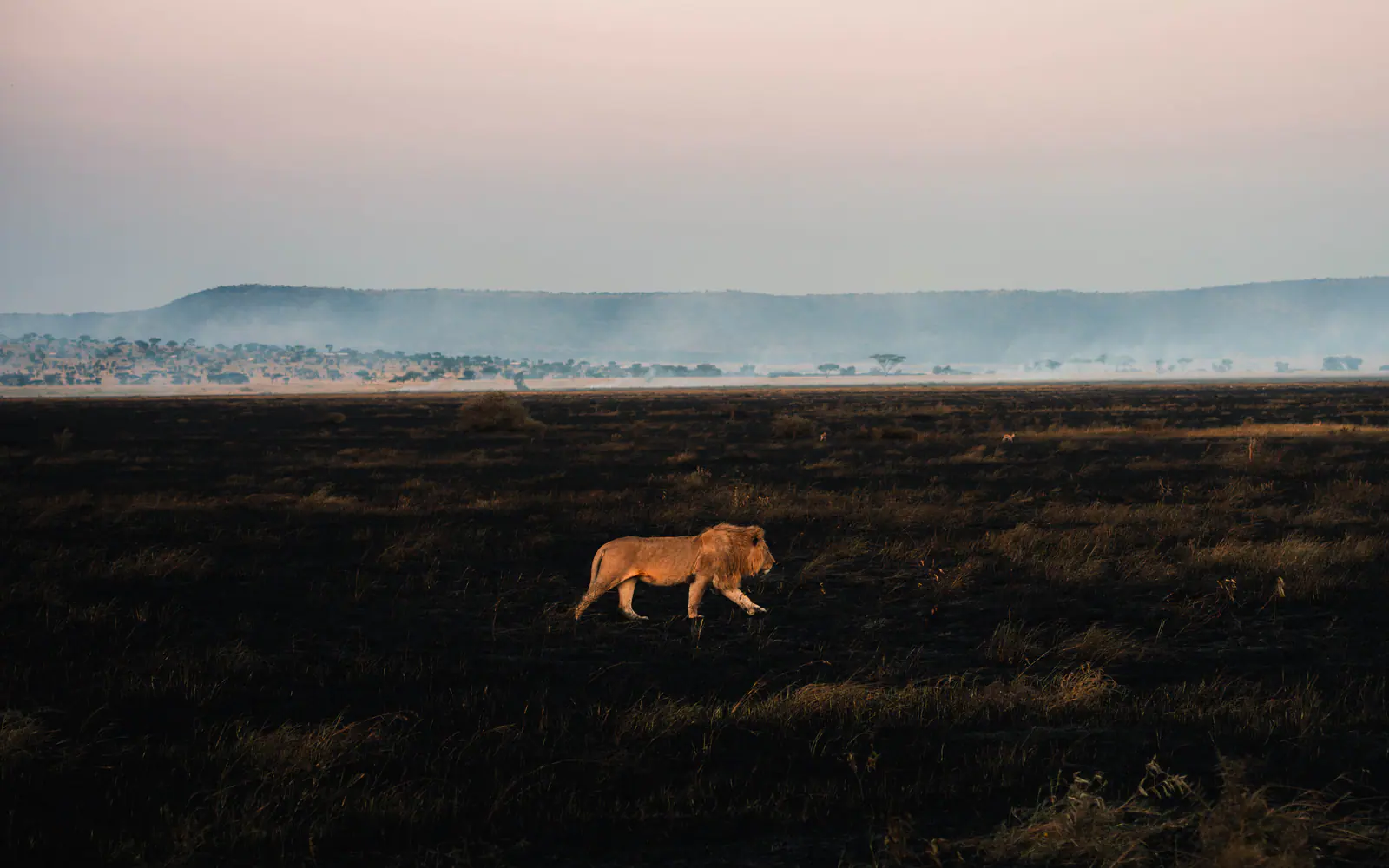
A lion walking across burned ground, with a line of smoke and low hills on the horizon.
06 / 07
What the list leaves out
Kenya's most memorable sightings frequently fall outside the five. Cheetah hunting on the open plains, wild dog moving through Laikipia, a leopard's prey hoisted into a fig tree, Grevy's zebra and gerenuk in Samburu, thousands of flamingo lifting off a Rift Valley lake, or the sheer noise of the migration crossing the Mara river.
Birdlife is the most under-appreciated part of a Kenyan safari. Lake Nakuru alone records around 450 species, and travellers with binoculars consistently report the birds as a highlight they did not expect.
So use the Big Five to choose your regions, then forget about it once you are there. The trip is better that way, and so are the photographs.
07 / 07
Where to take this next
Each species points somewhere specific: planning a Maasai Mara safari for predators, Lake Nakuru for rhino, and the Amboseli safari guide for elephants.
Nairobi's city park is a useful rhino stop but has no elephant. See Nairobi National Park. To turn a species list into an itinerary, use how to plan a Kenya safari, the Kenya safari guide and the Kenya safari guides library.
Planned by people who live the route
This library exists because the same Kenya questions arrive with every safari enquiry we answer.
- Locally based in Tanzania
- Kenya and Tanzania route specialists
- Licensed and insured operator
- Fast, direct answers
- Read Safari Soles reviews on TripAdvisor
- Read Safari Soles reviews on SafariBookings
- Read Safari Soles reviews on Google
Where these facts come from (4)
- Amboseli National Park: park information Kenya Wildlife Service · Park authority · checked 2026-09-14
- Lake Nakuru National Park: park information and rhino sanctuary Kenya Wildlife Service · Park authority · checked 2026-09-14
- Tourism, Wildlife and Culture: Maasai Mara National Reserve oversight Narok County Government · Reserve authority · checked 2026-09-14
- Tsavo East National Park: park information Kenya Wildlife Service · Park authority · checked 2026-09-14
Related Safari Soles guides
Continue with the guides travellers usually read next.
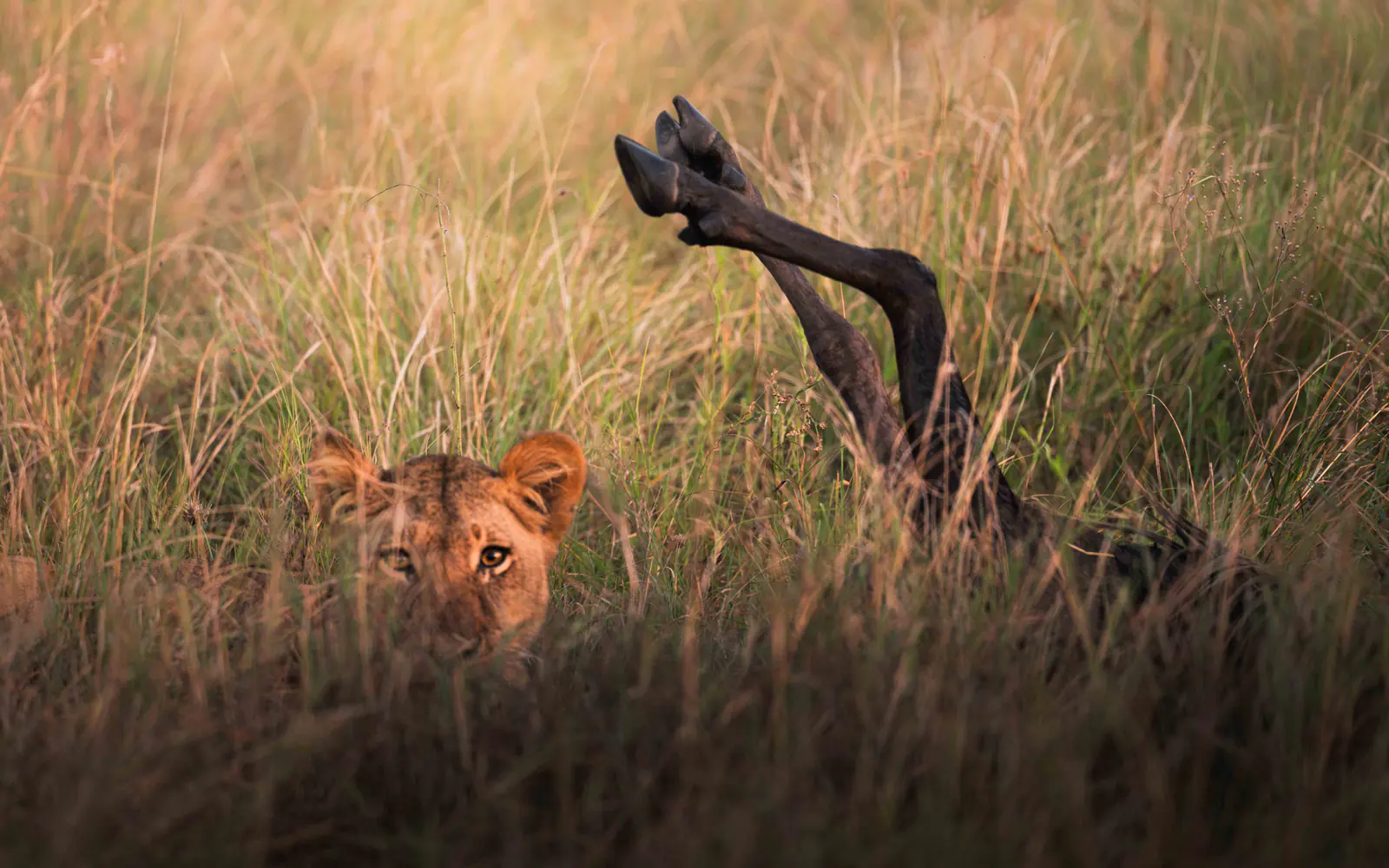 Maasai Mara Safari Reserve or conservancy, where to base yourself, how the migration months behave and how many nights the Mara justifies on a first Kenya trip. Parks & Reserves
Read the guide
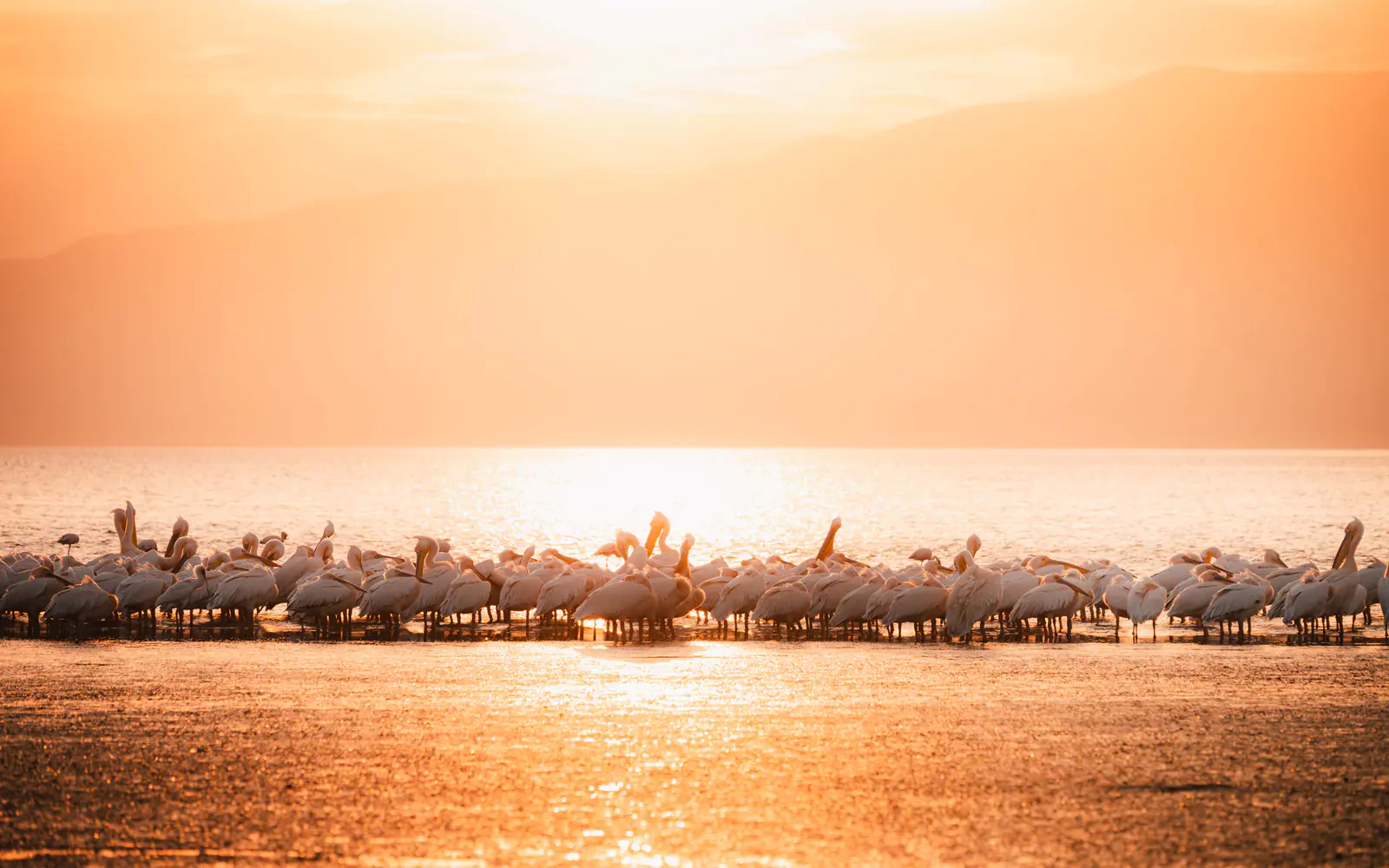 Lake Nakuru Safari The Rift Valley rhino sanctuary, its birdlife and why a single night here pairs so cleanly with a drive between Nairobi and the Mara. Parks & Reserves
Read the guide
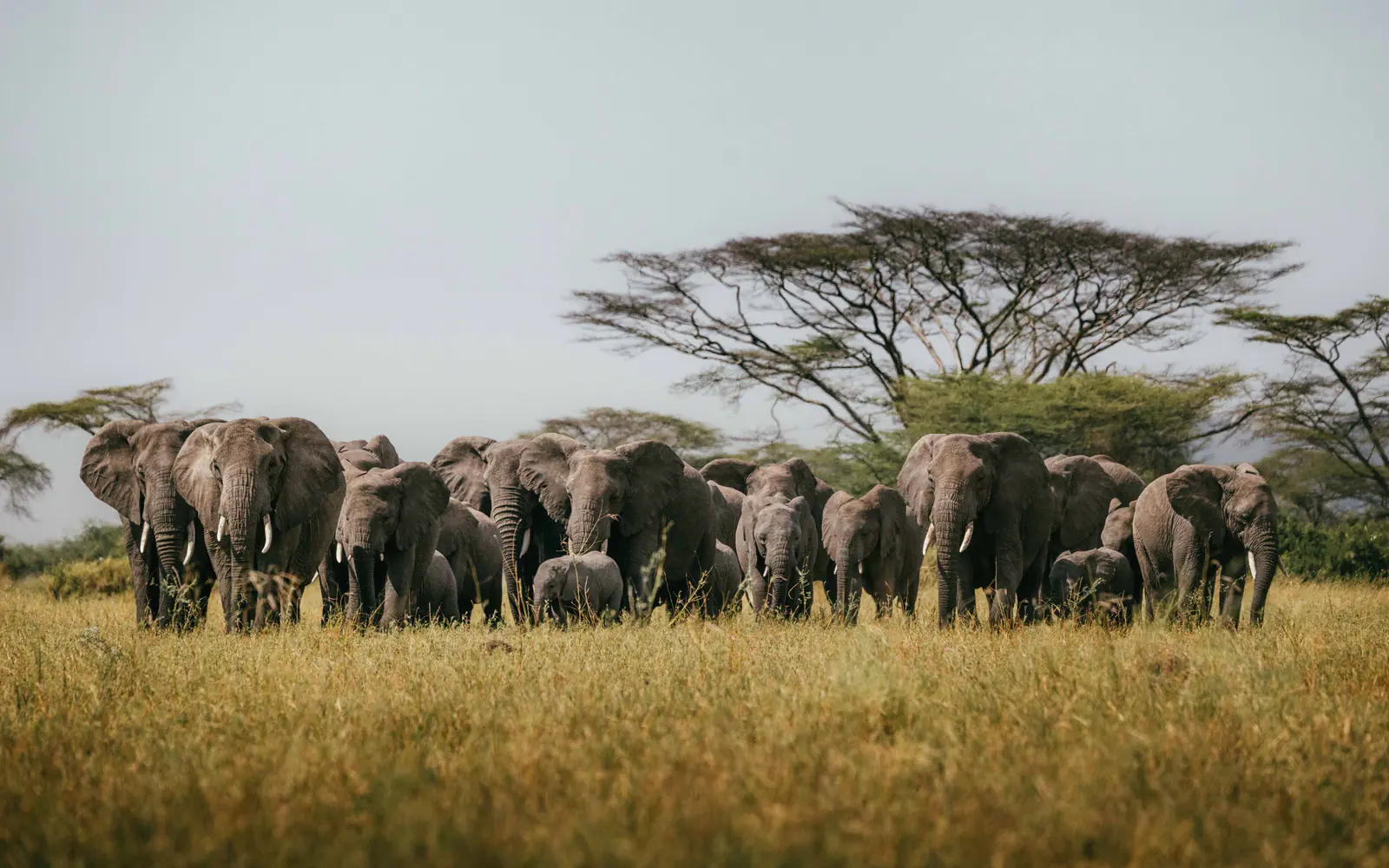 Amboseli Safari Large elephant herds, Kilimanjaro backdrops, Observation Hill and the swamp birdlife, plus how Amboseli slots into a wider circuit. Parks & Reserves
Read the guide
Frequently Asked Questions
-
All five are present in Kenya, but not in one park in reliable numbers. Combining a big-cat region with a rhino area over six to ten nights gives a realistic chance of all five without any guarantee.
Build this into a real Kenya route
Send us the dates, the travellers and the wildlife you care about most, and we will turn this guide into an itinerary that actually works on the ground.