


Lake Nakuru Safari
Nakuru is small, fenced and easy to underrate, until you realise it is one of the most reliable places in Kenya to see rhino, and that it sits exactly where you need a stop.
- Location
- Rift Valley, 3–4 hours from Nairobi
- Rhino sanctuary
- Major black and white rhino sanctuary
- Birdlife
- Around 450 recorded species
- Recommended stay
- 1 night
Written and maintained by the Safari Soles planning team in Arusha, Tanzania.
Lake Nakuru National Park lies in the Rift Valley roughly three to four hours from Nairobi by road, on the way to the Maasai Mara.
- Kenya Wildlife Service describes Nakuru as a major sanctuary for both black and white rhino: sightings are more consistent here than almost anywhere in Kenya.
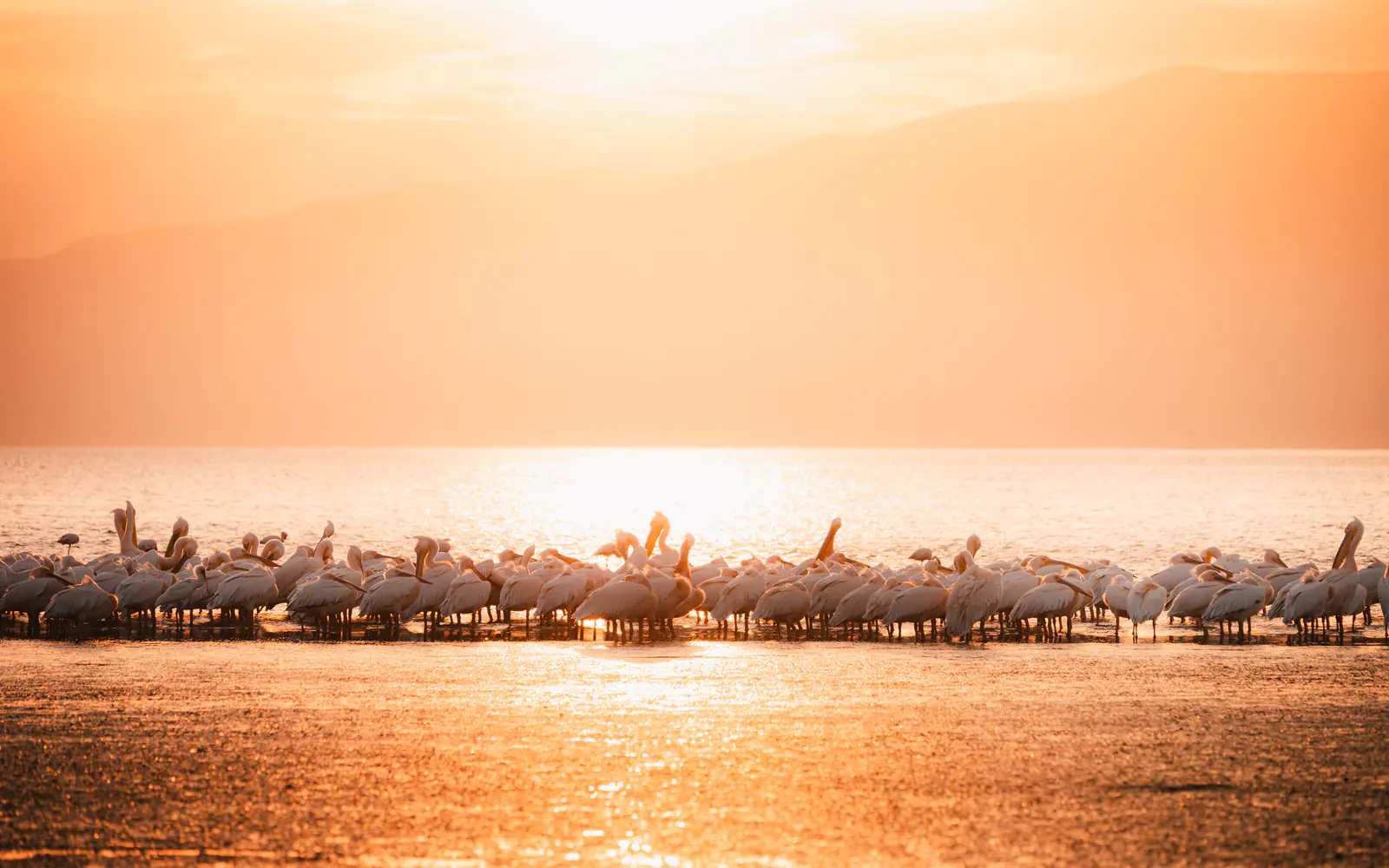
- Around 450 recorded bird species make it one of the country's best single days for birding.
- Flamingo numbers vary greatly with water levels; treat a large concentration as a bonus, not the reason to visit.
- One night is the right length, ideally staying inside the park.
- Its position makes it the natural break on the Nairobi to Maasai Mara drive, and largely redundant on a fly-in itinerary.
01 / 08
Is Lake Nakuru right for your trip?
Nakuru is a specific tool rather than a general-purpose park. It does two things unusually well (rhino and birds) inside a small, fenced, easily covered area that happens to sit on the main route west. Judge it on that, not on whether it competes with the Mara.
Lake Nakuru at a glance
-
Best for
Rhino sightings, Rift Valley birdlife, Rothschild's giraffe, and breaking the Nairobi to Mara drive into two comfortable halves.
-
Ideal stay
An afternoon drive on arrival and a morning drive before you leave covers the park thoroughly. Two nights only if you are adding Naivasha or Hell's Gate.
-
Pairs with
Maasai Mara almost always, and Lake Naivasha for boats and walking. Rarely visited alone.
-
Think twice if
You are flying between regions, chasing big-cat density, or expecting the million-flamingo photographs. On a fly-in itinerary the case for Nakuru largely disappears.
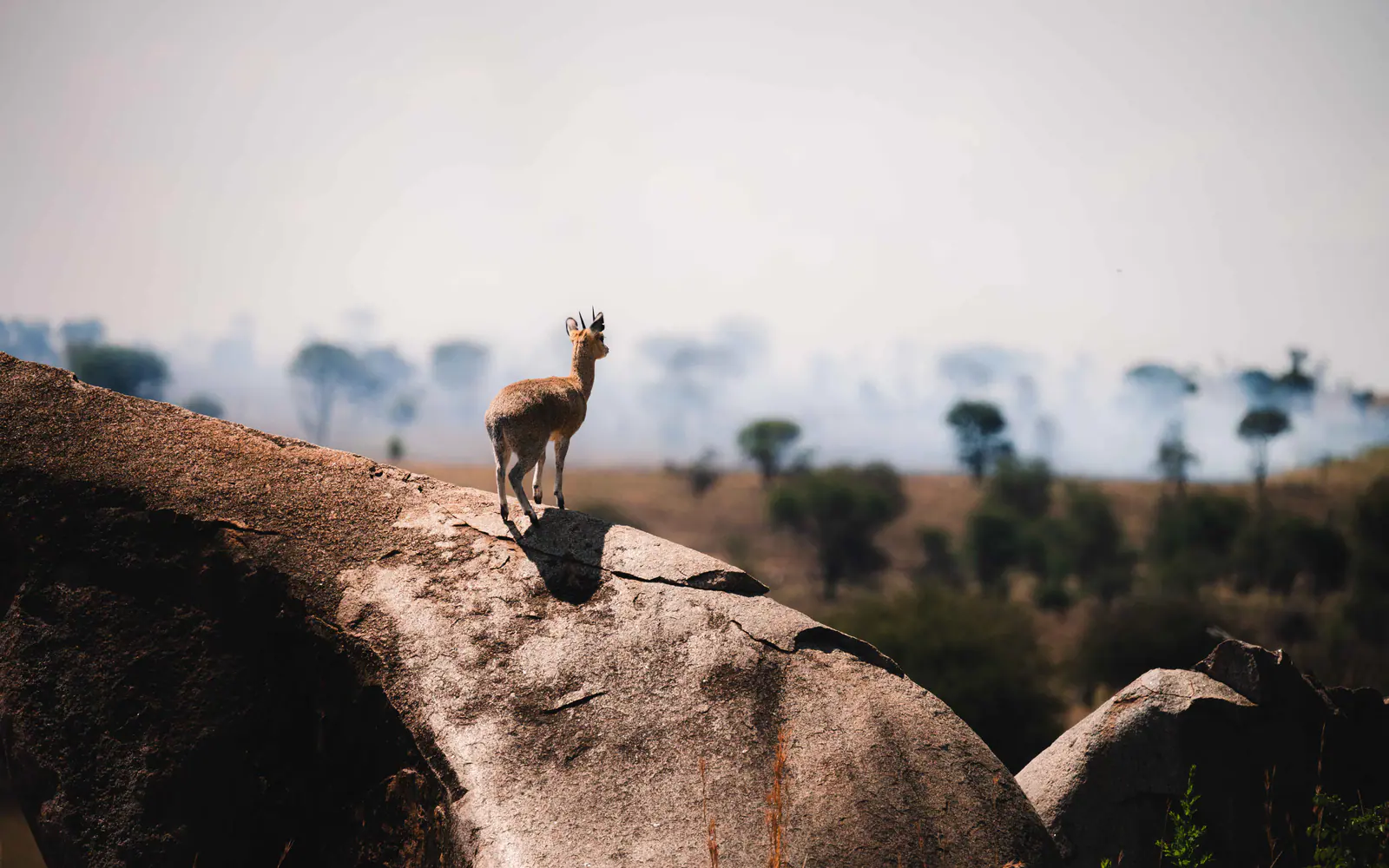
A klipspringer stands on a granite boulder with misty acacia scrub below, using the height to scan the plain.
02 / 08
A rhino sanctuary first and foremost
Nakuru's defining feature is its fence. The park is enclosed, which in conservation terms has allowed it to function as a protected sanctuary for both black and white rhino for decades: Kenya Wildlife Service identifies it as a major sanctuary for both species. For visitors, the practical consequence is that rhino sightings here are more consistent than in almost any other Kenyan park.
White rhino are the easier of the two: larger, grazing in the open, often in small groups on the grasslands near the lake. Black rhino are browsers, more solitary and more often in thicker bush, so sightings are less certain. Nakuru gives you a genuine chance at both in a single day, which is unusual anywhere.
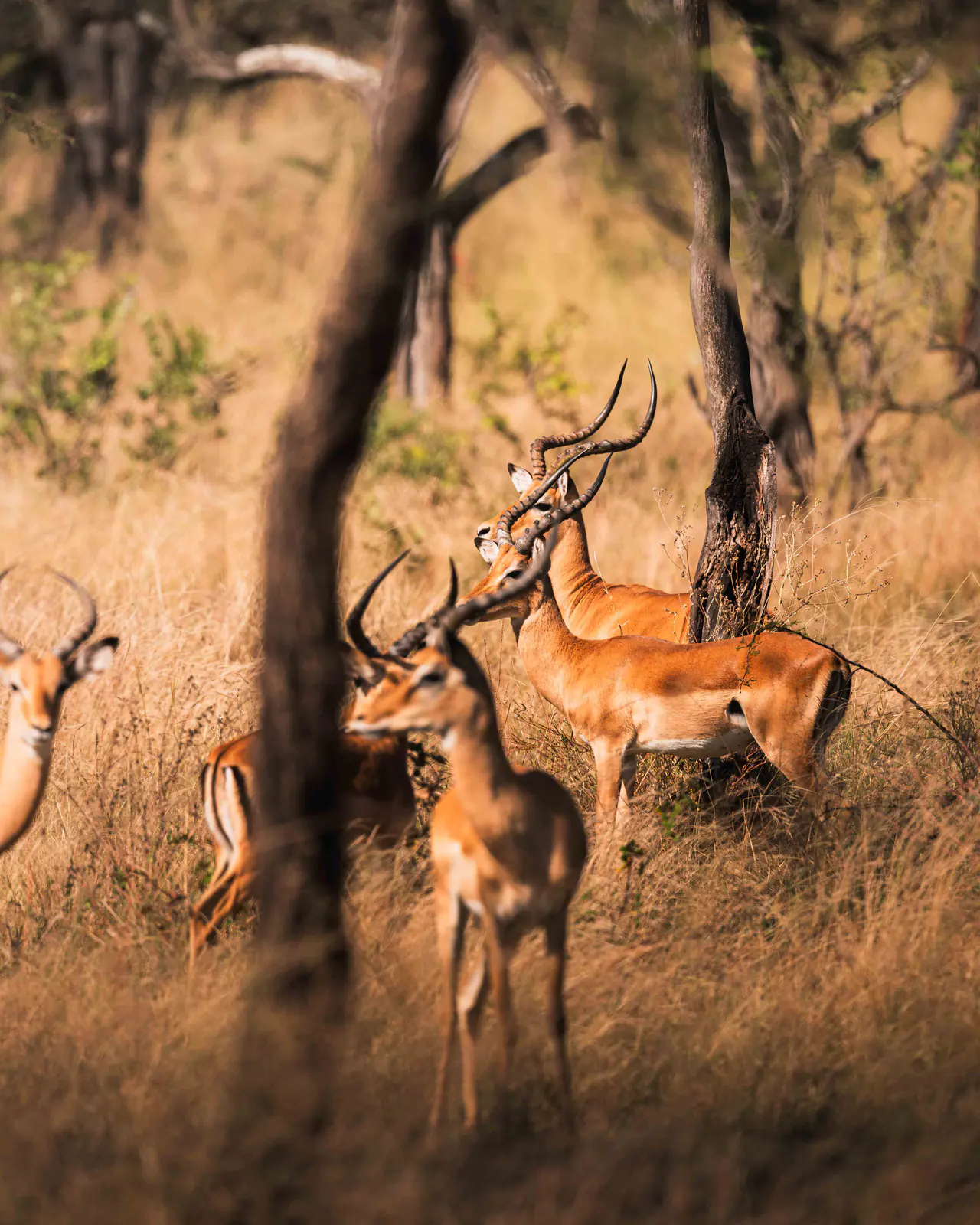
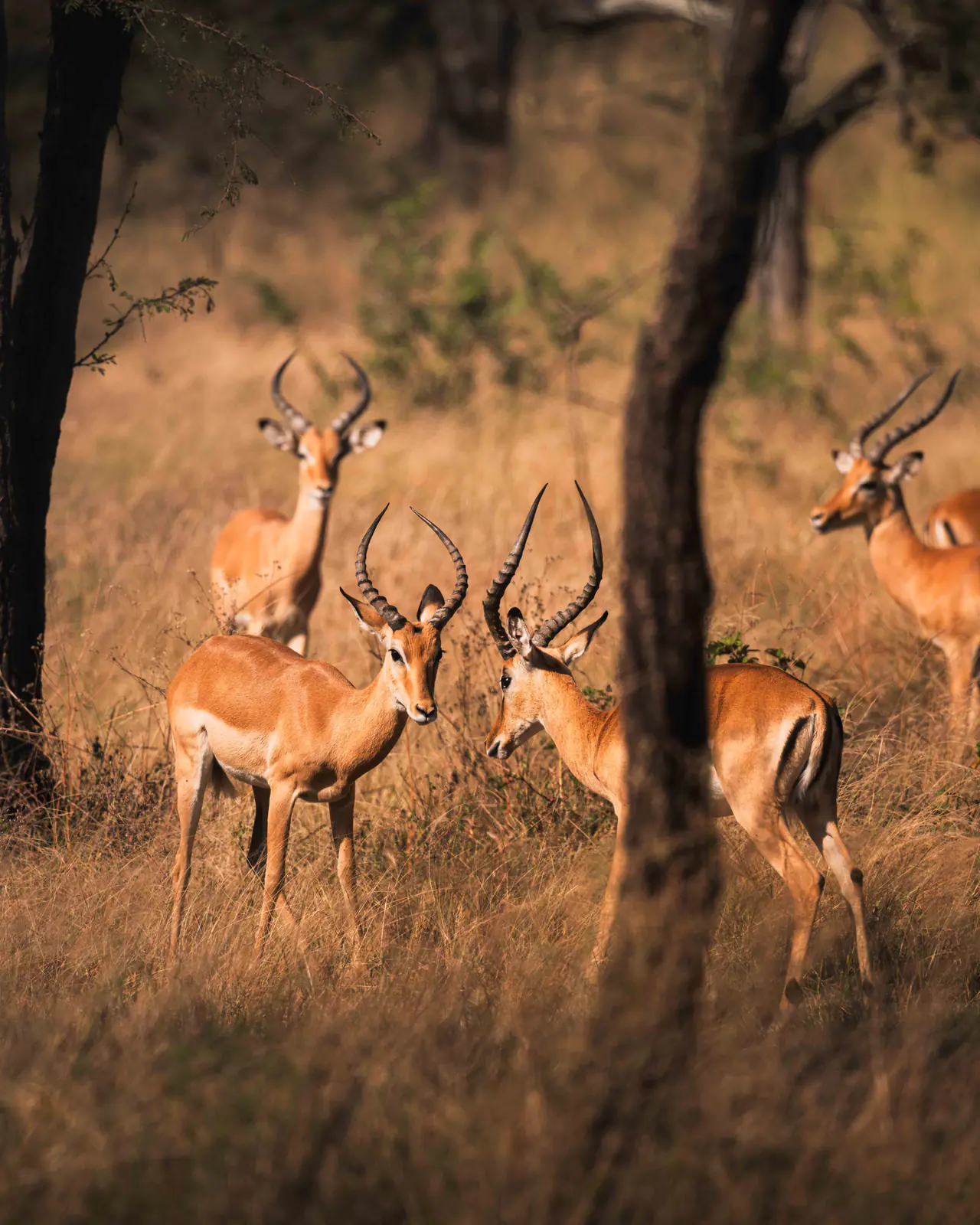
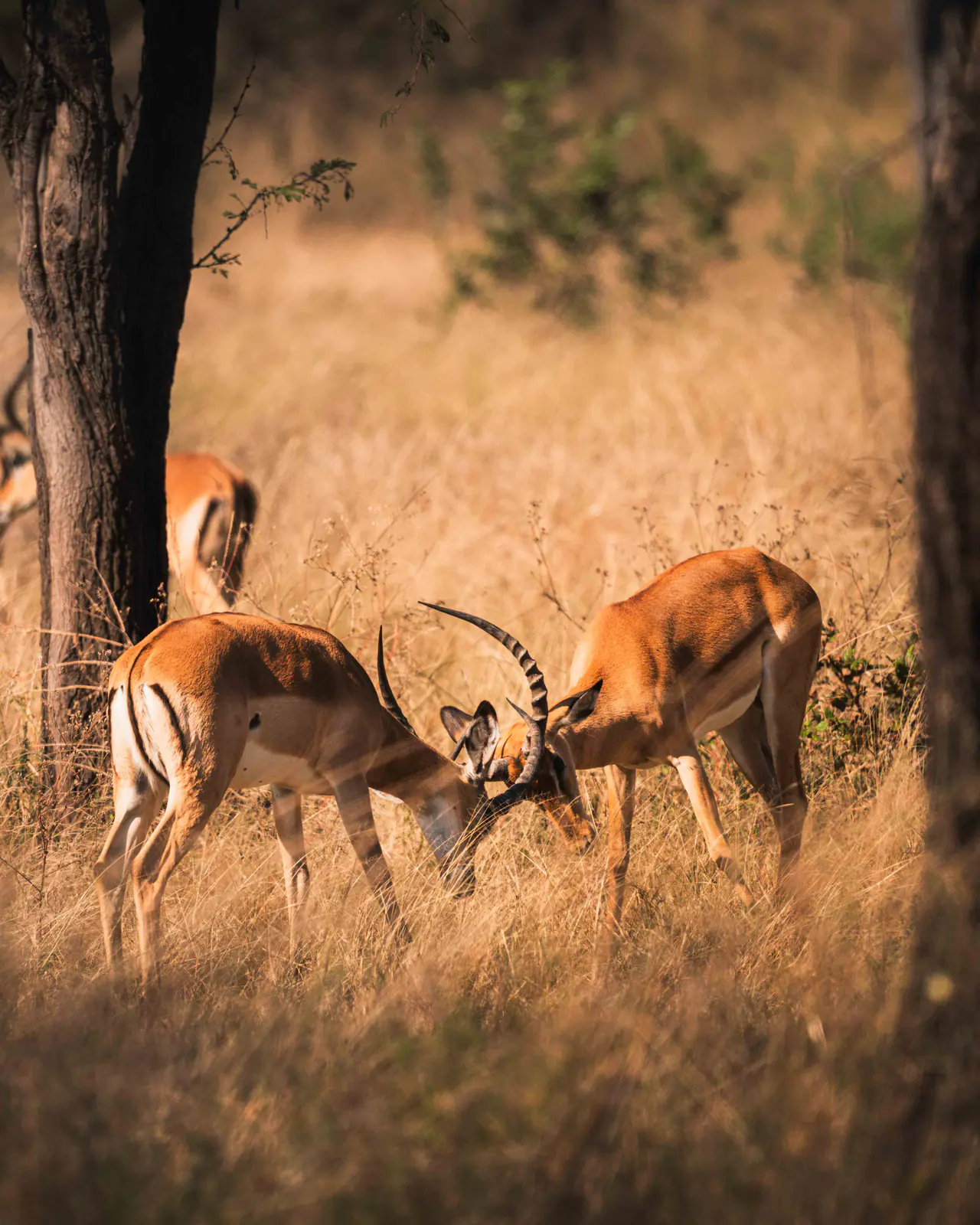
The park also holds Rothschild's giraffe, a distinctive subspecies you will not see in the Mara or Amboseli, along with good numbers of buffalo, waterbuck and impala. Lion are present and Nakuru has a reputation for tree-climbing behaviour: a bonus rather than a guarantee, as with every specific animal behaviour on safari.
03 / 08
The birdlife, and the flamingo question answered honestly
Nakuru built its fame on photographs of a shoreline pink with more than a million flamingos. Those images are real, but they are not a reliable description of the park today. Water levels across the Rift Valley lakes have risen substantially in recent years, changing the alkalinity that supports the algae flamingos feed on, and the birds have redistributed across the region.
In practice, flamingo numbers at Nakuru vary enormously and can be modest. Neighbouring lakes have at times held larger concentrations. If flamingos are the single reason you are going, ask your operator what the current situation is rather than relying on a decade-old photograph.
What has not changed is the general birdlife. Kenya Wildlife Service records around 450 species in the park: pelicans, cormorants, storks, herons, fish eagles and a long list of raptors and waterbirds. For anyone carrying binoculars, this is one of the most rewarding single days in Kenya.
Flamingo numbers at Nakuru fluctuate with water levels and are not predictable. Treat any large concentration as a bonus rather than an expectation.
04 / 08
Why the location makes it worth a night
The strongest argument for Nakuru is geographic. The drive from Nairobi to the Maasai Mara is long, and doing it in one push wastes a day and arrives everyone tired. Nakuru sits roughly at the natural break point, with the road passing the Rift Valley escarpment viewpoints on the way.
Splitting the journey with one night here turns a hard travel day into two comfortable half-days, each ending with game viewing. You add a completely different landscape and a strong rhino chance for very little extra travel time. That is why it appears on so many classic driving circuits. The reasoning is set out in drive versus fly.
One night is genuinely enough. The park is compact and can be covered thoroughly in a long afternoon drive plus a morning. Two nights makes sense only if you are combining it with Lake Naivasha, boat trips or Hell's Gate, which some itineraries do to good effect.
Where Nakuru sits on the classic western circuit
-
Nairobi → Lake Nakuru
Approximate road time: 3–4 hrs
Trade-off: Escarpment viewpoints en route; traffic leaving Nairobi is the main variable.
-
Lake Nakuru
Overnight: 1 night
Trade-off: Afternoon drive on arrival, morning drive before departure.
-
Lake Nakuru → Maasai Mara
Approximate road time: 4–5 hrs
Trade-off: The rougher half of the drive; arrive in time for an afternoon game drive.
All journey times are approximate. Traffic, weather, road conditions, stops, gate choice and airstrip schedules all change them.
05 / 08
Lake Nakuru or Lake Naivasha?
Both are Rift Valley lakes on the western road, and travellers frequently ask which to stop at. They do different jobs, and on a longer itinerary there is a case for both.
Nakuru compared with Naivasha
On an eight-night western circuit there is room for both; on a shorter trip, Nakuru is the wildlife choice.
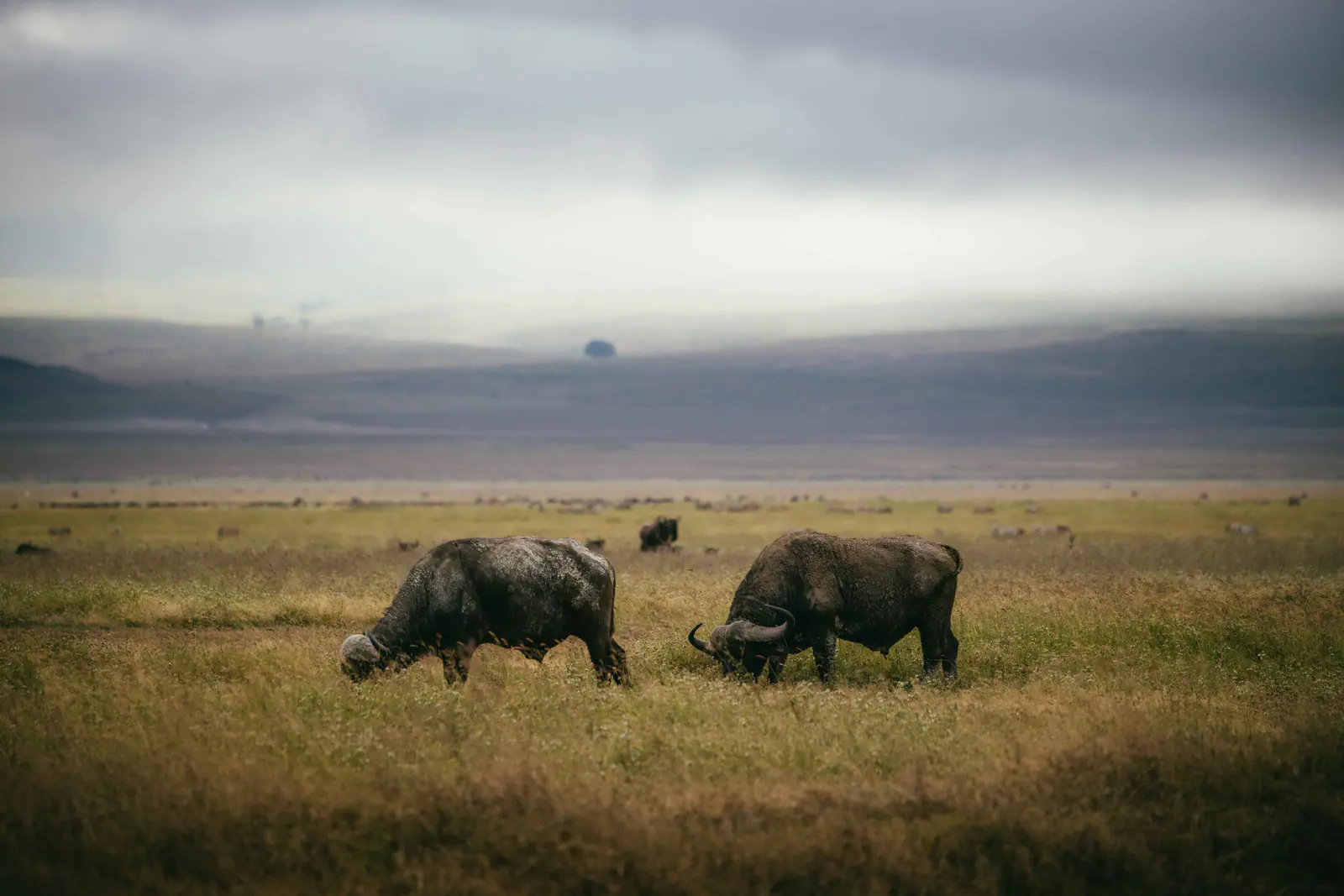
Two Cape buffalo grazing in short grass under a heavy grey sky.
06 / 08
Families, photographers and first-timers
Nakuru suits families well. Drives are short, the park is compact, and there is a genuine chance of something dramatic within an hour of the gate, which matters when attention spans are limited. The single night also fits neatly into the pacing advice in the family safari guide.
For photographers, the appeal is specific rather than general: rhino at reasonable range in open ground, pelicans and flamingos in flight over pale water, and the escarpment as a backdrop. The light in the early morning across the lake basin is excellent. Depth of habitat is limited compared with the Mara, so this is a supporting location rather than the main event. See the photography safari guide.
For a first safari, Nakuru works precisely because it is not the whole trip. It gives you a different landscape, a species you may not see again, and a gentler introduction before the Mara raises the intensity.
07 / 08
Timing and practicalities
Nakuru works year-round. The dry months from June to October and January to February give the easiest driving and the cleanest light; the rainy months green the park dramatically and are excellent for birds, though tracks near the lake can become difficult after heavy rain.
The park sits at altitude, so mornings are cooler than the equator suggests and evenings can be genuinely chilly. Pack a warm layer. The full list is in the packing guide.
Accommodation ranges from lodges inside the park with views over the lake to a wider selection in and around Nakuru town. Given that you are usually here for a single night on a driving route, a lodge inside the park is worth the premium: it means an evening drive on arrival and a dawn start without a gate queue. Park entry fees are set by Kenya Wildlife Service and change periodically, so confirm current rates rather than relying on a published figure. The cost guide explains how fees fit the total.
08 / 08
Where to take this next
Nakuru is a strong Big Five supporting act rather than a headline. See the Kenya Big Five guide for where the rest of the list is reliable, and planning a Maasai Mara safari for the region it usually pairs with.
Whether it fits at all is a length question: read how many days for a Kenya safari. Broader routing sits on the Kenya safari guide, and the Kenya safari guides library holds the rest.
Planned by people who live the route
This library exists because the same Kenya questions arrive with every safari enquiry we answer.
- Locally based in Tanzania
- Kenya and Tanzania route specialists
- Licensed and insured operator
- Fast, direct answers
- Read Safari Soles reviews on TripAdvisor
- Read Safari Soles reviews on SafariBookings
- Read Safari Soles reviews on Google
Where these facts come from (2)
- Lake Nakuru National Park: park information and rhino sanctuary Kenya Wildlife Service · Park authority · checked 2026-09-14
- Conservation fees and visitor regulations Kenya Wildlife Service · Park authority · checked 2026-09-14
Related Safari Soles guides
Continue with the guides travellers usually read next.
 Maasai Mara Safari Reserve or conservancy, where to base yourself, how the migration months behave and how many nights the Mara justifies on a first Kenya trip. Parks & Reserves
Read the guide
Maasai Mara Safari Reserve or conservancy, where to base yourself, how the migration months behave and how many nights the Mara justifies on a first Kenya trip. Parks & Reserves
Read the guide
- Kenya Big Five Guide Where lion, leopard, elephant, buffalo and rhino are most reliably seen in Kenya, and why no itinerary can promise all five. Parks & Reserves
Read the guide
 Drive vs Fly Safari in Kenya Road transfers against light-aircraft hops: cost, time on the move, route flexibility, luggage limits and how each affects a short trip. Comparisons
Read the guide
Drive vs Fly Safari in Kenya Road transfers against light-aircraft hops: cost, time on the move, route flexibility, luggage limits and how each affects a short trip. Comparisons
Read the guide
Frequently Asked Questions
-
Yes, if you are driving to the Mara and want rhino and birdlife. It is less compelling as a standalone destination or on a fly-in itinerary that would otherwise skip it.
Build this into a real Kenya route
Send us the dates, the travellers and the wildlife you care about most, and we will turn this guide into an itinerary that actually works on the ground.