


Amboseli Safari: Elephants Beneath Kilimanjaro
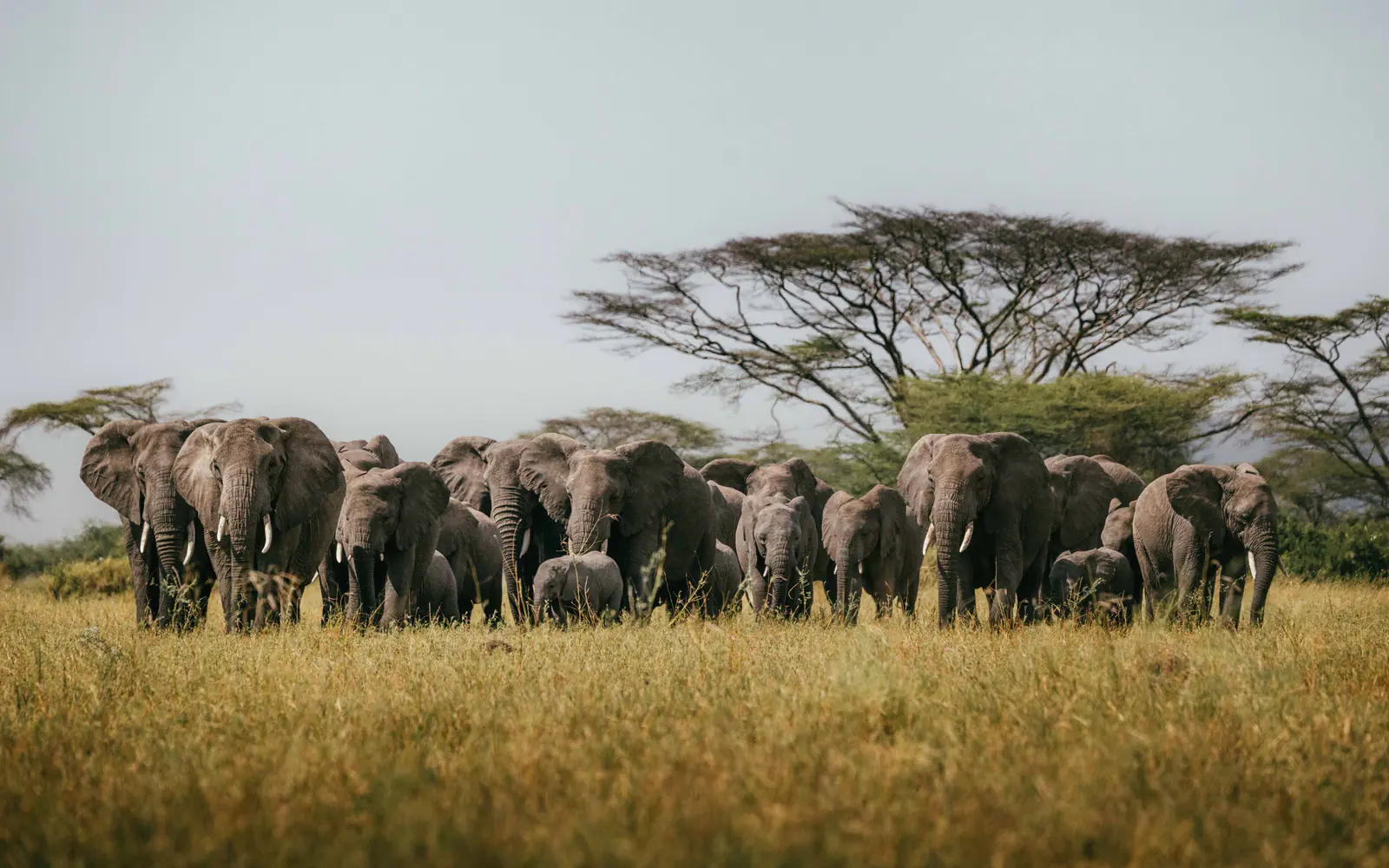
Amboseli is not Kenya's biggest park or its most varied. It is where you go to spend time with elephants in open country, with Africa's highest mountain behind them when the cloud lifts.
- Location
- Southern Kenya, on the Tanzanian border
- Drive time
- 4–5 hours from Nairobi
- Best for
- Elephants and mountain views
- Recommended stay
- 2 nights
Written and maintained by the Safari Soles planning team in Arusha, Tanzania.
Amboseli National Park sits in southern Kenya on the Tanzanian border, roughly four to five hours by road from Nairobi or a short flight.
- Amboseli is Kenya's most reliable elephant destination, thanks to permanent swamps fed from Kilimanjaro.
- Kilimanjaro views are best at dawn and often obscured by cloud. Two nights doubles your chances.
- It is not a big-cat park; pair it with the Maasai Mara for predators.
- Two nights is the right length, and staying inside or bordering the park protects the best hours of the day.
- Its position makes it the natural first stop on a classic circuit or the start of a southern route to the coast.
01 / 07
What Amboseli is, and what it is not
Amboseli is a compact park of open plains, dry lake bed and, crucially, permanent swamps fed by meltwater filtering underground from Kilimanjaro. Those swamps are why elephants stay here year-round in a landscape that otherwise looks too dry to support them, and why the park is so reliable for elephant viewing even at the end of a long dry season.
The park's elephant population has been studied continuously for decades, one of the longest-running wildlife studies anywhere. Long-term protection has produced herds that are notably relaxed around vehicles and include some genuinely large old bulls. Watching a family group walk out of a swamp at eye level, unbothered, is the Amboseli experience.
What Amboseli is not is a big-cat destination on the Mara's level. Lion and cheetah are present but the open, short-grass terrain and smaller area mean sightings are less frequent. Leopard are rarely seen. Travellers who arrive expecting predator density are usually the ones who leave disappointed; travellers who come for elephants and landscape rarely are.
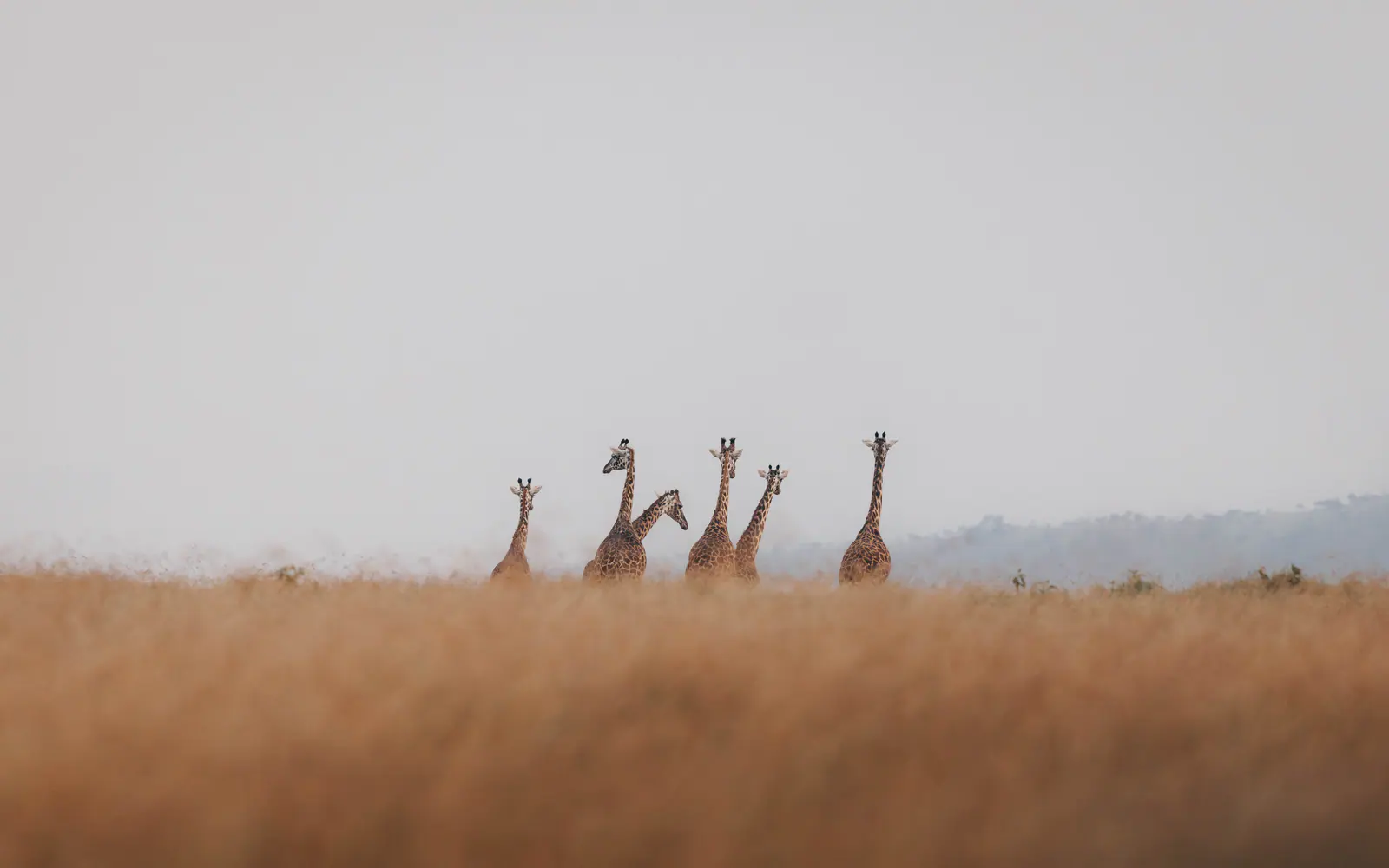
Five giraffes spread out across dry grassland under a hazy sky, small against the open plain. Their height makes them one of the first animals you spot from a moving vehicle.
02 / 07
The Kilimanjaro question
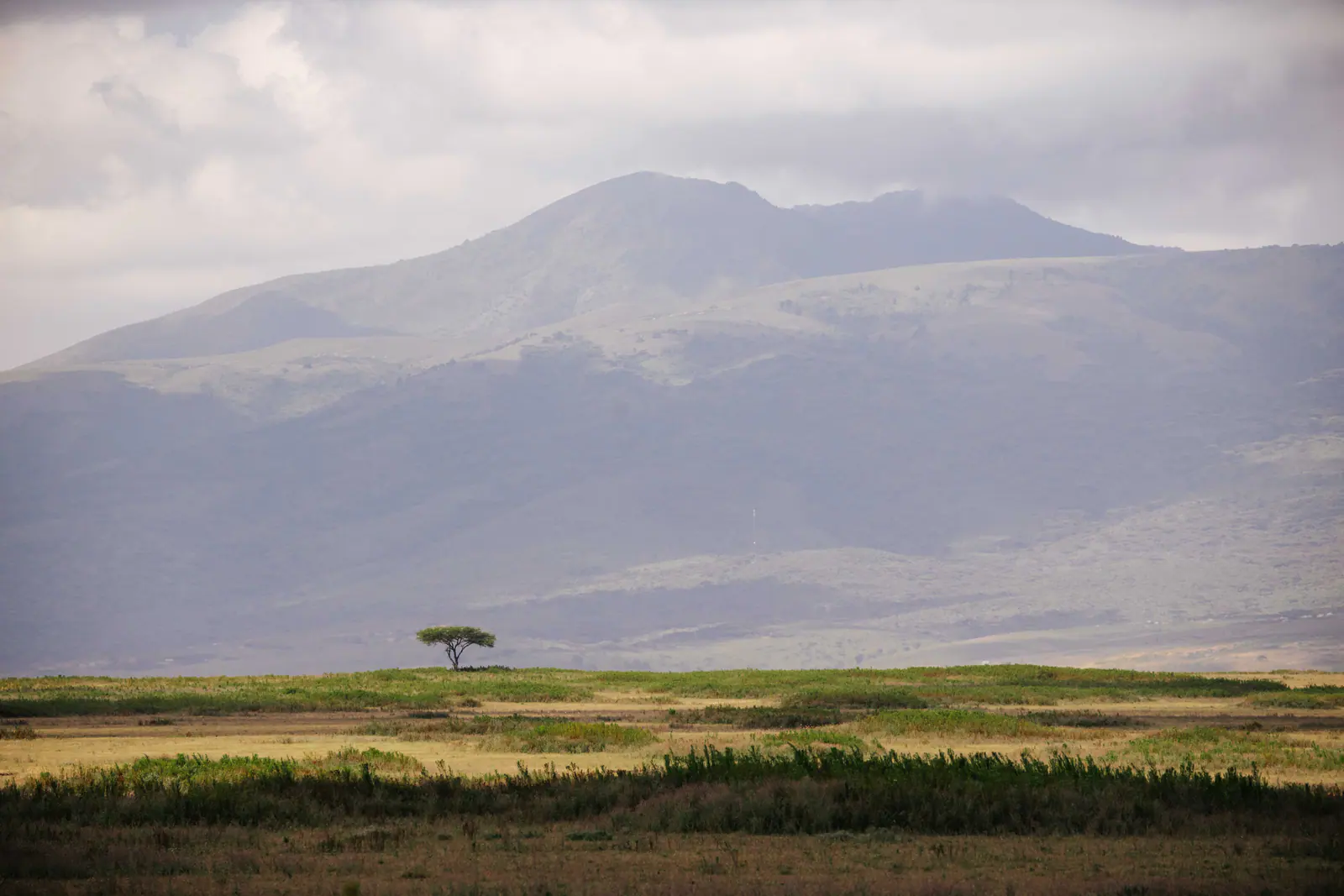
The mountain is in Tanzania, but the classic view of it is from Kenya, and Amboseli is where you get it. On a clear morning the snow-capped summit rises above the plains with elephants in the foreground. The image that sells Kenya safaris worldwide.
It is also weather-dependent and frequently invisible. Cloud typically builds around the mountain from mid-morning and lingers through the afternoon, so the reliable windows are the first hour after sunrise and sometimes the last light of the day. Some visitors spend two nights and see the summit clearly once; others see nothing but cloud.
The clearest views tend to come in the drier months, particularly around January and February and again in the middle of the dry season. If the mountain matters to you, book two nights rather than one (that doubles your dawn attempts) and be in the vehicle before sunrise both mornings.
No itinerary can promise a Kilimanjaro view. Cloud cover is a daily lottery and any operator suggesting otherwise is overselling.
One night or two?
Safari Soles planning guidance rather than a rule. A single night works if Amboseli is a staging stop rather than a destination.
Plan the mountain around first light
Cloud typically builds around Kilimanjaro through the morning, so the clear windows are usually the first hour after sunrise and occasionally the last of the evening light. That argues for being in the vehicle before sunrise and for staying inside or immediately bordering the park rather than an hour from the gate.
03 / 07
Wildlife beyond the elephants
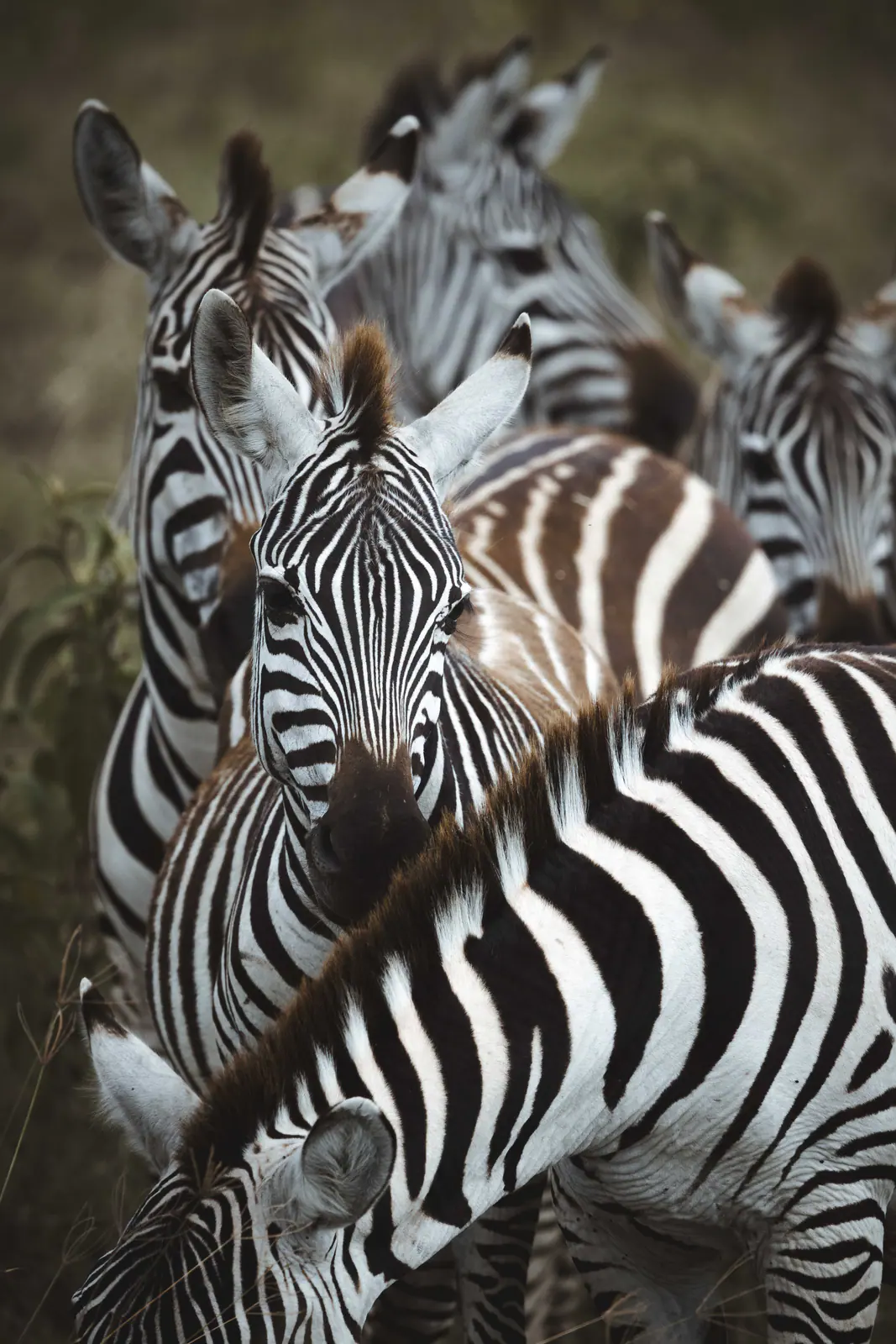
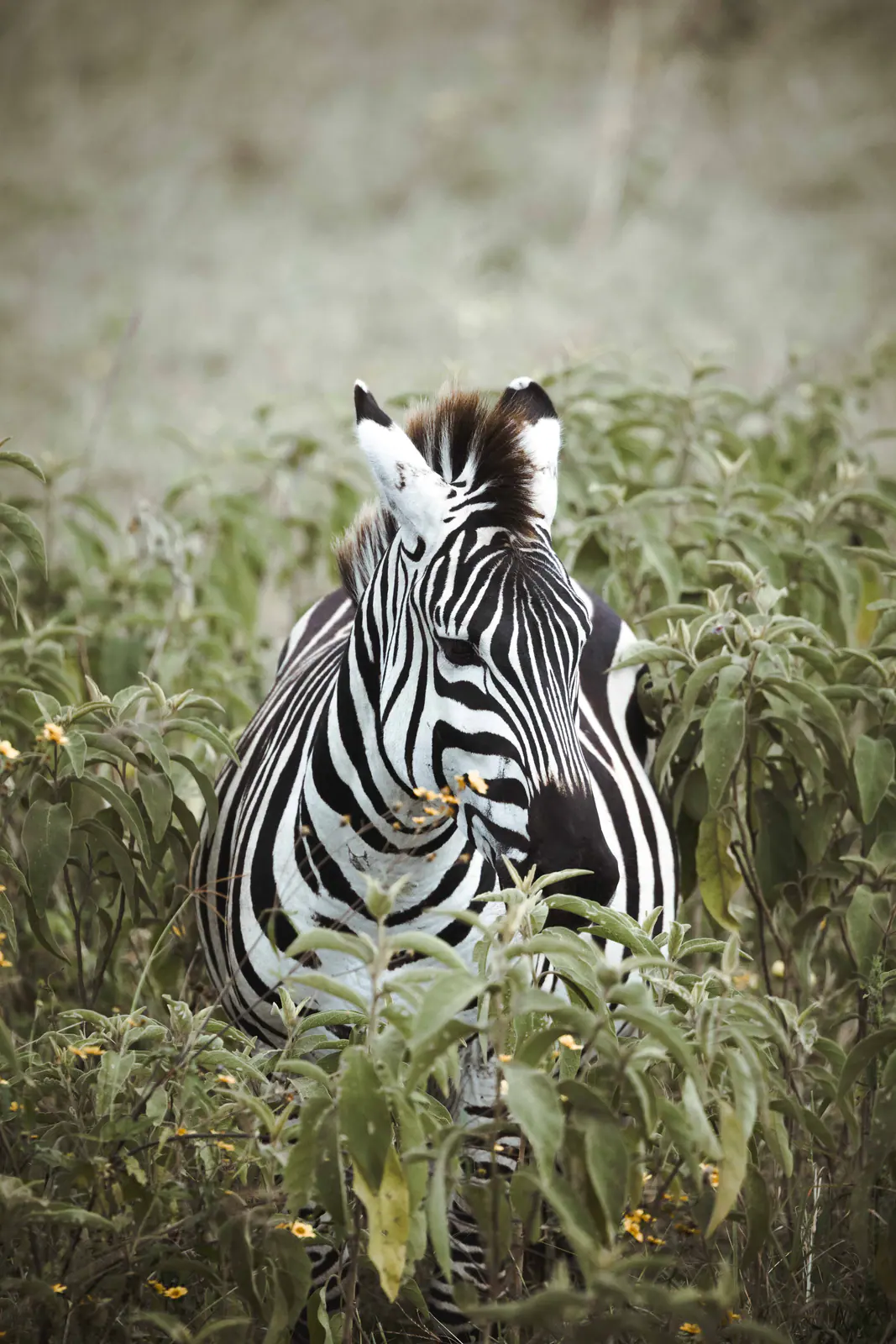
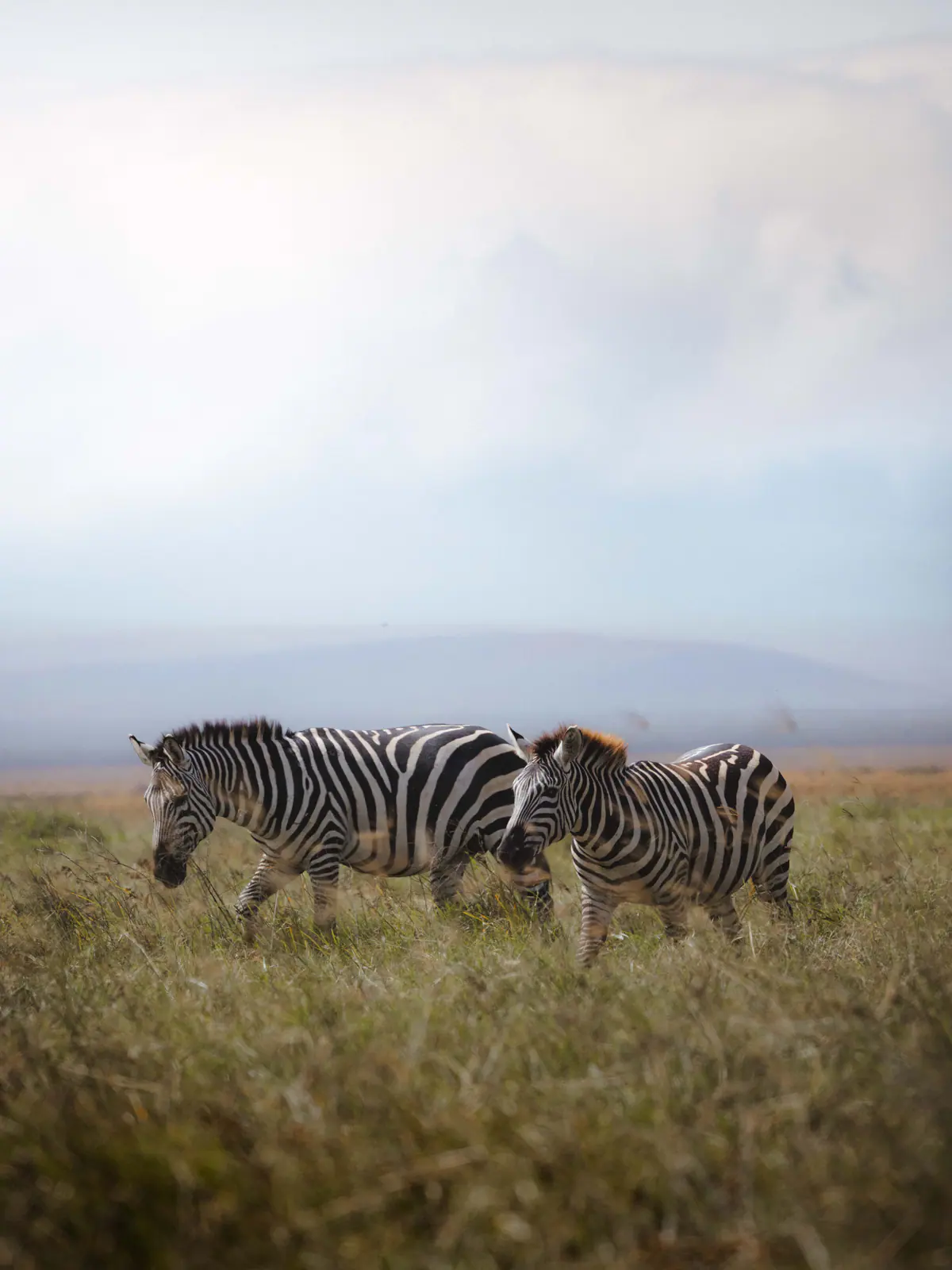
Amboseli's smaller cast is easy to underrate. The swamps hold hippo and buffalo and draw huge numbers of birds; the dry lake bed produces shimmering mirages and dust-devil light that photographers love; and the surrounding plains carry zebra, wildebeest, giraffe, and both Grant's and Thomson's gazelle in numbers.
- Elephants
- The reason to come. Large multi-generational herds, big tuskers, and swamp crossings at close range.
- Birdlife
- Over 400 recorded species, with pelicans, herons, storks and flamingos concentrated around the swamps and seasonal water.
- Predators
- Lion, cheetah and hyena present but not dense. Spotted hyena are commonly seen; leopard rarely.
- Plains game
- Zebra, wildebeest, giraffe, gazelle and, in the drier grassland, gerenuk on occasion.
- Landscapes
- Observation Hill gives the only elevated view over the swamps and plains, and is worth an evening visit.
04 / 07
When to visit
The drier months from June to October and again from January to February are the strongest. Water elsewhere dries up, animals concentrate on the swamps, dust hangs in the light and the mountain is more often visible at dawn. This is also when Amboseli is busiest, though it never feels like the peak-season Mara.
The long rains in April and May transform the park. It greens dramatically, birdlife peaks, and the crowds vanish, but the dry lake bed can flood, some tracks become difficult and the mountain hides behind cloud for days at a time. Rates fall sharply, which makes green season worth considering if elephants rather than Kilimanjaro are the priority.
Amboseli is hot by mid-morning throughout the year and dusty in the dry months. Long sleeves, a buff or scarf for dust, and serious sun protection matter here more than in the highlands. See the wider best time to visit Kenya guide for how this fits the rest of the country.
05 / 07
Getting there and where it fits
By road, Amboseli is four to five hours from Nairobi on a route that is mostly tarmac with a rough final stretch. That accessibility makes it the easiest major park to add to the start of a circuit, and the usual first stop on the classic Kenya route before Lake Nakuru and the Mara. Scheduled light aircraft also serve the park from Wilson in well under an hour.
Amboseli's other natural partner is Tsavo, immediately to the east, which opens the road to the coast. A southern route of Amboseli, Tsavo and then Diani makes a coherent safari-and-beach trip without long backtracking. See Kenya safari and Diani.
Two nights is the standard recommendation and is genuinely enough for a park of this size. Three makes sense if you are photographing seriously, or if you want a full day without moving. One night is a mistake here: you get one dawn, and dawn is when the mountain appears.
Where Amboseli sits on a Kenya route
-
Nairobi → Amboseli
Approximate road time: 4–5 hrs · Overnight: 2 nights
Trade-off: Mostly tarmac with a rough final stretch. A late Nairobi departure can cost you the first afternoon drive.
-
Nairobi Wilson → Amboseli airstrip
Approximate flight time: 40–60 min
Trade-off: Protects the first afternoon, at a higher cost and with a strict soft-bag luggage limit.
-
Amboseli → Tsavo West
Approximate road time: 2–4 hrs · Overnight: 2 nights
Trade-off: Opens the southern route towards the coast; adds scale but not predator density.
-
Amboseli → Maasai Mara
Approximate flight time: 1–2 hrs with a Nairobi stop
Trade-off: The classic pairing. Doing this leg by road is a very long day and rarely worth it.
All journey times are approximate. Traffic, weather, road conditions, stops, gate choice and airstrip schedules all change them.
Amboseli plus Mara, or Amboseli plus Tsavo?
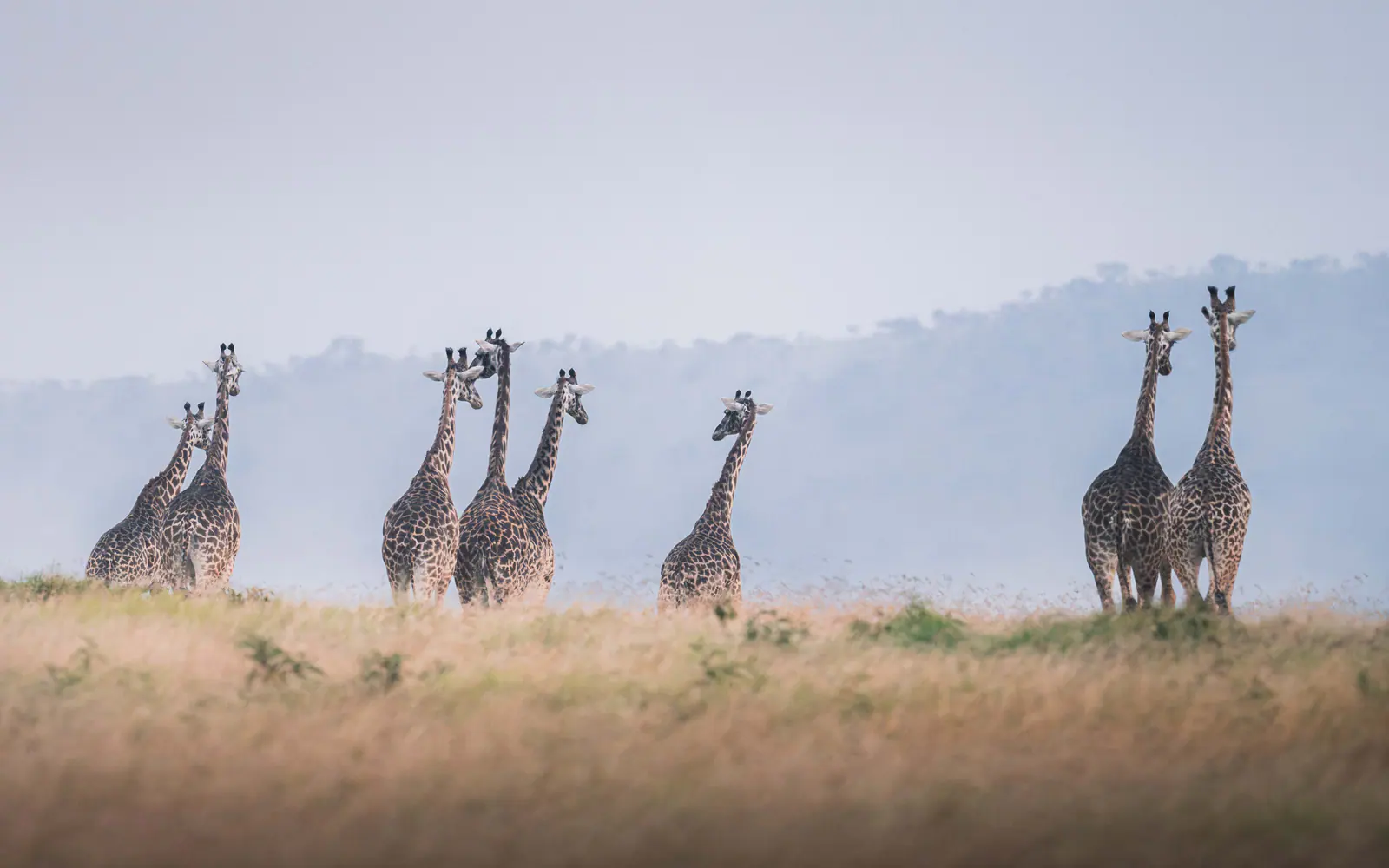
A loose group of giraffes standing along a low rise, with blue hills fading into mist behind them.
06 / 07
Where to stay
Accommodation falls into three broad groups. Lodges inside the park put you closest to the swamps and give you the earliest starts, at higher cost and with less flexibility on activities. Camps in the community group ranches bordering the park often permit walking and night drives that are not allowed inside, and support the Maasai landowners directly. Simpler lodges outside the main gate are the budget option and cost you an hour of driving at each end of the day.
Given that Amboseli's best hours are the first and last of the day, staying inside or immediately adjacent is worth paying for here more than in larger parks. If budget is tight, it is better to take a simpler room inside the ecosystem than a smarter one an hour from the gate.
07 / 07
Where to take this next
Amboseli is rarely visited alone. The natural southern continuation is Tsavo, and the direct comparison most travellers need is Amboseli versus the Maasai Mara.
Photographers should read the Kenya photography safari guide for the mountain light, and timing sits in best time to visit Kenya. Circuit context is on the Kenya safari guide, with everything else in the Kenya safari guides library.
Planned by people who live the route
This library exists because the same Kenya questions arrive with every safari enquiry we answer.
- Locally based in Tanzania
- Kenya and Tanzania route specialists
- Licensed and insured operator
- Fast, direct answers
- Read Safari Soles reviews on TripAdvisor
- Read Safari Soles reviews on SafariBookings
- Read Safari Soles reviews on Google
Where these facts come from (2)
- Amboseli National Park: park information Kenya Wildlife Service · Park authority · checked 2026-09-14
- Seasonal rainfall forecasts and outlooks Kenya Meteorological Department · Meteorological · checked 2026-09-14
Related Safari Soles guides
Continue with the guides travellers usually read next.
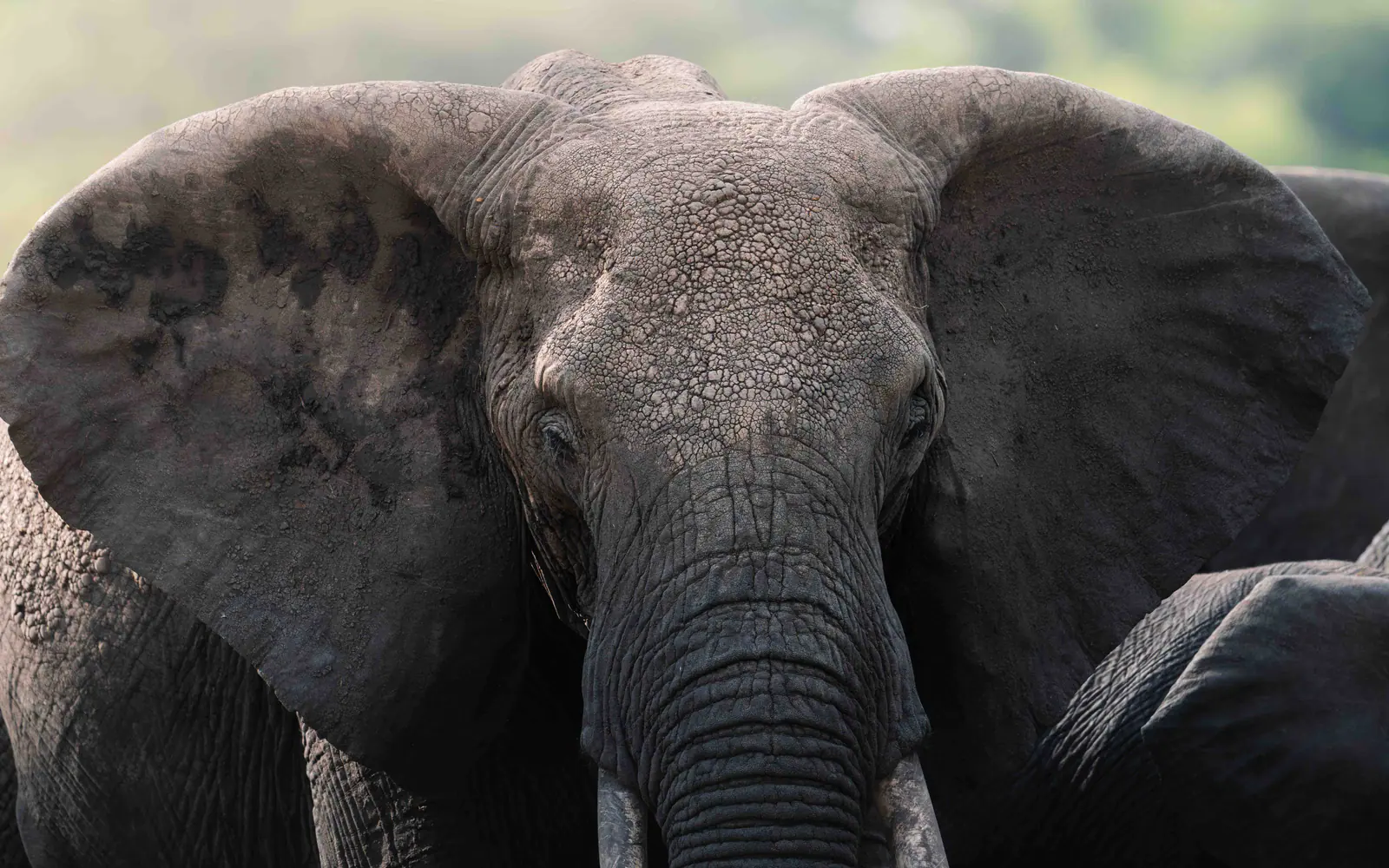 Amboseli vs Maasai Mara Elephants under a mountain against big cats on open grassland, and why most well-built Kenya routes include both rather than choosing. Comparisons
Read the guide
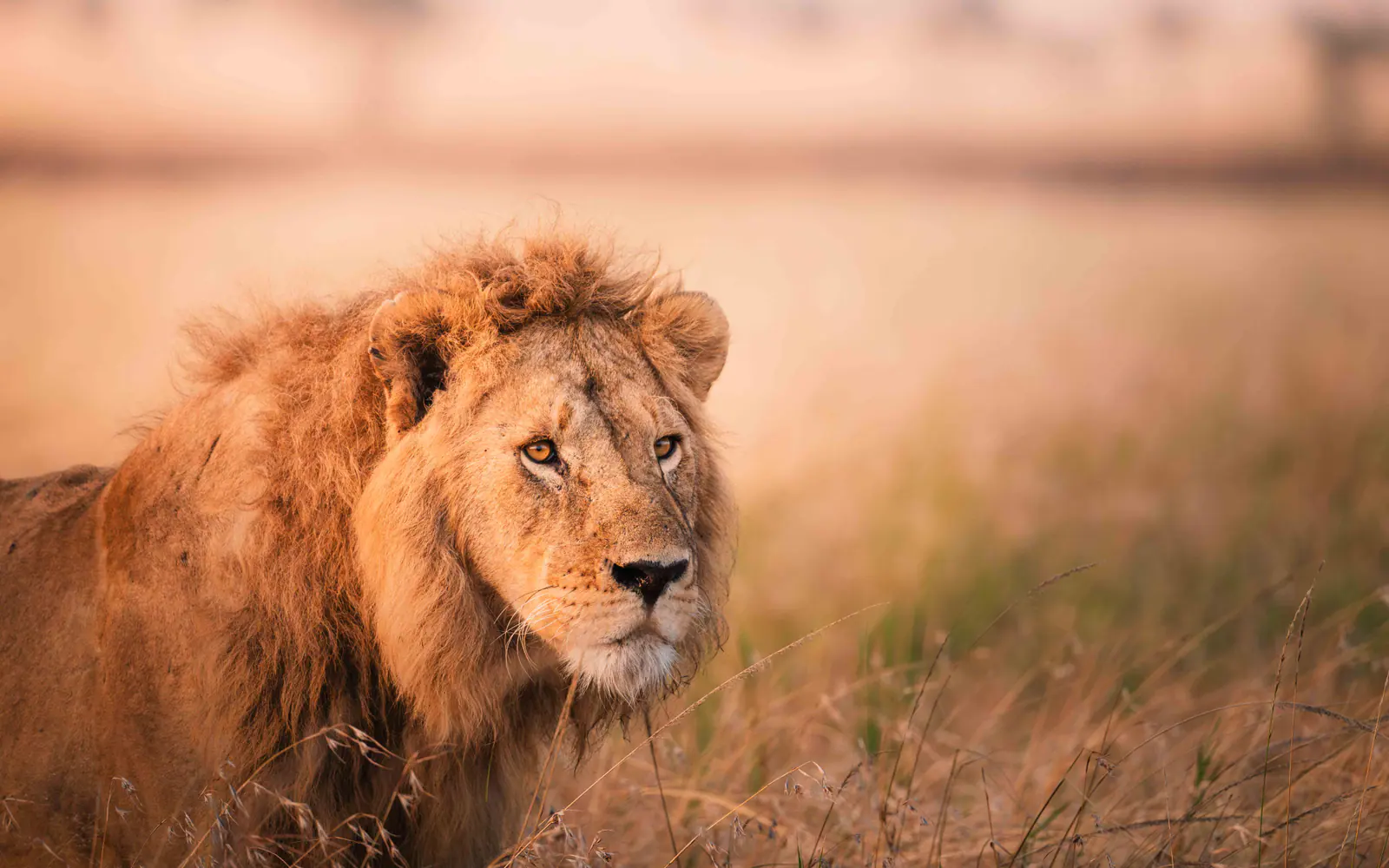 Kenya Photography Safari Vehicle setup, early starts, staying longer at a single sighting, Amboseli light and predator-focused Mara time. Traveler Types
Read the guide
 Tsavo Safari Kenya's largest protected wilderness: red-earth landscapes, the Galana River and Yatta Plateau, and the natural bridge towards the coast. Parks & Reserves
Read the guide
Frequently Asked Questions
-
Different strengths: Amboseli for elephants and landscape, the Mara for predators and the migration. Most good Kenya routes include both rather than choosing. See Amboseli vs Maasai Mara.
Build this into a real Kenya route
Send us the dates, the travellers and the wildlife you care about most, and we will turn this guide into an itinerary that actually works on the ground.