


Great Migration in Kenya
The migration is the most oversold experience in East African travel, and still one of the most extraordinary. The difference between disappointment and awe is usually expectation management.
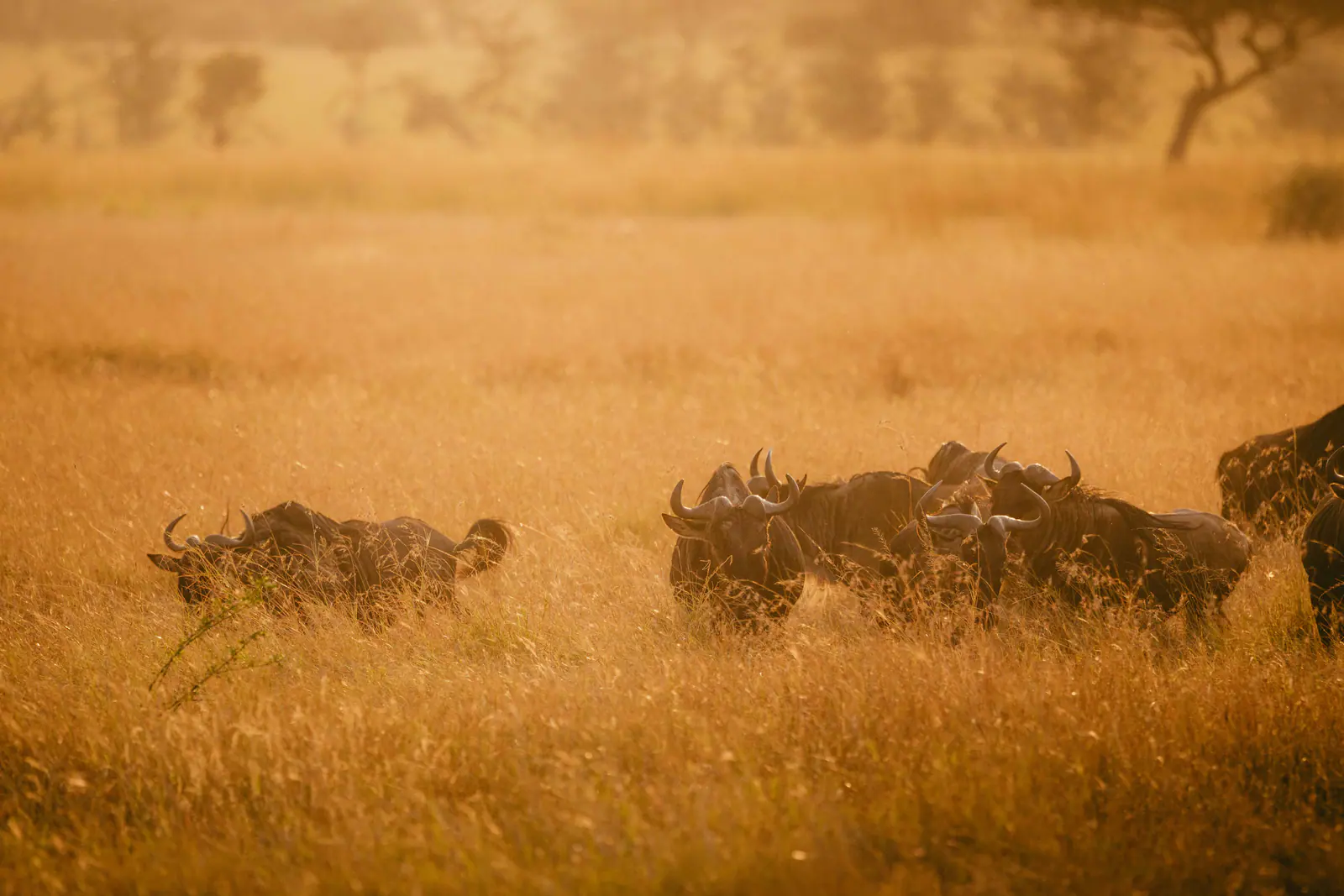
- Kenyan window
- Roughly July to October
- River crossings
- Cannot be scheduled or guaranteed
- Recommended stay
- 4+ nights improves your odds materially
- Herd timing
- Shifts every single year
Written and maintained by the Safari Soles planning team in Arusha, Tanzania.
The Great Migration is a continuous, year-round movement of wildebeest, zebra and gazelle around the Serengeti–Mara ecosystem.
- The migration is continuous and year-round; Kenya hosts the northern stage, typically July to October.
- River crossings cannot be scheduled, predicted or guaranteed by anyone.
- Four or more nights in the Mara materially improves your chances compared with two.
- Position matters: near the river for crossings, in a conservancy for quieter sightings.
- Timing shifts every year with rainfall and grazing: treat any month-by-month guide as a pattern, not a forecast.
- Outside the window, the Mara remains an outstanding predator destination at a lower price.
01 / 08
What the migration actually is
The Great Migration is not an event with a start date. It is the continuous, roughly circular movement of well over a million wildebeest, along with large numbers of zebra and gazelle, around the Serengeti–Mara ecosystem in pursuit of grazing and water. The herds are always migrating; the question is only where they are this month.
Most of that circuit takes place in Tanzania's Serengeti. The Kenyan portion, the northern extreme of the loop, is where the herds arrive when the southern plains dry out, typically in the second half of the year, before returning south again.
So Kenya offers a season rather than a permanent attraction. Outside the window, the Maasai Mara remains one of the finest big-cat destinations in Africa, but the wildebeest are elsewhere. The Mara guide covers what the reserve offers year-round.
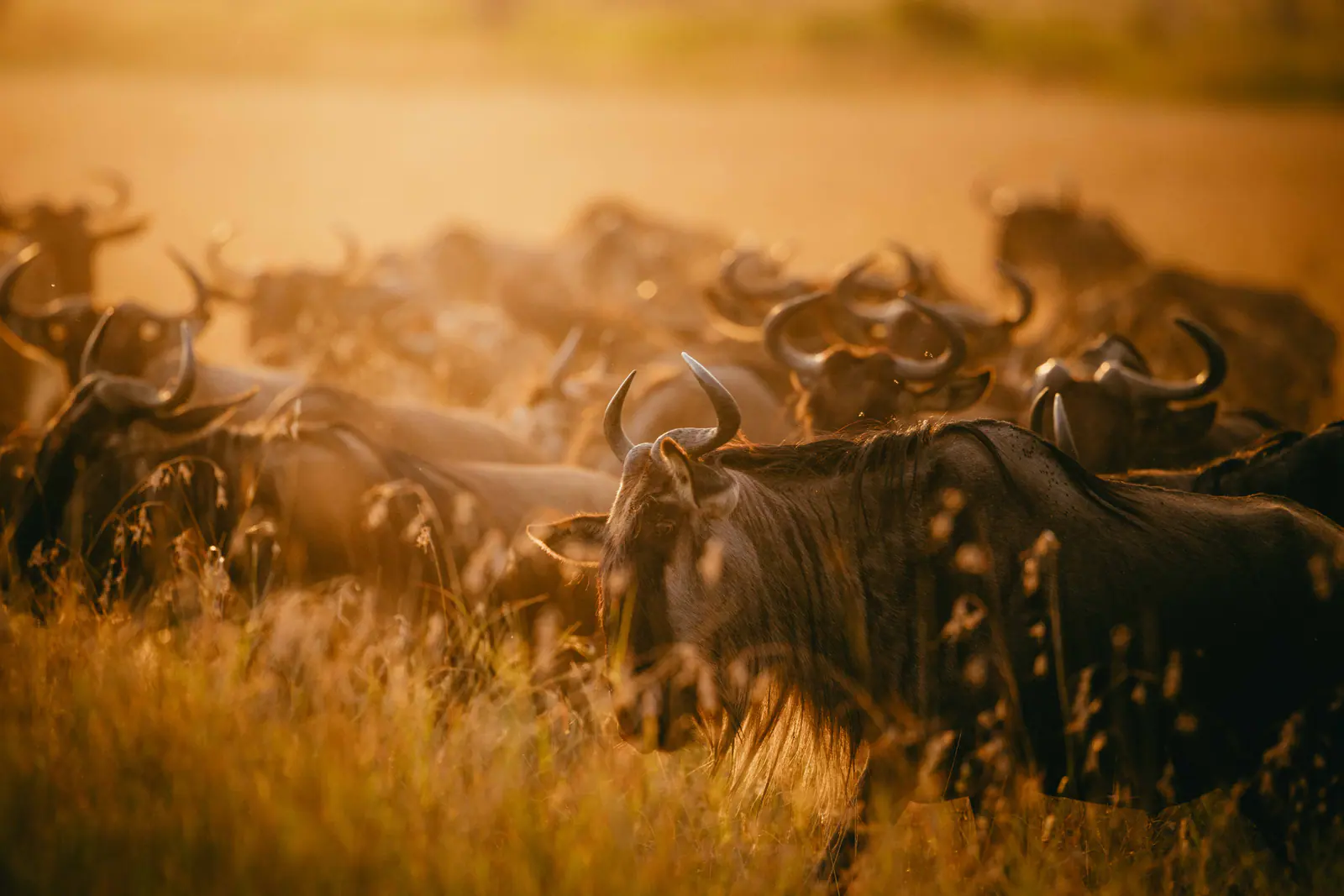
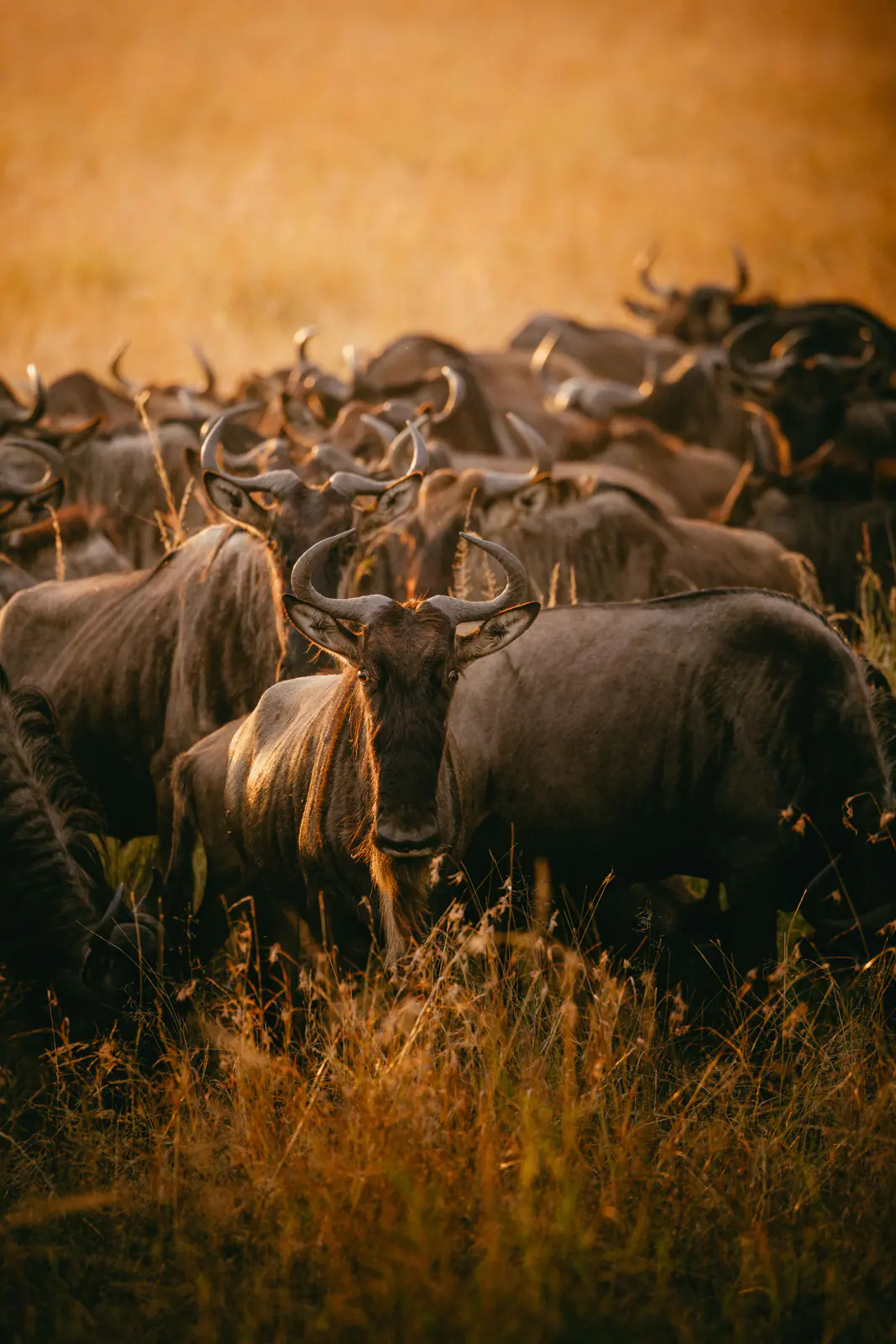
Wildebeest packed together in low gold light, the heads at the front turned toward the camera.
02 / 08
Kenya and Tanzania: two halves of one ecosystem
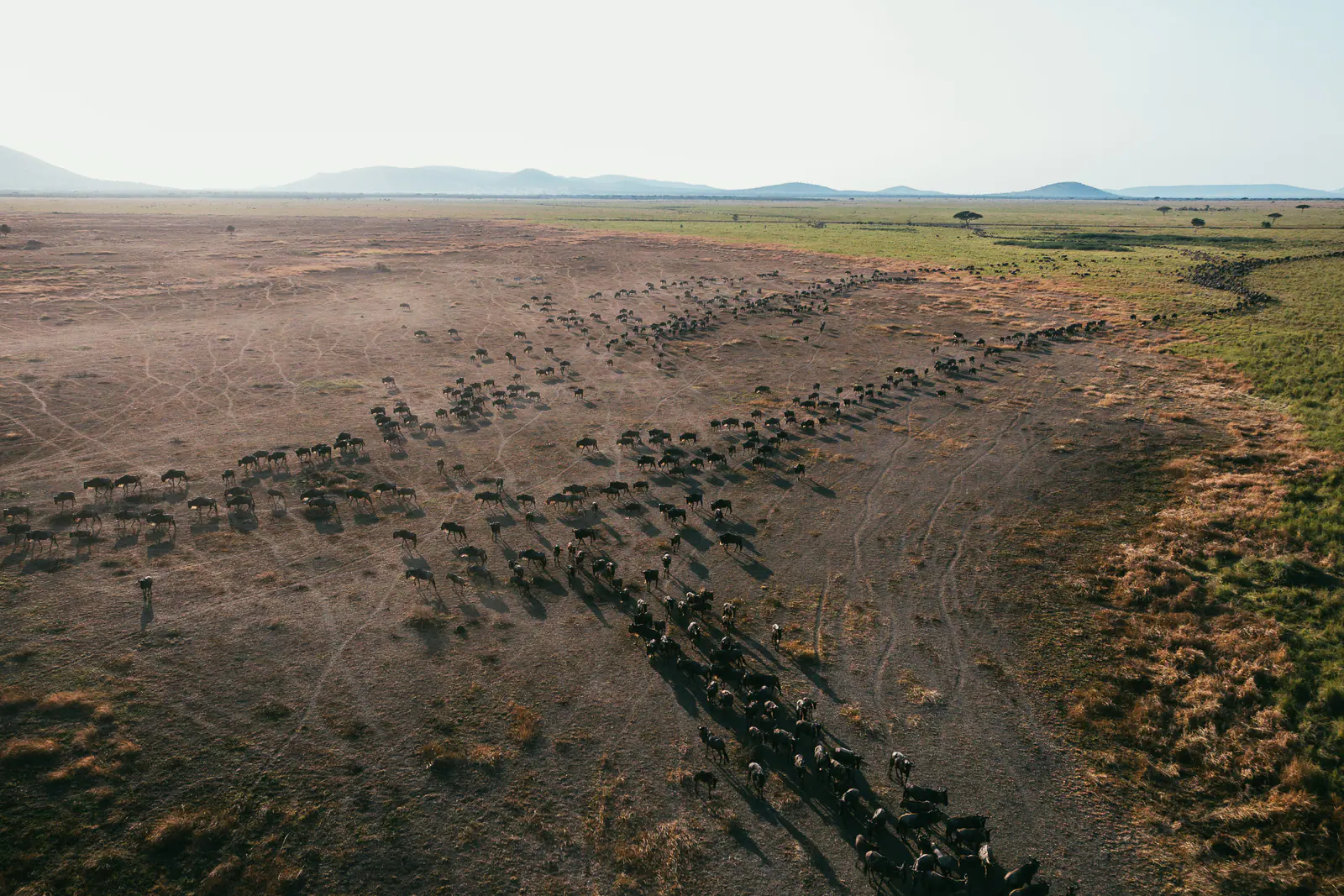
The Mara and the Serengeti are the same grassland, split by an international border. The herds do not recognise it, which is why a migration trip is really a question of which side you want to be on and when.
Broadly: the calving season on the southern Serengeti plains falls in the early months of the year, the herds move north and west through the middle of the year, they reach the northern Serengeti and the Mara around mid-year, and they return south towards the end of it. Kenya's window is the northern phase.
Kenya's advantage is that its stage of the migration coincides with the reserve's driest, most reliable game-viewing months, and that the Mara is compact and easy to cover. Tanzania's advantage is the sheer scale of the Serengeti and the calving season, which Kenya does not have. The full comparison sits in Maasai Mara versus Serengeti and Kenya versus Tanzania.
03 / 08
What each month realistically offers
The panel below describes typical patterns, not predictions. Every one of these months has produced both spectacular crossings and empty riverbanks in different years.
The Kenyan window, month by month
- July
- The usual arrival period. Leading herds cross into the Mara from the northern Serengeti, often in significant numbers, but distribution is patchy and early-season crossings can be concentrated in a few areas. Excellent predator activity as cats respond to the influx.
- August
- Generally the fullest month, with large concentrations across the reserve and the conservancies. River crossings are most frequently reported in this period. It is also the busiest and most expensive month, particularly in the reserve itself.
- September
- Herds are typically well established and often more evenly spread, which can mean quieter viewing with the same numbers. Crossings continue as groups move back and forth across the river rather than in one direction.
- October
- The southward return usually begins, though it can be gradual. Some years hold strong numbers into late October; others empty earlier. Rates soften and vehicle numbers drop before the short rains.
River crossings cannot be scheduled, booked or guaranteed. Herds cross when conditions and instinct dictate, sometimes several times in a day and sometimes not for days. Every month above varies substantially year to year with rainfall and grazing.
04 / 08
River crossings, honestly
The Mara river crossing is the image that sells the migration: thousands of animals piling down a bank into crocodile water. It happens, it is genuinely astonishing, and it is entirely outside anyone's control.
Herds gather at a crossing point, wait (sometimes for hours, sometimes for a day) and then either cross or wander off. Guides read the signs and position vehicles, but the animals decide. Travellers regularly spend a full morning at a riverbank and see nothing, then witness a crossing on the way back to camp.
Two practical things improve your odds. First, time: four nights gives you far more chances than two. Second, position: staying within reasonable reach of the river sections where crossings typically occur means you can be there early and wait, rather than arriving after two hours of driving. Neither converts a possibility into a certainty.
It is also worth knowing what a crossing involves. Animals drown, are taken by crocodiles, and are injured on the banks. It is not a gentle spectacle, and some travellers find it harder to watch than they expected.
Anyone advertising guaranteed river crossings is describing something nobody can deliver. Judge an operator by how clearly they set expectations, not by how confidently they promise.
05 / 08
Where to base yourself
Three broad options exist inside the Mara, and the choice matters more during the migration than at any other time of year.
Reserve, Mara Triangle or conservancy?
The Mara Triangle, the western section managed separately, is often noted for lower vehicle numbers than the eastern reserve while still offering river access.
Matching base to priority
- Crossings are the whole point
- Inside the reserve, near the river, four or more nights
- Migration season without the crowds
- A northern conservancy, with reserve excursions on selected days
- Big cats above all
- A conservancy: reserve versus conservancy explains why
- Family travel in peak season
- Conservancy, private vehicle, shorter drives
- Budget-conscious peak-season travel
- Camps outside the main gates, accepting longer drives in
This is a starting point rather than an objective ranking. The right answer changes with your dates, your nights and who is travelling.
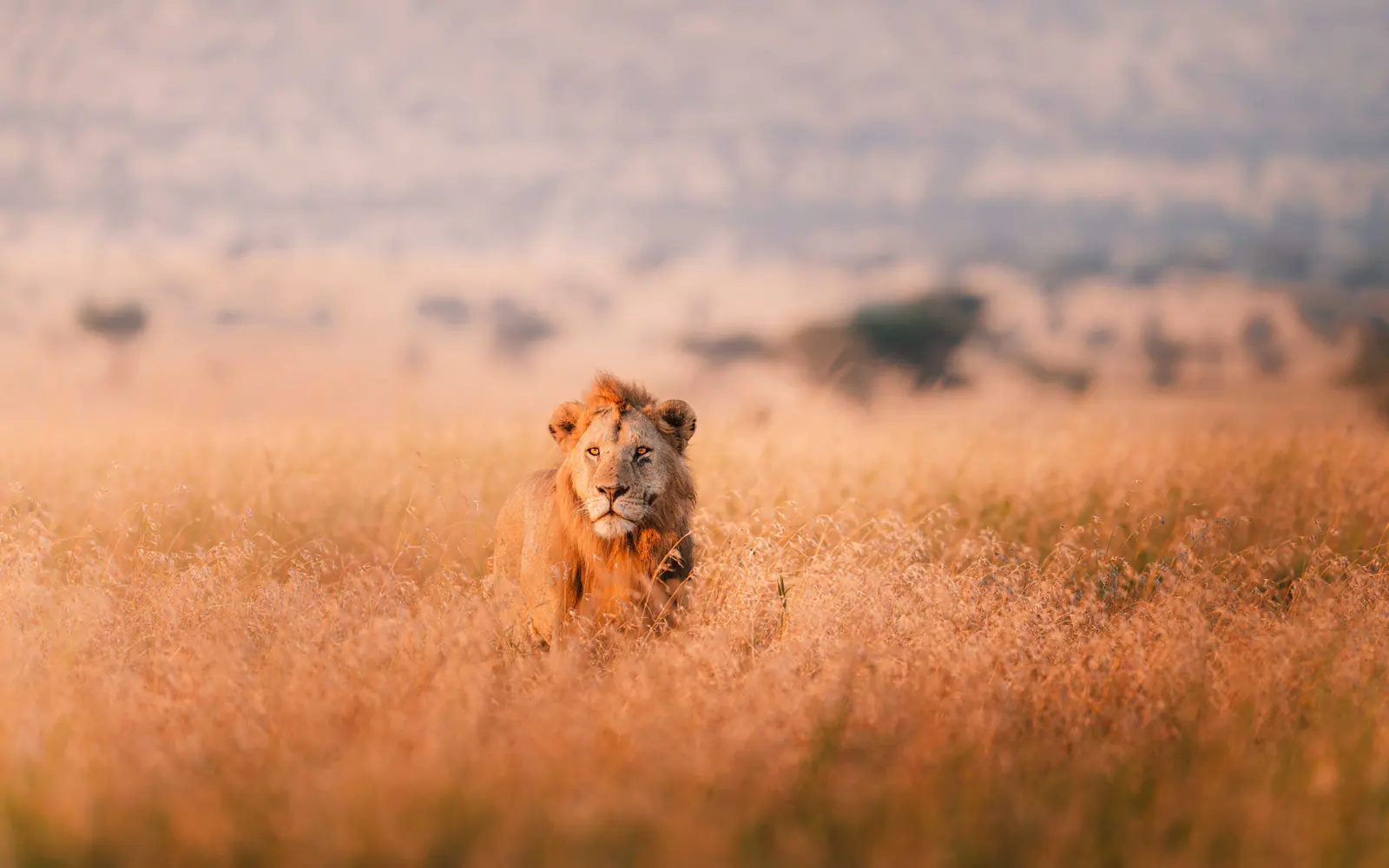
A male lion walks through tall grass toward the camera, with the plain stretching out hazily behind him.
06 / 08
How many nights, and when to book
Two nights in the Mara during the migration is a gamble. Three is workable. Four or more is what serious crossing-hunters should plan, because it converts a single chance into several, and because it lets you spend a whole morning waiting at the river without feeling you have wasted the trip.
Peak-season availability is the other constraint. July through September is the busiest period in Kenyan travel, and the better camps, particularly small conservancy properties, are frequently full six to twelve months ahead. Rates are also at their annual peak, as the cost guide explains.
If your dates are fixed and fall outside the window, do not force it. The Mara outside migration season is quieter, cheaper and still one of Africa's great predator destinations, and a green-season trip often produces better photographs.
07 / 08
Kenya or Tanzania for the migration?
If you are travelling between roughly July and October, Kenya is the straightforward choice: the herds are typically in the Mara, the reserve is compact, and access from Nairobi is quick by road or air.
If you are travelling in the early months of the year, Tanzania is the answer, because the calving season on the southern Serengeti plains has no Kenyan equivalent. Between those periods the herds are moving through the central and western Serengeti, which again points south of the border.
For travellers with the time and budget for both, a cross-border itinerary covers the ecosystem properly: the Kenya and Tanzania combination guide sets out the practical routes and how the border works.
Which side of the border?
Choose Kenya if…
- You are travelling July to October
- You want crossings specifically
- You have a shorter trip and want less internal travel
- You want conservancy options alongside the reserve
Choose Tanzania if…
- You are travelling in the calving months early in the year
- You want the scale of the Serengeti
- You are combining with Ngorongoro Crater
- Your dates fall outside the Kenyan window
Combine both if…
- You have twelve nights or more
- You want the full ecosystem rather than one stage
- You are comfortable with a border crossing mid-trip
- See Kenya and Tanzania safari
08 / 08
Where to take this next
Migration timing only matters alongside where you stay and when you travel. Read planning a Maasai Mara safari for the ground detail and best time to visit Kenya for how the rest of the country reads in the same months.
If you are deciding which side of the ecosystem to base yourself on, read Maasai Mara versus Serengeti and compare Kenya and Tanzania. Wider planning: the Kenya safari guide and the Kenya safari guides library.
Planned by people who live the route
This library exists because the same Kenya questions arrive with every safari enquiry we answer.
- Locally based in Tanzania
- Kenya and Tanzania route specialists
- Licensed and insured operator
- Fast, direct answers
- Read Safari Soles reviews on TripAdvisor
- Read Safari Soles reviews on SafariBookings
- Read Safari Soles reviews on Google
Where these facts come from (3)
- Tourism, Wildlife and Culture: Maasai Mara National Reserve oversight Narok County Government · Reserve authority · checked 2026-09-14
- Serengeti National Park: park information Tanzania National Parks (TANAPA) · Park authority · checked 2026-09-14
- Seasonal rainfall forecasts and outlooks Kenya Meteorological Department · Meteorological · checked 2026-09-14
Related Safari Soles guides
Continue with the guides travellers usually read next.
 Maasai Mara Safari Reserve or conservancy, where to base yourself, how the migration months behave and how many nights the Mara justifies on a first Kenya trip. Parks & Reserves
Read the guide
 Maasai Mara vs Serengeti Two halves of one migration ecosystem: scale, vehicle density, seasonal movement, access and what each side does better at different times of year. Comparisons
Read the guide
 Best Time to Visit Kenya Month-by-month safari timing: wildlife movement, rainfall patterns, migration activity, crowd levels and where the value sits in each season. Planning
Read the guide
Frequently Asked Questions
-
Herds are typically in the Maasai Mara between roughly July and October, with August and September usually the fullest months. Timing shifts every year with rainfall and grazing.
Build this into a real Kenya route
Send us the dates, the travellers and the wildlife you care about most, and we will turn this guide into an itinerary that actually works on the ground.