


Maasai Mara vs Serengeti
These are not rival destinations. They are two ends of the same ecosystem, and the right choice depends almost entirely on when you are travelling.
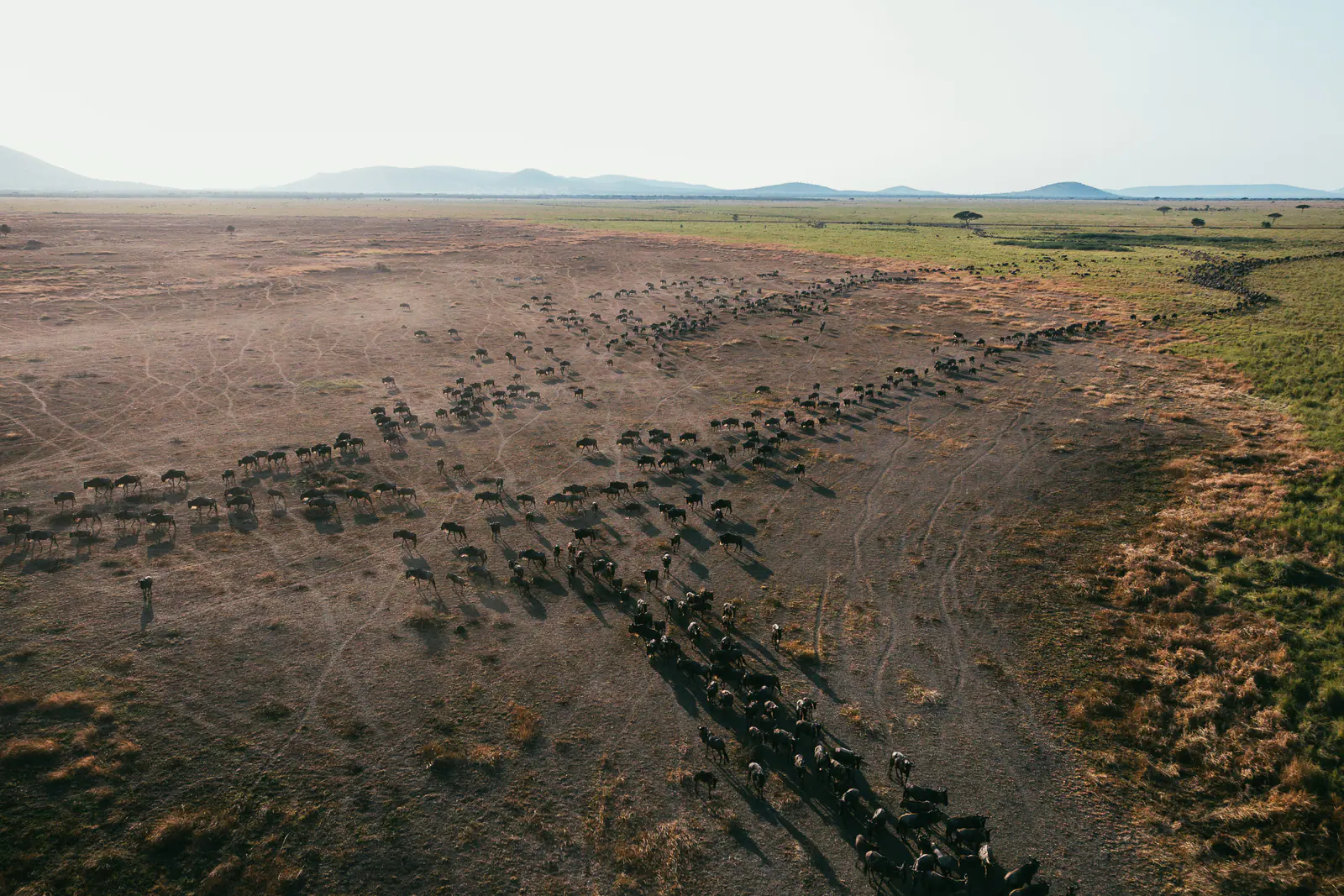
- Ecosystem
- One ecosystem, two countries
- Serengeti
- Far larger, more remote
- Mara
- Compact, high predator density
- Mara migration
- ~July to October
Written and maintained by the Safari Soles planning team in Arusha, Tanzania.
The Serengeti is roughly fifteen times larger and delivers scale and solitude; the Maasai Mara is compact, has exceptional predator density and is easier to reach and to do well in a short trip.
- The Mara and Serengeti are one ecosystem split by a border. The wildlife is fundamentally the same.
- The Serengeti offers scale and solitude; the Mara offers density and easier access.
- The migration is in the Mara roughly July to October and in the Serengeti for most of the rest of the year.
- Kenya's conservancies are the most effective way to escape peak-season vehicle crowding.
- Trips under a week favour the Mara; eight nights or more makes the Serengeti practical.
01 / 07
One ecosystem, one border
The Maasai Mara National Reserve is the northern extension of the Serengeti ecosystem. There is no fence between them; the same grassland continues across the international boundary, and wildlife moves freely in both directions. Lion prides, elephant herds and the entire migration treat the border as invisible.
That means the fundamental wildlife experience is similar. The same species, the same habitats, the same seasonal drivers. Anyone claiming one side has categorically better wildlife is describing marketing, not ecology.
The differences that matter are about scale, density, access and cost, and above all about timing.
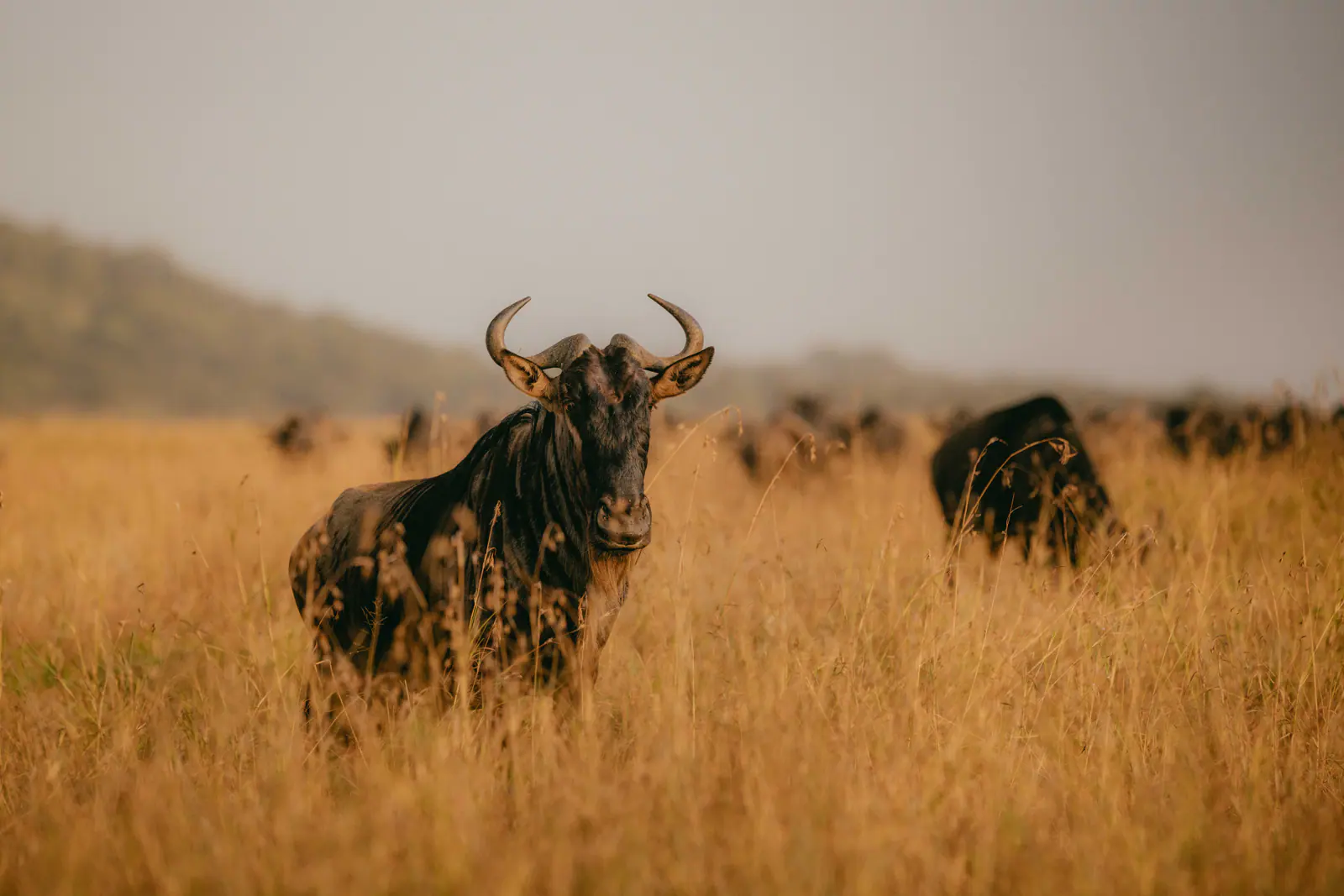
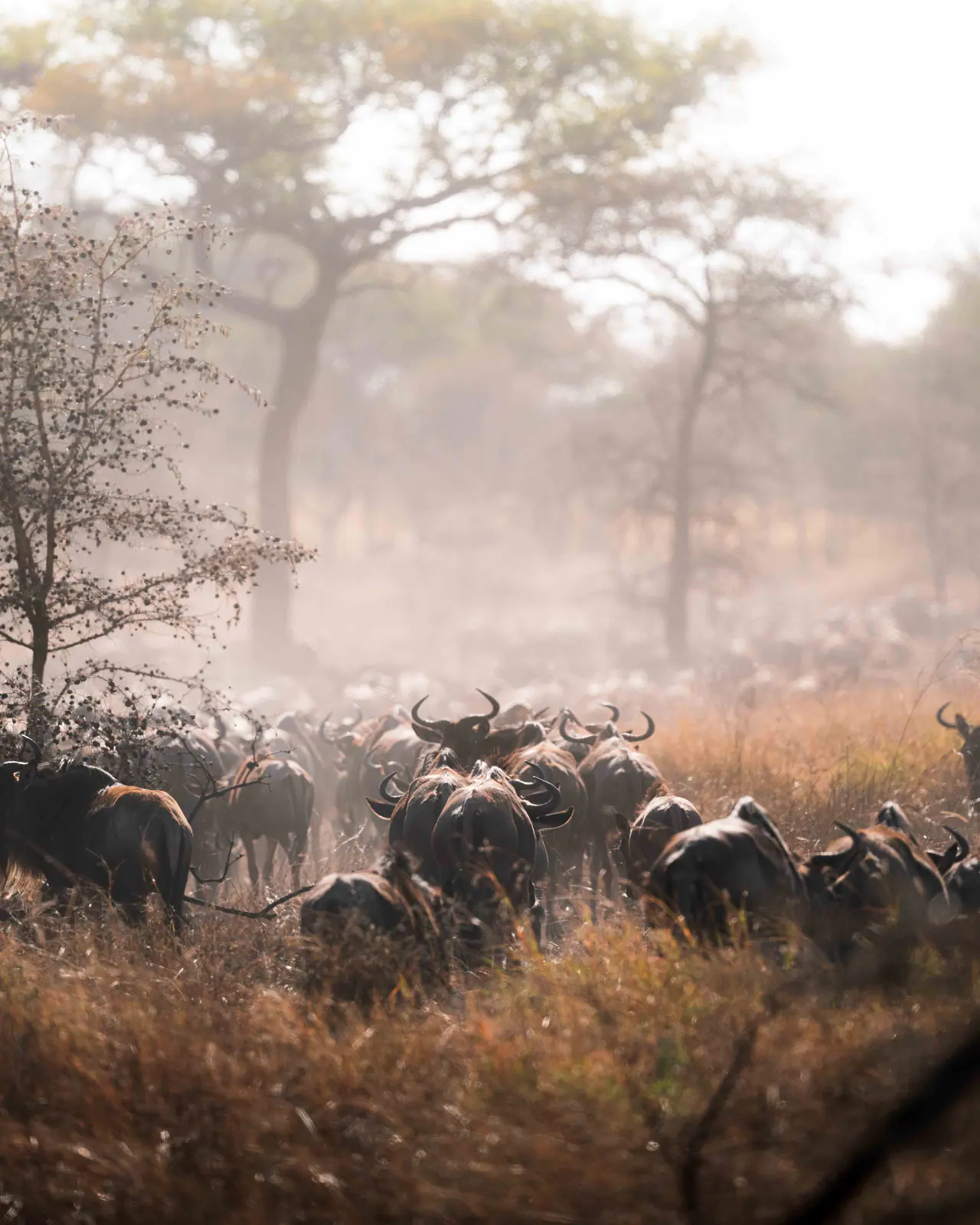
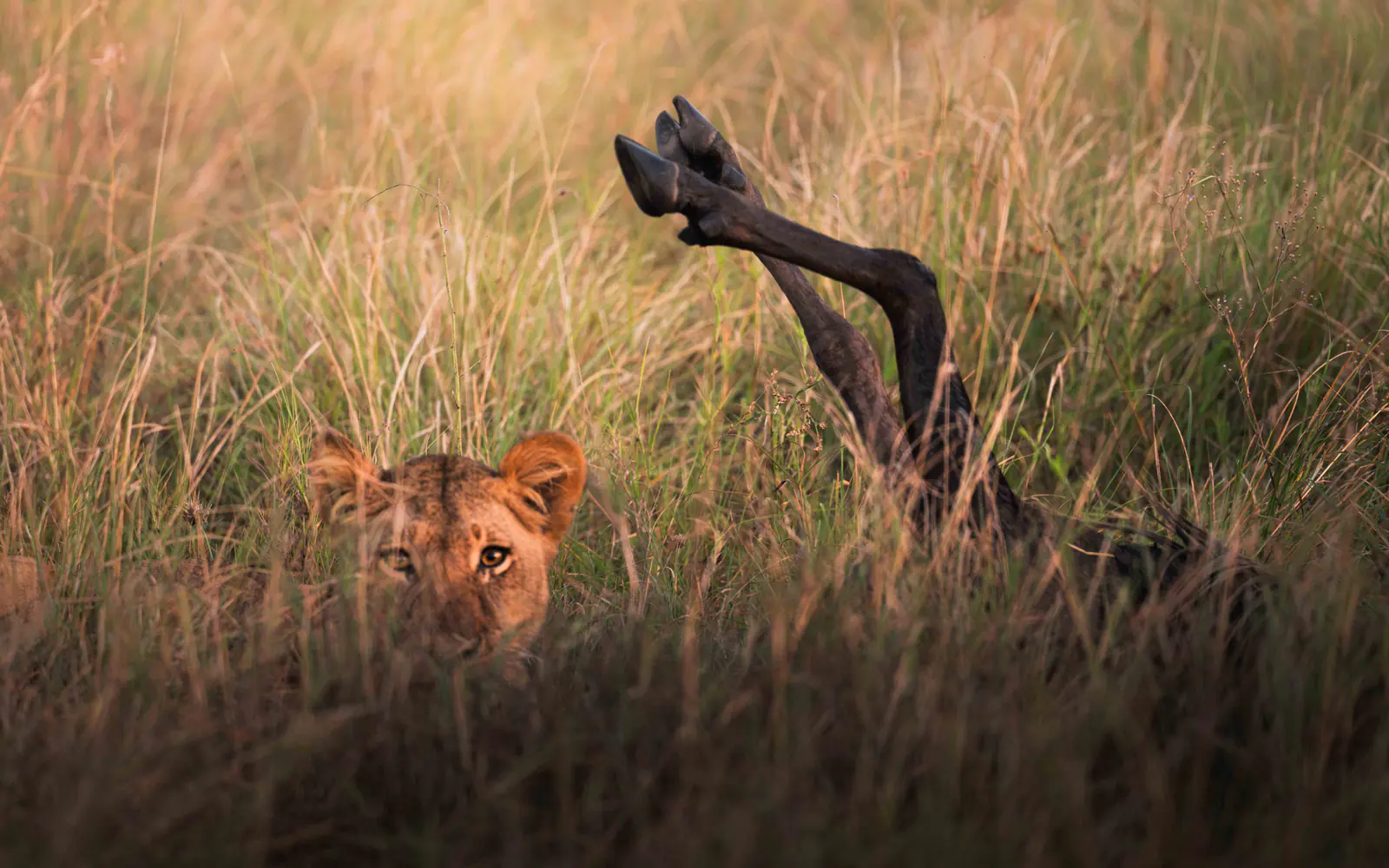
A wildebeest stares at the camera in golden grass, with a smaller group behind.
02 / 07
Size, density and how they feel
The Serengeti covers roughly 14,750 square kilometres; the Mara National Reserve is around 1,510. Adding the surrounding Mara conservancies enlarges the Kenyan side considerably but does not close the gap. That difference produces two genuinely different feelings on the ground.
The Serengeti gives you space. Driving across the central plains, the horizon is empty in every direction, and in the more remote sectors you can go long stretches without seeing another vehicle. It feels vast in a way the Mara does not.
The Mara gives you density. Because the reserve is compact and wildlife concentrates along the Mara and Talek rivers, a morning drive can produce lion, cheetah, elephant, hippo and hundreds of plains game without covering much ground. For predators in particular (and cheetah especially, on the open grassland) the Mara's hit rate per hour in the vehicle is hard to beat.
- Want scale and solitude
- Serengeti, particularly the western, northern and southern sectors away from Seronera.
- Want predator density in less time
- Maasai Mara, especially with a conservancy stay to avoid vehicle crowding.
- Have four to five nights total
- Maasai Mara: easier access and less internal travel.
- Have eight nights or more
- Serengeti, or both sides across a combined trip.
03 / 07
Where the migration is, and when
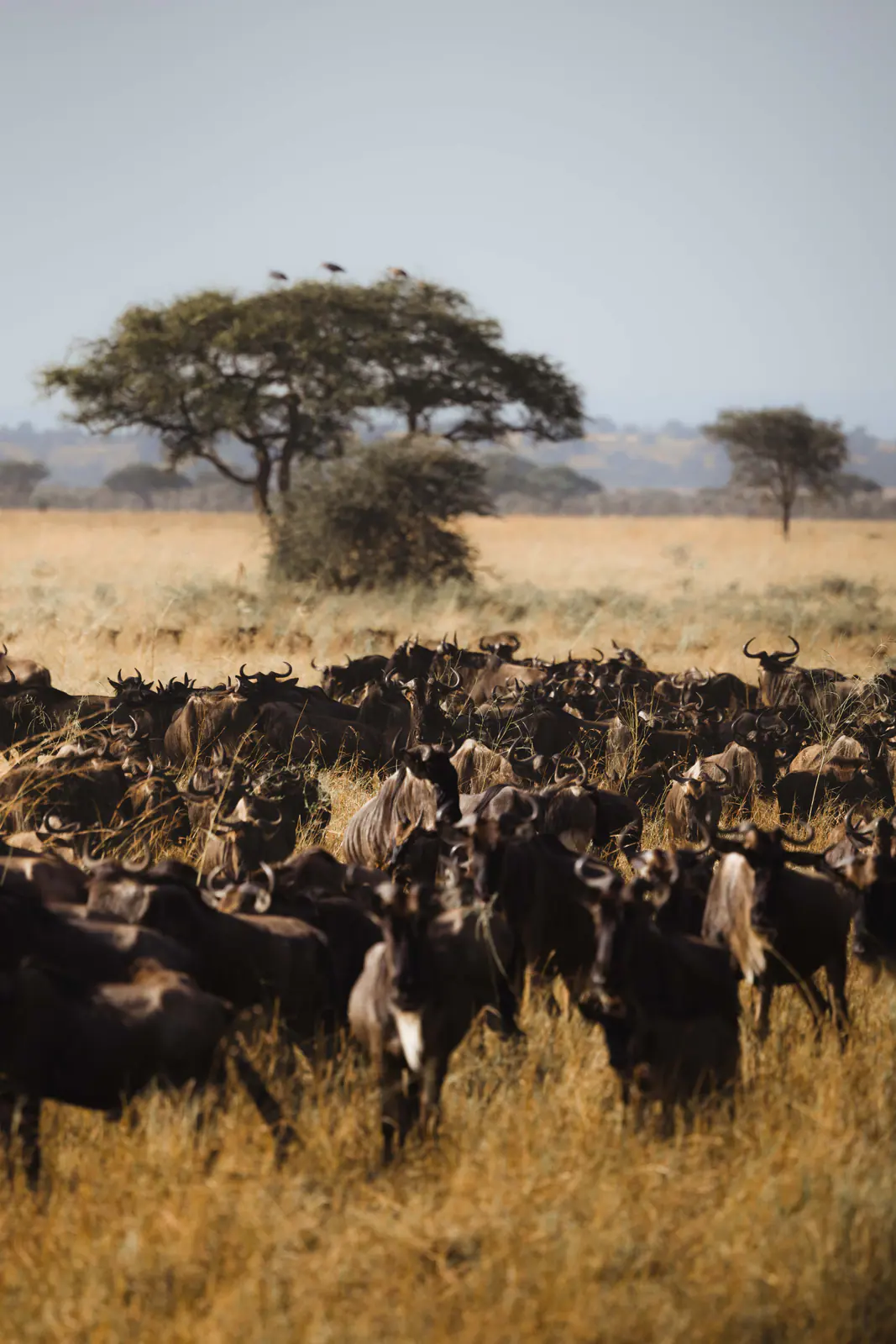
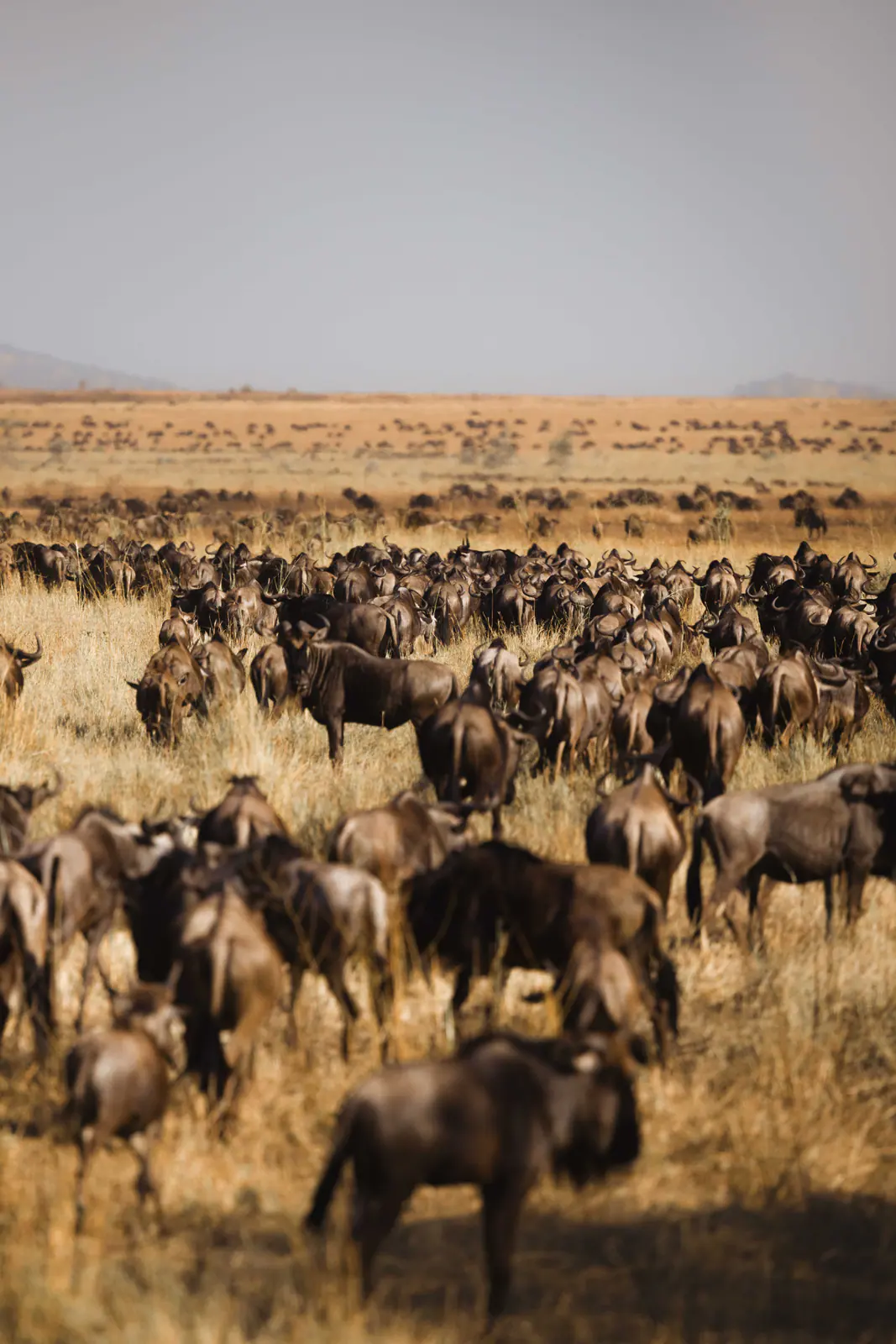
This is usually the deciding factor. Herds calve in the southern Serengeti around January to March, move through the central and western Serengeti April to June, cross into the Mara from around July, remain through August to October, and return south from late October.
So the Serengeti has the migration for roughly two-thirds of the year, including the calving season, which is arguably the most dramatic period for predator activity. The Mara has it during the dry months, which is also when the Mara River crossings occur.
River crossings happen on both sides (the Grumeti in the western Serengeti earlier in the year, the Mara River later) and neither can be predicted. If a crossing is your priority, July to October in the Mara or the northern Serengeti gives the best odds, and even then it is chance. The Kenyan detail is in the Great Migration in Kenya.
Migration timing shifts with rainfall each year. Treat every month-by-month schedule, including this one, as a pattern rather than a promise.
River crossing expectations, honestly
- July
- Herds may be arriving in the Mara or still spread across the northern Serengeti; arrival timing varies with rainfall and movement.
- August
- Often important Mara herd activity and the month most associated with crossings, but crossings cannot be scheduled.
- September
- Can remain strong on both sides of the border depending on rainfall and movement.
- October
- Distribution may begin changing as conditions shift, with groups moving back towards Tanzania.
Migration timing is natural and variable. River crossings cannot be guaranteed on a particular date or game drive, on either side of the border.
04 / 07
Vehicles and crowding
Both areas get busy. In the Mara National Reserve during peak season, a lion kill or a river crossing can attract a long line of vehicles, and there is no cap. In the Serengeti, the central Seronera area has the same problem, though the park's size means that moving away from it thins traffic quickly.
Kenya's structural answer is the conservancy system: private and community areas bordering the reserve that limit vehicle numbers per sighting, restrict bed density and permit night drives and walking. Staying in a conservancy transforms the Mara experience and is the single best crowd-avoidance move available on the Kenyan side. See reserve vs conservancy.
Tanzania's answer is distance and private concessions: go further from Seronera, or into the western or northern sectors, and vehicle numbers fall sharply. Both work; Kenya's costs a higher nightly rate, Tanzania's costs travel time.
05 / 07
Access and cost
The Mara is easier to reach. A light aircraft from Nairobi Wilson takes under an hour, or you can drive it in a long day broken at Lake Nakuru. That accessibility is why Kenya works so well for trips of five to seven nights.
The Serengeti sits further from its gateway. From Arusha it is a long drive or a flight, and most well-planned trips fly at least one leg. That pushes the practical minimum trip length up and adds cost before you have spent a night in the park.
On price, the mid-range is generally cheaper in Kenya, where supply is deeper and road routing is realistic. At the top end the two are comparable. Both charge substantial park fees, and in both countries the biggest cost drivers are season, camp tier and whether you fly, as set out in the Kenya safari cost guide.
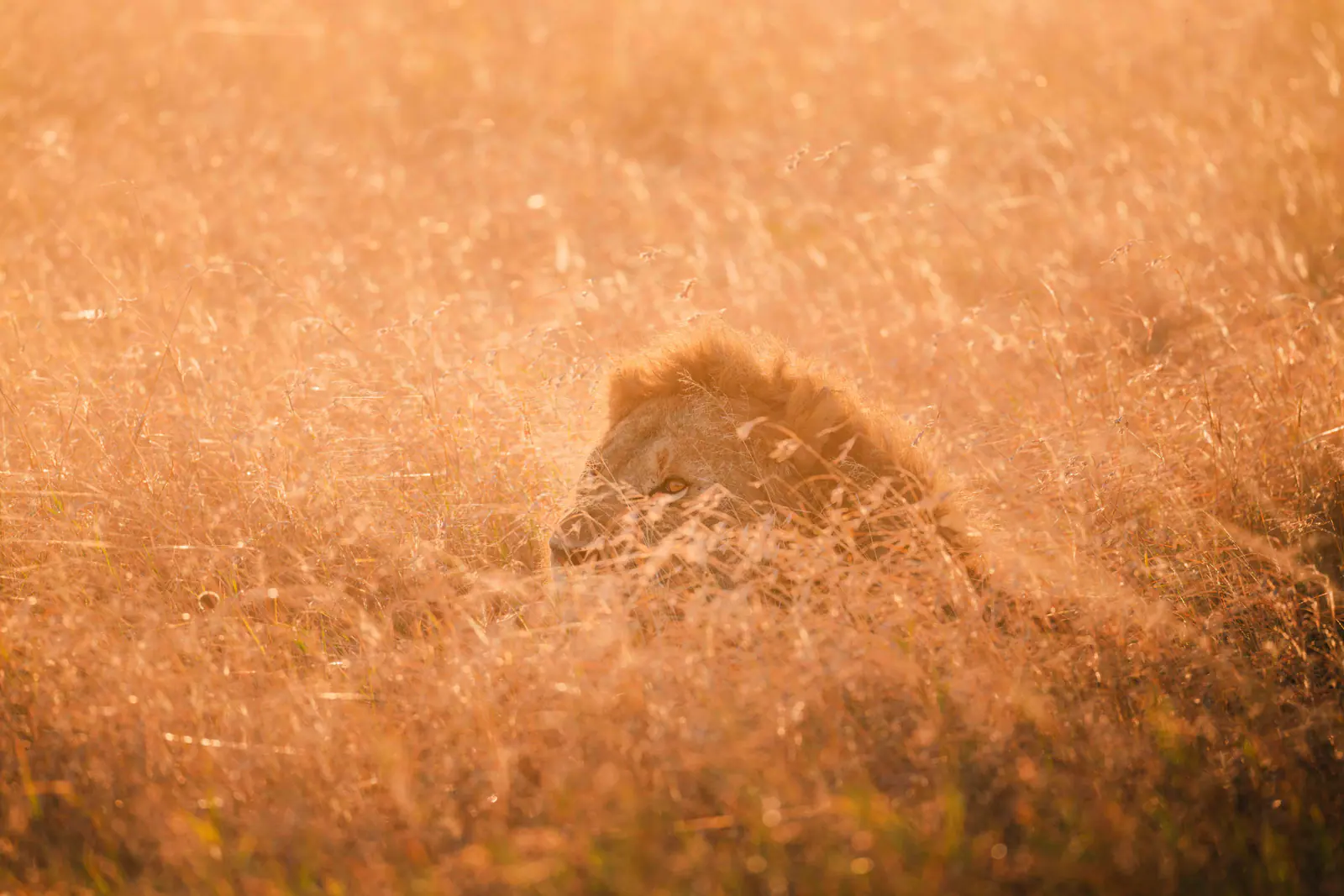
A male lion lies low in tall golden grass, his mane just visible above the stalks. Grass this high hides a lion until you are close.
06 / 07
So which should you book?
Start from your dates. July to October points clearly to the Mara. January to March points to the southern Serengeti for calving. April to June points to the western Serengeti, with the caveat of the long rains.
Then apply your trip length. Under a week favours the Mara. Eight nights or more makes the Serengeti's distances manageable, and twelve nights or more makes doing both a real option. The logistics of that are in Kenya and Tanzania safari.
If dates and length leave you genuinely free to choose, pick on temperament: the Mara for intensity and big cats in a compact area, the Serengeti for the feeling of endless space.
Which fits your trip
Neither area is universally better. The right one depends on your dates, your nights and how much driving you will accept.
07 / 07
Where to take this next
Once you have chosen an ecosystem, plan it properly: planning a Maasai Mara safari on the Kenyan side, or the Serengeti safari guide on the Tanzanian side.
The wider country decision sits in which safari country fits your trip, and herd timing in the Great Migration in Kenya guide. Doing both is covered in Kenya and Tanzania safari, alongside the Kenya safari guide, our Tanzania safari guides and the Kenya safari guides library.
Planned by people who live the route
This library exists because the same Kenya questions arrive with every safari enquiry we answer.
- Locally based in Tanzania
- Kenya and Tanzania route specialists
- Licensed and insured operator
- Fast, direct answers
- Read Safari Soles reviews on TripAdvisor
- Read Safari Soles reviews on SafariBookings
- Read Safari Soles reviews on Google
Where these facts come from (3)
- Tourism, Wildlife and Culture: Maasai Mara National Reserve oversight Narok County Government · Reserve authority · checked 2026-09-14
- Maasai Mara National Reserve Management Plan 2023–2032 Narok County Government · Reserve authority · checked 2026-09-14
- Serengeti National Park: park information Tanzania National Parks (TANAPA) · Park authority · checked 2026-09-14
Related Safari Soles guides
Continue with the guides travellers usually read next.
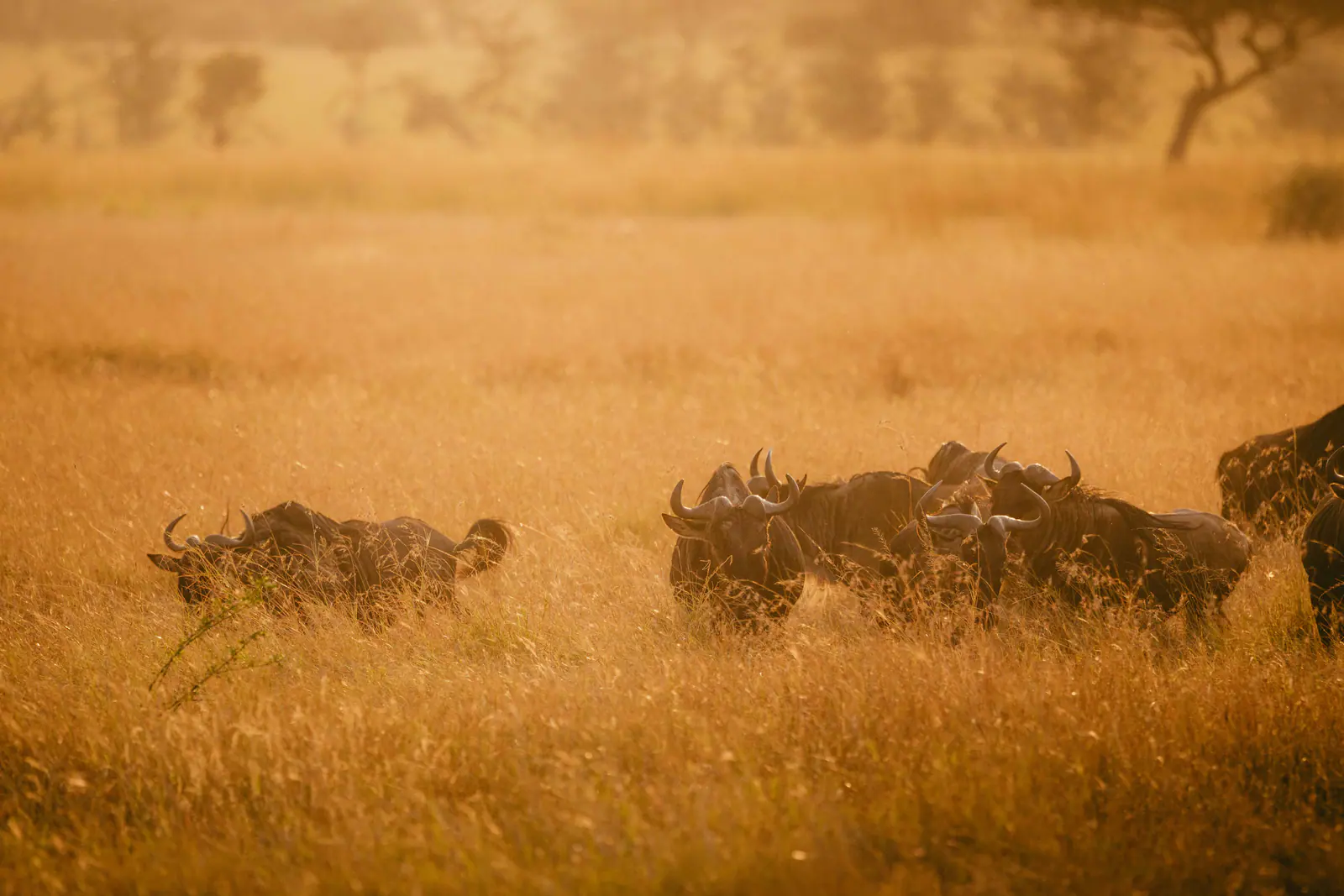 Great Migration in Kenya How the migration behaves on the Kenyan side of the ecosystem, when herds are typically in the Mara, and why crossings can never be guaranteed. Parks & Reserves
Read the guide
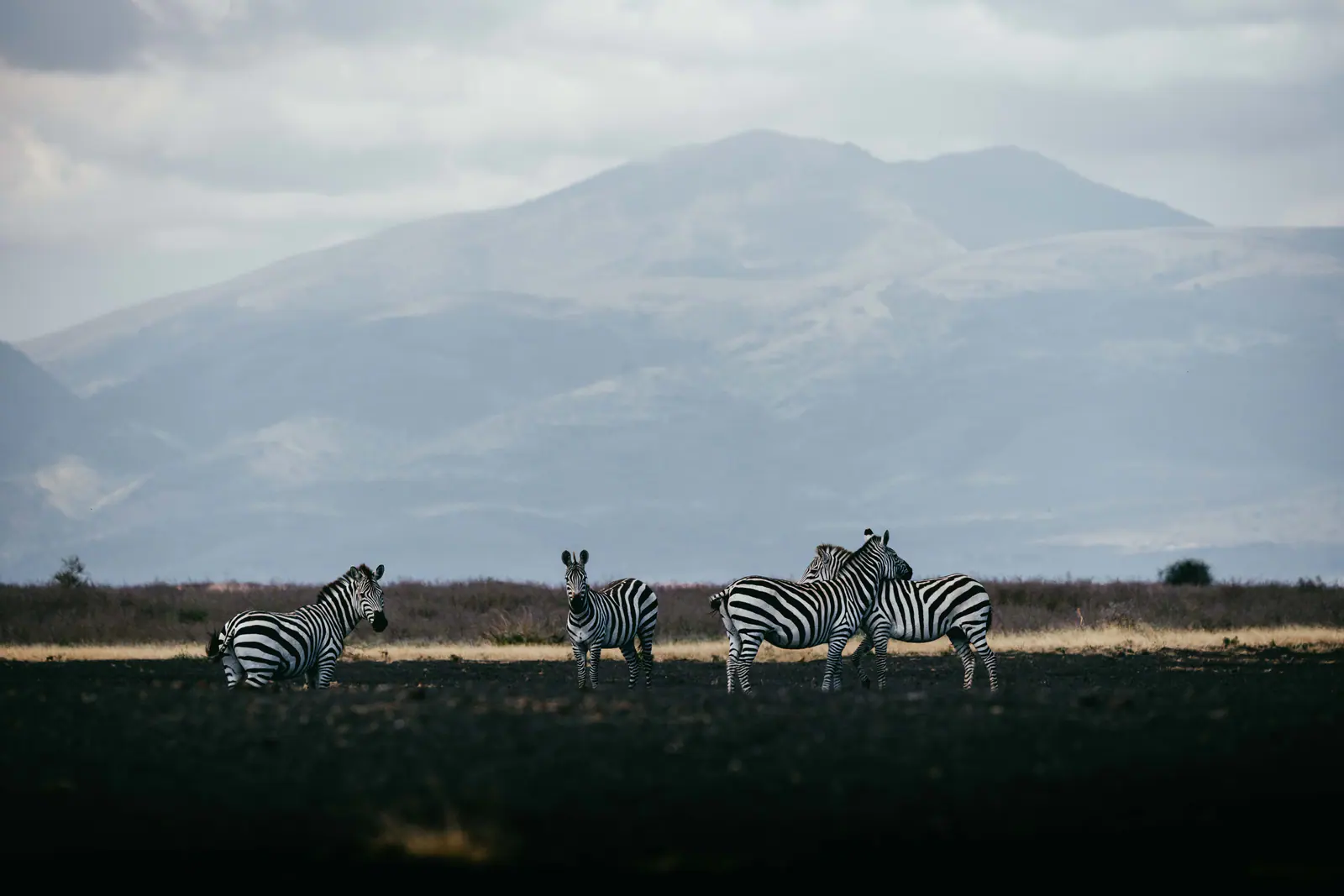 Kenya vs Tanzania Safari A country-level comparison across wildlife areas, trip length, routing, cost structure and beach pairings, without declaring an overall winner. Comparisons
Read the guide
 Maasai Mara Safari Reserve or conservancy, where to base yourself, how the migration months behave and how many nights the Mara justifies on a first Kenya trip. Parks & Reserves
Read the guide
Frequently Asked Questions
-
Neither, fundamentally: they share the same ecosystem and species. The Mara has higher density in a smaller area; the Serengeti has more space and more remote sectors.
Build this into a real Kenya route
Send us the dates, the travellers and the wildlife you care about most, and we will turn this guide into an itinerary that actually works on the ground.