


How Many Days Do You Need for a Kenya Safari?
The most common Kenya planning mistake is not choosing the wrong park. It is trying to reach too many of them in too few nights. Here is what each trip length genuinely delivers.
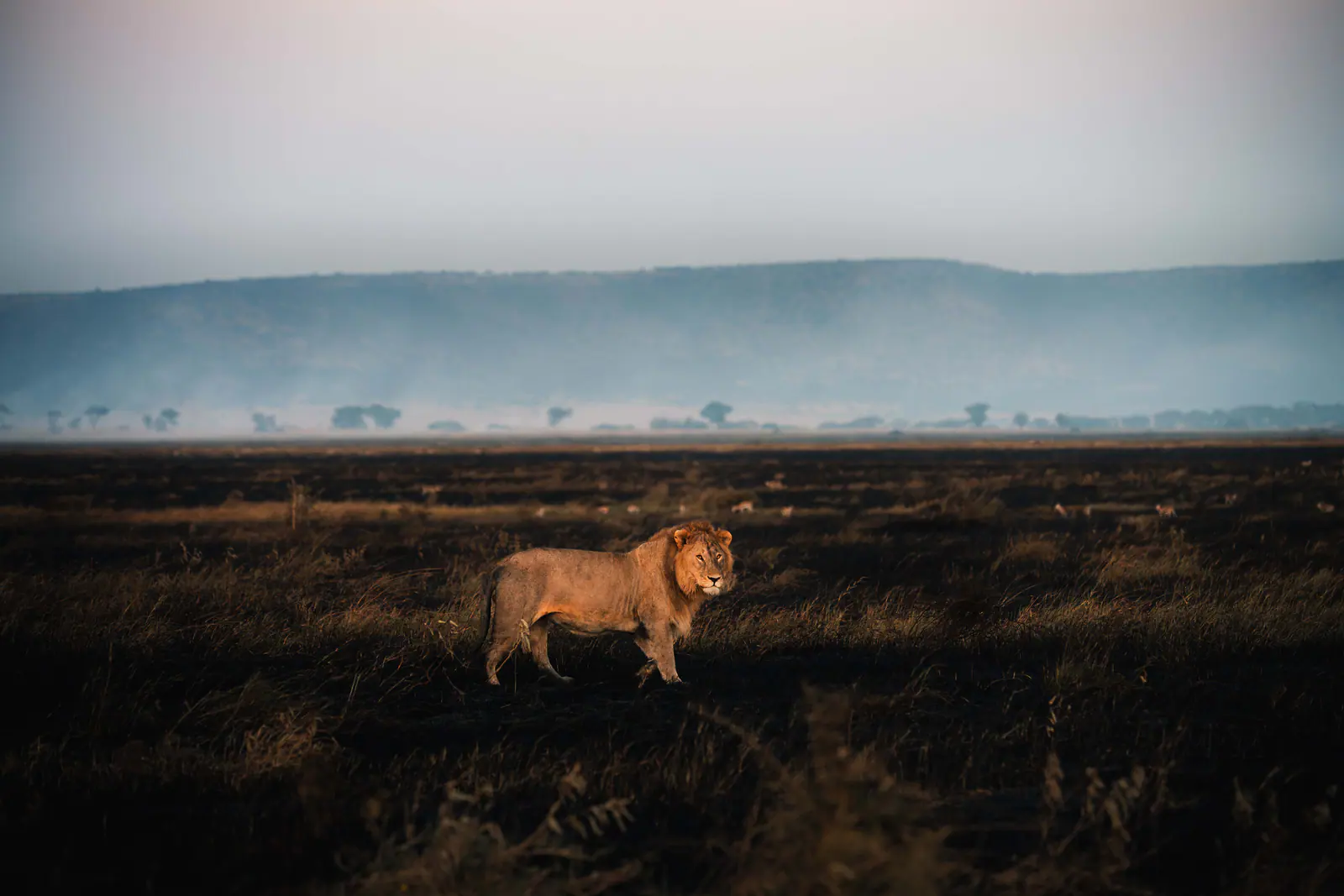
- Most common trip
- 5–7 nights on safari
- Mara minimum
- 3 nights
- Beach leg
- 4 nights or more
- Regions
- Two beats four, at every length
Written and maintained by the Safari Soles planning team in Arusha, Tanzania.
Five to seven nights on the ground is the sweet spot for a first Kenya safari: enough for two or three complementary regions with three nights in the Maasai Mara.
- Count nights on the ground, not days on the calendar: arrival and departure days rarely include game viewing.
- Two nights is the practical minimum per region; the Maasai Mara justifies three or more.
- Five to seven nights covers two or three complementary regions and is where most good Kenya trips land.
- Eight to ten nights is the point at which northern Kenya or a coast finish fits comfortably.
- Past ten nights, spend the extra time going deeper rather than adding parks, or add a second country.
01 / 08
Why nights, not days, are the unit that matters
Count nights on the ground, not days on the calendar. A trip that departs on a Friday evening and returns the following Sunday morning sounds like nine days and is in fact seven nights, of which the first is often a Nairobi arrival night with no game viewing at all. Itineraries advertised in days routinely overstate what you actually get.
The other unit that matters is nights per region. Wildlife viewing improves markedly on the second and third morning in an area, because your guide has learned where the animals were yesterday. A single night in a park buys you one afternoon drive and one morning drive, split by a pack-and-move, and you pay a full day of park fees for it. Two nights is the practical minimum in most areas; three is where the Mara starts to deliver properly.
Every internal move costs time. A road transfer between regions typically eats a morning or a whole day; a light aircraft hop costs perhaps two to three hours door to door once transfers and check-in are counted. The arithmetic is unforgiving: a seven-night trip with four regions spends three of those days moving.
What each trip length realistically fits
-
3–4 nights
- Less suited to
- Two parks. A beach extension. Any slack for a slow or wet day
- Sample route
- Fly Nairobi–Maasai Mara, 3 nights one camp, fly back.
- Pace
- Settled: no packing days.
- Trade-off
- One washed-out day costs a third of the safari.
- One region, properly
- A fly-in Mara trip with three full days of drives
-
5–7 nights
- Less suited to
- Northern Kenya and the coast in the same trip. Four regions without heavy transfer days
- Sample route
- 2 nights Amboseli, 1 night Lake Nakuru, 3 nights Maasai Mara.
- Pace
- Steady, with one or two moving mornings.
- Trade-off
- Adding a third region costs a viewing day, not just a drive.
- Two, occasionally three complementary regions
- A migration-focused Mara stay plus one contrast park
-
8–10 nights
- Less suited to
- Every park in Kenya. A second country done properly
- Sample route
- 3 nights Maasai Mara, 2 nights Amboseli, 3 nights Diani.
- Pace
- Comfortable, with a rest day built in.
- Trade-off
- You still have to choose between the north and the coast.
- Three regions with room to breathe
- Samburu or Laikipia, or a coast finish
-
11–14+ nights
- Less suited to
- A different park every two nights
- Sample route
- 3 nights Samburu, 4 nights Maasai Mara, 2 nights Amboseli, 4 nights coast.
- Pace
- Relaxed, with genuine down time.
- Trade-off
- Cost rises with each region: extra nights in one place are the cheaper way to add time.
- Depth in fewer places
- Northern Kenya plus a beach finish
- A second country, if flown

Aerial view of steep, eroded slopes folded into ridges and channels, in warm evening light.
02 / 08
Three to four nights: one region, done properly
A short safari can be excellent, provided it does not try to be a tour of Kenya. The strongest version is a fly-in to a single area, almost always the Maasai Mara, with three nights in one camp. You fly out of Wilson after breakfast, you are on a game drive by mid-afternoon, and you get three full days of morning and afternoon drives before flying back.
The alternative short trip is a road-based Amboseli or Lake Nakuru itinerary, which is cheaper and shows you more of the country between the parks, but spends more of your limited time in a vehicle on tarmac. It works well if the flight cost is prohibitive or if you are adding safari to a business trip in Nairobi.
What does not work at this length is a two-park circuit. Mara plus Amboseli in four nights means two nights each, two long transfers and effectively no margin if a day goes quiet. If you have four nights and want two areas, fly between them and accept the cost.
At three nights, a single wet or slow day removes a third of your safari. Short trips are the strongest argument for travelling in a drier month and paying for a private vehicle.
03 / 08
Five to seven nights: the standard, and the best value
This is where most well-built Kenya safaris land, and there is a reason. Seven nights allows three nights in the Maasai Mara, two nights in a complementary area such as Amboseli, Samburu or Laikipia, and a transit night at Lake Nakuru or in Nairobi, with one spare night as insurance against a slow day or a delayed flight.
The classic road version runs Nairobi to Amboseli for two nights, north to Lake Nakuru for one, west into the Mara for three, and back to Nairobi. It covers elephants under Kilimanjaro, rhinos and Rift Valley birdlife, and big cats on open grassland, with drives that are long but not punishing. The fly-in version swaps two of those road days for air time and typically uses the saved hours on an extra Mara morning or a conservancy night.
Five nights is the honest minimum for two regions. Three nights in the Mara plus two in Amboseli, flying at least one leg, is a genuinely good trip. Adding a third region at five nights is where itineraries start to look impressive on paper and feel exhausting in practice.
- 5 nights, two regions
- 3 Mara + 2 Amboseli, one leg flown. Covers cats and elephants with no wasted day.
- 7 nights, three regions
- 2 Amboseli + 1 Nakuru + 3 Mara + 1 buffer. The classic Kenya circuit.
- 7 nights, two regions
- 4 Mara + 3 Laikipia or Samburu. Slower, quieter, better for repeat travellers.
04 / 08
Eight to ten nights: add the north, or add the coast
At eight to ten nights the trip stops being a circuit and starts being a journey. The two most rewarding additions are northern Kenya (Samburu and Laikipia, which offer species and landscapes you simply do not see in the south) or a coast finish at Diani or Watamu, which turns a safari into a holiday.
A strong ten-night shape is three nights Mara, two nights Laikipia, two nights Samburu and three nights on the coast, flying between the safari legs and down to the coast at the end. Another is a slower southern route: two Amboseli, three Tsavo, four Diani, which stays in one part of the country and keeps transfers short.
This is also the length at which conservancies pay off. Once you have enough nights, spending three of them in a conservancy where walking, night drives and off-road viewing are permitted adds a genuinely different kind of day rather than just more of the same. What differs between reserve and conservancy is set out in reserve vs conservancy.
05 / 08
Twelve nights and beyond: depth, not distance
Beyond about ten nights, the instinct is to add parks. It is usually the wrong instinct. Extra nights are better spent staying longer in fewer places, moving at a gentler pace and building in genuine rest days: particularly with children, older travellers, or on a honeymoon where the trip is meant to feel restful rather than achieved.
The exception is a second country. Two weeks is enough to combine Kenya and Tanzania properly. The Mara and the Serengeti are two halves of one ecosystem, and crossing between them by air is straightforward if planned. The logistics are real and are covered in Kenya and Tanzania; the honest comparison of the two countries sits in Kenya vs Tanzania.
The other good use of a long trip is the coast, at length. Four nights on a beach after a safari feels like a bolt-on; seven feels like a second holiday. If the trip is a honeymoon or a milestone, that second half is often what people remember most warmly.

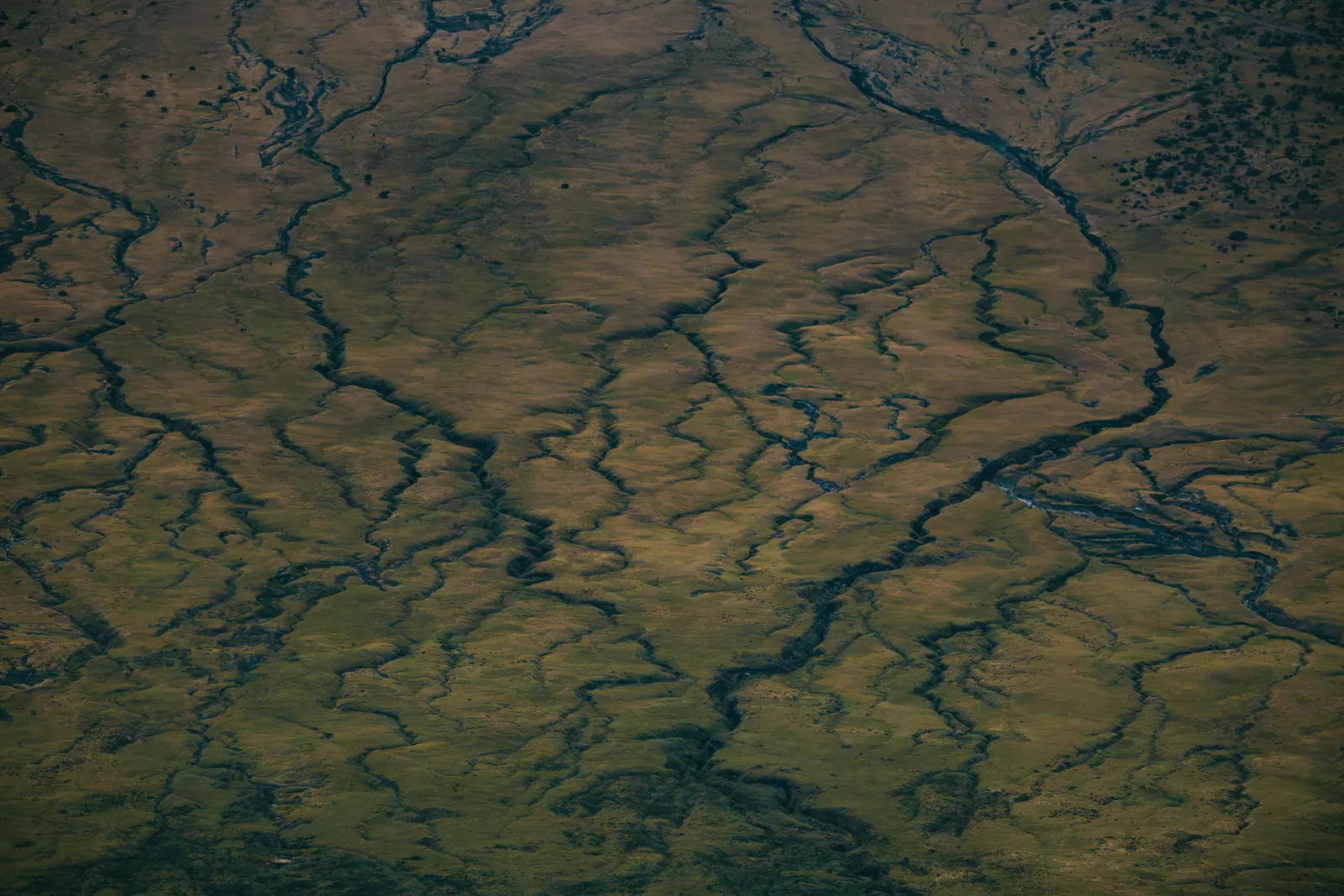
A close aerial view of fine drainage lines combing down a steep slope in low light.
06 / 08
The mistakes that waste nights
Most poor Kenya itineraries fail in predictable ways, and all of them are visible on paper before you book.
- One night in a park. You pay full fees for two half-days split by packing. Only defensible where the park is directly on the route, as at Lake Nakuru.
- Four regions in seven nights. Impressive itinerary, three days in transit, no depth anywhere.
- Ignoring the arrival night. Most long-haul flights land in Nairobi in the evening. That night is a hotel, not a safari night.
- Sleeping outside the park to save money. An hour to the gate each way removes the two best wildlife hours of every day.
- No buffer. Light aircraft schedules change and roads flood. One spare night converts a crisis into an inconvenience.
- Flying home the same day you leave the bush. Build in a Nairobi day room or an overnight if your international flight is late.
07 / 08
Matching length to what you actually want
The right answer depends less on an ideal number than on your priorities. Migration-focused trips need three or four Mara nights inside the July to October window, because crossings are unpredictable and you are buying chances. Photography trips need more nights in fewer places, because good images come from returning to the same subjects. Family trips need shorter driving days and a pool, which usually means fewer regions over the same number of nights.
Budget interacts with length in a way people underestimate. A shorter trip in a better camp usually beats a longer trip in a weaker one, because location and guiding decide what you see. If the choice is ten mediocre nights or seven good ones, take the seven. The full breakdown sits in the Kenya safari cost guide.
How long, by what you are travelling for
- Migration and river crossings
- 3 to 4 nights in the Maasai Mara inside the July to October window, plus travel days.
- First safari, broad introduction
- 6 to 7 nights across two or three regions with one contrast park.
- Photography
- 8 to 10 nights in two areas, with repeat mornings in the same ground. See the photography guide.
- Family travel
- 7 to 9 nights with short driving legs and a pool day. See the family guide.
- Safari plus beach
- 10 nights or more, splitting roughly six safari nights and four coast nights.
- Kenya and Tanzania together
- 12 nights or more, flying the border leg, see Kenya and Tanzania.
Safari Soles planning guidance based on how routes work in practice. These are recommendations, not official standards.
The arrival day is rarely a safari day
Most long-haul flights land in Nairobi in the evening or early morning, and onward bush flights leave from Wilson Airport across the city. Treating the arrival day as a travel day rather than a game-viewing day makes trip lengths add up honestly, and removes the most common source of disappointment on short itineraries.
08 / 08
Where to take this next
With a night count in mind, move to sequence and money: how to plan a Kenya safari sets the order, and what a Kenya safari costs shows what each extra night buys. How you move between regions changes how many of those nights are usable. See drive versus fly.
Short trips often start with a morning at Nairobi National Park on an arrival day, and travellers weighing two headline parks against each other should read Amboseli versus the Maasai Mara. Wider context sits on the Kenya safari guide and in the Kenya safari guides library.
Planned by people who live the route
This library exists because the same Kenya questions arrive with every safari enquiry we answer.
- Locally based in Tanzania
- Kenya and Tanzania route specialists
- Licensed and insured operator
- Fast, direct answers
- Read Safari Soles reviews on TripAdvisor
- Read Safari Soles reviews on SafariBookings
- Read Safari Soles reviews on Google
Where these facts come from (2)
- Conservation fees and visitor regulations Kenya Wildlife Service · Park authority · checked 2026-09-14
- Baggage allowance for light-aircraft safari flights Safarilink Aviation · Airline policy · checked 2026-09-14
Related Safari Soles guides
Continue with the guides travellers usually read next.
 How to Plan a Kenya Safari The planning order that works: dates, nights, wildlife priorities, region shortlist, transport, camps and only then a quote. Planning
Read the guide
 Kenya Safari Cost What drives the price: park and conservancy fees, accommodation tier, season, private versus group travel, and road versus fly-in routing. Planning
Read the guide
 Drive vs Fly Safari in Kenya Road transfers against light-aircraft hops: cost, time on the move, route flexibility, luggage limits and how each affects a short trip. Comparisons
Read the guide
Frequently Asked Questions
-
Yes, if you fly and stay in one area. Three nights in one Mara camp is a real safari. Three nights split across two parks mostly buys you transfers.
Build this into a real Kenya route
Send us the dates, the travellers and the wildlife you care about most, and we will turn this guide into an itinerary that actually works on the ground.