


Reserve vs Conservancy in Kenya
Two travellers can visit the same region in the same week and come home with completely different experiences. Usually the reason is not the camp. It is whether they stayed inside the reserve or in a conservancy.
- Reserves
- Public, rule-bound, busier
- Conservancies
- Private, capped, flexible
- Rules
- Vary conservancy by conservancy
- Conservancy fees
- Fund land and communities
Written and maintained by the Safari Soles planning team in Arusha, Tanzania.
National parks and reserves are publicly managed, open to any paying visitor, and governed by authority rules:
- The difference is governance: public land with public rules versus leased land where the conservancy sets them.
- Conservancies cap vehicles at sightings, which is the change most travellers notice first.
- Night drives, walking and off-road access may be permitted in conservancies, but vary property by property.
- Reserves remain essential for migration river crossings and for tighter budgets.
- Conservancy fees fund lease payments to landowning communities and expand usable habitat.
- A conservancy base with selected reserve excursions is the structure that suits most travellers.
01 / 07
Who owns the land, and why that decides everything
A national park is state land managed by Kenya Wildlife Service. A national reserve, the Maasai Mara being the best-known example, is managed by the relevant county government, in that case Narok County. In both cases the land is public, entry is open to anyone who pays the fee, and the rules are set by the authority rather than by the camps.
A conservancy is different in kind. It is land held by private owners or, more often in Kenya, by community landholders who lease their land into a collective conservation area in return for income. The conservancy sets its own operating rules within the terms of those leases and its conservation agreements.
That single structural difference produces everything else on this page. Public land must accommodate everyone; leased land can limit numbers because limiting numbers is what the lease income is paying for.
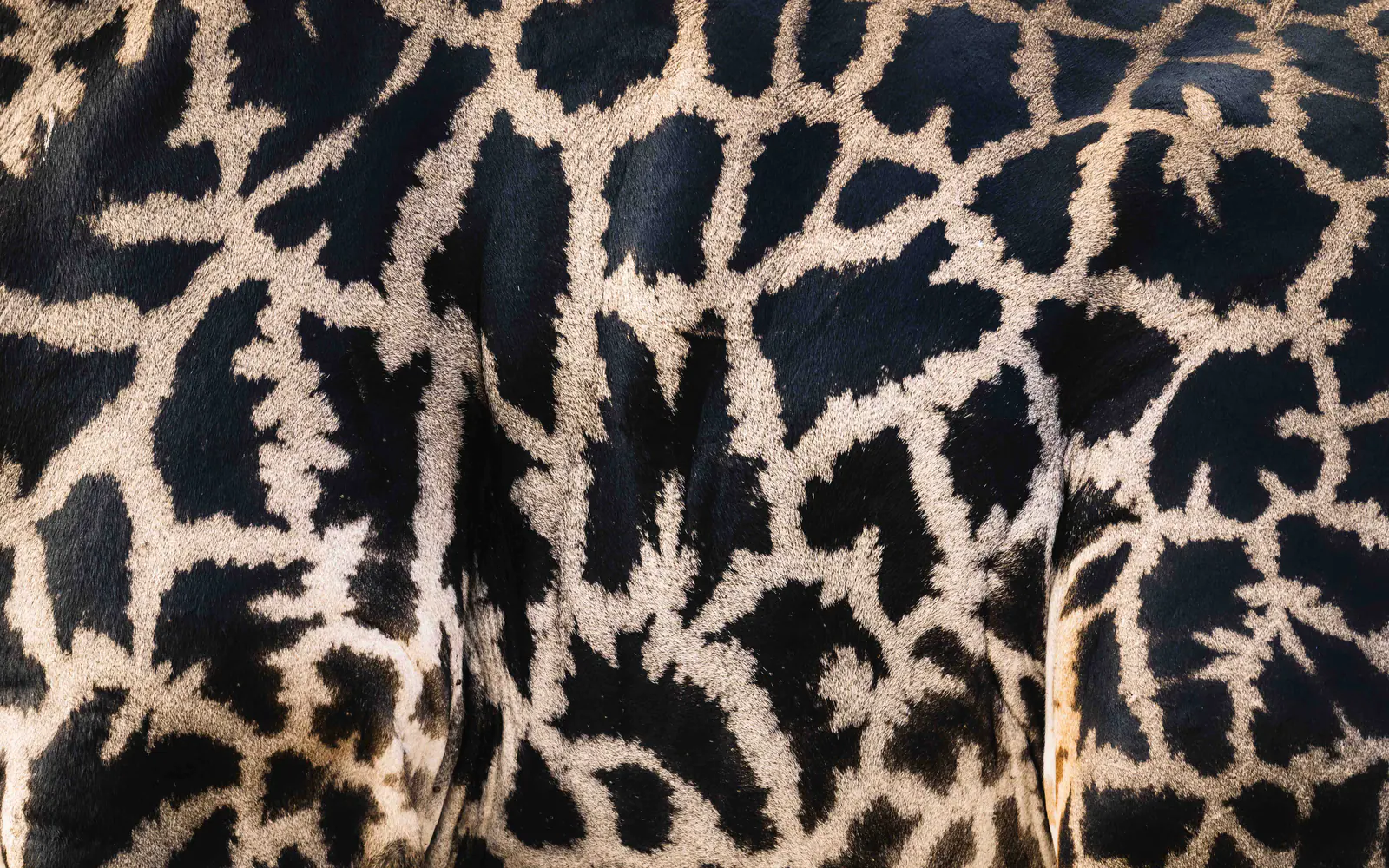
Close-up of a giraffe's coat, a fine pale network of lines around dark patches. The pattern is as individual as a fingerprint.
02 / 07
What actually changes on the ground
The differences below are the ones travellers notice within the first afternoon. Read the vehicle-numbers row first. It is the one that most affects how a sighting feels.
Reserve compared with conservancy
Conservancies are not a different wildlife area: in the Mara they surround and connect to the reserve, and animals move freely between them.
03 / 07
The rule that matters most: they are not all the same
It is tempting to read the column above as a promise. It is not. Every conservancy sets its own rules, and properties within a conservancy make their own decisions about what they run.
Some conservancies permit night drives and some do not. Walking may be offered by one camp and not by its neighbour. Minimum ages for walking vary. Off-road access may be allowed in some areas and restricted in others for habitat reasons. Vehicle caps differ. Fee structures differ, and some conservancies bundle the fee into the nightly rate while others charge it separately.
So if a specific activity is the reason you are choosing a conservancy (a night drive, a walking safari, a horseback ride in Laikipia) confirm it for your specific property in writing before booking. This is the single most common source of disappointment in conservancy travel, and it is entirely avoidable.
Not every conservancy allows the same activities. Walking, night drives, off-road access and minimum ages are set property by property, not region by region. Always confirm with the specific camp before booking around an activity.
04 / 07
Which should you choose?
For most travellers the honest answer is a combination, and the most common structure is a conservancy stay with selected excursions into the reserve. That gives you quiet sightings, activities out of the vehicle and access to the reserve's highest-density areas or river sections when you want them.
Matching the choice to your priority
- Migration river crossings
- Inside the reserve. The crossing points are there. See the migration guide.
- Quiet sightings and few vehicles
- Conservancy, without question
- Night drives or walking
- Conservancy: and confirm your property offers it
- Tighter budget
- Reserve, or a camp just outside the gates
- Photography
- Conservancy for off-road access and time at a sighting, with reserve days as needed
- Direct community benefit
- Conservancy: lease payments go to landowning families
- Families needing flexibility
- Conservancy, for flexible timing and activities beyond game drives
This is a starting point rather than an objective ranking. The right answer changes with your dates, your nights and who is travelling.
05 / 07
The conservation and community argument
The conservancy model exists because protected areas alone are not large enough to hold the wildlife populations that move through them. Animals cross park boundaries onto community land, and if that land is more valuable under crops or fences than under wildlife, the wildlife loses.
Conservancies address that by paying landholders a regular lease income for keeping land open, in return for limits on settlement, cultivation and grazing intensity. Tourism revenue funds those payments, along with rangers, monitoring and employment. In the Mara ecosystem in particular, the conservancies that surround the reserve have added a substantial area of functioning habitat over the past two decades.
That is why conservancy fees are higher and why they are worth paying attention to. The premium is not a service charge. It is the mechanism. It is also why bed numbers are capped: the model only works if the number of visitors stays proportionate to the land.
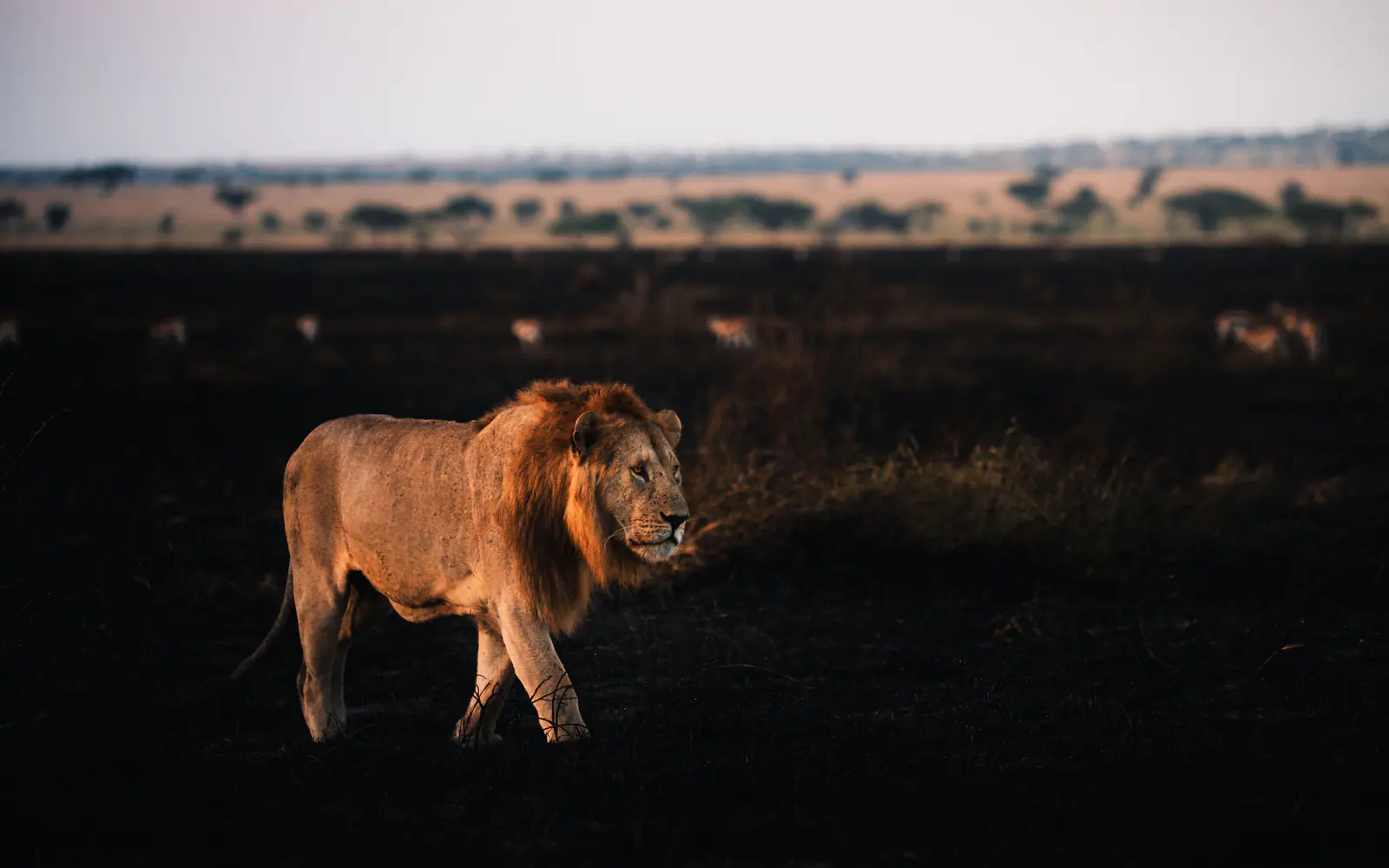
A male lion walks across dark burned ground in low light, with a pale strip of grass behind.
06 / 07
Cost and how the fees work
Park and reserve entry fees are charged per person per day and set by the managing authority. Conservancy fees are also per person per night and are set by each conservancy. Some camps bundle them into the nightly rate; others show them separately, which can make a quote look cheaper than it is.
When comparing quotes, always check whether conservancy and park fees are included. Two camps at apparently similar rates can differ meaningfully once fees are added, particularly on a longer stay.
All fee levels change periodically, so treat any figure published anywhere, including in a guide like this one, as something to verify rather than rely on. The cost guide explains how fees fit into an overall budget without quoting numbers that go stale.
Three questions to ask before you book
Are conservancy and park fees included in the quoted rate, or added? How many vehicles are permitted at a sighting? And which activities (night drives, walking, off-road access) does this specific property actually run, and with what minimum ages? Clear answers to those three change more about your trip than the room category does.
07 / 07
Where to take this next
This decision is easiest to picture on the ground: read planning a Maasai Mara safari for the reserve side and the Laikipia safari guide for the conservancy side.
Conservancy stays dominate the luxury Kenya safari and Kenya honeymoon safari end of the market, and photographers should read Kenya photography safari for why off-road access matters. Wider planning: the Kenya safari guide and the Kenya safari guides library.
Planned by people who live the route
This library exists because the same Kenya questions arrive with every safari enquiry we answer.
- Locally based in Tanzania
- Kenya and Tanzania route specialists
- Licensed and insured operator
- Fast, direct answers
- Read Safari Soles reviews on TripAdvisor
- Read Safari Soles reviews on SafariBookings
- Read Safari Soles reviews on Google
Where these facts come from (2)
- Tourism, Wildlife and Culture: Maasai Mara National Reserve oversight Narok County Government · Reserve authority · checked 2026-09-14
- Conservancies in Kenya: the community and private conservancy model Kenya Wildlife Conservancies Association · Conservation body · checked 2026-09-14
Related Safari Soles guides
Continue with the guides travellers usually read next.
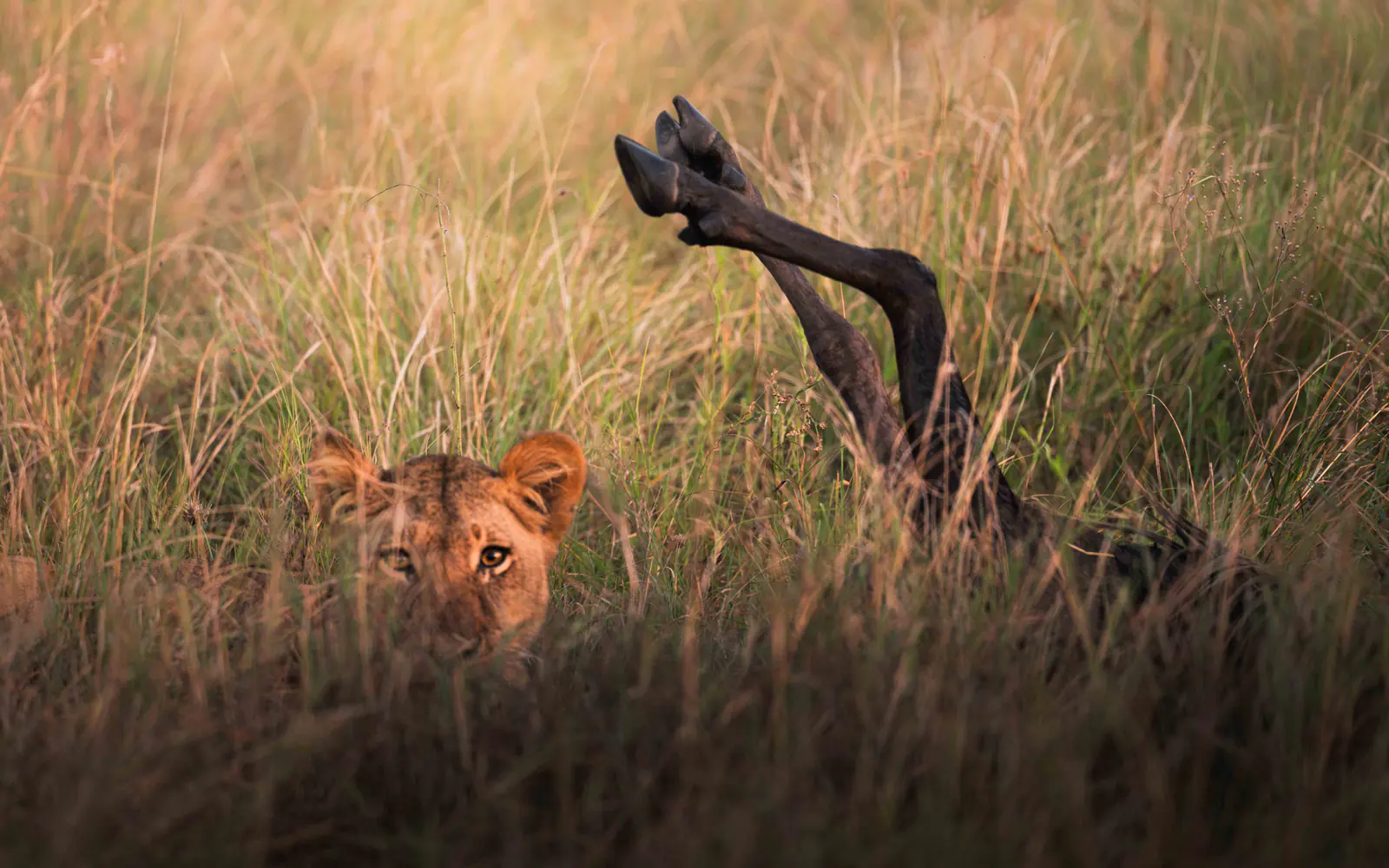 Maasai Mara Safari Reserve or conservancy, where to base yourself, how the migration months behave and how many nights the Mara justifies on a first Kenya trip. Parks & Reserves
Read the guide
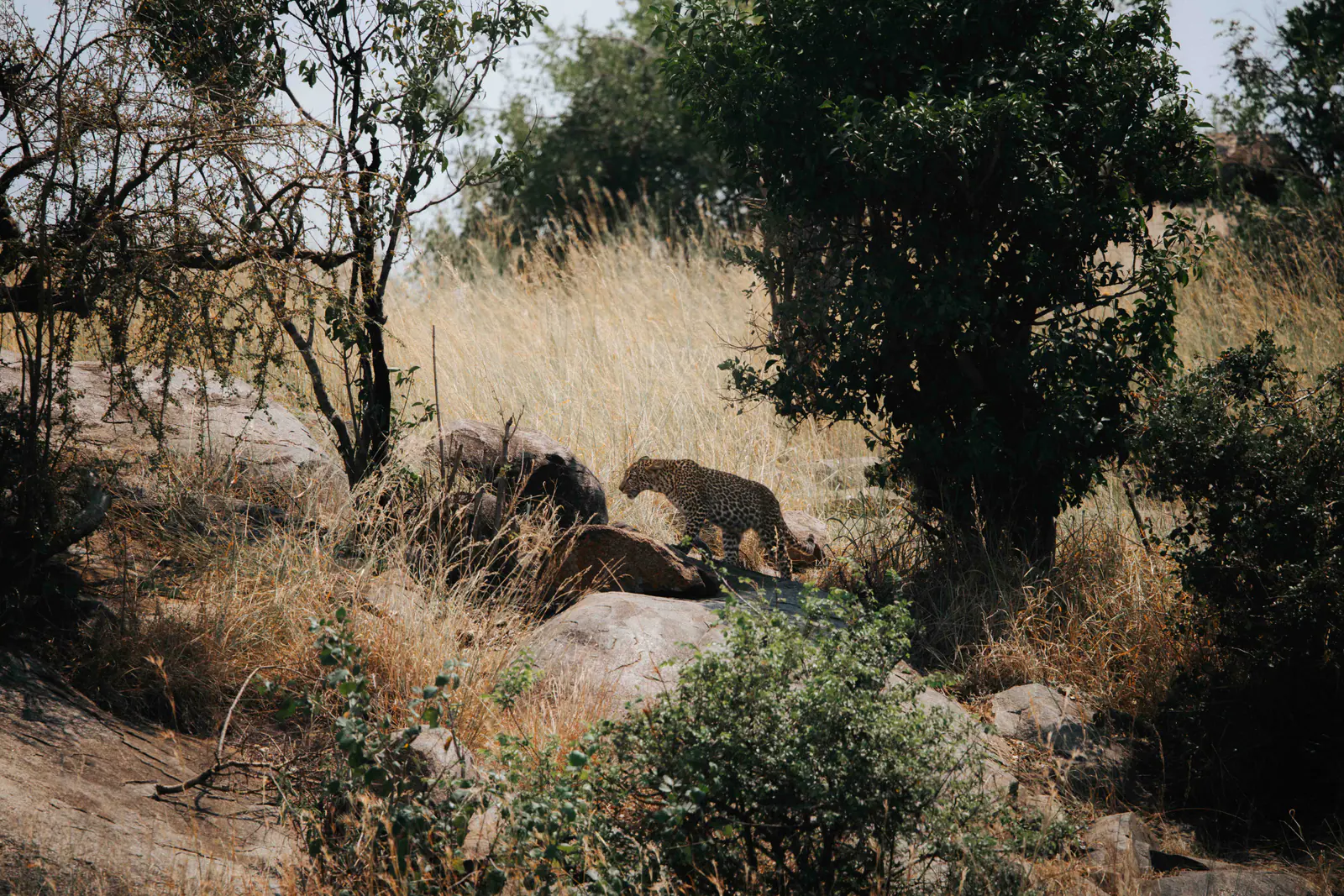 Laikipia Safari Highland conservancies below Mount Kenya: rhino conservation, walking and riding, low vehicle numbers and a wider range of activities. Parks & Reserves
Read the guide
 Kenya Luxury Safari Fly-in routing, private conservancies, small high-end camps and the privacy that separates a premium trip from an expensive one. Traveler Types
Read the guide
Frequently Asked Questions
-
A reserve is publicly managed land open to any paying visitor, with rules set by the authority. A conservancy is private or community land leased for conservation, where the conservancy limits bed numbers and sets its own operating rules.
Build this into a real Kenya route
Send us the dates, the travellers and the wildlife you care about most, and we will turn this guide into an itinerary that actually works on the ground.