


Drive vs Fly Safari in Kenya
This is the decision that quietly reshapes a Kenya itinerary more than the choice of parks. Get it right and a week feels generous; get it wrong and half the trip happens through a window.
- Road
- Cheaper, slower, more luggage
- Air
- Faster, pricier, strict bag limits
- Short trips
- Usually justify flying
- Hybrid routes
- Common and sensible
Written and maintained by the Safari Soles planning team in Arusha, Tanzania.
Drive if your trip is longer, your budget is the binding constraint, your regions sit on one line (Nairobi to Nakuru to the Mara, or Nairobi to Amboseli to Tsavo to the coast) and you want to see the country between the parks. Fly if your trip is short, if you are combining distant regions such as Samburu or Laikipia with the Mara, or if losing a full day to a transfer would cost you a wildlife day you cannot spare. Most well-built Kenya itineraries of seven nights or more end up doing some of each.
- Road is cheaper, more flexible and better for groups; air buys back whole days on short trips.
- Kenyan road distances translate badly into hours, always plan in hours, not kilometres.
- Light aircraft mean soft bags and a strict, carrier-specific weight limit that may include hand luggage.
- Flying is effectively the only sensible way to include Samburu or Laikipia on a week-long trip.
- Larger groups tilt strongly towards driving; couples on short trips tilt towards flying.
- Most well-built seven-night-plus itineraries use both, deliberately.
01 / 06
The decision, in one place
Before the detail, work through the factors that actually swing this choice. If three or more point the same way, you have your answer.
Road safari compared with fly-in
Neither column is the premium option. Road and air solve different problems.
What most itineraries should do
- Best hybrid approach
- Drive the first, scenic leg out of Nairobi; fly the long return or the leg between distant regions
- Tightest budget
- All road, on a single-line route, with fewer regions
- Photographers with heavy gear
- Road where possible; if flying, count gear against the allowance carefully
- Families with young children
- Fly the long legs, drive the short ones
This is a starting point rather than an objective ranking. The right answer changes with your dates, your nights and who is travelling.
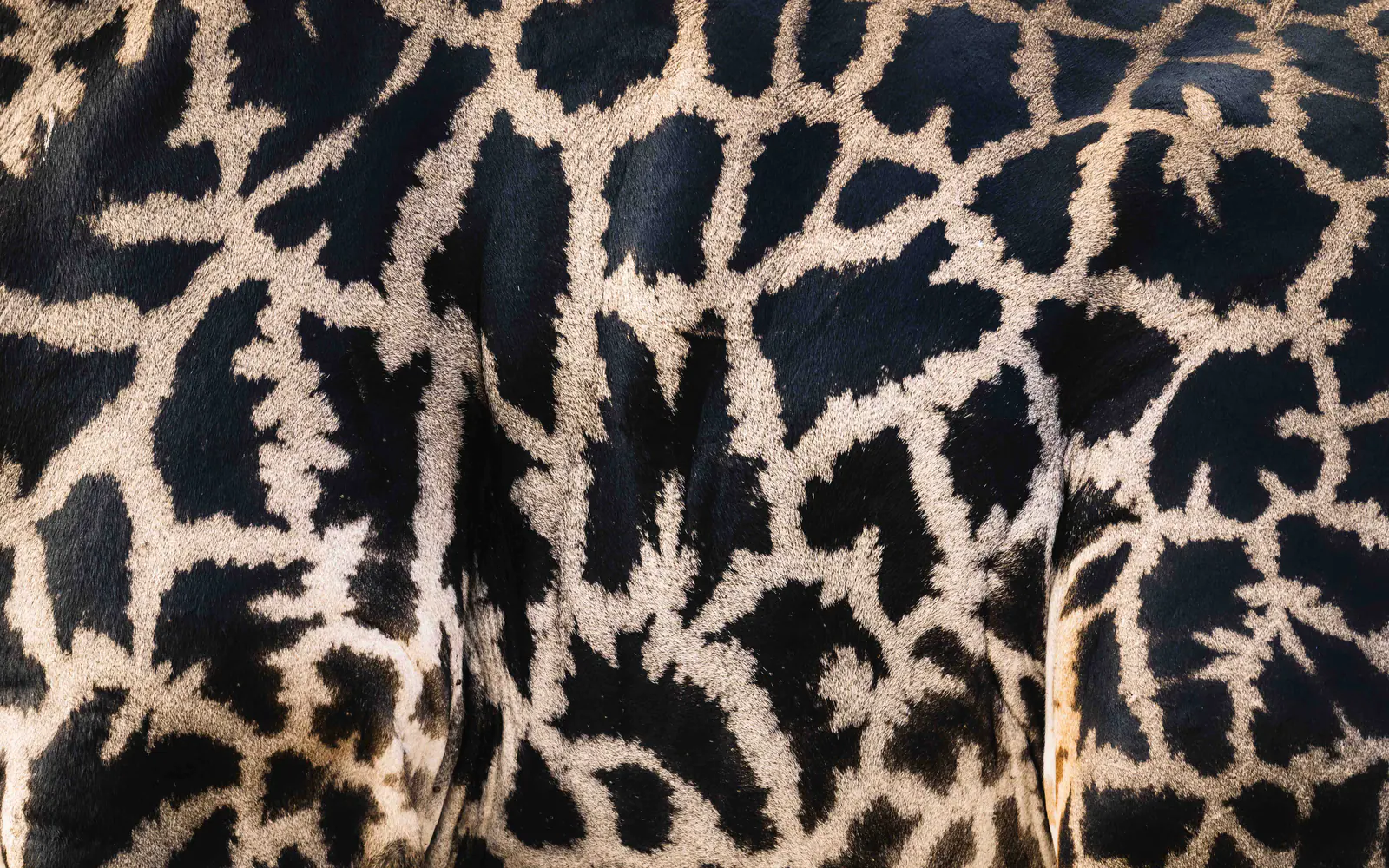
Close-up of a giraffe's coat, a fine pale network of lines around dark patches. The pattern is as individual as a fingerprint.
02 / 06
Cost: what you are actually paying for
A road safari bundles the vehicle, fuel and guide into one cost that is largely fixed regardless of how many people share it. That is why driving gets cheaper per person as the group grows, and why it suits families and groups of friends particularly well.
Flights are priced per person per sector, so a family of four flying two legs is paying eight fares. The cost does not scale down with numbers, which is the single biggest reason larger groups drive.
The counter-argument is what a day is worth. If flying converts two lost transfer days into two game-viewing days on a seven-night trip, you have effectively bought 30% more safari. On a fourteen-night trip that same saving is proportionally much smaller. The cost guide sets out how transport fits into an overall budget.
How transport choice moves the total
-
Group size
- Spends less
- Four or more people sharing one vehicle and guide across the whole trip.
- Spends more
- Two people flying multiple sectors, each paying per leg.
- Effect on the total
- The larger the group, the stronger the case for driving.
-
Trip length
- Spends less
- Ten nights or more, where a transfer day is a smaller share of the trip.
- Spends more
- Five to seven nights, where a lost day is a significant proportion.
- Effect on the total
- Shorter trips justify flying far more readily.
-
Regions chosen
- Spends less
- Regions on a single line out of Nairobi.
- Spends more
- Regions on opposite sides of the country.
- Effect on the total
- Geography, not preference, often forces the decision.
-
Vehicle type
- Spends less
- Shared group departures in a minibus or shared 4x4.
- Spends more
- Private 4x4 with a dedicated guide throughout.
- Effect on the total
- Private vehicles cost more but change how the day is run.
Air and road pricing both move with season, fuel costs and availability. Treat any figure you find online as indicative and ask for a current quote for your specific dates and route.
03 / 06
Time: the currency that actually matters
Kenyan road distances translate badly into hours. Nairobi to the Maasai Mara is commonly a five to seven hour drive depending on route, road conditions and traffic leaving the city; Nairobi to Amboseli is roughly four to five; Nairobi to Samburu is a solid six to seven. Add a lunch stop and a gate queue and the day is gone.
The equivalent flights are short, usually well under two hours between the main airstrips, often much less. What you are buying is not comfort so much as an afternoon game drive at the other end.
All of these figures are approximate and change with conditions. Airstrip departures also shift: light aircraft schedules depend on load, weather and other passengers, and a flight can route via another strip. Build a little slack into either option, and never plan a same-day connection to an international departure without a buffer.
Approximate transfer times from Nairobi
-
Nairobi → Maasai Mara
Approximate road time: 5–7 hrs
Trade-off: The final stretch is rough; leaving early makes a real difference.
-
Nairobi (Wilson) → Maasai Mara airstrip
Approximate flight time: 45 min – 1 hr 15
Trade-off: May route via another strip; soft bags only.
-
Nairobi → Amboseli
Approximate road time: 4–5 hrs
Trade-off: Good road for most of the way; a reasonable drive even with children.
-
Nairobi → Samburu
Approximate road time: 6–7 hrs
Trade-off: Scenic past Mount Kenya, but a full day each way.
-
Nairobi (Wilson) → Samburu airstrip
Approximate flight time: 1 hr – 1 hr 30
Trade-off: What makes the northern regions viable on a short trip.
All times are approximate and vary with traffic, weather, road conditions, routing and airstrip scheduling. Confirm against your own itinerary rather than planning to the minute.
04 / 06
Luggage, comfort and the practical differences
The luggage rule catches people out more than anything else. Light aircraft require soft-sided bags and enforce weight limits that vary by carrier, aircraft and route, and the limit can include hand luggage. Hard suitcases often cannot be loaded at all. If your trip includes city or beach clothing, most Nairobi hotels will store a second bag while you are in the bush.
On the road, none of that applies. Take the suitcase, take the second camera body, take the extra pair of shoes. For photographers with heavy equipment this alone is often decisive. The packing guide covers both scenarios.
Comfort cuts both ways. Long drives on corrugated murram are genuinely tiring, particularly the final approach to the Mara. Small aircraft, on the other hand, can be bumpy in the heat of the day and are not ideal for nervous flyers. Neither is a hardship; both are worth knowing about in advance.
05 / 06
The hybrid approach most good itineraries use
The false premise in this comparison is that you must choose one for the whole trip. In practice the strongest itineraries mix the two, using the road where it adds something and the air where it saves a day.
A common pattern: drive out from Nairobi to Lake Nakuru, continue by road to the Mara (so you have seen the Rift Valley and broken the journey) then fly back to Nairobi at the end rather than repeating the long drive. You gain most of the road experience and lose only the tedious return.
Another: fly into Samburu or Laikipia at the start, when energy is highest and the distance is greatest, then drive the shorter southern legs. The principle is the same in both cases: spend flying money where it buys the most time back.
Three approaches that work
All road
- Ten nights or more
- Regions on one line
- Budget is the binding constraint
- Group of four or more sharing a vehicle
- You want one guide throughout
All air
- Five to seven nights total
- Distant regions such as Samburu or Laikipia
- Time matters more than cost
- Two travellers rather than a group
- Comfortable with soft-bag luggage limits
Hybrid
- Drive out, fly back
- Road where the landscape is worth it
- Air across the one long leg
- The default for most seven-to-ten-night trips
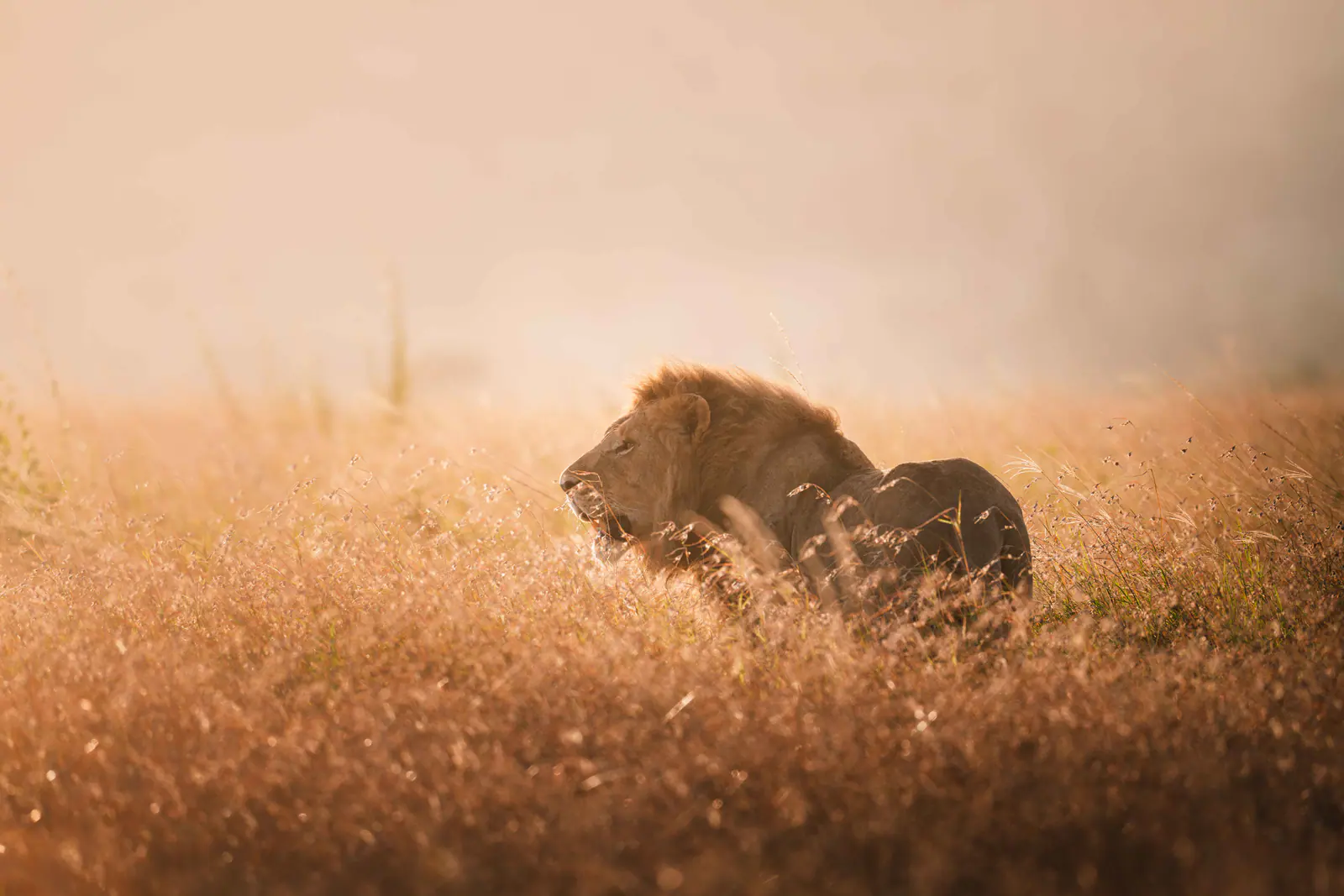
A male lion in profile, half hidden in sunlit grass with dust hanging in the air behind him.
06 / 06
Where to take this next
Transport changes both the budget and the usable time in your trip: see Kenya safari pricing and how many days you need.
If any leg is flown, read the luggage section of the Kenya safari packing list. Fly-in routing is standard at the top of the market (see luxury Kenya safari) and couples on tight schedules should read the Kenya honeymoon safari guide. Wider context: the Kenya safari guide and the Kenya safari guides library.
Planned by people who live the route
This library exists because the same Kenya questions arrive with every safari enquiry we answer.
- Locally based in Tanzania
- Kenya and Tanzania route specialists
- Licensed and insured operator
- Fast, direct answers
- Read Safari Soles reviews on TripAdvisor
- Read Safari Soles reviews on SafariBookings
- Read Safari Soles reviews on Google
Where these facts come from (3)
- Kenya's airports, including Wilson Airport Kenya Airports Authority · Aviation authority · checked 2026-09-14
- Baggage allowance for light-aircraft safari flights Safarilink Aviation · Airline policy · checked 2026-09-14
- Baggage policy for scheduled safari flights AirKenya Express · Airline policy · checked 2026-09-14
Related Safari Soles guides
Continue with the guides travellers usually read next.
 Kenya Safari Cost What drives the price: park and conservancy fees, accommodation tier, season, private versus group travel, and road versus fly-in routing. Planning
Read the guide
 How Many Days for a Kenya Safari What three to four, five to seven, eight to ten and ten-plus nights each realistically buy you on the ground, and where the extra days pay off. Planning
Read the guide
 Kenya Safari Packing List Clothing and layers for cold dawns and hot afternoons, camera gear, binoculars, and the soft-luggage weight limits that apply on light aircraft. Planning
Read the guide
Frequently Asked Questions
-
Drive on longer trips where regions sit on one line and budget matters; fly on short trips or when combining distant regions. Many itineraries do both: drive out, fly back.
Build this into a real Kenya route
Send us the dates, the travellers and the wildlife you care about most, and we will turn this guide into an itinerary that actually works on the ground.