


How to Plan a Kenya Safari
Most disappointing safaris are not booked badly. They are sequenced badly. Decisions get made in the wrong order, and the itinerary ends up serving the calendar instead of the traveller.
- Planning order
- Nights first, parks second
- Regions
- Two or three, not five
- Road vs air
- Changes everything
- Extensions
- Come last, not first
Written and maintained by the Safari Soles planning team in Arusha, Tanzania.
Plan a Kenya safari in a fixed order:
- Sequence matters: nights, priorities, regions, transport, style, season, extensions, requirements, booking.
- Count nights on the ground rather than days away: long-haul travel typically eats two of them.
- Two or three regions is the ceiling for most trips; four is usually a driving holiday.
- Road versus air is the decision that most changes what an itinerary can contain.
- Do not build the whole trip around the migration; build a route that works regardless.
- Brief an operator with priorities and constraints, not a list of parks.
01 / 07
The planning workflow, in order
Each step below narrows the field for the next one. Work through them in sequence and the itinerary largely designs itself; jump around and you will find yourself defending a choice made three steps too early.
Nine steps from idea to itinerary
-
Decide your real trip length
Count nights on the ground, not days away. Two of your calendar days are usually flights. A ten-day trip is often seven safari nights. See how many days you need.
Decide here: How many safari nights do you actually have?
-
Name your wildlife priorities
Big cats, elephants against Kilimanjaro, rhino, the migration, birdlife, or simply space and quiet. Two priorities is a workable itinerary; five is a driving holiday.
Decide here: What would make the trip a success?
-
Decide road or air
This single choice reshapes the itinerary more than any other. Roads are cheaper and scenic; flights buy back whole days. The drive versus fly guide sets out the trade.
Decide here: Are you buying time or saving money?
-
Pick an accommodation style
Large lodge, mid-size tented camp, small owner-run camp or exclusive-use property. Camp size affects vehicle sharing, meal timing and how the day is paced far more than the room does.
Decide here: Scale and price, or intimacy and flexibility?
-
Choose the season around your priorities
Dry months concentrate wildlife; green months bring lower rates, fewer vehicles and dramatic skies. Only fix dates around the migration if the migration is genuinely the point.
Decide here: Are your dates fixed, or is the wildlife?
-
Add a beach or cross-border extension last
Extensions should absorb the days that remain, not compete with safari nights. Diani, the wider Kenya coast, Zanzibar or Tanzania.
Decide here: Does the extension still leave the safari intact?
-
Check entry and health requirements
Passport validity, authorisation and a travel-health consultation. Start these once the route is settled and long before departure. See Kenya entry requirements.
-
Request a costed itinerary
Give an operator your nights, priorities, travellers and budget range rather than a list of parks. A good one will push back on the route if it does not work.
The order matters more than the detail. Most itinerary problems trace back to a decision made out of sequence.
Aerial view of rolling hills and shadowed folds in dry gold and brown.
02 / 07
Steps one and two: nights and priorities
Trip length is the constraint everything else negotiates with. The honest arithmetic is that a long-haul return trip loses roughly two days to travel, and a road transfer day between distant regions is not a wildlife day. So work in nights on the ground and be conservative.
With three or four nights, one region is the answer. With five to seven, two regions work comfortably. Eight to ten allows three, or two done properly with a beach ending. Beyond that you can build genuinely varied routes without rushing.
Priorities are the second filter, and the discipline is in naming two rather than nine. A traveller who says "big cats and somewhere quiet" has just described a Mara conservancy itinerary. A traveller who says "everything" has described a fortnight of driving. Write down what would make you feel the trip was worth it, and let the rest be a bonus.
Priority to region, at a glance
- Big cats and predator behaviour
- Maasai Mara, reserve or conservancy
- The migration and river crossings
- Mara in the July–October window, with realistic expectations
- Elephants and mountain landscapes
- Amboseli, two nights, ideally clear-season
- Rhino
- Lake Nakuru on a road route, or Laikipia for depth
- Something different from the classic circuit
- Samburu for dry-country species
- Safari plus beach in one holiday
- Kenya safari and beach for the pairing decision
This is a starting point rather than an objective ranking. The right answer changes with your dates, your nights and who is travelling.
03 / 07
Steps three and four: regions and how you move between them
Kenya's parks are not arranged conveniently. The Mara is south-west, Amboseli south-east, Samburu and Laikipia north, Tsavo south-east towards the coast. Two of those are a comfortable pairing; four are a logistical problem unless you fly.
The strongest road circuits run in one direction rather than radiating from Nairobi and back. Nairobi to Nakuru to the Mara is the classic western line. Nairobi to Amboseli to Tsavo to Diani is the southern line that ends at the beach. Both work because each transfer moves you forward instead of retracing.
Air changes the arithmetic completely. A flight turns a full driving day into a short hop, which is what makes northern regions like Samburu and Laikipia realistic on a shorter trip. It costs more and it caps your luggage, and on a long, unhurried itinerary the road can be part of the pleasure. The choice is genuinely about what your days are worth to you.
Three routes that work
-
The classic western circuit
Nairobi → Lake Nakuru → Maasai Mara. Breaks the long drive, adds rhino and birdlife, and finishes with the strongest big-cat region in the country.
-
The southern safari-and-beach line
Nairobi → Amboseli → Tsavo → Diani. Every transfer moves towards the coast, so nothing is retraced.
-
The northern fly-in
Nairobi → Samburu or Laikipia → Mara. Only realistic by air, and worth it for the contrast between dry north and grassland south.
-
The short first safari
One region, done properly. Usually the Mara. Resist the urge to add a second park. See how many days.
04 / 07
Steps five and six: camp style and timing
Accommodation style is not really about thread count. A hundred-room lodge and an eight-tent camp produce completely different days: shared versus private vehicles, fixed versus flexible meal times, a queue at a sighting versus an unhurried hour with it. Decide the experience you want and let the room follow.
Location within a region matters as much as the property. A camp inside a conservancy can offer night drives and walking that a reserve cannot; a lodge near a busy gate saves money but costs you the first hour of light. The reserve versus conservancy guide explains why the same region can feel like two different places.
Season comes after style because it should flex around what you have already chosen. Dry months give easier viewing and higher prices; green months give lower rates, fewer vehicles, dramatic light and better birding at the cost of thicker vegetation. Unless the migration is your central reason for going, the green shoulder months are frequently the better trip.
Fixing dates around the migration is the most common trap
Herd movements respond to rainfall and grazing, not to calendars, and river crossings cannot be scheduled. Planning an entire itinerary around a specific crossing is how travellers end up with a rushed route, peak-season pricing and disappointment. Build a route that would be excellent regardless, and treat a crossing as a very good day rather than the objective. The migration guide sets out what is realistic month by month.
05 / 07
The planning mistakes that recur
Almost every itinerary we are asked to review has at least one of these in it. None of them are exotic errors. They are the natural result of planning enthusiastically.
- Too many parks. Four regions in eight nights means four half-days lost to transfers and no time to work a sighting properly.
- Underestimating transfer time. Road distances in Kenya translate poorly into hours. A map distance of 250 kilometres can be most of a day.
- Choosing dates only around the migration. It compresses the route, raises the price and stakes the trip on something nobody controls.
- Mixing distant regions on a short trip. Samburu and Amboseli in five nights is a transfer itinerary with wildlife attached.
- One-night stops everywhere. A single night usually means one afternoon drive and one rushed morning. Two nights is where a place starts to make sense.
- Adding beach days without protecting the safari. The beach should take the leftover nights, not borrow from the bush.
- Booking the cheapest option in the most expensive month. Peak-season budget lodges near busy gates deliver the crowded version of the best region.
The same eight nights, planned two ways
Fewer places, more nights in each, is the single most reliable improvement to a Kenya itinerary.
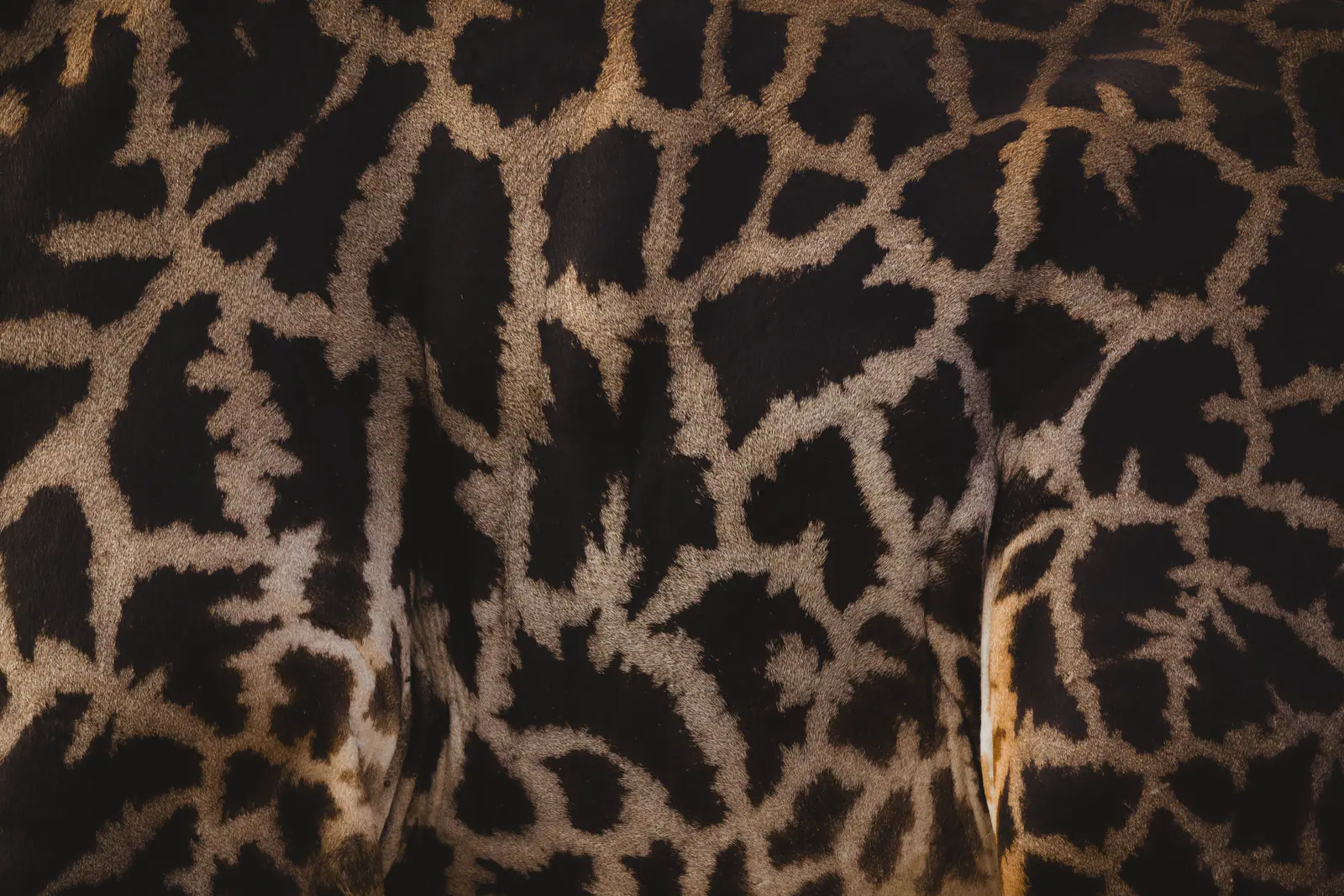
Close-up of a giraffe's coat in deep shadow, a pale web of lines around dark patches.
06 / 07
How to brief an operator so you get a good itinerary back
The best briefs are short and honest. Give your travel window and how much of it is flexible, the number of nights you can actually spend in Kenya, who is travelling and their ages, your two wildlife priorities, your feeling about road versus air, and a realistic budget range per person excluding international flights.
What not to do is send a list of parks copied from a search result. That tells an operator nothing about what you value, and the itinerary that comes back will simply be your list arranged in geographical order, which is exactly how overloaded routes get built.
Expect and welcome pushback. If nobody suggests dropping a park, lengthening a stay or moving a date, you are being sold an itinerary rather than planned one. Costs and what drives them are set out in the Kenya safari cost guide, and the wider planning context sits in the Kenya safari overview.
07 / 07
Where to take this next
Each step above has a guide behind it: best time to visit Kenya for the month, how many days you need for length, and Kenya safari pricing for the money.
For regions, start with planning a Maasai Mara safari and the Amboseli safari guide. Arrival and departure days are often best spent at Nairobi National Park. The Kenya safari guide frames the country; the Kenya safari guides library holds the rest.
Planned by people who live the route
This library exists because the same Kenya questions arrive with every safari enquiry we answer.
- Locally based in Tanzania
- Kenya and Tanzania route specialists
- Licensed and insured operator
- Fast, direct answers
- Read Safari Soles reviews on TripAdvisor
- Read Safari Soles reviews on SafariBookings
- Read Safari Soles reviews on Google
Where these facts come from (2)
- Conservation fees and visitor regulations Kenya Wildlife Service · Park authority · checked 2026-09-14
- Kenya Electronic Travel Authorisation: official portal Directorate of Immigration Services, Republic of Kenya · Immigration · checked 2026-09-14
Related Safari Soles guides
Continue with the guides travellers usually read next.
 Best Time to Visit Kenya Month-by-month safari timing: wildlife movement, rainfall patterns, migration activity, crowd levels and where the value sits in each season. Planning
Read the guide
 How Many Days for a Kenya Safari What three to four, five to seven, eight to ten and ten-plus nights each realistically buy you on the ground, and where the extra days pay off. Planning
Read the guide
 Kenya Safari Cost What drives the price: park and conservancy fees, accommodation tier, season, private versus group travel, and road versus fly-in routing. Planning
Read the guide
Frequently Asked Questions
-
How many nights you will genuinely spend on the ground. Everything else (how many regions, whether you fly, whether a beach extension fits) follows from that number.
Build this into a real Kenya route
Send us the dates, the travellers and the wildlife you care about most, and we will turn this guide into an itinerary that actually works on the ground.