


Laikipia Safari
Laikipia is not a national park. It is a patchwork of private and community conservancies below Mount Kenya, and that structure is exactly why it offers things the parks cannot.
- Location
- Central highlands, below Mount Kenya
- Area type
- Conservancies, not a national park
- Activities
- Vary by property
- Recommended stay
- 2–3 nights
Written and maintained by the Safari Soles planning team in Arusha, Tanzania.
Laikipia is a highland plateau north-west of Mount Kenya made up of conservancies rather than a single national park.
- Laikipia is a network of conservancies, not a national park, which is why activities beyond game drives are possible at all.
- What is permitted varies by conservancy and by property, never assume walking, night drives or riding are available.
- It is central to Kenya's rhino conservation and offers unusually close insight into that work.
- Vehicle numbers are very low, so sightings are private and unhurried.
- Two to three nights, ideally flown if your trip is short.
- Generally a mid-upper to high-cost region because of conservancy fees and small camps.
01 / 07
Why the conservancy model changes the experience
In a national park or reserve, rules are set by the wildlife authority and apply to everyone: fixed gate hours, restrictions on off-road driving, generally no walking, no night drives, and no cap on how many vehicles can attend a sighting. Conservancies are privately or community managed and set their own rules within the terms of their conservation agreements.
In practice that means many Laikipia properties can offer guided walking, night drives, horseback or camel-back safaris and off-road access to sightings, with a limited number of beds spread across a large area. The result is that you rarely share a sighting, and that you can spend part of the day out of the vehicle.
It also means these are working landscapes. Many conservancies combine wildlife with livestock and community programmes, and a night here contributes directly to both. The broader comparison sits in reserve versus conservancy.
Laikipia is not one place with one rulebook. Walking, night drives, riding and off-road access are permitted by individual conservancies and properties, not by the region as a whole: confirm what your specific camp offers before you book around an activity.
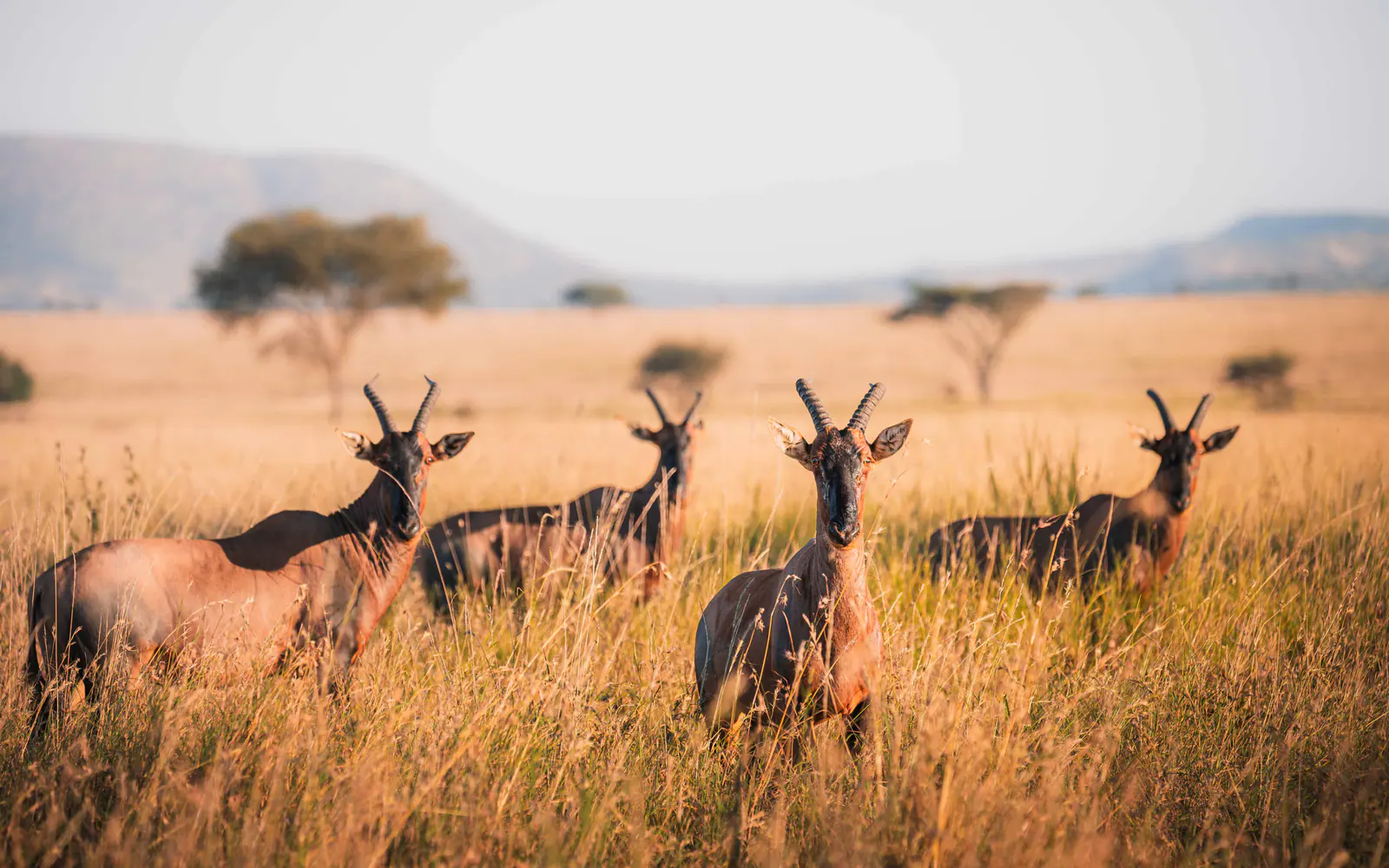
Topi standing alert in tall grass, with acacias and hills behind them.
02 / 07
Wildlife, and rhino in particular
Laikipia's conservation significance is substantial, particularly for rhino. Several of its conservancies hold important black and white rhino populations and run intensive protection programmes, and some are known for work with other endangered species. Visitors here often get an unusually close view of how conservation actually operates: tracking, monitoring and anti-poaching work included.
Beyond rhino, the region holds elephant, lion, leopard, buffalo, reticulated giraffe, Grevy's zebra and wild dog, which are seen more often here than in most of Kenya. Because Laikipia sits between the highlands and the northern drylands, the species mix draws from both: you will see animals here that do not occur together anywhere further south.
Game viewing is generally less dense than the Mara. The pleasure is in the quality and privacy of sightings rather than the quantity, and in the activities around them.
03 / 07
Is Laikipia right for your trip?
Laikipia rewards a particular kind of traveller and frustrates another. Work through both columns honestly before you commit nights to it.
Laikipia fit check
Choose Laikipia if…
- You have already done the classic circuit and want a different rhythm
- Getting out of the vehicle matters to you
- You want privacy and very low vehicle numbers
- Conservation is part of why you are travelling
- You are travelling as a family and need flexibility beyond game drives
- You are combining it with Samburu to the north
Think twice if…
- This is a short first safari and big cats are the priority
- Volume of sightings matters more than quality
- Budget is the binding constraint: conservancy fees add up
- You are set on a specific activity without checking the property offers it
- You only have two nights and would need a full day of road transfer each way
Combine it if…
- You have seven nights or more
- You want highland contrast alongside the Mara
- You are flying between regions rather than driving
- You want walking and riding on one half of the trip and predator density on the other
04 / 07
Activities, and checking what is actually available
The activity list is the reason most people choose Laikipia, so it is worth being precise about it. Guided walking with an armed guide is widely available but subject to minimum ages that vary. Night drives are offered by many conservancies but not all. Horse riding and camel treks exist at a small number of properties and often need booking in advance. Some camps also offer visits to rhino monitoring or anti-poaching operations.
None of that is regional policy. Each conservancy sets its own rules, and each camp within it decides what it runs. Two properties an hour apart can offer completely different days. If a particular activity is the reason you are going, confirm it in writing at the point of booking rather than assuming.
One consequence worth planning for: because activities are property-led, camp choice matters more in Laikipia than almost anywhere else in Kenya. In the Mara the region largely defines the experience; here the camp does.
What may be available: and what to confirm
-
Guided walking
With an armed guide. Minimum ages apply and vary by property: check if you are travelling with children.
-
Night drives
Where permitted, the best chance at aardvark, porcupine, genet and hunting leopard. Confirm before booking around it.
-
Riding safaris
Horseback and camel-back options exist in a small number of places and usually need advance arrangement and some experience.
-
Conservation visits
Some conservancies offer access to rhino monitoring or anti-poaching work. Availability depends on operational circumstances on the day.
05 / 07
Families, honeymooners and luxury travellers
Laikipia works particularly well for families. Many camps are owner-run, flexible about meal times and able to offer activities beyond game drives that keep children engaged: riding, walking, swimming, tracking exercises. Minimum ages apply to some activities, so ages matter to camp choice; see Kenya family safari.
For honeymooners the appeal is privacy: small properties, few vehicles, and the option of a private guide and vehicle at many camps. Exclusive-use houses are more common in Laikipia than in most Kenyan regions, which suits couples travelling with family or friends. The structuring options are in the honeymoon guide.
It is also one of the strongest luxury regions in the country, though for reasons of space and access rather than décor: the luxury safari guide explains why that distinction matters.
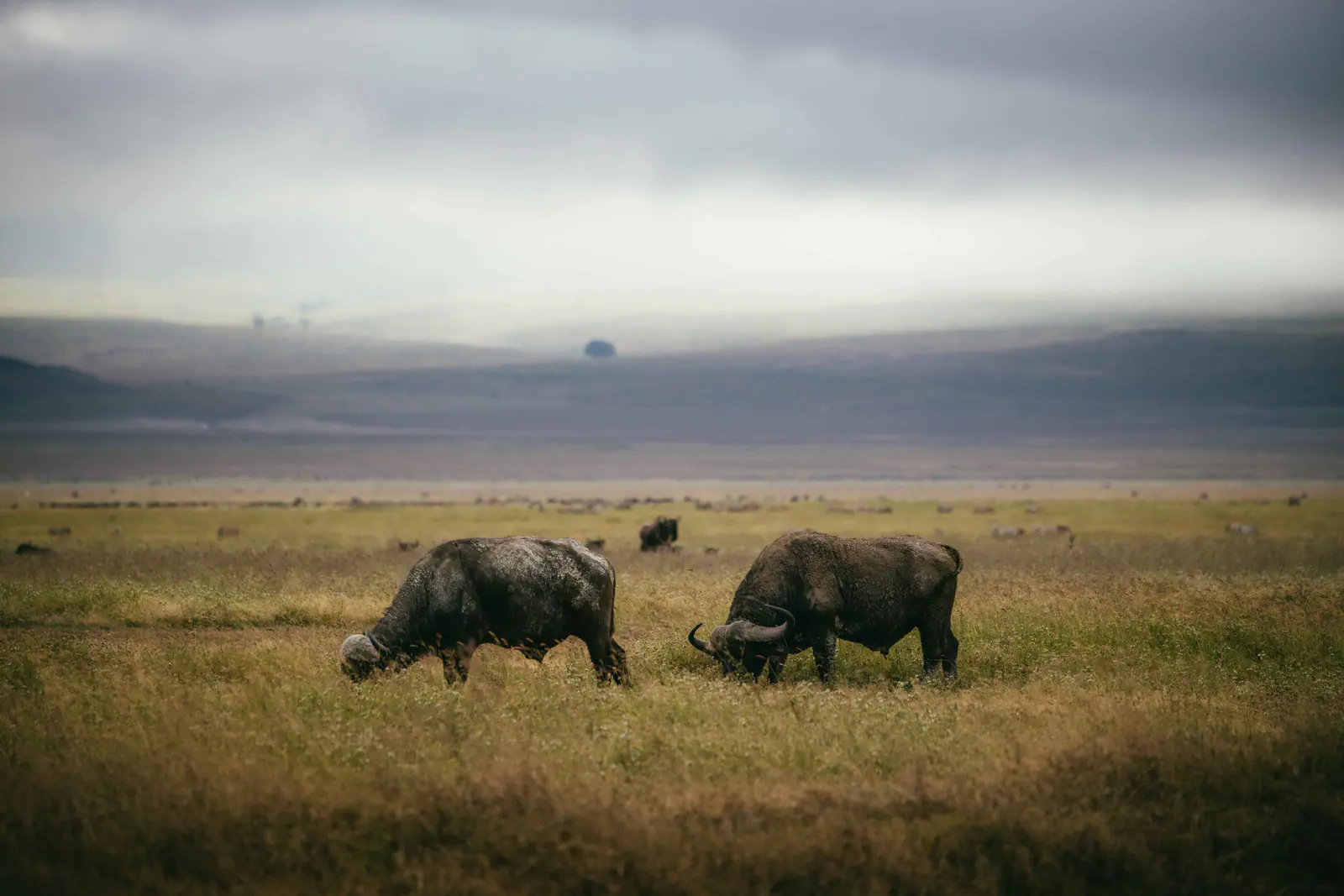
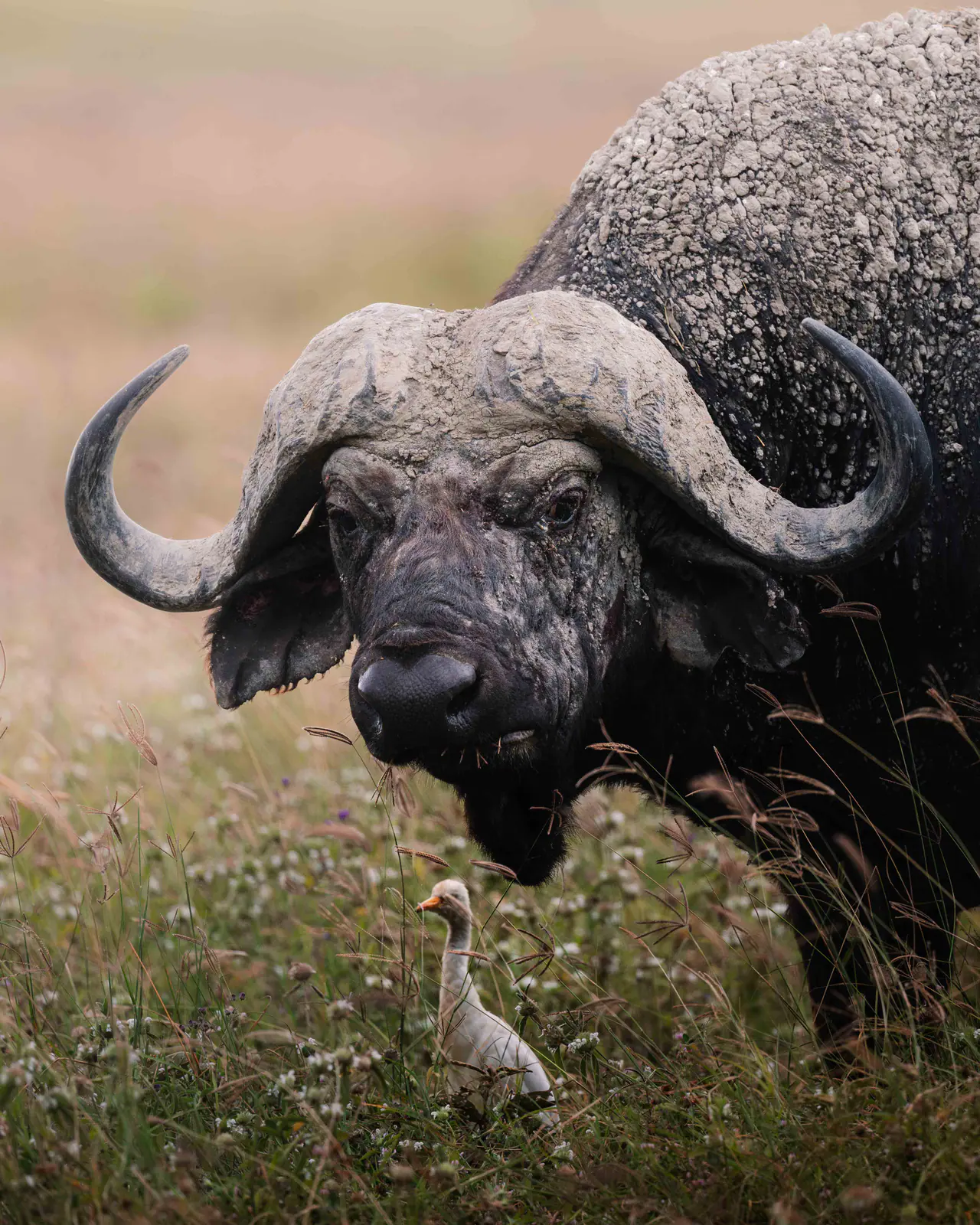
Two Cape buffalo grazing in short grass under a heavy grey sky.
06 / 07
Getting there, timing and cost
Laikipia is roughly four to five hours from Nairobi by road, past Mount Kenya, or under an hour by light aircraft to one of several airstrips. Flying is common here because road time eats into a short stay, and because the region pairs so naturally with other fly-in destinations.
The altitude makes Laikipia noticeably cooler than Samburu or Tsavo, with genuinely cold mornings and pleasant days. It is a year-round destination: the drier months give the easiest conditions, while the rains bring green landscapes and excellent birding without the crowding that affects other regions.
Cost is the main constraint. Conservancy camps carry conservation fees and are typically small, which puts most of Laikipia in the mid-upper to high bracket. More affordable options exist, but this is not a budget region. The cost guide explains how conservancy fees work.
Reaching Laikipia
-
Nairobi (Wilson) → Laikipia airstrip
Approximate flight time: 45 min – 1 hr
Trade-off: Protects the stay; soft luggage and a carrier-specific weight limit.
-
Nairobi → Laikipia
Approximate road time: 4–5 hrs
Trade-off: Scenic past Mount Kenya, but half a day at each end.
-
Laikipia → Samburu
Approximate road time: 2–3 hrs
Trade-off: Short enough to make the northern pairing work by road.
-
Laikipia → Maasai Mara
Approximate flight time: 1 hr 30 – 2 hrs
Trade-off: Usually via Nairobi; the classic highland-and-grassland combination.
All journey times are approximate. Traffic, weather, road conditions, stops, gate choice and airstrip schedules all change them.
07 / 07
Where to take this next
Laikipia and Samburu form the standard northern pairing, and reserve versus conservancy explains why the land model here changes the experience so much.
Because most Laikipia properties sit at the top of the market, read luxury Kenya safari and, for couples, the Kenya honeymoon safari guide. Circuits: the Kenya safari guide. Everything else: the Kenya safari guides library.
Planned by people who live the route
This library exists because the same Kenya questions arrive with every safari enquiry we answer.
- Locally based in Tanzania
- Kenya and Tanzania route specialists
- Licensed and insured operator
- Fast, direct answers
- Read Safari Soles reviews on TripAdvisor
- Read Safari Soles reviews on SafariBookings
- Read Safari Soles reviews on Google
Where these facts come from (2)
- Laikipia conservation landscape and community conservancies Laikipia Wildlife Forum · Conservation body · checked 2026-09-14
- Conservancies in Kenya: the community and private conservancy model Kenya Wildlife Conservancies Association · Conservation body · checked 2026-09-14
Related Safari Soles guides
Continue with the guides travellers usually read next.
 Reserve vs Conservancy How national reserves and private or community conservancies differ on vehicle numbers, permitted activities, camp style and cost, and why rules vary by conservancy. Comparisons
Read the guide
Reserve vs Conservancy How national reserves and private or community conservancies differ on vehicle numbers, permitted activities, camp style and cost, and why rules vary by conservancy. Comparisons
Read the guide
 Samburu Safari Northern Kenya's dry-country wildlife, the species you will not see further south, and quieter routing for repeat safari travellers. Parks & Reserves
Read the guide
Samburu Safari Northern Kenya's dry-country wildlife, the species you will not see further south, and quieter routing for repeat safari travellers. Parks & Reserves
Read the guide
 Kenya Family Safari Private vehicles, shorter transfer days, family rooms and pools, age-appropriate pacing and the coast finish that keeps everyone happy. Traveler Types
Read the guide
Kenya Family Safari Private vehicles, shorter transfer days, family rooms and pools, age-appropriate pacing and the coast finish that keeps everyone happy. Traveler Types
Read the guide
Frequently Asked Questions
-
Different rather than better. The Mara has higher predator density and the migration; Laikipia has privacy, activities out of the vehicle and rhino. Many good itineraries include both.
Build this into a real Kenya route
Send us the dates, the travellers and the wildlife you care about most, and we will turn this guide into an itinerary that actually works on the ground.