


Samburu Safari
Samburu is the moment a Kenya itinerary stops feeling like a circuit. Different landscape, different species, different people, and a river that holds the whole thing together.
- Location
- Arid northern Kenya, on the Ewaso Ng'iro
- Wildlife
- Dry-country species not found in the Mara
- Recommended stay
- 2–3 nights
- Pairs with
- Laikipia
Written and maintained by the Safari Soles planning team in Arusha, Tanzania.
Samburu National Reserve sits in Kenya's arid north, on the Ewaso Ng'iro river, and offers a genuinely different safari from the southern grasslands.
- Samburu offers dry-country species (reticulated giraffe, Grevy's zebra, gerenuk, beisa oryx, Somali ostrich) that are rare or absent in southern Kenya.
- The Ewaso Ng'iro river concentrates wildlife, so game viewing focuses on the river corridor.
- Two nights is the minimum; three is better if the specials matter to you.
- Fly if your trip is short. The road from Nairobi costs a day at each end.
- It pairs naturally with Laikipia by road, and with the Mara by air for a north-south contrast.
- No sighting is guaranteed here or anywhere; Samburu improves the odds on species you cannot reasonably look for further south.
01 / 07
What makes northern Kenya different
Everything about Samburu contrasts with the Mara. The Mara is rolling green grassland at altitude; Samburu is hot, low, arid country of doum palms, acacia scrub, red rock and dry riverbeds. The colour palette is ochre and grey-green rather than gold and emerald, and the light is harder and more dramatic.
The Ewaso Ng'iro river is the reason wildlife concentrates here at all. It runs through the reserve and, in a landscape where surface water is scarce, it draws elephant, big cats and plains game to a narrow corridor. Game viewing in Samburu is therefore about the river and its fringes rather than about open plains.
The human landscape is different too. This is Samburu land, and the pastoralist communities here have a distinct culture from the Maasai further south. Several camps work directly with community conservancies in the wider region, so the cultural context is closer to the surface than it is on the classic southern circuit.
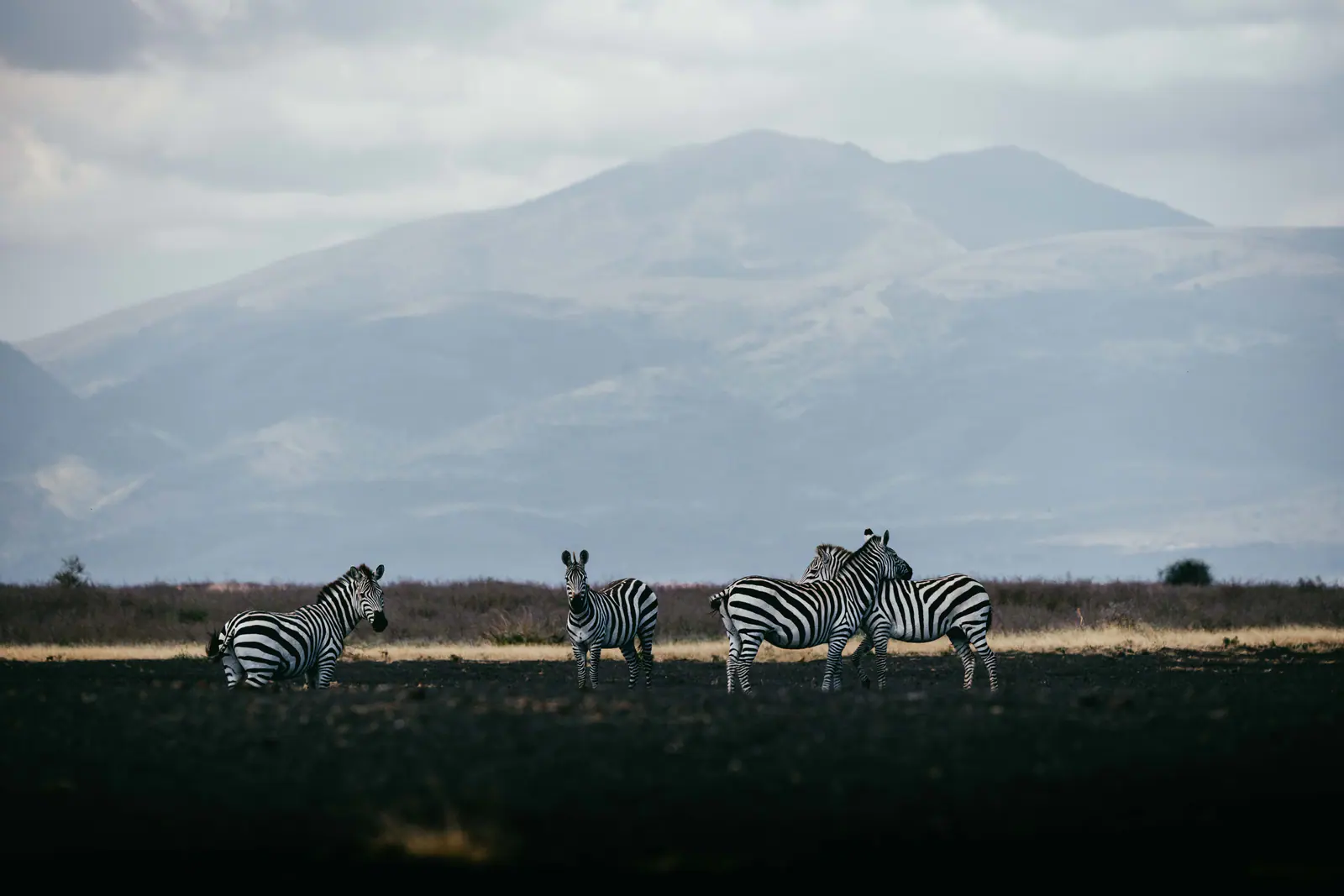
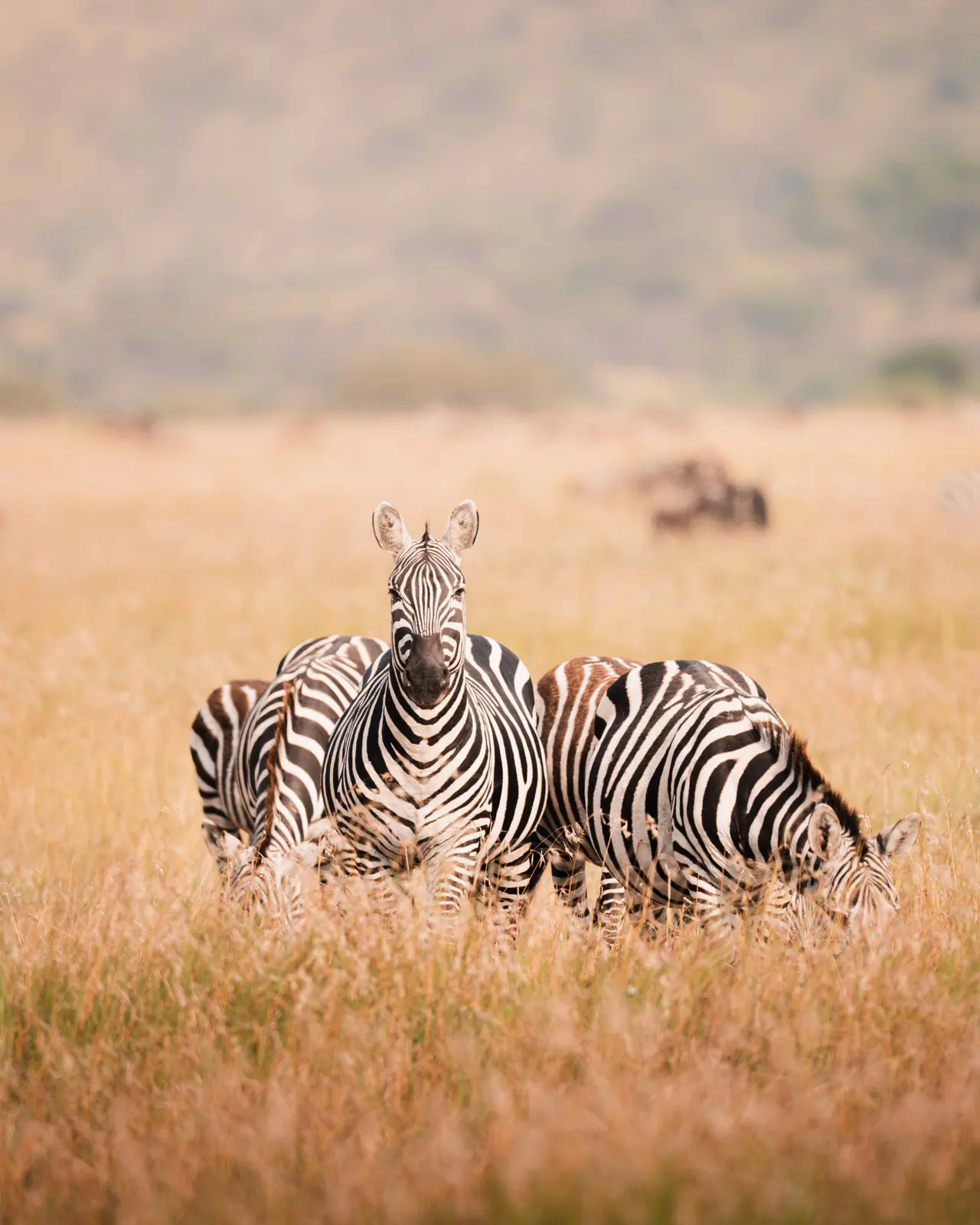
Four zebras on a dark plain below a big hazy mountain.
02 / 07
The wildlife you come here for
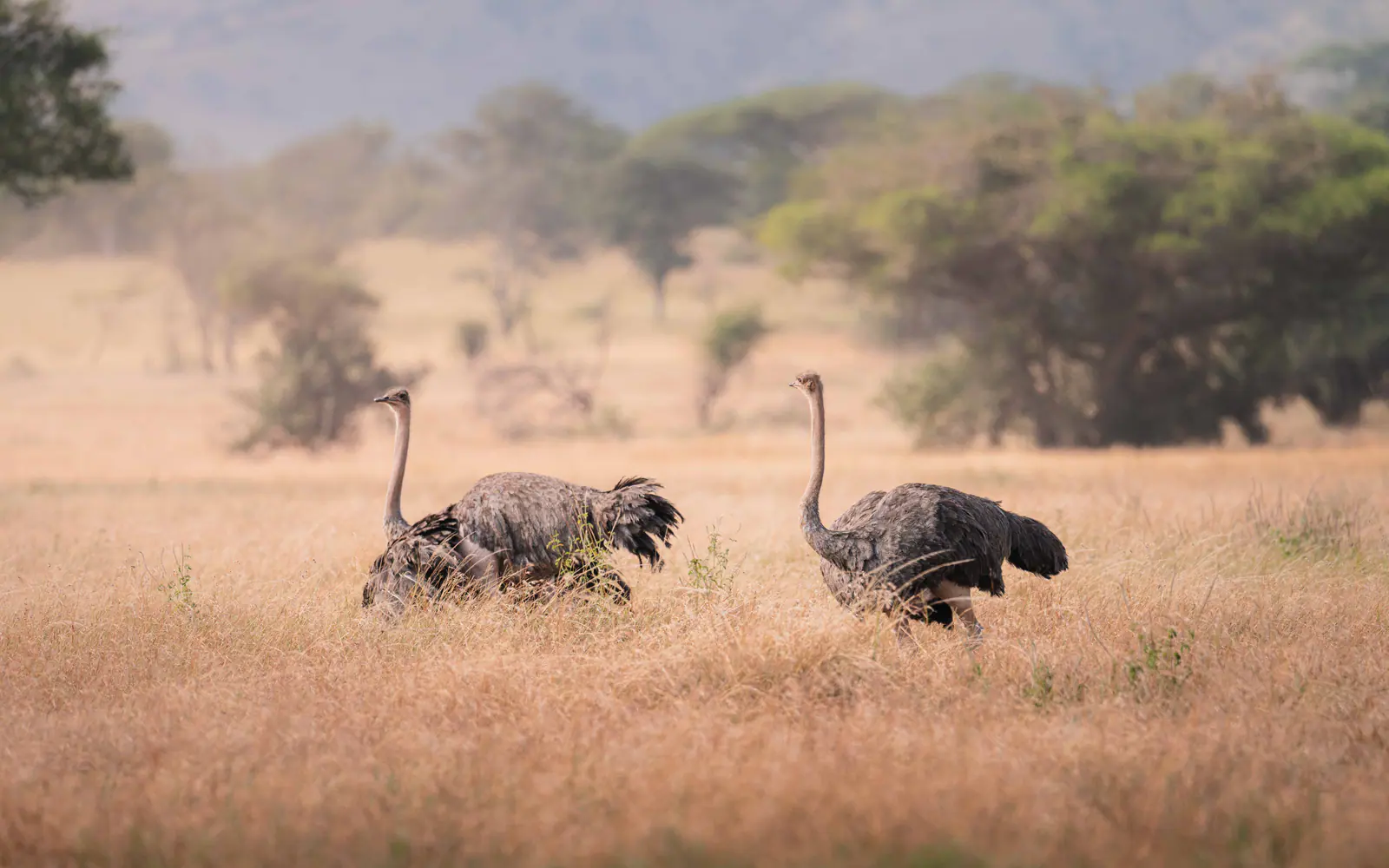
Samburu's headline is a group of arid-adapted species that are rare or absent in the southern parks. Reticulated giraffe, Grevy's zebra, gerenuk, the antelope that stands on its hind legs to browse, beisa oryx and Somali ostrich are all sought here, and camps often refer to them collectively as the northern specials.
That does not mean they are guaranteed. Sightings depend on season, rainfall, where the animals are moving and a degree of luck, as everywhere. What is reasonable to say is that Samburu is the most accessible place in Kenya to look for them, and that most visitors on a two or three night stay see several.
Beyond the specials, elephant are common along the river, lion and leopard are both present, and Samburu has a reputation for good leopard viewing in the riverine cover. Cheetah occur in the more open sections. Birdlife is excellent, with a distinctly northern species list that keeps birders busy.
The northern specials
-
Reticulated giraffe
Sharply defined liver-red patches with white lines: visually quite different from the Maasai giraffe of the south.
-
Grevy's zebra
Larger than the common zebra, with narrow stripes and rounded ears. Northern Kenya is central to its remaining range.
-
Gerenuk
A long-necked antelope that browses standing upright on its hind legs: one of the most memorable sightings in the north.
-
Beisa oryx and Somali ostrich
Both are arid specialists. The Somali ostrich's blue-grey legs and neck distinguish it from the common ostrich of the south.
03 / 07
Samburu or the Maasai Mara?
This is the question that actually decides most itineraries, and for a first, short safari the honest answer is usually the Mara. Samburu earns its place as a contrast, a second region, or the choice for a traveller who has already done the classic circuit and wants somewhere that does not feel like it.
Samburu compared with the Maasai Mara
Neither replaces the other. On a seven-night trip, one of each is a genuinely strong combination.
04 / 07
How many nights, and how to get there
Two nights is the practical minimum and delivers a full day plus two half-days: enough to work the river properly and give the specials a fair chance. Three nights lets you slow down, spend time with a leopard sighting rather than glancing at it, and add a cultural visit without compressing the game drives.
Access is the real planning question. Samburu is a long day's drive north of Nairobi, past Mount Kenya, and while the road is scenic, it consumes a day at each end. On a short trip that is expensive in the currency that matters. A light aircraft flight is considerably quicker and is what most fly-in itineraries use.
The road makes more sense if you are already in the highlands (coming from Laikipia, for example, where the transfer is short) or if you have the nights to spare and want to see the country change as you go. The drive versus fly guide works through the trade in detail.
Getting to Samburu
-
Nairobi (Wilson) → Samburu airstrip
Approximate flight time: 1 hr – 1 hr 30
Trade-off: Fastest option; luggage is limited to a soft bag within the carrier's allowance.
-
Nairobi → Samburu
Approximate road time: 6–7 hrs
Trade-off: Scenic past Mount Kenya, but a full day gone at each end of the stay.
-
Laikipia → Samburu
Approximate road time: 2–3 hrs
Trade-off: Short enough to make the two regions a natural pair by road.
All journey times are approximate. Traffic, weather, road conditions, stops, gate choice and airstrip schedules all change them.
How long to stay
- Adding contrast to a Mara-led trip
- 2 nights, flown in and out
- Looking specifically for the northern specials
- 3 nights: more chances, less pressure
- Combining with Laikipia
- 2 nights here, 2–3 there, linked by road
- Photography-led travel
- 3 nights, private vehicle, working the river at both ends of the day
- A short first safari
- Consider the Mara instead and save Samburu for a second trip
This is a starting point rather than an objective ranking. The right answer changes with your dates, your nights and who is travelling.
05 / 07
Families, honeymooners and repeat visitors
Samburu suits repeat visitors best. If you have already seen the Mara and want a Kenya that feels genuinely unfamiliar, this is the answer, and the low vehicle numbers make it feel like a private experience even in the reserve itself.
For honeymooners it works well as the quiet half of a trip, particularly paired with a conservancy stay elsewhere. Camps here tend to be small and riverside, and the setting is dramatic without being showy. The honeymoon guide covers how to structure that pairing.
With children, be realistic about heat and transfer time. Samburu is hot by the middle of the day, and the long road journey is hard on younger travellers: fly if you are bringing them. Many camps have family accommodation and river-facing shade, and older children in particular respond well to the difference from the standard safari landscape. Pacing advice sits in the family safari guide.
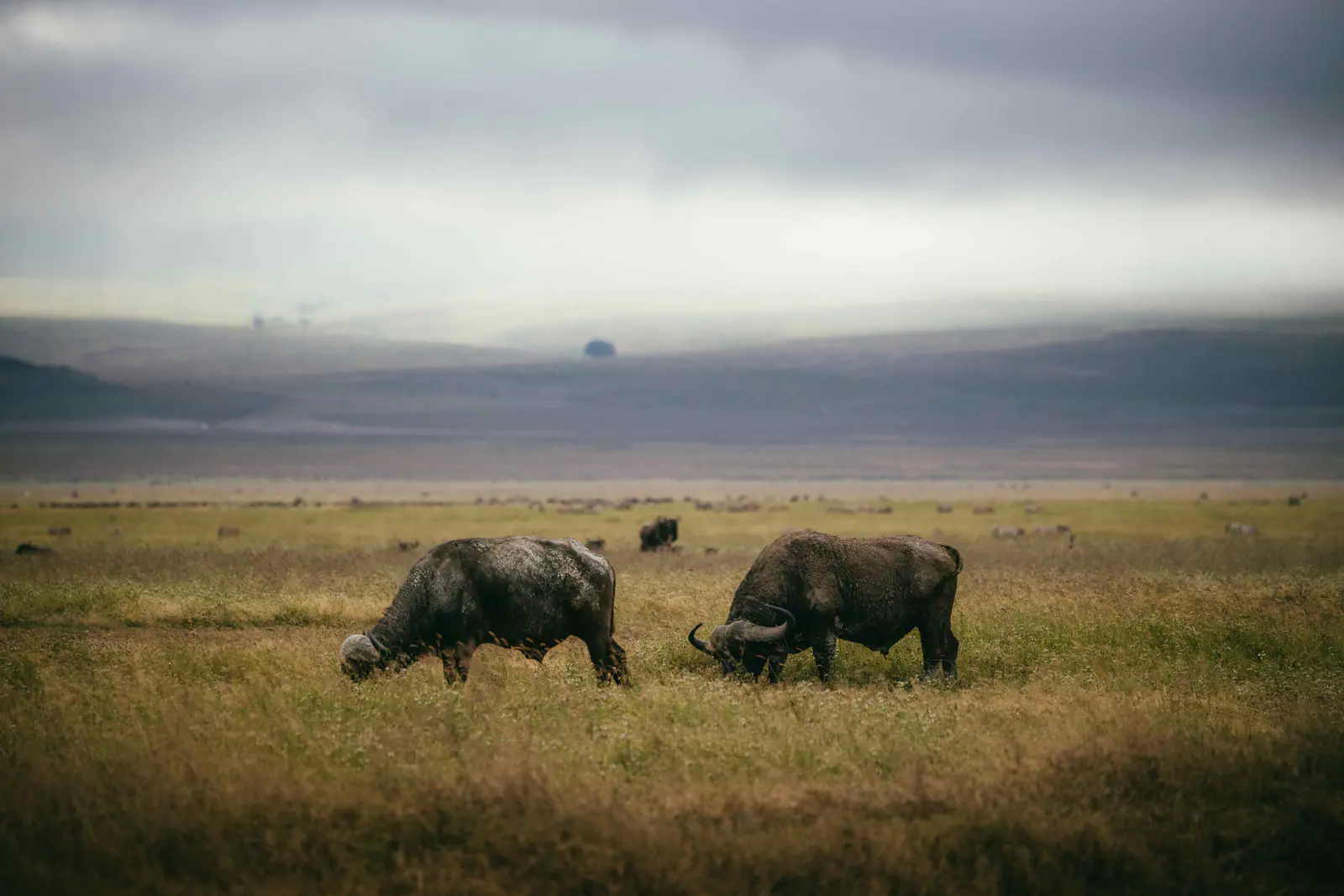
Two Cape buffalo grazing in short grass under a heavy grey sky.
06 / 07
When to visit
The dry months (broadly June to October and January to February) concentrate wildlife along the Ewaso Ng'iro and give the most reliable game viewing. Heat is significant in the middle of the day year-round, so drives run early and late.
The rains transform the reserve. Green flushes across the scrub, birdlife peaks and the landscape photographs beautifully, but animals disperse away from the river because water is available everywhere. Access can also be affected after heavy rain.
One planning point specific to the north: the river itself responds to rainfall in the highlands rather than locally, so its level does not always match conditions in the reserve. Seasonal outlooks from the Kenya Meteorological Department are the right reference for broad expectations. See also best time to visit Kenya.
07 / 07
Where to take this next
Samburu is usually planned with the Laikipia plateau, so read the Laikipia safari guide next, and reserve versus conservancy for what changes when you move onto conservancy land.
The northern species and light suit photographers particularly well. See Kenya photography safari. For sequencing, use how to plan a Kenya safari, the Kenya safari guide and the Kenya safari guides library.
Planned by people who live the route
This library exists because the same Kenya questions arrive with every safari enquiry we answer.
- Locally based in Tanzania
- Kenya and Tanzania route specialists
- Licensed and insured operator
- Fast, direct answers
- Read Safari Soles reviews on TripAdvisor
- Read Safari Soles reviews on SafariBookings
- Read Safari Soles reviews on Google
Where these facts come from (2)
- Tourist attraction sites, including Samburu National Reserve County Government of Samburu · County authority · checked 2026-09-14
- Seasonal rainfall forecasts and outlooks Kenya Meteorological Department · Meteorological · checked 2026-09-14
Related Safari Soles guides
Continue with the guides travellers usually read next.
 Laikipia Safari Highland conservancies below Mount Kenya: rhino conservation, walking and riding, low vehicle numbers and a wider range of activities. Parks & Reserves
Read the guide
 Kenya Photography Safari Vehicle setup, early starts, staying longer at a single sighting, Amboseli light and predator-focused Mara time. Traveler Types
Read the guide
 Reserve vs Conservancy How national reserves and private or community conservancies differ on vehicle numbers, permitted activities, camp style and cost, and why rules vary by conservancy. Comparisons
Read the guide
Frequently Asked Questions
-
As a second region, strongly: it delivers species and landscapes the southern parks cannot. As a short first safari on its own, the Maasai Mara is usually the better choice.
Build this into a real Kenya route
Send us the dates, the travellers and the wildlife you care about most, and we will turn this guide into an itinerary that actually works on the ground.