


Rwanda Gorilla Trekking: A Beginner's Guide to the Whole Experience
If all you know is that Rwanda is a place to see mountain gorillas, start here. This guide explains the forest trek, the permit, the rules, the one-hour encounter and the practical decisions around the day.
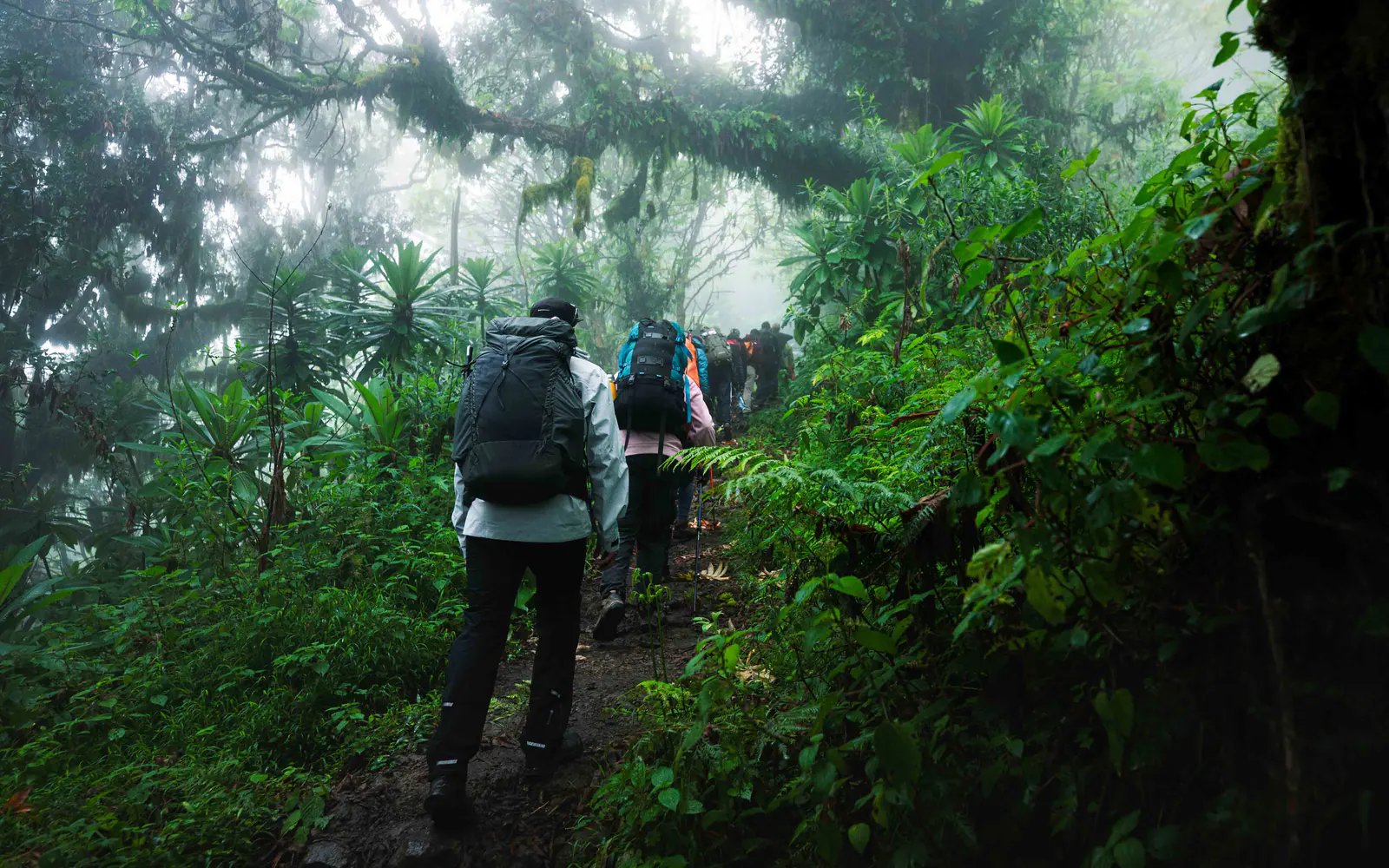
- Park
- Volcanoes National Park
- Reporting time
- 07:00
- Group size
- Maximum 8 visitors
- Gorilla time
- Maximum 1 hour
Written and maintained by the Safari Soles planning team in Arusha, Tanzania.
Gorilla trekking is a guided hike through Volcanoes National Park in northwestern Rwanda to locate one of the habituated mountain gorilla families. “Habituated” means that a family has gradually become accustomed to brief, carefully managed human visits. It does not mean the gorillas are tame, confined or trained. They remain wild animals living freely in mountain forest.
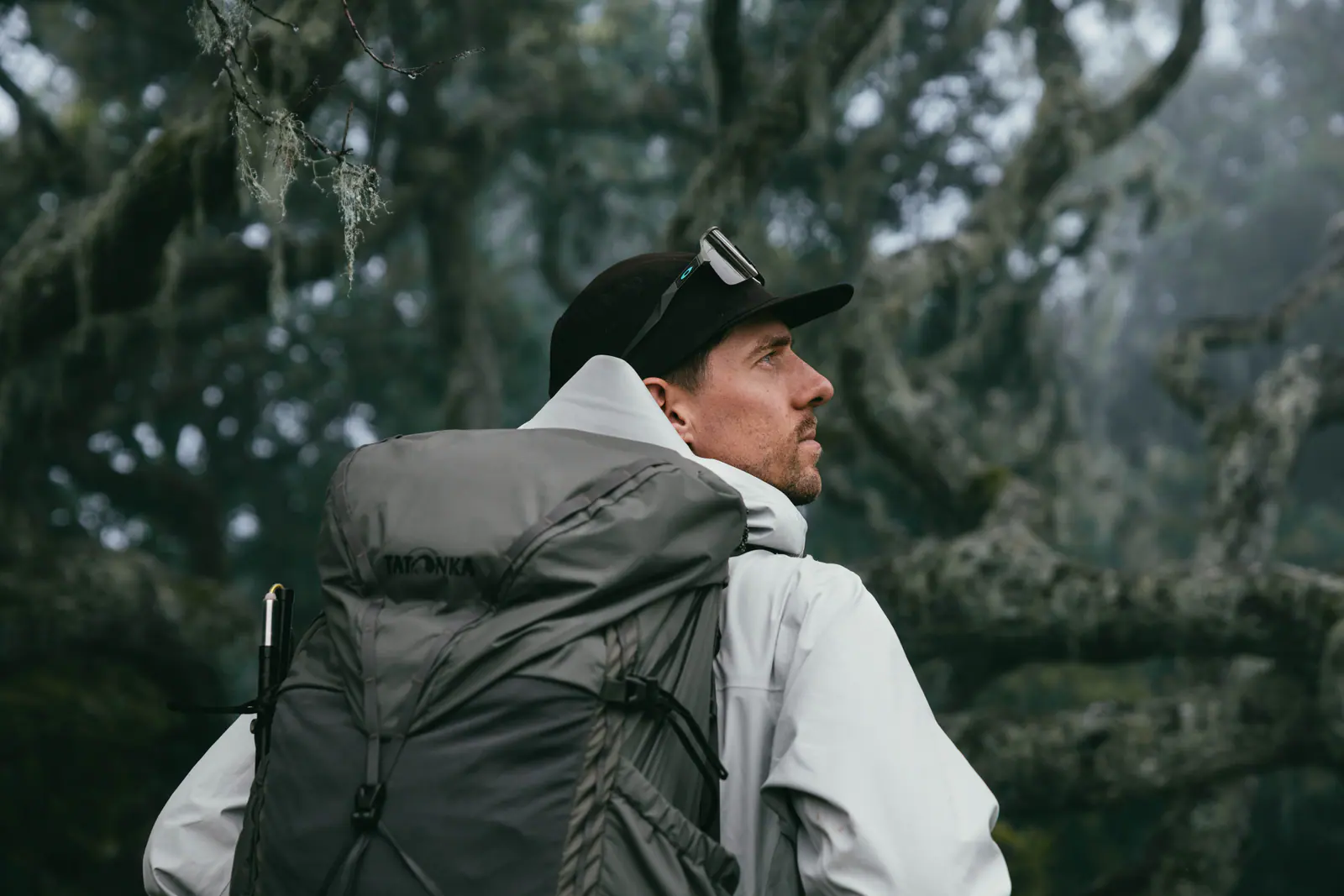
A trekker in a cap and pack looks off to the side among lichen-covered branches.
- ForestMountain rainforest
- MovementGorillas move daily
- TrekVariable hike
- EncounterOne regulated hour
The encounter comes after a real forest trek. The amount of walking cannot be guaranteed because the gorillas move naturally through the park. Your permit secures a place in the controlled trekking system on a particular date; it does not buy a fixed trail, a fixed hiking time or a private encounter.
The simplest way to picture the experience is as two connected parts: an unpredictable hike followed by a tightly regulated wildlife encounter.
The hiking part belongs to the forest. It can involve cultivated land near the boundary, bamboo, dense vegetation, roots, mud and sloping volcanic ground. Your guide sets the pace and the group moves together. The encounter part begins only when the assigned family is reached. At that point, instructions become even more precise: where to stand, how to move, how quietly to speak and how to respond if a gorilla changes position.
This distinction changes how you prepare. You are not preparing only to watch wildlife; you are preparing to reach it on foot, in changeable mountain conditions, then stay calm and attentive for a short period that cannot be extended. That is what makes gorilla trekking feel very different from a game drive or a zoo visit.
01 / 15
Where do you trek for gorillas in Rwanda?
Standard mountain gorilla trekking in Rwanda takes place in Volcanoes National Park, in the far northwest of the country within the Virunga Massif.
The park protects steep volcanic slopes and a mosaic of bamboo, montane forest, grassland, swamp and heath. On Rwanda’s side, the landscape includes five major Virunga volcanoes: Karisimbi, Bisoke, Sabyinyo, Gahinga and Muhabura. You do not need to learn the geology before visiting. The important beginner fact is that this is cool, wet, highland habitat rather than low, warm savannah.
Musanze is the main town associated with the area, while Kinigi is the park-headquarters location used for the trekking morning. Many properties are spread around the broader Volcanoes region rather than inside one compact resort strip, which is why the position of your stay matters. Exact road-transfer times depend on the route, conditions and property, so this guide does not publish an unverified Safari Soles timing promise.
Kigali international arrivalMusanze / Kinigi trekking baseVolcanoes National Park habitat
02 / 15
How gorilla trekking actually works
The experience becomes much less mysterious when you separate it into five stages, from permit date to the return walk.
- 01
Secure a permit
Your permit is tied to a specific trekking date. Confirm availability before locking flights or the rest of the route.
- 02
Arrive in the Volcanoes region
Stay near Musanze or Kinigi before the trek. This protects the early start from arrival-day delays and gives you time to prepare.
- 03
Report to Kinigi
Current RDB guidance requires reporting at 07:00 for registration and the morning briefing.
- 04
Briefing and family allocation
The briefing covers forest conduct and gorilla etiquette. Visit Rwanda says family allocation considers visitors' fitness levels, although no exact route can be promised.
- 05
Trek, encounter, return
Guides lead the group through the forest to the assigned family. After the regulated encounter, you walk back out on the same changeable terrain.
A permit is not an open ticket that can be used on any morning. It belongs to a specific date, so the route is normally built backward from that fixed point. If gorilla trekking is the purpose of the journey, check availability before committing to flights or non-refundable accommodation.
Plan to be in the Volcanoes region the night before. Treating the trek as something to attempt after an international arrival or a long same-morning transfer adds avoidable risk to a day with a firm reporting requirement. Once at Kinigi, listen closely to the briefing and be candid about fitness, mobility or health concerns. Visit Rwanda says fitness is one factor in allocating visitor groups to gorilla families, but that is not a promise of a short or easy route.
From the trailhead, the park team manages the search and the approach. Trackers’ knowledge and daily monitoring make the encounter possible, but the gorillas still decide where they move. The group follows the guide, not an independent map, and remains together through the walk in, the viewing period and the walk out.
03 / 15
What happens on gorilla trekking day?
The morning has a clear operational sequence, but the forest portion remains variable. Keep the afternoon free of promises that depend on an exact finish time.
-
Breakfast and final preparation
Breakfast and departure depend on your lodge and road position. Treat 06:00 as an approximate planning cue, not a universal wake-up promise.
-
Kinigi registration and briefing
Check in, meet the trekking structure for the morning and listen carefully to the health, distance and behavior rules.
-
Family allocation
The day's family allocation is made, with fitness among the factors noted by Visit Rwanda. Ask questions and be candid about concerns.
-
Meet the trekking team
Continue to the relevant trailhead, meet the wider team and arrange porter support where applicable before entering the forest.
-
Forest trek
Walk through vegetation, mud, slopes and altitude according to where the assigned family is that day. This stage may be short or take hours.
-
One regulated hour
Once the family is reached, the viewing period is limited to 60 minutes. Follow every positioning and distance instruction.
-
Walk out and slow the pace
Return through the forest. Do not plan the afternoon around a guaranteed lunch-time finish; keep the rest of the day unhurried.
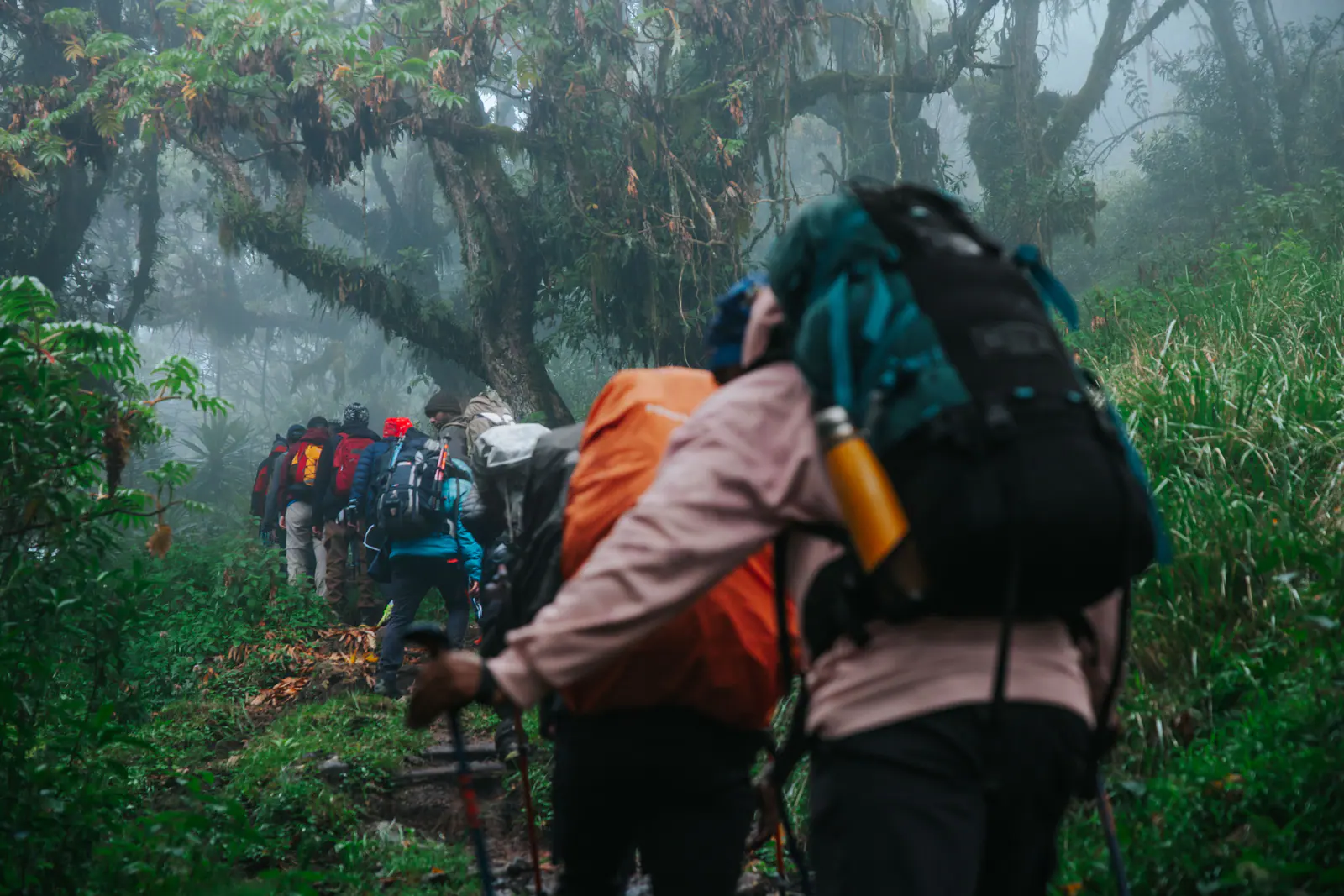
A line of trekkers in bright packs on a muddy forest trail, seen from behind.
Visit Rwanda says visitors gather at Kinigi at 7am and that, depending on the gorillas’ location, hikes can range from roughly 30 minutes to four or more hours. Those figures describe the approach, not the entire door-to-door day. Registration, briefing, the drive to the relevant trailhead, the forest encounter and the return walk all sit around it.
When the gorillas are located, the guide prepares the group before the final approach. Follow instructions about bags, food, voices, movement and camera settings. The one-hour limit is not a target to negotiate. It is part of a system designed to keep tourism controlled and limit disruption to the family’s day.
Afterward, there is still a forest walk to complete. Mud may feel harder on the descent, weather can change, and the group moves at a shared pace. An empty or gentle afternoon is therefore a better default than a tightly scheduled second major activity. The day may be emotional as well as physical; leaving space around it is not wasted itinerary time.
04 / 15
How hard is gorilla trekking in Rwanda?
The accurate answer is not easy, moderate or hard. It varies, because the route is determined by wildlife and conditions rather than a fixed recreational trail.
-
Time
Family location changes daily.
-
Slope
Volcanic terrain is uneven.
-
Ground
Rain can change footing quickly.
-
Altitude
Official guidance describes a broad elevation range.
Official Visit Rwanda guidance says hikes may range from around 30 minutes to four or more hours and can reach elevations between about 2,500m and 4,000m.
Time is only one part of difficulty. A shorter route can still be slippery or steep. A longer route can feel manageable if the ground is firm and the pace is steady. Rain, mud, thick vegetation, altitude, gorilla location, personal fitness and how the group moves all interact. That is why a single rating would create false confidence.
You cannot know your exact trek in advance. A reasonable walking base can help, as can footwear with grip, practical layers and a light daypack. You do not need to frame the day as an athletic competition. The goal is to move steadily, listen to the team and conserve enough energy for the return.
This guide cannot assess whether the trek is suitable for an individual. If you have specific health, mobility or altitude concerns, discuss them with an appropriate medical professional before travel and explain practical needs during planning. No guide page can provide medical clearance or guarantee a particular allocation.
05 / 15
How Rwanda gorilla permits work
The current standard foreign visitor adult permit is US$1,500. It secures one place on a specific trekking date within the official system.
The same live RDB product page currently lists a minimum age of 15, a 07:00 reporting time, a maximum of 8 visitors in a trekking group and a maximum 60-minute viewing period. Permit bookings are first come, first served and can be made in advance.
Visit Rwanda currently states that 12 tourism-habituated families receive 8 permits each per day, giving 96 permits daily. Treat that as a current planning fact, not permanent capacity. Family availability and the operating system can change.
-
Check the permit before fixing the rest.
A beautiful lodge does not solve a missing permit. If the trek is your anchor, establish the official date first and then shape accommodation and the wider route around it.
-
Do not assume a promotional rate applies.
Some citizenship and residency categories may qualify for different prices depending on current RDB rules and travel dates. The live page currently warns that listed promotional rates are not applicable from June through October 2026. Review the detailed eligibility table in the Rwanda gorilla permit guide.
-
Recheck before payment.
Permit pricing, visitor categories, promotional rules, capacity and booking conditions can change. Confirm the current product and your eligibility directly with RDB rather than relying on a saved screenshot or an undated article.
06 / 15
Rules exist to protect both you and the gorillas
The forest team will brief you on current instructions. The practical principle is simple: stay calm, minimize disturbance and follow the guide immediately.
-
Keep the requested distance
RDB asks visitors to remain at least 7 metres from the gorillas, following the guide's positioning instructions.
-
Keep voices low
A calm group reduces disturbance and helps everyone hear the guides.
-
Move slowly
Avoid sudden movements and never try to attract a gorilla's attention.
-
No litter
Everything carried into the forest must come back out.
-
Cover coughs
Turn away and cover your mouth if you need to cough or sneeze.
-
Follow the guide
The guide's instruction takes priority over a photograph or preferred viewpoint.
RDB says a visitor with a cold, flu or another contagious illness may be denied access to the park. The purpose is protective, not punitive: gorillas can be vulnerable to human disease. Tell the operator or park team and check the current official conditions. This is not medical advice.
Distance is a requested minimum, not a promise that wildlife will remain exactly seven metres away. Gorillas move. If one approaches or changes the available space, follow the guide’s direction rather than trying to manage the moment yourself. Never step closer for a photograph.
Keep food and drink packed away near the family, avoid rapid movements, keep voices low and take every item of waste out of the forest. If you need to cough or sneeze, turn away and cover your mouth as directed. The same discipline applies when the moment feels exciting: calm behavior is part of being allowed into the habitat.
07 / 15
What should you wear for gorilla trekking?
Pack for wet vegetation, uneven ground and a moving group, not for a fashion photograph or a technical expedition.
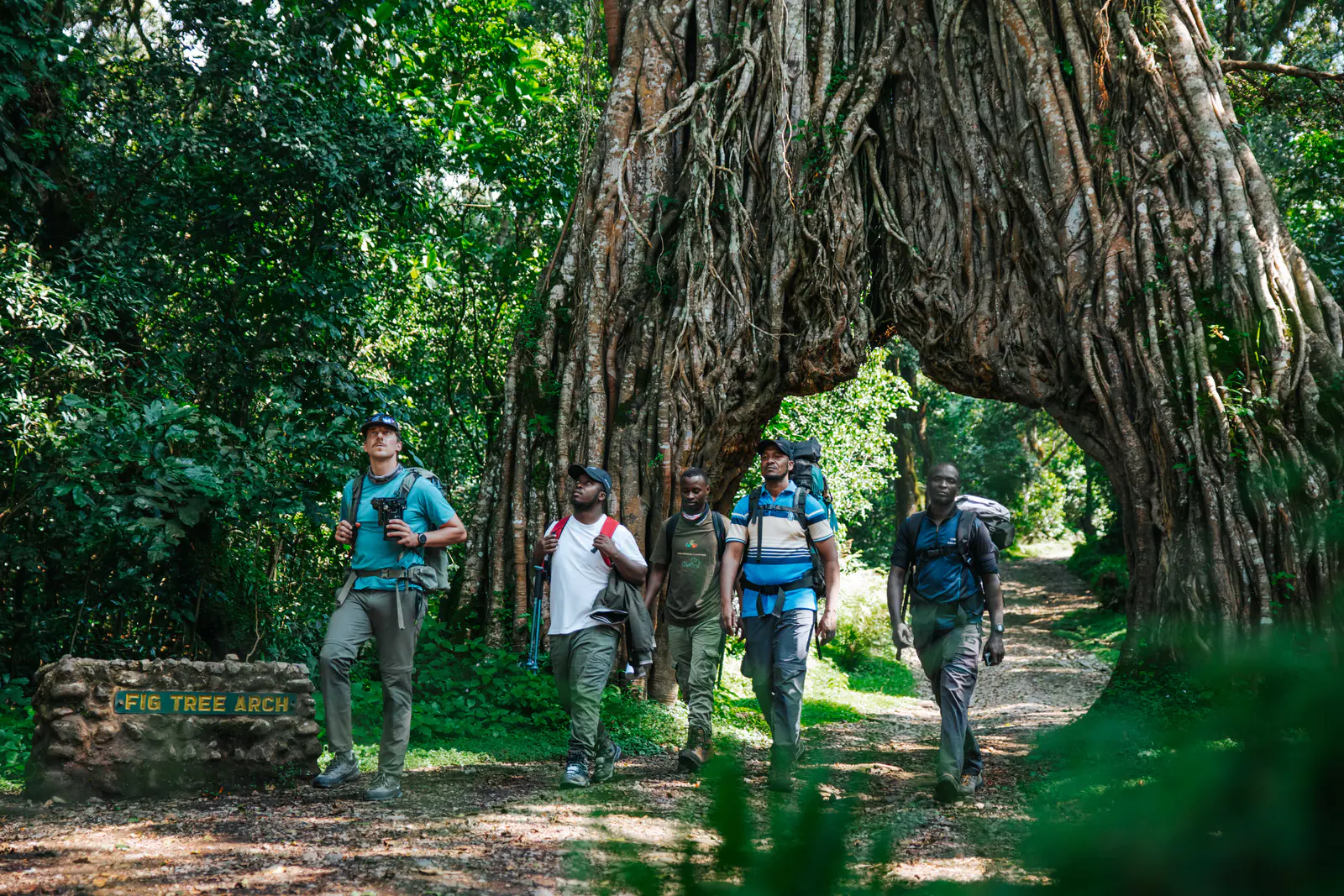
Trekkers walk through the Fig Tree Arch, formed by the roots of a giant strangler fig.
Wear
- Sturdy walking shoes or hiking boots
- Long trousers
- Long-sleeved top
- Lightweight waterproof
- Gaiters where useful
- Gardening or leather gloves
Carry
- Reusable water bottle
- Small snack for away from the gorillas
- Simple camera setup
- Small comfortable daypack
- Permit and required documents
- Dry protection for electronics
Visit Rwanda specifically recommends solid walking shoes, sturdy clothing, gaiters, gardening or leather gloves and a lightweight waterproof. RDB also advises long trousers, long-sleeved shirts and rain gear. Long layers help with vegetation and insects; boots or sturdy shoes help with roots and mud.
Keep the daypack genuinely manageable. Water, a small snack for the time away from the gorillas, a camera, basic rain protection and required documents are more useful than a long “just in case” inventory. Food should remain packed away around the gorillas, and the ranger’s instructions always override your preferred setup.
Forest conditions can be cool and damp even when Kigali feels warm. A light layer system is easier to adjust than one heavy garment. Protect electronics from moisture, know where essentials are, and avoid a bag so large that it catches vegetation or makes balance harder. A porter can carry the bag, but thoughtful packing still matters.
08 / 15
When is the best time for gorilla trekking in Rwanda?
There is no universally perfect month. The useful question is how much rain and mud you are comfortable with, and how the trek fits the rest of your route.
- Jan
- Drier
- Feb
- Mixed
- Mar
- Rainier
- Apr
- Rainier
- May
- Rainier
- Jun
- Drier
- Jul
- Drier
- Aug
- Drier
- Sept
- Mixed
- Oct
- Rainier
- Nov
- Rainier
- Dec
- Mixed
-
Transition, outside the named rainy periods
This stretch sits outside Visit Rwanda's two named rainy periods, but it is not classified as an official dry season. Rain remains possible in mountain forest.
-
Main rainy period
More rain and greater muddy-trail potential. The forest is active and green, but footing and waterproofing matter more.
-
Main dry period
Trails generally tend to be easier, though the Virunga mountains remain cool and rain can still arrive.
-
Second rainy period
Expect a higher chance of rain and mud. Build the decision around trail conditions, not a good-versus-bad label.
-
Transition between the rainy periods
Conditions generally move away from the second rains before the main rainy period returns, though this is not an officially named dry season. Mountain weather can stay changeable.
Rwanda’s official weather guidance describes the main rainy period as mid-February through May, the main dry period as June through mid-September, and a second rainy period from mid-September through mid-December. The Virunga mountains are among Rwanda’s coolest areas. During the main dry period, roads and paths generally tend to be easier to navigate.
“Drier” does not mean dry every day, and “rainier” does not mean trekking stops. Mountain weather remains changeable, rain is possible throughout the year and gorilla tracking operates year-round. The difference is often underfoot: more rain can mean more mud, slower footing and greater need for waterproof layers.
The best period is therefore a trade-off. A traveler prioritizing easier trail conditions may prefer the main dry period. Someone with fixed dates can still plan well in a rainier period by preparing for mud and keeping the route comfortable. This guide deliberately avoids rating months as good or bad; gorilla behavior is not a seasonal performance schedule.
09 / 15
What does a Rwanda gorilla trekking trip cost?
The permit anchors the budget at US$1,500 for a standard foreign adult. Everything else depends on the route and comfort choices around it.
-
Gorilla permit
The primary fixed cost is the standard foreign visitor permit, currently US$1,500 per adult.
-
Accommodation
Property style and number of nights can move the total substantially, especially around Volcanoes.
-
Private road transport
Vehicle, driver-guide, route length and pickup plan affect the transport component.
-
Number of nights
A focused stay and a wider Rwanda circuit have different accommodation and transport footprints.
-
Additional experiences
Golden monkeys, Akagera, Nyungwe, Lake Kivu and premium upgrades belong outside the permit itself.
There is no responsible single total to publish without defining accommodation, vehicle arrangement, number of nights, group size, meals, additional activities and wider destinations. A two-night focused stay and a seven-day private Rwanda circuit are not the same product simply because both include one permit.
Separate known costs from variable ones. The permit is the clearest fixed line. Accommodation and private road transport usually create the largest movement around it. Additional park experiences, a porter, meals outside the chosen basis and luxury upgrades add further layers. The number of nights affects several categories at once.
This page does not invent Safari Soles package ranges or percentages. Use the gorilla trekking cost guide for detailed budgeting. Compare quotes by inclusions and trip shape rather than by one headline number: permit category, room standard, vehicle arrangement, meals, activities, pickup and drop-off responsibilities should all be clear.
10 / 15
How photography works around the gorillas
Photography is allowed; flash is not permitted under current RDB guidance. The best setup is one you can control quietly without slowing the group.
Forest light is often subdued and uneven. Bright gaps, dark foliage and a gorilla’s dark coat can challenge automatic exposure. Weather and moisture can affect equipment, while leaves and other visitors can limit a clear line of sight. None of this requires the most expensive camera. It requires familiarity with what you carry.
Disable flash before entering the final approach. Keep straps secure and avoid changing lenses in a way that distracts the group or exposes equipment to rain and dirt. Listen to the guide’s positioning instructions; they protect the family and help the group share limited viewing space.
The encounter lasts one hour. Make some photographs, then spend part of it looking directly rather than through a screen. A technically imperfect image can still hold a strong memory; ignoring a guide or blocking another visitor for a frame is never worth it.
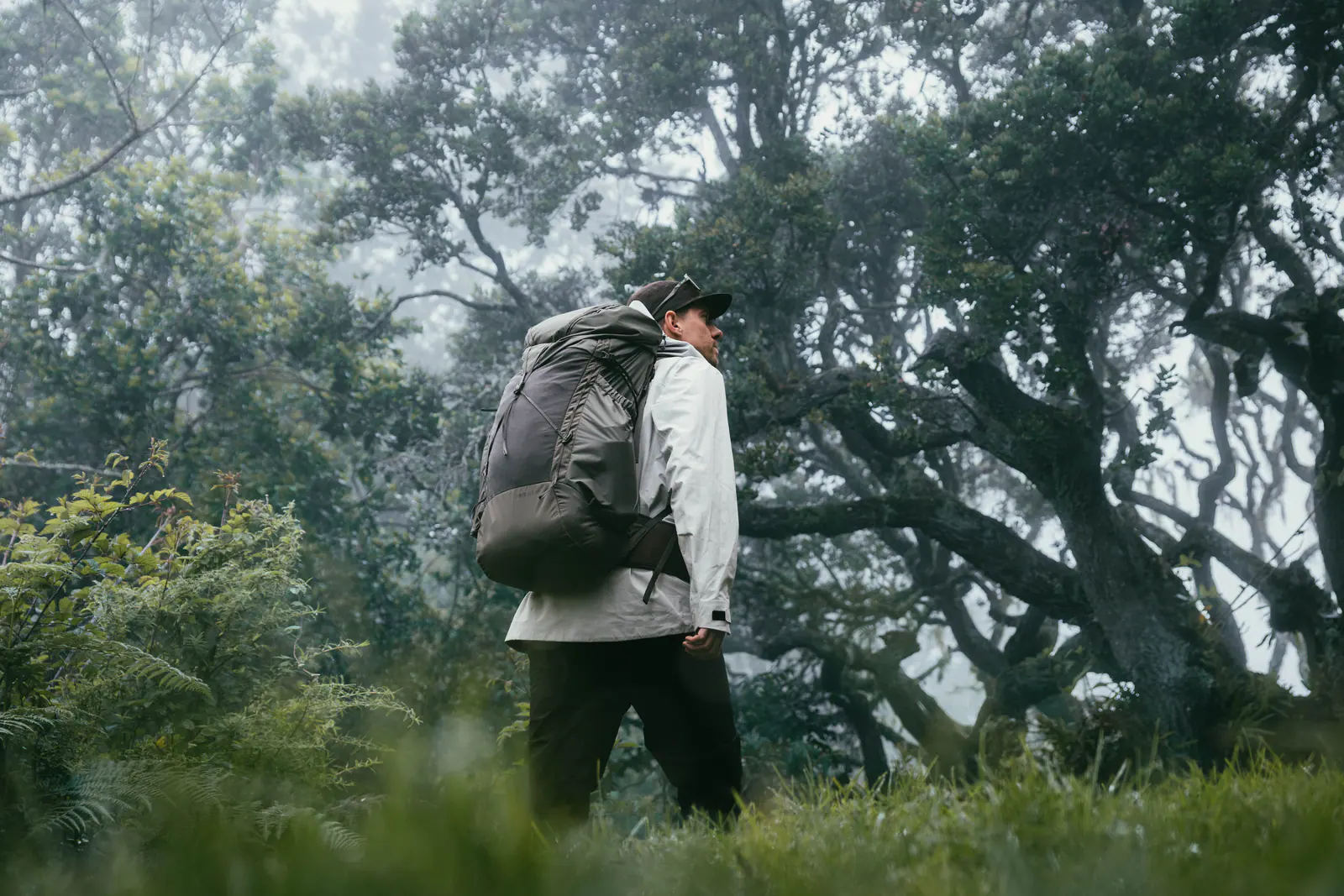
A trekker with a large pack walks past gnarled, moss-covered trees in cloud forest.
-
Light
Often subdued beneath the forest canopy
-
Movement
Natural and unpredictable
-
Distance
Always follow ranger positioning
-
Flash
Not permitted under current RDB guidance
11 / 15
Should you hire a porter?
A porter is practical trekking support, not an admission that you are unfit.
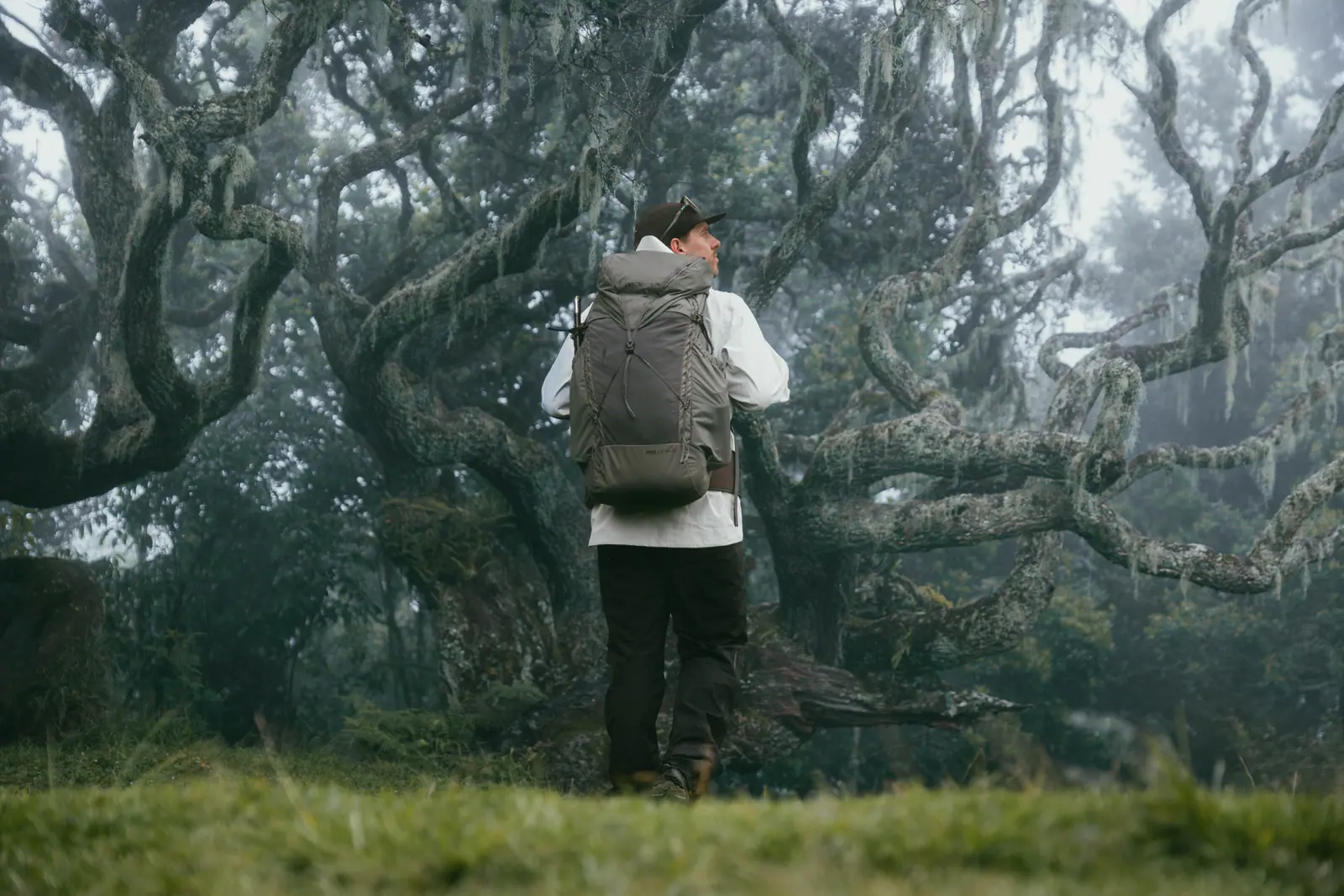
A trekker with a pack looks up at twisted, moss-draped trees in misty highland forest.
A porter can lighten the load, not remove the uncertainty.
Porters can carry a daypack or camera equipment and may assist with footing on difficult sections. The role is useful trekking support and a source of local employment. Terrain and family location still vary.
Visit Rwanda and RDB state that porters are available. A porter can carry a daypack, water or camera equipment and may help with footing on parts of the route. That can leave you freer to concentrate on balance, pace and the guide’s instructions. The benefit can matter even on a shorter trek if the ground is wet.
The role should be presented respectfully. Portering is paid local employment and a practical part of the trekking system, not decoration for a travel photograph. Ask what the current arrangement is, agree any payment or gratuity clearly through the appropriate local process, and do not assume an old price remains current. This guide does not publish a porter fee until current operational pricing is verified.
Terrain varies and family location changes, so nobody can promise that support will make every route suitable for every traveler. If you have mobility or health considerations, discuss them before committing and seek relevant professional advice. Be honest during the morning allocation rather than minimizing a concern because you fear receiving a different route.
12 / 15
Where should you stay for gorilla trekking?
The first decision is not a hotel name. It is how much comfort and recovery you want around an early, physically active day.
-
A sound base for the early start
Prioritize reliable comfort, meals around the trek schedule and practical access to the morning meeting point.
-
More space around an active day
Look for stronger service, restorative rooms and a setting that makes the pre- and post-trek hours feel considered.
-
The stay becomes part of the journey
Privacy, landscape, highly attentive service and unhurried pacing can matter as much as proximity.
Staying in or around the Volcanoes and Musanze area before trekking morning makes practical sense. Properties are distributed across the region, so assess the morning plan rather than assuming every room marketed as “Volcanoes” sits beside Kinigi. Confirm how breakfast, departure and the connection to park headquarters are handled.
A practical stay can be entirely appropriate when the trek is the priority. Upper-midrange choices usually add space, design and a more restorative setting. Luxury properties make the stay itself a major part of the journey, with privacy, landscape and high service levels. All three can access the same regulated gorilla encounter; accommodation category does not buy a longer hour.
Consider the night after the trek too. Some travelers value returning to the same room, while others move toward Lake Kivu or Kigali after time to wash, eat and recover. The right answer depends on the route, not a universal best hotel. Compare regional options in the Rwanda safari lodges guide, which avoids unverified hotel rankings and nightly rates.
13 / 15
How many days do you need for Rwanda gorilla trekking?
Use trip shapes rather than searching for one perfect duration. The permit day needs a safe arrival before it and enough flexibility after it.
-
Focused gorilla trip
Arrive in the Volcanoes region, trek the next day, then add a second local activity or return. This is efficient, but it leaves little room for disruptions or a wider understanding of Rwanda.
-
Gorillas plus golden monkeys
Visit Rwanda publishes a three-day example with gorilla tracking followed by golden monkey tracking. Treat it as evidence of a plausible shape, not a mandatory or Safari Soles itinerary.
-
Gorillas plus a major contrast
Add Akagera for classic safari, Lake Kivu for slower scenery, Nyungwe for another primate forest, or Kigali for more cultural and historical context.
-
Rwanda plus Tanzania or Kenya
Use Rwanda for the mountain-forest encounter and a second country for a longer savannah circuit. Protect the fixed permit date when arranging regional flights.
-
Kigali → Volcanoes
Arrive in the region, settle in and prepare.
-
Gorilla trekking
Keep the afternoon deliberately unhurried.
-
Golden monkeys or return
Choose a second forest activity or travel onward.
Visit Rwanda currently publishes a similar three-day gorilla-focused itinerary. This is not a Safari Soles itinerary.
What can you add after the trek?
-
Golden monkeys
A second forest experience with a quicker, more animated primate encounter.
-
Lake Kivu
A slower chapter after the trek, built around water, green hills and rest.
-
Akagera
Add vehicle-based wildlife viewing and a completely different ecosystem.
-
Nyungwe
Continue the primate theme in a larger montane rainforest, with more road time required.
-
Tanzania
Pair the forest encounter with Serengeti and Ngorongoro-style savannah travel.
A route should use contrast deliberately. Akagera changes the mode completely: vehicle safari, open country and savannah wildlife. Lake Kivu slows the pace. Nyungwe continues the primate story but adds a longer road commitment and a different rainforest. Golden monkeys offer another Volcanoes morning without moving regions.
For a wider East Africa journey, Rwanda pairs naturally with Tanzania or Kenya because the landscapes and wildlife-viewing styles differ. Do not compress the Volcanoes night before the trek to save a day on the other half. The permit is the least flexible date in the plan, so regional connections should protect it rather than put it at risk.
14 / 15
Rwanda or Uganda for gorilla trekking?
This is a decision preview, not a ranking. Both countries offer mountain gorilla trekking within different geographies and trip structures.
-
Volcanoes National Park
- Current standard foreign visitor permit: US$1,500
- Kigali-centered access and a compact national route
- Easy pairing with Akagera, Lake Kivu, Nyungwe and the capital
- A high permit cost that strongly shapes the budget
-
A different geography and permit system
- Often considered by travelers comparing overall budget and trip style
- Different trekking regions and route logistics
- Can fit naturally within a longer Uganda journey
- Current pricing is intentionally not quoted here without separate verification
“Which is better?” hides the useful questions. Where else do you want to travel? How much time do you have? What permit system and budget fit? Do you want a compact Rwanda route or a broader Uganda itinerary? How will regional flights or road travel connect to the fixed trekking date?
Rwanda can be especially straightforward for a trip anchored around Kigali, Volcanoes and one or two contrasting regions. Uganda may fit a different budget or a longer route through its own parks. Neither country guarantees a particular family, hike length, photograph or emotional response. The dedicated comparison checks both countries’ official sources without naming a winner.
15 / 15
Gorilla trekking is tourism inside a conservation system
Small groups, limited encounter time, health precautions and continuous monitoring are not obstacles around the experience. They are part of what makes it possible.
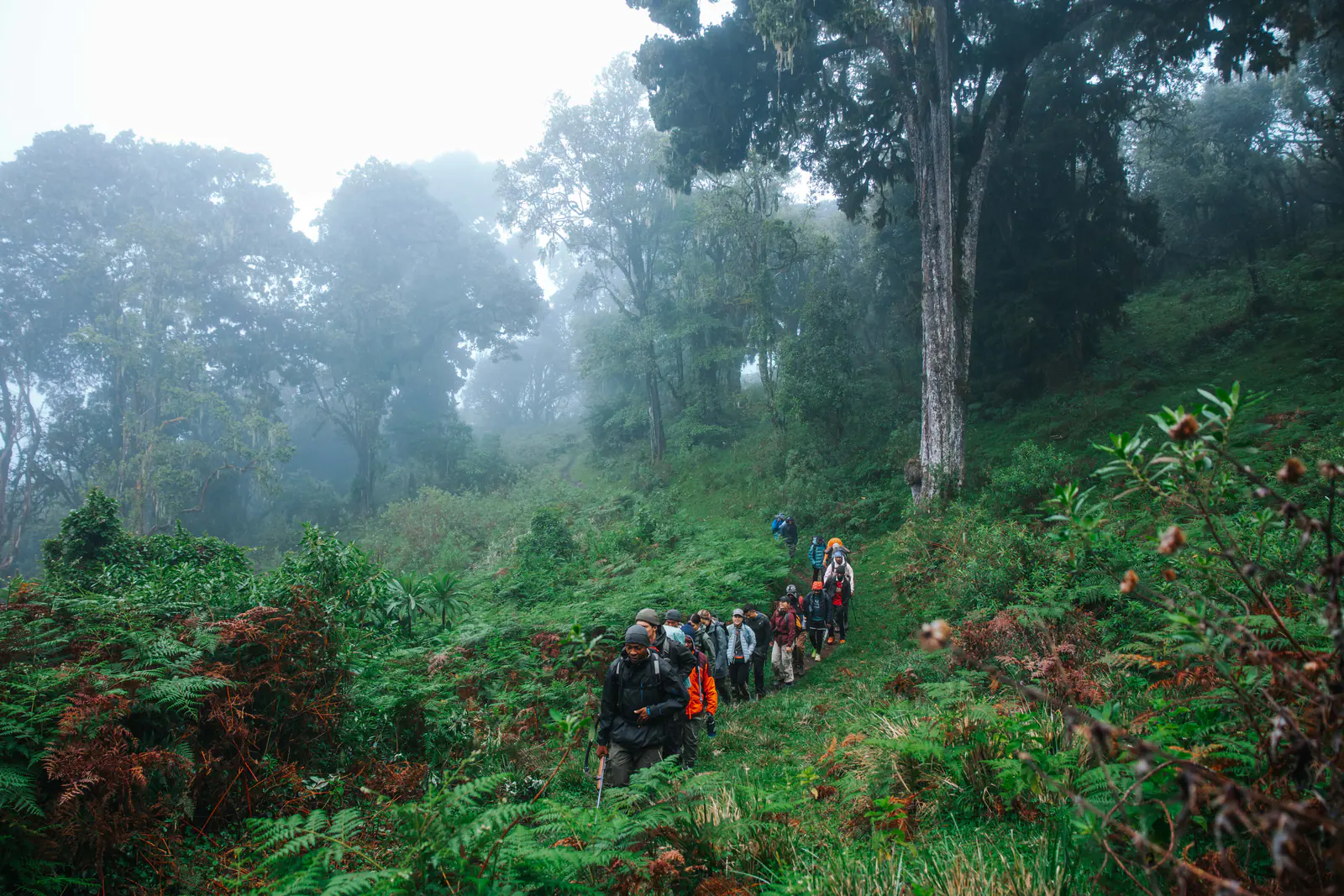
A line of trekkers climbing in single file through ferns and misty forest.
-
tourism-habituated families
12
-
permits per family per day
8
-
current daily permit capacity
96
Mountain gorillas live across the Virunga landscape shared by Rwanda, Uganda and the Democratic Republic of the Congo. In Rwanda, tourism access is concentrated around habituated families in Volcanoes National Park. Rangers and trackers monitor the groups, visitor numbers are limited and each tourism family receives only a controlled period of visitor contact.
Disease precautions matter because humans and gorillas are biologically close enough for respiratory illness to be a concern. The requested distance, low voices, one-hour limit and sick-visitor restrictions work together. They also protect the quality of the encounter by keeping the group small and the behavior around the gorillas predictable.
Visit Rwanda states that 10% of income from gorilla, safari and other tourism permits and park fees is spent in partnership with local communities; its gorilla information also says that 10% of gorilla permit revenue is channeled toward local community projects. This guide does not claim Safari Soles manages those funds. It describes the official system around the visit.
The current capacity panel uses Visit Rwanda’s present figures: 12 tourism-habituated families, 8 permits per family per day and 96 permits daily. Those values were checked on 18 September 2026 and should be treated as dynamic. Older material can show different family counts; the current Visit Rwanda tracking page is used here for capacity, while the live RDB product is used for permit price and rules.
Continue planning with the Rwanda gorilla permit guide, the gorilla trekking cost guide, the Volcanoes National Park guide, the golden monkey trekking guide, the Rwanda vs Uganda comparison, the best time to visit Rwanda guide and the Rwanda safari packing list.
Planned by people who live the route
This library gathers the Rwanda questions that come up when travellers plan gorilla trekking and East African combinations.
- Locally based in Tanzania
- East Africa route specialists
- Licensed and insured operator
- Fast, direct answers
- Read Safari Soles reviews on TripAdvisor
- Read Safari Soles reviews on SafariBookings
- Read Safari Soles reviews on Google
Where these facts come from (6)
- Rwanda Development Board: Mountain Gorilla Tracking Live permit price, minimum age, reporting time, visitor rules, health restrictions, photography and booking conditions.
- Visit Rwanda: Gorilla Tracking Current tourism-family and daily-capacity figures, Kinigi process, trek duration, allocation, porters and conservation context.
- Visit Rwanda: Volcanoes National Park Park location, Virunga volcanoes and montane ecosystem context.
- Visit Rwanda: What to Wear Official clothing, footwear, waterproof, glove and gaiter guidance.
- Visit Rwanda: Weather Official rainy and dry periods and general trail-condition guidance.
- Visit Rwanda: Three-day Gorilla Tracking itinerary Official example combining gorilla and golden monkey tracking.
Related Safari Soles guides
Continue with the guides travellers usually read next.
 Rwanda Safari Understand Rwanda's landscapes, experiences, seasons and the decisions that shape a complete first trip. Trip Planning
Read the guide
 Rwanda Gorilla Permit A focused guide to permit rules, current categories, availability and what the permit includes. Gorilla Trekking
Read the guide
 Rwanda Gorilla Trekking Cost Separate the permit from accommodation, transport and the other costs around the trek. Gorilla Trekking
Read the guide
Frequently Asked Questions
-
It can be profoundly rewarding if you value a rare wildlife encounter and accept the permit cost, early start, variable hike and strict rules. It is not a casual viewing stop. The value comes from entering the gorillas' natural habitat under a carefully controlled system, not from a guaranteed close-up photograph.
Make gorilla trekking the anchor of your Rwanda journey.
Once you know your trekking date, the rest of Rwanda can be shaped around it: Akagera, Lake Kivu, Nyungwe or a wider East Africa safari.