


Rwanda park guide
Volcanoes National Park Rwanda: Complete Planning Guide
A beginner-first guide to Rwanda's Virunga park — the five peaks, primate encounters, hiking, Musanze and Kinigi, accommodation logic, seasons and a route that gives the landscape enough time.
LocationNorthwest Rwanda
Highest peakKarisimbi · 4,507m
Booked activitiesReport at 07:00
Best baseMusanze / Kinigi
Park geography
Where Volcanoes National Park sits
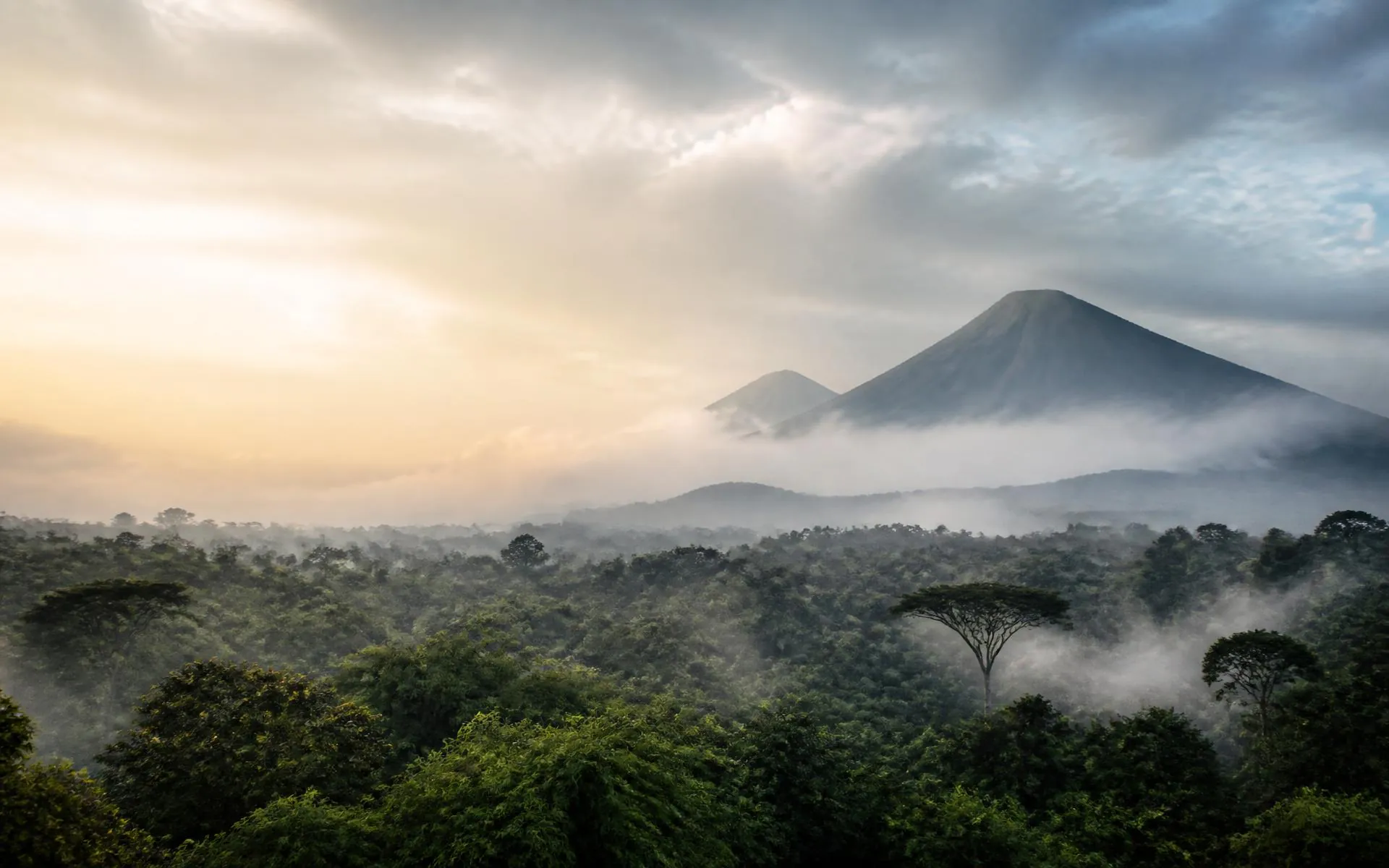
The park occupies Rwanda's far northwest, where the country rises into the Virunga Massif.
Volcanoes National Park is not a fenced wildlife reserve surrounded by empty land. It is a high, cultivated and densely settled region where towns, farms and villages meet a protected mountain forest. Kigali is the usual international gateway; Musanze is the practical service town; Kinigi is the reporting and park-headquarters area; and the protected slopes rise beyond them. Reading those four places as separate layers prevents the common mistake of treating every Volcanoes-region address as equally close to a 07:00 activity.
The Rwanda side protects five named Virunga volcanoes: Karisimbi, Bisoke, Sabyinyo, Gahinga and Muhabura. They create a dramatic skyline but also shape daily planning. Roads climb, cloud gathers quickly, trailheads sit in different places and an accommodation advertised as 'near Volcanoes' can still involve a meaningful drive. Ask for the actual transfer time to Kinigi and to the trailhead relevant to your booked activity.
Musanze is the region's urban centre, useful for practical accommodation, restaurants, supplies and onward road connections. Kinigi is smaller and closer to the park's visitor operations. A lodge between them can balance access and comfort; a property farther into the foothills can offer stronger scenery but should be judged by road time, not map distance alone.
GatewayKigaliArrival and onward connection
Regional baseMusanzeServices and broad lodging choice
Park operationsKinigiRegistration and briefing reference
Protected landscapeVolcanoes National ParkGuided activity trailheads
Mountain settingVirunga volcanic landscapeFive named peaks on Rwanda's side
A vertical landscape
Why the Virunga setting feels different
This is a mountain destination whose vegetation, weather and views change with elevation.
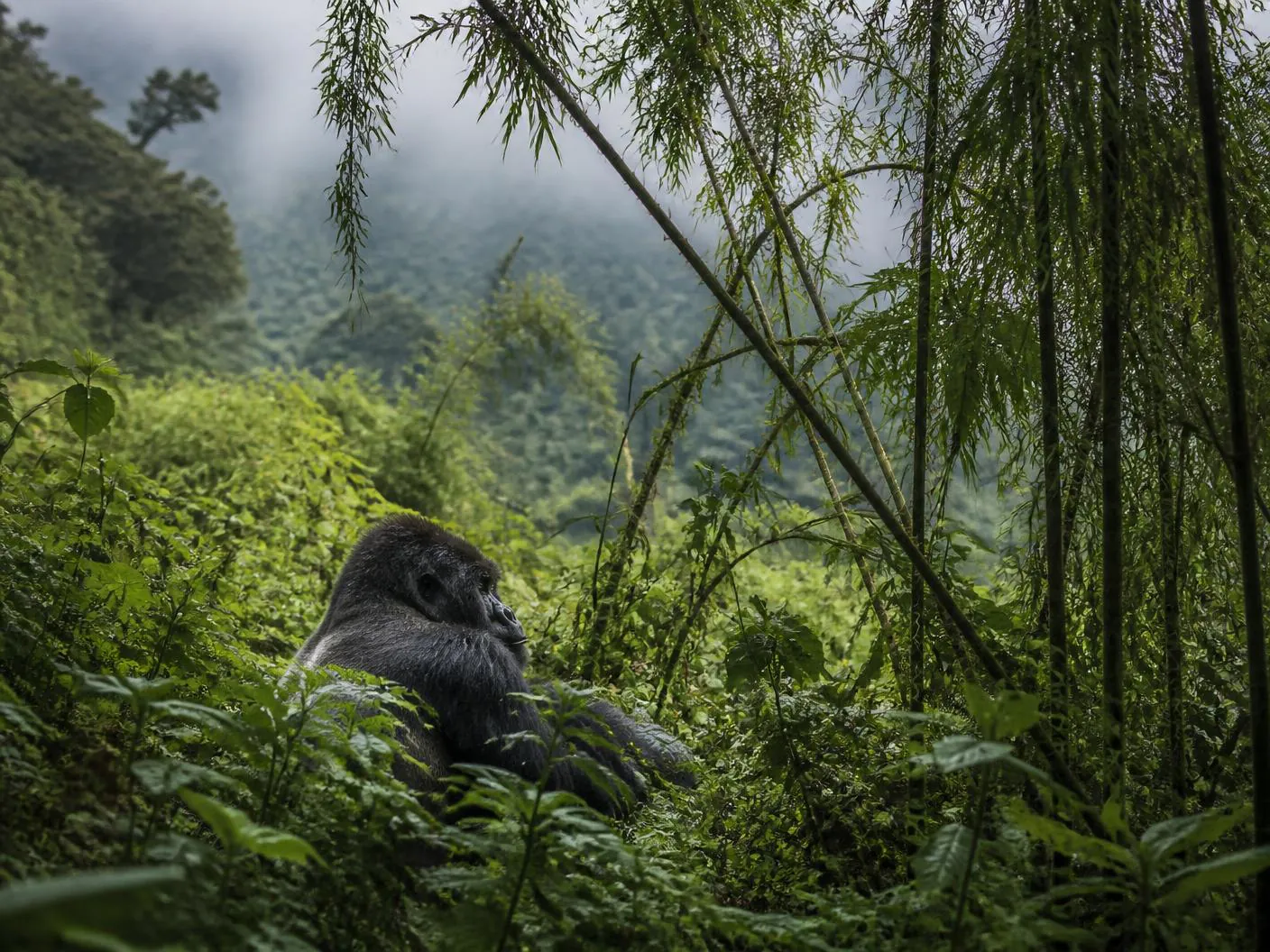
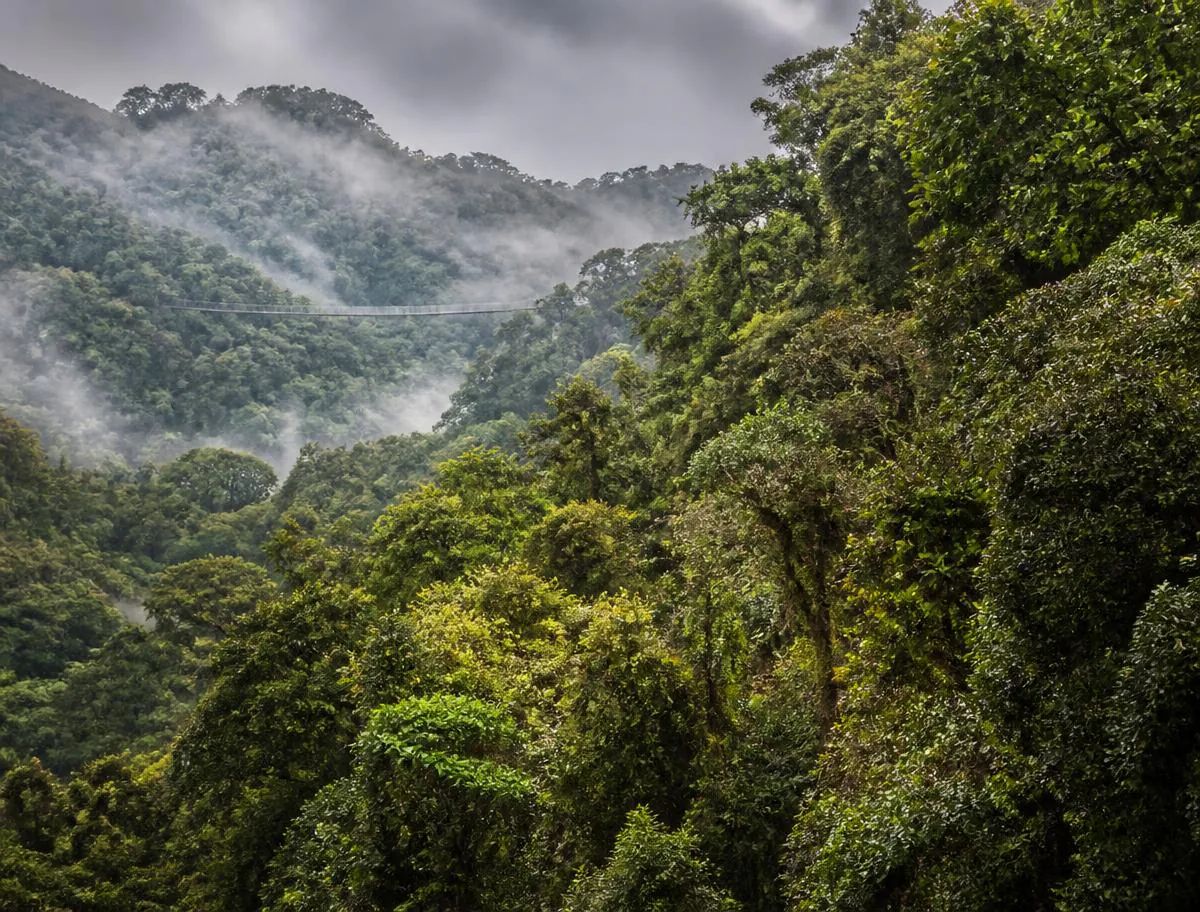
The official destination description emphasizes montane and bamboo ecosystems. That distinction matters to travellers because Volcanoes is not one continuous dark forest. Bamboo zones can feel open and luminous; montane forest can be tangled and wet; higher slopes become cooler, rougher and more exposed. Golden monkeys are closely associated with bamboo habitat, while hiking routes may move through several vegetation bands in a single day.
The five peaks are not interchangeable scenic backdrops. Karisimbi is the highest at 4,507 metres and represents a serious mountain undertaking. Bisoke is known for its crater-lake hike. Sabyinyo, Gahinga and Muhabura complete Rwanda's named Virunga chain. Current access, route operation and permits must be confirmed through official products rather than assumed from an old itinerary or a blog that treats every summit as continuously available.
Cloud and rain are part of the ecosystem rather than an interruption to it. A clear sunrise can become a wet forest morning, and a dry-season date does not guarantee a dry trail. Pack for moisture in every month, then use seasonal tendencies to adjust expectations rather than to promise conditions.
Choose by interest
Choose your Volcanoes experience
Start with the experience that matters most, then build the nights and clothing around it.
Gorilla trekking is the park's best-known experience, but it should not erase the rest of the destination. Golden monkey tracking brings a faster-moving primate encounter in bamboo habitat. Official hiking products include Bisoke, Karisimbi and the Dian Fossey Tomb route. Visit Rwanda also points travellers toward Buhanga Eco-Park, Musanze Caves, canoeing, mountain biking, village experiences and the wider landscape around the park.
These are not substitutes for one another. A traveller choosing wildlife observation will prepare differently from someone choosing a summit hike. A family with a 12-year-old may find the current golden-monkey age rule opens a park experience while gorilla tracking and the official Bisoke and Karisimbi products list 15 as the minimum age. A photographer may value an extra morning for cloud changes more than another strenuous trail.
Build the stay around one anchor activity per morning. Report and briefing times, trail duration, muddy clothing and recovery make two major forest activities on the same morning impossible and two hard hikes on consecutive days unwise for many visitors. The point is not to collect every product; it is to choose a coherent park stay.
Selected experience
Mountain gorillas
- Experience type
- Regulated primate encounter
- Physical effort
- Variable forest trek
- Time commitment
- One principal morning
- Advance planning
- Permit-led; book first
- May suit
- Wildlife-focused travelers
No activity is ranked as best. Choose according to interests, eligibility, effort and the wider itinerary.
The signature encounter
How gorilla trekking fits without owning the whole park
Mountain gorilla trekking is a principal reason travellers come to Volcanoes, but the park guide's job is to place that fixed-date activity inside a workable destination stay. The dedicated gorilla guide explains the forest day; the permit guide owns rates, documents and booking rules; the cost guide explains the wider budget. Here, the essential planning point is that the permit date anchors accommodation and transport.
Sleep in the region before the booked morning. The current RDB golden monkey product (opens in a new tab) uses a 07:00 reporting time, and a long same-morning transfer from Kigali creates avoidable risk. Keep the afternoon after trekking lightly planned because the route length and terrain vary with the assigned family location. An unhurried meal, lodge rest or very gentle local visit is more resilient than a timed transfer immediately after the forest.
Do not assume the most expensive lodge changes the park encounter. Allocation, guiding and viewing rules belong to the park system. Accommodation changes comfort, transfer time, recovery and setting. That distinction is central to honest Volcanoes planning.
Bamboo-zone primates
Golden monkeys deserve their own morning
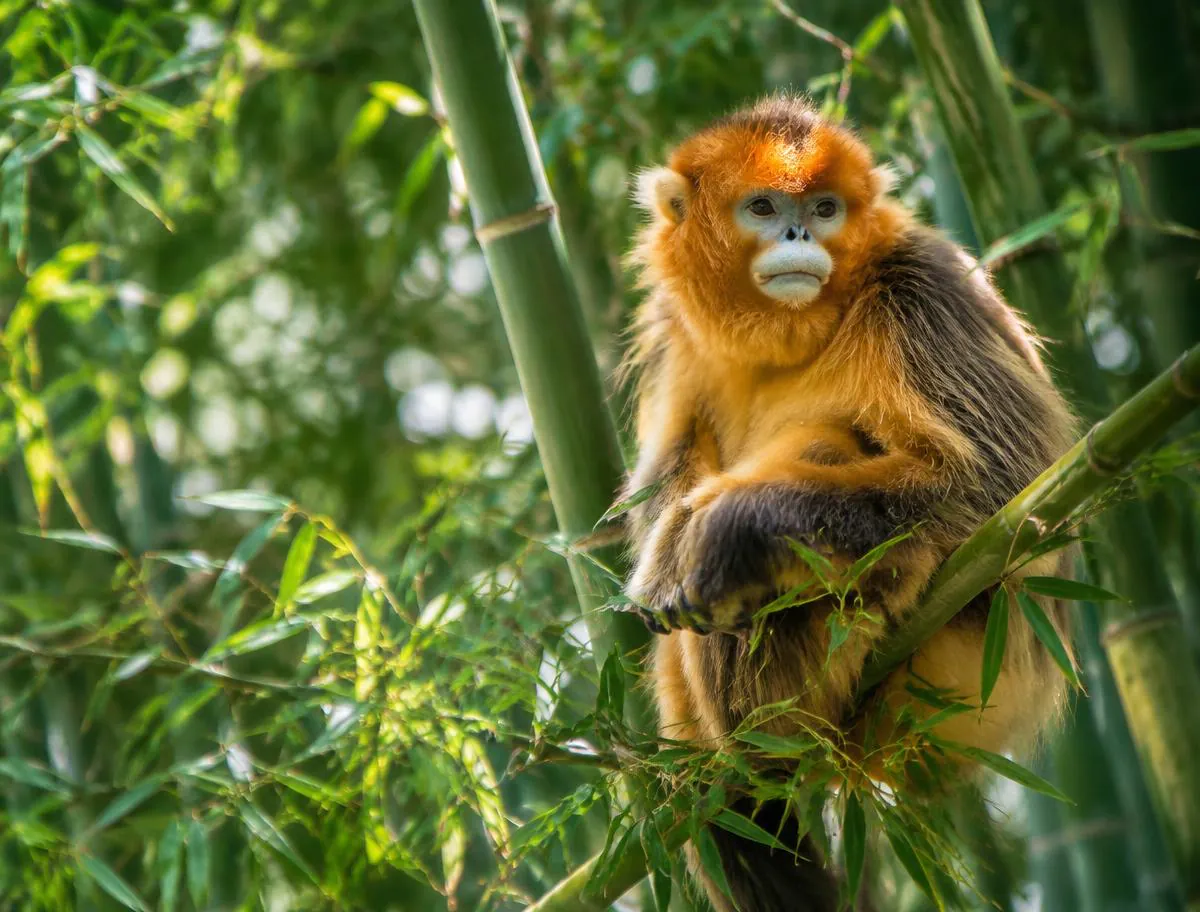
Golden monkey tracking is not a shortened gorilla trek. The animals move quickly through bamboo and the visual experience is more active. The current RDB golden monkey product lists a 07:00 report at the park visitor information or registration centre, a minimum age of 12 and a foreign non-resident adult rate of US$100. Those are dynamic service facts and should be rechecked for the exact date and visitor category.
For many itineraries, golden monkeys work well the morning after gorilla trekking because the experience is different rather than repetitive. It can also be the main Volcanoes activity for travellers who are below the gorilla minimum age, who prefer a shorter forest outing, or who want a wildlife morning without the same permit cost. It is still an outdoor mountain activity: waterproof layers, boots and camera protection remain relevant.
The dedicated golden-monkey guide explains the day, permit categories, terrain and photography in detail. Within this park overview, the key decision is whether it is an anchor experience or a companion to gorillas.
Beyond primates
Hikes and current official products
RDB currently publishes separate products for the Bisoke hike (opens in a new tab), the Karisimbi hike (opens in a new tab) and the Dian Fossey Tomb hike (opens in a new tab). The live pages list foreign non-resident adult rates of US$75 for Bisoke, US$400 for Karisimbi and US$75 for the Dian Fossey route, with current category tables and evidence rules. Bisoke and Karisimbi list a minimum age of 15. These are activity-specific prices, not a general park-entry promise, and they can change.
Karisimbi should be treated as a mountain objective, not a casual add-on. Its altitude, duration and exposure demand a different level of fitness and preparation. Bisoke is shorter but still a high, often muddy volcanic hike. The Dian Fossey route combines forest walking with conservation history. Select by physical appetite and meaning, not by the cheapest fee or the shortest label.
Visit Rwanda also places Musanze Caves and Buhanga Eco-Park within the wider destination story. The official page describes the caves as the product of ancient volcanic activity and Buhanga as an ancient forest connected with Rwandan folklore. Confirm opening, access and booking arrangements locally rather than relying on inherited schedules.
Trip length
How many days to give Volcanoes
Two nights can support one principal morning if arrival is early enough to settle before the reporting day, an approach explored further in the Rwanda itinerary guide. Three nights create a more balanced shape: arrival, one anchor experience, a second contrasting activity and onward travel without compressing every transition. Four nights can make sense for a major hike, slower photography, lodge time or a second forest morning.
These are illustrative route shapes, not official durations or claims about what most visitors do. Count mornings rather than nights: each booked park activity normally owns a morning, and demanding hikes may also own the recovery time afterwards. If you arrive late on the first day and leave early on the last, a three-night stay may contain only two usable mornings.
A practical sequence is to put the least flexible booked activity first, preserve a calm evening before it and use the next morning for a contrasting experience. Avoid planning a long road transfer immediately after an activity whose finish time is variable.
When comparing two- and three-night options, write the itinerary as actual clock-sensitive blocks. Mark arrival time, lodge check-in, the 07:00 activity report where applicable, an uncertain finish window, meals and the onward drive. This usually reveals why an apparently spare night protects the experience rather than merely adding accommodation cost. It also helps identify where a gentle cultural or landscape activity can fit without competing with a regulated forest morning.
Families and mixed-ability groups should plan around the least flexible participant. Minimum ages differ by product, and a traveller who is comfortable on a forest walk may not be suited to a high volcanic hike. Separate activities can be a better design than forcing everyone into the same morning. Confirm childcare, lodge supervision and transport arrangements directly rather than assuming they are included.
2 nights · one anchor morning
Arrival, one booked experience, then onward travel. Efficient but with little room for a second park activity.
3 nights · two different mornings
An illustrative balanced option for gorillas plus golden monkeys, a hike or a gentler regional experience.
4 nights · slower park stay
Useful for a demanding hike, photography, lodge time or a less compressed connection onward.
Musanze and Kinigi
Choose accommodation by function, not just scenery
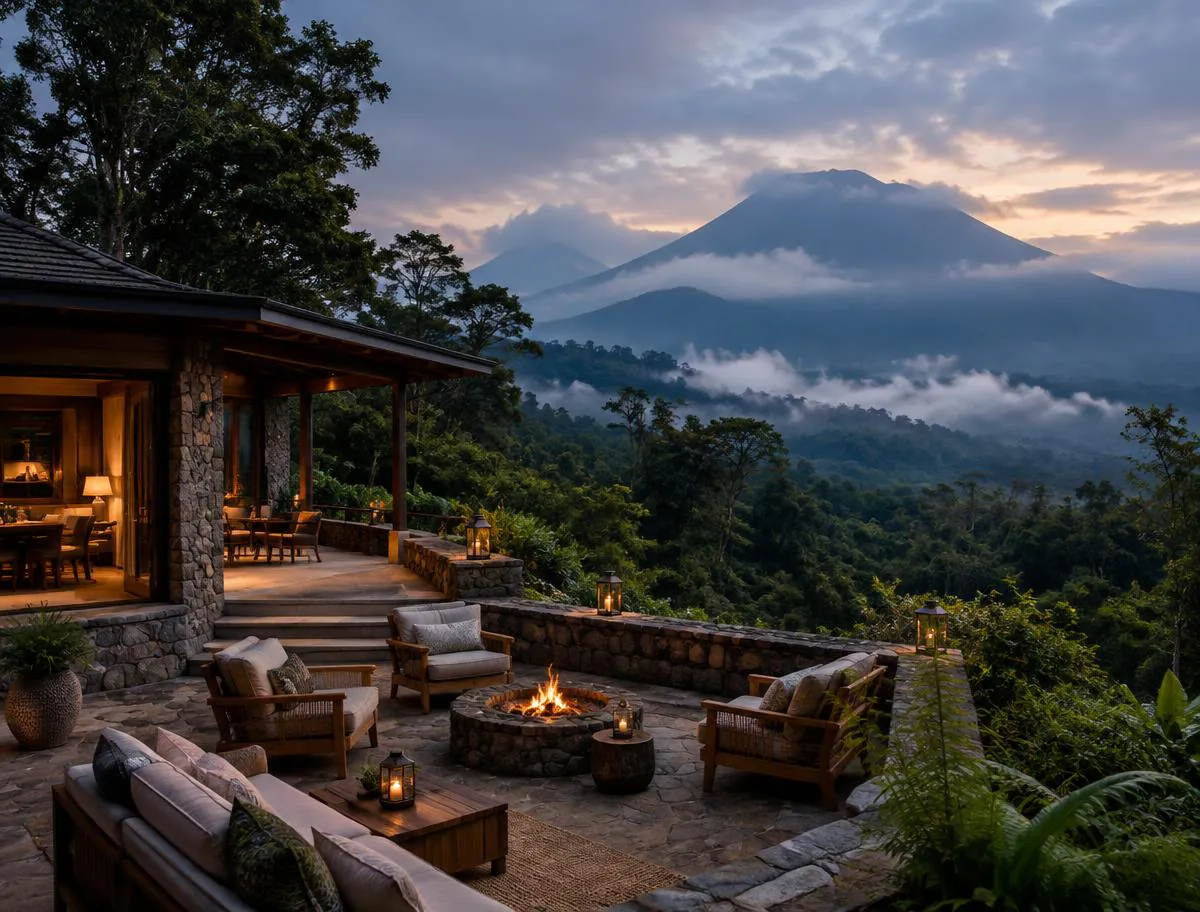
Musanze generally offers the broadest practical range and easier access to town services. Kinigi and the park-facing foothills can shorten the reporting drive and create a stronger landscape setting. Neither label guarantees a specific transfer time, because roads and exact property locations vary. Ask for minutes to the reporting point under early-morning conditions — see the Rwanda safari lodges guide for how to judge properties by function rather than marketing labels.
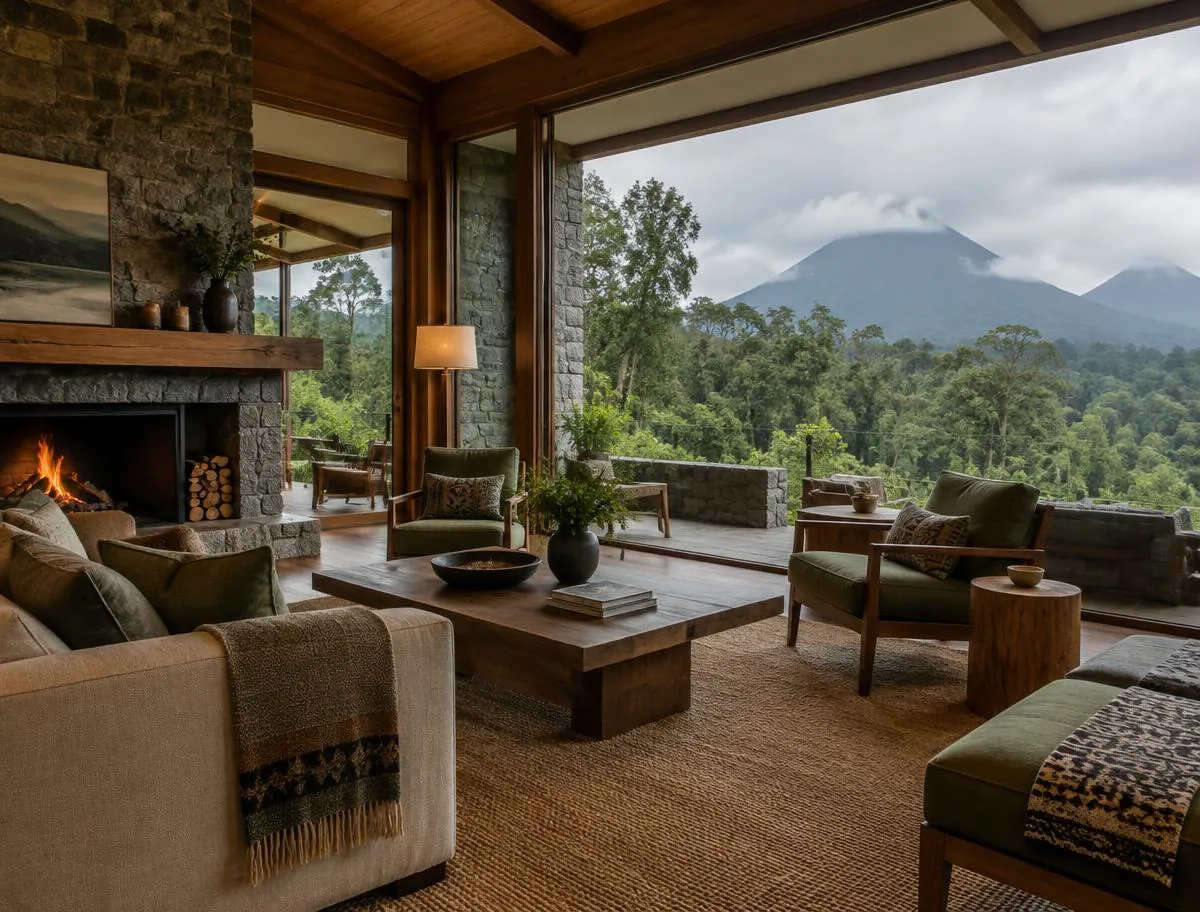
For a trek-focused stay, early breakfast, warm water, heating or a reliable way to dry clothing, boot cleaning and flexible meal timing matter. For a slower stay, views, private space, guiding support and a comfortable common area may justify spending more. The same park activity remains available across accommodation levels; the price difference buys the hours around it.
Do not select a Kigali hotel as the trek base simply because the road distance looks manageable. Kigali is the gateway, not the calmest staging point for a strict early report. Move north the previous day.
Weather and trail conditions
Best time means choosing a trade-off
Volcanoes is a year-round mountain destination, but trail surfaces, cloud, views and demand shift. Broadly drier tendencies can make paths firmer and views more likely; rainier periods can intensify green landscapes and soften demand. Neither pattern is a guarantee. Rain can fall in a drier period, and a clear morning can occur in a wetter one.
As the best-time-to-visit guide explains, Visit Rwanda identifies rainy periods from roughly mid-February to May and mid-September to mid-December, with the named dry season from June to mid-September. Safari Soles treats the interval between the named rainy periods as planning context only, not as an official second dry season. None of these ranges is a daily forecast.
The best date is the one that aligns permit availability, physical expectations, wider route plans and tolerance for mud or crowds. A flexible traveller may value quieter dates; a photographer may accept rain for saturated forest colour; a hiker may prioritise the firmer tendency of the drier months.
| Planning view | Jan | Feb | Mar | Apr | May | Jun | Jul | Aug | Sep | Oct | Nov | Dec |
|---|---|---|---|---|---|---|---|---|---|---|---|---|
| General tendency | Drier | Mixed | Rainier | Rainier | Rainier | Drier | Drier | Drier | Mixed | Rainier | Rainier | Mixed |
| Planning emphasis | Dust + layers | Variable | Rain shell | Mud plan | Rain shell | Demand | Demand | Demand | Variable | Rain shell | Mud plan | Holiday demand |
Drier tendencyMixedRainier tendency
Mountain field kit
Dress for moisture, vegetation and changing temperature
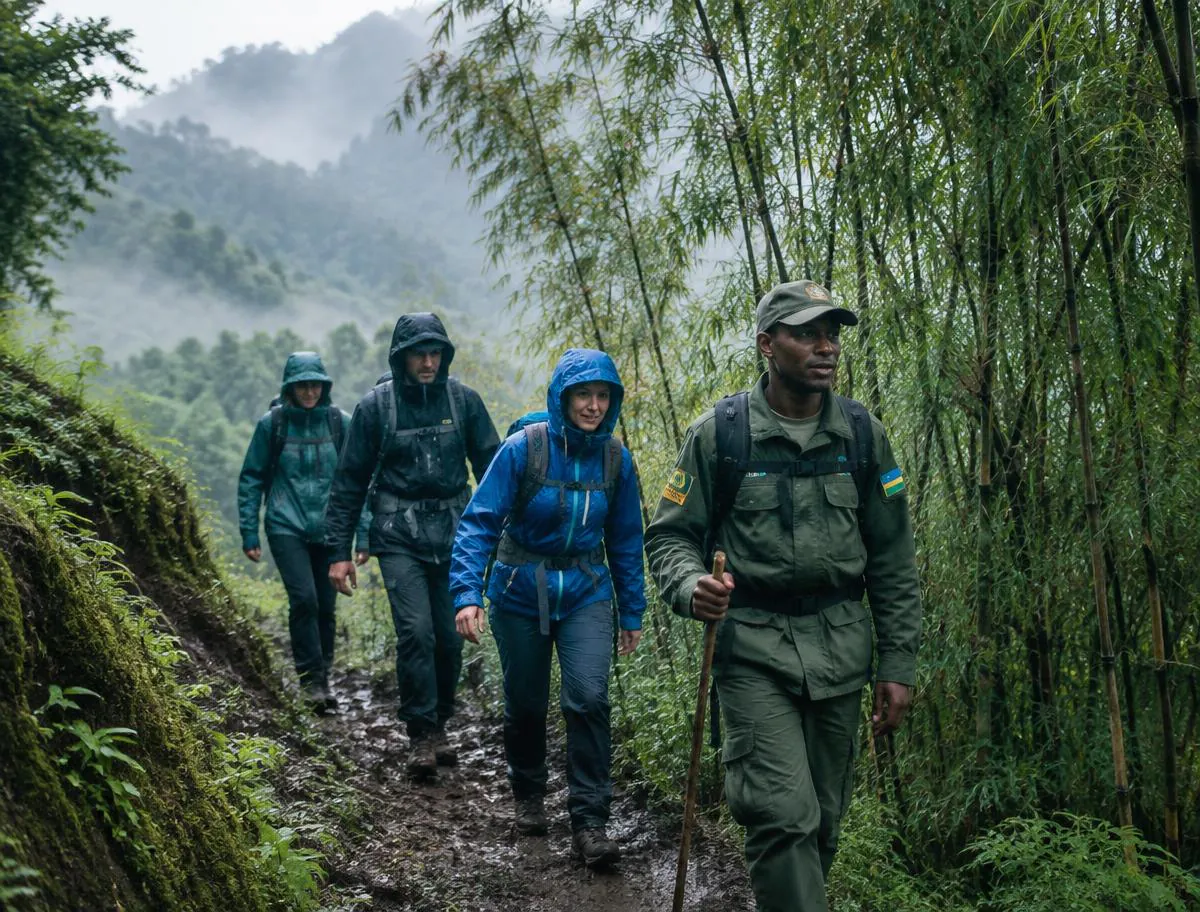
As covered in the Rwanda safari packing list, wear broken-in boots with grip, long trousers, long sleeves and a waterproof outer layer. Gaiters help keep mud and vegetation away from socks and trouser openings. Gardening-style gloves can protect hands when a guide allows you to use vegetation for balance. A small daypack should keep water, camera equipment and spare layers protected.
Avoid cotton as the only warm layer because it holds moisture. Use breathable layers that can be added during a cool briefing and removed during a climb. Pack a dry layer for the vehicle and lodge after the activity. Sun protection also matters at altitude even when cloud makes the light feel soft.
The correct kit is not a costume assembled for a photograph. It is a safety and comfort system for a mountain forest. Keep it simple, tested and easy for a porter or traveller to carry.
Pack by function and keep critical items accessible. Rain protection belongs near the top of the daypack, not beneath camera cases and spare clothing. Protect documents and electronics inside waterproof pouches even when the forecast looks stable. Carry the water and food specified by the operator or activity team, but avoid an oversized bag that becomes awkward in vegetation. Test boots, jacket closures and camera access before leaving home.
Plan the return as carefully as the start. A dry shirt, clean footwear option and warm layer in the vehicle can make the post-activity transfer much more comfortable. Lodges differ in laundry speed and boot-cleaning support, especially when several wet mornings follow one another. Ask what is available and pack enough field clothing for the actual sequence rather than assuming everything can be cleaned overnight.
Route logic
Kigali, Volcanoes and where to go next
Kigali is the normal gateway and the road north is the principal connection. Treat the transfer as its own travel block rather than an invisible gap between flight and activity. International arrival delays, baggage collection and traffic can erode an apparently generous schedule. Arrive with enough time to reach the region before dark and prepare calmly.
After Volcanoes, Lake Kivu offers a gentler change of pace; Kigali can provide a cultural and logistical reset; Akagera or Nyungwe create a larger country circuit with substantially more driving. The right onward route depends on the next fixed commitment. Do not add a distant park merely because Rwanda looks compact on a map.
Regional road and flight schedules change. Confirm the actual door-to-door sequence for your dates, including border procedures if the trip continues to Uganda or another country — a custom safari planner can help sequence permit dates and transfers. A simple route with protected buffers is more robust than a theoretically efficient chain of tight connections.
For arrival day, share the flight number and realistic clearance time with the transfer team. For departure day, work backwards from airport check-in rather than from scheduled takeoff. If the itinerary includes a border, verify entry documents and vehicle handover arrangements for every traveller. None of these details is visually dramatic, but they decide whether the park stay feels calm or compressed.
Keep one source of truth for the itinerary. The permit date, visitor names, accommodation address, reporting instruction, driver contact and onward booking should agree across documents. When something changes, update the whole sequence rather than one isolated voucher. This is particularly important when several park activities have separate products and evidence requirements.
| Next stop | Why combine it | Main planning cost |
|---|---|---|
| Kigali | Flights, museums, restaurants and a transition day | Road time south and city-night timing |
| Lake Kivu | Recovery, water and a slower landscape | Additional nights and western routing |
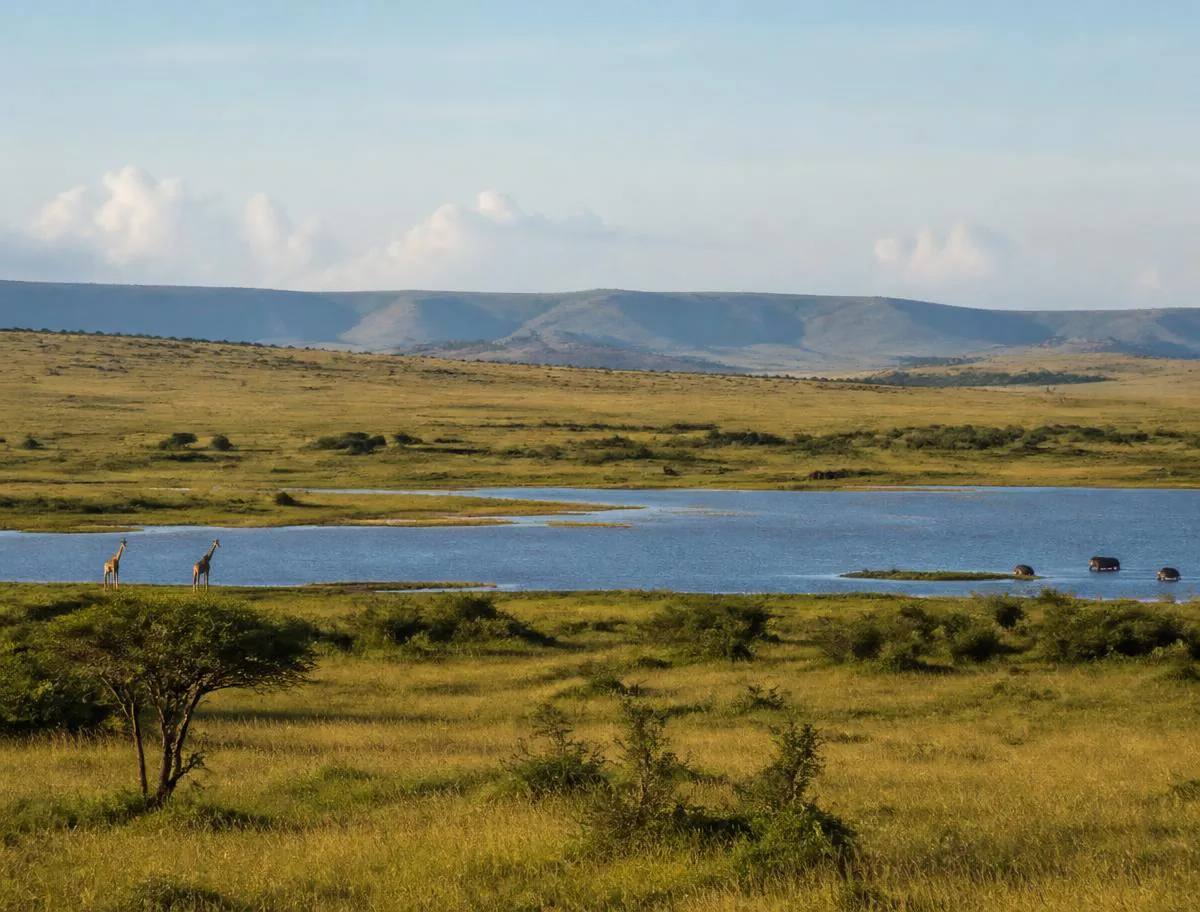
| Akagera | Savannah wildlife contrast | A longer cross-country road sequence |
| Nyungwe | Forest diversity and chimpanzees | Substantial distance and another fixed activity schedule |
| Uganda | A cross-border primate or safari route | Border time, separate permits and more complex logistics |
Protected access
Tourism takes place inside a conservation system
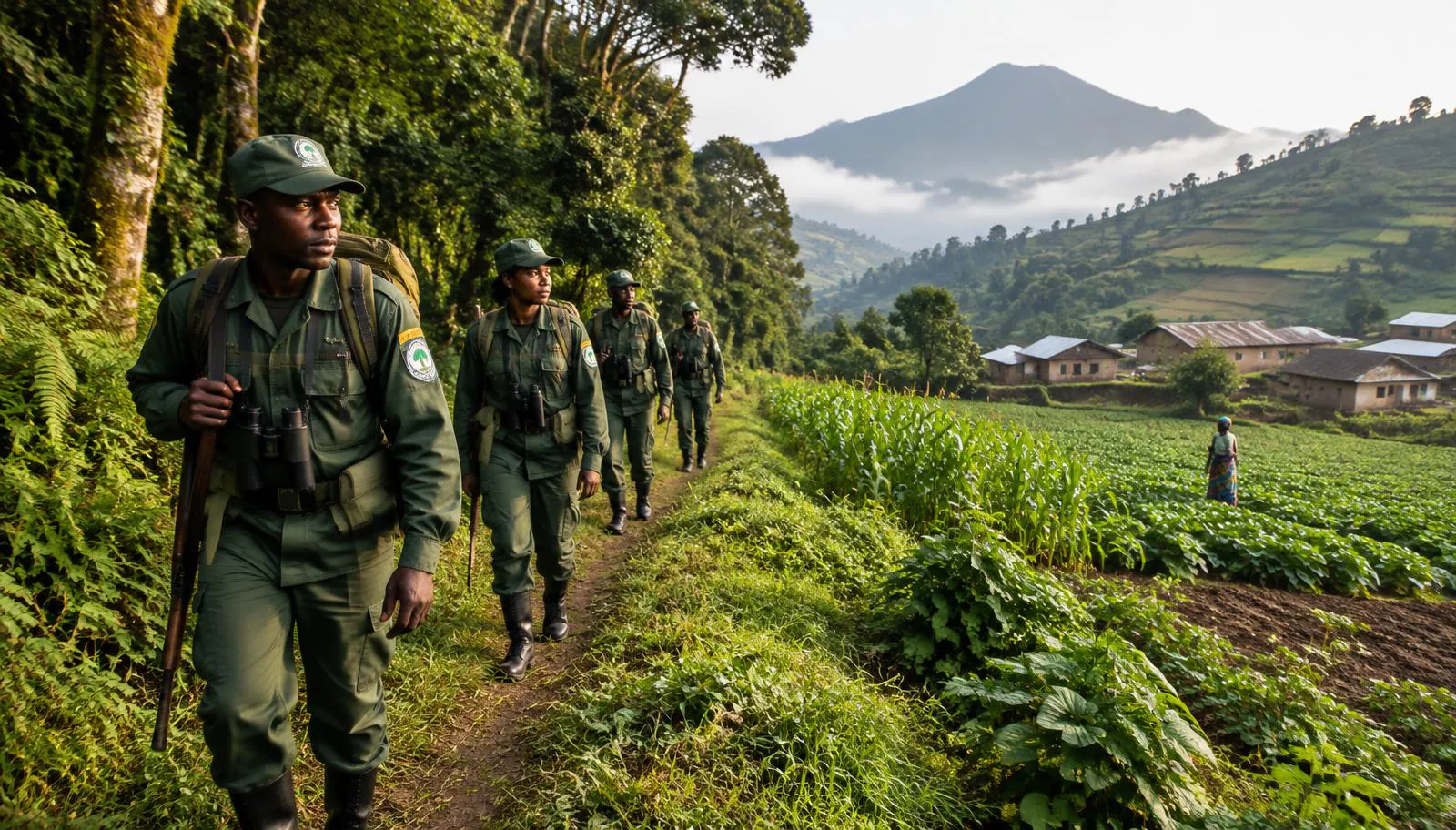
The park protects rare species and high-elevation habitats while sitting beside communities and farmland. Access is therefore guided, timed and limited by product rules. Those controls are not service inconveniences; they are part of how tourism is kept compatible with wildlife protection and field operations.
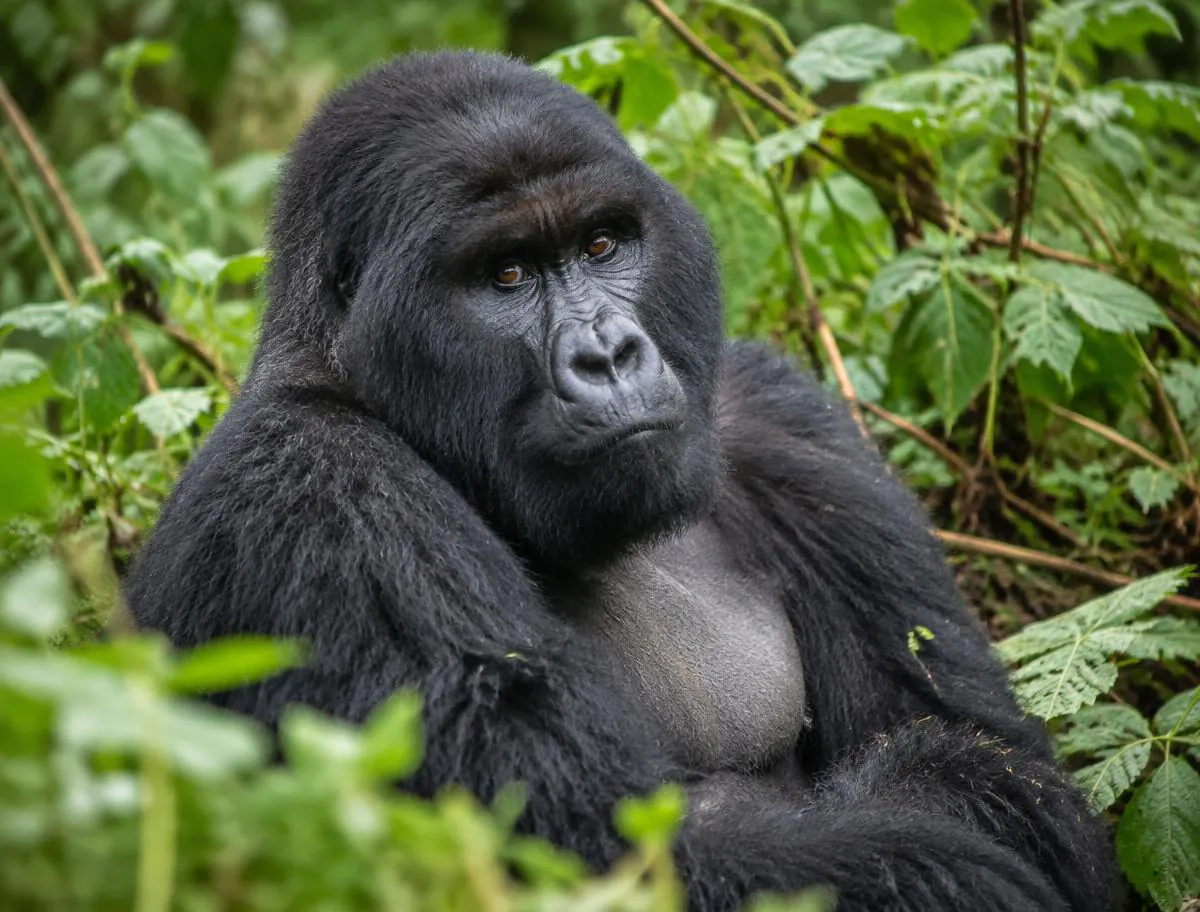
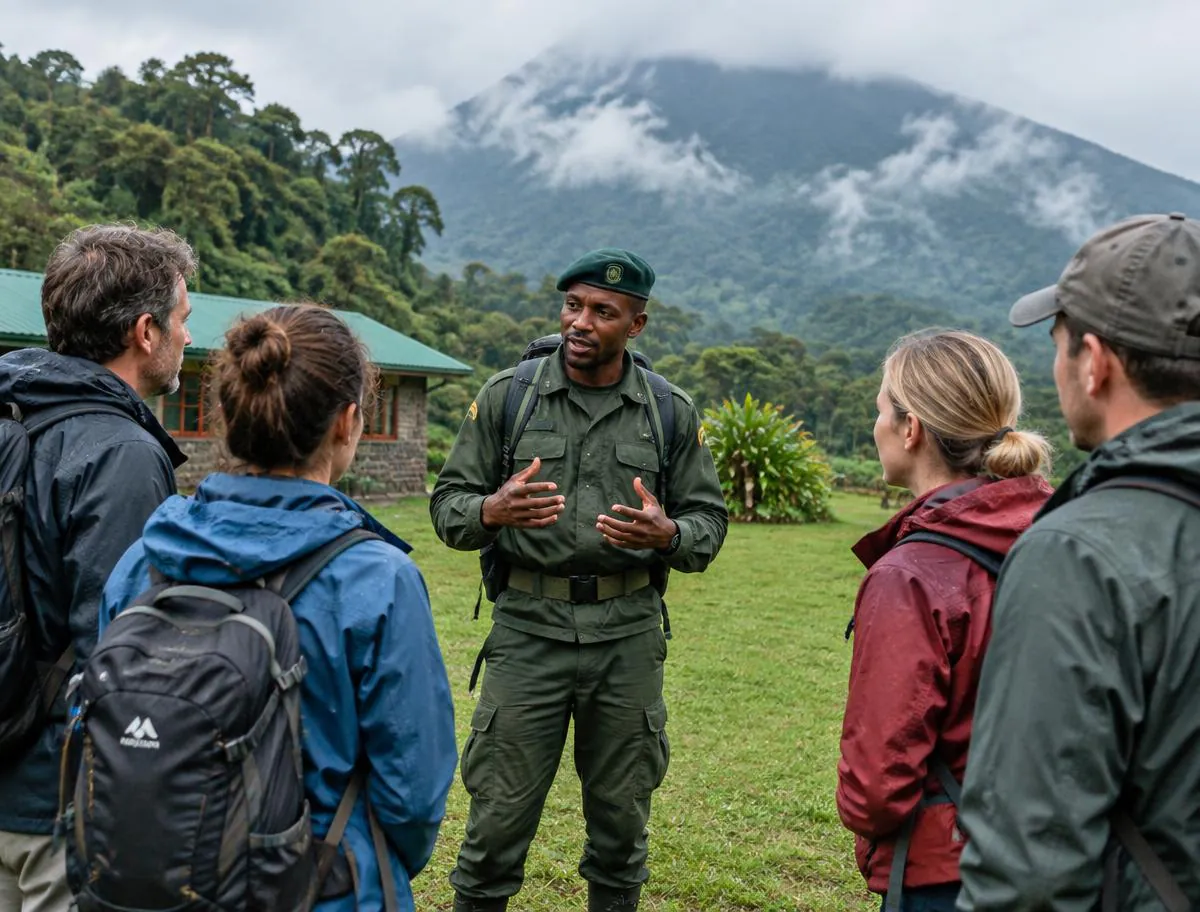
Visit Rwanda (opens in a new tab) describes more than 200 bird species and both mountain gorillas and golden monkeys within the destination. It also presents the wider Virunga landscape and associated cultural sites as part of the experience. Responsible planning means following guide instructions, disclosing illness where required, keeping distance from wildlife and avoiding pressure for exceptional access.
Community benefit is also part of the destination's resilience. Porters, local guides, accommodation staff and community experiences connect visitor spending with livelihoods around the park. Choose transparent services and treat staff guidance as part of the conservation experience.
Who it suits
Match the park to your real interests
Volcanoes works especially well for travellers who value primates, mountain scenery, active mornings and a compact region with several distinct experiences. It can also suit mixed-interest parties because one person can choose a serious hike while another chooses a gentler cultural or landscape day.
It is less naturally suited to someone seeking a classic open-plains game drive as the main event, since Akagera owns that experience — for the wider comparison of what different parks contribute to a trip, see the Rwanda safari overview. It also requires more preparation than a passive viewpoint: early starts, permits, variable weather and physical movement are central to the visit — see the Rwanda vs Uganda gorilla trekking comparison for how the region compares regionally.
Families should plan by the published minimum age of each activity rather than by the park as a whole. Golden monkeys currently list 12; gorillas, Bisoke and Karisimbi list 15. Younger travellers can still enjoy the region, but they need a deliberately designed alternative morning rather than an assumption that rules will bend.
Avoidable errors
Common Volcanoes planning mistakes
The first mistake is treating the park as one activity. That produces a rushed in-and-out trek with no understanding of the landscape. The second is the opposite: trying to stack every primate encounter, hike and cultural visit into consecutive mornings. The park rewards selection, not collection.
Other errors follow from geography: sleeping in Kigali before a 07:00 report, choosing accommodation without checking road time, assuming a named volcano is currently open because an old article lists it, or scheduling a long transfer immediately after an open-ended forest morning. Each can be fixed by working from current official products and protecting the booked morning.
Finally, do not use a general park guide as a substitute for the permit terms. Rates, eligibility evidence, rescheduling and refund rules belong to the live RDB service pages and the dedicated permit guide. Recheck them before payment.
One activity too many
Leave recovery time and choose contrasting mornings instead of collecting every available product.
Kigali on trek eve
Move to the Volcanoes region before the strict early report.
Old schedule as current
Verify every hike and rate on the live official product for your date.
Lodge chosen by label
Ask for actual travel time to Kinigi and the relevant trailhead.
No wet-weather kit
Prepare for rain and mud in every month, including broadly drier periods.
Planning FAQ
Direct answers about planning Volcanoes National Park
Is Volcanoes National Park only for gorilla trekking?
No. Gorillas are the signature experience, but current official material also presents golden monkeys, hiking, Buhanga Eco-Park, Musanze Caves, cycling, canoeing and village experiences.
How many nights should I plan?
Two nights can support one anchor morning. Three nights are an illustrative balanced option for two different mornings; four can support a demanding hike or slower stay.
Should I stay in Kigali before trekking?
No. Move to the Musanze or Kinigi area the previous day so the 07:00 report does not depend on a long dawn transfer.
Can children visit the park?
Yes, but minimum ages are activity-specific. The live golden-monkey product lists 12; gorillas, Bisoke and Karisimbi list 15. Verify before booking.
What is the best month?
There is no universally best month. Drier tendencies can mean firmer trails and stronger demand; wetter periods can mean more mud, cloud and vivid vegetation.
Do I need hiking boots?
For forest and volcano activities, broken-in waterproof boots with grip are the practical default. Add long trousers, layers and a rain shell.
Can I climb every named volcano?
Do not assume so. Rwanda has five named Virunga peaks, but current visitor products and route access must be verified with RDB.
Is Musanze the same as Kinigi?
No. Musanze is the regional town; Kinigi is the park-registration area. Accommodation can be in either zone or between them.
Does a premium lodge improve gorilla access?
No. It changes comfort, setting and transfer time. The regulated wildlife encounter is managed by the park.
Where should I go after Volcanoes?
Lake Kivu offers slower contrast; Kigali provides a gateway reset; Akagera or Nyungwe create a broader circuit with more road time.
Continue planning
Read the guide that owns your next question
Rwanda vs Uganda Gorilla Trekking
Compare park access and the wider journey without a forced winner.
Sources & verification
Official information behind this guide
Visit Rwanda provides destination context; live RDB products provide current activity-specific rates, ages and reporting instructions. Unverified porter prices, quotas and old hiking schedules are intentionally omitted.
- Visit Rwanda — Volcanoes National Park Official park location, peaks, ecosystems, wildlife and wider experiences
- RDB — Golden monkey tracking Current permit categories, minimum age and reporting time
- RDB — Bisoke hike Current Bisoke product, rate categories and age rule
- RDB — Karisimbi hike Current Karisimbi product, rate categories and age rule
- RDB — Dian Fossey Tomb hike Current official hike product and rate categories
Build the park stay
Choose one anchor morning. Give the Virunga landscape room around it.
Start with gorillas, golden monkeys or a hike, then add the nights, accommodation and onward route that support that choice.