


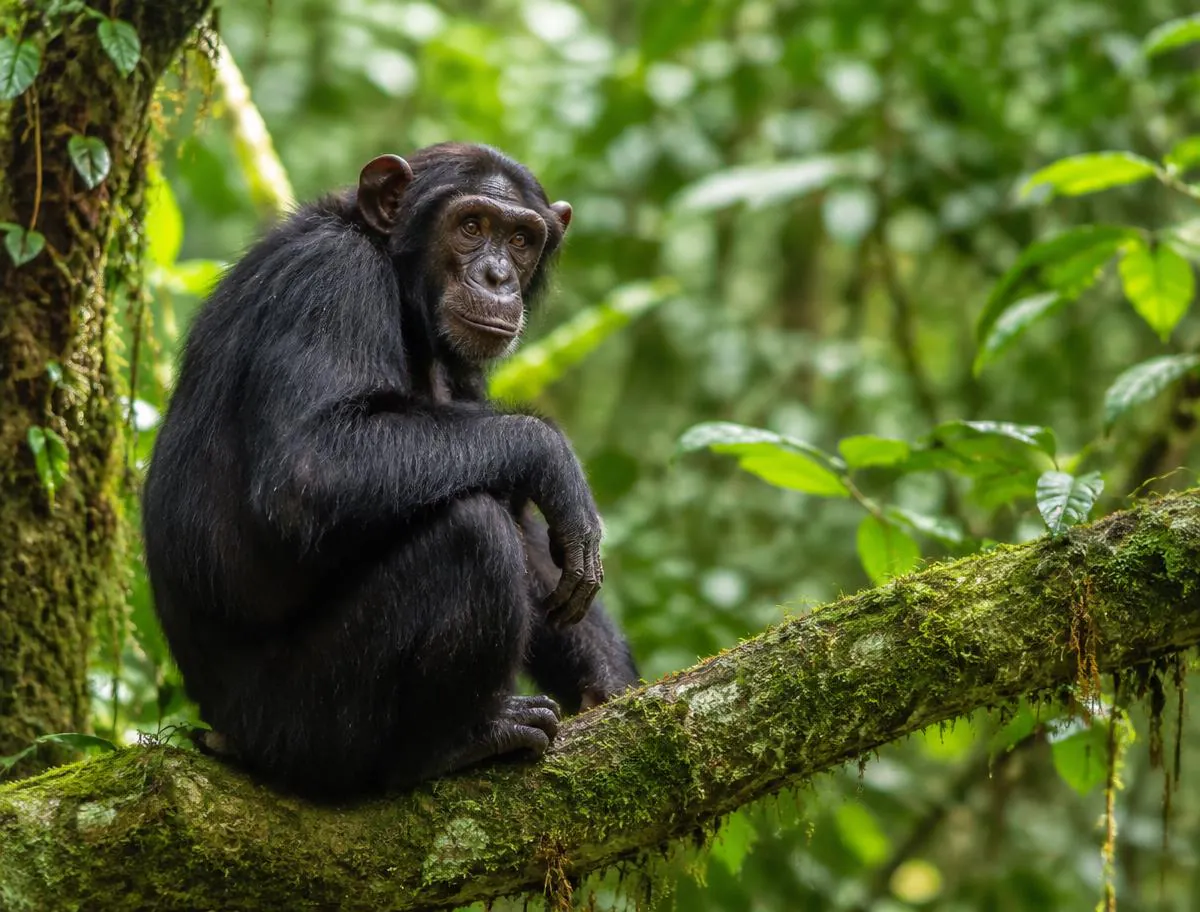
Nyungwe primate guide
Chimpanzee Trekking in Rwanda: What to Expect
How a Nyungwe chimpanzee trek actually unfolds: the pre-dawn report, a faster, less predictable forest day than gorilla trekking, fitness demands and honest expectation-setting.
ParkNyungwe
Typical reportPre-dawn
Minimum ageConfirm with RDB
EncounterOne hour once located
The experience
What chimpanzee trekking actually is
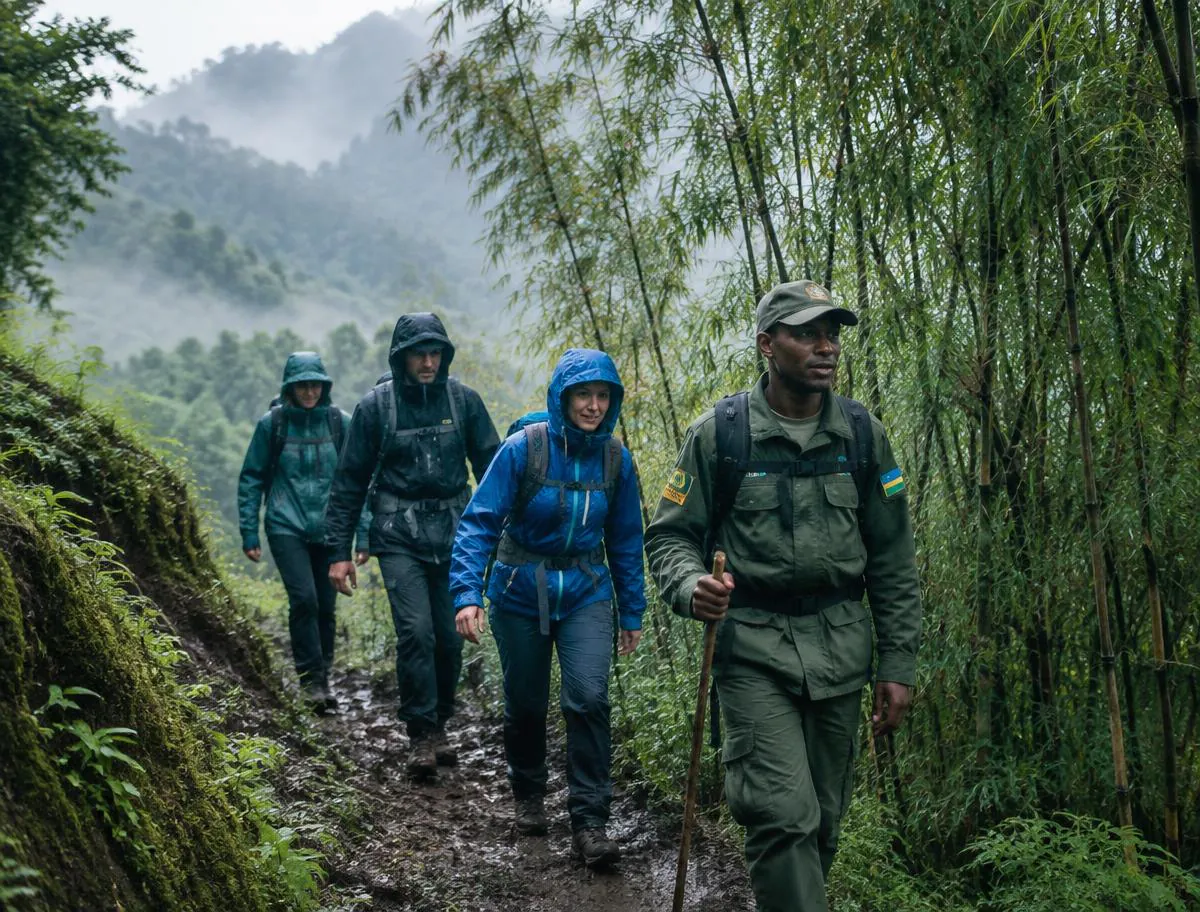
Chimpanzee trekking is a guided activity that takes visitors into Nyungwe's forest to find and spend limited time observing a habituated chimpanzee community. Rangers use a combination of prior tracking, radio contact and knowledge of the group's territory to locate them, then lead a group of visitors in for a supervised viewing period.
This guide owns the tracking experience itself: what a trek day involves, how demanding it is, how to manage expectations, and how it compares with gorilla trekking. It does not repeat Nyungwe's wider destination profile, canopy walk or trail network — that content lives in the Nyungwe National Park guide.
Chimpanzees are far more mobile than mountain gorillas. They range widely, move quickly through the canopy and on the ground, and can cover long distances between sightings, which shapes almost every practical decision below.
Location
Where chimpanzee trekking happens
In Rwanda, chimpanzee tracking is centred on Nyungwe National Park in the southwest, with departures organised from the Uwinka Reception Centre for the main forest community and from Gisakura for access to the smaller, separate Cyamudongo forest community.
Cyamudongo is a distinct forest fragment roughly an hour's drive from the main park block, and its community is generally described as smaller than the main forest group — part of the wider destination covered in the Rwanda safari guides library. Which site you are assigned depends on booking and permit allocation, not personal choice on the day.
The trek day
How a tracking day unfolds
The day begins early, typically with reporting well before sunrise so trackers can locate the community's likely position from its previous night's nesting site. Expect a briefing on group conduct, distance rules and safety before setting off behind a park guide and, often, a separate tracker team already in the forest.
Once the group is found, visitors are usually allowed one hour of observation, though actual walking time before and after that hour varies enormously depending on where the chimpanzees are. Because they move quickly and spend real time high in the canopy, a session can involve short bursts of fast walking to keep pace as the group relocates.
Photography, sound and distance rules are set on the day by the accompanying guide; always follow the current instruction rather than a rule read in an old trip report.
- Pre-dawn
Report at reception
Registration and document checks at the reporting point shown on the booking confirmation before first light.
- Early morning
Briefing
Guides explain group conduct, distance and the day's specific instructions.
- Morning
Enter the forest
Trackers and guides lead the group toward the community's likely location.
- On contact
One-hour observation
A supervised viewing period once the group is located, subject to guide direction.
- Variable finish
Return
Walking time back varies with distance covered; keep the rest of the day flexible.
What the day demands
Physical demands and fitness
Because chimpanzees move faster and further than gorillas typically do, a chimp trek can require more sustained walking, including uphill sections, uneven forest floor and occasional fast repositioning to keep the group in view. Treat it as a genuine hike rather than a short stroll.
Build basic walking fitness beforehand, wear broken-in boots with grip, and tell the guide about any mobility concerns before setting off. A trekking pole can help on steep or muddy sections, and a porter can assist with bags on the harder days.
Setting expectations
Wildlife location varies, and a different rhythm than gorillas
Chimpanzee tracking does not come with a guaranteed sighting. The community can be located quickly on some mornings and cover significant ground on others, and trackers work from the most recent known position rather than a fixed location.
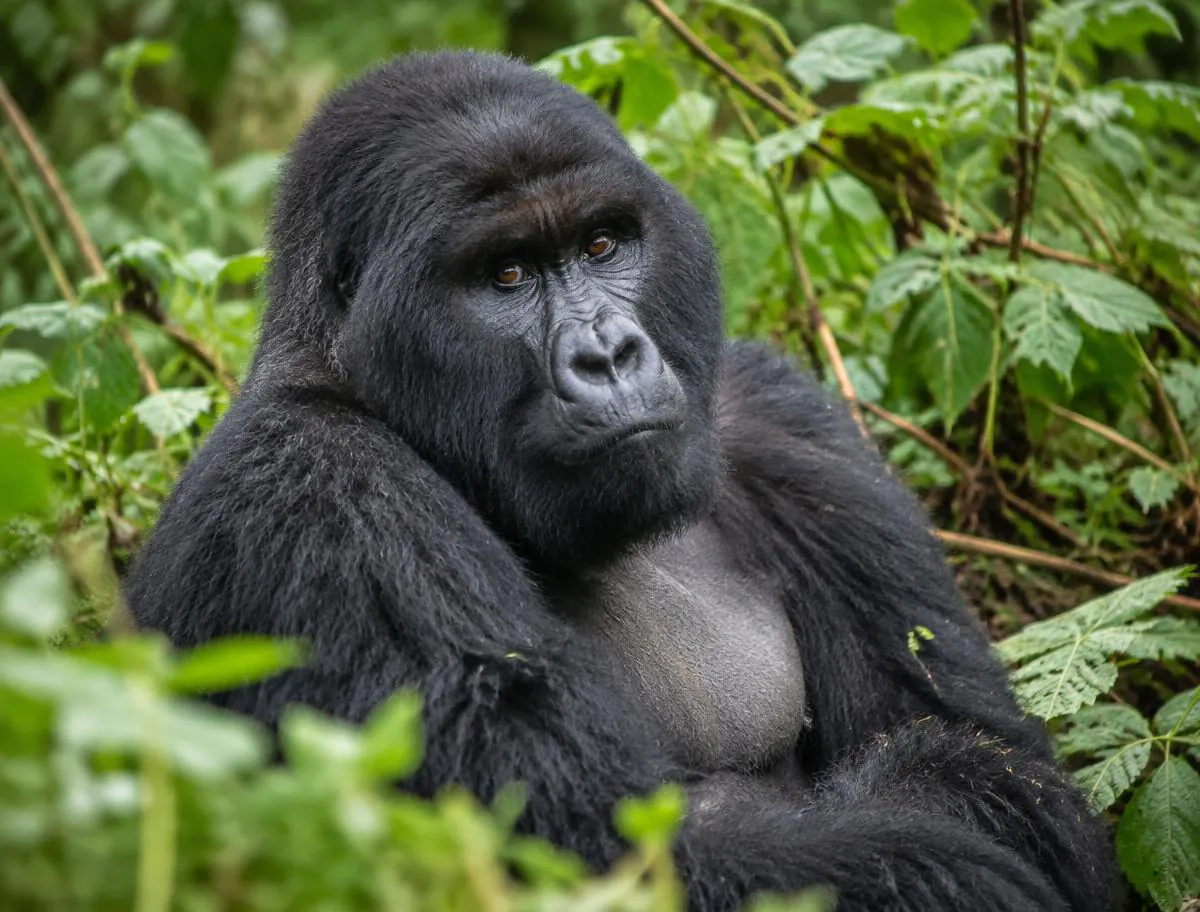
Even after contact, chimpanzees often stay high in the canopy or keep moving, which makes for a more active, noisier and sometimes more fragmented viewing experience than the closer, calmer ground-level encounters typical of gorilla trekking.
What to expect
- Faster-moving subject, often high in the canopy
- Trek distance and duration vary more between days
- One-hour observation once located
- Minimum age requires current RDB confirmation
For comparison
- Ground-based family groups, generally calmer to observe
- Approach distance still varies but sightings are highly reliable
- One-hour encounter once located
- Minimum age requires current RDB confirmation
Booking and eligibility
Permits and booking, verified where possible
Chimpanzee tracking permits are managed through Rwanda's tourism system (opens in a new tab). The current minimum age was not confirmed on the live public product during this review, so verify the latest threshold directly with RDB before booking, alongside the separately published gorilla trekking rules. Multiple current operator sources describe visitor-category pricing well below the gorilla permit rate, but this guide could not confirm an exact current figure on RDB's own live booking portal at the time of research.
Check the current official tariff and availability directly on the RDB booking portal or through a licensed operator before paying. Daily capacity is limited because only a small number of communities are habituated for tourism, so book ahead rather than assuming a same-week slot.
Eligibility
Minimum age and who it suits
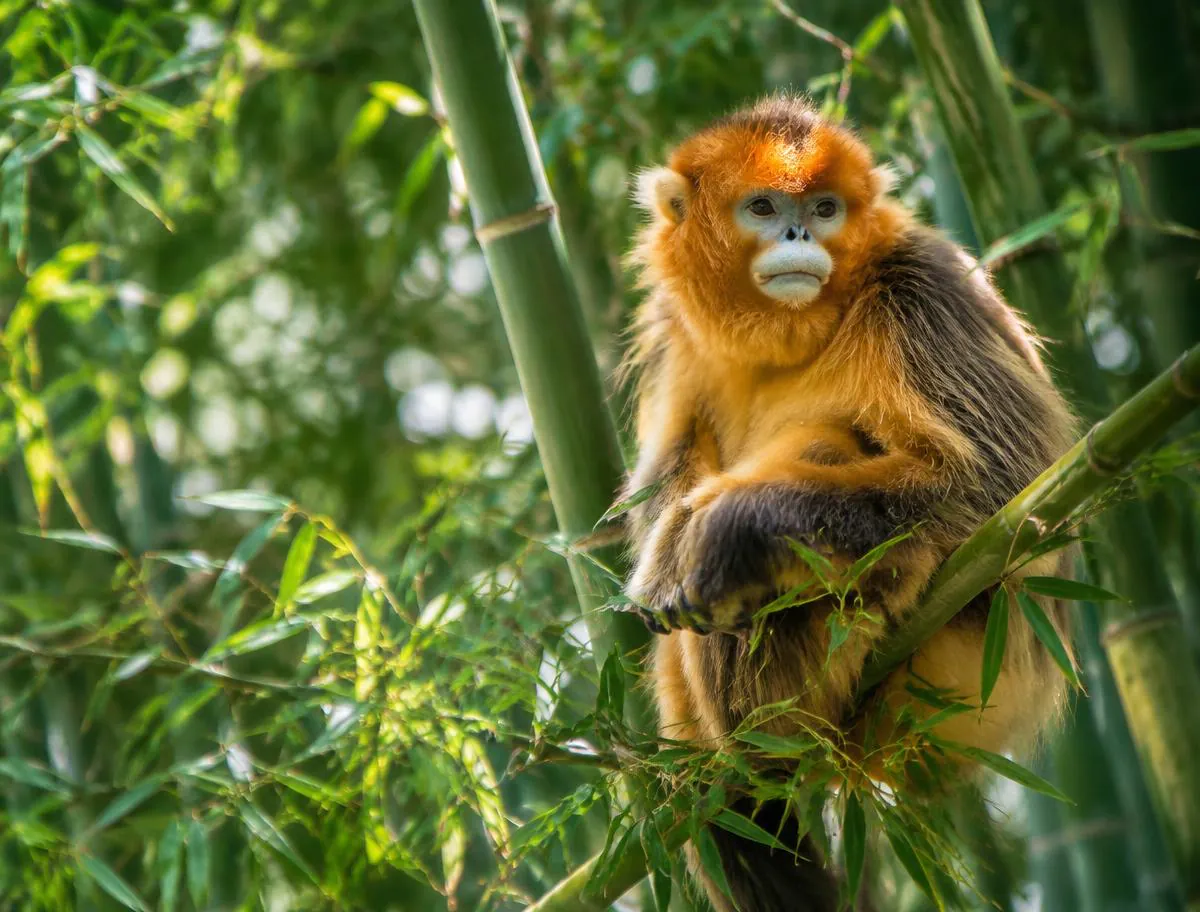
The current minimum age was not confirmed on the live Visit Rwanda page; verify it directly with RDB before booking. Families travelling with younger children may find golden monkey tracking, with its lower minimum age, a more accessible primate activity in the meantime.
The activity suits travellers who are comfortable with an early start, sustained walking and an unpredictable, fast-paced encounter rather than a calm, guaranteed portrait session.
Fast subjects, low light
Photography under canopy and in motion
Early starts mean the first part of the walk is often in low light, and forest canopy keeps light levels down even once the sun is up. Use a fast shutter speed to freeze movement, raise ISO rather than accept blur, and keep gear light enough to reposition quickly.
A moderate telephoto lens is usually more useful than an extreme one, since chimpanzees are frequently closer and more mobile than distant, static subjects — see the Rwanda photography safari guide for a fuller kit discussion. Protect equipment from rain and condensation and default to no flash unless the guide says otherwise.
What to wear
Clothing and kit for a chimp trek
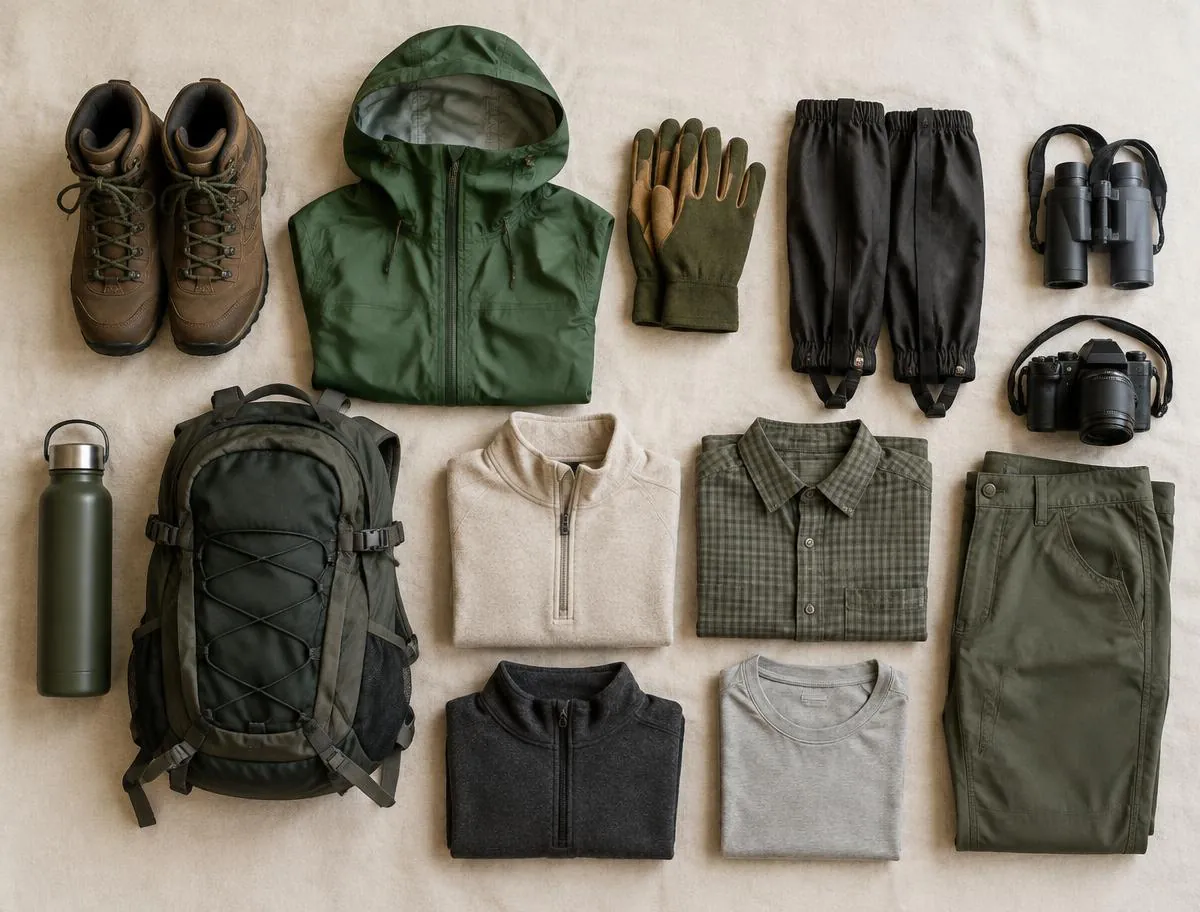
Per Visit Rwanda's official clothing guidance (opens in a new tab), wear long trousers, long sleeves, broken-in boots with strong grip and a waterproof shell, layered so you can adjust as exertion and weather change. Gaiters help keep mud and vegetation off socks on wetter mornings.
Carry water, any needed medication, a dry bag for electronics and a light rain cover for a daypack, drawn from the Rwanda safari packing list. Because the day can run long if the community is far from the trailhead, pack more water and snacks than you think you will need.
When to go
Timing and pairing with Nyungwe
Confirm operating dates and permit availability with RDB before booking. Broadly drier periods can mean firmer trails and marginally more predictable movement, but this is a wet rainforest destination in any month, so treat seasonal choice as a trail-condition trade-off rather than a guarantee of dry weather, per the best-time-to-visit guide and Visit Rwanda's seasonal overview (opens in a new tab).
Pair the trek with at least one further Nyungwe activity, such as the canopy walkway or a birding trail, on a separate day of the same stay. Trying to fit tracking and a long onward drive into the same day removes the flexibility a variable finish time requires — see the Nyungwe National Park guide for the destination's full activity range and seasonal detail.
Who it suits
Deciding if this is the right primate morning
Chimpanzee trekking suits travellers who want an active, unpredictable wildlife encounter and are comfortable with a real hike and a non-guaranteed sighting. It is a strong complement to gorilla trekking for a fuller primate comparison across one Rwanda trip, or a strong standalone highlight for a Nyungwe-focused itinerary — a custom safari can help sequence both.
Travellers who want a calmer, more reliably close encounter, or who cannot manage a sustained forest hike, may prefer to prioritise gorilla trekking or golden monkey tracking instead and treat a Nyungwe visit around its other activities.
Planning FAQ
Direct answers about the chimp trekking day
Where does chimpanzee trekking happen in Rwanda?
In Nyungwe National Park, departing from Uwinka for the main forest community or Gisakura for the smaller Cyamudongo community.
What is the minimum age?
Confirm the current threshold directly with RDB before booking.
Is a sighting guaranteed?
No. Chimpanzees move quickly and widely, so tracking is Cannot be promised to succeed on every attempt.
How is it different from gorilla trekking?
Chimpanzees are faster, often high in the canopy and cover more ground, making for a more active and less predictable day.
How much does a permit cost?
Check the current official RDB tariff before booking; this guide does not publish an unverified figure.
How fit do I need to be?
Build basic walking fitness; the trek can involve sustained uphill walking and fast repositioning.
What should I wear?
Broken-in boots, long layers, a waterproof shell and a protected daypack.
Can I combine it with Nyungwe's canopy walk?
Yes, but plan them on separate parts of the same stay rather than the same morning.
What time do I report?
Very early, generally before sunrise; confirm the exact time on your booking.
Should I do chimps or gorillas first?
There is no fixed rule; many travellers do gorillas in Volcanoes and chimps in Nyungwe as two separate legs of one trip.
Continue planning
Read the guide that owns your next question
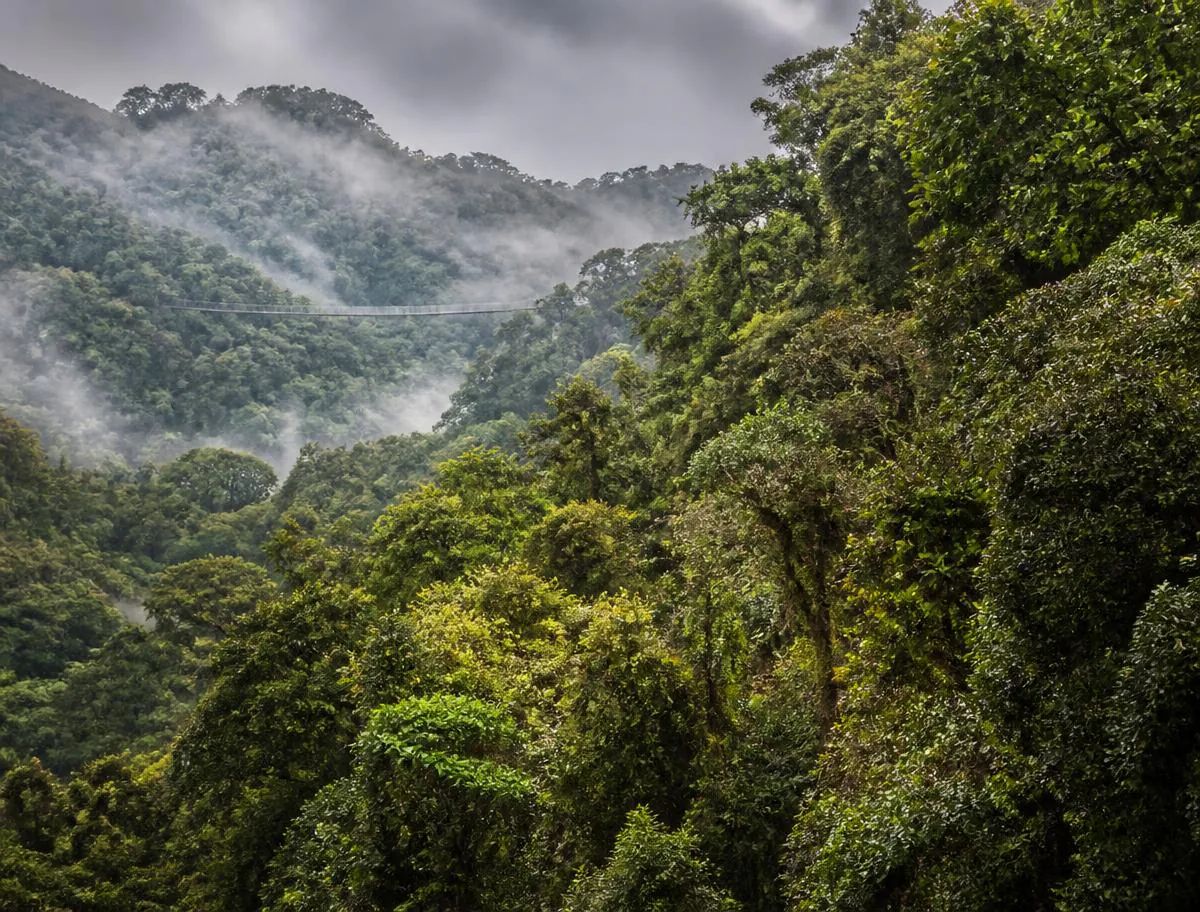
Nyungwe National Park
See the full destination: canopy walk, trails, birding and seasonality.
Sources & verification
Official information behind this guide
RDB's booking portal is the authority for permit price, category and availability; Visit Rwanda supports destination and clothing context. No specific chimpanzee permit price is published here because it could not be verified live.
- RDB — Tourist permit booking portal Live permit categories, availability and booking process
- Visit Rwanda — Primate Tracking Official destination and activity context
- Visit Rwanda — What to wear Official clothing guidance for Rwanda's forest conditions
- Visit Rwanda — Weather Official seasonal context
Prepare for a faster forest day
Set realistic expectations before booking a chimpanzee trek.
Confirm the current permit tariff, build in fitness and time buffer, and pair the trek with the rest of what Nyungwe offers.