


Volcanoes primate guide
Golden Monkey Trekking in Rwanda: What to Expect
A practical guide to Rwanda's bamboo-zone primate experience: the live permit and age rules, 07:00 report, terrain, clothing, fast forest photography and how to pair the morning with gorilla trekking.
ParkVolcanoes
Reporting07:00
Minimum age12
Current adult permitUS$100 foreign visitor
The animal and encounter
What golden monkey tracking is
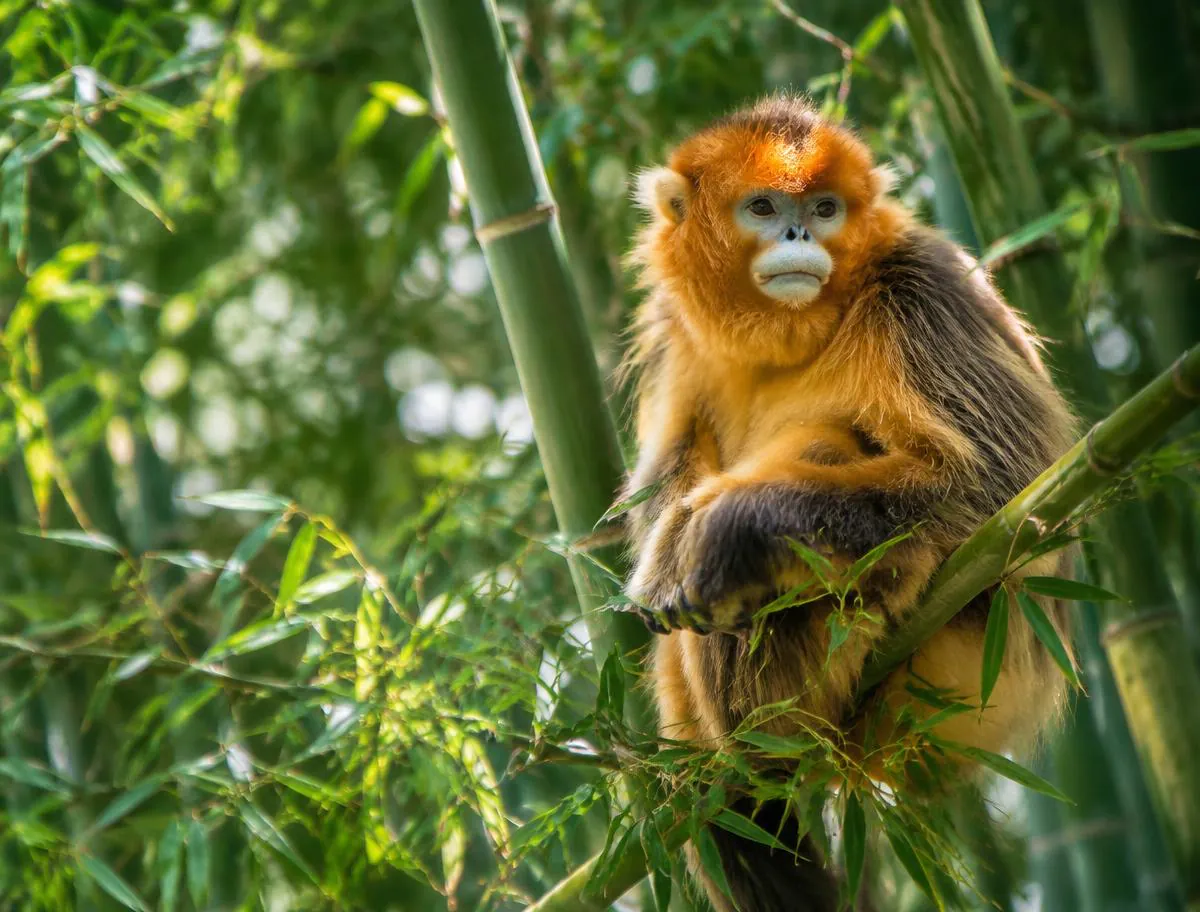
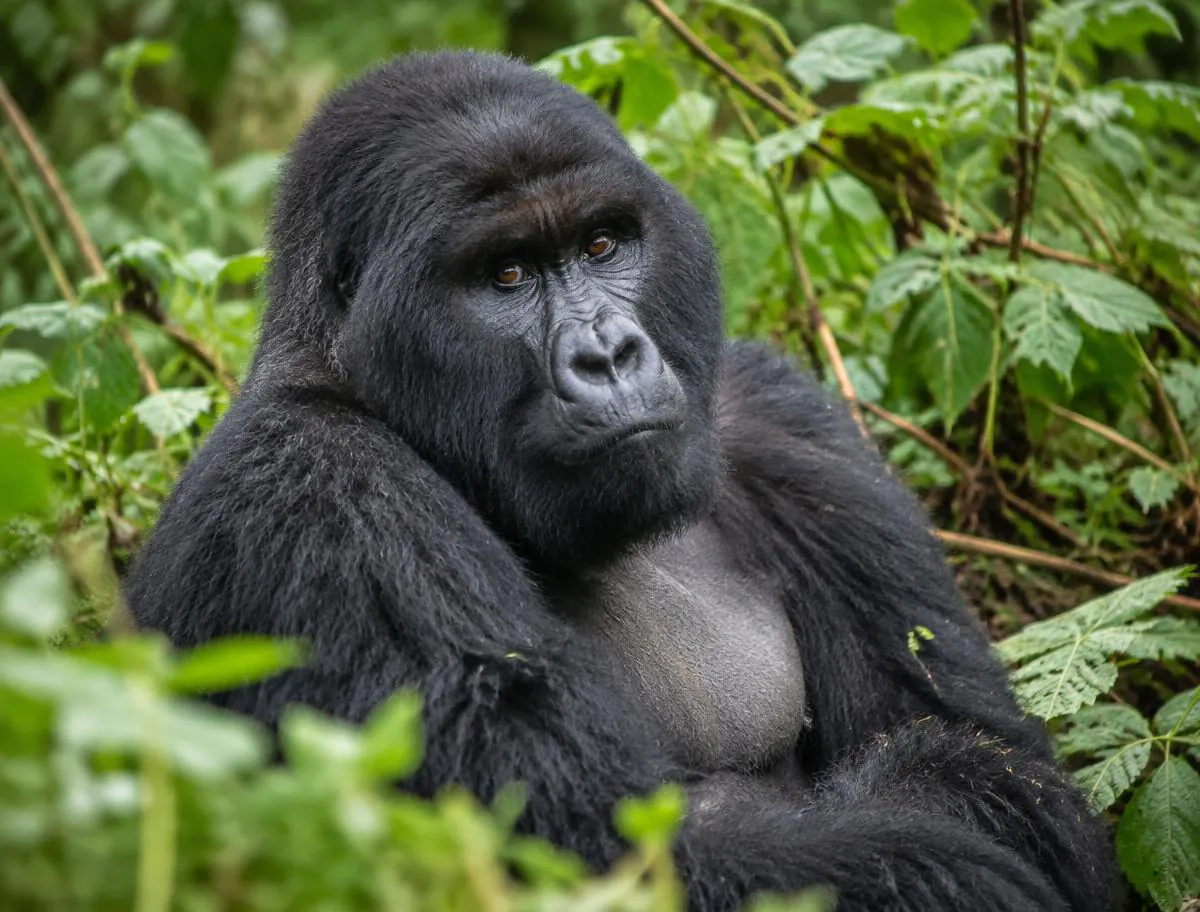
Golden monkeys are endangered primates associated with the Albertine Rift and the bamboo forests of the Virunga region. In Volcanoes National Park, visitors join a guided tracking activity to locate a habituated troop and observe its movement through the forest. The experience is visually energetic: monkeys feed, leap and change position quickly, so watching them feels different from the slower, ground-level attention of a gorilla trekking encounter.
Tracking is still a managed wildlife activity, not a zoo visit or guaranteed photographic session. The troop's position, weather, foliage and light shape the day. Guides control the approach and explain current field rules. Follow their instructions rather than carrying assumptions from gorilla trekking or an old trip report.
The purpose of this guide is practical: what the live RDB product says, how the morning is structured, what terrain and photography demand, and how to place it beside gorillas — Visit Rwanda's own gorilla-tracking itinerary context (opens in a new tab) is a useful official reference — without turning two distinct experiences into a ranking.
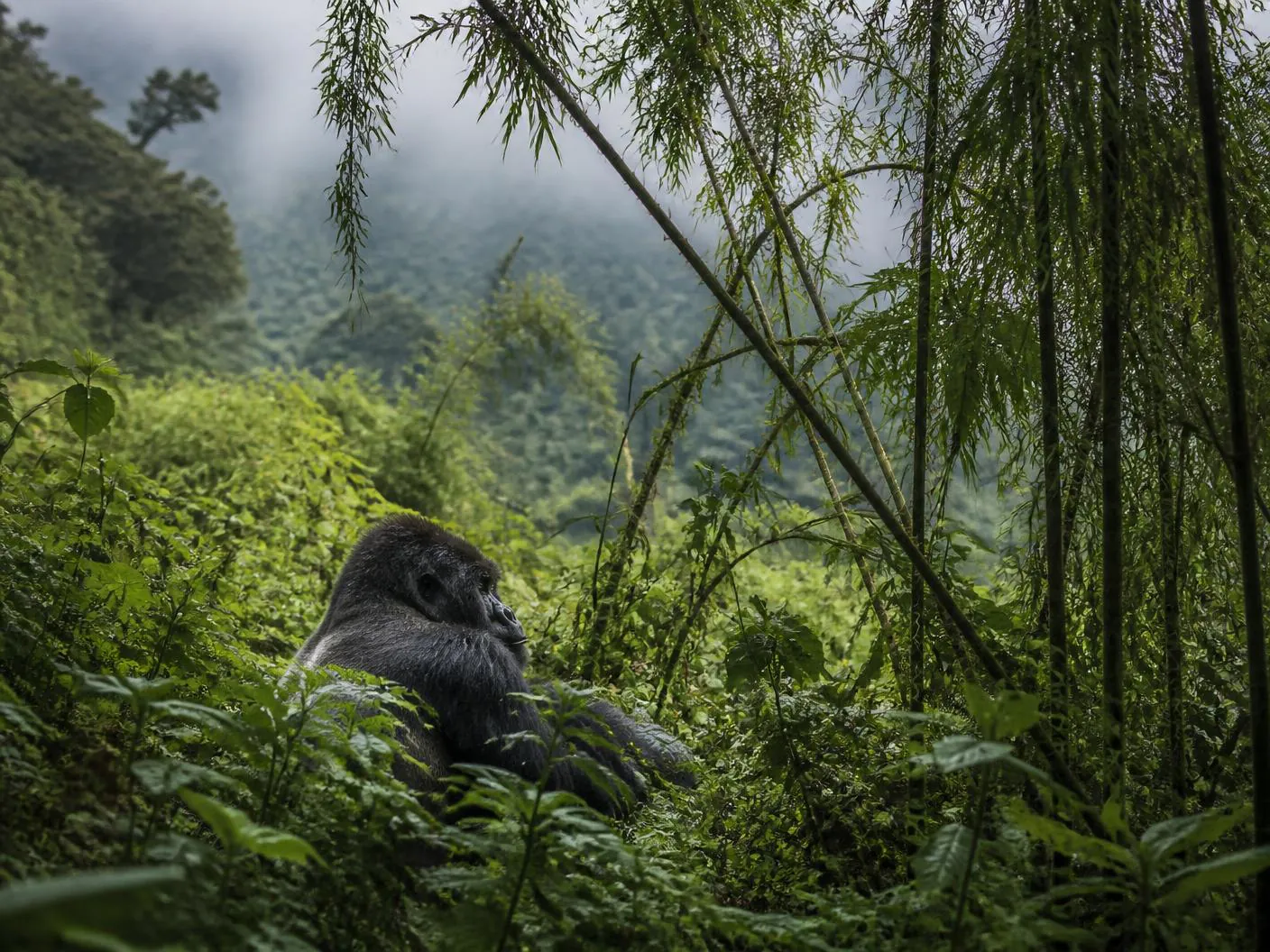
Bamboo in the Virungas
Where tracking happens
Golden monkey tracking takes place in Volcanoes National Park in northwestern Rwanda. Musanze is the regional town and Kinigi is the principal park-registration reference. The current RDB product instructs visitors to report at 07:00 at a park visitor information or registration centre. Confirm the exact instruction on the permit rather than relying only on the lodge's general description.
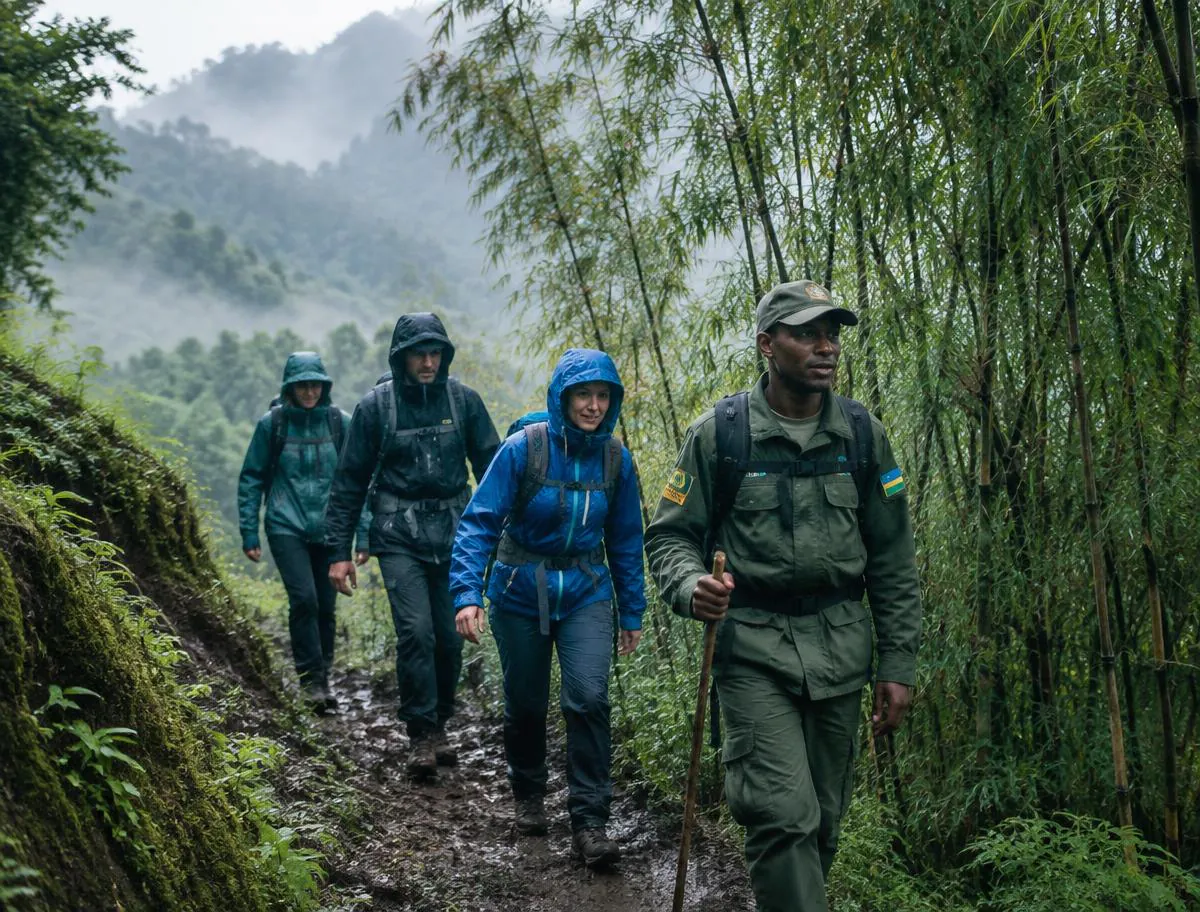
The monkeys' association with bamboo habitat helps explain why this day often feels different from a gorilla trek, but 'lower slope' should not be interpreted as flat or effortless. The park remains a wet mountain environment with uneven ground, vegetation and changing weather. Trail length depends on where the animals are located.
Sleep in the Volcanoes region the night before. A same-morning road departure from Kigali puts a strict report behind a long drive and removes the calm needed for breakfast, equipment and briefing.
| Place | Role | What to confirm |
|---|---|---|
| Kigali | International gateway | Transfer timing on the previous day |
| Musanze | Regional services and lodging | Actual pre-dawn drive to registration |
| Kinigi | Park-registration area | Exact permit reporting point |
| Volcanoes National Park | Guided bamboo-zone tracking | Current rules, weather and trail advice |
A guided activity
How the morning works
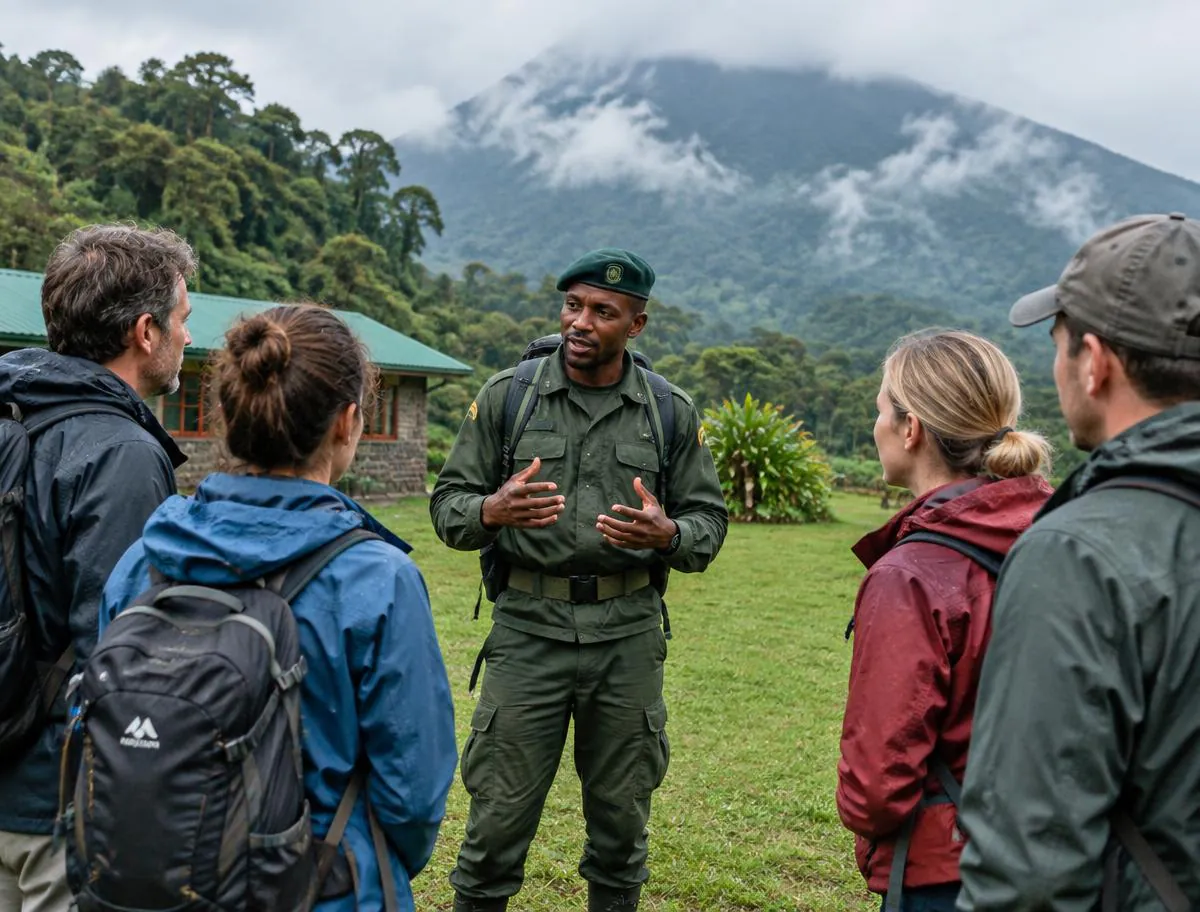
The day begins with registration and a briefing. Park staff organize the activity and guides lead the forest approach. Once the monkeys are located, attention shifts from walking to observing quick movement through bamboo and foliage. Guides manage distance and behavior and can help travellers anticipate movement without chasing or surrounding the animals.
Do not schedule a fixed departure immediately after the nominal morning window. Wildlife location and trail conditions vary, so finish time is not a reliable appointment. Keep the afternoon flexible for lunch, drying equipment, rest or a gentle local activity.
A porter can be useful for carrying water, rain layers and camera equipment and for practical assistance on slippery ground. Current porter arrangements and fees should be confirmed locally; this guide does not publish an unverified amount.
- 07:00
Report and register
Present the booking and required evidence at the instructed park centre.
- After registration
Briefing and group organization
Listen for the day's wildlife, trail and photography rules.
- Morning
Walk into bamboo habitat
Follow the guide at the group's pace over potentially wet, uneven ground.
- When located
Observe the troop
Keep the directed distance and expect quick movement through foliage.
- After tracking
Return and recover
Keep onward timing flexible; change out of wet or muddy clothing before travel.
Live RDB product
Permit, price and eligibility basics
The live RDB golden-monkey product (opens in a new tab) lists US$100 for a foreign non-resident adult. It also lists separate categories for foreign residents in Rwanda, East African citizens, East African foreign residents and Rwandan citizens, including student or child rates where shown. Eligibility is documentary, not a discount requested at the counter.
The same product says foreign-resident and East African foreign-resident categories require evidence of at least four consecutive months of residence or a valid work permit. Family and diplomatic provisions also appear on the official page. Read the category conditions in full and use the rate that matches the evidence the traveller can actually present.
Rates and rules can change. Keep the permit line separate from accommodation, road transfers, porter arrangements and any gorilla permit. Golden monkey tracking is its own booked product.
A distinct threshold
The current minimum age is 12
The live RDB product lists 12 as the minimum age for golden monkey tracking. That makes the activity available to some families whose children are not yet eligible for gorilla trekking, whose current minimum of 15 is set out in the Rwanda gorilla permit guide. Do not assume the lower threshold makes the day suitable for every 12-year-old.
Assess comfort with an early start, rain, mud, uneven trail, instructions and an unpredictable finish. A child who walks regularly and enjoys wildlife may find it engaging; a child who dislikes wet conditions or standing quietly when directed may not. The authority's minimum is an eligibility boundary, not a personal fitness assessment.
Carry proof of age where relevant and ensure names and visitor categories match the booking. Ask RDB or the booking channel about any uncertainty before payment, not at registration.
Physical expectations
Bamboo slopes are still mountain terrain
Golden monkey tracking is often described as less strenuous than gorilla trekking because the troops are associated with bamboo zones, but that is planning guidance rather than a guaranteed difficulty. Rain, mud, roots, elevation and troop movement can still create a demanding morning.
Prepare for a steady forest walk rather than an extreme climb. Build basic walking fitness, wear footwear with grip and use a pace that you can sustain. Tell the guide about mobility concerns before the group leaves so that expectations are visible.
Do not book the activity as a recovery day if the traveller is exhausted or injured from a previous hike; browse the Rwanda safari guides library for other ways to pace a trip. It is a contrasting wildlife morning, not passive rest.
Often more accessible
Bamboo-zone tracking can be shorter and less steep, but it is not guaranteed.
Still wet and uneven
Roots, mud, vegetation and changing weather remain part of the activity.
Fitness still helps
Regular walking and comfort on uneven ground make the morning more enjoyable.
Porter support
Useful for bags and footing; verify current local arrangements rather than an old quoted fee.
What to wear
Use the same protective logic as other forest activities
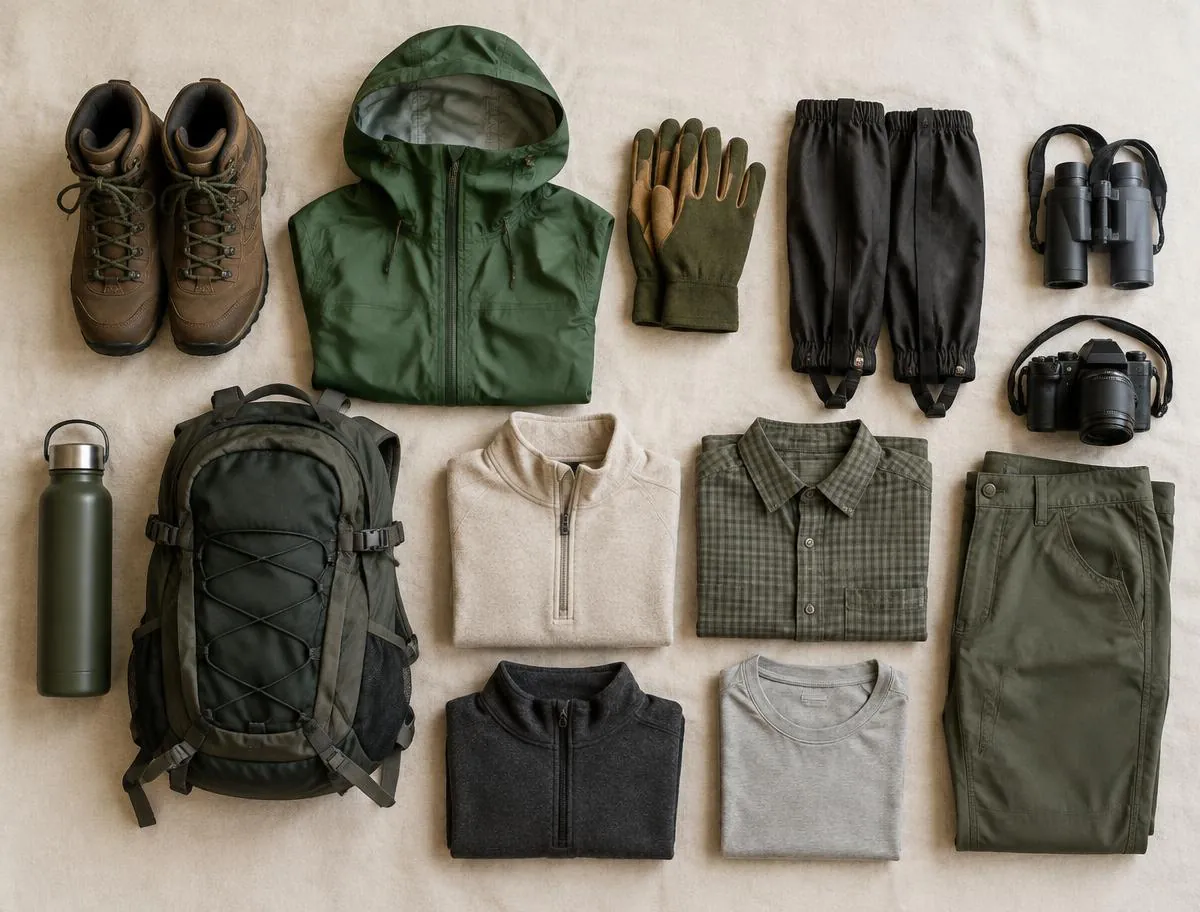
Wear long trousers, long sleeves and broken-in boots with reliable grip, as covered in the Rwanda safari packing list. Add a waterproof shell and carry a dry layer in a protected bag. Gaiters can keep mud and vegetation away from socks; light gloves may help where the guide permits holding vegetation for balance.
Use layers rather than one heavy garment. The briefing can feel cool, walking creates heat and a pause under wet canopy can cool the body again. Avoid clothing that stays saturated and camera bags that open directly to rain.
Pack water, necessary medication, a small snack if permitted under current rules, lens protection and only the equipment you can manage. Follow the guide's instructions about eating, movement and distance once near wildlife.
Fast subjects, difficult light
Photography is about readiness, not reach
Golden monkeys can move quickly and disappear behind bamboo, a challenge covered further in the Rwanda photography safari guide. Use a shutter speed that can handle movement, raise ISO rather than accepting blur and choose equipment you can reposition without blocking the group. A moderate telephoto can be useful, but very long gear may become awkward at close forest distances.
Protect the camera from rain and condensation. Keep a cloth accessible, use a hood and avoid changing lenses in wet conditions if possible. Review current flash rules during the briefing and default to no flash around wildlife.
Take time to watch without the viewfinder. A sequence of natural movement often tells the story better than a single tightly framed portrait, and the guide's position advice can be more valuable than moving independently for a clearer angle.
Year-round planning
Best time is a trail and light trade-off
Golden monkey tracking can be planned throughout the year, subject to current product availability — see the best time to visit Rwanda guide for the wider seasonal picture. Broadly drier periods may bring firmer paths and stronger demand; wetter periods can bring mud, rain protection challenges and saturated forest colour. The animals remain wild and weather does not guarantee visibility or photographic conditions.
Visit Rwanda's seasonal guidance (opens in a new tab) identifies a rainy period roughly mid-February to May, a dry season from June to mid-September and a second rainy period from mid-September to mid-December. The remaining weeks around December to mid-February sit outside those named rainy periods but are not classified as an official second dry season. Transitional months do not obey clean boundaries.
Choose dates around the whole route and permit availability. If golden monkeys follow gorillas, the gorilla permit usually controls the date. If this is the anchor activity, a quieter wetter-period date may appeal to a traveller comfortable with mud and variable light.
| Planning view | Jan | Feb | Mar | Apr | May | Jun | Jul | Aug | Sep | Oct | Nov | Dec |
|---|---|---|---|---|---|---|---|---|---|---|---|---|
| Trail tendency | Firmer | Variable | Muddier | Muddier | Muddier | Firmer | Firmer | Firmer | Variable | Muddier | Muddier | Variable |
| Prepare for | Demand | Mixed weather | Rain | Rain | Rain | Demand | Demand | Demand | Transitions | Rain | Rain | Holiday demand |
Drier tendencyMixedRainier tendency
Two primate mornings
Gorillas and golden monkeys work best as a sequence
The two activities share a park and an early reporting culture, but they should occupy separate mornings. Gorilla trekking centers on locating one habituated family and a regulated encounter; golden monkeys create a faster bamboo-zone observation. Their difference is the reason to combine them.
An illustrative three-night structure is arrival in the Volcanoes region, gorilla trekking on the first full morning, golden monkeys on the second and onward travel after the second activity or the next day. Reverse the mornings if permit availability requires it. Do not describe this as the only correct itinerary.
Use one activity's clothing and wet-weather kit for both, but keep permits, age rules and prices separate — the gorilla trekking cost guide shows how add-on permits fit the wider budget. A golden-monkey booking is not included in a gorilla permit.
| Dimension | Golden monkey tracking | Gorilla trekking |
|---|---|---|
| Primary habitat feel | Bamboo-zone movement | Variable montane and bamboo forest approach |
| Current minimum age | 12 | 15 |
| Current standard foreign visitor reference | US$100 adult | US$1,500 |
| Subject movement | Fast, active and often above ground | Slower observation once the family is reached |
| Physical pattern | Often more accessible, never guaranteed | Approach length and difficulty vary widely |
| Best relationship | A distinct second morning | Often the fixed-date anchor |
Trip shape
How many nights to plan
For golden monkeys alone, two nights in the Volcanoes region can create a calm arrival, one tracking morning and onward travel. For gorillas plus golden monkeys, three nights are an illustrative balanced option because each activity has its own morning and there is less pressure to transfer immediately after the forest.
Add a fourth night for a slower lodge stay, another official park experience or protection around complex onward travel. The number is planning guidance rather than an official requirement; the Rwanda itinerary guide shows how it fits a longer route. Count usable mornings and fixed permits, not labels such as 'three-day tour.'
Keep the night before tracking near the park and keep finish time flexible. Those two decisions do more for reliability than squeezing the itinerary to its theoretical minimum.
2 nights · golden monkeys
Arrival, one tracking morning and onward travel with the report protected.
3 nights · two primate mornings
An illustrative balanced option for gorillas and golden monkeys on separate days.
4 nights · slower Volcanoes stay
Adds recovery, another experience or a less compressed departure.
Who it suits
A strong fit for active wildlife curiosity
The experience can suit travellers who enjoy primates, fast wildlife behavior, forest photography and a half-day mountain activity. The current minimum age of 12 also opens a shared park morning for some families who cannot trek gorillas together.
It can be less suitable for someone expecting a guaranteed easy walk, a stationary portrait session or a passive viewing platform. Foliage, movement and variable light are central to the encounter.
For returning gorilla trekkers, golden monkeys add ecological and visual contrast. For first-time visitors, they can stand alone as an accessible introduction to Volcanoes National Park, provided the traveller is still prepared for wet mountain terrain — a custom safari can build the rest of the trip around it.
Planning FAQ
Direct answers about the golden-monkey morning
How much is golden monkey tracking in Rwanda?
The live RDB product listed US$100 for a foreign non-resident adult when checked on 20 September 2026. Verify the date and category before payment.
What is the minimum age?
The current RDB product lists 12.
Where does it happen?
In Volcanoes National Park in northwestern Rwanda, with reporting instructions centered on the park visitor-registration system.
What time do I report?
The live product lists 07:00. Follow the exact location and time shown on the booking.
Is it easier than gorilla trekking?
It is often described as more accessible, but no difficulty is guaranteed. Mud, roots, slopes, weather and troop location still matter.
How long is the encounter?
Current field instructions should be confirmed at briefing. Do not build a fixed onward departure around an assumed finish time.
Can I do gorillas and golden monkeys on the same day?
Plan them on separate mornings. Both begin with early park operations and have variable forest timing.
What should I wear?
Broken-in boots, long trousers, long sleeves, waterproof layers and a protected daypack.
Can I use flash?
Default to no flash and follow the current guide instruction. Fast shutter speed and higher ISO are safer photographic tools.
How many nights do I need?
Two nights can support golden monkeys alone; three are an illustrative balanced shape for a separate gorilla and golden-monkey morning.
Are children charged differently?
The live RDB table shows student/child rates in several eligible categories, not a universal child discount. Check category evidence.
Do I need a porter?
A porter can help with bags and footing. Confirm current arrangements locally because this guide does not publish an unverified fee.
Continue planning
Read the guide that owns your next question
Volcanoes National Park
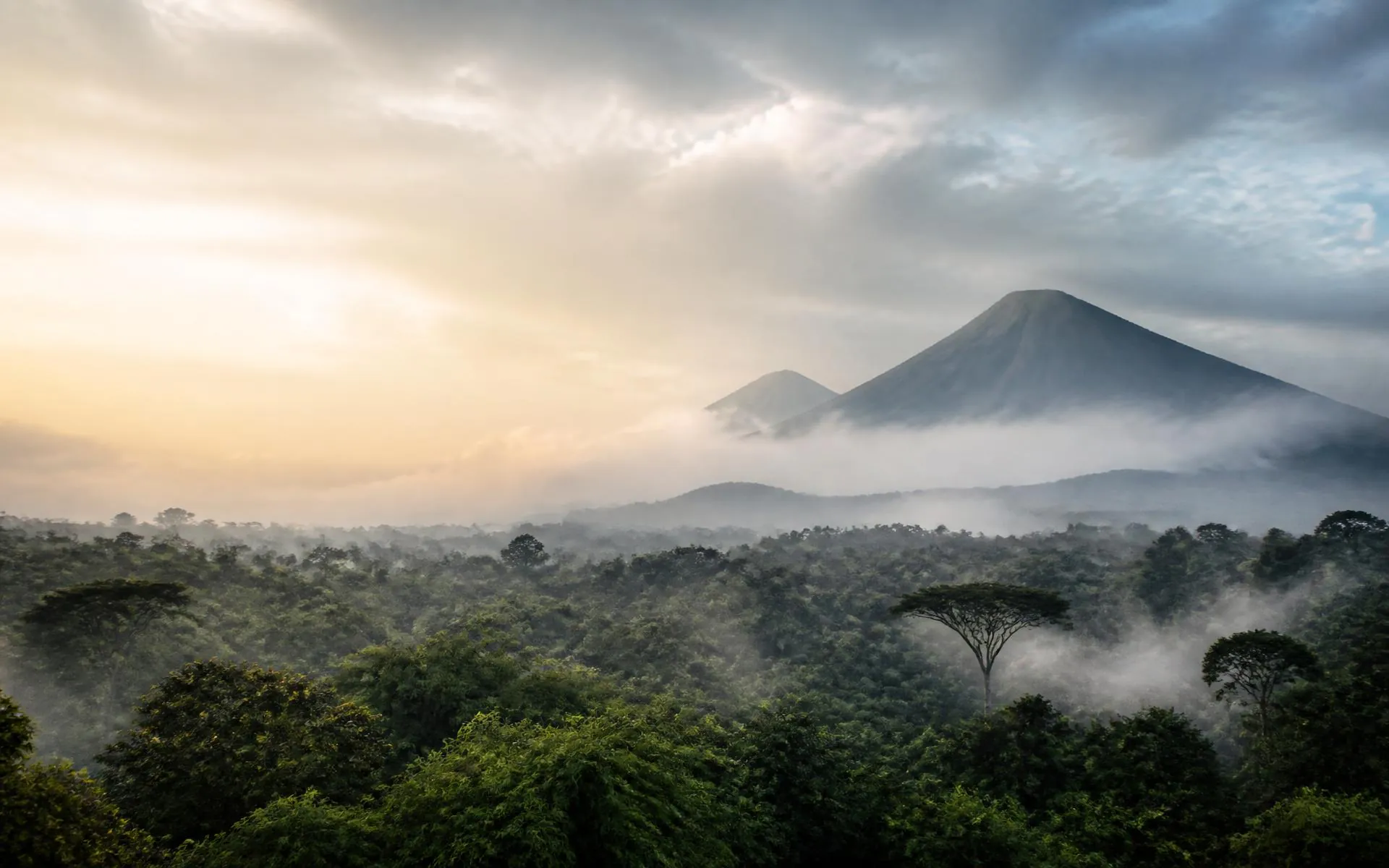
See the complete park, peaks, hikes and regional planning logic.
Rwanda Gorilla Permit
Keep the separate gorilla permit categories and service rules clear.
Rwanda vs Uganda Gorilla Trekking
Compare the wider route if gorillas remain the anchor experience.
Sources & verification
Official information behind this guide
The live RDB product is the authority for price, categories, age and reporting. Visit Rwanda supports destination, itinerary, clothing and weather context. Unverified troop sizes, daily quotas and porter fees are omitted.
- RDB — Golden monkey tracking Current permit categories, minimum age, reporting time and eligibility evidence
- Visit Rwanda — Volcanoes National Park Official park, habitat and destination context
- Visit Rwanda — Gorilla tracking itinerary Official context for sequencing gorillas and golden monkeys
- Visit Rwanda — What to wear Official clothing context for Rwanda's conditions
- Visit Rwanda — Weather Official country weather and season context
Add a different primate morning
Give golden monkeys their own space in the Volcanoes itinerary.
Protect the 07:00 report, prepare for bamboo and rain, and keep the afternoon flexible after a fast-moving wildlife encounter.