


Kenya Family Safari
Children do not ruin safaris. Badly paced itineraries do, and the fix is almost always fewer parks, shorter transfers and a private vehicle.

- Regions
- Two, not four
- Private vehicle
- Changes everything
- Minimum stay
- 2–3 nights per place
- Beach timing
- Ending, not beginning
Written and maintained by the Safari Soles planning team in Arusha, Tanzania.
A family safari in Kenya works when the itinerary is built around transfer times rather than park lists.
- Fewer regions and longer stays beats a comprehensive itinerary every time with children.
- A private vehicle is the single highest-value upgrade on a family safari.
- Keep transfers short for under-fives, and fly the long legs where the budget allows.
- Amboseli and Nakuru suit younger children; conservancies and Laikipia suit older ones.
- Ask about family rooms, pools, minimum ages and children's programmes before booking a camp.
- Finish at the beach rather than starting there: safari logistics are harder to protect at the end of a trip.
01 / 07
Pacing is the whole game
The itinerary that fails with children is the one that looks impressive on paper: four parks, seven nights, a transfer every other morning. Each of those transfer days is four to six hours in a vehicle without wildlife to look at, and by the third one nobody is enjoying themselves.
The itinerary that works is narrower. Two regions, three nights in each, one transfer between them, and a private vehicle so you can come back to camp when a four-year-old has had enough. It sounds like less. It produces far more.
The second lever is drive length. Adults will happily sit out a four-hour game drive; most children will not. Two shorter drives with a long midday break at camp (pool, lunch, sleep) is a better structure than one long push, and almost every camp will accommodate it if you have your own vehicle.
The private vehicle is the highest-value upgrade
On a shared game drive you leave when the vehicle leaves and return when it returns. With children, the ability to cut a drive short, stop for a toilet break, skip the dawn start on a difficult morning or spend an extra twenty minutes with a lion cub is worth more than any room upgrade. If the budget has one flexible item in it, put it here.
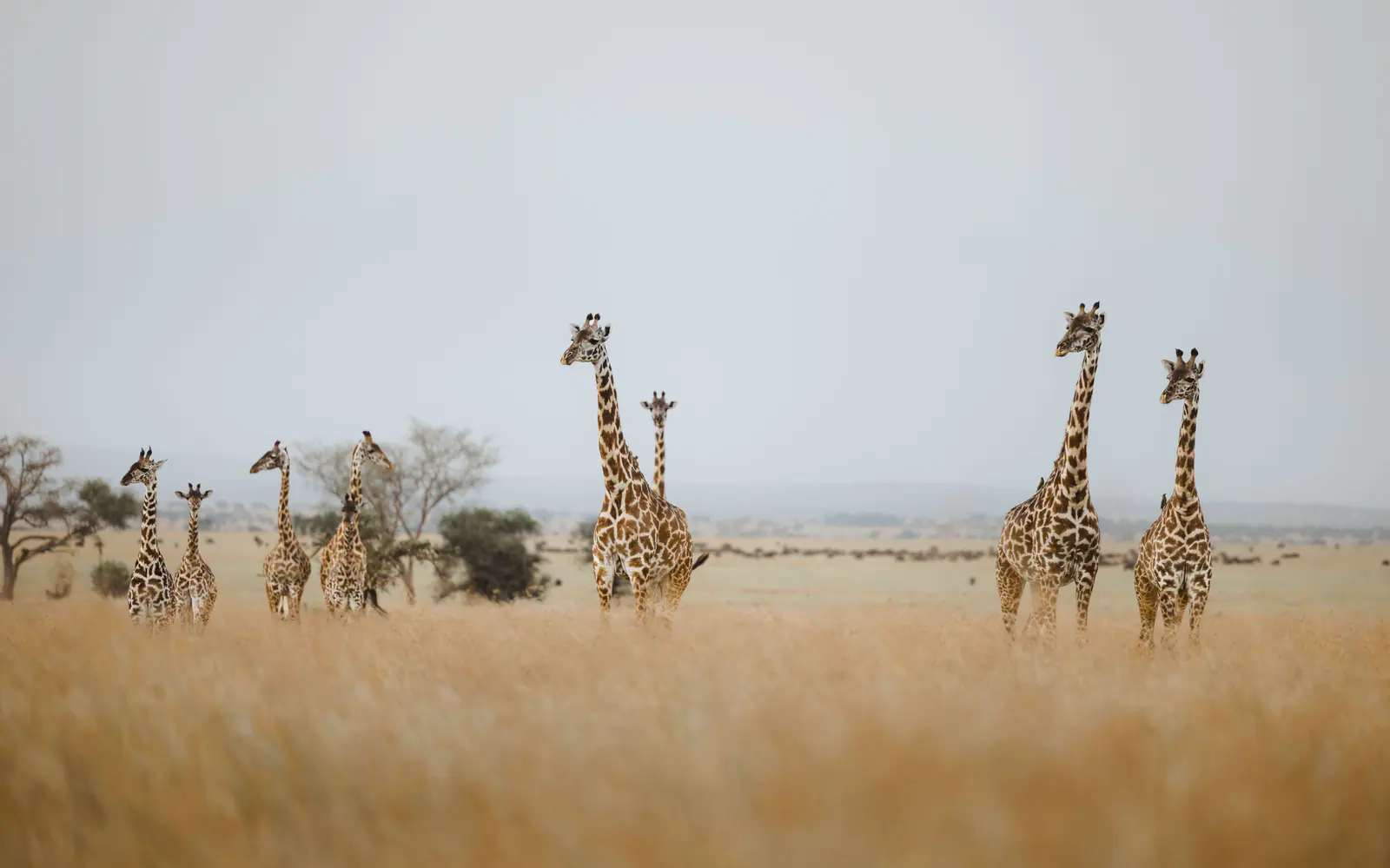
Giraffes standing apart on open grassland under a flat grey sky, some far off among scattered trees.
02 / 07
What works at different ages
This is about logistics rather than medicine: the practical question of how long a child of a given age can comfortably spend in a vehicle, and what else needs to be in the day. Health matters, including vaccinations and malaria prevention, belong with a qualified travel-health professional and should be discussed well before you travel.
Pacing by age group
-
Under 5
Keep transfers under about three hours and fly where you can. Two shorter drives with a long midday break. Choose one region, or two very close together. Check minimum ages at camps. Some have restrictions.
-
5 to 9
Attention holds well if there is something to do: a checklist, binoculars of their own, a guide who involves them. Two regions works. Pool time is not a luxury, it is what makes the afternoons function.
-
10 to 13
Long enough drives, real interest in the wildlife, and old enough for many walking activities where properties permit them. Conservancies open up considerably at this age.
-
Teenagers
Game drives alone can wear thin. Walking, riding, night drives where permitted, cultural visits, and a beach ending keep engagement high. Laikipia is particularly strong here.
Health decisions belong with a professional
Vaccination requirements, malaria prevention and anything relating to a child's medical history are questions for a qualified travel-health professional or your family doctor, not a travel guide. Book that consultation early (some recommendations need weeks of lead time) and carry medication in original labelled packaging.
03 / 07
Which regions suit families
Not all Kenyan parks are equally family-friendly, and the differences are mostly about drive length, reliability of sightings and what there is to do outside the vehicle.
Region by family fit
- Youngest children, shortest transfer
- Amboseli: four to five hours from Nairobi, compact, dependable elephants
- A quick win on the first day
- Nairobi National Park: a half day with a strong rhino chance
- Breaking the drive west
- Lake Nakuru: one night, short drives, rhino and birds
- The best wildlife, if you can fly
- Maasai Mara conservancies: flexible timing, few vehicles
- Older children and teenagers
- Laikipia: riding, walking and conservation activities where properties permit
This is a starting point rather than an objective ranking. The right answer changes with your dates, your nights and who is travelling.
Amboseli or the Mara with children?


04 / 07
What to look for in a camp
The features that matter to families are specific and worth asking about directly. Family rooms or interconnecting tents remove the question of where everyone sleeps. A pool is not indulgence. It is what makes a four-hour midday break work in the heat. Flexible meal times mean a five-year-old can eat at six rather than at eight.
Ask about minimum ages. Some camps have age restrictions, particularly for walking activities and occasionally for accommodation. Ask about children's programmes. Some properties have genuinely good ones, with young rangers' activities, tracking games and bush skills sessions. And ask whether the camp is fenced, which some parents feel strongly about either way.
Conservancies generally suit families better than reserves, because they can flex on timing and offer activities beyond game drives. The trade is cost, and the details are in reserve versus conservancy.
- Family rooms or interconnecting units, confirmed rather than requested
- A pool, and shade over it
- Flexible meal times and simple options children will actually eat
- Any minimum age restrictions, for the camp and for activities
- Children's programmes or a guide who is genuinely good with children
- Private vehicle availability, and whether it is a fixed supplement
05 / 07
Routes that work with children
Two structures cover most family trips. The southern road circuit keeps every transfer manageable and ends at the beach. The fly-in route trades cost for time and works when your days are limited.
Family itineraries by length
-
7 nights, road
- Less suited to
- No beach time. Misses the Mara
- Sample route
- Nairobi → Amboseli (3) → Tsavo (3) → Nairobi
- Pace
- One transfer day
- Trade-off
- Comfortable and affordable, but not the strongest wildlife.
- No long transfers
- Two regions, three nights each
- Manageable with under-tens
-
9 nights, safari and beach
- Less suited to
- Long final drive to the coast
- Sample route
- Nairobi → Amboseli (2) → Tsavo (2) → Diani (4)
- Pace
- Two transfer days, both broken
- Trade-off
- The classic Kenyan family holiday: see [Kenya safari and Diani](/kenya-safari-and-diani).
- Ends at the beach
- All by road, forward-moving
- Suits mixed ages
-
8 nights, fly-in
- Less suited to
- Higher cost. Soft-bag luggage limits
- Sample route
- Nairobi (1) → Mara conservancy (4) → Diani (3)
- Pace
- Two short flights
- Trade-off
- Buys back two days of driving at a real price.
- Best wildlife
- Short transfers
- Conservancy flexibility
-
12 nights, safari and island
- Less suited to
- Two countries to arrange. Highest cost
- Sample route
- Nairobi → Mara (4) → Laikipia (3) → Zanzibar (4)
- Pace
- Flights between all legs
- Trade-off
- Cross-border planning: see [Kenya safari and Zanzibar](/kenya-safari-and-zanzibar).
- Genuine variety
- Time to slow down
- Works for teenagers

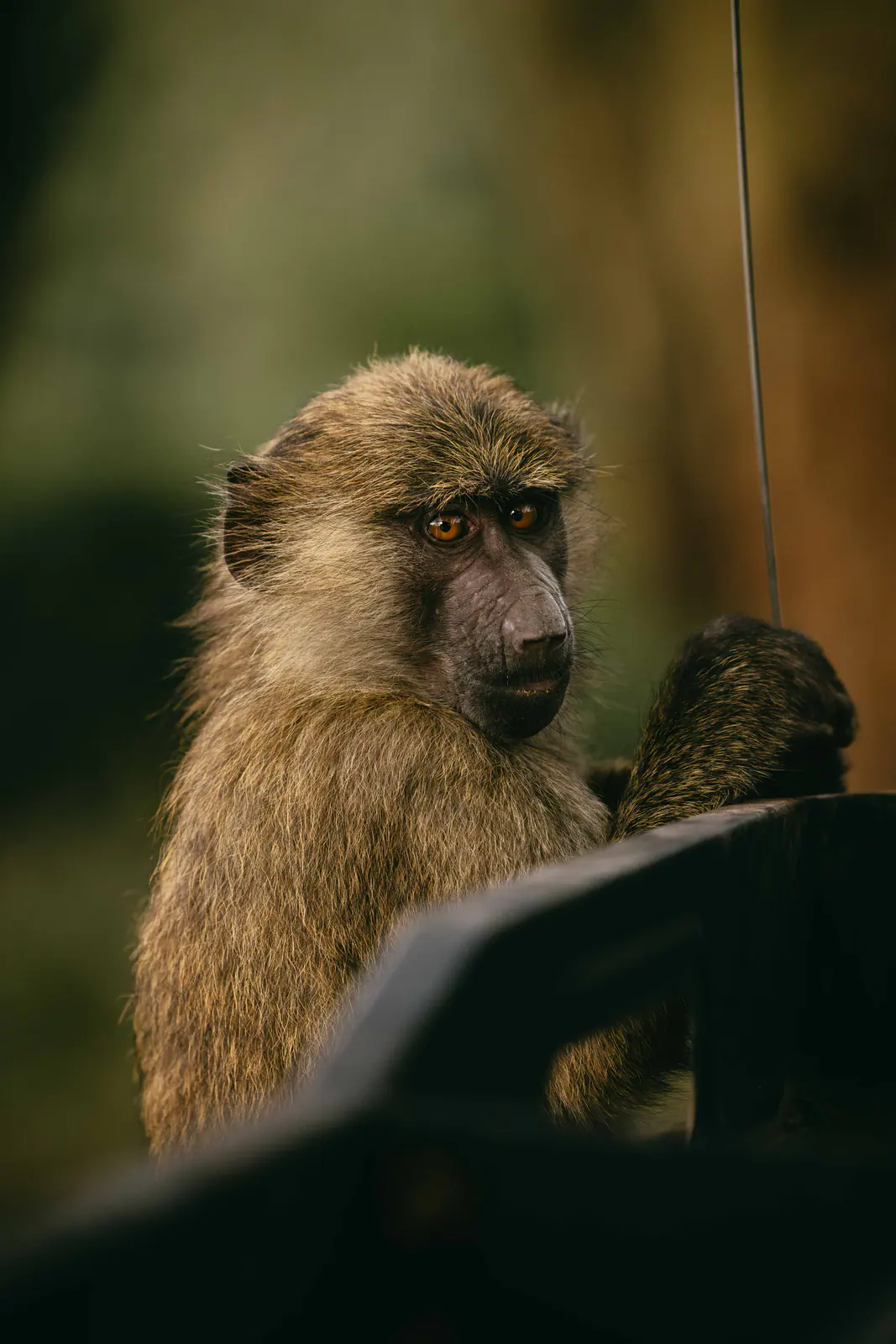
An olive baboon looking off to one side, brow furrowed, with grass blurred behind it.
06 / 07
Practical details parents ask about
Packing for children is mostly about sun, layers and boredom management. Dawn drives are genuinely cold at altitude, midday is hot, and a small bag with snacks, water, binoculars and something to do during transfers earns its place. The full list is in the packing guide.
Entry requirements apply to children as well as adults: each child generally needs their own passport and, where required, their own travel authorisation. Some countries also require additional documentation for minors travelling with one parent. Check both sides well ahead. See Kenya entry requirements.
On flights, ask about age or weight considerations with light aircraft operators, and about seating arrangements. On the road, confirm what the vehicle has: pop-top roof, charging points, a cool box, and whether child seats can be arranged.
07 / 07
Where to take this next
Family trips live or die on pace and packing. Use how to plan a Kenya safari for the decision order and the Kenya safari packing list for what children actually need.
On regions, the Amboseli safari guide and Amboseli versus the Maasai Mara answer most first questions, and a coast finish is covered in Kenya safari and Diani. Circuits: the Kenya safari guide. Everything else: the Kenya safari guides library.
Planned by people who live the route
This library exists because the same Kenya questions arrive with every safari enquiry we answer.
- Locally based in Tanzania
- Kenya and Tanzania route specialists
- Licensed and insured operator
- Fast, direct answers
- Read Safari Soles reviews on TripAdvisor
- Read Safari Soles reviews on SafariBookings
- Read Safari Soles reviews on Google
Where these facts come from (2)
- Conservation fees and visitor regulations Kenya Wildlife Service · Park authority · checked 2026-09-14
- Nairobi National Park: park information Kenya Wildlife Service · Park authority · checked 2026-09-14
Related Safari Soles guides
Continue with the guides travellers usually read next.
 Kenya Safari + Diani The all-Kenya safari and beach pairing, leg by leg: Amboseli or Tsavo into the south coast without leaving the country. Safari Combinations
Read the guide
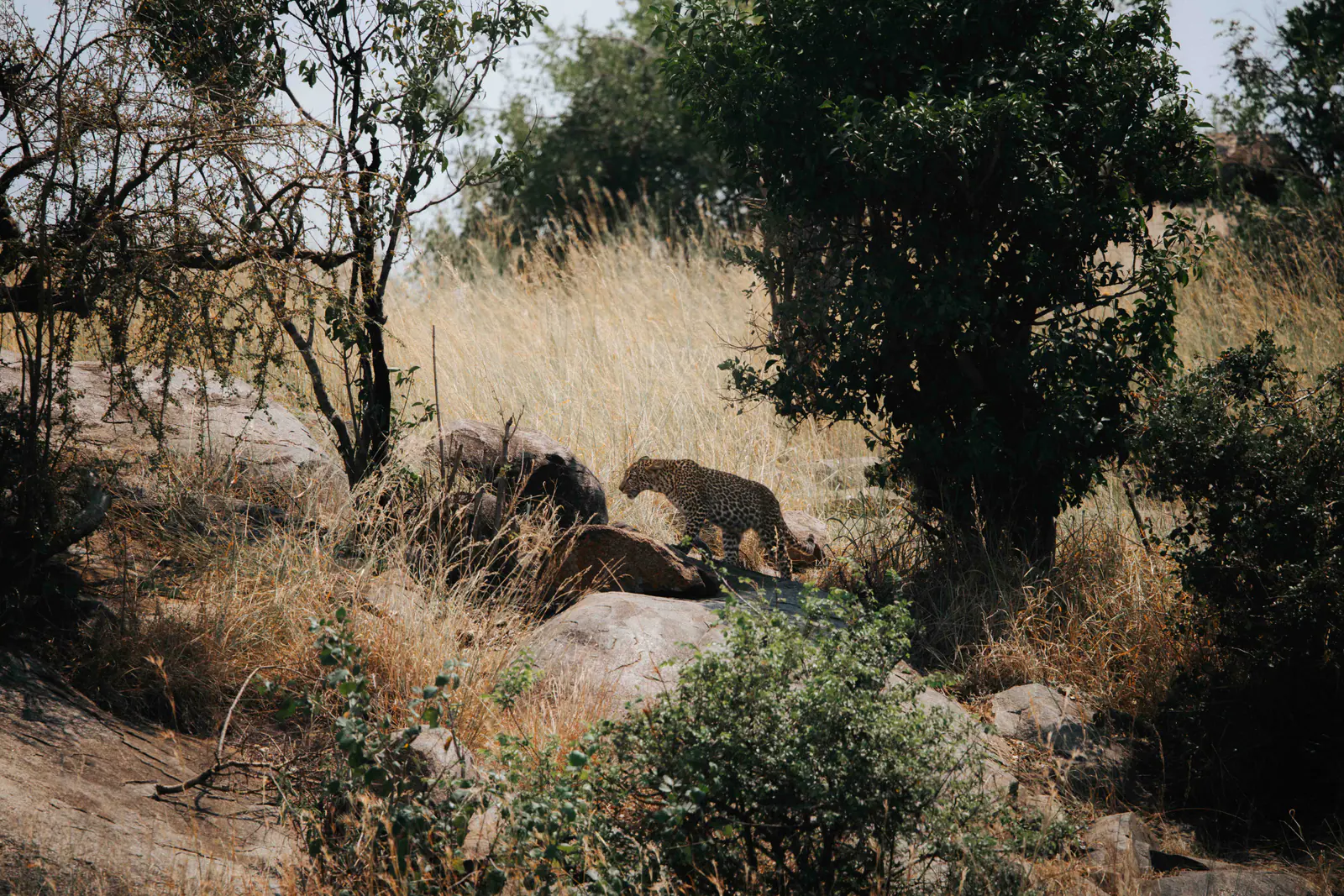 Laikipia Safari Highland conservancies below Mount Kenya: rhino conservation, walking and riding, low vehicle numbers and a wider range of activities. Parks & Reserves
Read the guide
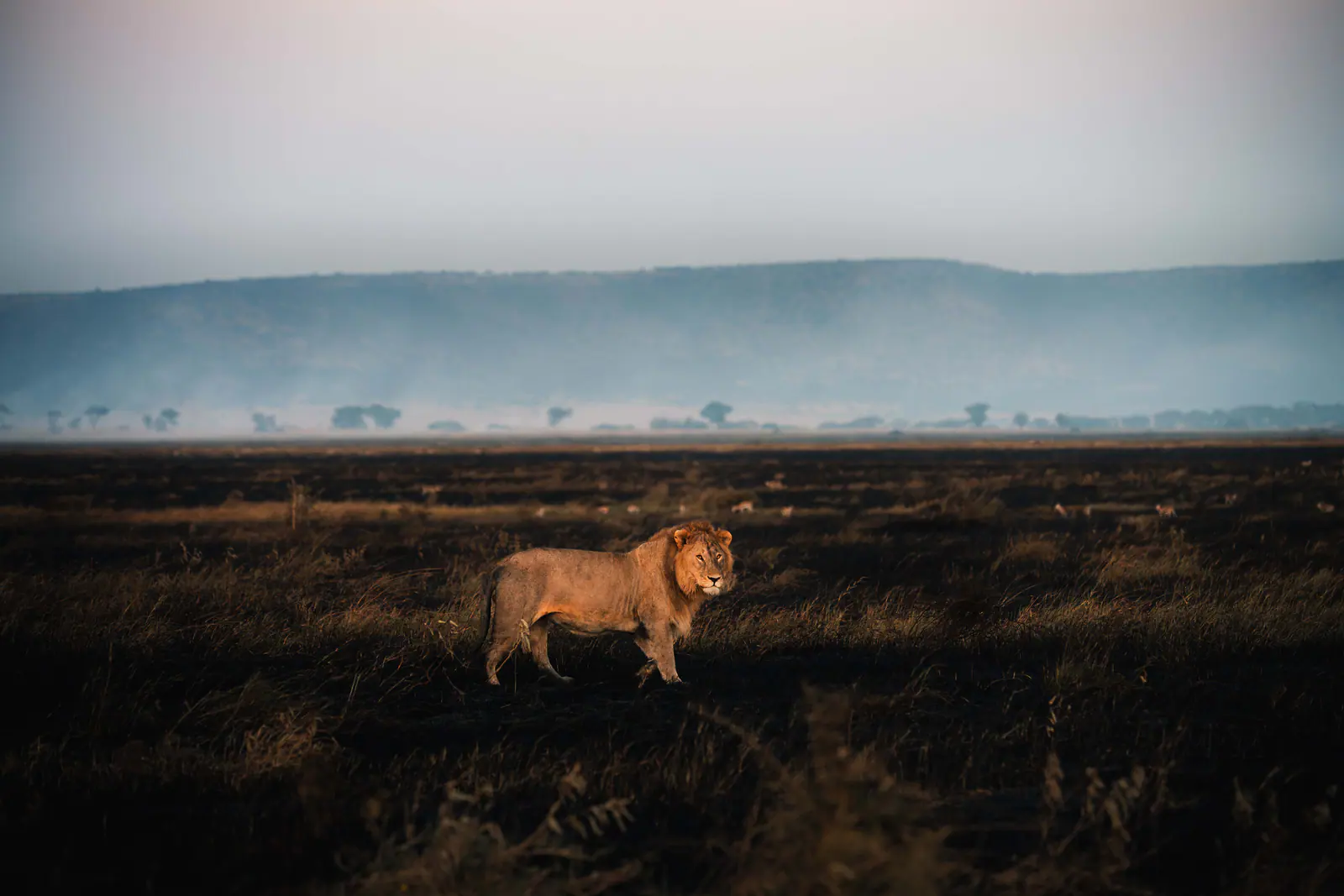 How Many Days for a Kenya Safari What three to four, five to seven, eight to ten and ten-plus nights each realistically buy you on the ground, and where the extra days pay off. Planning
Read the guide
Frequently Asked Questions
-
Logistically, from around five upwards is easier, and ten to thirteen is the sweet spot. Younger children travel well if transfers are short and the pace is slow. Some camps set minimum ages, so check when choosing.
Build this into a real Kenya route
Send us the dates, the travellers and the wildlife you care about most, and we will turn this guide into an itinerary that actually works on the ground.