


Luxury & traveler types
Rwanda Honeymoon: Trip Structure for Couples
How to structure a Rwanda honeymoon around gorilla trekking, privacy, pacing and lake or savannah pairings — plus when to extend into Tanzania or Zanzibar. A trip-shape guide, not a lodge list.
Standard foreign adult permitUS$1500
Simplest honeymoon shape7–8 nights: primates + Lake Kivu
Longer combination12–14 nights with a Zanzibar close
Planning prioritySecure the fixed permit date well ahead
Fit for a honeymoon
Why couples choose Rwanda for a first big trip together
Rwanda works for a honeymoon because it compresses several distinct moods into a short, manageable distance: a misty rainforest morning with mountain gorillas, a slow lakeside afternoon, and — if the trip runs longer — an open savannah evening in the east. Few destinations let two people move between that much emotional range without long domestic flights between stops.
The country is also small and increasingly set up for private, unhurried travel: most of the well-known regions sit within a half-day's drive of Kigali, so a couple can build a trip around two or three bases rather than living out of a suitcase every night. That structure suits a celebratory trip better than a checklist safari.
This guide focuses on trip structure for couples specifically — pacing, privacy, which combinations of regions actually make sense together, and where a longer honeymoon can extend into Tanzania or Zanzibar. Where to physically stay, by comfort tier and property style, belongs on the dedicated lodges guide; general premium journey design for any traveller lives on the luxury guide.
The central choice
The one decision that shapes everything else
Almost every honeymoon planning question in Rwanda reduces to one choice: how many distinct experiences the couple wants inside the trip, versus how much unhurried time they want in fewer places. A trip built around gorilla trekking plus one slower chapter (lake or forest) is the simplest and most reliably relaxing shape. Adding a savannah park, or a country extension, adds variety but also adds transfer days that need their own buffer.
Neither shape is objectively better for a honeymoon, and the same trade-off applies across the wider Rwanda safari guides: a couple who wants an active, varied trip will be frustrated by three empty lake days, and a couple who wants to actually rest will resent a itinerary with a transfer every second day. Decide this before choosing lodges or drafting dates, because it determines the whole structure.
The rest of this guide works through structure first — privacy, pacing, combinations — before touching planning logistics, because for a honeymoon the shape of the days matters more than any single line item.
What privacy actually means here
Privacy on a Rwanda honeymoon: what is realistic
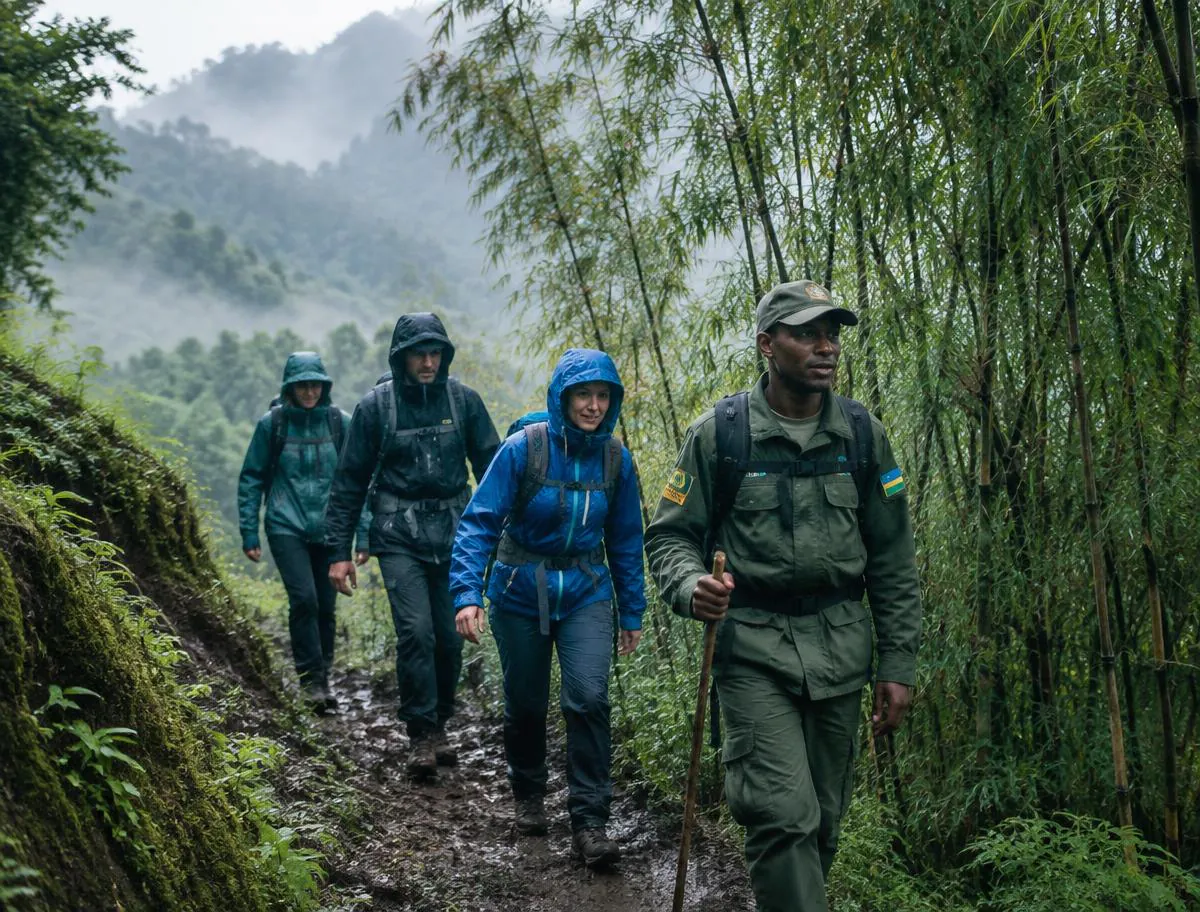
Gorilla trekking is not a private activity for anyone at any budget: groups are capped at eight visitors (opens in a new tab) by the Rwanda Development Board regardless of who booked what, and every visitor follows the same reporting time, distance rules and one-hour limit. A couple should not expect — or pay extra for — a private encounter with the gorillas themselves.
What can realistically be private on a honeymoon is everything around the shared park experience: a private vehicle and driver-guide for the whole trip instead of a shared transfer bus, a table or viewpoint requested away from other guests where a lodge can accommodate it, and pacing that leaves the couple alone together for most of each day outside the actual trek.
Some lodges in the Volcanoes and Lake Kivu regions are built around small numbers of rooms and can offer genuinely quiet settings; this is a property-level detail to confirm directly with the lodge or a licensed operator, not something this guide can promise as guaranteed by any given date or room category.
Private vehicle and guide
Realistic and common — removes shared-schedule constraints for the whole trip.
Requested quiet table or viewpoint
Often possible directly with the lodge; confirm ahead rather than assume.
A private gorilla encounter
Not offered to any visitor; group size and rules are Set by RDB by visitor category for everyone.
A guaranteed specific room or view
Request in writing at booking, but availability depends on the property on the date.
Days that feel like a honeymoon
Pacing a trip so it feels celebratory, not scheduled
The clearest way a Rwanda honeymoon can go wrong is treating it like a checklist safari: an activity every morning, a transfer every afternoon, and no day with genuinely nothing scheduled. For a couple, the value of open time — a slow breakfast, an afternoon with no ranger meeting point — is usually worth more than an extra activity.
A workable pacing principle is one meaningful activity per day, never two, and at least one full day per region with nothing booked at all. After the gorilla trek specifically, plan the following day as unstructured; trek finish times vary, and packing appropriately, per the packing list, helps manage how tired travellers feel from the altitude and terrain.
Where a trip includes a lake or forest chapter purely for rest, resist the temptation to fill it with add-on activities. A quiet chapter only works as a honeymoon device if it is actually quiet.
- 01Principle 1
One activity per day
Never schedule two structured activities (a trek plus a boat trip, for example) on the same day.
- 02Principle 2
A rest day after the trek
Keep the day after gorilla trekking free of any onward activity or early transfer.
- 03Principle 3
A genuinely unscheduled chapter
Give the lake or forest stretch of the trip at least one full day with nothing booked.
- 04Principle 4
Arrival and departure buffers
Avoid scheduling any activity on the day of an international arrival or departure.
Trip-style composer
Four honeymoon trip shapes, compared
These are labelled planning shapes to illustrate how the same core Rwanda elements recombine for different honeymoon priorities — they are illustrative routes, not fixed packages, and every night count should be adjusted with a licensed operator around real flight and permit dates.
Primates and the lake
- 1 night Kigali
- 3 nights Volcanoes region
- 3 nights Lake Kivu
- 1 night Kigali before departure
The simplest, most reliably restful shape: one active chapter, one slow chapter, minimal transfers.
Primates and Akagera savannah
- 1 night Kigali
- 3 nights Volcanoes region
- 1 night transit/Kigali
- 3 nights Akagera
- 1–2 nights Kigali or Lake Kivu
Adds a distinct savannah mood — game drives and open horizons — as a contrast to the forest chapter.
Rwanda and Zanzibar
- 4–5 nights Rwanda (Volcanoes plus Kivu or Kigali)
- 1 travel day
- 7–8 nights Zanzibar beach chapter
Forest-and-lake opening, then a distinct flight to a beach close; treat Zanzibar as its own chapter with its own transfer, not squeezed against trek days.
Luxury slow journey
- 2 nights Kigali
- 4 nights Volcanoes region (fewer transfers, longer stays)
- 4+ nights Lake Kivu or Nyungwe
Prioritises fewer moves and more time in each place over covering more ground; pairs with the pacing principles above.
Match the shape to the couple
Which honeymoon shape suits which couple
Use this selector alongside the trip shapes above to sense-check which structure suits how the couple actually wants to spend the trip, before locking dates or lodges.
If the couple mainly wants
Rest and privacy
- Best-fit shape
- Primates and the lake
- Structure
- Two chapters only, longer stays in each
- Watch for
- Resist adding extra activities to the lake chapter
Every shape still uses the same Standard foreign adult permit rules; only the surrounding structure changes.
Setting, not a booking list
Lodge atmosphere to look for, in general terms
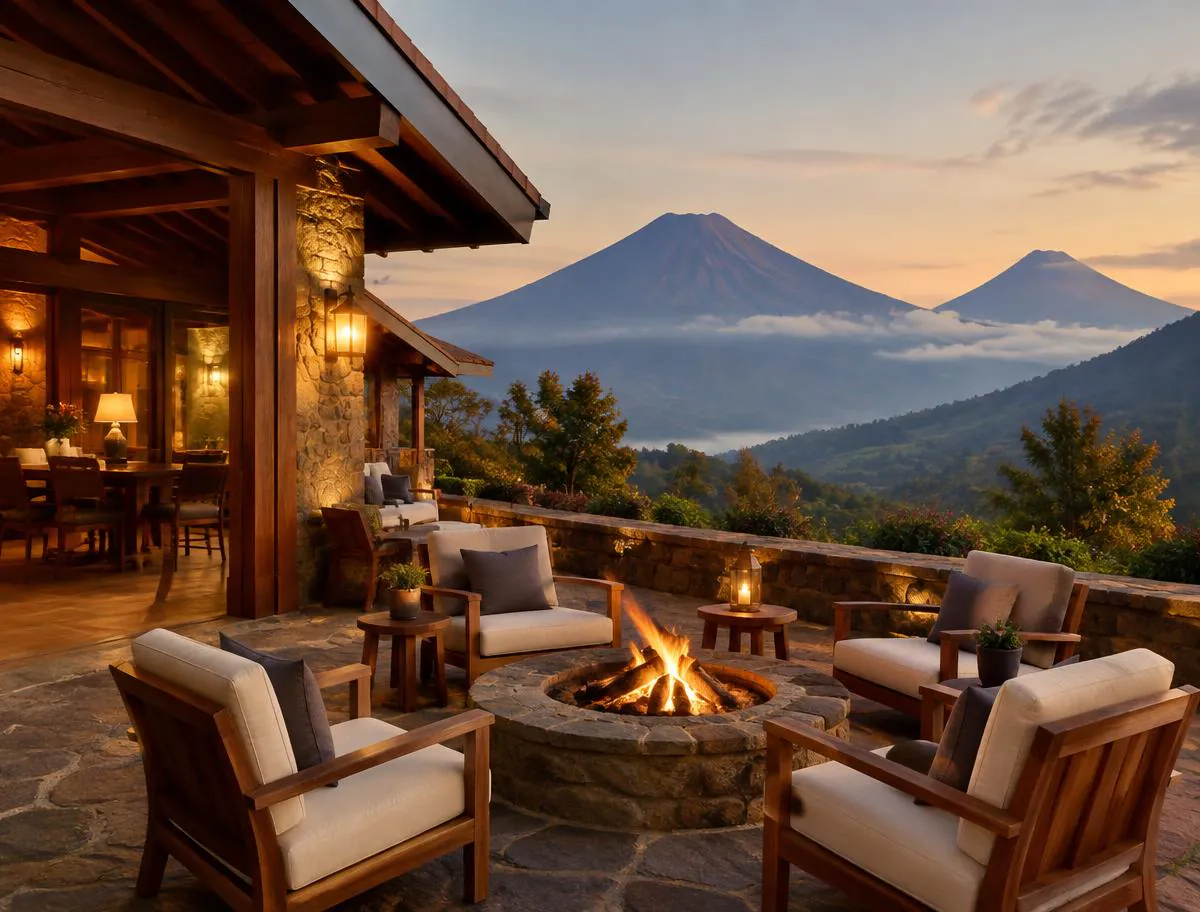
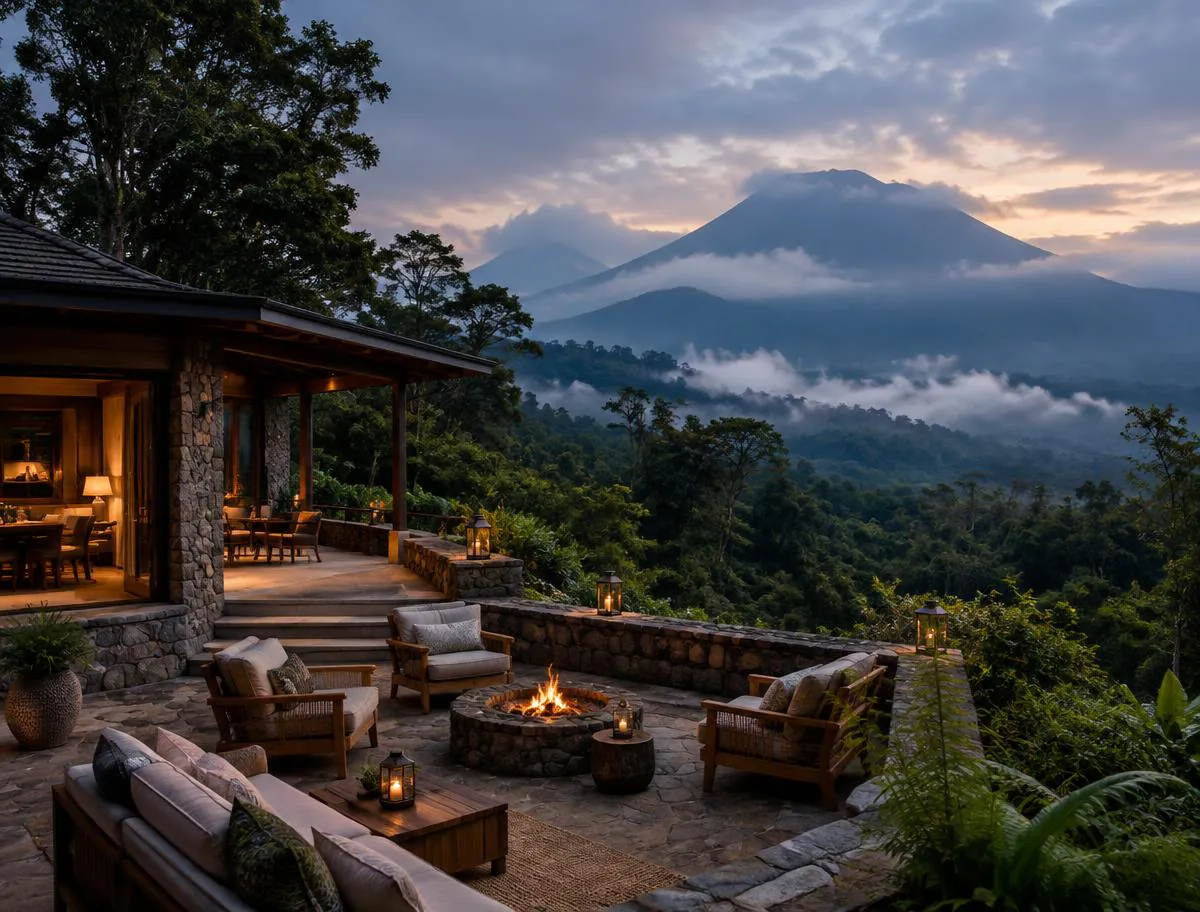
Without naming specific properties, honeymoon-suited lodges in Rwanda tend to share a few traits worth asking about directly: a small total room count, décor and outlook oriented toward couples rather than large groups, dining that can be arranged privately on request, and — in the Volcanoes region especially — a terrace or lounge facing the forested slopes rather than a car park or entrance road.
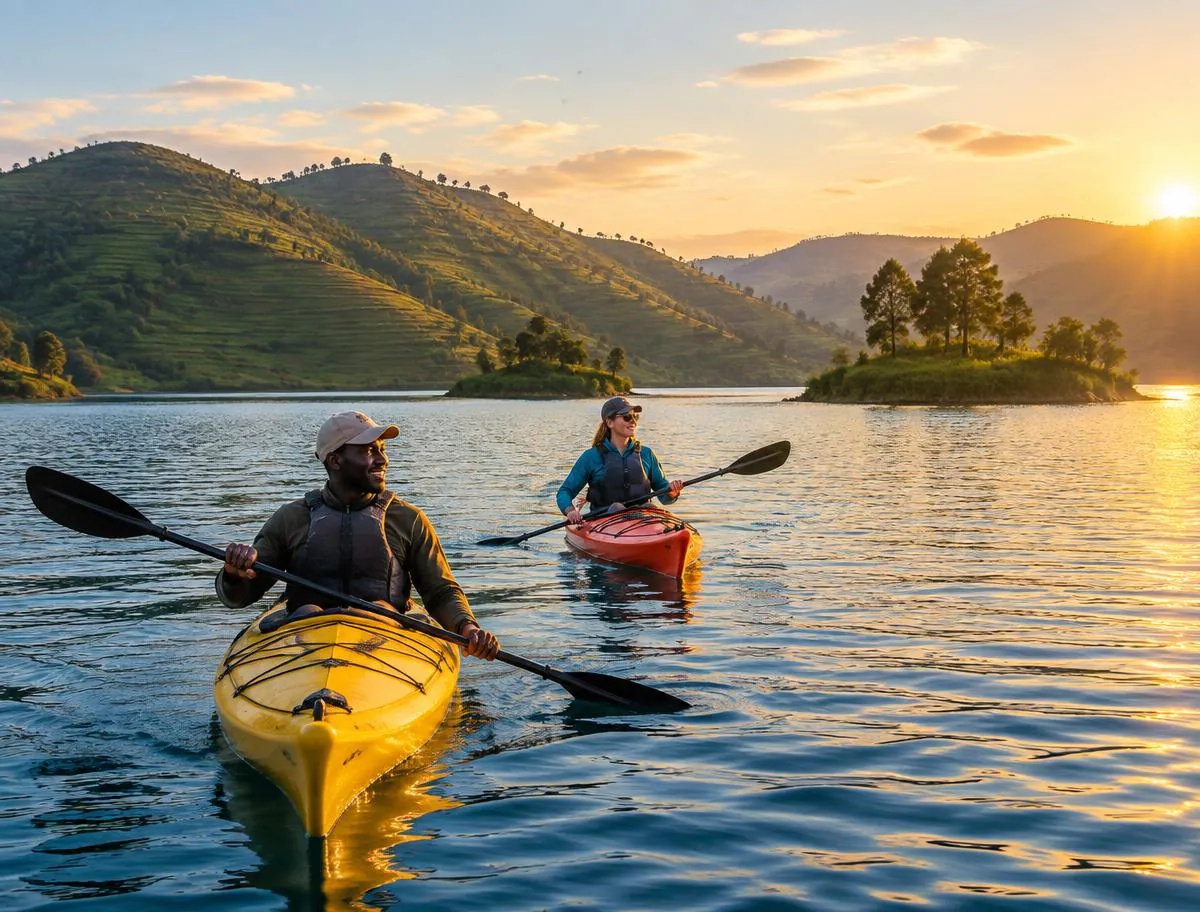
In the Lake Kivu region, atmosphere shifts toward water: a private or semi-private stretch of shoreline, a terrace at the right elevation for sunset, and boat or kayak access arranged directly through the lodge rather than a public dock. In Nyungwe, atmosphere leans toward forest immersion — proximity to the canopy walk and a slower, quieter grounds layout.
Confirm honeymoon-specific touches (turndown extras, a private dinner setting, room category) directly with the property or a licensed operator at the time of booking; this guide describes the kind of setting to look for, not a guaranteed inclusion at any named lodge. Full property comparisons by comfort tier live on the dedicated lodges guide.
Beyond one park
How the primate, savannah and lake chapters actually combine
Rwanda's regions differ enough in mood that combining them rarely feels repetitive: Volcanoes National Park delivers the misty-forest, high-effort primate morning; Akagera delivers open savannah and classic game-drive evenings; Lake Kivu and Nyungwe deliver slower, lower-effort days. A honeymoon benefits from picking two or, at most, three of these rather than trying to include everything.
One illustrative honeymoon sequence, elaborated in the Rwanda itinerary guide, places the higher-effort chapter (gorilla trekking) early or mid-trip, while energy and enthusiasm are highest, and the lowest-effort chapter last, so the trip winds down rather than building toward a demanding final morning before an international departure.
Where Akagera is included, treat it as a genuinely separate chapter with its own transfer day, not a same-day add-on to a Volcanoes stay; the regions sit on opposite sides of the country and the visual and pace shift is part of the point.
Longer honeymoons
Extending into Tanzania or Zanzibar
For couples with two or more weeks, Rwanda pairs naturally with a Tanzania safari chapter or a Zanzibar beach chapter, and the two extension types answer different needs: Tanzania (Serengeti-style plains) adds more classic big-game safari variety, while Zanzibar adds a beach-and-rest close that Rwanda itself does not offer.
Each extension needs its own flight and its own entry-requirement check; do not assume a single regional flight covers logistics the way a domestic transfer does within Rwanda. Build at least one buffer day around the international connection between countries.
This guide does not publish flight schedules, connection times or country-specific visa or travel-document rules for Tanzania or Zanzibar; confirm current requirements for each country directly with the relevant authority before booking either extension.
Rwanda opening chapter
Major driverGorilla trekking plus a slower lake or forest stretch.
Dedicated flight between countries
Major driverTreat as its own travel day, not a same-day connection with a trek.
Tanzania savannah chapter
OptionalAdds classic open-plains game viewing distinct from Rwanda's forest experiences.
Zanzibar beach chapter
OptionalA rest-and-beach close; confirm current entry requirements separately.
Buffer day around each border crossing
Major driverProtects the trip from missed connections and fatigue.
Marking the occasion
Planning the celebratory details without overpromising
Many lodges and operators in Rwanda can arrange honeymoon touches on request — a private dinner setting, a small in-room gesture, a note to the front desk about the occasion — but these vary property to property and should be requested directly at the time of booking rather than assumed as a standard inclusion, since availability depends on the property, the date and its own policies.
If marking a specific date (an anniversary dinner, a proposal moment) matters to the trip, communicate it clearly and in writing to whoever is managing the booking, and reconfirm it again close to arrival, since staff, availability and even the property's own offerings can change between booking and travel.
For couples who want the whole trip designed end-to-end — pacing, privacy requests and any celebratory touches coordinated together — this is where working with a specialist custom safari planner earns its value, rather than trying to coordinate each lodge separately.
What to lock in first
Planning priorities and realistic lead times
As with any Rwanda trip built around gorilla trekking, the fixed-capacity permit date is the first constraint. Secure it well ahead once travel dates are known, before finalising lodges, flights or an extension.
Check live permit and lodge availability as soon as dates are fixed. Visit Rwanda identifies June to mid-September as the principal dry season (opens in a new tab); no official monthly sell-out timeline is published.
Passport validity, any required travel documentation, and health guidance should be checked against current official sources for every country on the itinerary well before departure; this guide does not restate visa rules that vary by nationality.
- First
Book the gorilla permit date
Confirm this before anything else; it is the fixed point every other decision follows.
- After the permit
Choose lodges and confirm privacy requests
Reserve honeymoon-suited rooms and put any celebratory requests in writing.
- Then
Confirm any extension
Book Tanzania or Zanzibar flights and check current entry requirements for each country.
- Before departure
Reconfirm everything
Reconfirm celebratory requests, transfers and any extension flights directly with each provider.
Who this suits
Who this kind of honeymoon actually suits
This style of trip suits couples who want an active, slightly demanding shared primate tracking (opens in a new tab) experience (the trek) balanced against real rest, and who are comfortable with a fixed, non-negotiable core activity around which the rest of the trip is designed.
It suits less well a couple mainly seeking guaranteed beach relaxation throughout the whole trip; in that case a Rwanda opening chapter plus a longer Zanzibar close, or a beach-only honeymoon elsewhere, may be a better starting shape than trying to make Rwanda itself carry that role.
Planning FAQ
Direct answers about honeymoon planning
Is Rwanda actually good for a honeymoon, or mainly a wildlife destination?
Both: gorilla trekking is a genuine shared adventure, and the country's compact size lets a couple pair it with a slower lake or forest chapter without long domestic flights, which is what makes it work as a honeymoon rather than only a wildlife trip.
Can we get a private gorilla trekking experience?
No. Group size (maximum 8), the one-hour limit and reporting rules are fixed by the Rwanda Development Board for every visitor regardless of budget; privacy comes from the private vehicle and guide around the trek, not the encounter itself.
How many nights does a Rwanda honeymoon need?
A workable minimum is around 7–8 nights for a primates-plus-lake shape; 9–10 nights allows an Akagera savannah chapter, and 12–14+ nights allows a Tanzania or Zanzibar extension as its own chapter.
Should we do the gorilla trek at the start or end of the trip?
Most honeymoon itineraries place the higher-effort trek earlier or mid-trip and end on the slower chapter, so the trip winds down rather than building toward a demanding morning before departure.
Can lodges arrange honeymoon touches like a private dinner?
Many can on request, but this varies by property and should be confirmed directly and in writing at booking, then reconfirmed close to arrival; this guide does not promise a specific inclusion at any named lodge.
Is Rwanda-and-Zanzibar a common combination?
Yes, for longer honeymoons — Rwanda's forest-and-lake opening followed by a dedicated flight into a Zanzibar beach chapter is an illustrative pairing; treat it as two distinct chapters with their own transfer and entry-requirement checks.
How far ahead should we plan?
Book the gorilla permit date first — as soon as dates are fixed for peak periods is realistic — then confirm lodges, privacy requests and any extension.
Do we need a specialist planner, or can we book everything ourselves?
Either is possible; a specialist planner mainly adds value by coordinating pacing, privacy requests and any celebratory touches across every property in one plan rather than booking each stage separately.
Continue planning
Read the guide that owns your next question
Sources & verification
Official information behind this guide
RDB is the authority for the RDB permit rules that apply to the booked visitor category regardless of the trip's purpose. Visit Rwanda supports destination context for each chapter described. Named lodges, honeymoon inclusions and country-specific visa rules are deliberately omitted; verify directly with a licensed operator or the relevant authority before booking.
- RDB — Mountain gorilla tracking Category-specific permit rates, minimum age and reporting rules that apply to the booked visitor category
- Visit Rwanda — Primate tracking Official context on gorilla, chimpanzee and golden monkey tracking structure
- Visit Rwanda — Volcanoes National Park Official destination context for the Volcanoes region
- Visit Rwanda — Lake Kivu Official destination context for the lake chapter
- Visit Rwanda — Weather Seasonal planning context for choosing honeymoon dates
Design the honeymoon, then book the stays
Lock the permit date first, then shape the trip around it.
Confirm the gorilla permit date, then work with a licensed planner to sequence chapters, privacy requests and any extension into one coordinated honeymoon.