


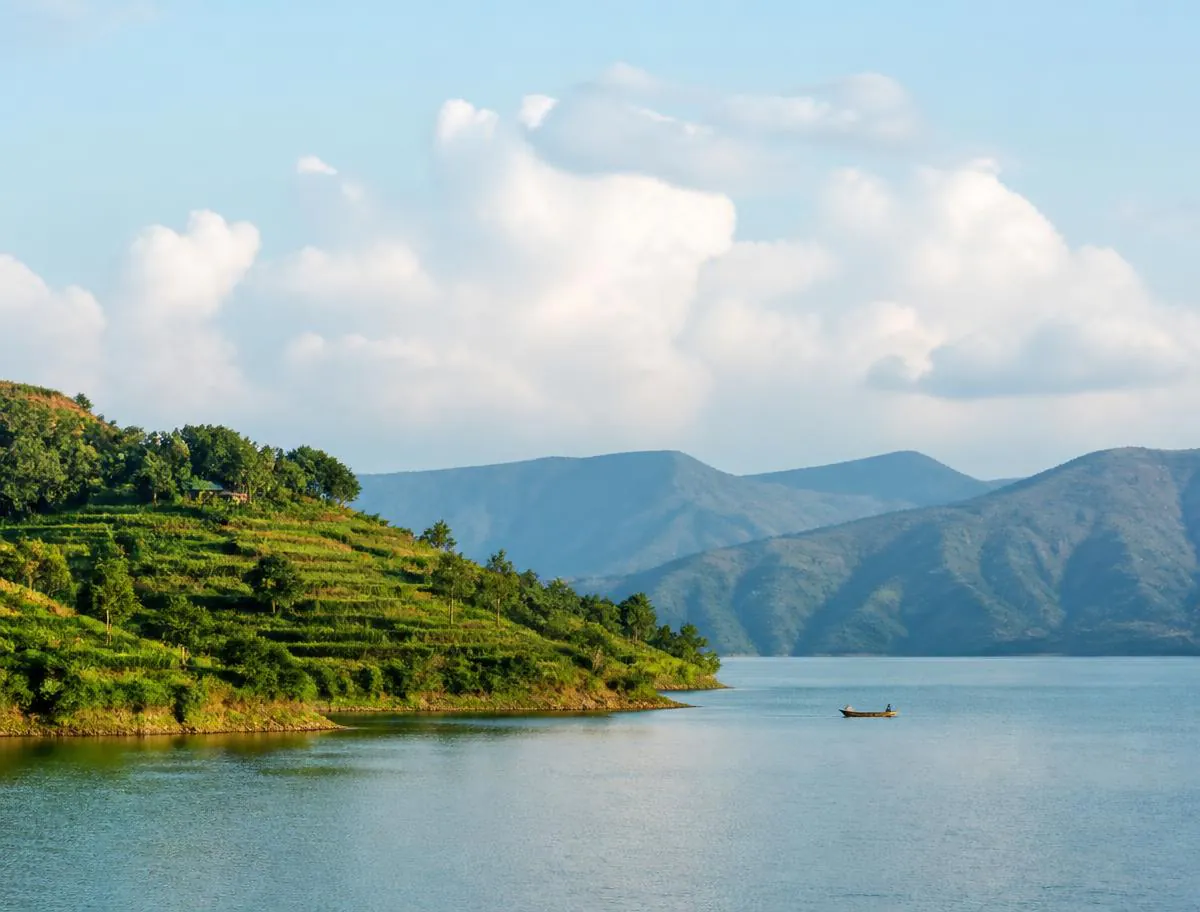
Rwanda's lake destination
Lake Kivu, Rwanda: The Complete Travel Guide
Rwanda's Great Rift Valley lake as a destination: shoreline towns, downtime, kayaking and boat trips, the Congo Nile Trail, and how it links Volcanoes and Nyungwe.
SettingGreat Rift Valley freshwater lake
Main townsRubavu, Karongi, Rusizi
Signature routeThe Congo Nile Trail
Role in a circuitLink between Volcanoes and Nyungwe
The destination
What Lake Kivu is, and why travellers add it
Lake Kivu (opens in a new tab) is one of Africa's Great Rift Valley lakes, forming much of Rwanda's western border with the Democratic Republic of Congo. It is a genuinely large freshwater lake ringed by terraced green hills, fishing villages and a scattering of small islands, and it sits at a comfortable mid-altitude that gives it a noticeably gentler climate than Rwanda's mountain parks.
This guide owns Lake Kivu as a travel destination in its own right: the towns along its shore, the downtime it offers, its lake-based activities, and the Congo Nile Trail that runs its length. It is a lake destination for scenery, rest and moderate adventure, not a beach-resort substitute, and it should never be compared directly with an Indian Ocean coastline — the water, sand, and holiday style are simply different things.
Most visitors reach Lake Kivu as a link between Rwanda's more active experiences: a stop between Volcanoes National Park in the north and Nyungwe National Park in the southwest, or a deliberate slow day added to break up a primate-focused itinerary.
Where it sits
Geography and the western shore
Lake Kivu runs along Rwanda's entire western edge, from Rubavu in the north near Musanze and the Volcanoes gateway, down through Karongi roughly midway along the shore, to Rusizi in the south near the Nyungwe and Burundi border area. The lake sits within the Albertine Rift, with volcanic hills, terraced farmland and scattered islands defining the shoreline view almost everywhere you stand.
Because the lake stretches the full length of western Rwanda, it naturally intersects any north-to-south route through the country, which is the main reason it appears in so many Rwanda itineraries as a connecting stop rather than a single fixed destination.
| Town | Position | Character |
|---|---|---|
| Rubavu (Gisenyi) | Northern shore, near Musanze | The lake's more developed northern hub, closest to Volcanoes National Park |
| Karongi (Kibuye) | Central shore | A quieter lakeside base with islands, bays and a slower pace |
| Rusizi (Cyangugu) | Southern shore | The gateway toward Nyungwe and the DRC border crossing |
Choosing a base
Which shoreline stop suits your trip
Rubavu, Karongi and Rusizi each work as a lake stop for different reasons, and the right choice depends on which end of a Rwanda circuit you are connecting and how much downtime you actually want. Use the selector below to compare them before deciding where to spend a night or two.
Lake Kivu stop explorer
Rubavu (Gisenyi)
- Best paired with
- Volcanoes National Park, reached via Musanze
- Feel
- The lake's largest town, with a lively lakeside strip and easier logistics
- Good for
- A short, convenient stop directly after or before gorilla or golden monkey tracking
Confirm current road conditions and transfer times with your operator before finalising a route.
What there is to do
Lake activities: rest and moderate adventure
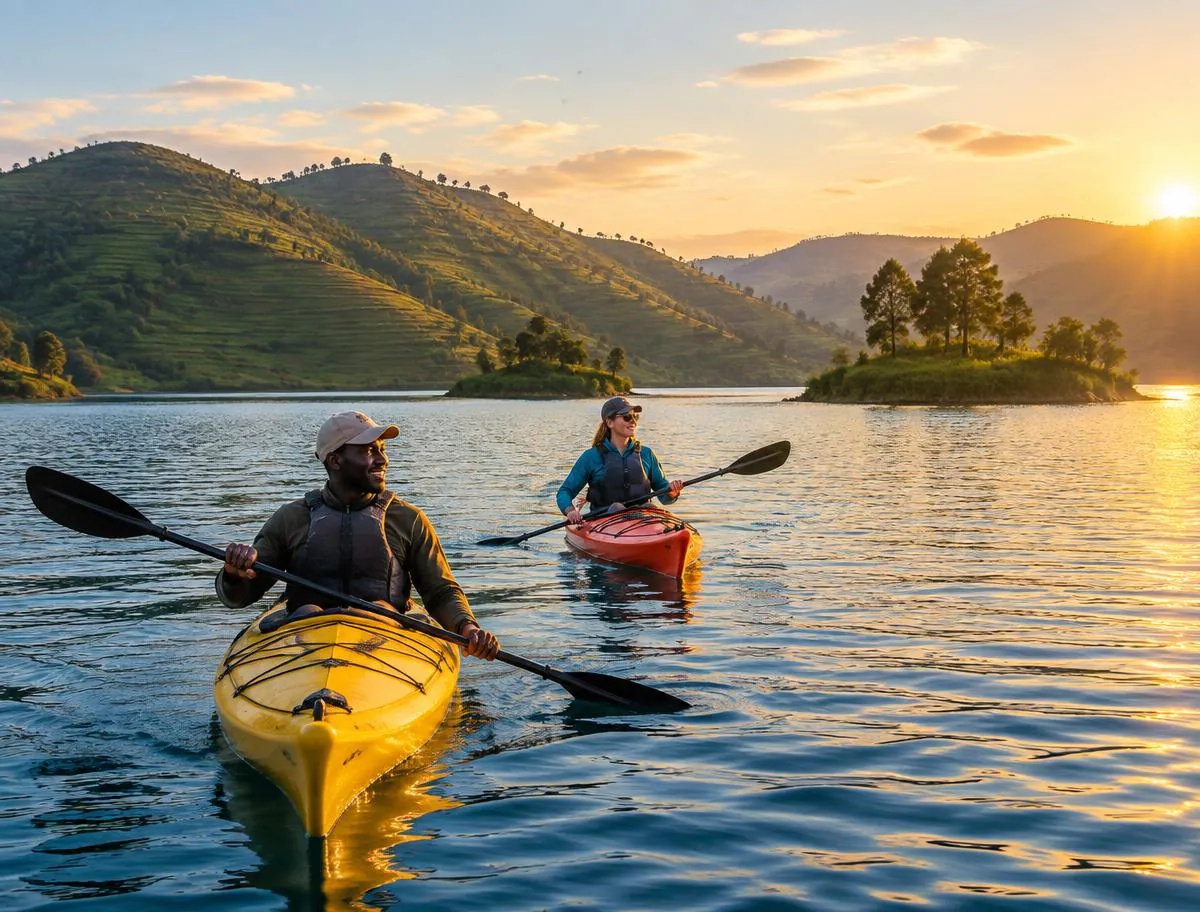
Lake Kivu's activity list runs from genuinely restful to moderately active. Boat trips and kayaking on calm water give an easy, low-effort way to enjoy the scenery, while beach time and lakeside walks suit travellers who simply want to slow down between more demanding park days.
For more active travellers, guided kayaking excursions along stretches of shoreline, coffee and tea cooperative visits, and short hikes into the surrounding hills add texture without requiring the fitness a rainforest trek does. None of this replicates or competes with the Congo Nile Trail's longer multi-day hiking and cycling, which this guide treats separately below, and it pairs easily with a lighter day added around golden monkey tracking.
Boat trips and swimming
Calm-water outings and lakeside downtime; check locally for safe swimming spots.
Kayaking
Guided paddling along scenic stretches of shoreline, generally suited to beginners.
Coffee and tea visits
Cooperative and plantation visits in the hills above the shoreline.
Short hikes and cycling
Day-length outings distinct from the full multi-day Congo Nile Trail.
The signature trail
The Congo Nile Trail in context
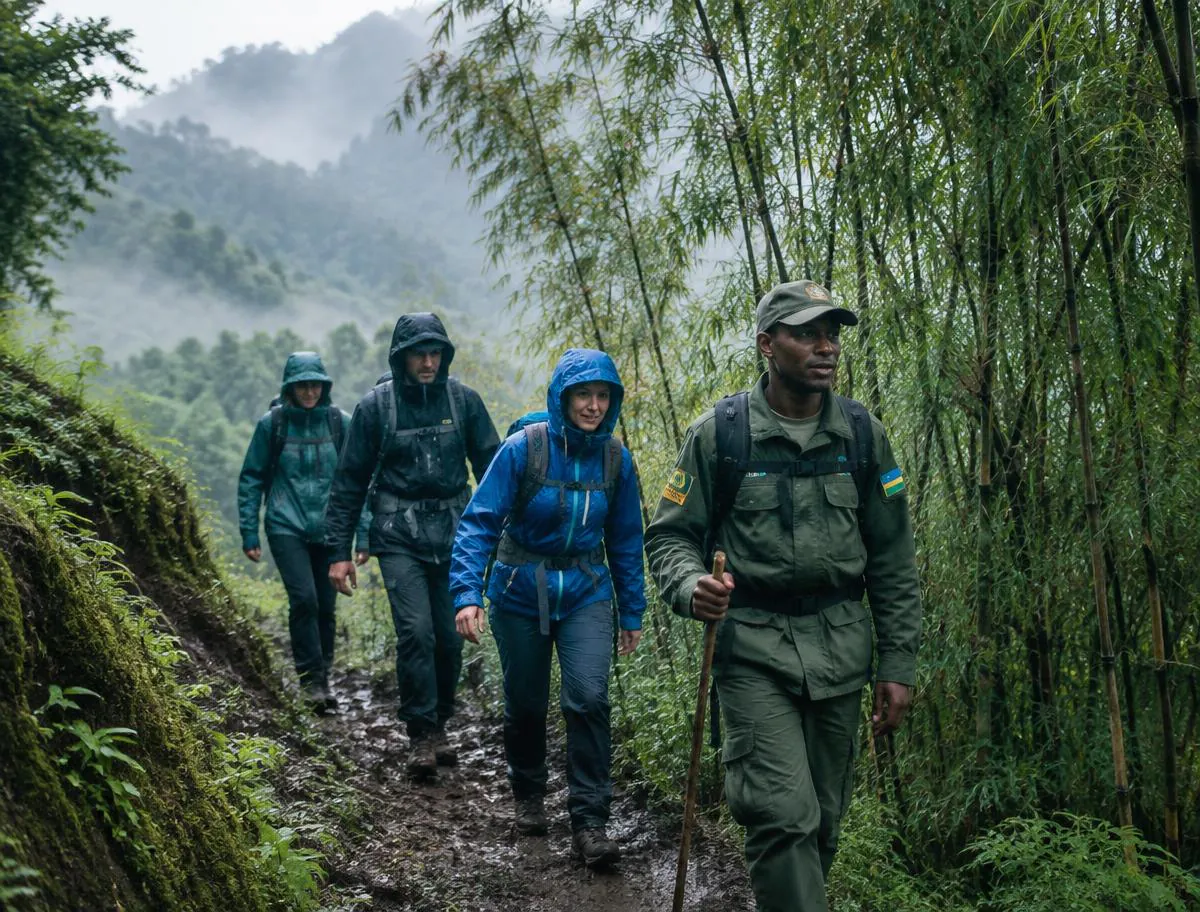
The Congo Nile Trail is a long-distance hiking and cycling route that follows the ridge dividing water flowing toward the Congo Basin from water flowing toward the Nile Basin, running the length of Lake Kivu's shore between Rubavu in the north and Rusizi in the south, a distance commonly cited by Visit Rwanda (opens in a new tab) at around 227 kilometres 1.
Cyclists typically cover the full trail (opens in a new tab) in roughly five to six days, while hikers commonly plan an operator-defined number of days for the complete route, while travellers may choose a single section, a weekend stretch, or a one-day outing rather than the whole trail 2. Terrain includes steep hill climbs, rural footpaths through farming villages, and lake-view stretches, so treat it as a genuine physical undertaking rather than a casual lakeside stroll.
Accommodation and support vary by trail section. Confirm current stages, overnight stops and any luggage arrangements with the chosen operator before committing.
| Style | Typical duration | Who it suits |
|---|---|---|
| Full cycling route | Around 5–6 days | Fit, experienced cyclists wanting the complete north–south trail |
| Full hiking route | Operator-defined duration | Committed hikers with a full extra week to give the trip |
| One section or day outing | A few hours to a single day | Travellers combining the trail with a wider Rwanda circuit |
Why the pace matters
Lake Kivu as deliberate downtime
Rwanda's headline activities — gorilla and golden monkey tracking, chimpanzee trekking, Akagera game drives — are early-starting and physically or logistically demanding in their own ways. Lake Kivu's principal value in an itinerary is the contrast: a day or two with no pre-dawn report time, no permit, and no trail assignment.
Building in genuine downtime, rather than treating every day as another activity to tick off, reduces fatigue on a multi-park trip and gives space to process the more intense parts of a Rwanda circuit, including a Kigali Genocide Memorial visit covered in the Kigali travel guide or a demanding trek day.
Placing Lake Kivu in a route
Pairing Lake Kivu with Volcanoes and Nyungwe
Lake Kivu's shoreline runs almost exactly between Rwanda's two primate-and-rainforest anchors, which is why it appears in most north-to-south Rwanda safari circuits as a transfer stop rather than a bolt-on extra. Rubavu sits closest to Volcanoes National Park via Musanze, while Rusizi sits closest to Nyungwe.
Illustrative route only: Kigali arrival, Volcanoes National Park for gorilla or golden monkey tracking, transfer west and south to Karongi on Lake Kivu for one or two restful nights, continue south to Nyungwe for rainforest activities, then return to Kigali for departure. Adjust the sequence around permit dates and flight timing rather than treating this as fixed.
| Approach | Typical routing | Best suited to |
|---|---|---|
| Northern link | Volcanoes National Park to Rubavu, then onward | Travellers wanting a short break right after tracking |
| Central pause | A dedicated stop in Karongi mid-trip | Travellers prioritising rest and scenery over trail distance |
| Southern link | Rusizi to Nyungwe National Park | Travellers heading into or out of the rainforest circuit |
Planning the visit
How long to stay on the lake
One night is enough to break up a long transfer day and enjoy a sunset over the water, but it leaves little room for a boat trip or trail section. Two nights is a common illustrative shape: it allows arrival, one lake activity such as kayaking or a boat trip, and genuine rest before continuing the circuit.
Travellers specifically planning a multi-day Congo Nile Trail section should budget separately for that trail time on top of any general lakeside downtime, since the two serve different purposes.
1 night
A useful transfer break; little time for a dedicated activity.
2 nights
An illustrative balance of one lake activity and real rest.
3+ nights or a trail section
Needed for a meaningful Congo Nile Trail hiking or cycling stretch.
Climate on the water
Seasonality at lake altitude
Lake Kivu's shoreline sits lower and generally feels milder than Rwanda's mountain parks, though the country's broader seasonal pattern described in the best time to visit Rwanda guide still applies: rains are broadest roughly mid-February to May and mid-September to mid-December (opens in a new tab), with the main drier stretch from June to mid-September.
Drier months tend to suit trail sections and cycling best, since the Congo Nile Trail's hill paths can become slick after heavy rain, while local conditions and safety guidance should be checked before boat trips or swimming.
Practical logistics
Getting there and organising the stop
The lake is reached by road: Rubavu via the route north through or near Musanze, Karongi via a direct road from Kigali or as a stop on the way south, and Rusizi from the Nyungwe direction. Confirm current road and passenger-boat options before relying on a lake transfer.
Pack layers for cooler lake evenings, sun protection for daytime boat or kayak outings, and separate hiking or cycling kit if attempting any Congo Nile Trail section, since that gear differs from the packing list for a primate-trekking day.
- 01Before
Decide your shoreline stop
Match Rubavu, Karongi or Rusizi to whichever end of your circuit you are connecting.
- 02Planning
Book any trail or kayak activity ahead
Guided Congo Nile Trail sections and kayaking outings benefit from advance arrangement.
- 03On arrival
Treat it as a rest stop, not another trek
Keep at least part of the stay unscheduled to get the benefit of the pace change.
- 04Departure
Confirm your onward transfer time
Check current road-condition estimates for the next leg before settling on a departure time.
Where to stay
Accommodation logic along the shore
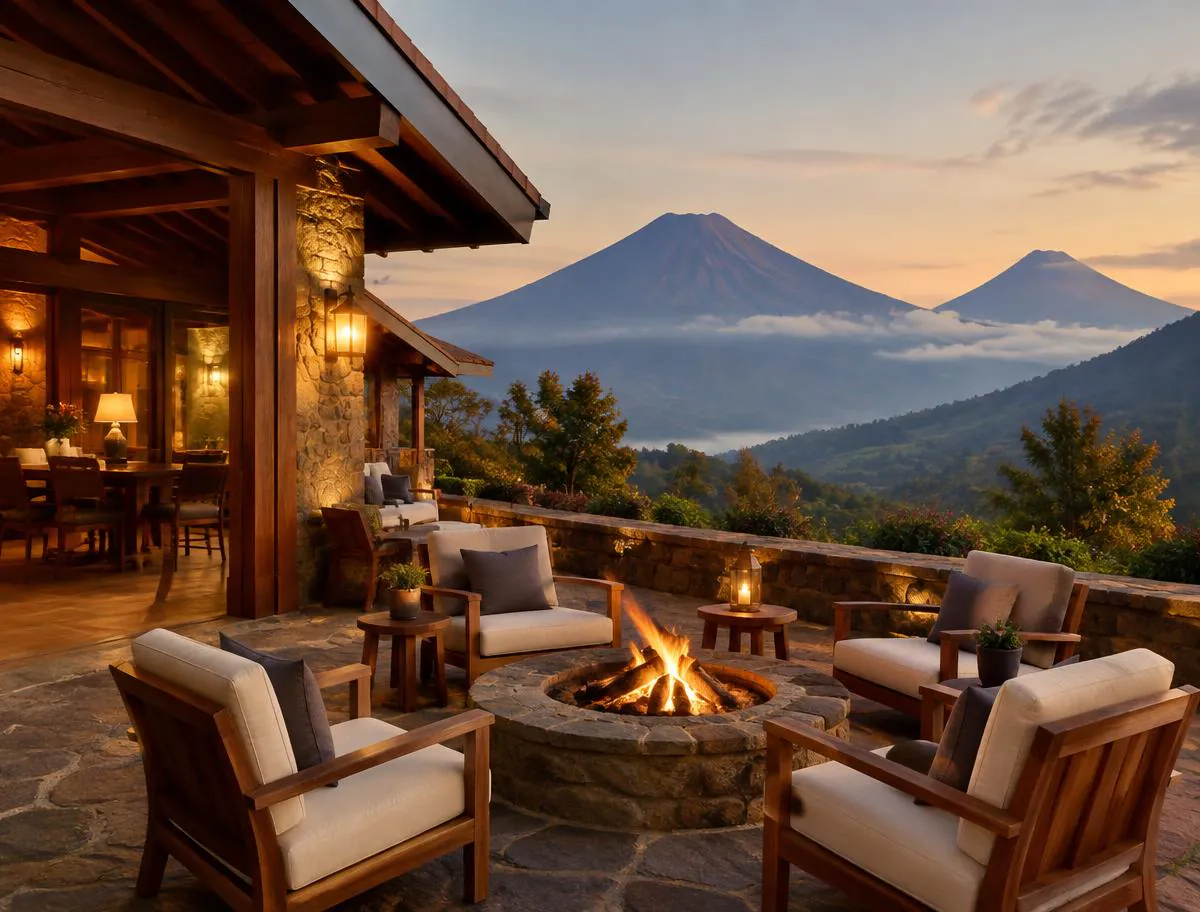
Options range from simple guesthouses in the shoreline towns to lakefront lodges with private beach access, concentrated most heavily around Rubavu and Karongi. This guide does not name specific properties or quote rates; see the Rwanda safari lodges guide or use a current booking channel or licensed operator for verified, available options.
Choose a base close to the boat or kayak departure point for your planned activity, and confirm whether your property offers direct lake access or a short transfer, since shoreline development is not continuous along the whole lake.
Planning FAQ
Direct answers about visiting Lake Kivu
Is Lake Kivu like a beach holiday?
No. It is a freshwater Rift Valley lake destination valued for scenery and rest, not an Indian Ocean beach comparison.
Which shoreline town should I choose?
Rubavu suits a stop near Volcanoes National Park, Karongi suits quieter downtime, and Rusizi links toward Nyungwe.
What is the Congo Nile Trail?
A long-distance hiking and cycling route of around 227 km along the lake's ridge between Rubavu and Rusizi.
Do I need to hike the whole Congo Nile Trail?
No, Travellers can do a single section or a day outing rather than the full multi-day hike or 5–6 day ride.
Can I swim in Lake Kivu?
Swimming is possible in many spots; check locally for safe, recommended areas at your chosen base.
How does Lake Kivu fit a Rwanda itinerary?
It typically links Volcanoes National Park in the north with Nyungwe National Park in the south.
How long should I stay?
One night breaks up a transfer; two nights allow a lake activity plus genuine rest.
Is Lake Kivu good for families?
Its restful pace and lower-key activities can suit families needing a break between more demanding park days.
What is the best season to visit?
The lake suits any month for rest and boat activities; the drier June to mid-September stretch suits trail sections best.
Are there kayaking tours?
Yes, guided kayaking is available along scenic stretches of shoreline, generally suited to beginners.
Continue planning
Read the guide that owns your next question
Sources & verification
Official information behind this guide
Visit Rwanda's own destination and activity pages anchor the shoreline and seasonal detail here; Congo Nile Trail duration figures reflect commonly cited current operator ranges, cross-checked for consistency rather than a single official timetable.
- Visit Rwanda — Lake Kivu Official destination overview and shoreline towns
- Visit Rwanda — Weather Official seasonal context applied to western Rwanda
- Visit Rwanda — Cycling and the Congo Nile Trail Trail length, route and typical hiking and cycling durations
- Visit Rwanda — Cycling Official context for cycling activity in Rwanda
Add real downtime to the circuit
Decide where on Lake Kivu to pause, and for how long.
Match a shoreline stop to your route between Volcanoes and Nyungwe, and choose an activity level that actually rests you.