


Kilimanjaro Honeymoon
A Kilimanjaro honeymoon is a very deliberate choice: you begin your marriage with something genuinely hard, then spend the rest of the trip recovering somewhere beautiful. This guide covers how couples should sequence those two halves, why a private climb changes the experience, and the quiet practicalities that make the celebration part actually feel celebratory.
- Guide
- Combinations
- Reading time
- 12minutes
- In this guide
- 8sections
- Private climb
- Recovery pacing
- Safari + beach flow
- Couple-friendly route
- Custom planning
Local Tanzania team · Licensed mountain crew · Real Safari Soles itineraries
A Kilimanjaro honeymoon works best when it is planned as two distinct halves rather than one continuous trip.
- Plan the climb first and the romance second. The order is what makes the trip work.
- A private climb lets the pace follow the two of you rather than a group of strangers.
- Budget at least one buffer night after the descent before any special or long-planned night.
- Four or more nights of beach or safari after the mountain is the difference between recovering and merely resting.
- Different fitness levels between partners are normal and manageable with the right route and day count.
- Tell us about dietary needs, comfort preferences and any celebration touches early, so they are built in rather than improvised.
01 / 08
Why couples choose to start a marriage on a mountain
Where this fits: this guide is part of the Kilimanjaro climbing guides hub, which supports our main Kilimanjaro climbing page and our published Kilimanjaro climb prices.
Plan the climb with the private climb guide and the route comparison, then read our Kilimanjaro and Zanzibar guide; Wikivoyage Zanzibar and the Tanzania Tourist Board are useful for the beach half.
There is a particular kind of closeness that comes from doing something difficult together, and Kilimanjaro delivers it reliably. You will see each other tired, cold, unwashed and briefly unreasonable, and you will also stand somewhere very high at sunrise having got there side by side. Couples who choose this over a purely restful honeymoon almost always describe the climb as the part they talk about for years afterwards.
It also creates a natural narrative arc for the trip. The first half asks something of you both; the second half gives back. That structure is far more satisfying than a flat two weeks of the same pace, and it means the beach or safari days feel earned rather than simply booked.
What it is not is a relaxing start. If either of you is hoping for a gentle, romantic first week, the climb is the wrong opening: it belongs in the trip only if you both actively want the challenge. That is a conversation worth having honestly before dates are locked in.
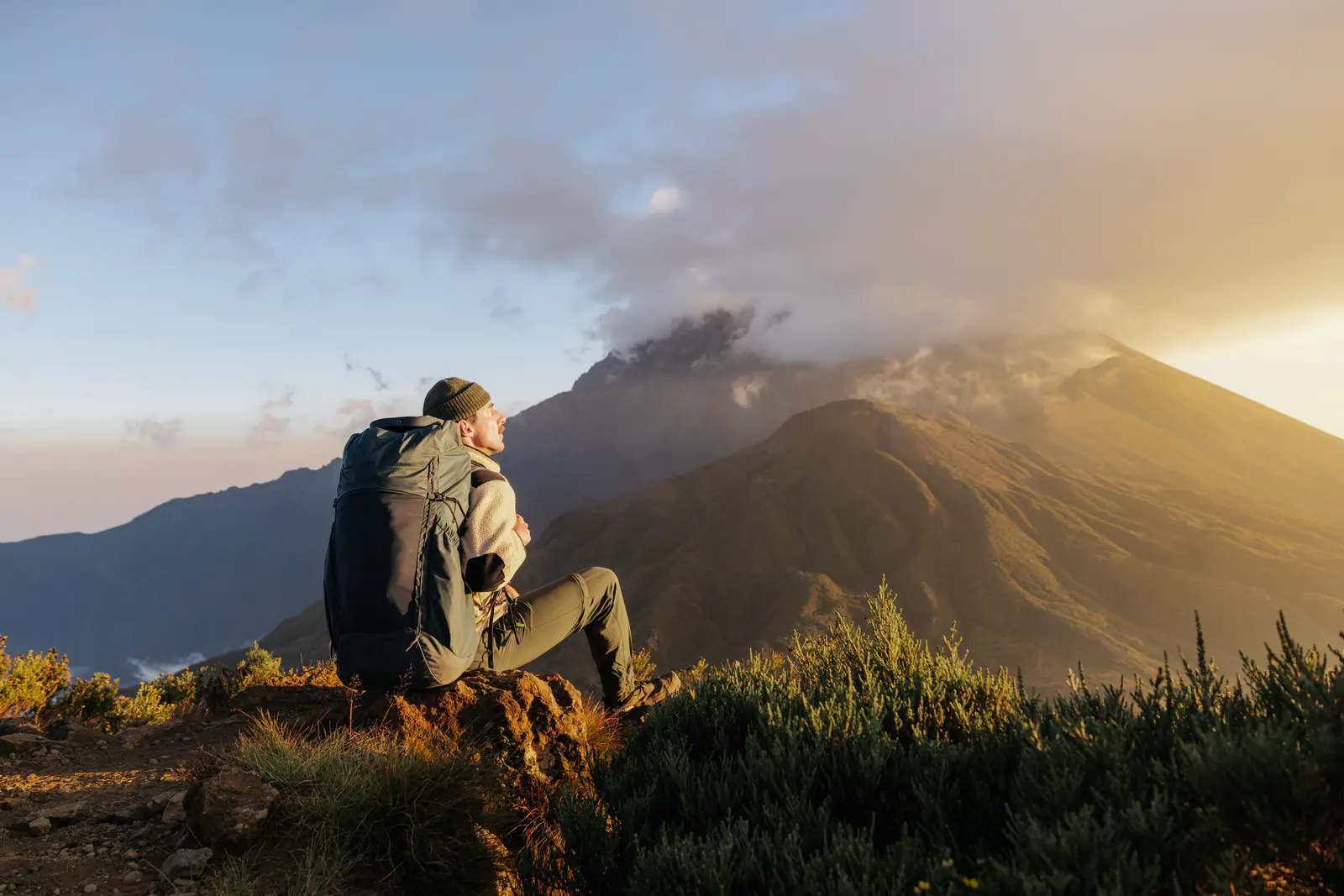
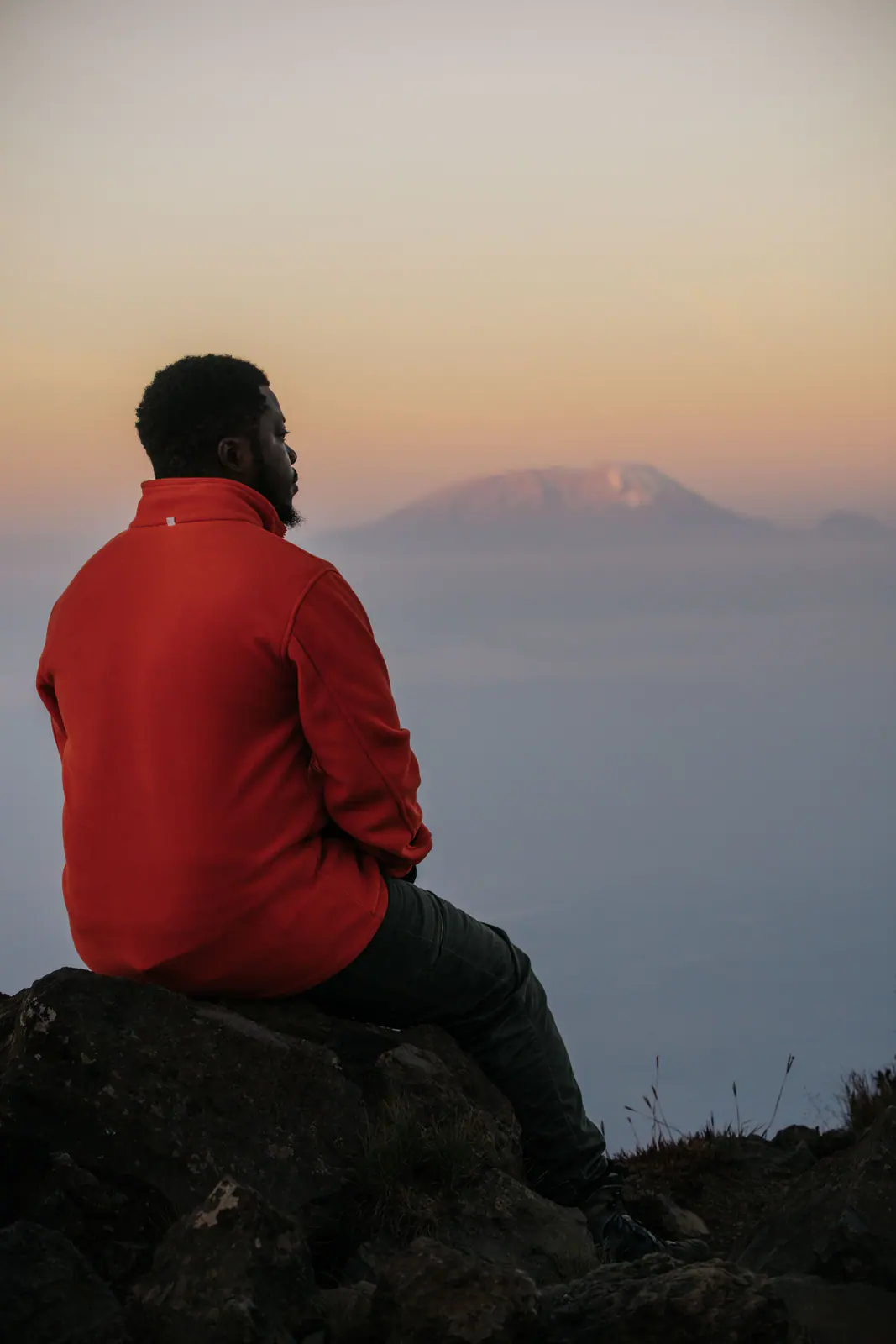
A trekker sits on a ridge looking toward a cloud-wrapped mountain slope in evening light.
02 / 08
Why a private climb suits couples
On a group climb, the daily rhythm is a compromise between everyone in the group: departure times, rest breaks, mealtime conversation and pace all belong to the group rather than to you. For most travellers that is part of the fun. For a honeymoon it quietly erodes the thing you came for.
A private climb means your guide manages the day around the two of you. If one of you is finding the altitude harder on a given morning, the pace slows without anyone else's expectations attached. Meals are yours, the mess tent is yours, and the evenings after dinner belong to you rather than to a shared social schedule.
It also handles the fitness-gap question gracefully. It is very common for one partner to be a stronger walker than the other, and on a private climb that difference simply becomes how your guide plans the day rather than a source of pressure to keep up.
Private versus group for a honeymoon climb
A private climb gives you
- Pace set by the two of you rather than a group average
- Your own mess tent, meals and evening time
- Flexible daily start times within the route's constraints
- Room to build in comfort requests without negotiating with strangers
- Guides who can quietly plan around a celebration moment
A group climb means
- Shared pace and shared rest stops throughout each day
- Communal meals and social evenings by default
- Fixed departure times that suit the whole group
- Less scope to adjust the day around how one of you feels
- A lower price, which is a genuine and reasonable trade-off
03 / 08
How to sequence the climb and the celebration
Put the climb at the front of the trip, always. Attempting a high-altitude trek after a week of rich food, late nights and beach heat makes the mountain harder than it needs to be, and it leaves you flying home the day after summit night, which is genuinely miserable.
Then protect the transition. One buffer night near Moshi or Arusha, with a hot shower, laundry and a proper meal, turns two exhausted climbers back into two travellers. Only after that should the honeymoon's most special nights begin.
From there, the choice is beach, safari or both. Couples who want to do as little as possible tend to prefer Zanzibar. Couples who want the trip to keep delivering new experiences usually prefer a safari finish, sometimes with a few beach nights after that if the calendar allows.
Summit night finishes with a long, tiring descent, usually arriving back at a lower camp or the gate in the early afternoon. Most climbers are dehydrated, short on sleep and running on adrenaline rather than energy. This is a day for a hot shower, a real meal and an early night, not a flight or a long drive.
We build at least one buffer night at lower altitude, near Moshi or Arusha, between the mountain and the next leg of the trip. It absorbs delays on the mountain, gives your body a genuine chance to rehydrate and sleep properly, and means you arrive at the next stage of the trip as a traveller again rather than as someone still recovering.
On a honeymoon this matters more than on any other combination. The nights you have looked forward to for months should not fall on the two nights when neither of you can stay awake past nine.
A sample honeymoon trip shape
A shape, not a package: day counts and lodges are confirmed with our team based on your dates and preferences.
- Days 1–8
Private Lemosho climb
A longer route with generous acclimatisation, walked at your own pace with your own crew and mess tent.
- Day 9
Buffer night near Moshi
Hot shower, laundry, a long dinner and an early night. Nothing scheduled, nothing special planned yet.
- Days 10–12
Safari, at a gentle pace
Shorter game drives, unhurried mornings and time at camp rather than a punishing park-to-park schedule.
- Days 13–16
Zanzibar
The genuinely restful half: warm water, slow days and the celebration dinners you actually have energy for.
- Day 17
Departure
A slow final morning on the island before your onward flight.
Three honeymoon shapes compared
| Shape | What it prioritises | Best suited to |
|---|---|---|
| Climb plus beach | Maximum rest after the mountain, minimal moving around | Couples who want to stop entirely once the climb is done |
| Climb plus safari | New experiences and wildlife rather than pure rest | Couples who get restless lying still for a week |
| Climb, safari and beach | The full arc: challenge, discovery, then recovery | Couples with a longer window and a flexible budget |
Climb plus beach
- What it prioritises
- Maximum rest after the mountain, minimal moving around
- Best suited to
- Couples who want to stop entirely once the climb is done
Climb plus safari
- What it prioritises
- New experiences and wildlife rather than pure rest
- Best suited to
- Couples who get restless lying still for a week
Climb, safari and beach
- What it prioritises
- The full arc: challenge, discovery, then recovery
- Best suited to
- Couples with a longer window and a flexible budget
04 / 08
Moving between the mountain and the honeymoon half
The logistics are straightforward but worth planning tightly, because a honeymoon has less tolerance for a wasted day than a general holiday does. Kilimanjaro International Airport connects to Zanzibar on short domestic flights, and safari camps in the northern circuit are reached by road transfer or, for the Serengeti, by light aircraft.
We hold flights and camp nights until your climb dates are confirmed, and we deliberately avoid same-day transfers off the mountain. The extra night costs less than a missed connection and far less than beginning the honeymoon half already frayed.
Typical transfers and connections
Exact routings depend on your chosen lodges and flight schedules. This shows the shape of the logistics, not a fixed itinerary.
| Leg | Typical mode | Notes |
|---|---|---|
| Mweka Gate → Moshi or Arusha hotel | Road transfer | Same day as your descent; short and straightforward |
| Moshi/Arusha → safari camps | Road transfer or light aircraft | Road for Tarangire and Ngorongoro; flights usually make more sense for the Serengeti |
| Kilimanjaro Airport → Zanzibar | Direct domestic flight | Just over an hour, with several daily departures |
| Zanzibar Airport → beach lodge | Road transfer | Twenty minutes to under two hours depending on the coast you choose |
Mweka Gate → Moshi or Arusha hotel
- Typical mode
- Road transfer
- Notes
- Same day as your descent; short and straightforward
Moshi/Arusha → safari camps
- Typical mode
- Road transfer or light aircraft
- Notes
- Road for Tarangire and Ngorongoro; flights usually make more sense for the Serengeti
Kilimanjaro Airport → Zanzibar
- Typical mode
- Direct domestic flight
- Notes
- Just over an hour, with several daily departures
Zanzibar Airport → beach lodge
- Typical mode
- Road transfer
- Notes
- Twenty minutes to under two hours depending on the coast you choose
05 / 08
The unromantic details that protect the romance
Honeymoon trips fail on small things far more often than large ones. Tell us early about dietary requirements, sensitivity to cold, sleep preferences and anything you would like arranged quietly, and we build them into the itinerary rather than improvising on the mountain, where options are limited.
Names on documents are worth checking too. If one of you is changing surnames, make sure passports, visas, insurance policies and flight bookings all match each other exactly: a mismatch between a booking name and a passport creates avoidable problems at check-in and at the park gate.
Worth telling us before you travel
- Dietary needs, allergies or strong food preferences for the mountain kitchen
- How sensitive either of you is to cold, so we can advise on sleeping-bag warmth honestly
- Whether you would like comfort upgrades such as a larger tent or private toilet tent
- Any celebration moment you would like handled discreetly rather than publicly
- Passport names, visa status and insurance details, especially after a name change
- Whether you would prefer a quieter beach stretch or somewhere more sociable
We can arrange thoughtful, low-key touches within what is genuinely possible in a mountain camp or at a lodge, and we would rather describe those honestly in advance than promise something the setting cannot support. Mountain camps are simple by nature; lodges and beach stays have far more scope.
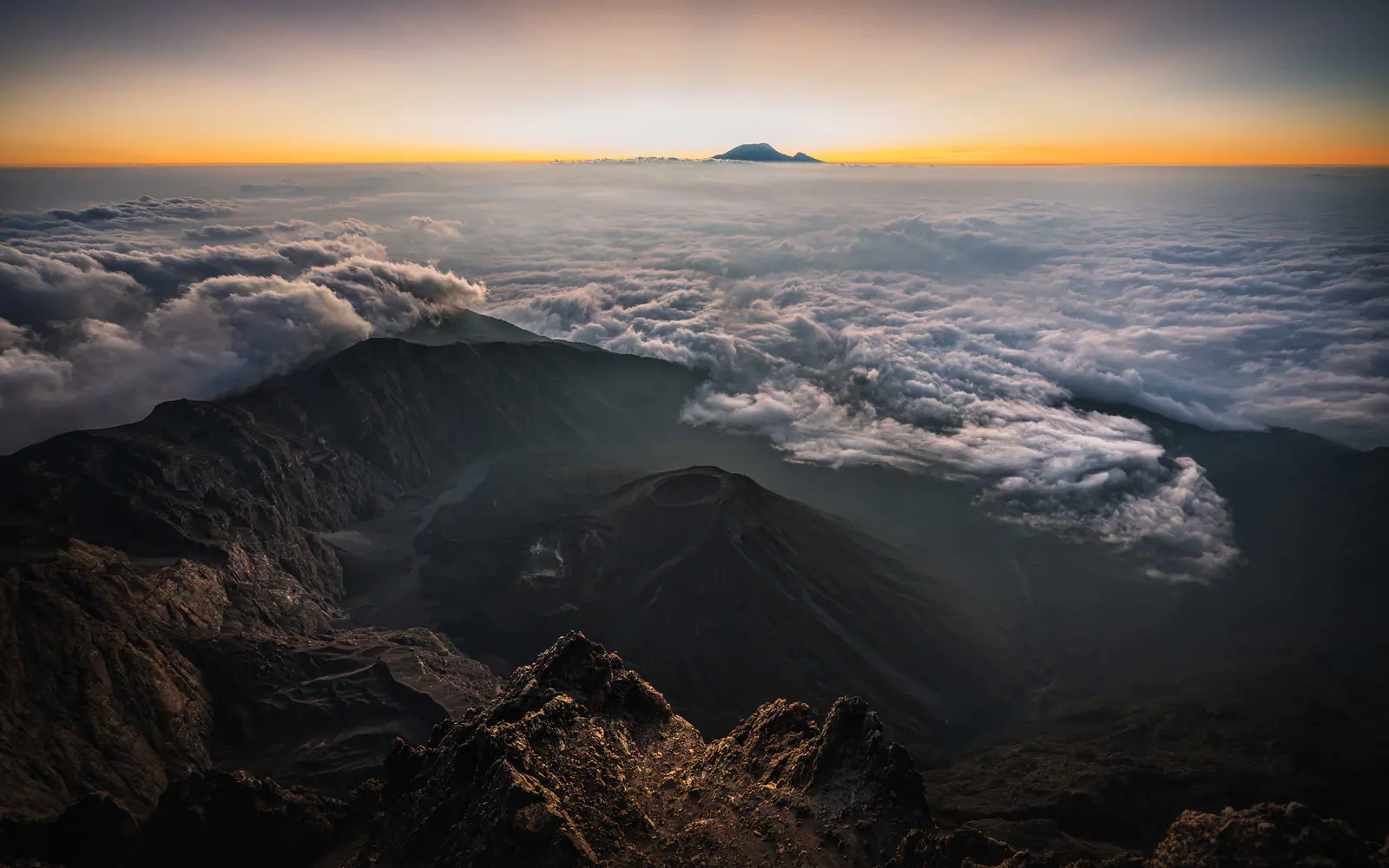
A sea of cloud at dawn with a distant peak on the horizon and dark ridges in the foreground.
06 / 08
Combination trip builder
Six quick questions about your days, priorities and pace, and we will suggest a honeymoon trip shape to discuss with our team.
Combination Trip Builder
Answer six quick questions about your time, priorities and pace, and we will suggest a realistic trip shape to discuss with our team, not a fixed package, just a sensible starting point.
0 of 6 answered
Answer all 6 questions and your result appears here.
This tool suggests a trip shape based on your answers. It is not a quote or an availability check: actual day counts, routing and internal flight timings are confirmed with our team before booking.
07 / 08
Other ways to combine your Kilimanjaro trip
-
Kilimanjaro and Zanzibar
Flight logistics, how many beach nights actually help, and how the island's coasts differ after a climb.
Plan this trip -
Kilimanjaro and safari package
Why safari works better after the mountain, plus transfers, recovery days and wildlife season context.
Plan this trip -
Kilimanjaro, safari and Zanzibar
The full three-part trip: total day budgeting, sequencing and packing for three climates.
Plan this trip
08 / 08
How Safari Soles approaches this
We plan honeymoon trips backwards from the part you care about most. If the beach days are the point, we protect them with enough climb days and a proper buffer night so you arrive rested. If the summit is the point, we build the recovery half around how you are likely to feel afterwards.
Tell us your dates, both fitness levels, and what you want the second half of the trip to feel like. We will come back with a shape, an honest view of what fits and what does not, and no pressure to add days you do not want.
Common mistakes to avoid
Most unsuccessful climbs come from a handful of avoidable planning decisions, not from the mountain.
- Booking the most special nights of the honeymoon for the two days straight after summit night, when neither of you can stay awake.
- Joining a group climb to save money, then spending the week walking at a stranger's pace on your honeymoon.
- Doing the beach or safari half first and arriving at the mountain under-slept and over-fed.
- Choosing the shortest possible climb so the honeymoon half can be longer, which makes altitude the story of the trip.
- Assuming both partners need identical fitness, rather than choosing a route and day count that suits the slower walker.
- Leaving dietary needs and comfort preferences unmentioned until you are already at camp, where options are limited.
- Booking flights and lodges under a new surname that does not yet match a passport.
- Planning no buffer night at all, so a single weather delay on the mountain collapses the rest of the itinerary.
Get these right and the climb follows
Every one of these comes down to the same thing: matching the route and the day count to the climber before booking anything. Send us your dates and we will tell you honestly what is realistic.
Plan this climb with a local expertQuestions worth asking any operator
Ask these of any operator you are comparing, including us. The answers tell you more about a climb than the price does.
- Is our climb genuinely private, and who exactly travels with us?
- How many mountain days does the itinerary include, and how many are real acclimatisation days?
- Where does our buffer night sit between the climb and the honeymoon half?
- How are transfers and internal flights handled between the mountain and the beach or safari?
- What comfort upgrades are available on the mountain for a couple, and what do they change?
- How do you handle dietary needs and any celebration requests we would like arranged quietly?
What Safari Soles puts in writing
Everything below is confirmed before you pay, so nothing about your climb is left to be discovered on the mountain.
-
Your route, day count and acclimatisation profile
Confirmed in writing before you pay, with our honest view on whether the number of days suits you.
-
How your health is monitored on the mountain
The daily check routine and who is responsible for it are explained at your pre-climb briefing.
-
First-aid and emergency response for your itinerary
You are told what travels with the climb and what happens at each camp if someone needs to descend.
-
Who is on your crew and what each person does
Lead guide, assistant guides, cook and porters are set out for your group size, not left vague.
-
Porter load handling for your climb
Duffel limits and how loads are weighed are confirmed before departure, so there are no gate surprises.
-
Tent, sleeping mat and dining arrangements
Camp comfort is described in the quote rather than discovered on the first night.
-
Meals, drinking water and hot drinks
How your food is cooked and your water treated is explained, including dietary requirements.
-
Gear rental list, sizes and prices
Shared before you shop, so you buy what matters at home and hire the rest on arrival.
-
An itemised quote with fees shown separately
Park and camping fees, crew, equipment, transfers and hotels appear as their own lines.
-
Tipping guidance for your group size
The customary range and how tips are collected are agreed before you fly, in writing.
Local Kilimanjaro operators, licensed crew, honest guidance
Written and reviewed by the Safari Soles team in Arusha, who plan and run Kilimanjaro climbs from beside the mountain rather than brokering them from an overseas office.
- Reviewed by the Safari Soles Kilimanjaro planning team
- Updated for 2026 climbing seasons
- Route and day count matched to your fitness and altitude history
- Daily health monitoring and descent decisions agreed before you book
- Read Safari Soles reviews on TripAdvisor
- Read Safari Soles reviews on SafariBookings
- Read Safari Soles reviews on Google
Where these facts come from (4)
- UNESCO: Kilimanjaro National Park The World Heritage listing for Kilimanjaro National Park, which records Africa's highest point at 5,895m.
- Tanzania Tourist Board Government tourism information on travelling in Tanzania, seasons and destinations.
- Tanzania Immigration: eVisa Official portal for visa requirements and online applications before you travel.
- Wikivoyage: Zanzibar Secondary travel background on Zanzibar's regions, transport and beaches.
Related Safari Soles guides
Continue with the guides travellers usually read next.
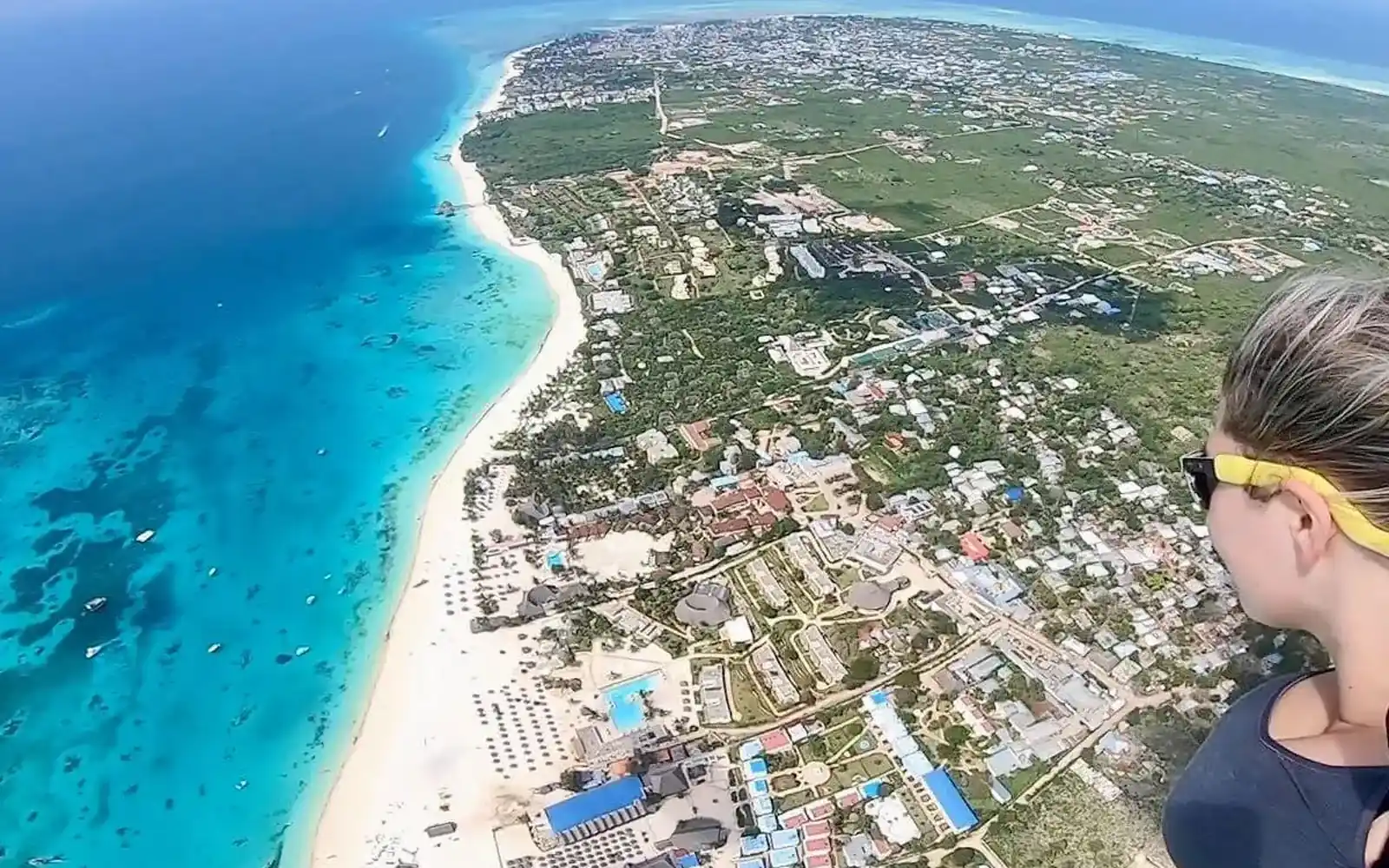 Kilimanjaro and Zanzibar Trade altitude for the Indian Ocean with a beach recovery week after your summit. Combinations
Read the guide
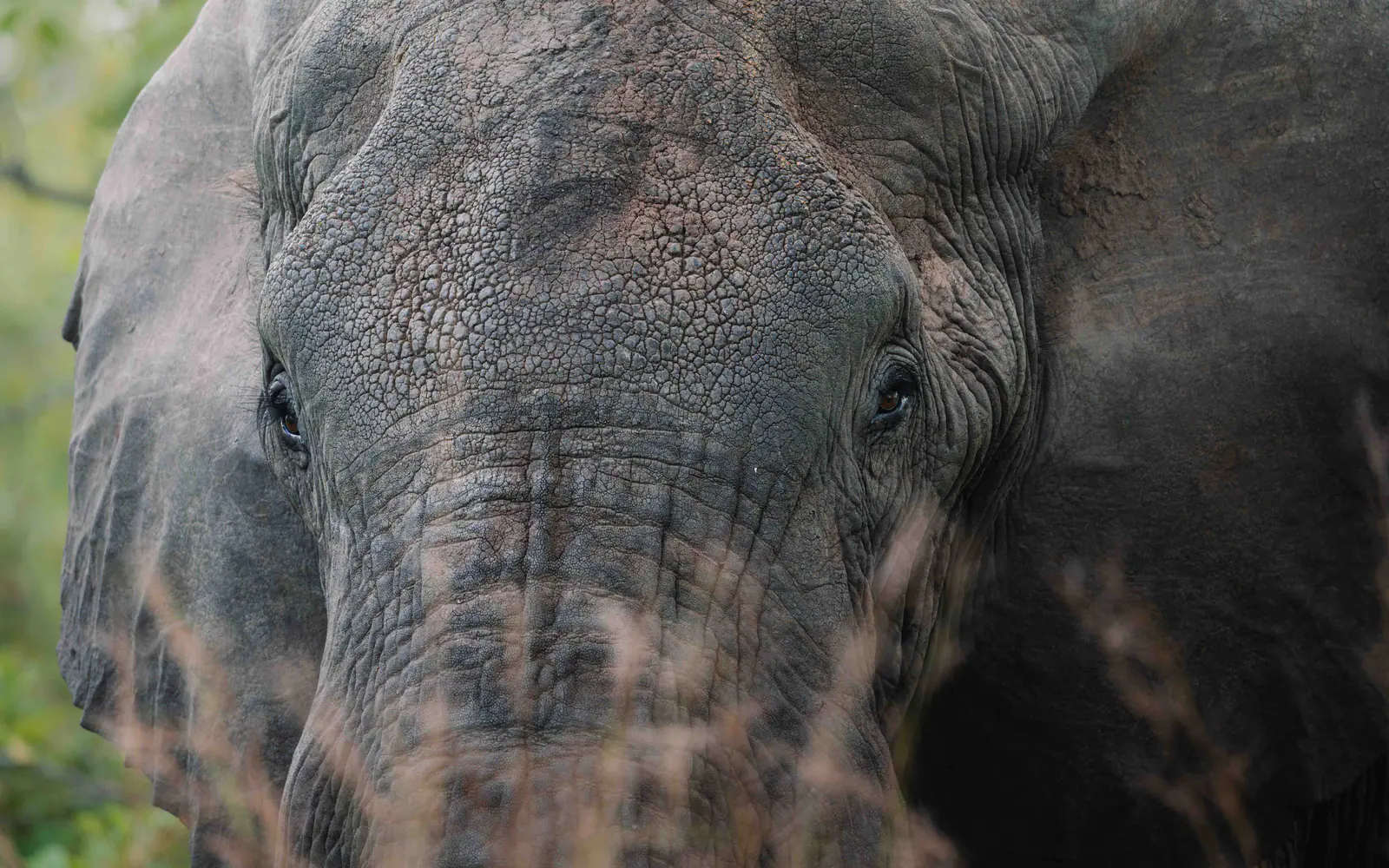 Kilimanjaro and Safari Package Climb first, then unwind on a northern-circuit safari with Serengeti and Ngorongoro game drives. Combinations
Read the guide
- Kilimanjaro Safari Zanzibar The full Tanzania trilogy (mountain, wildlife and island) in one carefully paced itinerary. Combinations
Read the guide
Frequently Asked Questions
-
It is, if you both actively want a shared challenge rather than a purely restful trip. The climb becomes the story you tell for years, and the second half of the trip provides the rest. It is the wrong choice if either of you is quietly hoping for a gentle first week.
Plan a Kilimanjaro honeymoon you will both enjoy
Tell us your dates, your fitness levels and what you want the second half of the trip to feel like. We will build a private climb with the right number of acclimatisation days, protect the buffer night, and shape a beach or safari finish around how you will actually feel when you come off the mountain.