


Kilimanjaro Group Climbs: How They Work and Who They Suit
Joining a group is one of the most common ways to climb Kilimanjaro, particularly for solo travellers and couples. This guide explains how a group climb actually works, how it compares with a private itinerary, and what to ask before you commit to a specific departure.
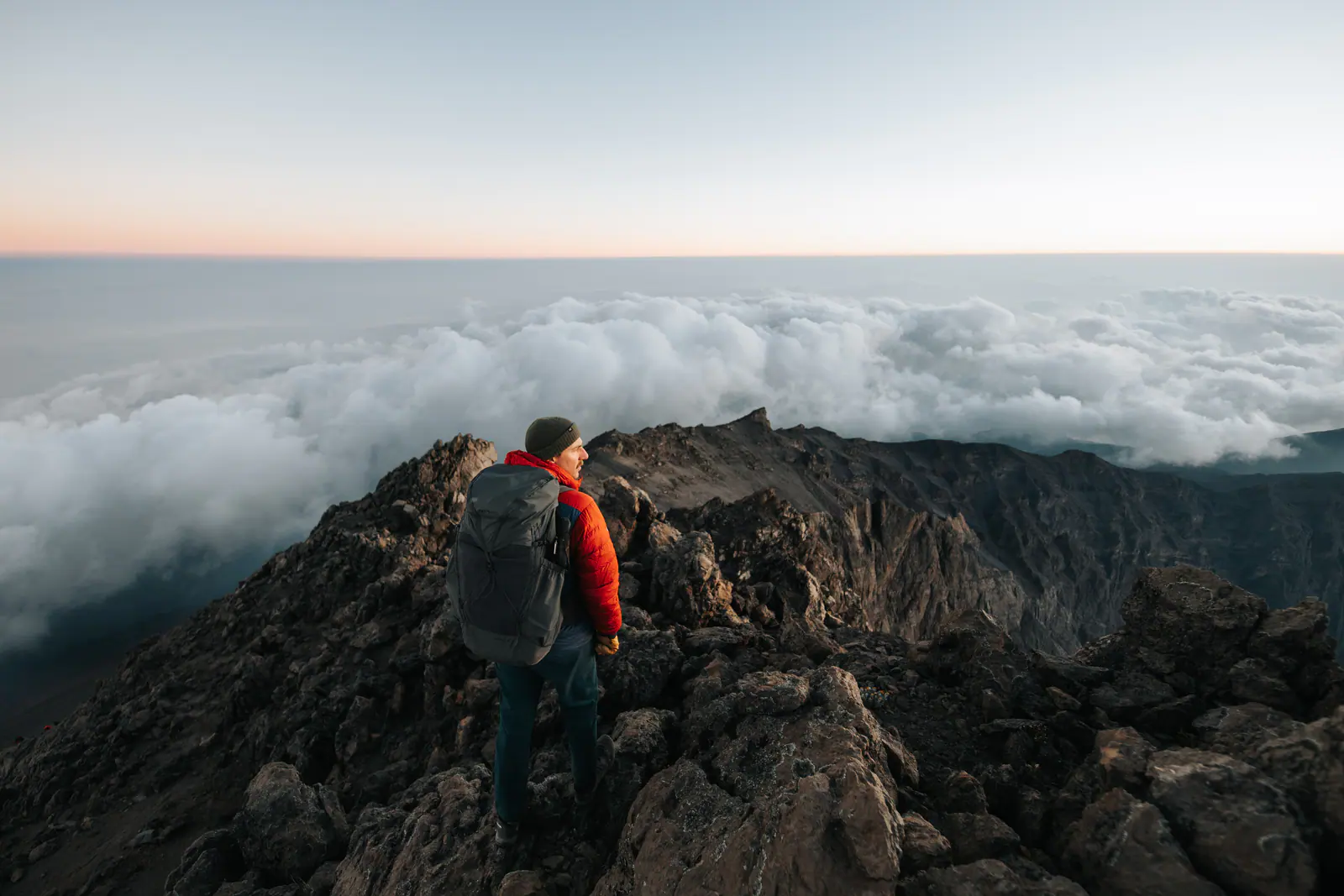
- Guide
- Group Climbs
- Reading time
- 11minutes
- In this guide
- 9sections
- Fixed departures
- Shared climb cost
- Good for solo travellers
- Group vs private matcher
- Check current availability
Local Tanzania team · Licensed mountain crew · Real Safari Soles itineraries
A Kilimanjaro group climb is a scheduled departure on a fixed route and set of dates, where climbers who booked separately (sometimes solo travellers, sometimes couples or small parties) are combined into a single climbing party sharing the same guides, crew and campsites. The appeal is straightforward: crew costs are spread across more people, and you get built-in company on a long, physically demanding trip.
- A group climb combines separately booked climbers into one party sharing guides, crew and campsites on fixed dates.
- The main appeal is shared crew costs and built-in company; the main trade-off is less control over pace and dates.
- Group size and guide ratio both affect how a mixed-ability group is actually managed on the mountain.
- Pace in a group is usually set to the group's slower members, which protects safety but changes the rhythm of your days.
- Private climbs let you set your own dates, pace and comfort upgrades, generally at a different cost structure.
- Solo travellers are one of the most common group climb participants and are rarely the only solo climber in a party.
01 / 09
What a group climb is and how ours are run
A group climb starts as a published route, a set number of days and a departure window. Individual climbers or small parties book onto that departure, and once the dates arrive, everyone climbs together as a single party under the same lead guide.
Where this fits: this guide is part of the Kilimanjaro climbing guides hub, which supports our main Kilimanjaro climbing page and our published Kilimanjaro climb prices.
Compare it with the private climb guide, the cost breakdown and the booking process guide, and check park regulations with TANAPA if you are planning a large party.
Park rules apply equally to every group size on this World Heritage site; see TANAPA and general background on the mountain, then read the summit night guide and training guide.
Behind the scenes, a group climb is planned much like a private one: permits, campsite allocations, crew numbers and food are all arranged for the specific size of that party. The difference is that the party itself is made up of people who booked independently rather than one travelling group.
We plan group departures with the same crew standards, health monitoring and route logistics as our private climbs. What changes is the shared schedule: everyone in the party moves through the same days, camps and pace, because the itinerary has to work for the whole group rather than being rebuilt around one couple or family.
If you are considering a group climb, the most useful first step is a direct conversation about which route and dates currently have a departure forming, since this changes over time and is not something to assume from a general guide like this one.
02 / 09
Group climbs vs private climbs
How the two options generally differ
Neither option is objectively better. They suit different priorities. A solo traveller who wants company and a lower cost per person is often well suited to a group departure. A couple who wants to choose their own dates, set their own pace, and request a private toilet tent without discussing it with strangers is usually better suited to a private climb.
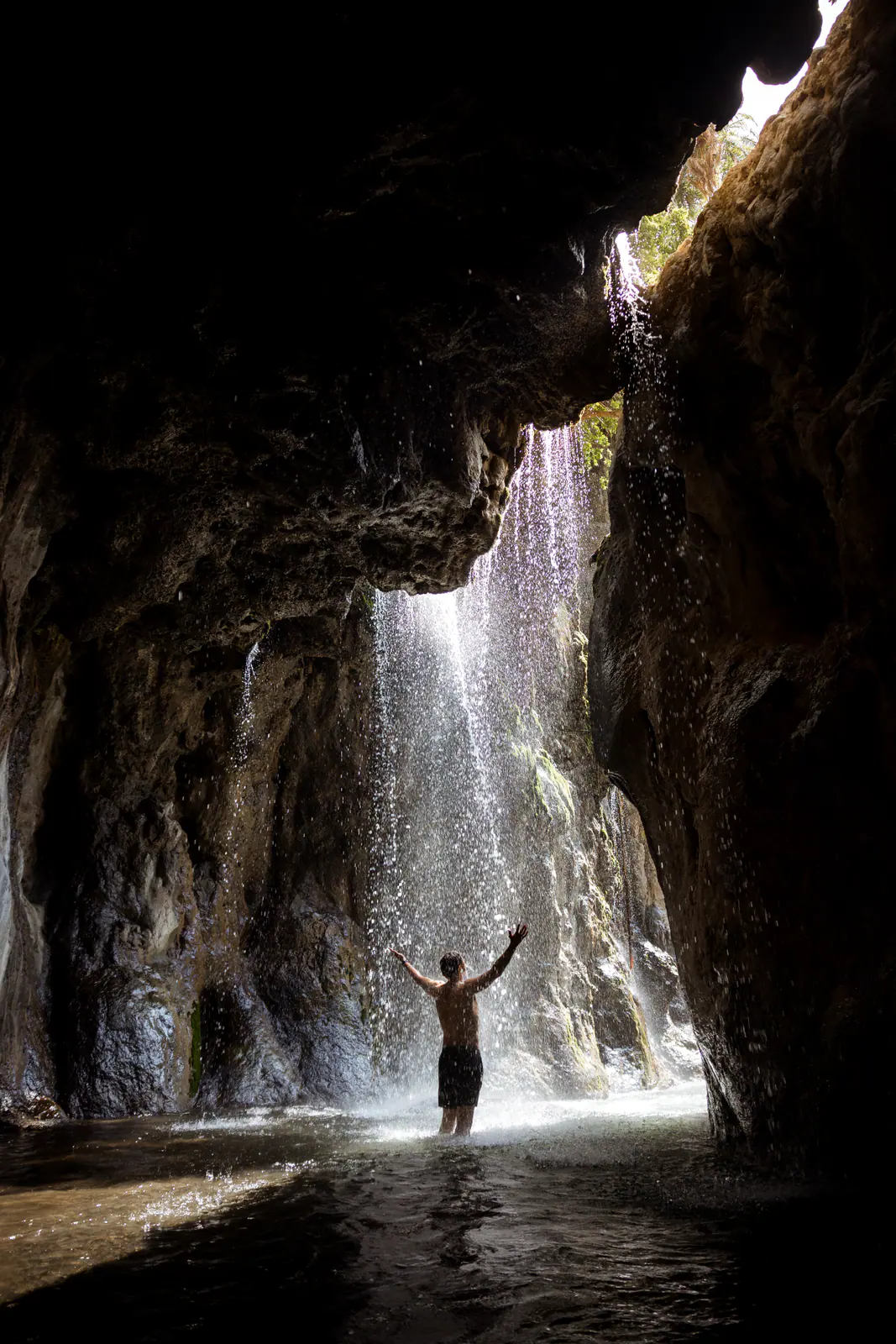
A traveller stands with arms raised under a waterfall in a rocky gorge.
03 / 09
Who tends to suit a group climb
- Solo travellers who would like company on a long, demanding trip without needing to bring their own group
- Couples or small parties happy to share the mountain with other travellers in exchange for shared crew costs
- Climbers whose dates are genuinely flexible enough to fit an existing departure window
- Travellers who are comfortable with a set itinerary and do not need custom pacing or route changes
- Budget-conscious climbers for whom sharing crew costs across a larger party matters more than full schedule control
Some climbers choose group departures specifically for the social side of the trip: meeting other travellers, sharing the summit night experience, and having built-in company through a genuinely tough physical challenge. That is a legitimate reason on its own, separate from cost.
04 / 09
Solo travellers joining a group
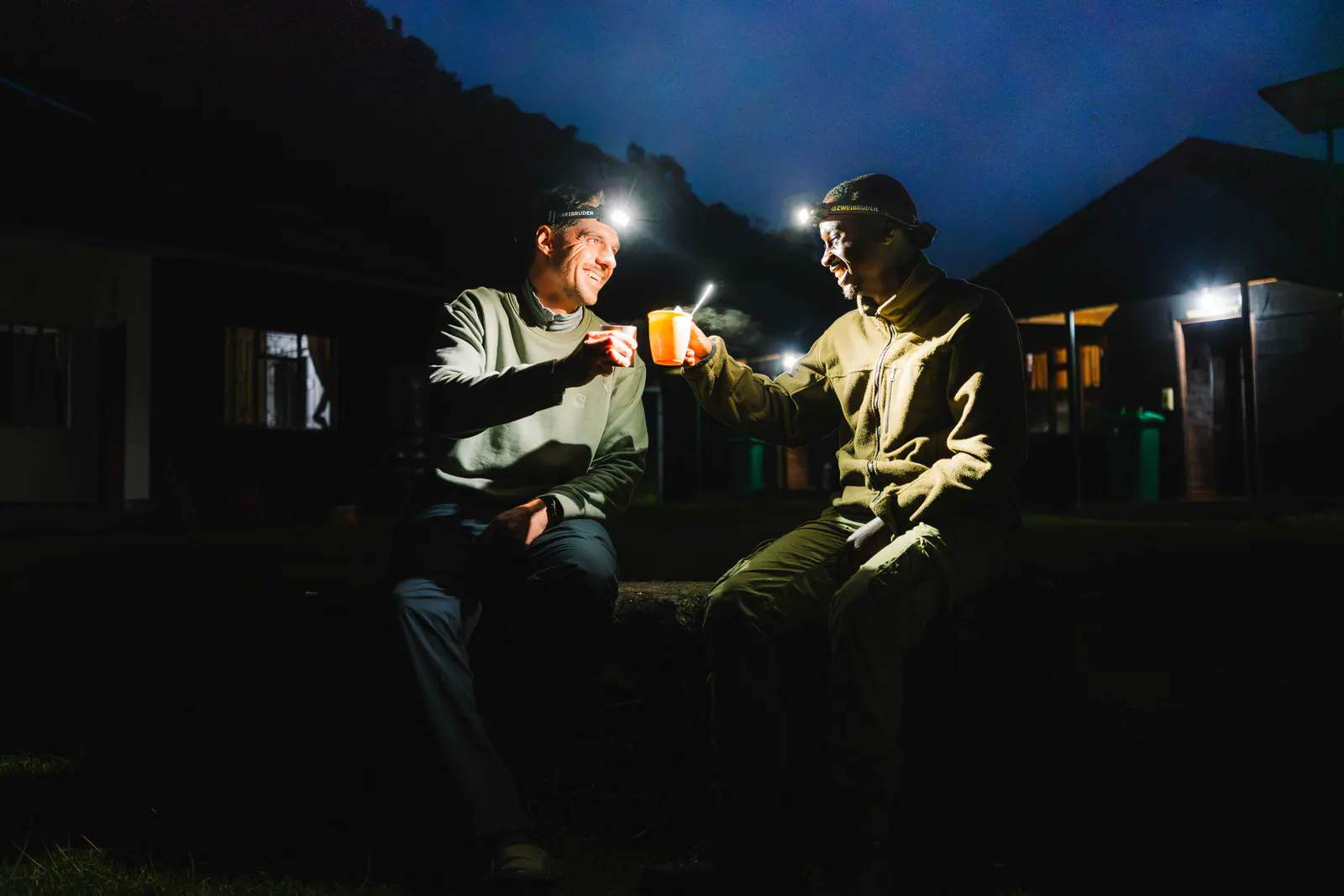
Solo travellers are one of the most common participants in group climbs, and joining a group means you are very unlikely to be the only solo climber in the party. Most departures include a mix of solo travellers, couples and small groups combined together.
Accommodation the night before and after the climb, and tent sharing on the mountain itself, are worth asking about specifically as a solo traveller. Some operators pair solo climbers of the same gender to share a tent by default, with a single-tent option available for an adjustment; ask how this is handled rather than assuming either way.
If you are nervous about joining a group alone, it is worth remembering that a shared physical challenge like a multi-day climb tends to build familiarity quickly: by the summit night, most groups have become a genuine team regardless of how they started as strangers.
05 / 09
Group size and guide ratio
Group size varies by departure, route and demand, and we do not publish a fixed maximum here because it changes. What matters more than the raw number is the guide-to-climber ratio: how many qualified guides are assigned to the party, and whether that scales up as the group gets larger.
A well-run group climb keeps enough assistant guides in the party that a climber who is struggling can be paired with a guide for a slower pace or an early descent without pulling attention away from the rest of the group. This is one of the most important questions to ask before joining any group departure, regardless of operator.
- How many climbers are currently confirmed on this specific departure?
- How many guides, including assistants, are assigned to a group of this size?
- Does the guide ratio increase if the group grows before the departure date?
- How are decisions made if one climber in the group needs to slow down or turn back?
06 / 09
Pace in a mixed-ability group
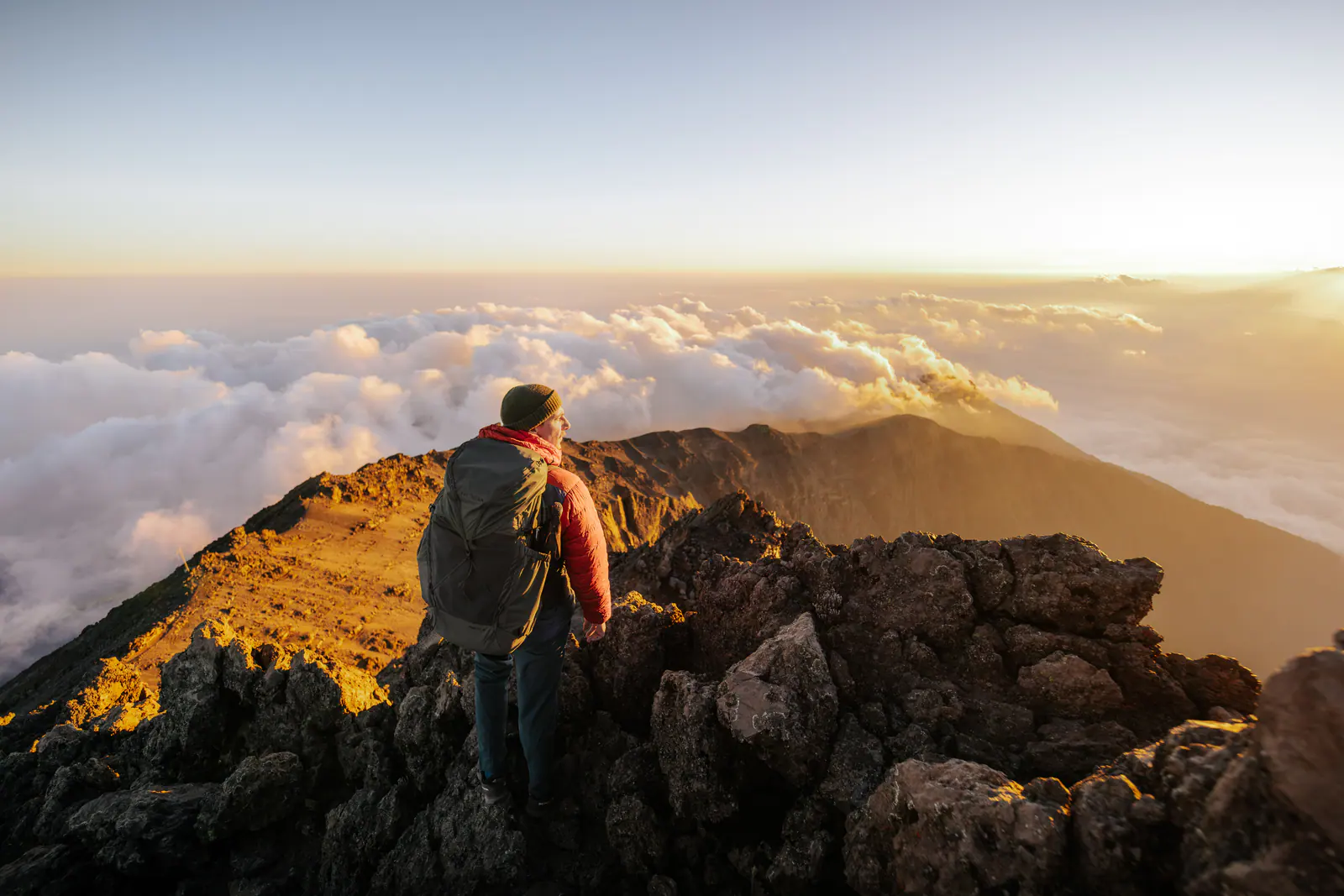
One of the most misunderstood parts of a group climb is pace. Guides generally set the walking speed of the whole party to the least experienced or slowest-adjusting member, not the fittest one. This is a safety decision, not an inconvenience, because moving too fast at altitude increases the risk of altitude sickness for everyone.
In practice this means very fit climbers in a group often walk more slowly than they could manage alone, which can feel frustrating on easier days but matters far less than it seems, since the deliberately slow pace ('pole pole') is itself one of the most effective tools for successful acclimatisation on Kilimanjaro regardless of your fitness level.
If pace control matters a great deal to you personally, that is one of the clearest signals that a private climb, rather than a group departure, is likely to suit you better.
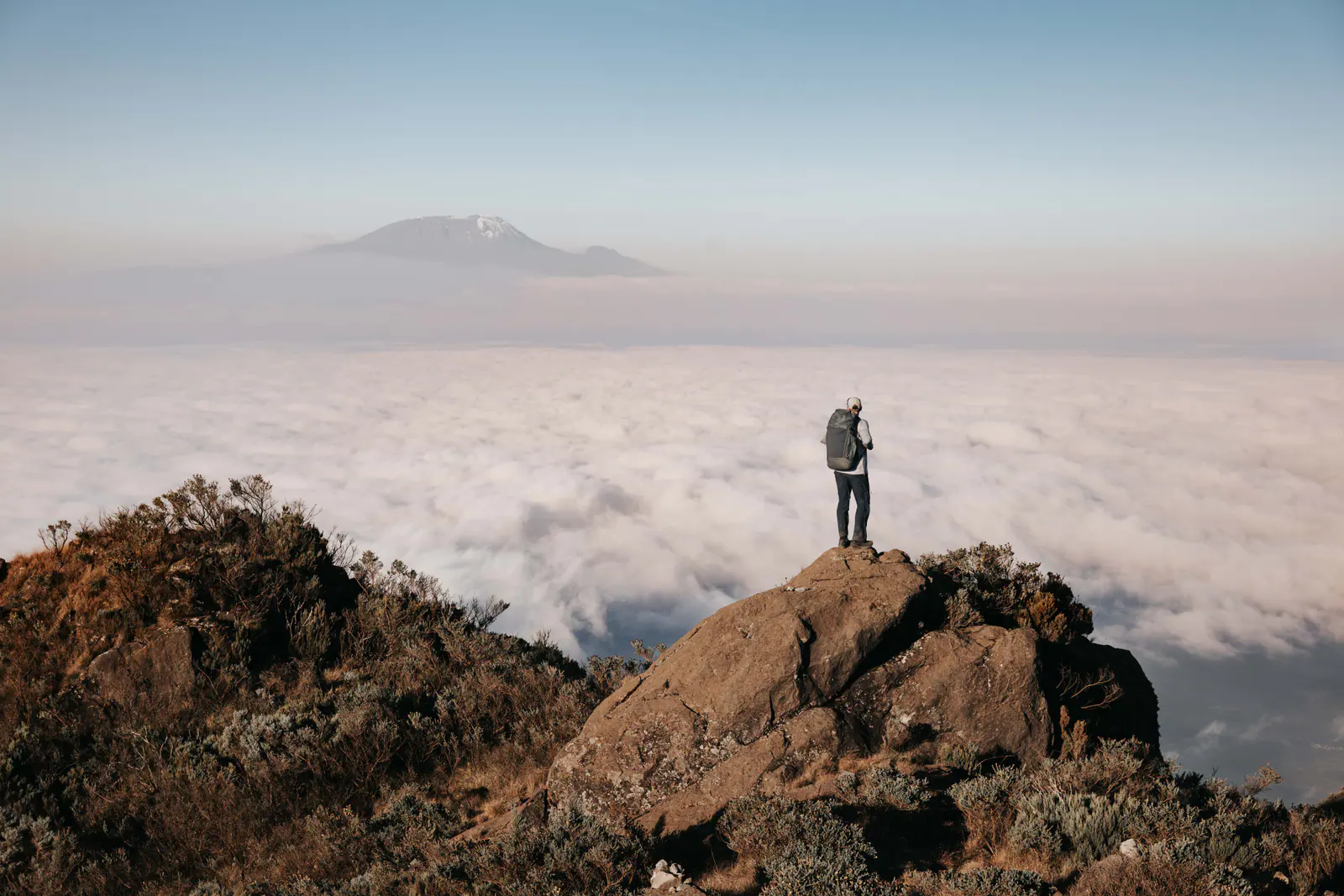
A trekker stands on a rock above the clouds, with Kilimanjaro on the horizon.
07 / 09
How private climbs differ in practice
A private climb is built around your own party from the start: your chosen route, your chosen dates within the operating season, and a pace discussed with your guide rather than set by a mixed group's needs. It also makes specific comfort upgrades (like a private toilet tent or a larger tent) straightforward to arrange, since you are not asking other climbers to agree to or pay for the same thing.
The trade-off is that a private climb does not benefit from spreading crew costs across a larger group of separately booked climbers, so the cost structure works differently. It suits people who value control and flexibility over the cost efficiency and built-in company of a shared departure.
Group vs private matcher
Answer honestly about your dates, budget and preferences, and we will suggest which option to enquire about first.
Group vs private matcher
Answer a few honest questions about budget, flexibility and how you like to travel, and we will tell you whether a scheduled group climb or a private climb looks like the better starting point for your enquiry.
0 of 6 answered
Answer all 6 questions and your result appears here.
08 / 09
What to ask before joining a group climb
- How many climbers and guides are currently confirmed on this departure?
- What happens to my booking if the group does not reach a minimum size?
- How is tent sharing handled for solo travellers?
- Is the pace set to the group's average, or can a guide split off with someone struggling?
- What comfort options, if any, can still be requested individually within a group climb?
- How are group tips collected and distributed at the end of the climb?
09 / 09
How Safari Soles approaches this
We do not publish fixed group departure dates, prices or minimum numbers on this page because they change regularly. Enquire directly and we will tell you what is realistically available for your preferred route and timing.
If you are unsure whether a group or private climb suits you better, tell us your priorities (budget, dates, pace, company) and we can talk it through rather than you guessing from general information alone.
Common mistakes to avoid
Most unsuccessful climbs come from a handful of avoidable planning decisions, not from the mountain.
- Assuming a group climb means you will be the only solo traveller in the party.
- Not asking about the guide-to-climber ratio before joining a larger departure.
- Expecting to set your own pace in a group climb rather than moving with the party.
- Booking a group departure assuming specific comfort upgrades will automatically be available.
- Not confirming what happens to your booking if a group departure does not fill.
- Comparing a group climb price to a private climb price without understanding what each includes.
- Leaving questions about tent sharing until you arrive in Moshi rather than asking in advance.
Get these right and the climb follows
Every one of these comes down to the same thing: matching the route and the day count to the climber before booking anything. Send us your dates and we will tell you honestly what is realistic.
Plan this climb with a local expertQuestions worth asking any operator
A group departure is only good value if the date, size and crew are confirmed. Ask these before you book flights around a scheduled climb.
- What is the maximum group size on this departure, and how many climbers are already booked?
- How many guides and assistant guides travel with the group at that size?
- Are the departure dates and the price confirmed, or do they depend on a minimum number joining?
- What happens if the group does not fill: is the date cancelled, repriced or run anyway?
- How are pace differences handled if climbers move at very different speeds?
- Will I share a tent, and is a single-occupancy option available?
- What is the difference in price and in experience between joining this group and running the same route privately?
What Safari Soles puts in writing
Everything below is confirmed before you pay, so nothing about your climb is left to be discovered on the mountain.
-
Your route, day count and acclimatisation profile
Confirmed in writing before you pay, with our honest view on whether the number of days suits you.
-
How your health is monitored on the mountain
The daily check routine and who is responsible for it are explained at your pre-climb briefing.
-
First-aid and emergency response for your itinerary
You are told what travels with the climb and what happens at each camp if someone needs to descend.
-
Who is on your crew and what each person does
Lead guide, assistant guides, cook and porters are set out for your group size, not left vague.
-
Porter load handling for your climb
Duffel limits and how loads are weighed are confirmed before departure, so there are no gate surprises.
-
Tent, sleeping mat and dining arrangements
Camp comfort is described in the quote rather than discovered on the first night.
-
Meals, drinking water and hot drinks
How your food is cooked and your water treated is explained, including dietary requirements.
-
Gear rental list, sizes and prices
Shared before you shop, so you buy what matters at home and hire the rest on arrival.
-
An itemised quote with fees shown separately
Park and camping fees, crew, equipment, transfers and hotels appear as their own lines.
-
Tipping guidance for your group size
The customary range and how tips are collected are agreed before you fly, in writing.
Safety standards on a Safari Soles climb
What safety means in practice on the mountain, rather than as a promise on a page.
-
Mountain safety preparation
Safety planning starts long before the gate. Your route, day count and acclimatisation profile are chosen for how you actually travel, and every climb is briefed as a plan rather than an ambition.
-
Altitude monitoring
Your guides monitor how you are adjusting each day (how you are sleeping, eating, drinking and breathing) and record what they see so the pattern across the climb is visible, not guessed at.
-
Guide-led pacing
Pace is set by your guide, deliberately slower than most climbers expect. Walking slowly is the single most effective acclimatisation tool on the mountain, and our guides hold that pace even when a group feels strong.
-
First-aid readiness
A mountain first-aid kit travels with every climb and your guide team is briefed on how it is used and when a symptom stops being discomfort and becomes a reason to act.
-
Emergency planning
Each itinerary has a worked-out response for illness or injury at every camp (who escorts you, which way you go down and who is contacted) agreed before day one rather than improvised.
-
Summit-night support
Summit night is the hardest part of the climb, so it is guided most closely: assistant guides stay with slower climbers, layering and hydration are checked before departure, and turning back early is treated as a normal outcome, not a failure.
-
Clear descent decisions
Your lead guide has final authority on descent. The reasoning is explained to you and to your group in advance, so nobody is negotiating a health decision at 5,000m in the dark.
-
Client briefing before the climb
The day before you walk, we go through the itinerary, the daily routine, your gear, the health checks and the descent process, and answer every question while there is still time to act on the answers.
Local Kilimanjaro operators, licensed crew, honest guidance
Written and reviewed by the Safari Soles team in Arusha, who plan and run Kilimanjaro climbs from beside the mountain rather than brokering them from an overseas office.
- Reviewed by the Safari Soles Kilimanjaro planning team
- Updated for 2026 climbing seasons
- Route and day count matched to your fitness and altitude history
- Daily health monitoring and descent decisions agreed before you book
- Read Safari Soles reviews on TripAdvisor
- Read Safari Soles reviews on SafariBookings
- Read Safari Soles reviews on Google
Where these facts come from (3)
- TANAPA: Tanzania National Parks Official park authority information on regulations, park fees and permitted activities.
- Tanzania Tourist Board Government tourism information on travelling in Tanzania, seasons and destinations.
- Wikipedia: Mount Kilimanjaro Secondary background context on the mountain's geology, glaciers and climbing history.
Related Safari Soles guides
Continue with the guides travellers usually read next.
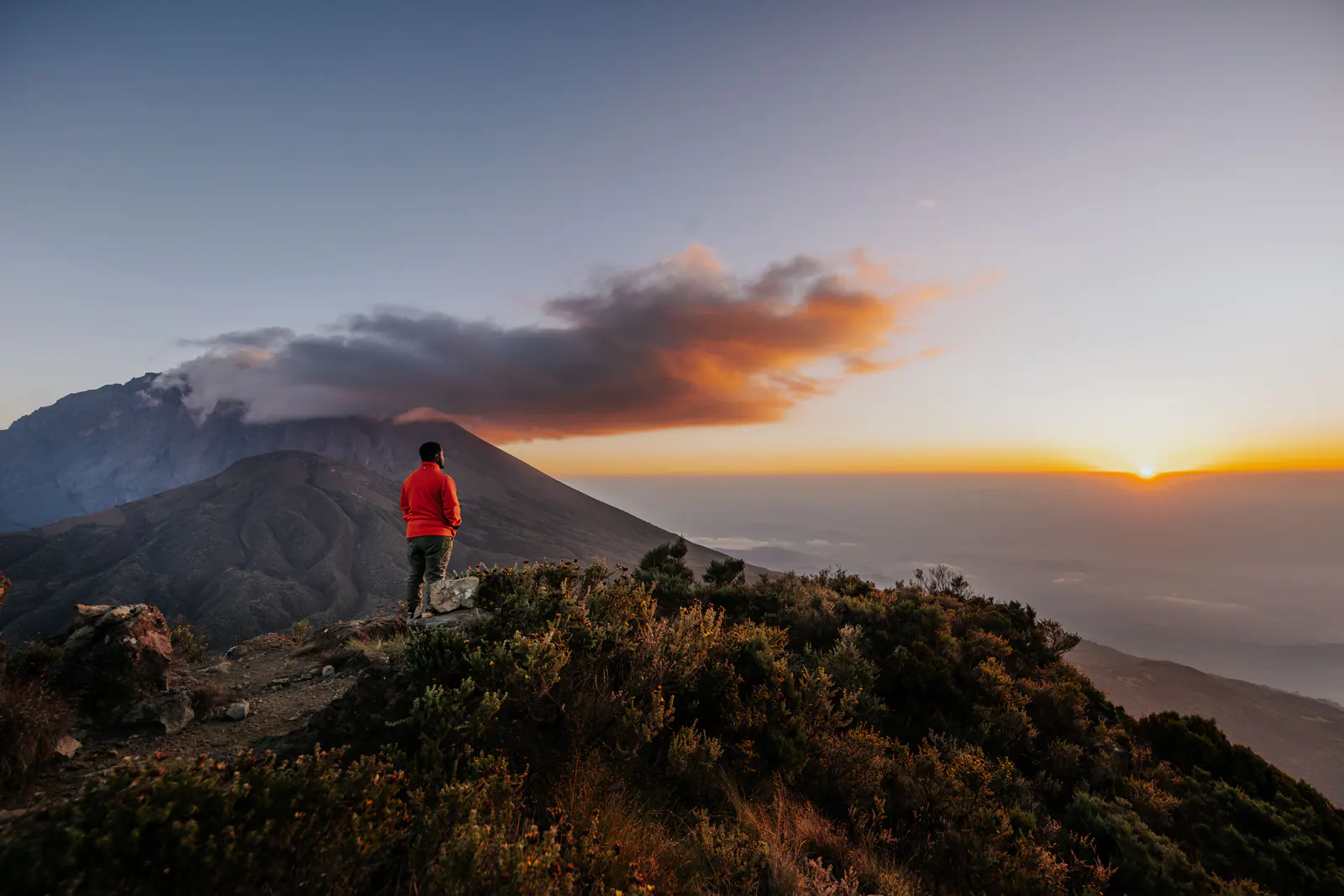 Kilimanjaro Climb Cost Where your money goes: park fees, crew wages, food, gear, transfers and route length. Cost
Read the guide
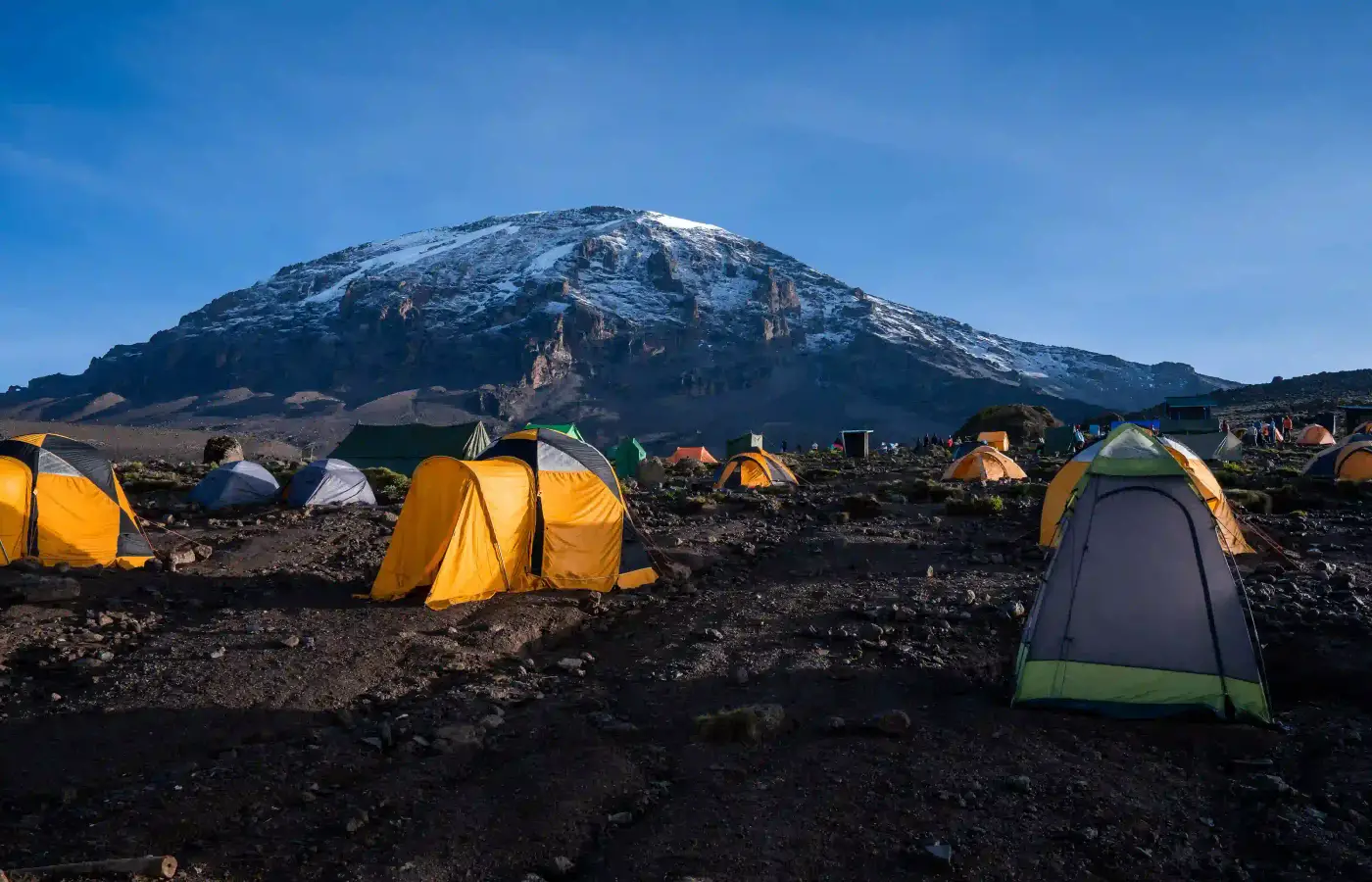 Equipment & Camp Comfort Tents, mattresses, mess tents, toilets and the small comforts that make high camps genuinely restful. Crew & Equipment
Read the guide
 Porter Welfare Load limits, wages, meals, sleeping gear and why porter treatment is part of climbing responsibly. Crew & Equipment
Read the guide
Frequently Asked Questions
-
A scheduled departure on a fixed route and dates where separately booked climbers (often solo travellers, couples and small parties) are combined into one climbing party sharing the same guides and crew.
Ask us about current group and private options
Tell us your rough dates, party size and priorities, and we will explain what a group departure or a private climb would realistically look like for you.