


Kilimanjaro Food and Meals: What You Actually Eat on the Mountain
Food on Kilimanjaro surprises almost everyone. There is a dedicated mountain cook, three hot meals a day, afternoon tea with popcorn, and more fresh fruit than you expect at 4,000m. This guide sets out exactly what is served, how appetite changes as you climb, how drinking water is handled, what our kitchen can cater for, and the snacks that genuinely earn their weight in your duffel.
- Guide
- Crew & Equipment
- Reading time
- 19minutes
- In this guide
- 10sections
- 3 cooked meals a day
- Dedicated mountain cook
- Treated drinking water included
- Dietary needs catered
- Snacks and hot drinks daily
Local Tanzania team · Licensed mountain crew · Real Safari Soles itineraries
You get three cooked meals a day plus afternoon snacks and unlimited hot drinks, all prepared fresh on the mountain by a dedicated cook who travels with your crew.
- All meals, snacks, hot drinks and treated drinking water are included in a proper Kilimanjaro package.
- A dedicated cook travels with your crew: food is prepared fresh, not reheated from packets.
- Expect three cooked meals a day plus afternoon tea, popcorn and fruit.
- Drinking water is sourced at camp, boiled and filtered or chemically treated before you drink it.
- Aim for three to four litres of fluid a day; dehydration mimics and worsens altitude sickness.
- Appetite falls sharply above 4,000m: soup and salty snacks are the reliable fallback.
01 / 10
A full day of eating on the mountain
Mountain days run to a predictable food rhythm. Once you know it, you can plan your own snacking around it instead of guessing when the next meal arrives.
Where this fits: this guide is part of the Kilimanjaro climbing guides hub, which supports our main Kilimanjaro climbing page and our published Kilimanjaro climb prices.
Read it with the camp life guide, the equipment and camp comfort guide and the altitude and safety guide; general health precautions for Tanzania are summarised by the CDC travellers' health pages.
Appetite loss at altitude is normal. See NHS altitude sickness advice and CDC high-altitude guidance, and check the training guide and summit night guide for fuelling before the summit push.
- 06:30
Bed tea
A porter brings hot tea, coffee or hot chocolate to your tent door, along with a bowl of warm washing water. It is a small ritual and it is the moment most climbers decide they like mountain life.
- 07:00
Breakfast in the mess tent
Porridge, eggs cooked to order, toast or chapati, sausage, fruit, peanut butter, jam and honey, with tea and coffee. This is your biggest reliable meal of the day: eat properly even if you are not hungry.
- Midday
Lunch on the trail or at camp
On long walking days you carry a packed lunch: fried chicken or a sandwich, boiled egg, fruit, juice and a snack bar. On shorter days you reach camp first and eat a hot lunch with soup at the table.
- 16:00
Afternoon tea and popcorn
Hot drinks with popcorn, roasted peanuts and biscuits once you are in camp. This is a genuinely important calorie window because it is before altitude tiredness peaks in the evening.
- 18:30
Dinner
Soup to start, always, then a main of rice, pasta, potatoes or ugali with a vegetable, bean or meat stew, plus fresh fruit to finish. Your guide runs a health check and the next day's briefing over the table.
- 20:00
Hot drinks and lights out
A final round of tea, ginger tea or hot chocolate before bed. Fill your bottles with hot water. It doubles as a hot water bottle in your sleeping bag overnight.
On summit night you eat dinner early, sleep for a few hours, then wake around 23:00 for tea, biscuits and porridge before starting the ascent in the dark. Nobody is hungry at that hour, and almost nobody eats enough. Force something down. The summit push is six to eight hours of cold walking on whatever fuel you carried up.
02 / 10
What Kilimanjaro cooks actually serve
Nothing here is freeze-dried. Fresh vegetables, fruit, eggs and meat are bought in Moshi before departure and carried up by porters, with fresh stock re-supplied on longer routes where the itinerary allows.
Breakfast
Millet or oat porridge, eggs (fried, scrambled or omelette), toast, chapati, sausage, fruit, peanut butter, honey, tea and coffee
- Why it is on the menu
- Slow-release carbohydrate plus protein before a five to seven hour walking day.
Packed lunch
Fried chicken or sandwich, boiled egg, banana or orange, juice box, muffin or cake, biscuits
- Why it is on the menu
- Eaten cold on the trail, so everything has to survive a few hours in a daypack.
Hot lunch
Vegetable soup, pasta, chips, rice, cooked vegetables, fresh fruit
- Why it is on the menu
- Served on shorter days when you reach camp before midday.
Afternoon tea
Popcorn, roasted peanuts, biscuits, tea, coffee, hot chocolate, ginger tea
- Why it is on the menu
- The easiest calories of the day, at the point where appetite is still intact.
Dinner
Soup (cucumber, leek, pumpkin, carrot), rice, pasta, potatoes or ugali, vegetable, bean or meat stew, chapati, fresh fruit
- Why it is on the menu
- Volume, salt and fluid together. The soup course is doing more work than it looks.
Drinks
Black and milky tea, instant coffee, hot chocolate, ginger tea, drinking chocolate, treated water
- Why it is on the menu
- Hot fluids drive hydration when cold water becomes unappealing higher up.
Quality drops with altitude, not with effort
Menus are richest on the first two or three days, when fresh produce is still plentiful and the cook has the most to work with. Higher up, meals become simpler (more soup, more starch, less fresh salad) partly because supplies thin out and partly because simple food is what people can actually keep down at altitude.
Portions are generous throughout. Most climbers eat more in the first three days than they do at home, because five to seven hours of walking at moderate altitude burns a serious number of calories. Then, somewhere around Barranco or Karanga, that appetite quietly disappears.
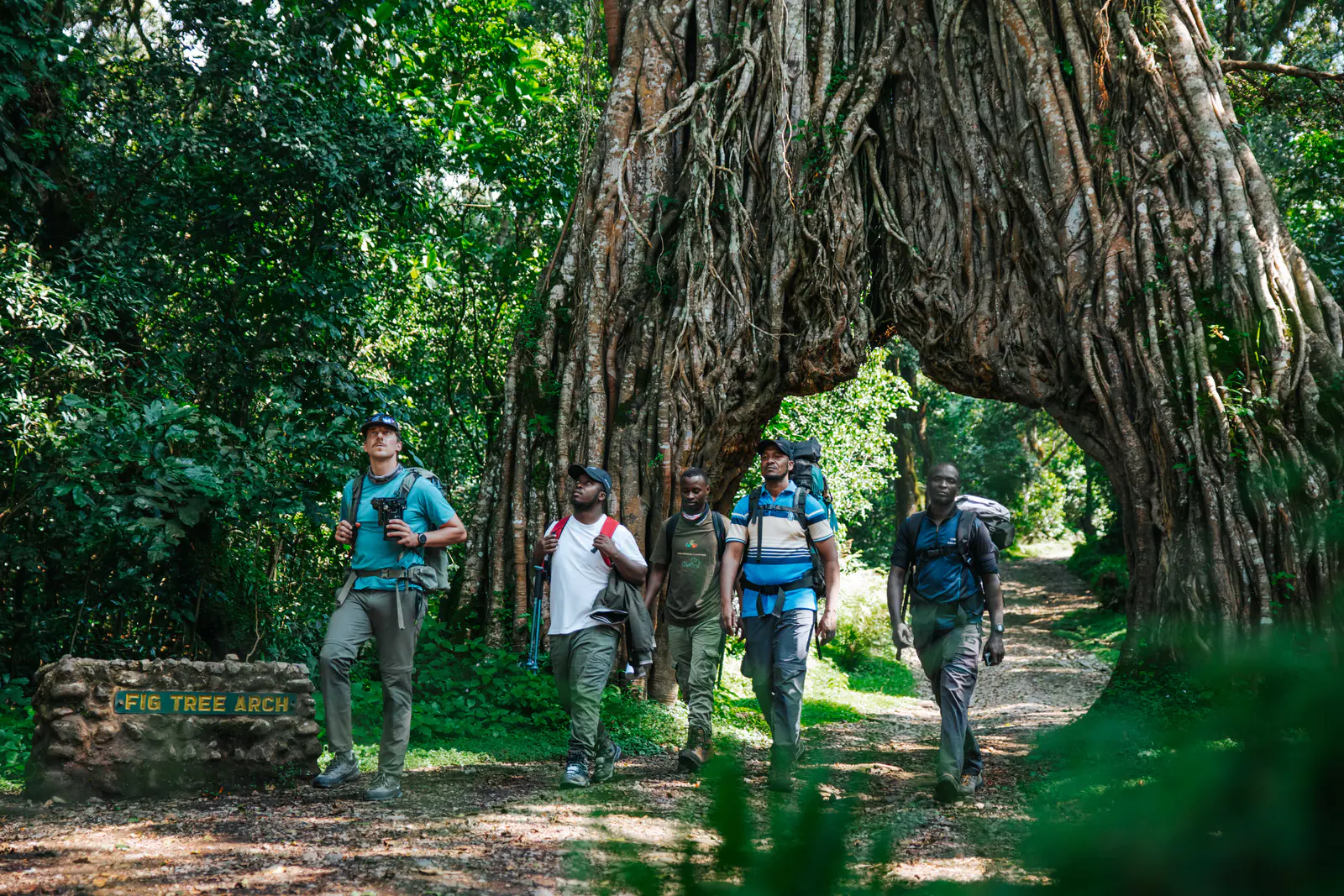
Trekkers walk through the Fig Tree Arch, formed by the roots of a giant strangler fig.
03 / 10
Why food stops appealing above 4,000m
At altitude your body suppresses hunger while simultaneously burning more energy. Digestion slows, taste flattens, mild nausea is common, and food that looked appetising at 3,000m looks like an obstacle at 4,600m. This is normal. It happens to fit climbers and unfit climbers alike, and it is not in itself a sign of altitude sickness.
The problem is what follows. Climbers who eat almost nothing on days five and six arrive at summit night with empty tanks, and low fuel shows up as cold hands, poor decisions, slow pace and turning back within sight of the crater rim. Eating badly does not usually cause altitude sickness, but it reliably makes a hard night much harder.
What actually works when you cannot face food
- Soup first, every time: it delivers calories, salt and fluid in a form that goes down when solids will not.
- Eat small and often rather than confronting a full plate. Ask for a half portion; nobody minds.
- Switch to salty snacks. Sweet flavours are usually the first thing to become unbearable.
- Ginger tea for nausea. It is on every mountain menu for a reason and it works better than most people expect.
- Keep snacks in a jacket pocket, not the daypack. You eat what is within reach.
- Drink calories: hot chocolate, sweetened tea, juice. Liquid calories bypass the appetite argument entirely.
- Tell your guide if you have eaten nothing for a full day. It is a health-check data point, not a complaint.
Mild appetite loss is expected. Persistent vomiting, a headache that does not clear with fluids and painkillers, dizziness or breathlessness at rest are different. Those are altitude symptoms and belong in a conversation with your guide immediately, not at the next meal.
04 / 10
Drinking water: where it comes from and how it is treated
Drinking water is included in your climb. Porters collect it from streams and camp water points, and the kitchen crew boils it and treats it (by filtration, chemical treatment, or both) before it is handed out. You fill your bottles or bladder at breakfast and again at camp in the evening, and hot water is available at the table.
On higher camps, water has to be carried further, which is one of the invisible jobs your crew is doing while you rest. It is also why you will occasionally be asked not to waste it on washing.
Hydration, practically
Do this
- Aim for three to four litres of fluid a day, including hot drinks and soup
- Carry two one-litre bottles, or one bottle plus a bladder
- Keep your bladder hose inside your jacket above 4,500m so it does not freeze
- Use rehydration salts or electrolyte tabs on long days
- Fill bottles with hot water at night and sleep with them in your bag
- Check your urine colour: pale is the target
Avoid this
- Relying on a bladder alone on summit night: hoses freeze, bottles do not
- Drinking untreated stream water, however clean it looks
- Skipping fluids because you dislike the cold toilet trips
- Alcohol on the mountain: it dehydrates and disrupts sleep at altitude
- Heavy caffeine loading beyond your normal daily habit
- Waiting until you feel thirsty; at altitude thirst lags behind need
05 / 10
Plan your dietary needs
Tell us how you eat and we will tell you what is standard, what needs advance notice, and what to bring yourself.
Dietary needs planner
Four questions. We will tell you what our mountain kitchen can cater for as standard, what needs advance notice, and what is genuinely worth carrying from home.
0 of 4 answered
Answer all 4 questions and your result appears here.
Menus vary with route, season and market availability in Moshi. Always confirm dietary arrangements in writing with our team before you pay a deposit.
06 / 10
Dietary requirements and allergies
Everything below is workable. The difference is only how much notice we need before the shopping is done in Moshi.
Vegetarian
Standard. Beans, lentils, eggs, vegetable stews, pasta, rice and fruit are already core to the menu.
- Notice needed
- Mention at booking; no special sourcing required.
Vegan
Straightforward, but we buy extra legumes, nuts, seeds and plant milk deliberately to keep protein and calories up.
- Notice needed
- Confirm at booking, in writing.
Gluten-free
Rice, potatoes, ugali, eggs, soups and stews adapt easily. Bread, chapati, pasta and porridge are substituted.
- Notice needed
- Confirm at booking; bring your own breakfast staple as backup.
Halal
Routine in Tanzania: meat is sourced accordingly, or simply omitted from your plate.
- Notice needed
- Mention at booking.
Lactose intolerance
Milk in tea and porridge is the main issue; black tea and plant milk are used instead.
- Notice needed
- Mention at booking.
Nut allergy
Peanuts and peanut sauce are common on the mountain menu and are removed entirely for the group when needed.
- Notice needed
- Written notice before deposit, and carry your own medication.
Severe allergy (any)
Separate ingredient sourcing, separate preparation and a briefing to the cook and lead guide before day one.
- Notice needed
- Written notice at booking, non-negotiable.
Tell us at enquiry, confirm it in your booking email, and repeat it to your lead guide at the pre-climb briefing. A dietary need mentioned only in conversation on the day of departure is a dietary need that will not survive the shopping trip.
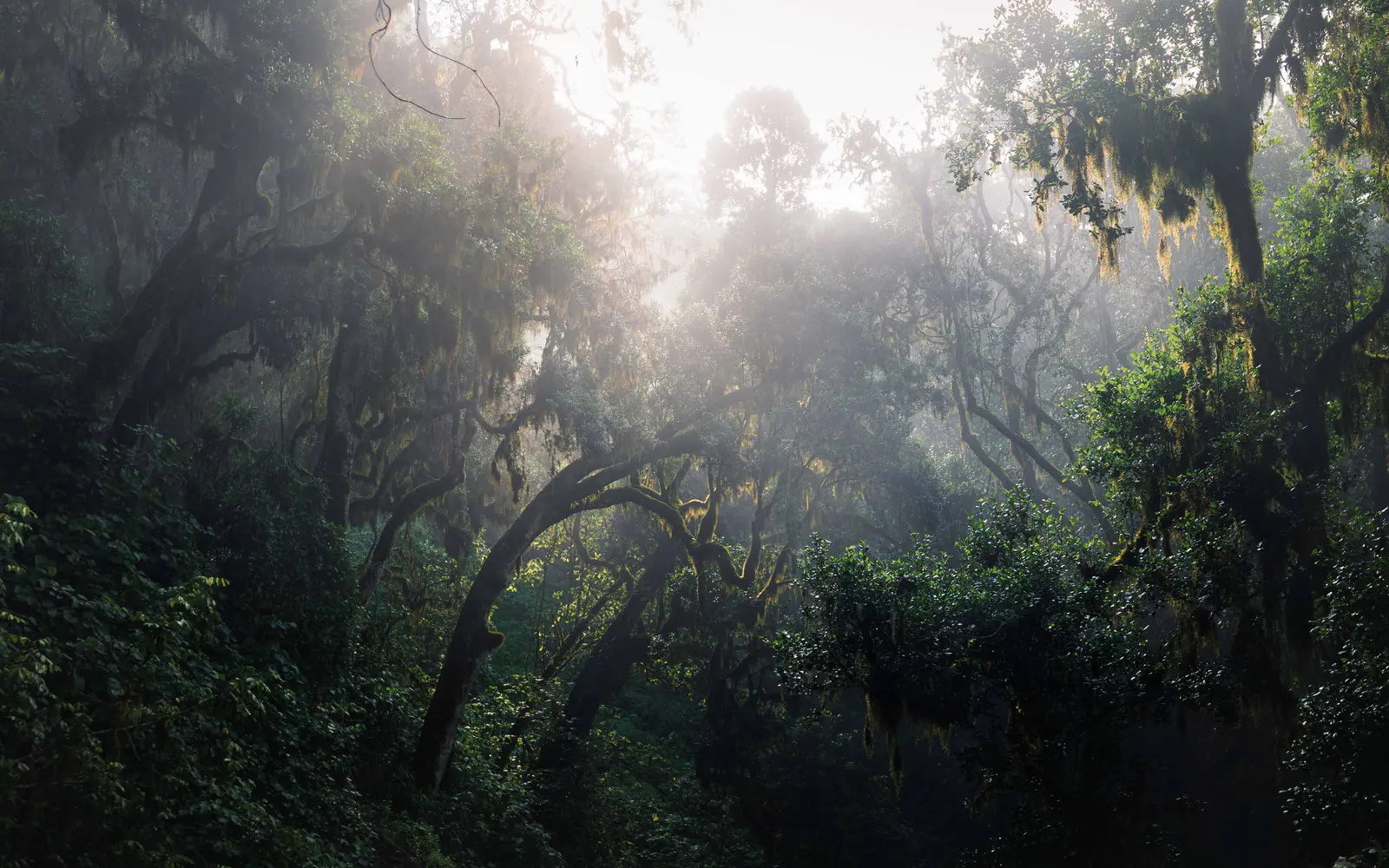
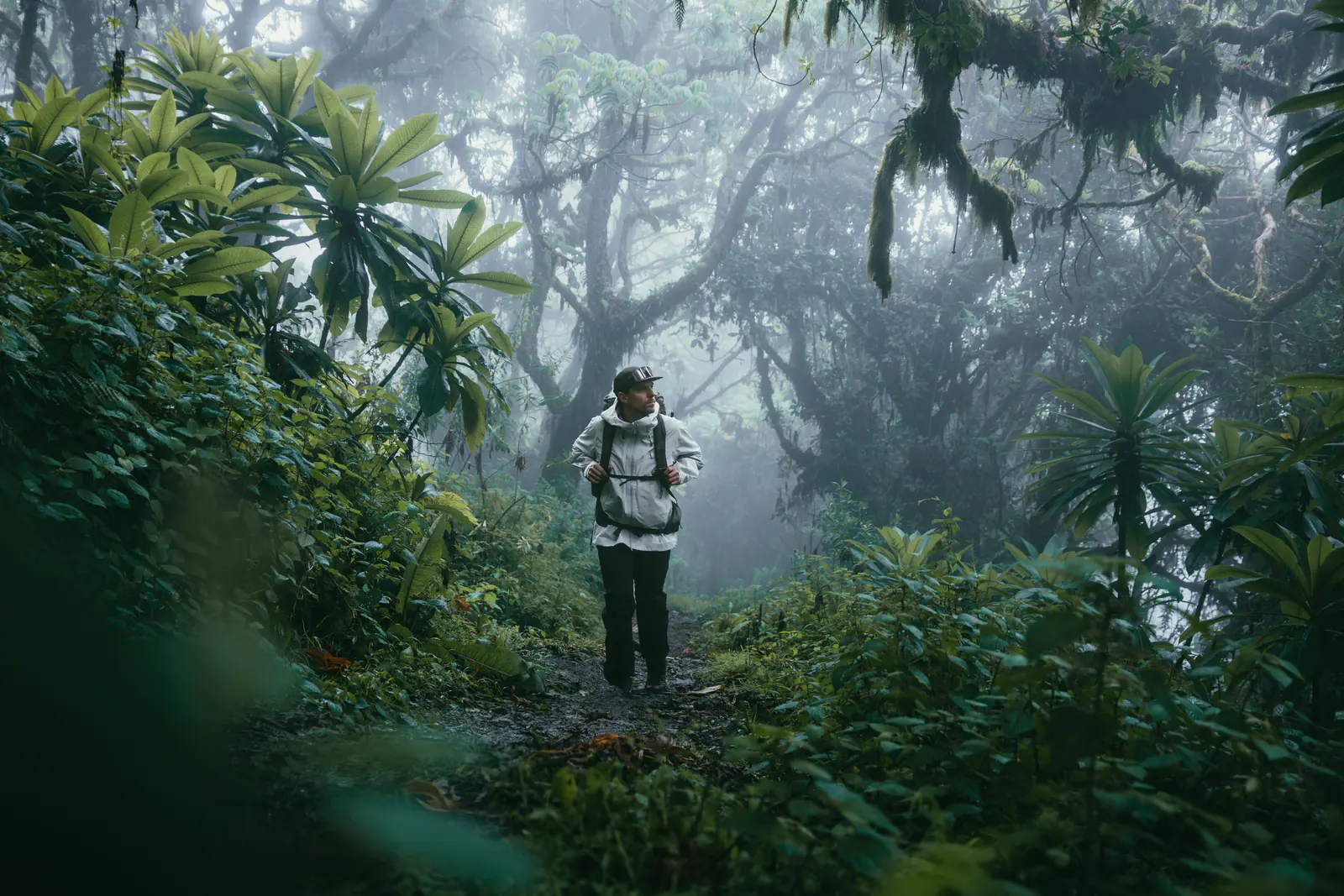
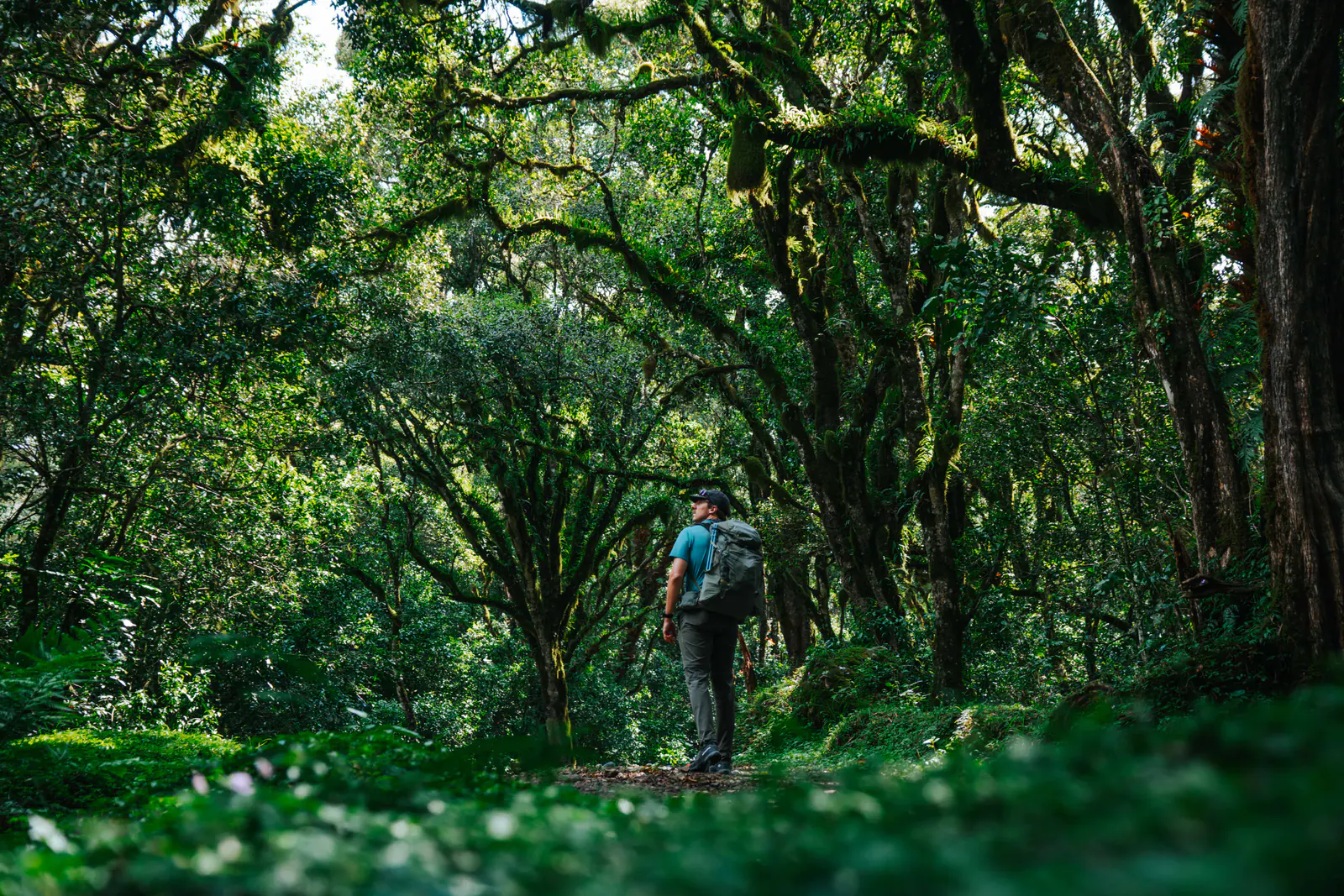
Mist and sunlight in tall, mossy forest, with the light filtering down through the canopy.
07 / 10
Snacks worth carrying from home
The kitchen feeds you well, so personal snacks are not about calories in general. They are insurance for the days when nothing on the plate appeals. Familiar flavours from home work far better at 4,600m than anything unfamiliar, however nutritionally clever it looks.
Aim for one to two snacks per day of the climb, roughly 500g to 1kg in total. More than that and you will carry it up and back down again untouched.
Bring these
- Salty crisps, pretzels or crackers, often the last thing you can still face
- Nuts and trail mix (unless there is a nut allergy in the group)
- Energy or protein bars you have actually eaten before
- Electrolyte or rehydration tablets
- Boiled sweets and mints for a dry throat on summit night
- Instant soup sachets or a favourite tea if you are fussy
- One 'summit night' treat you genuinely look forward to
Leave these behind
- Chocolate that will freeze solid on summit night
- Gels you have never trained with: altitude is a poor place to experiment
- Bulky multi-packs; repackage into a single zip bag
- Anything requiring preparation, hot water or cutlery
- Fresh food from home that customs will not let in
- Sugary snacks only: tastes flip to savoury as you climb
08 / 10
Kitchen hygiene and why it decides your week
Stomach upsets are one of the few genuinely avoidable reasons climbers fail to summit. Altitude is hard to control; food hygiene is not. On a well-run climb the kitchen is a dedicated tent with its own cook and assistants, food is stored off the ground, water is treated before it reaches you, and a handwashing bowl with soap appears outside the mess tent before every meal.
Your own habits matter just as much. Hands touch trekking poles, tent zips, toilet doors and shared serving spoons all day. Wash or sanitise before every meal without exception. Most on-mountain illness is transmitted hand to mouth, not through the food itself.
What good practice looks like
- A separate kitchen tent, not cooking in or beside sleeping tents
- A cook whose only job is the kitchen, plus assistants for water and washing up
- Drinking water boiled and filtered or chemically treated every day
- Handwashing water with soap set out before each meal
- Food carried in sealed containers and stored off the ground
- Hot food served hot, not lukewarm after standing
- Waste carried off the mountain, not buried at camp
Hand sanitiser, wet wipes and a personal supply of rehydration salts weigh almost nothing and cover the gap on the one day everything runs late. Add anti-diarrhoeal medication to your personal kit and tell your guide immediately if you need it: fluid loss at altitude escalates fast.
09 / 10
The mess tent is where the climb actually happens
Meals are the social centre of a Kilimanjaro climb. The mess tent (a standing dining tent with a table, chairs and usually a tablecloth) is where the group swaps notes on the day, where your guide runs evening health checks and pulse-oximeter readings, and where the next morning's plan is explained. On cold high camps it is also the only warm shared space you have.
Group size decides how good that space is. A dining tent is standard on our climbs, but on very small budget operations it quietly disappears and people end up eating in their sleeping tents. If a quote seems unusually low, this is one of the first things to check, alongside tents, mats and toilet arrangements.
Related planning
-
Equipment and camp comfort
Tents, mats, dining setup, toilets and what your quote actually includes at camp.
Read the guide -
Porter welfare
Your cook and porters eat on the mountain too: how load limits, wages and crew meals should work.
See the standards -
Packing list
The full kit list, including where snacks, bottles and hydration gear fit into the weight limit.
Open the list
10 / 10
How Safari Soles approaches this
Send us your dietary requirements with your enquiry and we will confirm in writing exactly what your kitchen crew will cater for and what you should carry yourself.
If you are comparing quotes, ask each operator whether a dedicated cook, a dining tent and treated drinking water are included. The differences show up on day four, not on the invoice.
Common mistakes to avoid
Most unsuccessful climbs come from a handful of avoidable planning decisions, not from the mountain.
- Skipping breakfast because you are not hungry, then running out of energy by mid-afternoon.
- Only bringing sweet snacks and discovering at 4,500m that you cannot face another chocolate bar.
- Relying on a hydration bladder on summit night and finding the hose frozen at 03:00.
- Mentioning a serious dietary need for the first time at the pre-climb briefing.
- Drinking too little because cold toilet trips at night are unpleasant.
- Eating nothing all day and telling nobody, so the guide cannot factor it into the health check.
- Assuming a very cheap quote still includes a cook, a dining tent and treated water.
Get these right and the climb follows
Every one of these comes down to the same thing: matching the route and the day count to the climber before booking anything. Send us your dates and we will tell you honestly what is realistic.
Plan this climb with a local expertQuestions worth asking any operator
Food is one of the easiest places for a low quote to cut corners, because you only discover the difference on day four at 4,000m. These questions surface it before you pay a deposit.
- Is a dedicated mountain cook included, or does a guide or porter cook alongside other duties?
- How is drinking water sourced and treated, and how much is provided per person per day?
- Is a dining tent with table and chairs included at my group size?
- How are vegetarian, vegan, gluten-free, halal and allergy requirements handled?
- Is fresh produce carried and re-supplied, or is the higher-camp menu mostly dried and packaged?
- Are all meals, snacks and hot drinks included in the quoted price, or are any charged as extras?
- What handwashing and food-hygiene arrangements are in place at camp?
- How are meals cooked and how is drinking water treated and provided each day?
What Safari Soles puts in writing
Everything below is confirmed before you pay, so nothing about your climb is left to be discovered on the mountain.
-
Your route, day count and acclimatisation profile
Confirmed in writing before you pay, with our honest view on whether the number of days suits you.
-
How your health is monitored on the mountain
The daily check routine and who is responsible for it are explained at your pre-climb briefing.
-
First-aid and emergency response for your itinerary
You are told what travels with the climb and what happens at each camp if someone needs to descend.
-
Who is on your crew and what each person does
Lead guide, assistant guides, cook and porters are set out for your group size, not left vague.
-
Porter load handling for your climb
Duffel limits and how loads are weighed are confirmed before departure, so there are no gate surprises.
-
Tent, sleeping mat and dining arrangements
Camp comfort is described in the quote rather than discovered on the first night.
-
Meals, drinking water and hot drinks
How your food is cooked and your water treated is explained, including dietary requirements.
-
Gear rental list, sizes and prices
Shared before you shop, so you buy what matters at home and hire the rest on arrival.
-
An itemised quote with fees shown separately
Park and camping fees, crew, equipment, transfers and hotels appear as their own lines.
-
Tipping guidance for your group size
The customary range and how tips are collected are agreed before you fly, in writing.
Local Kilimanjaro operators, licensed crew, honest guidance
Written and reviewed by the Safari Soles team in Arusha, who plan and run Kilimanjaro climbs from beside the mountain rather than brokering them from an overseas office.
- Reviewed by the Safari Soles Kilimanjaro planning team
- Updated for 2026 climbing seasons
- Route and day count matched to your fitness and altitude history
- Daily health monitoring and descent decisions agreed before you book
- Read Safari Soles reviews on TripAdvisor
- Read Safari Soles reviews on SafariBookings
- Read Safari Soles reviews on Google
Where these facts come from (4)
- TANAPA: Tanzania National Parks Official park authority information on regulations, park fees and permitted activities.
- UNESCO: Kilimanjaro National Park The World Heritage listing for Kilimanjaro National Park, which records Africa's highest point at 5,895m.
- Tanzania Tourist Board Government tourism information on travelling in Tanzania, seasons and destinations.
- Kilimanjaro Porters Assistance Project (KPAP) Industry context on porter wages, load limits, meals and equipment standards on Kilimanjaro. Linked as background reading, not as a membership claim.
Related Safari Soles guides
Continue with the guides travellers usually read next.
- Equipment & Camp Comfort Tents, mattresses, mess tents, toilets and the small comforts that make high camps genuinely restful. Crew & Equipment
Read the guide
 Kilimanjaro Packing List Layer by layer gear checklist covering boots, sleeping systems, summit-night warmth and what to rent locally. Preparation
Read the guide
 Porter Welfare Load limits, wages, meals, sleeping gear and why porter treatment is part of climbing responsibly. Crew & Equipment
Read the guide
Frequently Asked Questions
-
Yes. Three cooked meals a day, afternoon snacks, hot drinks and treated drinking water are included in a proper Kilimanjaro package, along with the cook and kitchen crew who prepare them. You only pay separately for personal snacks bought before the climb and any drinks in your hotel.
Tell us how you eat, and we will plan around it
Send your travel window, party size and any dietary requirements and we will confirm in writing exactly what your mountain kitchen will provide, plus an itemised quote covering food, crew, permits and camp equipment. Prefer to talk it through? Message our Tanzania team on WhatsApp at +255766322264 or browse the full trip range at safarisolestours.com.