


Kilimanjaro Summit Night
Summit night is the part of Kilimanjaro that lives largest in people's imaginations, and for good reason. It is cold, dark, slow and unlike any other night of the climb. Here is what actually happens, hour by hour.
- Guide
- Safety
- Reading time
- 14minutes
- In this guide
- 11sections
- Cold and dark
- Slow pole pole pace
- Guide decisions matter
- Warm layers required
- Readiness checker
Local Tanzania team · Licensed mountain crew · Real Safari Soles itineraries
Summit night begins with a wake-up around midnight at high camp, after a short and often broken rest, and involves several hours of slow, steady walking in the dark and cold before reaching the crater rim around sunrise.
- Summit night typically starts around midnight and can take many hours before you reach Uhuru Peak.
- The pace is deliberately very slow: far slower than daytime walking on the mountain.
- Cold is the dominant physical challenge, often made worse by wind chill.
- Hydration and food both become harder in freezing temperatures and need a deliberate plan.
- Reaching Stella Point before Uhuru Peak is a genuine milestone, not the finish line itself.
- The descent afterwards is long and tiring and is often underestimated in people's planning.
01 / 11
What actually happens on summit night
Before the hour-by-hour detail, it helps to understand the shape of the night as a whole: what it is trying to achieve and why it is structured the way it is.
Where this fits: this guide is part of the Kilimanjaro climbing guides hub, which supports our main Kilimanjaro climbing page and our published Kilimanjaro climb prices.
Prepare for it using the training guide, the altitude and safety guide and the equipment and camp comfort guide, and read NHS advice on altitude sickness so you recognise symptoms in the dark.
Read CDC high-altitude guidance and the Wilderness Medical Society on altitude illness, then plan the practical side with the cost breakdown, the best time to climb guide and the camp life guide.
Summit night exists because reaching Uhuru Peak at sunrise, or shortly after, gives you the best combination of weather, visibility and time to safely descend afterwards. That single goal shapes almost every decision about the night. The midnight start, the painfully slow pace, and the emphasis on layering and steady breathing over speed.
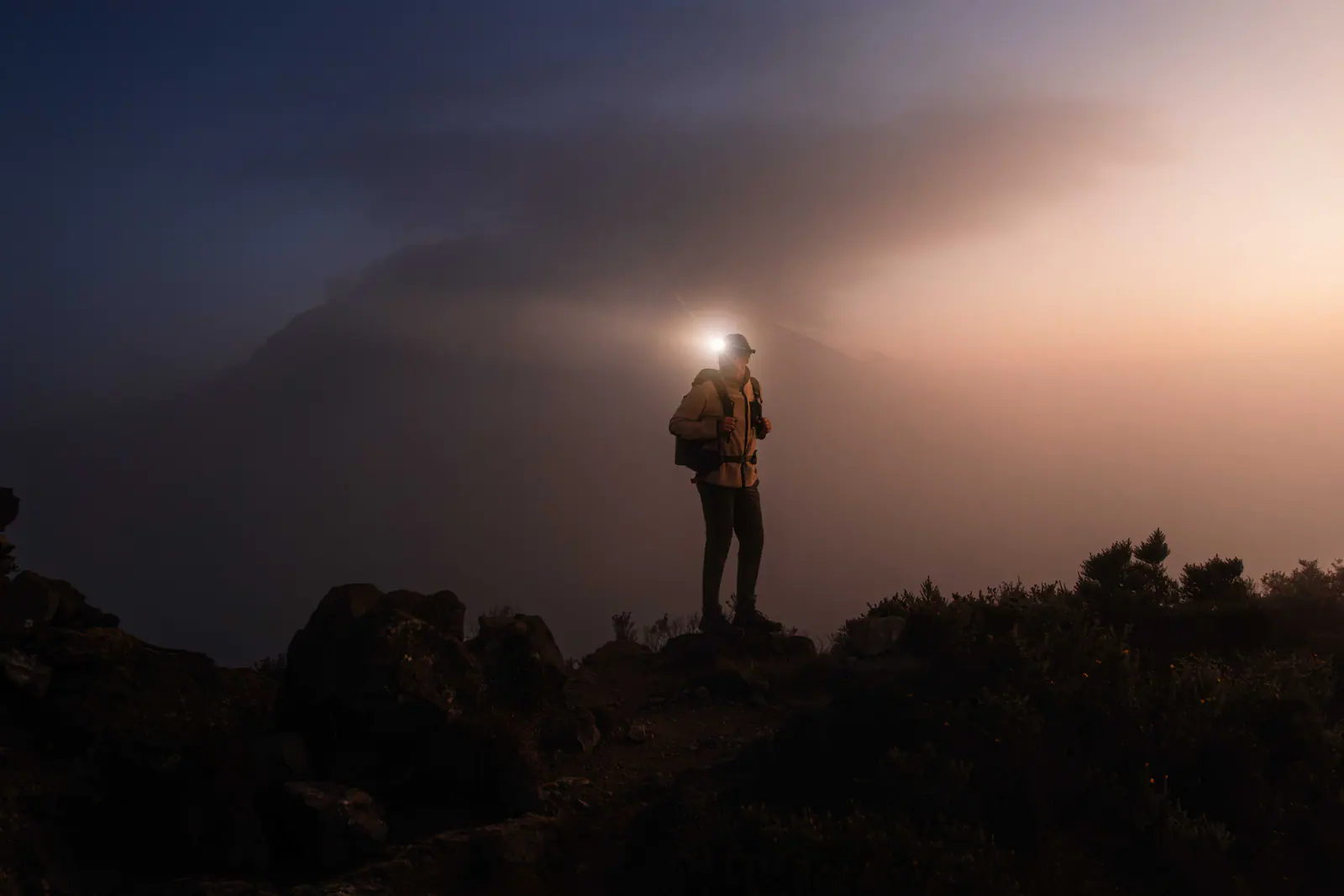
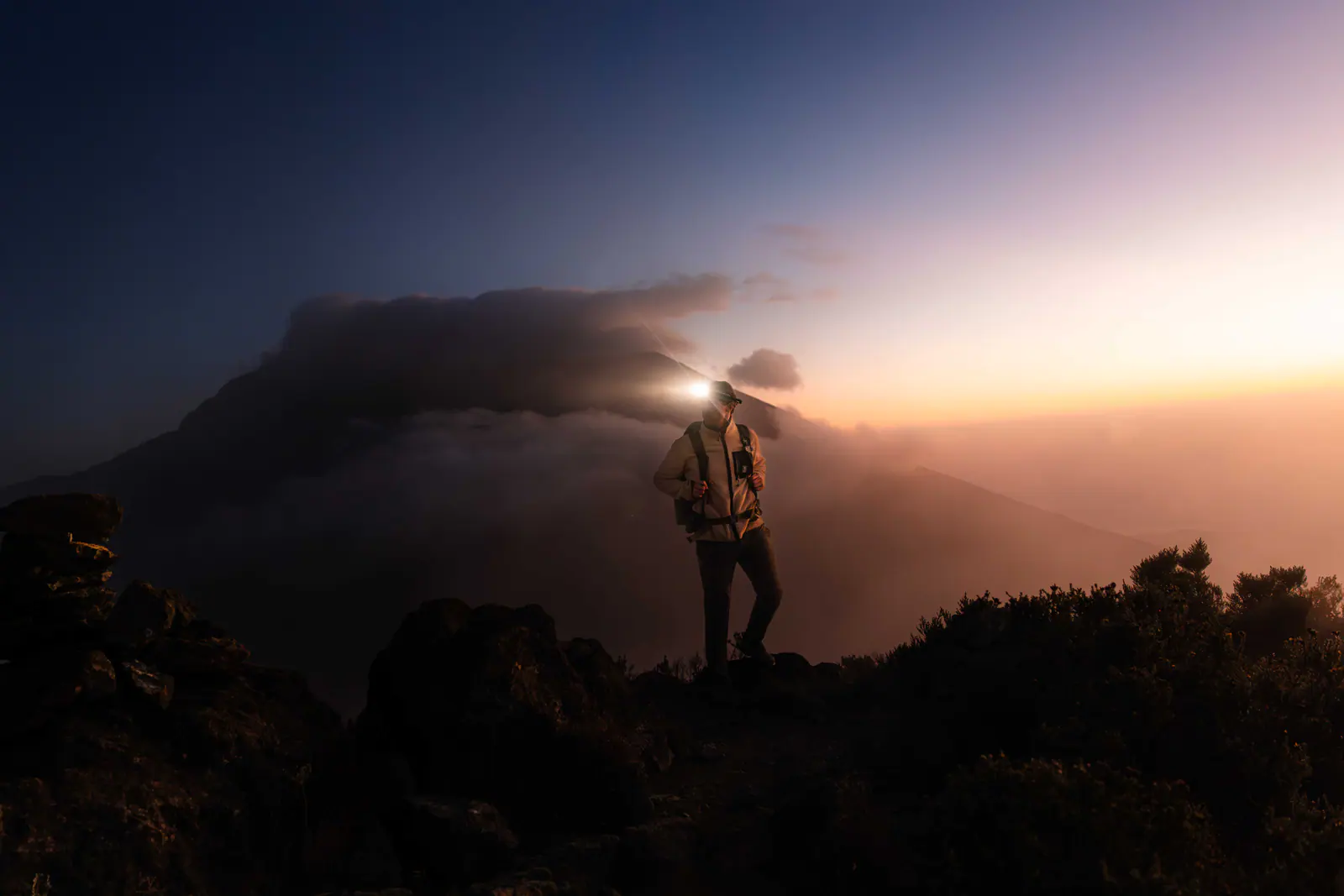
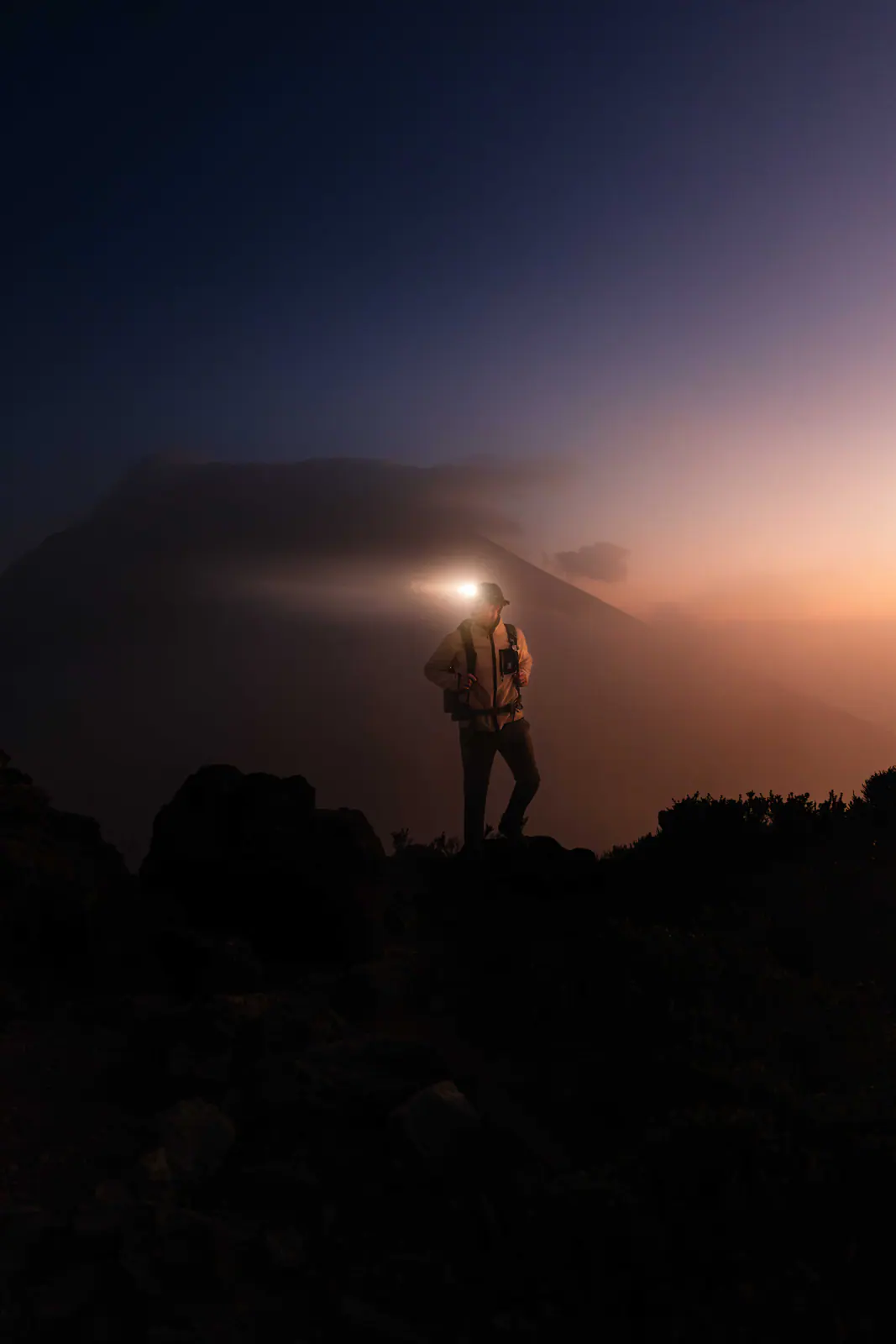
You will leave high camp in full darkness, wearing essentially every layer you own, walking in a line behind your guide with a headlamp lighting only a few metres of trail ahead. The initial section is often the steepest and psychologically hardest, simply because you cannot see how far you have come or how far remains. You are following a small pool of light and your guide's pace, one step at a time.
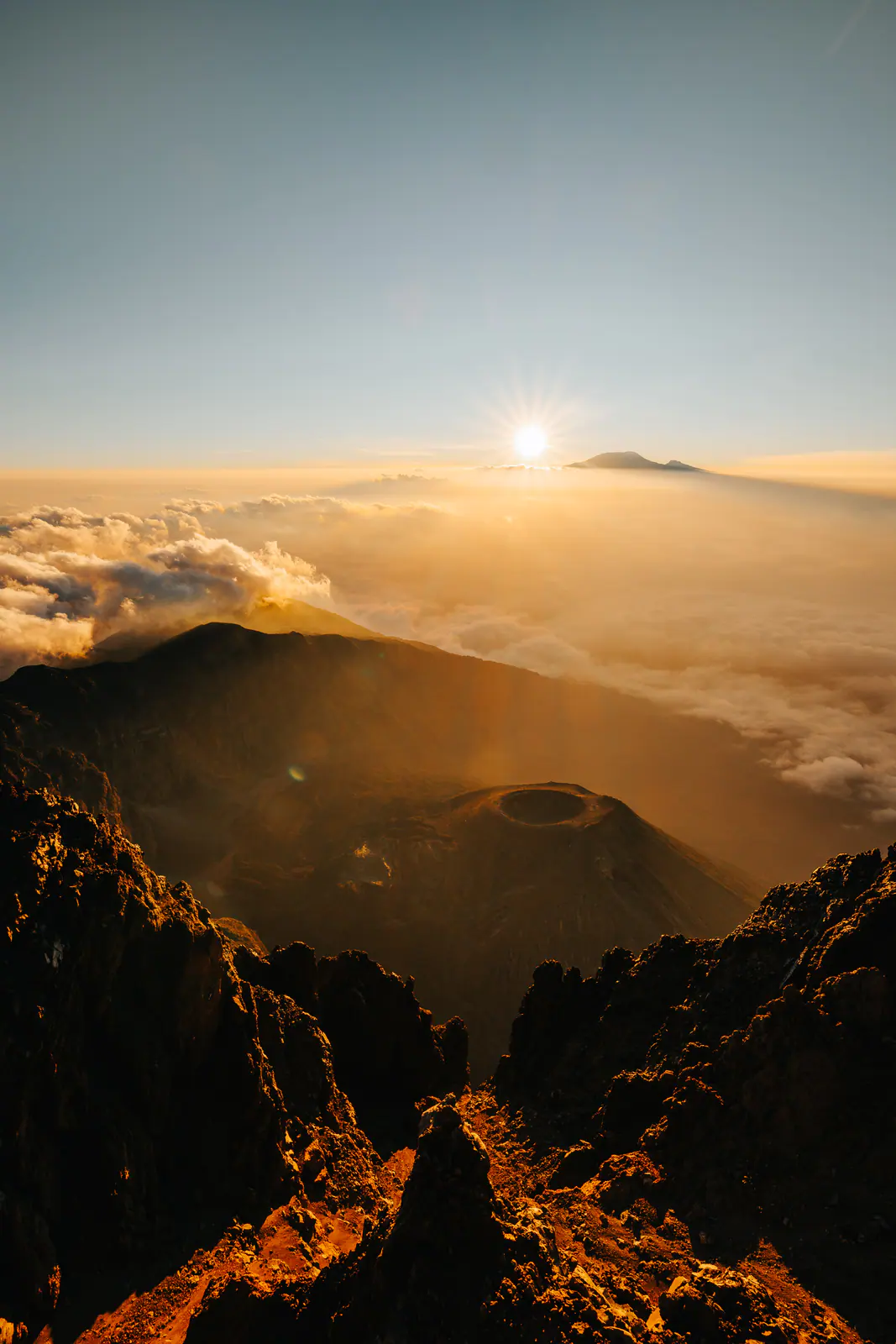
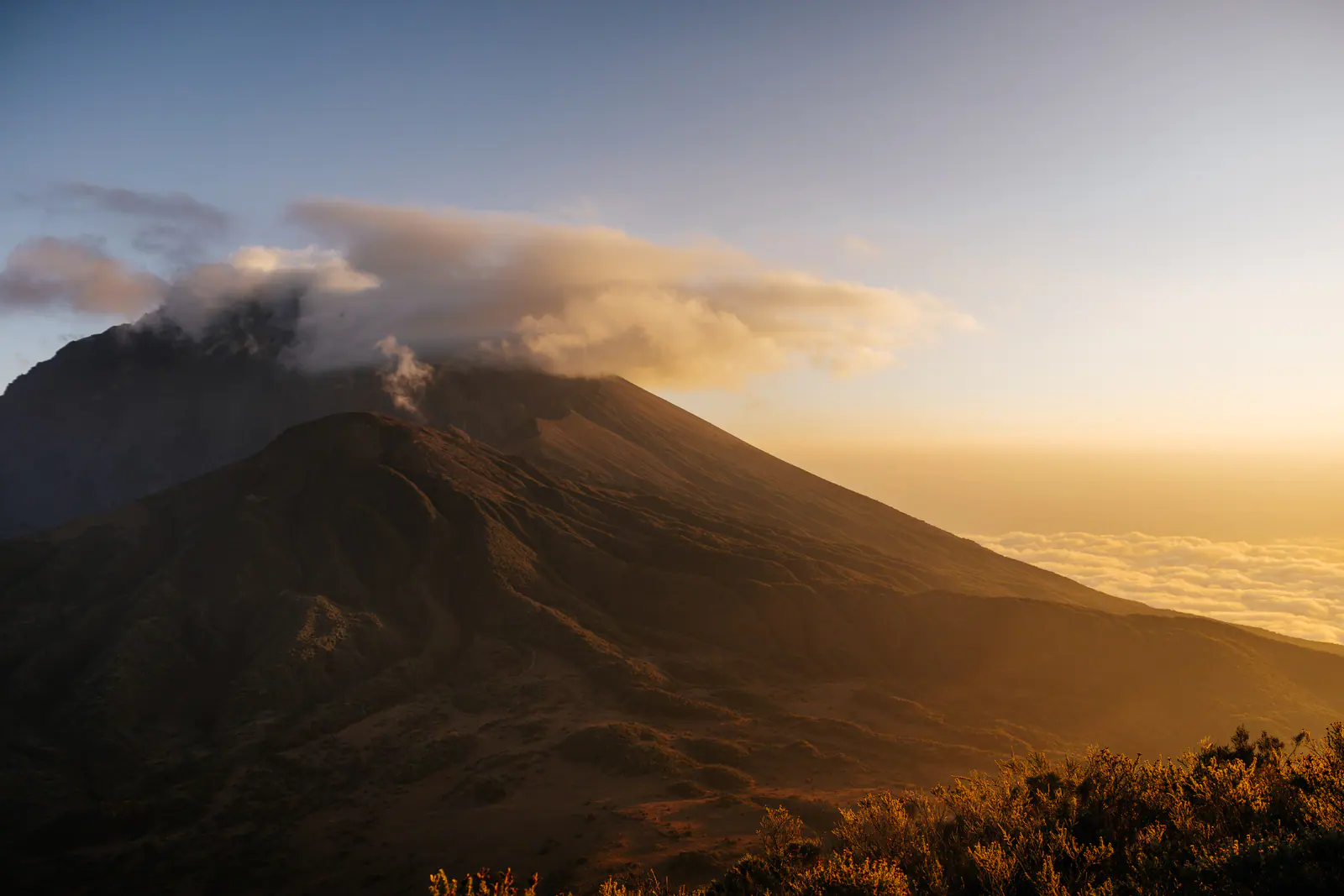
As dawn approaches, most climbers reach the crater rim, commonly at Stella Point or Gilman's Point depending on the route, where the sky begins to lighten and the summit finally comes into view. From there, a further walk along the rim leads to Uhuru Peak itself, the true summit, before the long return journey back down through high camp and on to a lower camp for the night.
Every group moves at a different pace depending on conditions, fitness and how individual climbers are coping with the altitude, so treat any specific timing as a general guide rather than a guarantee. Your guides will adjust the plan to what is actually happening on the night.
02 / 11
Summit night, hour by hour
A general shape of how the night tends to unfold. Actual timings vary by route, weather and how your group is moving.
- ~11:00pm–12:00am
Wake-up at high camp
A short, often disrupted rest is broken by a call to wake, dress in every layer you own, and gather for hot tea and a light snack before setting off into full darkness.
- ~12:00–2:00am
The first steep hours
The group sets off in a slow, steady line, headlamps lighting only the trail immediately ahead. This is often the psychologically toughest stretch, as there is no visible progress marker in the darkness.
- ~2:00–4:00am
Deep cold and deep focus
Temperatures are at their coldest. Conversation fades and most climbers turn inward, focusing on breathing, footing and small sips of water, guided by their crew's steady, unhurried pace.
- ~4:00–6:00am
Approaching the crater rim
The trail steepens further towards the rim. The sky begins to lighten almost imperceptibly at first, giving climbers their first sense of how far they have already come.
- ~Sunrise
Stella Point or Gilman's Point
Reaching the crater rim is a genuine milestone and often the first moment climbers see the summit itself in daylight, along with glacier views that were invisible in the dark.
- ~1–2 hours after rim
The rim walk to Uhuru Peak
A further, gentler but still demanding walk along the crater rim leads to Uhuru Peak, the true summit, where climbers typically spend a short time at the sign before beginning the descent.
- Mid-morning
Descent to high camp
The return to high camp is faster than the ascent but hard on tired legs, often covered by sliding through scree sections that would have been treacherous in darkness on the way up.
- Afternoon
Continuing down to a lower camp
After a short rest and meal at high camp, most itineraries continue the descent to a lower camp the same day, adding several more hours of walking to an already long day.
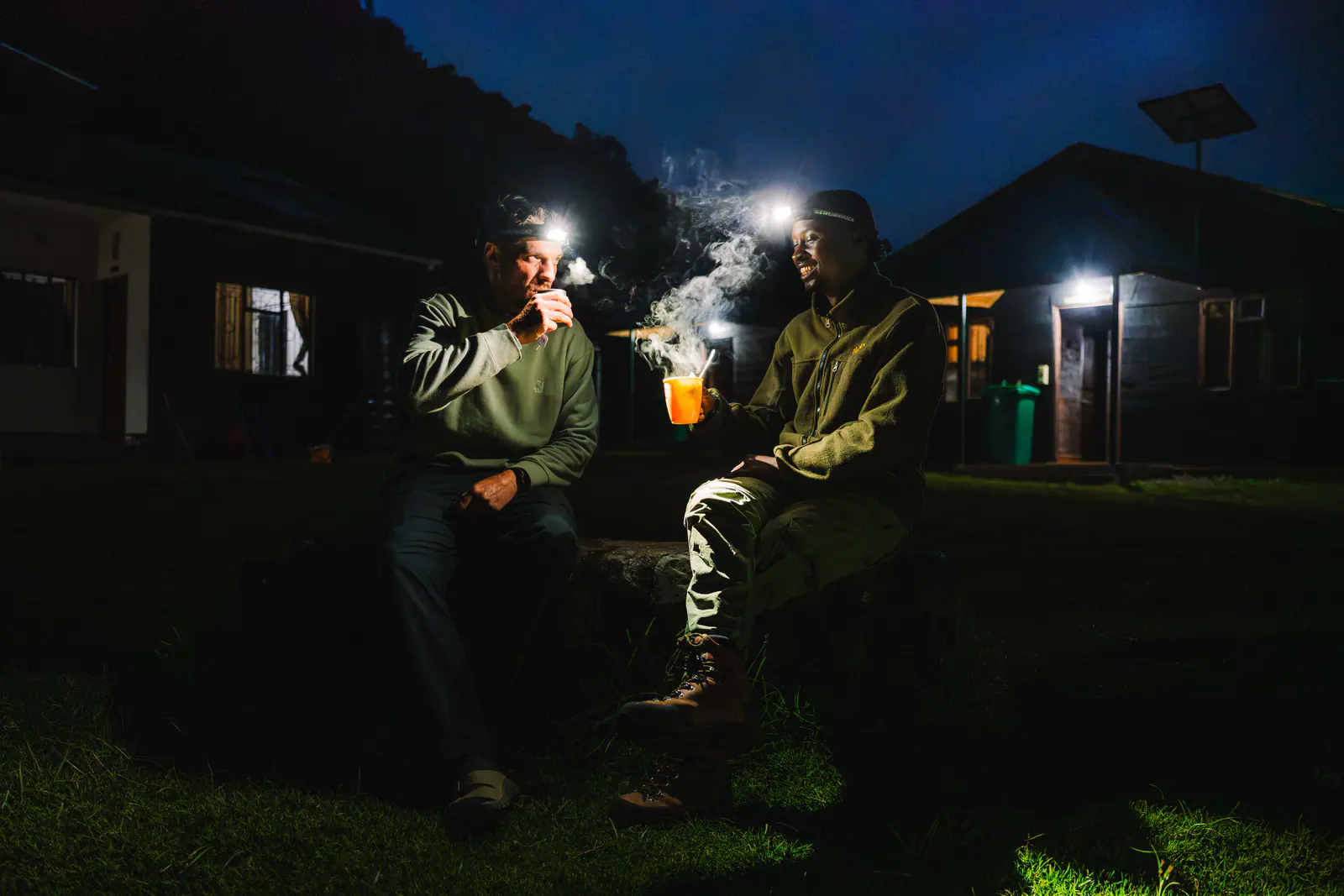
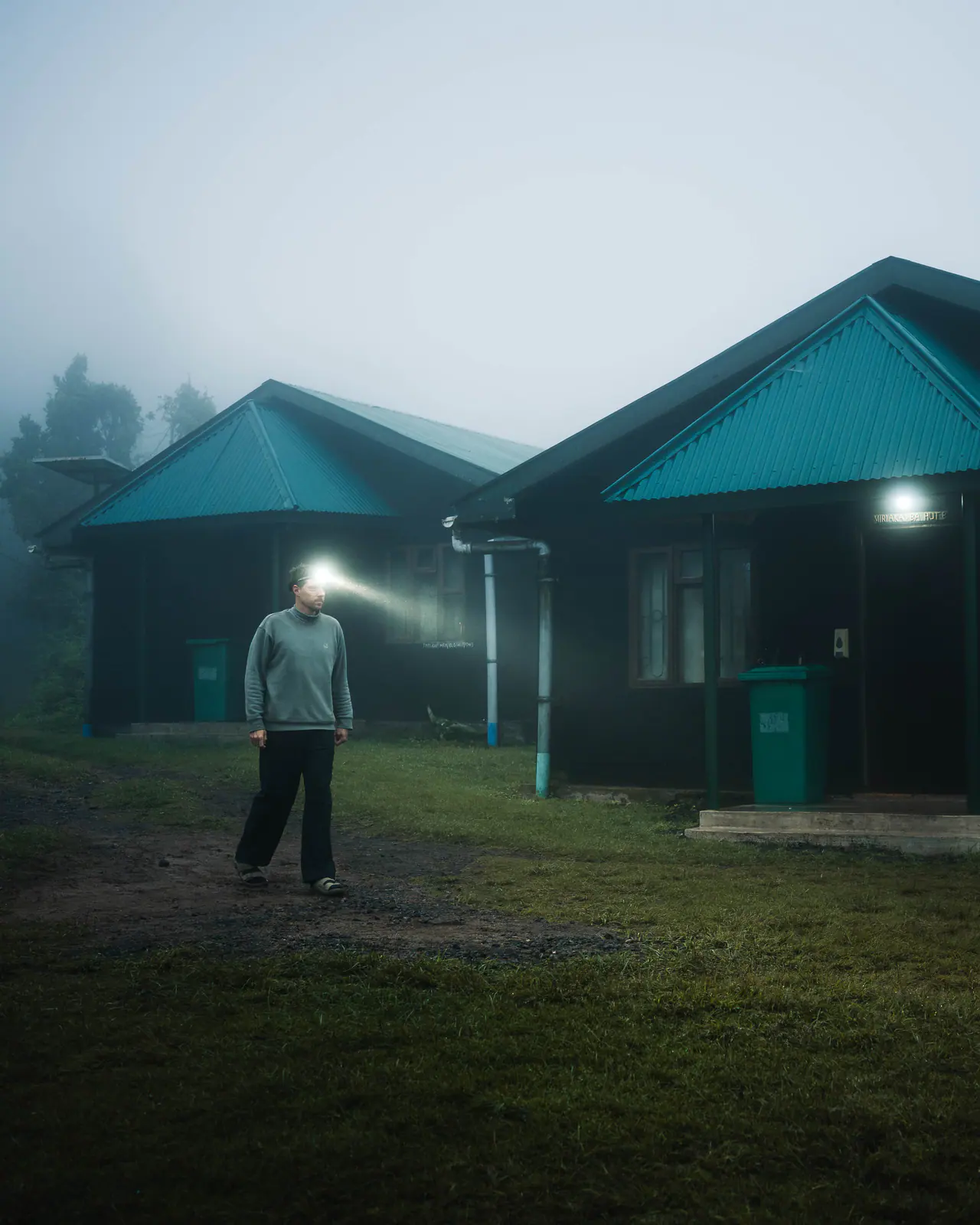
Two guides sit outside a hut at night, headlamps on, sharing a hot drink.
03 / 11
Cold and layering strategy
Temperatures on summit night regularly fall well below freezing, and wind chill can make the felt temperature considerably colder still. This is the one part of the climb where you wear every warm layer you own simultaneously (base layer, mid layer, heavy insulated jacket, and a windproof-waterproof shell) rather than adjusting layers through the day as you would lower down the mountain.
Extremities suffer first in extreme cold, so pay particular attention to hands, feet and your face. Insulated summit mitts worn over thin glove liners let you make small adjustments, like sipping water, without fully exposing bare skin to the cold. A balaclava or buff protects your face from wind, and chemical hand and toe warmers are a small, inexpensive addition that many climbers find makes a real difference.
It is normal to feel genuinely cold at points during the night despite good layering. The goal is manageable, not eliminated, cold. If any part of you goes from cold to numb, or you notice signs of frostnip such as white or waxy patches of skin, tell your guide immediately rather than waiting to see if it improves on its own.
04 / 11
Hydration and food that works below freezing
Staying hydrated on summit night is harder than at any other point on the climb, partly because water bottles and hydration bladder tubes can freeze in the extreme cold, and partly because the effort of stopping to drink feels like an unwelcome interruption to a hard-won rhythm. An insulated bottle or thermos, ideally filled with warm rather than cold water, resists freezing far longer than a standard bottle.
Appetite typically drops at altitude, and the cold makes eating anything fiddly or exposed to the air unappealing. Small, easy-to-eat snacks (biscuits, energy bars, dried fruit) kept in an inner pocket close to your body stay soft and accessible rather than frozen solid in an outer pocket of your pack.
Sipping small amounts regularly, even without feeling thirsty, is more effective than large infrequent drinks, both for hydration and for keeping your energy steady across a night that can last considerably longer than a typical day's walk lower down the mountain.
05 / 11
Headlamp, batteries and darkness
- Bring a reliable headlamp, not a hand-held torch, so both hands stay free for poles and balance
- Carry spare batteries in an inner pocket, since cold drains battery life much faster than usual
- Test your headlamp's brightness settings and beam distance before you fly
- Consider a small backup light source in case your primary headlamp fails
- Keep spare batteries warm against your body rather than in an outer pocket
Walking for hours by headlamp alone is a genuinely different experience from daytime hiking. Your world narrows to the small circle of light ahead of you and the boots of the person just in front, which some climbers find calming and meditative, and others find disorientating until they settle into the rhythm. Both reactions are completely normal.
Cold significantly shortens battery life, so a headlamp that lasted all night on a mild evening at home may fade faster in genuinely freezing conditions. Carrying spares and keeping them warm removes one avoidable source of stress from a night that already has enough happening.
06 / 11
Pacing and breathing
The pace your guides set on summit night is deliberately, almost uncomfortably slow: far slower than the walking pace you have used on every previous day of the climb. This is intentional: a slower pace reduces the demand on your body for oxygen at a time when the air contains roughly half the oxygen available at sea level.
Match your breathing to your steps rather than letting your steps chase your breathing. Many climbers find a rhythm of one breath per step, or one breath per two steps, helps keep both steady rather than accelerating into short, ineffective gasps that leave you more breathless, not less.
Resist any urge to overtake or push ahead of the pace your guide has set, even if you feel strong in the moment. The pace is calibrated for the whole night and the whole group, not just how you feel in the first hour, and going out too fast is one of the more common reasons climbers struggle later on.
07 / 11
When to turn around and why that is a good decision
Not every climber who sets off on summit night reaches Uhuru Peak, and that outcome is far more often a sign that the safety systems around the climb are working than a personal failure. Guides are trained to recognise the signs of worsening altitude illness and will recommend a descent when continuing poses a genuine risk, regardless of how close the summit appears.
It helps enormously to decide, before the night begins, that you will trust your guide's judgement on this point rather than negotiating with them in the moment when you are cold, tired and possibly not thinking as clearly as usual: altitude can affect decision-making itself, which is precisely why an external, experienced judgement matters.
If you are asked to turn around, it reflects a decision made in your interest, using observations your guide has been quietly making throughout the night. Reaching high camp safely, even without the summit, is still a genuine achievement, and for many climbers it remains a meaningful and memorable part of the experience.
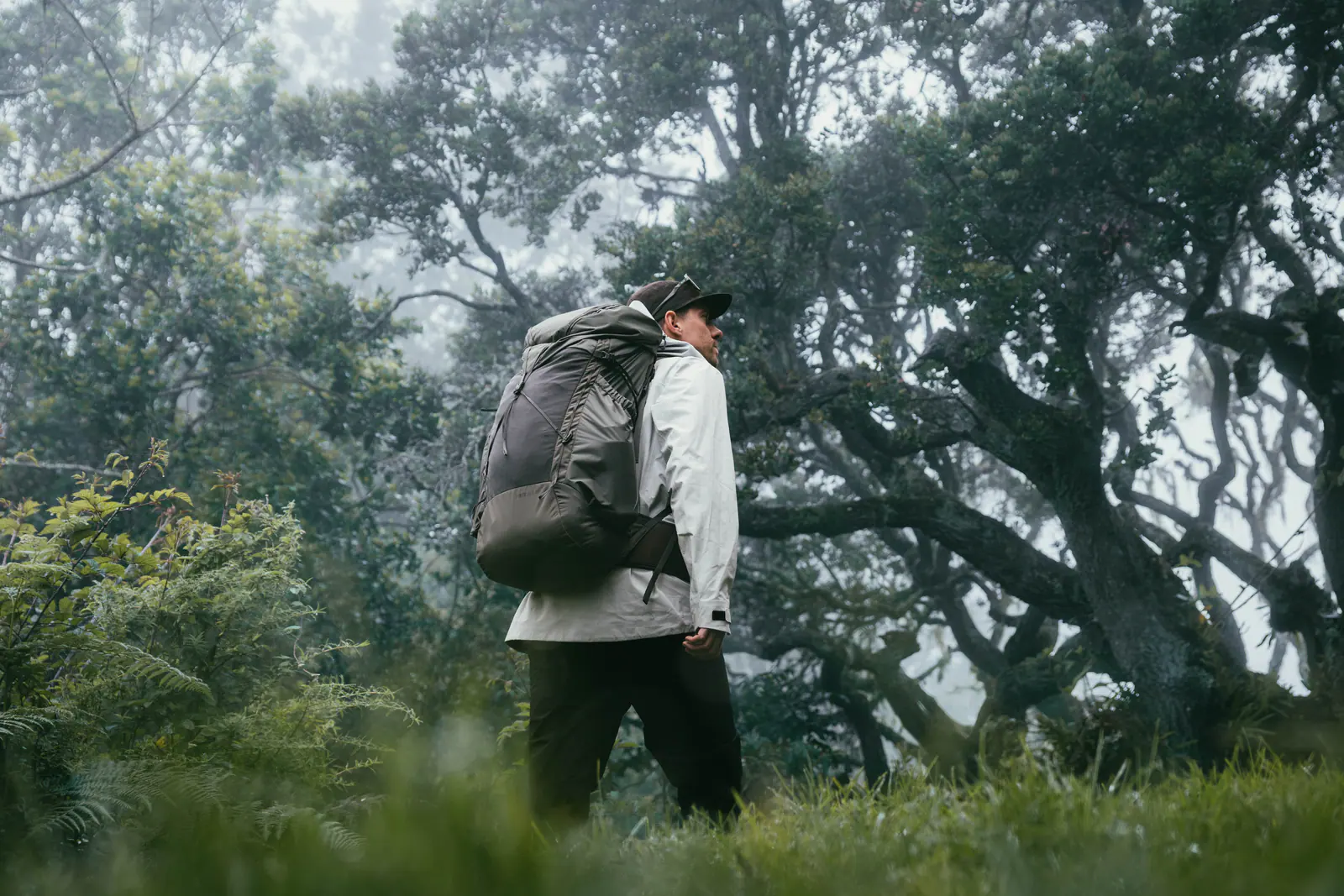
A trekker with a large pack walks past gnarled, moss-covered trees in cloud forest.
08 / 11
The descent nobody prepares for
Reaching Uhuru Peak understandably dominates most people's mental picture of summit night, but the descent afterwards is long, physically demanding and often surprises first-time climbers with how much it takes out of them. You are descending on tired legs, often through loose scree, with the adrenaline of the summit fading and fatigue setting in more heavily than expected.
Many itineraries continue the descent all the way to a lower camp on the same day, meaning summit day often becomes the longest single day of the entire climb by a significant margin, sometimes twelve hours or more of continuous movement between the midnight wake-up and finally settling into camp that evening.
Trekking poles genuinely earn their keep on the descent, taking pressure off tired knees on the steep, loose sections. Pace yourself deliberately even here: the temptation to rush downhill once the summit is behind you is understandable, but a controlled pace reduces the risk of a slip or a fall when concentration is naturally starting to fade.
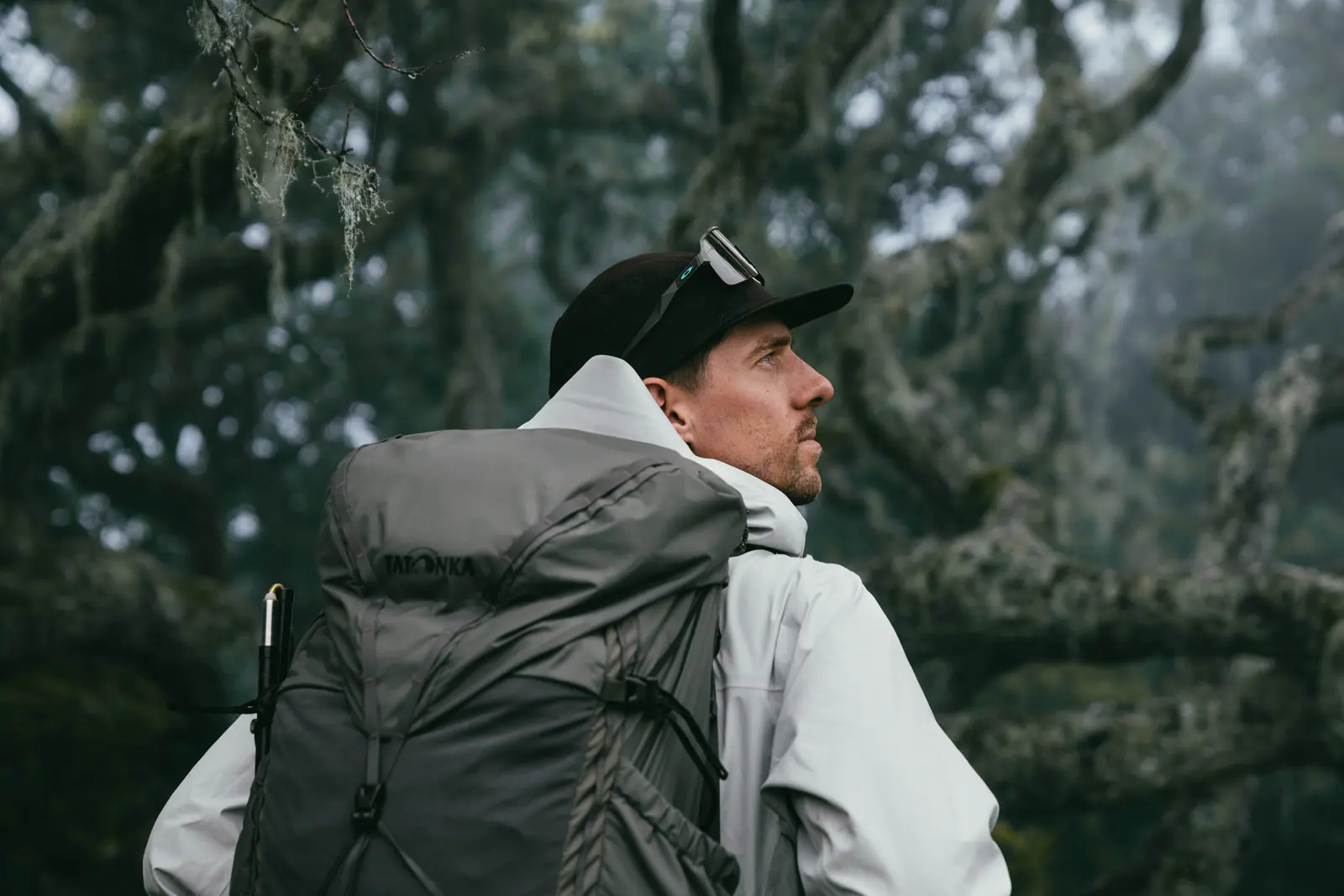
A trekker in a cap and pack looks off to the side among lichen-covered branches.
09 / 11
Mental strategies for summit night
- Break the night into small sections rather than thinking about the whole climb at once.
- Focus on the pool of light ahead of you rather than how far the summit still feels.
- Use a simple mental phrase or count to sync with your breathing and steps.
- Expect low points during the darkest, coldest hours. They are normal and usually pass.
- Lean on your guide's encouragement and experience rather than trying to manage everything alone.
- Remind yourself that the slow pace is working for you, not against you.
Most climbers experience at least one difficult stretch during summit night, whether physical, mental, or both. Expecting this in advance, rather than being surprised by it, makes it considerably easier to work through when it happens.
10 / 11
Summit night readiness checker
Answer honestly to see which parts of your preparation need attention before you fly.
Summit night readiness checker
Answer six honest questions about your preparation and mindset for summit night, and we will tell you what to focus on before you go.
0 of 6 answered
Answer all 6 questions and your result appears here.
This tool reflects general preparation guidance and is not a medical assessment. How your body responds to altitude cannot be predicted by a quiz.
11 / 11
How Safari Soles approaches this
We are happy to talk through exactly how summit night is run on your chosen route and itinerary, including typical timings and how guides make pacing and turnaround decisions on the night.
If you have specific concerns about cold, altitude or a past experience with either, tell us in advance so we can factor that into route and pacing conversations before you book.
Common mistakes to avoid
Most unsuccessful climbs come from a handful of avoidable planning decisions, not from the mountain.
- Underestimating just how cold summit night gets, especially with wind chill.
- Expecting a normal walking pace instead of the deliberately slow pace guides set.
- Not testing headlamp batteries in genuinely cold conditions beforehand.
- Skipping water and food because stopping in the cold feels unappealing.
- Treating Stella Point or Gilman's Point as the finish line rather than a milestone.
- Rushing the descent once the summit is behind you.
- Negotiating with a guide's turnaround decision instead of trusting it.
- Forgetting that summit day often continues with a long descent to a lower camp.
Get these right and the climb follows
Every one of these comes down to the same thing: matching the route and the day count to the climber before booking anything. Send us your dates and we will tell you honestly what is realistic.
Plan this climb with a local expertQuestions worth asking any operator
Ask these of any operator you are comparing, including us. The answers tell you more about a climb than the price does.
- How many days are on the mountain, and how many of those are genuine acclimatisation days?
- Who leads the climb, and how many assistant guides travel with our group size?
- What daily health monitoring happens, and what triggers a descent decision?
- What is included in the quoted price, and what is paid separately?
- What equipment is provided, what can be rented locally and what must I bring?
- How are crew tips collected and distributed at the end of the climb?
What Safari Soles puts in writing
Everything below is confirmed before you pay, so nothing about your climb is left to be discovered on the mountain.
-
Your route, day count and acclimatisation profile
Confirmed in writing before you pay, with our honest view on whether the number of days suits you.
-
How your health is monitored on the mountain
The daily check routine and who is responsible for it are explained at your pre-climb briefing.
-
First-aid and emergency response for your itinerary
You are told what travels with the climb and what happens at each camp if someone needs to descend.
-
Who is on your crew and what each person does
Lead guide, assistant guides, cook and porters are set out for your group size, not left vague.
-
Porter load handling for your climb
Duffel limits and how loads are weighed are confirmed before departure, so there are no gate surprises.
-
Tent, sleeping mat and dining arrangements
Camp comfort is described in the quote rather than discovered on the first night.
-
Meals, drinking water and hot drinks
How your food is cooked and your water treated is explained, including dietary requirements.
-
Gear rental list, sizes and prices
Shared before you shop, so you buy what matters at home and hire the rest on arrival.
-
An itemised quote with fees shown separately
Park and camping fees, crew, equipment, transfers and hotels appear as their own lines.
-
Tipping guidance for your group size
The customary range and how tips are collected are agreed before you fly, in writing.
Safety standards on a Safari Soles climb
What safety means in practice on the mountain, rather than as a promise on a page.
-
Mountain safety preparation
Safety planning starts long before the gate. Your route, day count and acclimatisation profile are chosen for how you actually travel, and every climb is briefed as a plan rather than an ambition.
-
Altitude monitoring
Your guides monitor how you are adjusting each day (how you are sleeping, eating, drinking and breathing) and record what they see so the pattern across the climb is visible, not guessed at.
-
Guide-led pacing
Pace is set by your guide, deliberately slower than most climbers expect. Walking slowly is the single most effective acclimatisation tool on the mountain, and our guides hold that pace even when a group feels strong.
-
First-aid readiness
A mountain first-aid kit travels with every climb and your guide team is briefed on how it is used and when a symptom stops being discomfort and becomes a reason to act.
-
Emergency planning
Each itinerary has a worked-out response for illness or injury at every camp (who escorts you, which way you go down and who is contacted) agreed before day one rather than improvised.
-
Summit-night support
Summit night is the hardest part of the climb, so it is guided most closely: assistant guides stay with slower climbers, layering and hydration are checked before departure, and turning back early is treated as a normal outcome, not a failure.
-
Clear descent decisions
Your lead guide has final authority on descent. The reasoning is explained to you and to your group in advance, so nobody is negotiating a health decision at 5,000m in the dark.
-
Client briefing before the climb
The day before you walk, we go through the itinerary, the daily routine, your gear, the health checks and the descent process, and answer every question while there is still time to act on the answers.
Local Kilimanjaro operators, licensed crew, honest guidance
Written and reviewed by the Safari Soles team in Arusha, who plan and run Kilimanjaro climbs from beside the mountain rather than brokering them from an overseas office.
- Reviewed by the Safari Soles Kilimanjaro planning team
- Updated for 2026 climbing seasons
- Route and day count matched to your fitness and altitude history
- Daily health monitoring and descent decisions agreed before you book
- Read Safari Soles reviews on TripAdvisor
- Read Safari Soles reviews on SafariBookings
- Read Safari Soles reviews on Google
Where these facts come from (6)
- UNESCO: Kilimanjaro National Park The World Heritage listing for Kilimanjaro National Park, which records Africa's highest point at 5,895m.
- TANAPA: Tanzania National Parks Official park authority information on regulations, park fees and permitted activities.
- Tanzania Tourist Board Government tourism information on travelling in Tanzania, seasons and destinations.
- Wikipedia: Mount Kilimanjaro Secondary background context on the mountain's geology, glaciers and climbing history.
- CDC: Travel to high altitudes US Centers for Disease Control guidance on altitude illness, ascent rates and when to descend.
- TravelHealthPro (NaTHNaC): Tanzania UK travel health advice for Tanzania, including altitude illness, HACE and HAPE, where immediate descent is required.
Related Safari Soles guides
Continue with the guides travellers usually read next.
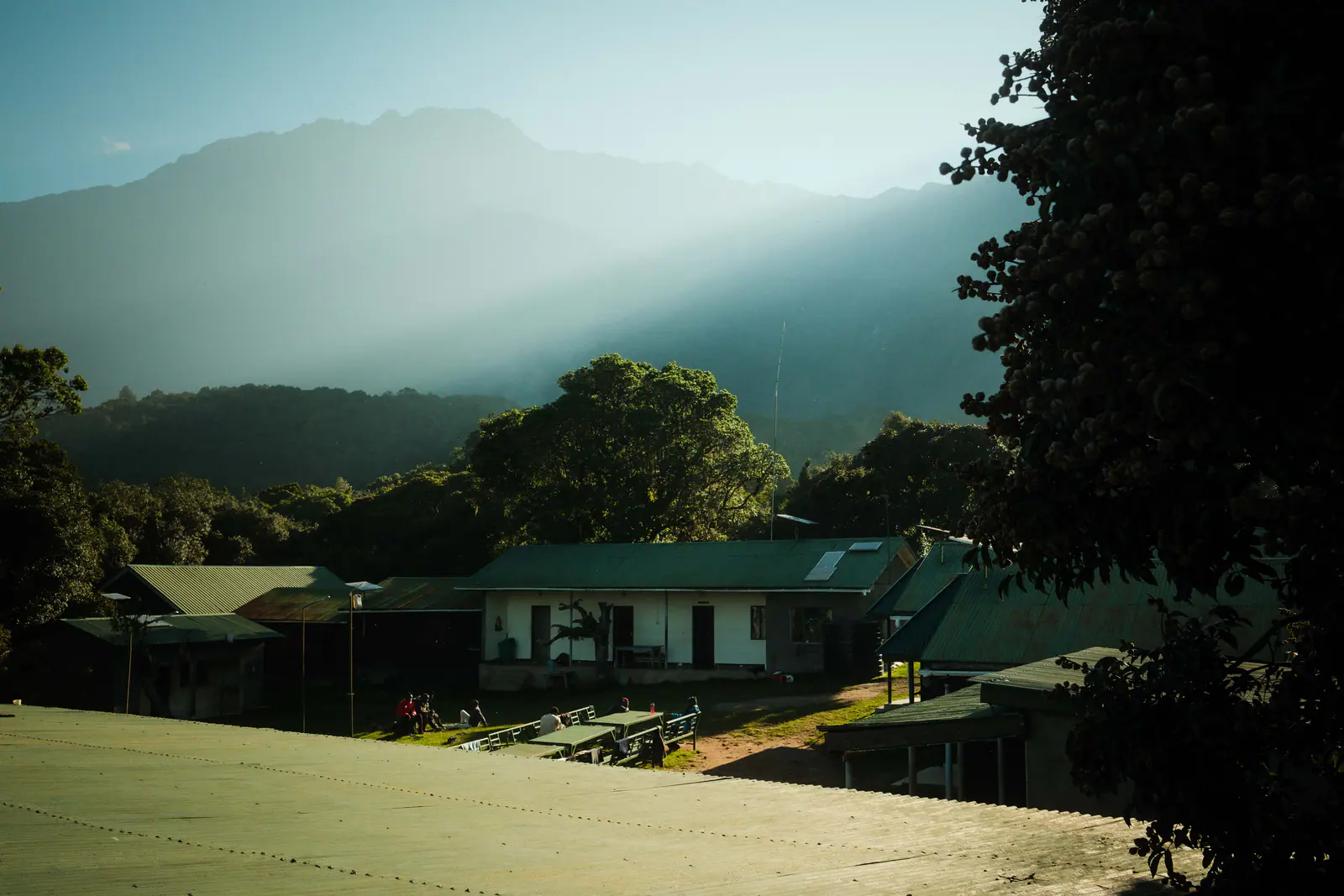 Kilimanjaro Altitude Sickness Recognising early symptoms, understanding acclimatisation and knowing when to descend. Safety
Read the guide
Kilimanjaro Altitude Sickness Recognising early symptoms, understanding acclimatisation and knowing when to descend. Safety
Read the guide
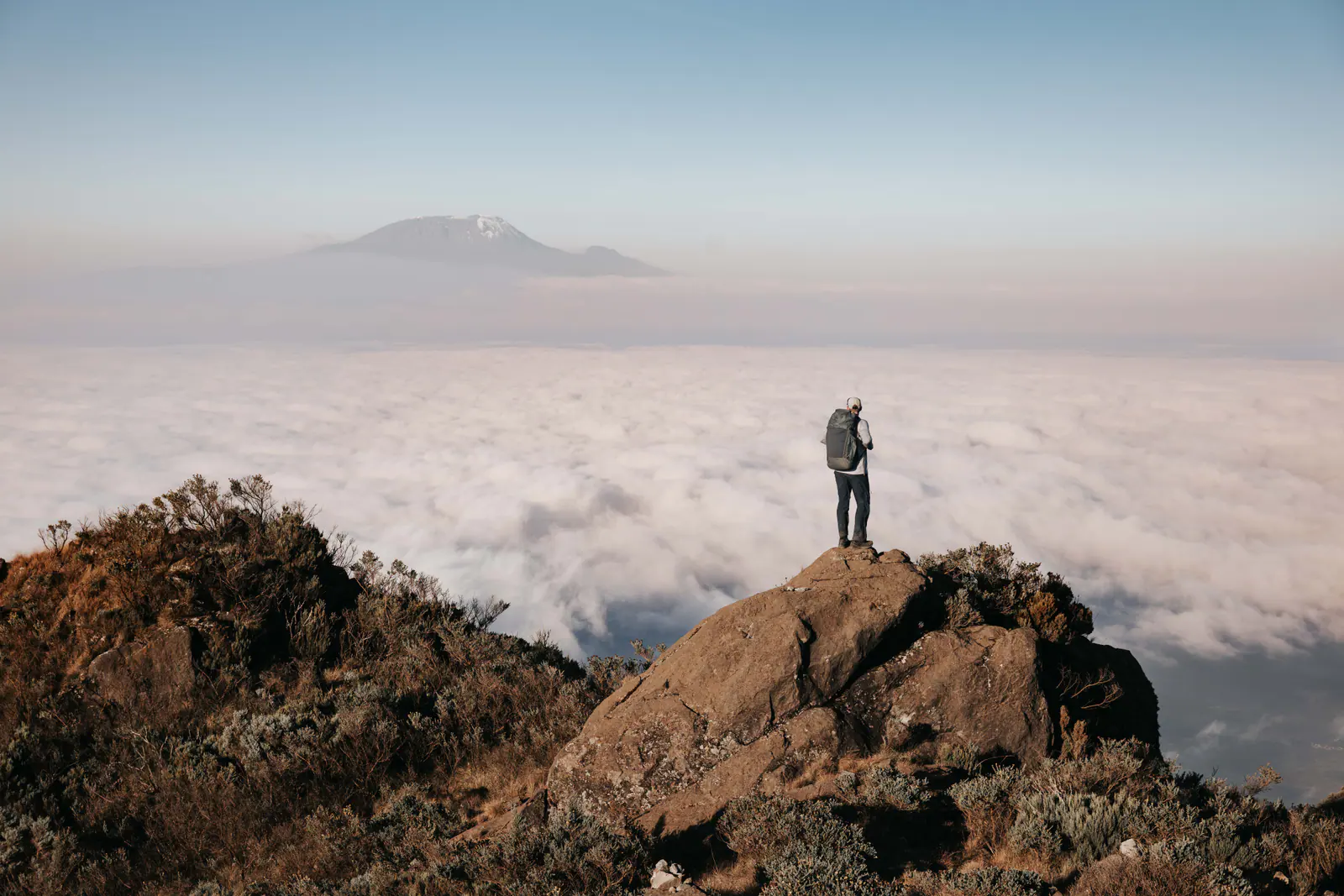 Kilimanjaro Safety How pacing, guide checks, oxygen, evacuation planning and honest turnaround decisions keep a climb safe. Safety
Read the guide
Kilimanjaro Safety How pacing, guide checks, oxygen, evacuation planning and honest turnaround decisions keep a climb safe. Safety
Read the guide
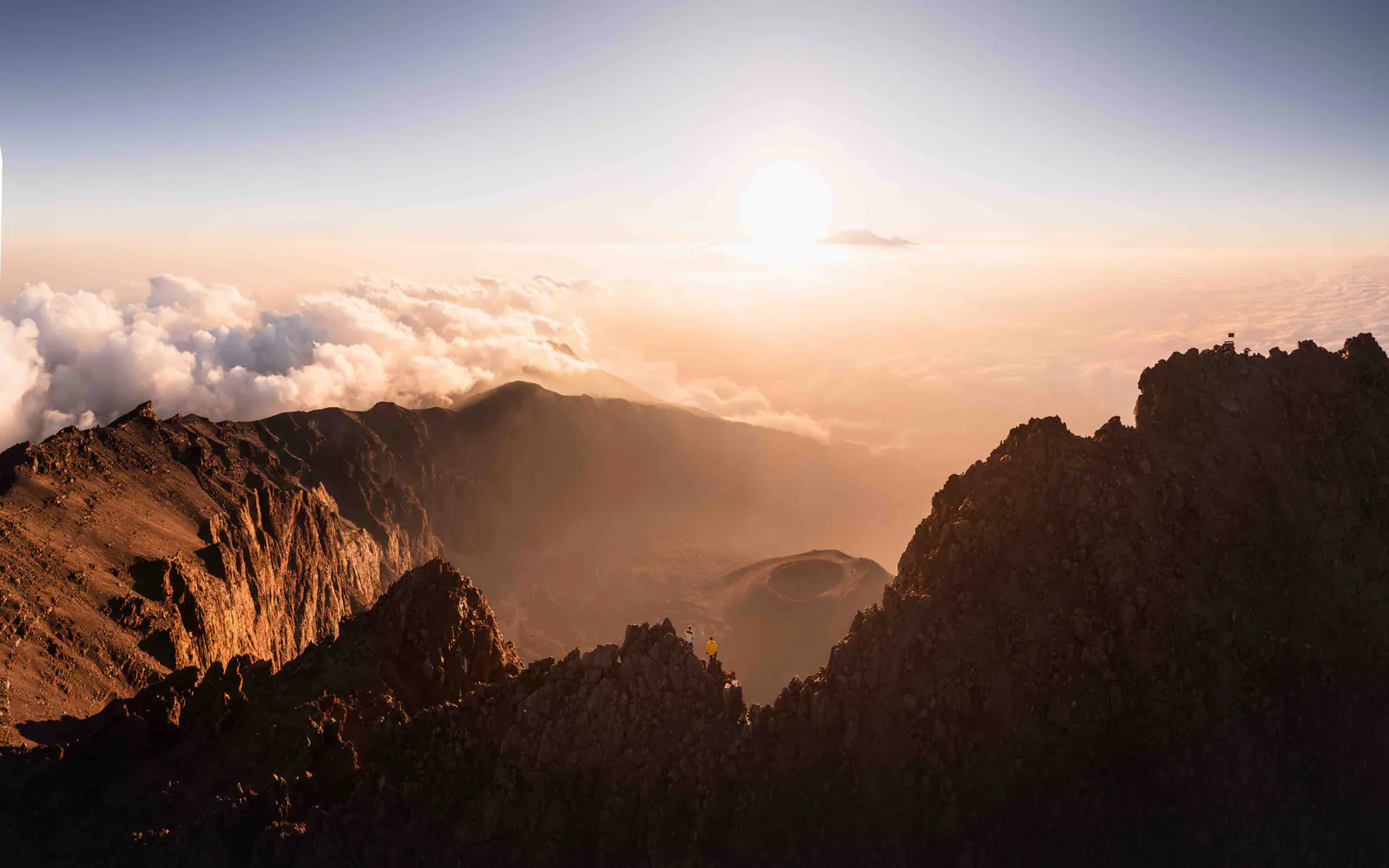 Kilimanjaro Training Guide A practical build-up of hill walking, loaded hikes, stamina and back-to-back days before you fly. Preparation
Read the guide
Kilimanjaro Training Guide A practical build-up of hill walking, loaded hikes, stamina and back-to-back days before you fly. Preparation
Read the guide
Frequently Asked Questions
-
Most groups wake around 11pm to midnight at high camp and set off shortly after, aiming to reach the crater rim around sunrise, though exact timings vary by route and conditions.
Want to talk through what summit night looks like on your route?
Ask us about pacing, timings and how our guide team supports climbers through the coldest, hardest hours of the climb.