


Kenya Photography Safari
Photographers need a different itinerary from everyone else. Fewer parks, longer sightings, a vehicle you can shoot from properly, and a willingness to spend three mornings on the same lion pride.
- Private vehicle
- Non-negotiable
- Itinerary
- Fewer parks, more nights each
- Best light
- Both ends of the day
- Bush flights
- Limit your gear weight
Written and maintained by the Safari Soles planning team in Arusha, Tanzania.
A photography-led Kenya safari should prioritise a private vehicle with clear shooting positions, early starts and late finishes, and fewer regions with more nights in each.
- A private vehicle with clear shooting positions is the most important booking decision you make.
- Fewer regions and more nights in each produces better photographs than a comprehensive route.
- Shoot the two golden windows and rest through the middle of the day, as the animals do.
- Pair a landscape region such as Amboseli with an action region such as the Mara.
- Conservancies often allow off-road positioning and flexible timing that reserves restrict.
- Bush flights limit your gear: confirm the exact weight allowance, or drive instead.
01 / 07
The vehicle is the most important decision
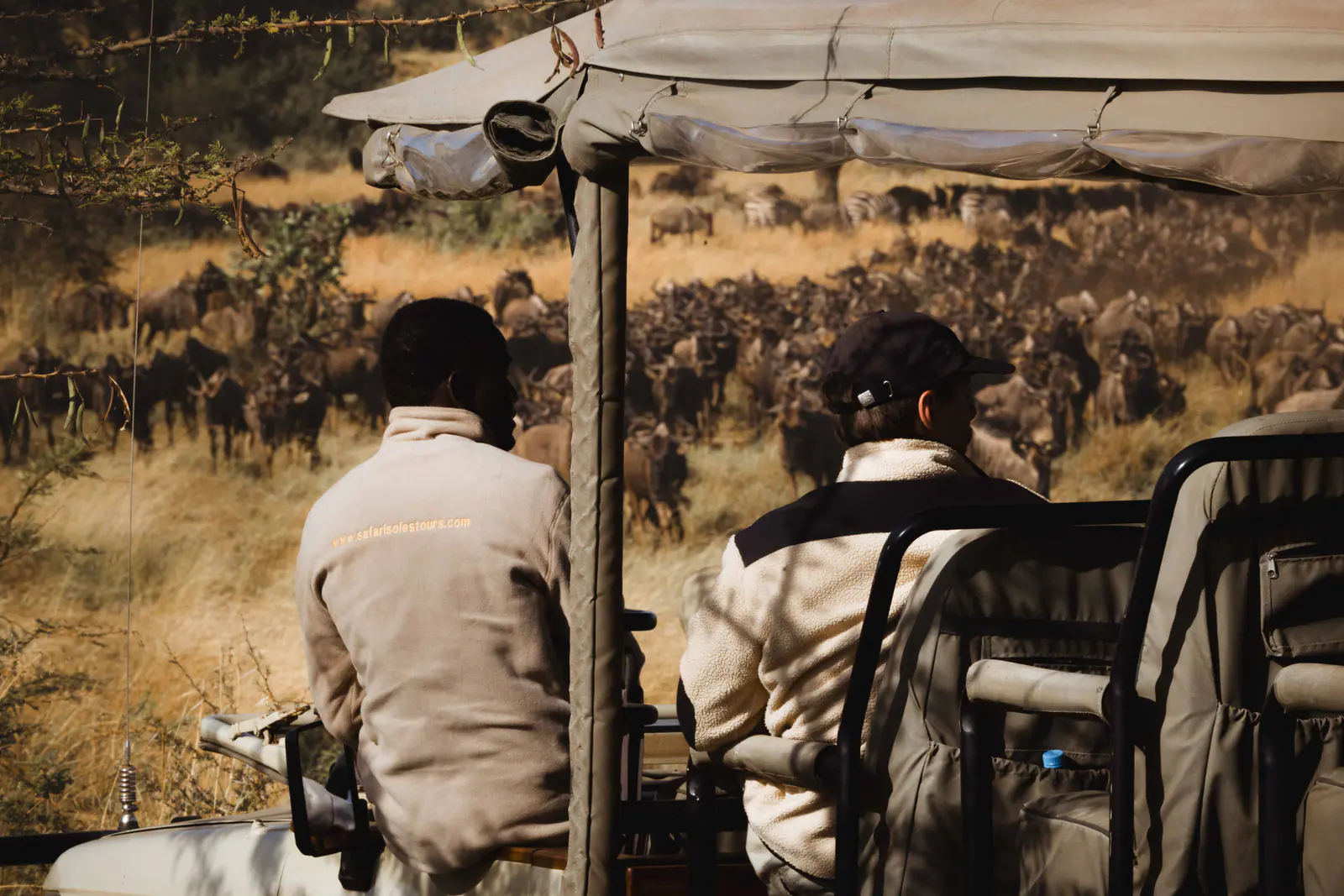
More photographs are lost to vehicle arrangements than to equipment. On a shared game drive you have a seat, not a shooting position: someone is in front of your lens, the vehicle moves when the group is ready, and you leave the sighting when the majority does.
A private vehicle changes all of it. You choose the angle, you ask the driver to reposition for the light, and you stay for the forty minutes it takes a cheetah to decide to hunt. For a photographer this is not a luxury; it is the difference between the trip working and not working.
Beyond privacy, ask about the configuration. Pop-top roofs suit standing shots but restrict low angles; open-sided vehicles allow lower, cleaner perspectives. Ask how many people will be in the vehicle. Two photographers in a seven-seat vehicle means each has a full row and both sides. Ask whether beanbags are provided, and take one if not.
What to specify when booking
-
Private vehicle
Full control of timing, positioning and how long you stay at a sighting.
-
Two people maximum per row
Both sides available, room for two bodies and a spare lens within reach.
-
Beanbag support
Steadier than a monopod on a vehicle frame. Some camps supply them; a rolled fleece works at a pinch.
-
A guide who understands photography
Positioning for the sun, cutting the engine, anticipating movement, and knowing when not to drive closer.
-
Charging arrangements
Some camps run generators or solar within set hours. Arrive with everything charged and bring a power bank.
-
Flexible meal times
The best light coincides with breakfast and dinner at most camps. Ask for packed meals instead.
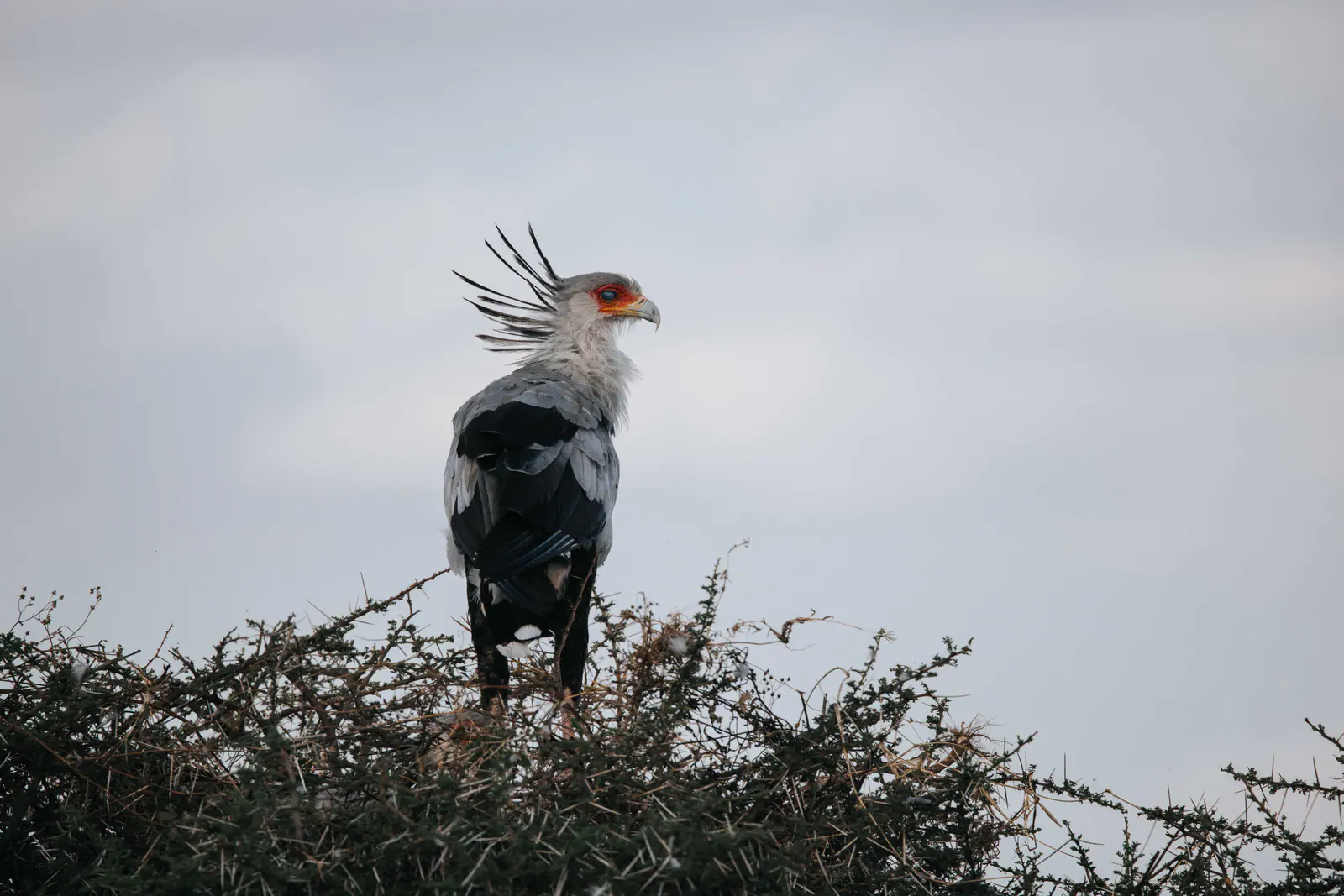
A secretary bird standing on top of a thorny bush with its crest raised, against a grey sky.
02 / 07
Light, timing and the discipline of staying put
Kenya sits on the equator, so sunrise and sunset are consistent through the year and the golden window at each end is comparatively short. That makes early starts non-negotiable: leaving camp at first light rather than after breakfast doubles the usable light in your morning.
The middle of the day is harsh and largely unusable for wildlife work. Most photographers use it the way the animals do, resting, and go out again in the late afternoon. That structure means you are shooting perhaps five good hours a day, which is precisely why the itinerary should have fewer regions and more days.
The discipline that separates good safari photography from average is staying with a sighting. A pride resting in flat light at nine in the morning will be doing something interesting at five in the afternoon. Where conservancy rules allow flexible timing and off-road positioning, that patience pays; in a reserve with fixed gate hours, plan around them.
Build the itinerary around returning, not covering
The instinct is to see as much as possible. The photographic reality is the opposite: four mornings in one region gives you four chances at the same subject in different light and different behaviour, which is how portfolio images happen. Two regions over eight nights will out-produce four regions over the same eight nights, every time.
03 / 07
Where to shoot what
Kenya's regions are photographically distinct, and a good itinerary pairs a landscape-led park with an action-led one rather than repeating the same conditions.
Photographic priorities by region
- Predators, action and behaviour
- Maasai Mara: clean grassland backgrounds, high density, long golden light
- Landscape and elephants at scale
- Amboseli: dust, marshes and Kilimanjaro when the cloud lifts
- Birds in flight and rhino
- Lake Nakuru: around 450 recorded species and open rhino ground
- Distinctive species and dramatic light
- Samburu: dry-country specials against red rock and doum palms
- Walking and low-angle work
- Laikipia, where individual properties permit it
- Migration river crossings
- Mara reserve, near the river, four or more nights. See the migration guide
This is a starting point rather than an objective ranking. The right answer changes with your dates, your nights and who is travelling.
Amboseli and the Mara for photographers
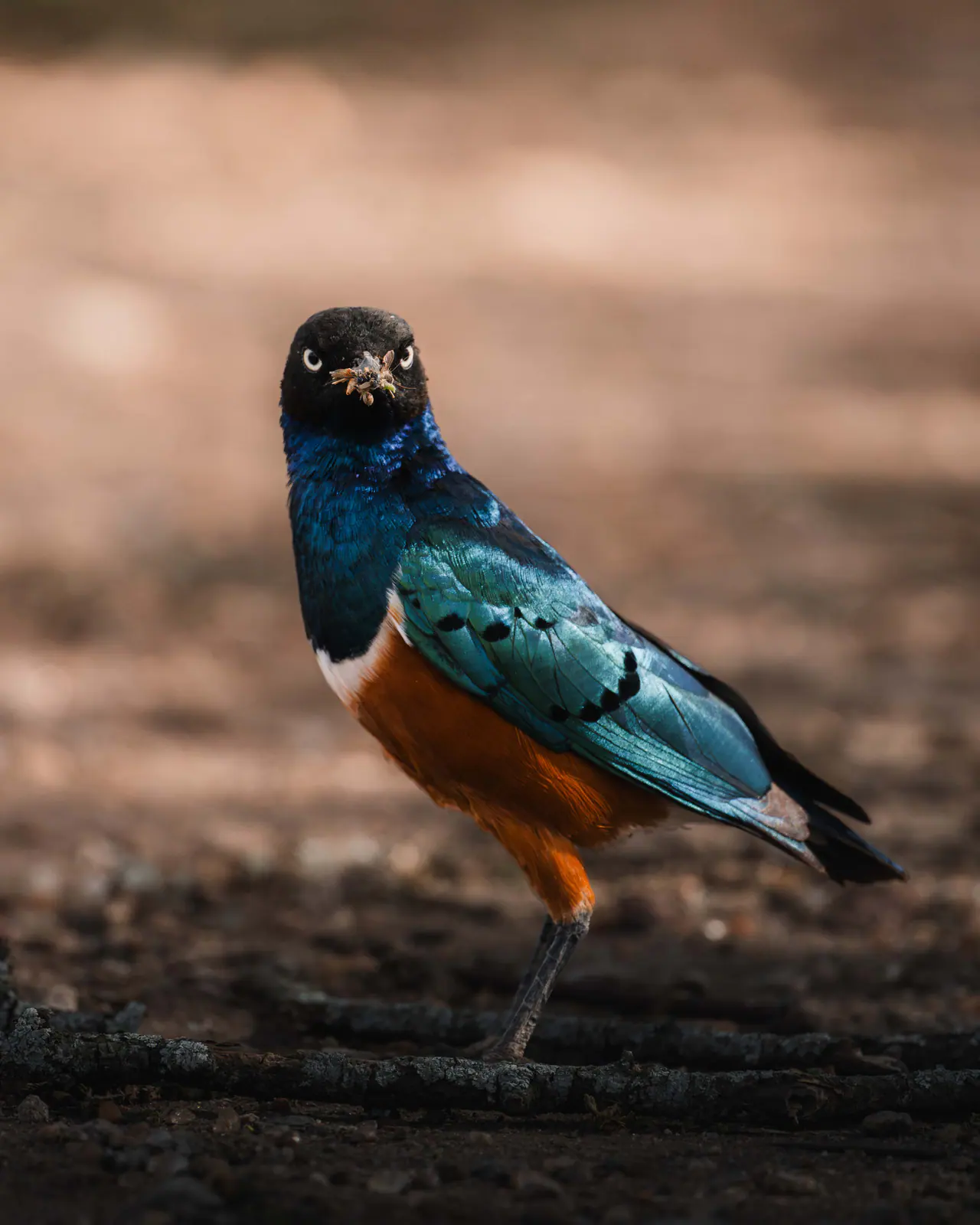
04 / 07
Gear, in principles rather than brands
The useful advice here is about focal lengths and redundancy rather than which manufacturer to buy. A long telephoto (something in the 400mm range on full frame, whether prime or zoom) covers most wildlife work. A mid-range zoom around 70–200mm handles closer sightings, herds and vehicle-level scenes. A wide lens earns its place for landscape and camp, particularly in Amboseli.
Two bodies, if you have them, save more shots than any single lens upgrade: switching between long and mid focal lengths is often impossible in the seconds a sighting allows, and changing lenses in a dusty vehicle is something you will only do once.
Bring more batteries and cards than you expect to need. Charging is limited at some camps, dust gets everywhere, and a full card at the wrong moment is a genuinely avoidable loss. A blower, a cloth and a sealed bag are the cheapest insurance you will buy.
- A long telephoto for wildlife, roughly 400mm equivalent, prime or zoom
- A mid-range zoom for closer subjects, herds and context
- A wide lens for landscape, particularly in Amboseli and Samburu
- Two bodies where possible, to avoid lens changes in dust
- Beanbag or soft support; tripods are impractical in a vehicle
- Spare batteries, plenty of cards, a blower, a cloth and a sealed bag
- A power bank, since camp charging can be restricted to set hours
05 / 07
Luggage: the constraint photographers hit hardest
Bush flights are where photographic ambition meets a weight limit. Light aircraft require soft-sided bags and enforce carrier-specific limits that may include hand luggage. Camera gear is heavy, and a long lens plus two bodies can consume a substantial share of an allowance before clothing is packed.
Three practical responses. First, confirm the exact limit for your specific flights as soon as the itinerary is fixed rather than assuming a standard figure. Second, leave a second bag with city and beach clothing at your Nairobi hotel, which most will store free of charge. Third, consider driving where the route allows it: a road itinerary places essentially no limit on what you bring, which is why some photographers deliberately choose the Nakuru and Mara road circuit over flying.
Whatever you decide, camera gear travels in the cabin with you, never in the hold. The full packing framework is in the packing guide.
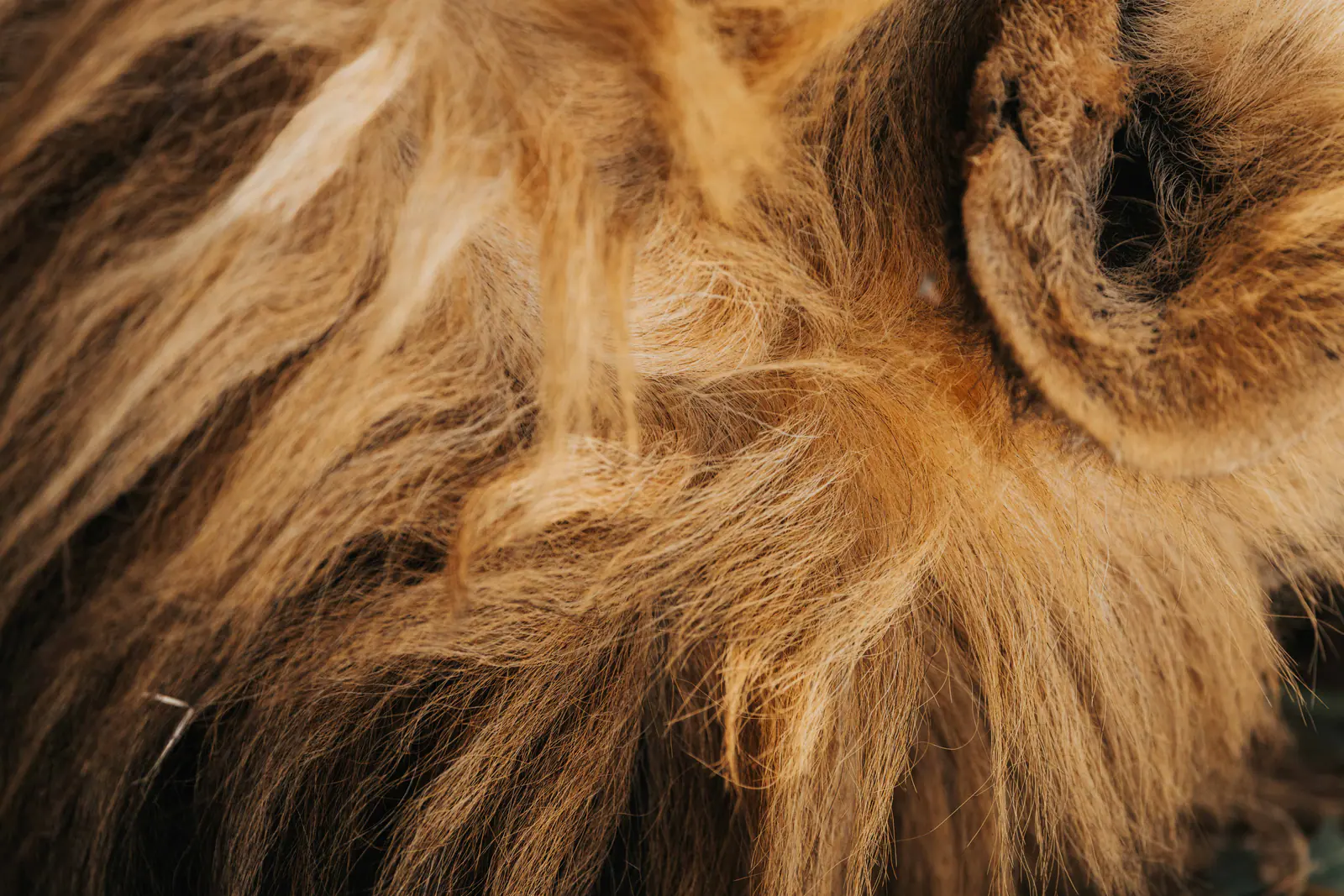
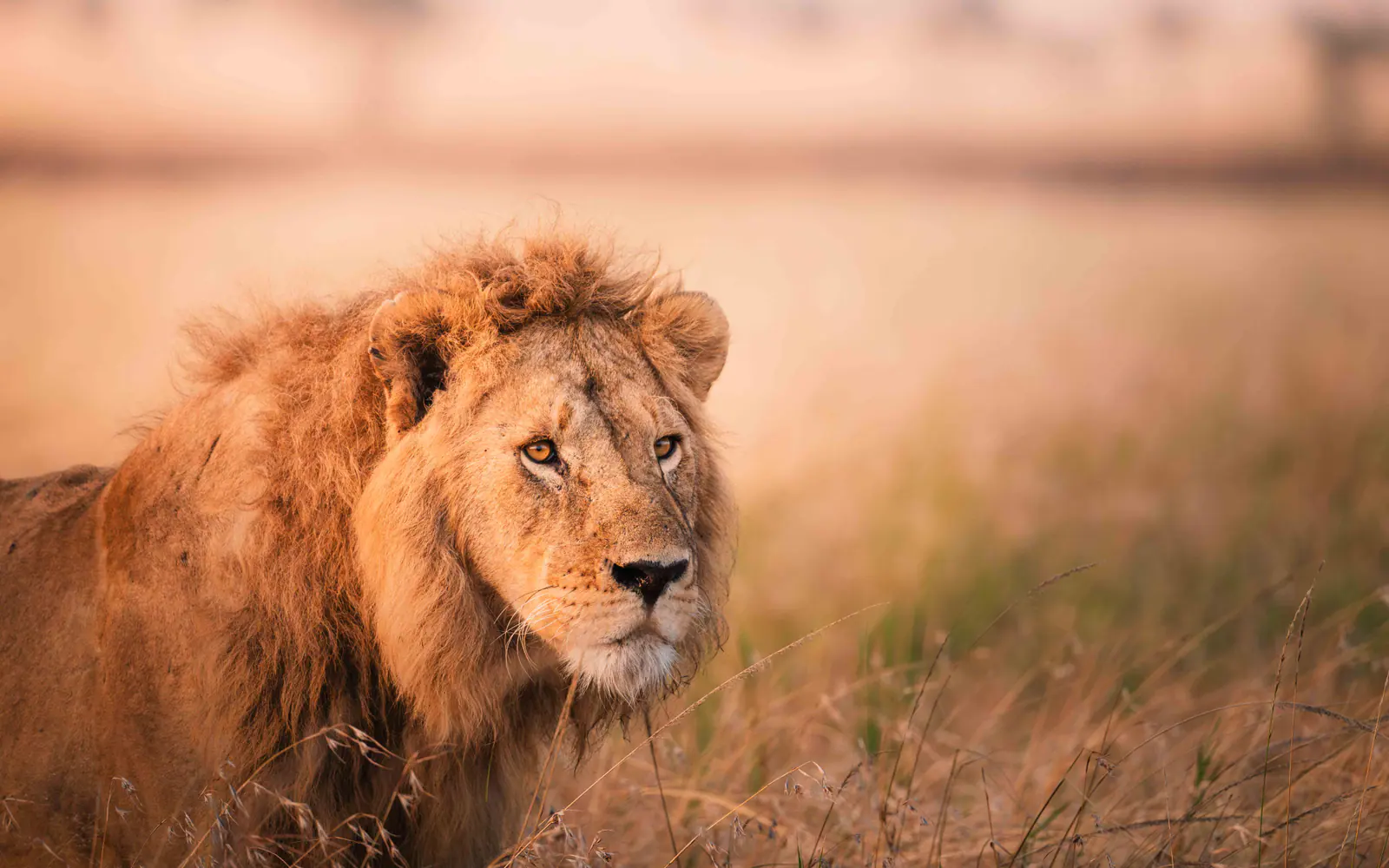
Very close on a male lion's mane and ear, the long hair pale at the tips and darker beneath.
06 / 07
Ethics at a sighting
The pressure to get the shot is exactly what produces bad behaviour: pushing too close, driving off-road where it is prohibited, blocking an animal's line of travel or interrupting a hunt. A good guide will refuse, and the right response is to support them.
Practical principles are simple. Let the animal set the distance. Never ask a guide to break park or conservancy rules. Keep engines and voices down at sensitive sightings, particularly with cats hunting or elephants with calves. Avoid flash around wildlife at night where night drives are permitted.
Conservancies help here, because capped vehicle numbers remove much of the competitive pressure that makes people behave badly at a crowded sighting. It is one of several reasons photographers gravitate towards them. The trade-offs are set out in reserve versus conservancy.
07 / 07
Where to take this next
The regions do the heavy lifting: the Amboseli safari guide for elephants against Kilimanjaro, planning a Maasai Mara safari for predators, and Samburu for the northern species.
Equipment and luggage limits are covered in the Kenya safari packing list, and if you are choosing between two headline parks read Amboseli versus the Maasai Mara. Wider planning: the Kenya safari guide and the Kenya safari guides library.
Planned by people who live the route
This library exists because the same Kenya questions arrive with every safari enquiry we answer.
- Locally based in Tanzania
- Kenya and Tanzania route specialists
- Licensed and insured operator
- Fast, direct answers
- Read Safari Soles reviews on TripAdvisor
- Read Safari Soles reviews on SafariBookings
- Read Safari Soles reviews on Google
Where these facts come from (2)
- Conservation fees and visitor regulations Kenya Wildlife Service · Park authority · checked 2026-09-14
- Baggage allowance for light-aircraft safari flights Safarilink Aviation · Airline policy · checked 2026-09-14
Related Safari Soles guides
Continue with the guides travellers usually read next.
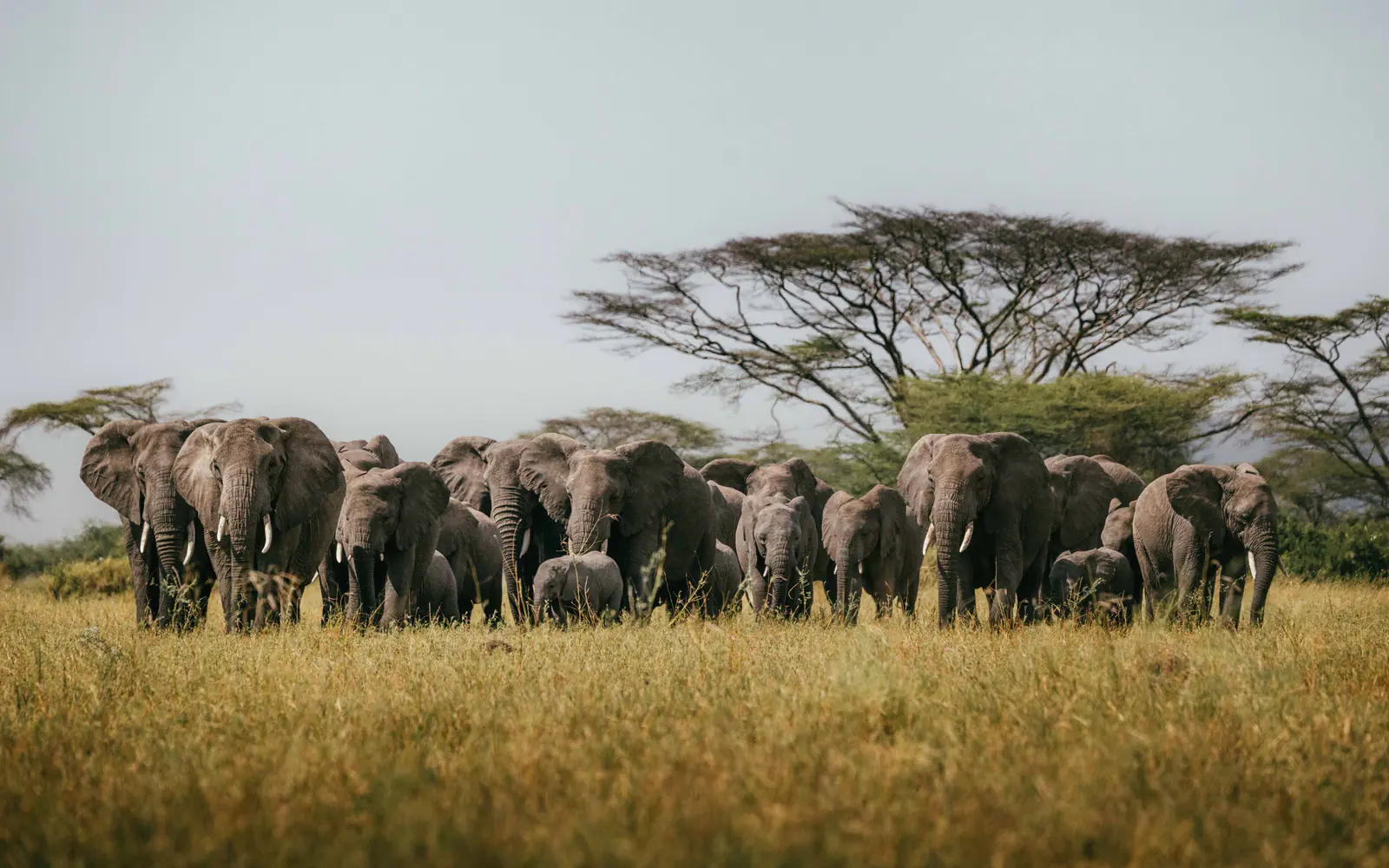 Amboseli Safari Large elephant herds, Kilimanjaro backdrops, Observation Hill and the swamp birdlife, plus how Amboseli slots into a wider circuit. Parks & Reserves
Read the guide
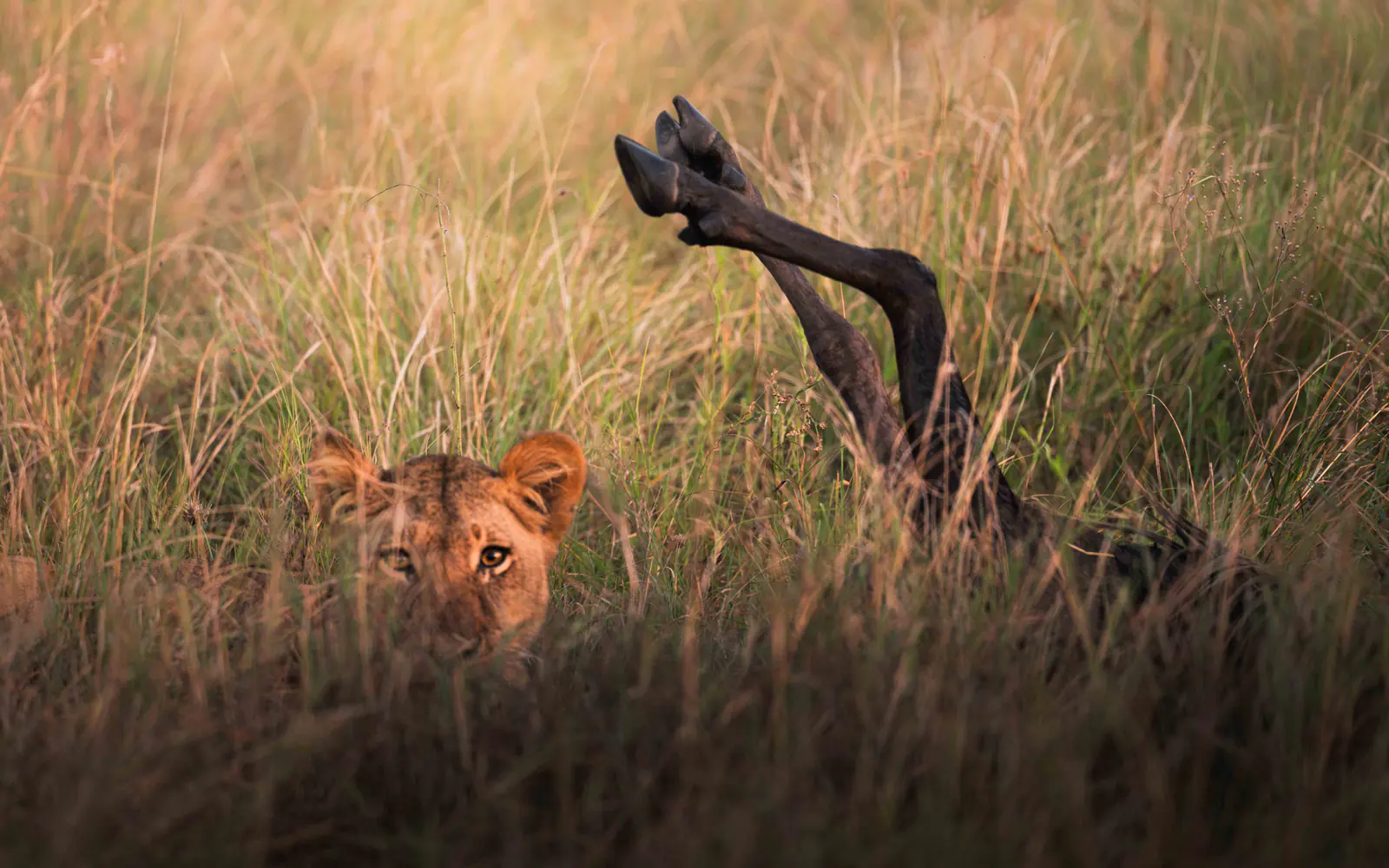 Maasai Mara Safari Reserve or conservancy, where to base yourself, how the migration months behave and how many nights the Mara justifies on a first Kenya trip. Parks & Reserves
Read the guide
 Kenya Safari Packing List Clothing and layers for cold dawns and hot afternoons, camera gear, binoculars, and the soft-luggage weight limits that apply on light aircraft. Planning
Read the guide
Frequently Asked Questions
-
Effectively yes. Shared drives give you a seat rather than a shooting position, and you leave sightings when the group does. It is the highest-value line in a photographer's quote.
Build this into a real Kenya route
Send us the dates, the travellers and the wildlife you care about most, and we will turn this guide into an itinerary that actually works on the ground.