


Zanzibar Food and Culture
Zanzibar is a Muslim island with an Omani, Indian, Persian and African kitchen. Understanding both (the food and the etiquette) is what separates a good trip from a great one.
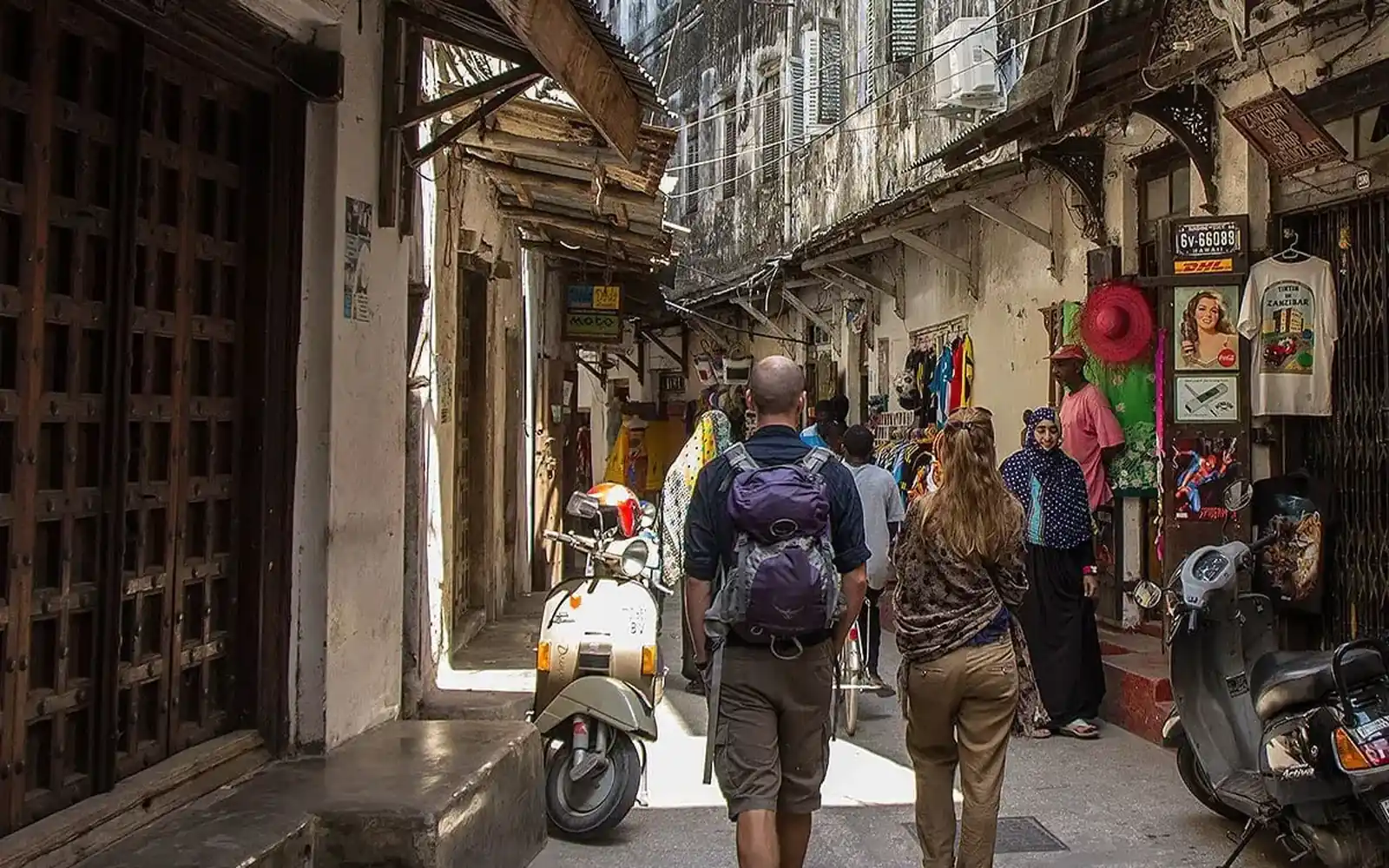
- Guide
- Culture
- Reading time
- 9minutes
- In this guide
- 7sections
- What to eat
- Dress and etiquette
- Ramadan
Written and maintained by the Safari Soles planning team in Arusha, Tanzania.
Eat urojo soup, pilau, biryani, octopus curry, mishkaki skewers, chapati and Zanzibar pizza, and drink fresh sugarcane juice with lime and ginger.
- Order octopus curry at least once; it is the island's signature dish.
- Forodhani is best after 6.30pm; choose stalls with a queue.
- Cover shoulders and knees away from the beach.
- Ask before photographing people, especially women.
- Learn five words of Swahili; it goes a very long way.
01 / 07
Swahili food worth ordering
Zanzibari cooking is a trade-route cuisine. Coconut, cardamom, clove and cinnamon come from the island itself; the rice dishes and samosas came with Persian and Indian merchants; the grilled meat and cassava are mainland African. The result is milder and more aromatic than most people expect: less chilli heat, more layered spice.
The fish is the point. Kingfish, red snapper, tuna and octopus come off the boats each morning, and in a decent local restaurant you choose from a tray before it is grilled. Octopus curry, slow-cooked in coconut milk until soft, is the dish to order if you order only one. For how this fits the rest of a trip, our Zanzibar travel guide covers timing, beaches and costs together.
Dishes to look for
Octopus curry
Octopus slow-cooked in spiced coconut milk
- Where
- Everywhere; best in village restaurants
Urojo (Zanzibar mix)
Tangy turmeric soup with bhajia, potato and crisps
- Where
- Forodhani, Darajani market
Pilau and biryani
Spiced rice with beef, chicken or fish
- Where
- Local cafés, farm lunches
Mishkaki
Grilled marinated meat skewers
- Where
- Street stalls after dark
Zanzibar pizza
A folded stuffed pancake, savoury or Nutella
- Where
- Forodhani night market
Mchuzi wa samaki
Coconut fish curry with rice
- Where
- Beach village restaurants
Mandazi
Lightly sweet fried dough, eaten at breakfast
- Where
- Cafés and markets
Sugarcane juice
Pressed cane with lime and ginger
- Where
- Forodhani; ask for no ice
Street food in Zanzibar is fine if you use the normal rules: eat where it is busy and freshly cooked to order, avoid pre-cut fruit and salads washed in tap water, skip ice outside hotels, and drink bottled or filtered water. The most common cause of an upset stomach here is not street food but seafood that has sat out in the heat at a quiet restaurant.
02 / 07
How to do Forodhani properly
Every evening the gardens on the Stone Town seafront fill with grills, and half the town comes to eat. It is touristy and it is also completely genuine: Zanzibari families eat here too. Arrive around 6.30pm as the stalls light up, walk the whole row before choosing anything, and buy from the stalls with local customers queuing rather than the ones with a man waving a laminated menu.
Prices should be quoted before you order, in shillings. A skewer or two, a Zanzibar pizza and a sugarcane juice is a full dinner for a few dollars. The seafood platters displayed on ice are the one thing we would avoid: they have often been out for hours. Order what goes on the grill in front of you.
- Go at dusk, around 6.30pm, and walk the row first.
- Agree the price before anything is cooked.
- Choose grilled-to-order over pre-cooked display platters.
- Skip the ice in juices unless the stall is using filtered water.
- Carry small shilling notes; change is hard to find.
03 / 07
Dress, customs and respect
On the beach and in resorts
- Swimwear is fine on hotel beaches
- Topless sunbathing is not acceptable anywhere
- Cover up when walking to a village or shop
- Alcohol is served freely in tourist venues
In Stone Town and villages
- Shoulders and knees covered, men and women
- A light scarf is useful for women at mosques and markets
- Ask before photographing people, always
- Public affection between couples is best kept minimal
None of this is enforced by anyone, and nobody will confront you. But Zanzibaris are unfailingly polite, and the difference in warmth between a visitor who has covered up in a village and one who has not is obvious within thirty seconds. It is the cheapest possible upgrade to a trip.
Greetings matter more here than in most places. A conversation properly begins with an exchange: *jambo* or, better, *habari?*: before you ask for anything. Rushing straight to a question reads as brusque.
Swahili worth knowing
- Jambo / Habari?
- Hello / How are you?
- Nzuri
- Good (the reply)
- Karibu
- Welcome
- Asante sana
- Thank you very much
- Hakuna matata
- No problem
- Pole pole
- Slowly, slowly
- Ngapi?
- How much?
- Samahani
- Excuse me / sorry
04 / 07
Visiting during Ramadan
Ramadan moves roughly eleven days earlier each year, so check the dates for your travel year against our best time to visit guide. Beach resorts operate entirely normally (meals, bars and excursions all run as usual) so a resort-focused trip is barely affected.
Stone Town is different. Many local restaurants close during daylight hours, the pace slows, and eating, drinking or smoking in the street during the day is genuinely impolite. In exchange you get the most atmospheric time of year in the old town: the streets fill spectacularly at sunset for iftar, and Forodhani becomes something else entirely. Dress more conservatively than usual and it is a rewarding time to visit, not a difficult one.
- Do not eat, drink or smoke in public in Stone Town during daylight.
- Expect reduced restaurant options in town, but not at resorts.
- Dress more conservatively than usual.
- Book iftar at a rooftop restaurant, it is the best meal of the year.
- Eid closes almost everything local for two to three days.
-
Stone Town
Where most of the island's food and culture actually lives, street by street.
Read the guide -
Spice tour
The plantations behind the kitchen, plus a Swahili lunch cooked on the farm.
See the tour -
Best time to visit
Seasons, sea conditions and how Ramadan and Eid fall against them.
Check timing
05 / 07
Where Zanzibari food comes from
Zanzibari cooking is Indian Ocean cooking: an African coastal base of fish, cassava, rice and coconut, layered with Arab, Persian and Indian techniques carried in on the monsoon trade, and finished with the spices the island grew for the world. Coconut is in nearly everything: the milk in curries, the flesh grated into rice, the water drunk from the shell. That is the through-line, and it is easiest to see for yourself on a Zanzibar spice tour.
The everyday dishes worth seeking out are not the ones on the hotel buffet. Urojo, the so-called Zanzibar mix, is a tangy mango-and-turmeric soup layered with bhajia, potato and crisps and eaten with a spoon at street stalls. Pilau and biryani show the Persian and Indian inheritance directly. Mchuzi wa samaki is the coconut fish curry that most people remember. Octopus curry is the island's signature. Mishkaki are grilled skewers eaten in the evening. Mandazi and cassava chips fill the gaps in between.
The imported item most visitors meet first is the 'Zanzibar pizza' at Forodhani: a filled, folded, fried dough that owes more to Zanzibar's improvisation than to Italy, and is better than that description suggests.
Eating well and safely
- Eat where it is busy. High turnover at street stalls is the best food-safety signal there is.
- Watch the cooking. Freshly grilled and fried is safer than anything that has been sitting out.
- Skip the raw salads and ice at simple stalls; bottled water only.
- Ask the price before ordering at Forodhani: quoted prices for tourists drift upwards.
- Ramadan changes everything during daylight hours; many local kitchens close until sunset, and the evening food scene becomes extraordinary.
- Alcohol is served at hotels, restaurants and beach bars but is not part of local life; drink discreetly outside those settings.
06 / 07
Language, dress, photography and Ramadan
Zanzibar is a predominantly Muslim society with a strong Swahili coastal culture, and it is generally warm and tolerant towards visitors who make a small effort. The effort is not complicated: cover shoulders and knees away from the beach, greet people before asking them anything, and ask before taking photographs of individuals.
A handful of Swahili words changes the tone of every interaction. *Jambo* is the tourist greeting; *habari* is what people actually say. *Karibu* means welcome, *asante* thank you, *hapana asante* no thank you, *pole pole* slowly. Use them and the response is noticeably different.
During Ramadan, eating, drinking and smoking in public during daylight is inconsiderate rather than illegal, and most visitors simply do it out of sight. Resorts operate normally throughout. The compensation is that Stone Town after sunset during Ramadan is one of the best food experiences on the island.
Small things that matter
- Right hand for eating, greeting and handing things over.
- Public affection is best kept low-key away from resort grounds.
- Photographing people, especially women, requires permission: ask, and accept no.
- Bargaining is normal in markets and expected to be good-humoured, not aggressive.
- Tipping is customary and appreciated: hotel staff, guides, drivers and boat crews.
- Buy local: spices from the farms, seaweed soap from the east-coast cooperatives, art from the maker rather than the beach reseller.
If wildlife interests you as much as food, the red colobus monkeys at Jozani Forest make a natural half-day pairing on the same trip.
07 / 07
A short Kiswahili glossary for Zanzibar
English is widely used in hotels and with guides, but a handful of Kiswahili words changes the tone of nearly every interaction. Greetings matter more here than efficiency: it is normal to greet first and ask your question second.
Greetings and everyday words
Jambo / Habari
Meaning Hello / how are things
- When to use it
- Standard greeting to anyone
Mambo: Poa
Meaning What's up: cool
- When to use it
- Informal, common with younger people
Shikamoo: Marahaba
Respectful greeting to an elder: the reply
- When to use it
- Greeting older people; widely appreciated
Karibu / Karibuni
Welcome (to one / to several)
- When to use it
- You will hear it constantly; Asante is the reply
Asante (sana)
Meaning Thank you (very much)
- When to use it
- Everywhere
Tafadhali
Meaning Please
- When to use it
- Requests
Samahani
Meaning Excuse me / sorry
- When to use it
- Passing someone, getting attention
Hapana asante
Meaning No, thank you
- When to use it
- Declining a seller politely and firmly
Pole / Pole pole
Meaning Sorry (sympathy) / slowly
- When to use it
- Sympathy, or asking someone to slow down
Hakuna matata
Meaning No problem
- When to use it
- Genuinely used, not only in films
Ngapi? / Bei gani?
Meaning How much? / what price?
- When to use it
- Markets and taxis: agree the price first
Maji / Chai / Kahawa
Meaning Water / tea / coffee
- When to use it
- Cafés and street stalls
Samaki / Nyama / Mboga
Meaning Fish / meat / vegetables
- When to use it
- Reading a menu
Choo kiko wapi?
Meaning Where is the toilet?
- When to use it
- Useful anywhere
Kwaheri
Meaning Goodbye
- When to use it
- Leaving
Kiswahili is the national language of Tanzania and everyday speech on the islands includes distinct local usage.
Common mistakes to avoid
The planning slips we see most often. Each one is easy to avoid once you know it.
- Walking through a village in swimwear.
- Photographing people, especially women, without asking.
- Eating pre-cooked seafood platters left out on ice.
- Eating in the street in Stone Town during Ramadan daylight hours.
- Only eating at your hotel and leaving without tasting the island.
Our Zanzibari guides write this section, and their consistent point is that the island rewards small courtesies out of all proportion. Cover up, greet people properly, learn five words, and you will have a different trip from the person on the next sunbed. If food and culture is the priority, have us design the itinerary around it rather than bolting it onto a standard plan.
Questions worth asking any operator
Copy these questions into your enquiry: to us or to any operator you are comparing. The answers tell you more about a Zanzibar trip than any brochure.
- Does our trip fall during Ramadan or Eid?
- Can you book a Swahili cooking class or a home lunch?
- Is the hotel restaurant our only realistic dinner option?
- Is alcohol served at the property?
- Can a local guide take us to Forodhani the first evening?
What Safari Soles puts in writing
Nothing important about your trip should be discovered at check-in. Each of these is put in writing for your itinerary before you pay a deposit.
-
Which beach area, and why that one for our dates?
Tide, wind and atmosphere vary hugely by coast; the reason should match how you want to spend your days.
-
What exactly is included in the board basis?
Half board, full board and all-inclusive mean different things island to island: drinks and excursions are often outside.
-
How are transfers and internal flights handled?
Baggage limits, drive times and connection buffers decide whether a safari-to-beach day is calm or stressful.
-
Which excursions are booked, and at what price?
Pre-booked trips at fixed prices avoid beach-side selling and surprise costs mid-holiday.
-
What is the payment, change and cancellation policy?
Island hotels have their own terms; you should see them in writing before you pay a deposit.
How we run a Zanzibar trip
Safari Soles is a Tanzania-based team. This is what we do for every traveller who books an island stay with us, in plain language.
-
One planner, start to finish
The person who plans your route is the person who answers on the day you travel. No handover to an unnamed inbox.
-
Itemised quotes
Accommodation, transfers, flights, excursions and fees are listed separately so you can see exactly what you are paying for.
-
Safari and beach as one trip
We plan the parks, the internal flight and the island days together, which is where most Zanzibar itineraries go wrong.
-
Honest seasonal advice
If your dates fall in the long rains or a tide window that will not suit you, we say so and suggest an alternative.
Planned by people who live the route
This hub exists because the same Zanzibar questions come up on every safari enquiry we answer.
- Locally based in Tanzania
- Safari and island specialists
- Licensed and insured operator
- Fast, direct answers
- Read Safari Soles reviews on TripAdvisor
- Read Safari Soles reviews on SafariBookings
- Read Safari Soles reviews on Google
Where these facts come from (2)
- Zanzibar Commission for Tourism Official island tourism body: licensed operators, entry rules and visitor information.
- UNESCO: Stone Town of Zanzibar World Heritage listing describing the Swahili coastal culture that shapes Zanzibari food, language and daily life.
Related Safari Soles guides
Continue with the guides travellers usually read next.
- Stone Town Zanzibar Walking the old town's lanes, carved doors, markets and heritage sites, and how long to stay before the beach. Culture
Read the guide
- Zanzibar Spice Tour What a spice farm visit actually involves, when to book it and how it pairs with a Stone Town day. Culture
Read the guide
 Best Time to Visit Zanzibar Dry seasons, rain months, humidity, sea conditions and how Zanzibar timing lines up with Serengeti migration months. Planning
Read the guide
Frequently Asked Questions
-
Octopus curry in coconut milk, urojo soup, pilau and biryani rice, mishkaki skewers, chapati and Zanzibar pizza, all built on locally grown cloves, cardamom and cinnamon.
Eat well, travel respectfully
We will build a trip with real Swahili food in it (a farm lunch, a cooking class, a night at Forodhani) guided by people from here.