


Tanzania Safari and Zanzibar: The Complete Two-Week Trip
Tanzania is one of the few countries where a major safari circuit and an Indian Ocean island sit two hours apart by air. This is how to build the whole trip as one route.
- Guide
- Safari + Beach
- Reading time
- 16minutes
- In this guide
- 8sections
- Northern vs southern circuit
- 10–16 day plans
- Where the money goes
Written and maintained by the Safari Soles planning team in Arusha, Tanzania.
The standard trip is the northern circuit plus Zanzibar: Tarangire, Ngorongoro and the Serengeti, then a flight to the coast.
- Northern circuit = classic wildlife density and the migration.
- Southern circuit = fewer vehicles, boat safaris, more remote camps.
- Both connect to Zanzibar by scheduled light aircraft.
- 10 days minimum, 12–14 days ideal, 16 days if you add Kilimanjaro.
- The parks drive the budget; the island is where you control it.
01 / 08
Northern or southern circuit before the beach?
Safari + beach sequencer
Work out the routing, the order and the realistic split of nights.
0 of 3 answered
Answer all 3 questions and your result appears here.
For a first Tanzania trip we usually recommend the northern circuit. The Serengeti and Ngorongoro deliver the density of wildlife people picture when they imagine Africa, and the road distances allow a mixed drive-and-fly itinerary that keeps costs sensible.
The southern parks are our recommendation for anyone who has already done a classic safari. Boat safaris on the Rufiji and walking safaris in Ruaha are experiences the northern circuit cannot offer, and the flight to Zanzibar from Dar es Salaam is the shortest hop in the country.
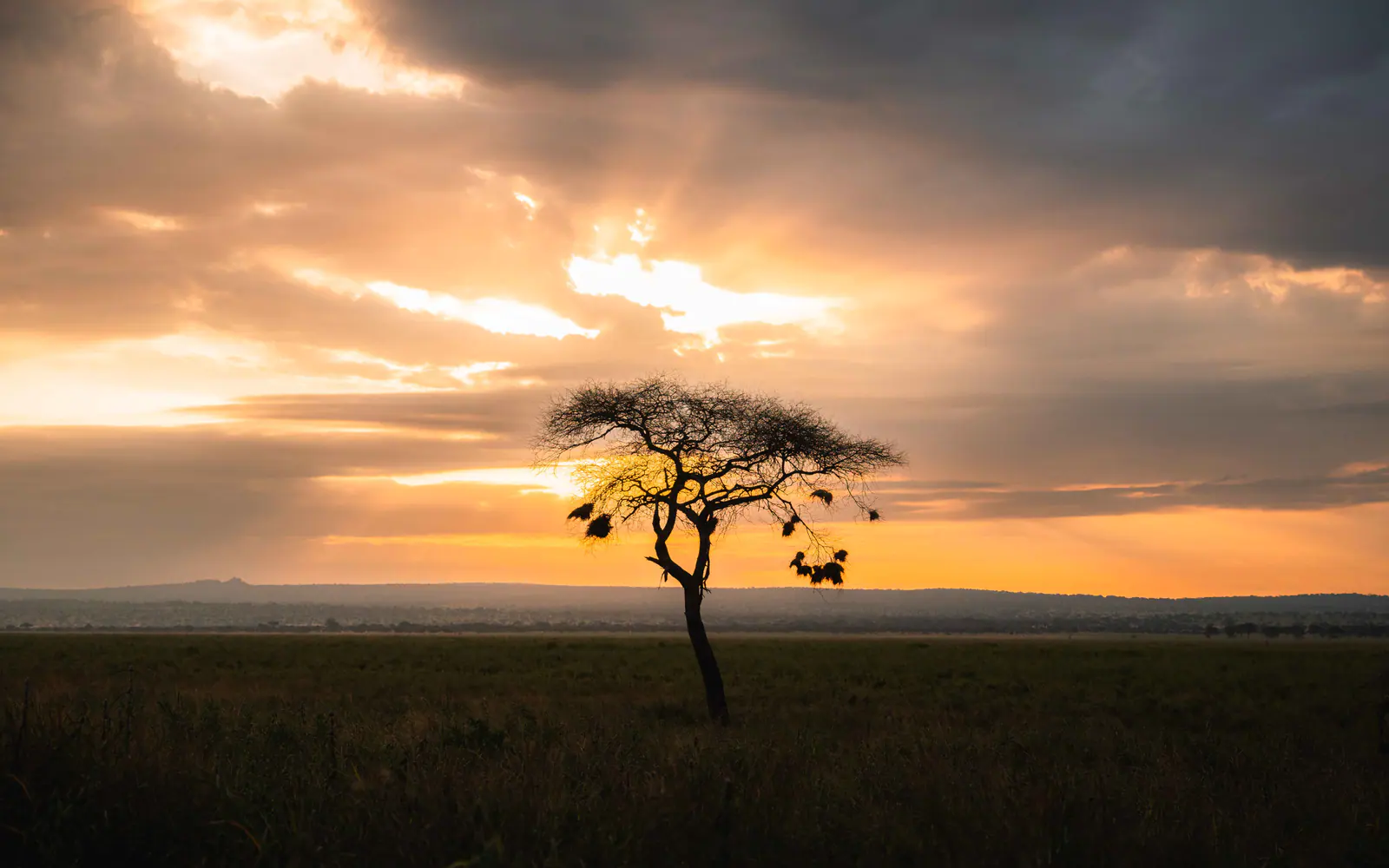
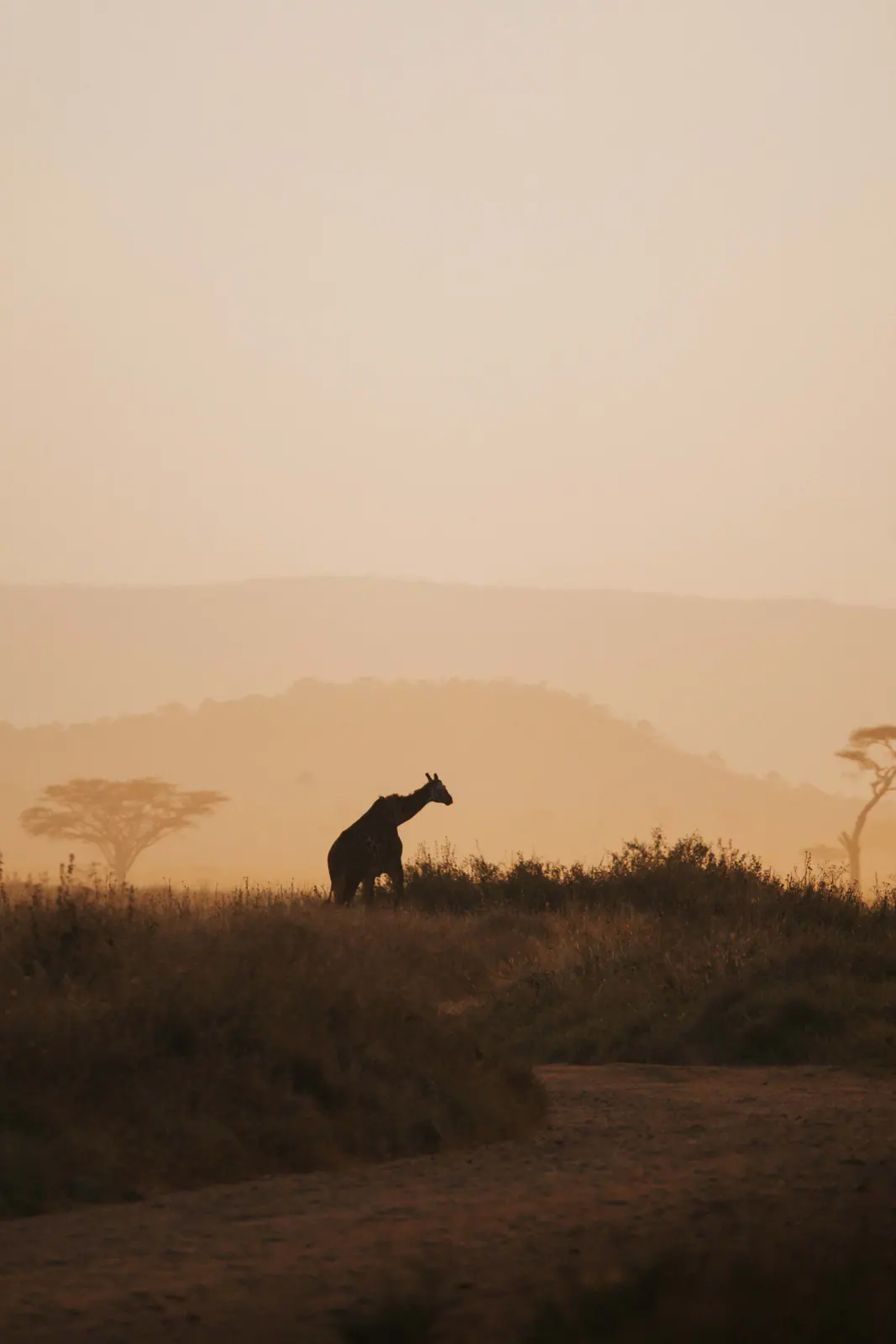
A lone acacia silhouetted against a low sun breaking through heavy cloud, with orange light along the horizon.
02 / 08
Three itinerary lengths
10 days: the efficient version
- Night 1 Arusha; days 2–3 Tarangire and Ngorongoro
- Days 4–6 Serengeti, flying out on day 7
- Nights 7–9 Zanzibar north or east coast
- Day 10 fly home from Zanzibar
13 days: the comfortable version
- Night 1 Arusha; days 2–3 Tarangire and Lake Manyara
- Day 4 Ngorongoro Crater; days 5–7 Serengeti (two regions)
- Day 8 fly to Zanzibar; night 8 Stone Town
- Nights 9–12 beach; day 13 fly home
16 days: safari, mountain and sea
- Days 1–7 Kilimanjaro climb via Lemosho or Machame
- Day 8 rest in Arusha; days 9–12 northern circuit safari
- Day 13 fly to Zanzibar; nights 13–15 beach recovery
- Day 16 fly home: see Kilimanjaro and Zanzibar
03 / 08
Where the budget actually goes
Park and crater fees
Driven by Days in parks, per person
- Can you control it?
- Only by reducing park days
Safari accommodation
Camp vs lodge, location inside or outside parks
- Can you control it?
- Yes: the biggest single lever
Vehicle and guide
Driven by Private vs shared, days
- Can you control it?
- Yes, but a private vehicle is worth it
Internal flights
Driven by Sectors flown
- Can you control it?
- Somewhat: driving one leg saves money and costs time
Zanzibar hotel
Season, board basis, room category
- Can you control it?
- Yes: huge range at every standard
Excursions and drinks
Driven by How much you book
- Can you control it?
- Yes
Ask any operator for the trip split into these lines. If a quote is a single number, you cannot see whether the saving is coming from a cheaper camp or from fewer park days, and those are very different holidays.
04 / 08
The best months for both halves
June to October is the strongest combined window: dry-season game viewing, river crossings in the northern Serengeti from around July, and Zanzibar at its least humid. January and February are the other strong option, pairing the southern Serengeti calving season with the calmest, clearest sea of the year.
March to May is the low season for both. The parks are green and beautiful with very few vehicles, but the coast is at its wettest and some island hotels close. If your dates are fixed in April, we would weight the trip towards the parks and keep the beach short.
05 / 08
Northern circuit, southern circuit, or western, with Zanzibar attached
Tanzania has more than one safari, and which one you pair with Zanzibar changes cost, logistics and season more than most travellers expect.
The northern circuit (Tarangire, Lake Manyara, Ngorongoro and the Serengeti) is the one nearly everyone means. It has the highest wildlife density, the widest range of accommodation from mid-range to very high-end, the best road network, and frequent scheduled flights straight from the Serengeti airstrips to Zanzibar. For a first Tanzania trip combined with the island, it is the correct answer in almost every case. See our Tanzania safari guides for how each park fits together.
The southern circuit (Nyerere (formerly Selous) and Ruaha) is wilder, emptier and strong on boat safaris and walking. It also sits geographically closer to Dar es Salaam and therefore to Zanzibar, which makes the transfer simple. It suits repeat safari travellers and people who value solitude over sheer volume of animals.
The western parks (Katavi and Mahale, with chimpanzee trekking on Lake Tanganyika) are extraordinary and expensive, with limited flights. Pairing them with Zanzibar makes a serious, long, high-budget trip, not a two-week holiday.
Choosing your safari half
| Circuit | Best for | Season | Zanzibar link |
|---|---|---|---|
| Northern | First safari, big game, migration, families | Jun–Oct dry; Jan–Feb calving | Direct flights from Serengeti / Arusha |
| Southern | Repeat visitors, boat and walking safari, quiet | Jun–Oct | Short hop via Dar es Salaam |
| Western | Chimpanzees, remoteness, high budget | Jun–Oct | Long, expensive routing |
Northern
- Best for
- First safari, big game, migration, families
- Season
- Jun–Oct dry; Jan–Feb calving
- Zanzibar link
- Direct flights from Serengeti / Arusha
Southern
- Best for
- Repeat visitors, boat and walking safari, quiet
- Season
- Jun–Oct
- Zanzibar link
- Short hop via Dar es Salaam
Western
- Best for
- Chimpanzees, remoteness, high budget
- Season
- Jun–Oct
- Zanzibar link
- Long, expensive routing
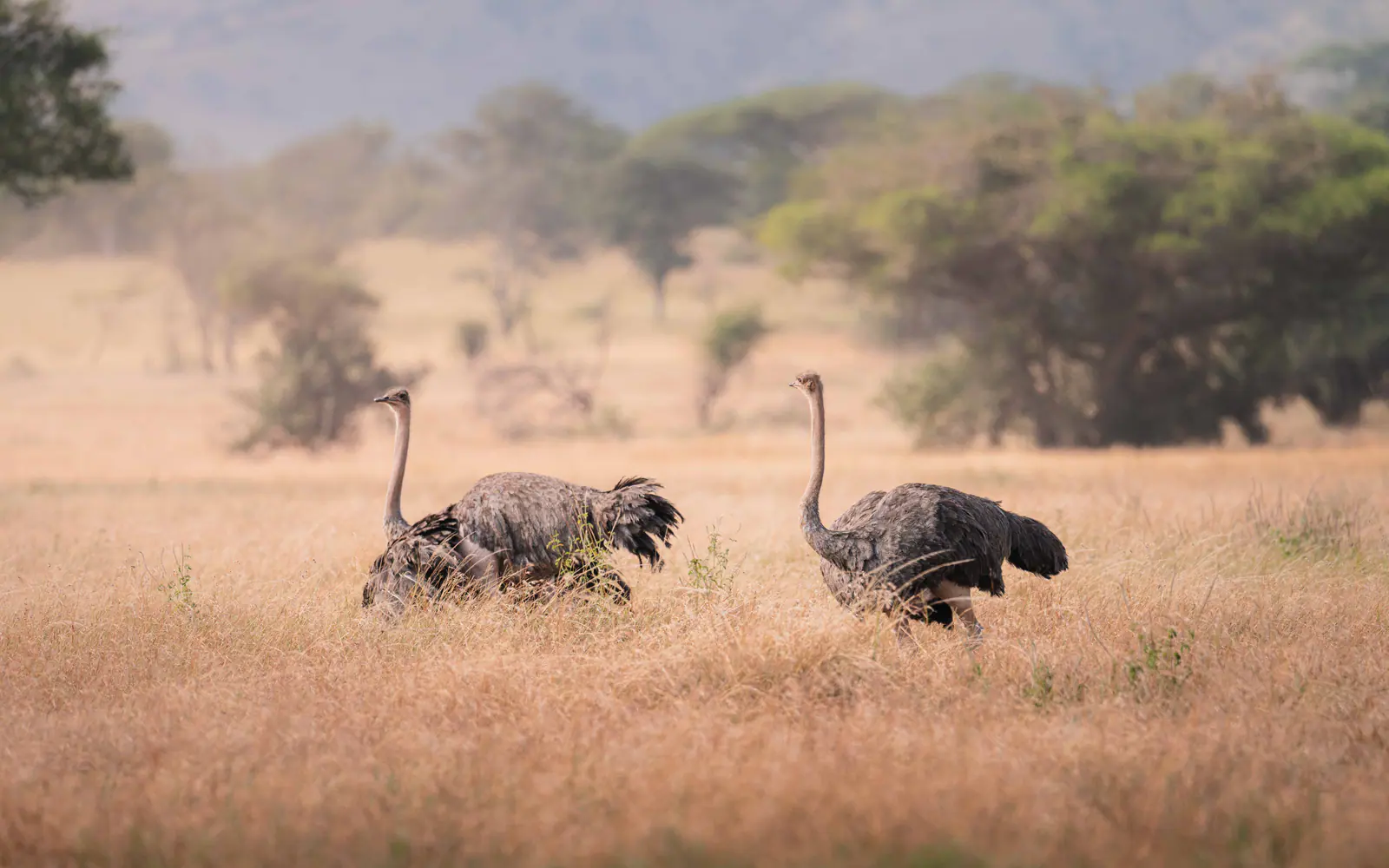
Two ostriches walking through dry grass, with acacia trees beyond.
06 / 08
How a Tanzania and Zanzibar budget really breaks down
Safari in Tanzania typically costs two to four times the beach half per day, and the reason is structural rather than luxury: park and conservation fees, concession fees, vehicle and guide costs, and the logistics of supplying remote camps. Zanzibar, by contrast, has real competition between hundreds of hotels and no daily park fee, so the price range is enormous and value is easy to find.
The practical implication is that trimming a safari night saves far more than trimming a beach night, and that upgrading the island half is usually the cheapest way to make a trip feel more special. Our cost guide breaks down the Zanzibar side in detail.
Costs people forget to budget
- Zanzibar's mandatory travel insurance, purchased in advance, per visitor.
- Infrastructure tax charged per person per night by Zanzibar hotels, usually payable locally.
- Domestic flight luggage limits and excess charges on light aircraft.
- Tips for safari guide, camp staff and Zanzibar hotel staff: budget separately and in cash.
- Excursions on the island: Mnemba access fees, Jozani entry, Stone Town guiding.
- Visa on arrival for Tanzania, plus any transit-country requirements.
07 / 08
How to split safari and beach nights
The single decision that shapes a combined trip is how many nights go to each half. Safari nights are expensive and tiring but front-loaded with the reason you came; beach nights are cheap, restorative and best at the end. Under-allocating the safari produces a rushed park circuit; under-allocating the beach means flying home still exhausted.
Sample structures
| Trip length | Safari nights | Zanzibar nights | Shape |
|---|---|---|---|
| 10 days | 5 | 3 | Tarangire, Ngorongoro, two Serengeti regions, then north or east coast |
| 12 days | 6 | 4 | Adds a second crater-area or Serengeti night and one more beach day |
| 14 days | 7 | 5 | Two Serengeti regions properly, one Stone Town night, four beach nights |
10 days
- Safari nights
- 5
- Zanzibar nights
- 3
- Shape
- Tarangire, Ngorongoro, two Serengeti regions, then north or east coast
12 days
- Safari nights
- 6
- Zanzibar nights
- 4
- Shape
- Adds a second crater-area or Serengeti night and one more beach day
14 days
- Safari nights
- 7
- Zanzibar nights
- 5
- Shape
- Two Serengeti regions properly, one Stone Town night, four beach nights
Rules that hold on almost every trip
- Beach last. Recovery works in one direction; nobody wants a game drive at 5:30am after five days of doing nothing.
- Minimum three beach nights. Two nights is one full day once flights are subtracted.
- Two nights minimum in each safari camp where the budget allows: single-night stays are mostly packing and driving.
- One buffer night on the island before an international departure, so a delayed light aircraft never threatens the flight home.
- Stone Town at the front or back of the beach stay, never in the middle.
Fly or drive between parks
Fly when
- The itinerary is 10 days or shorter and every hour counts
- You are going to the northern Serengeti, or moving between two Serengeti regions
- Anyone in the party dislikes long, rough road days
- You are connecting the safari to Zanzibar: flying this leg is almost always better
Drive when
- Budget matters more than time and the circuit is Tarangire, Manyara and the crater
- You want the Rift Valley escarpment and roadside Tanzania as part of the experience
- You are travelling as a family and want one vehicle, one guide and flexible stops
- The trip is 12 days or longer, so one long transfer day does not cost a park day
Honeymoon and family variations
Honeymoons work best with fewer, longer stays: two safari camps rather than four, a private vehicle, and an island half weighted towards the north-east or a small barefoot-luxury property rather than a large resort. Spend the upgrade money on the Zanzibar half, where the price difference between good and exceptional is far smaller than in the parks. See Zanzibar honeymoon.
Families should shorten drive days, choose lodges with pools and family rooms outside the park gates, and pick a beach with swimmable water at more states of the tide: Kendwa or Nungwi rather than the far east coast. Check minimum ages for walking safaris, balloon flights and diving before committing to a camp. See Zanzibar family holiday.


08 / 08
JRO, ARK, DAR or ZNZ: which airports your trip should use
Most of the friction in a Tanzania and Zanzibar trip comes from the airports, not the parks. There are four that matter, and choosing the wrong combination costs a day at each end.
Kilimanjaro International (JRO) is the northern circuit's international gateway. It sits between Arusha and Moshi, roughly an hour from Arusha, and takes long-haul arrivals from Europe, the Gulf and Nairobi. If your safari is Tarangire, Ngorongoro and the Serengeti, you almost certainly fly into JRO.
Arusha Airport (ARK) is the small domestic strip inside town. Nearly all light-aircraft services to the Serengeti and onward to Zanzibar operate from here, not from JRO. Assume a road transfer between the two on arrival and departure day, and do not let a schedule assume they are interchangeable.
Dar es Salaam (DAR) is the southern circuit's gateway and the hub for Nyerere and Ruaha. It is also the most frequent short hop to Zanzibar: a twenty-minute flight with services throughout the day, which is why southern-circuit trips connect to the coast so easily.
Zanzibar (ZNZ) takes direct international flights from Europe and the Gulf as well as constant domestic services. That matters: finishing on the island and flying home from ZNZ avoids backtracking to the mainland entirely. Where your airline allows it, book the international ticket as multi-city: into JRO or DAR, out of ZNZ. Paying a small fare premium for that construction usually saves a whole travel day and a hotel night.
Between the safari and the coast, routing varies by airstrip, airline, season and operating day. Some services run direct from a Serengeti airstrip to Zanzibar; others make one or two intermediate stops or route through Arusha. Treat the transfer as a travel day rather than a beach day, and never book a same-day international departure out of Zanzibar on the day you leave the bush.
Which circuit suits which traveller
Circuit choice should follow your wildlife objective and tolerance for driving. Zanzibar attaches well to both.
How many nights each half really needs
There is no single correct split, but the trip length sets the ceiling on what is sensible. Count travel days honestly: arrival day, the safari-to-coast day and departure day rarely deliver much.
Eight days is compressed. It works as a short southern-circuit fly-in with three or four beach nights, or as a crater-focused northern trip, but it will not carry the full northern circuit and a relaxed island stay.
Ten days is workable and the most commonly booked length: roughly five safari nights, three to four beach nights and the transfers in between. Expect one genuinely busy day.
Twelve to fourteen days is where the trip stops feeling rushed. Two nights minimum in each camp, a Serengeti region chosen for the season rather than convenience, and five or six island nights including a buffer night before flying home.
Fourteen days and beyond allows slower travel: two Serengeti regions, or a mountain or cultural element before the parks, and a full week on the coast without the sense that you should be doing something.
What actually drives the cost
Four levers move a Tanzania and Zanzibar budget far more than the hotel star rating. Park and conservation fees are charged per person per twenty-four hours and are the same whether you stay in a mid-range lodge or a top-end camp: so the number of park days is a bigger cost decision than the property. Internal flights are the second lever: each light-aircraft sector is priced per person, and a route with three sectors instead of one changes the total materially. Vehicle exclusivity is the third: a private vehicle and guide throughout typically adds a fixed daily cost split across the party, which makes it much cheaper per head for four than for two. Season is the fourth, and it applies mostly to the island half, where the same room can shift substantially between shoulder and festive weeks.
Group type changes the shape too. Families save by sharing vehicles and family rooms but pay full park fees for older children, so a shorter safari with a longer beach stay usually balances better. Honeymoons get more value from spending the upgrade on the Zanzibar half than on an extra camp category. Private and luxury trips buy back time rather than luxury alone (a private guide, private transfers and flights instead of drives), which is why a fourteen-day private trip often feels calmer than a ten-day one at the same nightly rate.
Common mistakes to avoid
The planning slips we see most often. Each one is easy to avoid once you know it.
- Adding a park because it is on a list, rather than because it changes the trip.
- Comparing quotes that include different numbers of park days.
- Driving every leg to save money and spending three days in a vehicle.
- Booking the island half separately and discovering the flight times do not work.
- Squeezing sixteen days of ambition into ten days of holiday.
The most common upgrade we recommend is not a better lodge. It is one more night in the Serengeti and one fewer transfer day. Movement is what tires people out on a Tanzania trip; the beach is only half the cure. Start planning from our Zanzibar planning hub, or have us design the itinerary once your parks are chosen.
Questions worth asking any operator
Copy these questions into your enquiry: to us or to any operator you are comparing. The answers tell you more about a Zanzibar trip than any brochure.
- How many park days are we actually paying for?
- Which nights are inside the park and which are outside?
- Is the safari vehicle private, and is the guide the same throughout?
- Which legs are flights and which are drives?
- What is included on the island, board basis, transfers, excursions?
What Safari Soles puts in writing
Nothing important about your trip should be discovered at check-in. Each of these is put in writing for your itinerary before you pay a deposit.
-
Which beach area, and why that one for our dates?
Tide, wind and atmosphere vary hugely by coast; the reason should match how you want to spend your days.
-
What exactly is included in the board basis?
Half board, full board and all-inclusive mean different things island to island: drinks and excursions are often outside.
-
How are transfers and internal flights handled?
Baggage limits, drive times and connection buffers decide whether a safari-to-beach day is calm or stressful.
-
Which excursions are booked, and at what price?
Pre-booked trips at fixed prices avoid beach-side selling and surprise costs mid-holiday.
-
What is the payment, change and cancellation policy?
Island hotels have their own terms; you should see them in writing before you pay a deposit.
How we run a Zanzibar trip
Safari Soles is a Tanzania-based team. This is what we do for every traveller who books an island stay with us, in plain language.
-
One planner, start to finish
The person who plans your route is the person who answers on the day you travel. No handover to an unnamed inbox.
-
Itemised quotes
Accommodation, transfers, flights, excursions and fees are listed separately so you can see exactly what you are paying for.
-
Safari and beach as one trip
We plan the parks, the internal flight and the island days together, which is where most Zanzibar itineraries go wrong.
-
Honest seasonal advice
If your dates fall in the long rains or a tide window that will not suit you, we say so and suggest an alternative.
Planned by people who live the route
This hub exists because the same Zanzibar questions come up on every safari enquiry we answer.
- Locally based in Tanzania
- Safari and island specialists
- Licensed and insured operator
- Fast, direct answers
- Read Safari Soles reviews on TripAdvisor
- Read Safari Soles reviews on SafariBookings
- Read Safari Soles reviews on Google
Where these facts come from (2)
- Tanzania National Parks (TANAPA) Official park authority: entry fees, seasons and current park regulations.
- Tanzania Tourist Board National tourism information covering parks, coast and travel practicalities.
Related Safari Soles guides
Continue with the guides travellers usually read next.
 Zanzibar Safari and Beach How a safari and beach trip fits together: order, flight legs, transfer days and how many nights to give each half. Safari + Beach
Read the guide
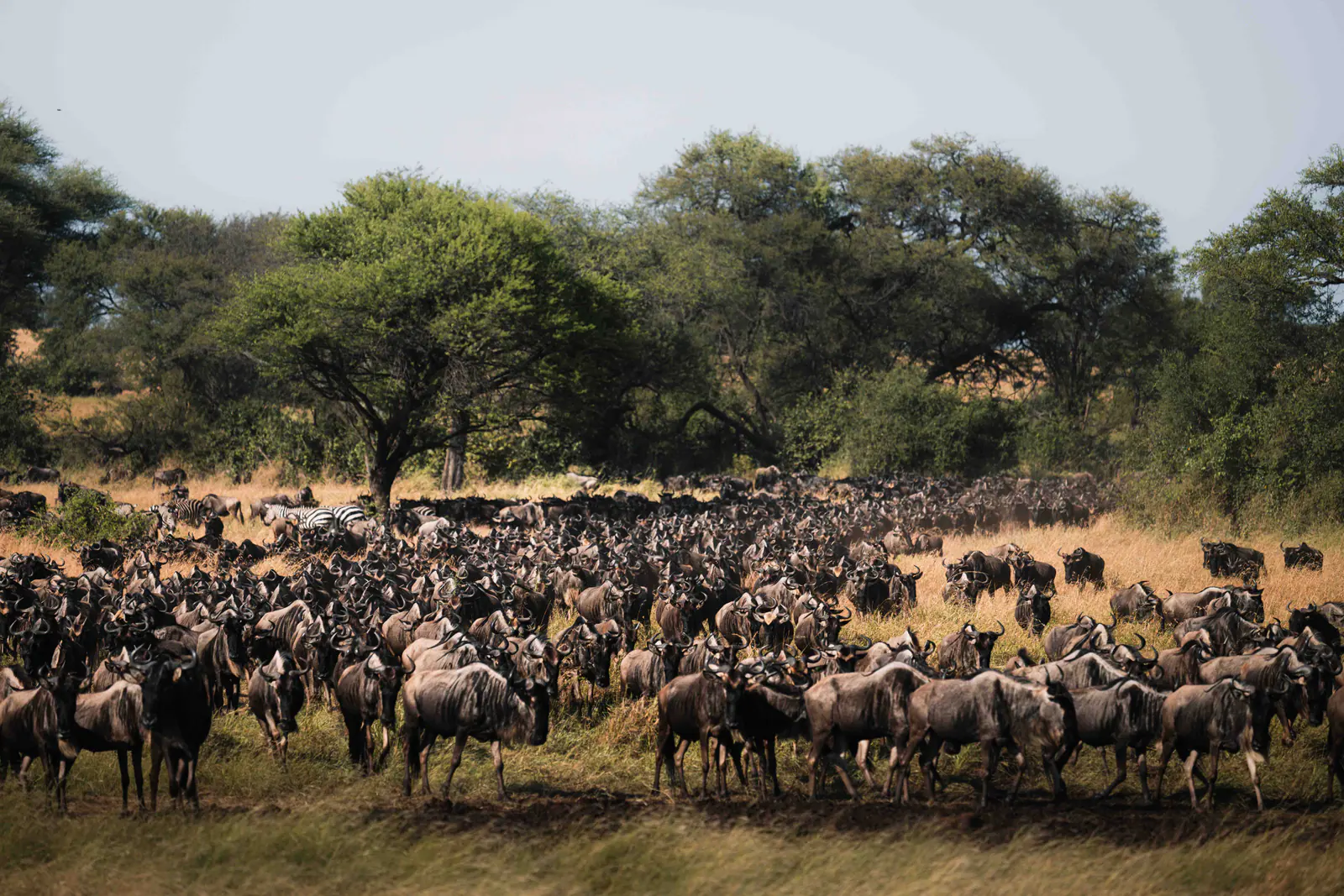 Serengeti and Zanzibar Pairing Great Migration months in the Serengeti with the right Zanzibar beach season and a smooth flight connection. Safari + Beach
Read the guide
 Zanzibar Travel Cost What Zanzibar realistically costs by travel style: accommodation, transfers, meals, excursions and park or marine fees. Cost
Read the guide
Frequently Asked Questions
-
Ten days is the practical minimum for a northern circuit safari plus a short beach stay. Twelve to fourteen days gives both halves room to breathe.
One Tanzania trip, planned end to end
Tell us your dates, how long you have and what you want to see. We will propose a park route, the flight to the coast and a beach that matches your month.