


Serengeti and Zanzibar: Plains Then Ocean
The Serengeti and Zanzibar are the two halves of Tanzania most people picture. Two hours of flying separates the herds from the reef. The planning is all in the timing.
- Guide
- Safari + Beach
- Reading time
- 13minutes
- In this guide
- 5sections
- Migration by month
- Airstrip to island
- 9–13 night plans
Written and maintained by the Safari Soles planning team in Arusha, Tanzania.
Fly from a Serengeti airstrip to Zanzibar, usually Seronera, Kogatende or Grumeti, two to two and a half hours with one or two stops, departing mid-morning or early afternoon.
- The migration is a year-round loop, not a single event: pick the region by month.
- Kogatende (north) and Ndutu (south) are seasonal bases; Seronera works most of the year.
- Bush flights to Zanzibar stop en route; allow the whole day for travel.
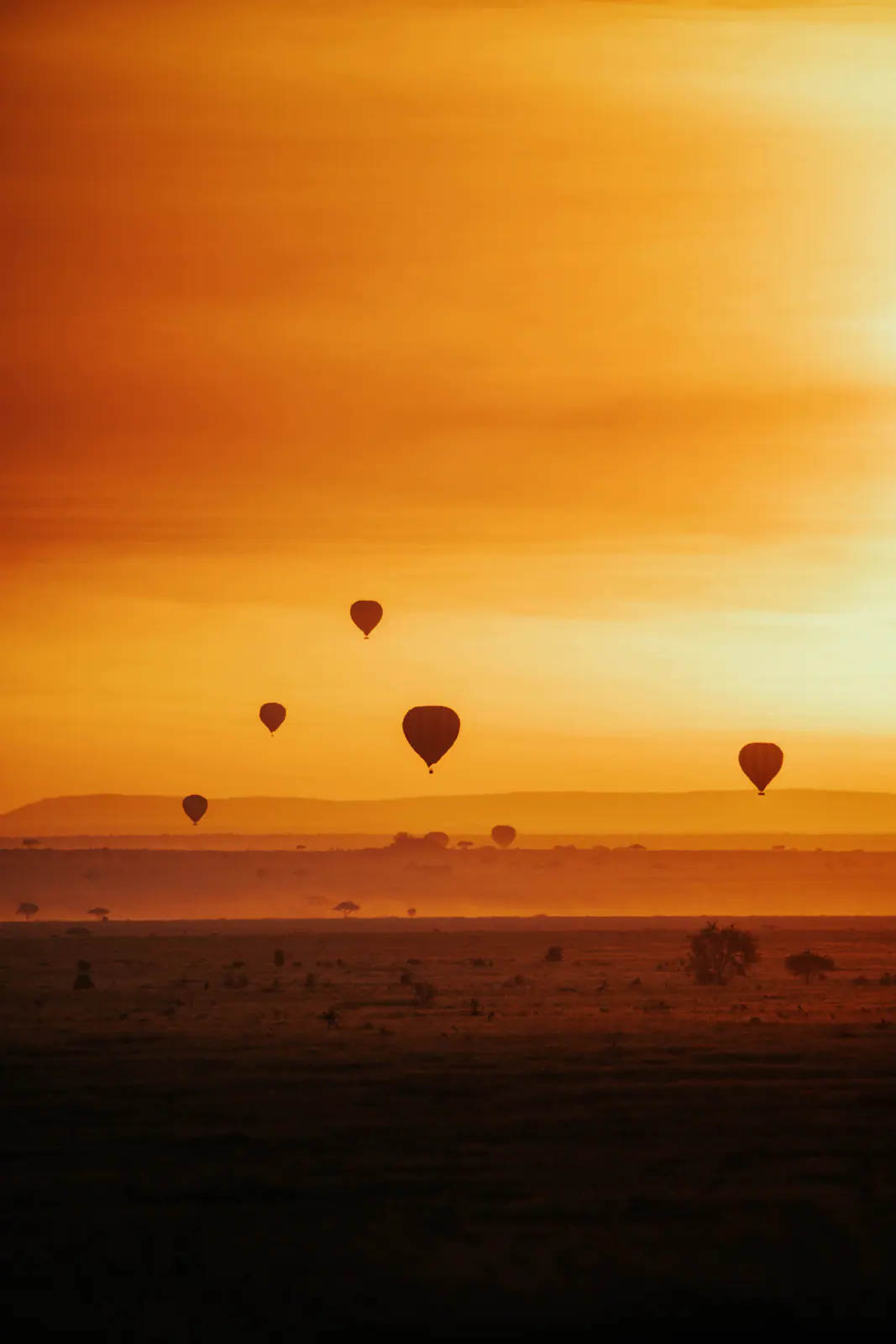
- Balloon flights leave before dawn: never on your fly-out day.
- Zanzibar's north coast is the easiest landing for a post-safari swim across most of the tidal cycle.
01 / 05
Serengeti regions month by month
Serengeti + Zanzibar planner
Serengeti needs more nights than most people allow. Check the routing and the split.
0 of 3 answered
Answer all 3 questions and your result appears here.
| Months | Region | What you see | Zanzibar conditions |
|---|---|---|---|
| Dec – Mar | Southern plains / Ndutu | Calving season, dense predator action | Hot, humid, calmest sea, best diving |
| Apr – May | Central and west | Green season, few vehicles, low rates | Long rains: keep the beach short |
| May – Jun | Western corridor / Grumeti | Herds massing, Grumeti crossings | Dry season starting, excellent |
| Jul – Sep | Northern Serengeti / Kogatende | Mara River crossings | Peak dry season, breezy east coast |
| Oct – Nov | North moving south | Herds returning, quieter camps | Warm, calm, very good value |
Dec – Mar
- Region
- Southern plains / Ndutu
- What you see
- Calving season, dense predator action
- Zanzibar conditions
- Hot, humid, calmest sea, best diving
Apr – May
- Region
- Central and west
- What you see
- Green season, few vehicles, low rates
- Zanzibar conditions
- Long rains: keep the beach short
May – Jun
- Region
- Western corridor / Grumeti
- What you see
- Herds massing, Grumeti crossings
- Zanzibar conditions
- Dry season starting, excellent
Jul – Sep
- Region
- Northern Serengeti / Kogatende
- What you see
- Mara River crossings
- Zanzibar conditions
- Peak dry season, breezy east coast
Oct – Nov
- Region
- North moving south
- What you see
- Herds returning, quieter camps
- Zanzibar conditions
- Warm, calm, very good value
River crossings depend on rain, grass and herd mood. Book two or three nights in the north during the season and treat a crossing as a strong possibility rather than an itinerary item. Anyone who guarantees one is selling, not planning.
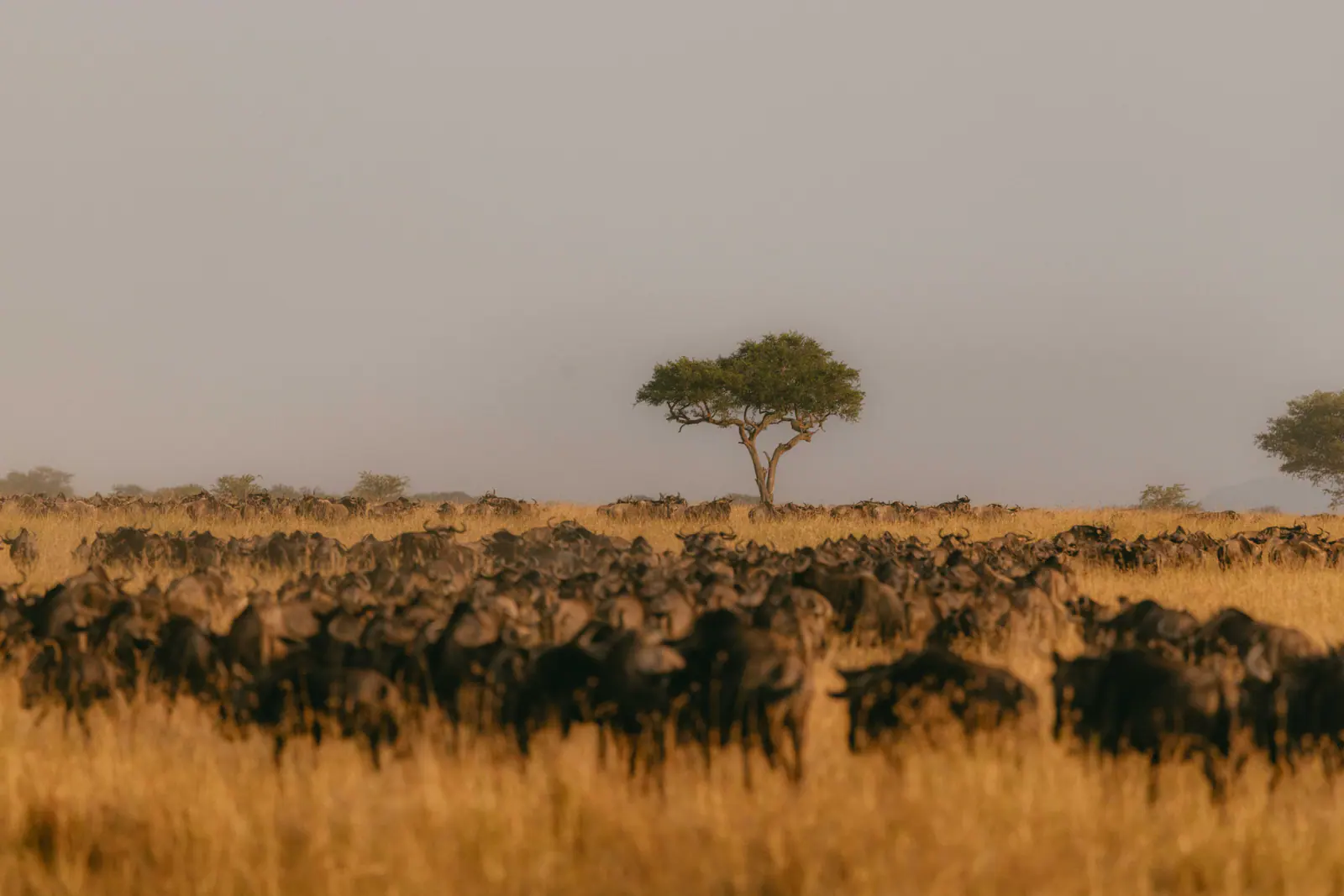
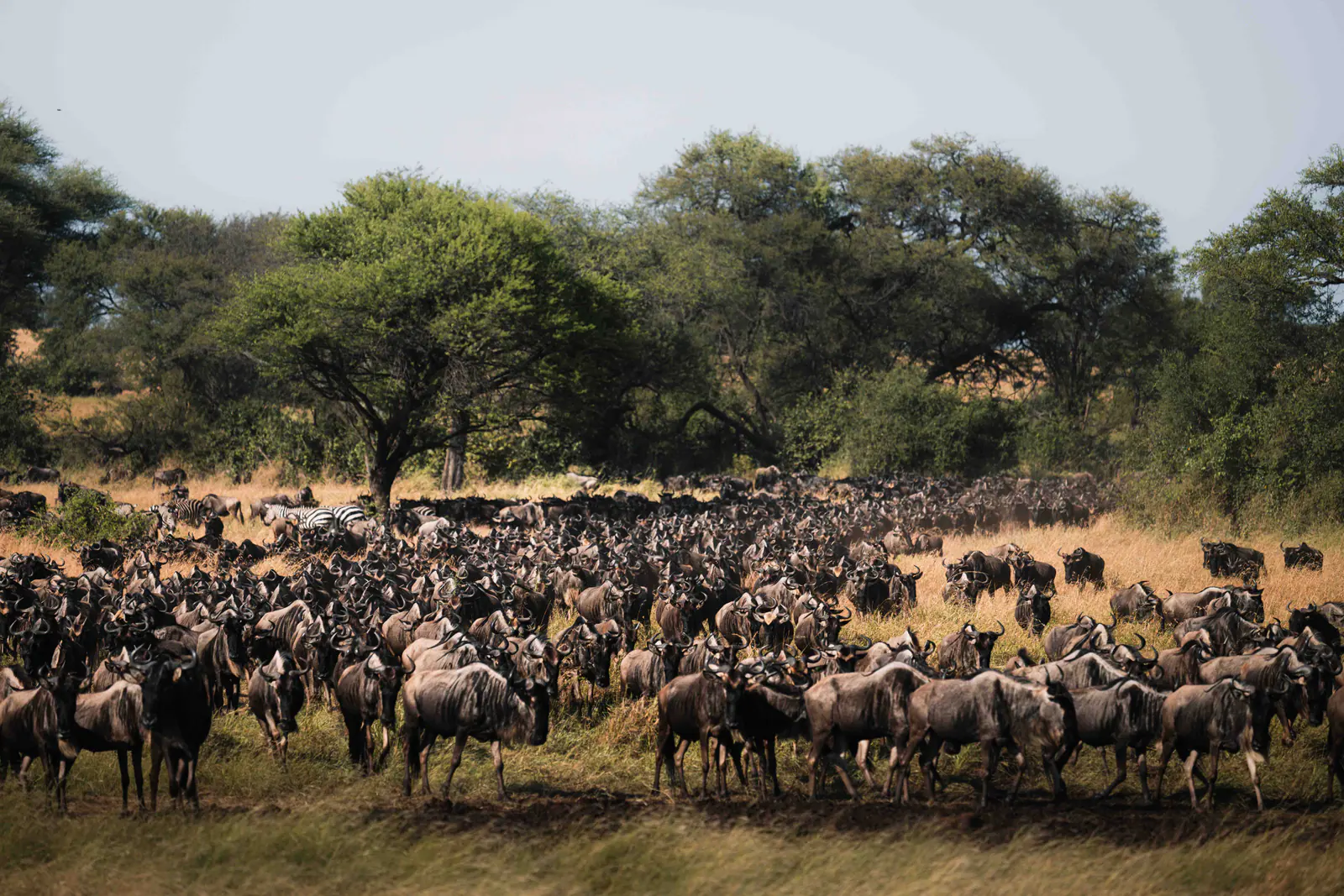
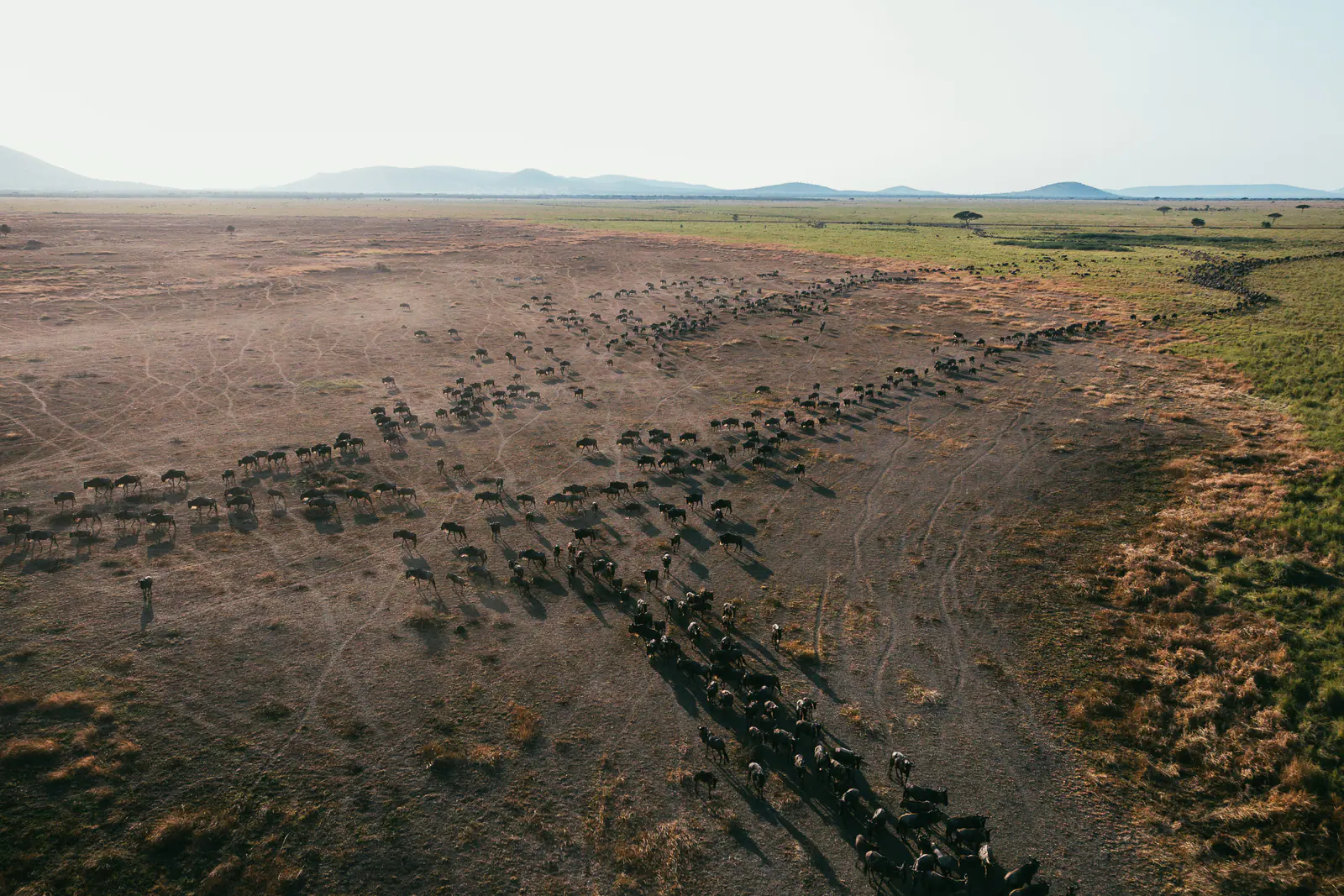
A dense herd of wildebeest grazing in front of a lone acacia.
02 / 05
From the plains to the beach
Your last morning on our Serengeti safaris is usually a short game drive on the way to the airstrip. Light aircraft then hop between strips before turning east, often touching down in Arusha before continuing to Zanzibar. Total elapsed time from camp to beach hotel is typically five to seven hours, which is why we count it as a travel day rather than a beach day.
Baggage is the detail that catches people out: 15kg per person in soft bags is standard, hard shells are refused, and anything extra can be left in storage in Arusha for collection at the end of the trip. Pack your island clothes in a small soft bag and store the rest before you fly into the parks.
- Confirm the airstrip in your itinerary: Kogatende to Zanzibar is a longer routing than Seronera.
- Keep camera gear, documents and medication in hand luggage.
- Expect small aircraft with no toilet on board; the stops are frequent.
- Zanzibar airport transfers take 15 minutes to Stone Town, 60–90 to the north coast.
03 / 05
A nine-night Serengeti and Zanzibar trip
Serengeti to the Indian Ocean, in order
Serengeti is a long way from the coast. Sequencing it properly is what keeps the trip from feeling like a series of airports.
-
Arusha overnight
Arrive, repack, brief with your guide.
-
Ngorongoro or Tarangire, 1–2 nights
Breaks the drive and adds a different ecosystem.
-
Serengeti, 3+ nights
Camp positioned to the herds for your dates, not to a fixed lodge map.
Two nights means half your time is transit
-
Fly Serengeti to Zanzibar
Usually via Arusha. A full travel day either way.
-
Coast, 5 nights
North-west for the least tide-dependent swimming; north-east for quiet and Mnemba.
Budget a genuine flight day between the Serengeti and the coast rather than treating it as an afternoon.
- Night 1
Arusha
Arrive at Kilimanjaro airport, transfer and overnight before flying into the parks.
- Nights 2–3
Central Serengeti
Fly to Seronera; two nights of resident game viewing: lion, leopard, cheetah on the plains.
- Night 4
Seasonal region
Move north or south depending on the month, following the herds.
- Night 5
Ngorongoro or a third Serengeti night
Either descend into the crater or stay with the migration for one more day.
- Day 6
Fly to Zanzibar
Morning drive to the airstrip, flight to the coast, afternoon check-in and first swim.
- Nights 6–8
Beach
Ocean excursion, Stone Town or spice half day, and two entirely free days.
- Day 9
Depart
Morning on the beach, transfer to Zanzibar airport for the international flight.
04 / 05
The best Zanzibar beach after a Serengeti safari
After a week of 5.30am starts on safari and beach, most people want to swim without studying a tide chart. That points to the north coast (Kendwa or Nungwi), where the water stays deep enough through most of the tidal cycle and the transfer from the airport is a single straight run.
If your safari was long and you want silence rather than restaurants, Matemwe or Pongwe on the east side are the better call, with Mnemba Atoll snorkelling on the doorstep. Our best beaches guide compares them properly.
Choose the north if
- You want to swim whenever you feel like it
- You want restaurants and a bit of life
- You are travelling with children
- You have only three or four island nights
Choose the north-east if
- You want quiet after a busy safari
- Snorkelling and diving matter most
- It is a honeymoon
- You have five nights or more
The migration moves: plan the Serengeti around it, then add the island
The great migration is not an event on a date. It is roughly two million wildebeest, zebra and gazelle moving in a continuous, weather-driven loop around the Serengeti–Mara ecosystem. Where the herds are in a given month is predictable within a region; where they are on a given day is not. Any operator who guarantees you a river crossing is selling something they do not control.
The important consequence for a combined trip is that the camp location inside the Serengeti matters more than the month you fly. Booking a northern camp in February, when the herds are calving in the south, is the classic and expensive mistake.
Roughly where the herds are
Indicative patterns, shifted year to year by rainfall.
| Period | Region | What you see |
|---|---|---|
| Dec–Mar | Southern plains / Ndutu | Calving season, huge concentrations, intense predator action |
| Apr–May | Central and western Serengeti | Herds moving, green season, fewer vehicles, lower prices |
| Jun–Jul | Western corridor / Grumeti | Grumeti river crossings, rutting |
| Aug–Oct | Northern Serengeti / Mara river | The famous crossings; the busiest and priciest window |
| Nov | Moving back south | Transitional, quiet, good value |
Dec–Mar
- Region
- Southern plains / Ndutu
- What you see
- Calving season, huge concentrations, intense predator action
Apr–May
- Region
- Central and western Serengeti
- What you see
- Herds moving, green season, fewer vehicles, lower prices
Jun–Jul
- Region
- Western corridor / Grumeti
- What you see
- Grumeti river crossings, rutting
Aug–Oct
- Region
- Northern Serengeti / Mara river
- What you see
- The famous crossings; the busiest and priciest window
Nov
- Region
- Moving back south
- What you see
- Transitional, quiet, good value
Attaching Zanzibar to this is straightforward: scheduled light aircraft link the Serengeti airstrips to Zanzibar most days, usually with a stop, taking a large part of a day. Fly out of the Serengeti in the morning and you are on the sand by mid-afternoon.
The seasonal alignment is helpful too. The August-to-October crossing window sits inside the island's dry kusi season, and the December-to-March calving window coincides with the calmest, clearest Zanzibar sea. Both halves of the trip are in good shape at the same time. See the best time guide for what each island season delivers, or compare the wider Tanzania safari and Zanzibar routing if you have not fixed your parks yet.
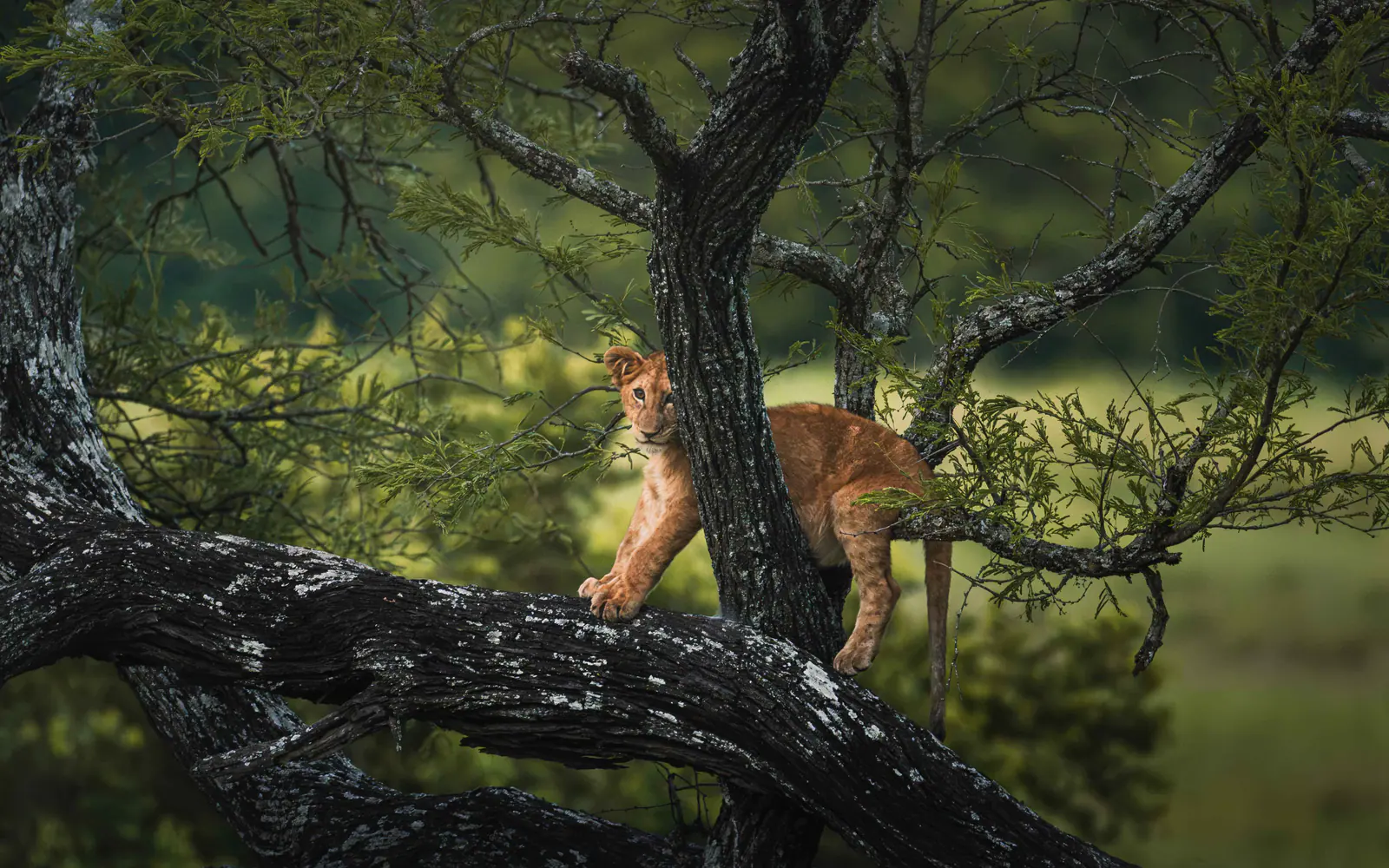
A young big cat climbing along a gnarled branch, one paw braced on the trunk.
05 / 05
“Serengeti” is not one place: choose the region, then fit Zanzibar around it
The Serengeti covers roughly 14,750 square kilometres, and the difference between one region and another in the same week can be the difference between a good safari and a great one. Choose your Serengeti region for the wildlife objective first. Zanzibar should be fitted around that decision, not the other way around.
The four regions that matter
| Region | What it is for | Season context | Access |
|---|---|---|---|
| Central / Seronera | The year-round general-wildlife base: resident lion, leopard along the river lines, plentiful plains game | Reliable in any month, and the safest choice if your dates are fixed and the herds are uncertain | Seronera airstrip: the best-served in the park, with the most onward connections |
| Southern plains / Ndutu ecosystem | Short-grass calving country on the Ngorongoro boundary; concentrated herds and very active predators | Calving context roughly December to March, rainfall-dependent and never a fixed date | Ndutu and Kusini strips; also reachable by road from the crater |
| Western Corridor / Grumeti | River and woodland country following the Grumeti; quieter vehicle numbers | Herd movement through roughly May to July in a typical year | Grumeti and Kirawira strips; fewer daily services |
| Northern Serengeti / Mara River | River-crossing country bordering the Masai Mara; dramatic terrain, big herds when they are present | Crossing season context roughly August to October; presence and timing vary year to year | Kogatende and Lamai strips: remote, so flying is effectively compulsory |
Central / Seronera
- What it is for
- The year-round general-wildlife base: resident lion, leopard along the river lines, plentiful plains game
- Season context
- Reliable in any month, and the safest choice if your dates are fixed and the herds are uncertain
- Access
- Seronera airstrip: the best-served in the park, with the most onward connections
Southern plains / Ndutu ecosystem
- What it is for
- Short-grass calving country on the Ngorongoro boundary; concentrated herds and very active predators
- Season context
- Calving context roughly December to March, rainfall-dependent and never a fixed date
- Access
- Ndutu and Kusini strips; also reachable by road from the crater
Western Corridor / Grumeti
- What it is for
- River and woodland country following the Grumeti; quieter vehicle numbers
- Season context
- Herd movement through roughly May to July in a typical year
- Access
- Grumeti and Kirawira strips; fewer daily services
Northern Serengeti / Mara River
- What it is for
- River-crossing country bordering the Masai Mara; dramatic terrain, big herds when they are present
- Season context
- Crossing season context roughly August to October; presence and timing vary year to year
- Access
- Kogatende and Lamai strips: remote, so flying is effectively compulsory
How the region choice changes the Zanzibar half
Region drives the airstrip, and the airstrip drives the routing to the coast. Seronera has the most onward services, so a central-Serengeti safari usually connects to Zanzibar with the least friction. Kogatende in the far north is the most remote: expect a longer routing, sometimes with intermediate stops, and build a full travel day around it rather than a morning.
Routing varies by airstrip, airline, season and operating day. Some sectors run direct, others stop once or twice. The practical rule is to choose the region for the wildlife, then let the routing set how many hours the transfer takes, then place the beach nights after it. If your Serengeti objective sits in the north during crossing season, protect an extra buffer night on the island before any international departure.
Common mistakes to avoid
The planning slips we see most often. Each one is easy to avoid once you know it.
- Booking two Serengeti nights and expecting two full days of game viewing.
- Scheduling a balloon flight on the morning you fly to the island.
- Arriving at the airstrip with hard suitcases over the 15kg limit.
- Choosing a north-region camp in a month when the herds are in the south.
- Leaving no buffer night between the beach and a long-haul departure.
Tell us your travel month first and let it choose the Serengeti region, not the other way round. A camp in the wrong region in the wrong month is the most expensive mistake in Tanzanian safari planning, and no beach makes up for it. Start from our Zanzibar planning hub or have us build the itinerary around your dates.
Questions worth asking any operator
Copy these questions into your enquiry: to us or to any operator you are comparing. The answers tell you more about a Zanzibar trip than any brochure.
- Which Serengeti region are we in, and why that one for our month?
- Which airstrip do we fly from, and how long is the routing to Zanzibar?
- How many full game-viewing days does this itinerary actually contain?
- Is the vehicle private, and does the guide stay with us?
- What is the baggage limit, and where do we store the rest?
What Safari Soles puts in writing
Nothing important about your trip should be discovered at check-in. Each of these is put in writing for your itinerary before you pay a deposit.
-
Which beach area, and why that one for our dates?
Tide, wind and atmosphere vary hugely by coast; the reason should match how you want to spend your days.
-
What exactly is included in the board basis?
Half board, full board and all-inclusive mean different things island to island: drinks and excursions are often outside.
-
How are transfers and internal flights handled?
Baggage limits, drive times and connection buffers decide whether a safari-to-beach day is calm or stressful.
-
Which excursions are booked, and at what price?
Pre-booked trips at fixed prices avoid beach-side selling and surprise costs mid-holiday.
-
What is the payment, change and cancellation policy?
Island hotels have their own terms; you should see them in writing before you pay a deposit.
How we run a Zanzibar trip
Safari Soles is a Tanzania-based team. This is what we do for every traveller who books an island stay with us, in plain language.
-
One planner, start to finish
The person who plans your route is the person who answers on the day you travel. No handover to an unnamed inbox.
-
Itemised quotes
Accommodation, transfers, flights, excursions and fees are listed separately so you can see exactly what you are paying for.
-
Safari and beach as one trip
We plan the parks, the internal flight and the island days together, which is where most Zanzibar itineraries go wrong.
-
Honest seasonal advice
If your dates fall in the long rains or a tide window that will not suit you, we say so and suggest an alternative.
Planned by people who live the route
This hub exists because the same Zanzibar questions come up on every safari enquiry we answer.
- Locally based in Tanzania
- Safari and island specialists
- Licensed and insured operator
- Fast, direct answers
- Read Safari Soles reviews on TripAdvisor
- Read Safari Soles reviews on SafariBookings
- Read Safari Soles reviews on Google
Where these facts come from (2)
- Tanzania National Parks (TANAPA) Official park authority: entry fees, seasons and current park regulations.
- Tanzania Tourist Board National tourism information covering parks, coast and travel practicalities.
Related Safari Soles guides
Continue with the guides travellers usually read next.
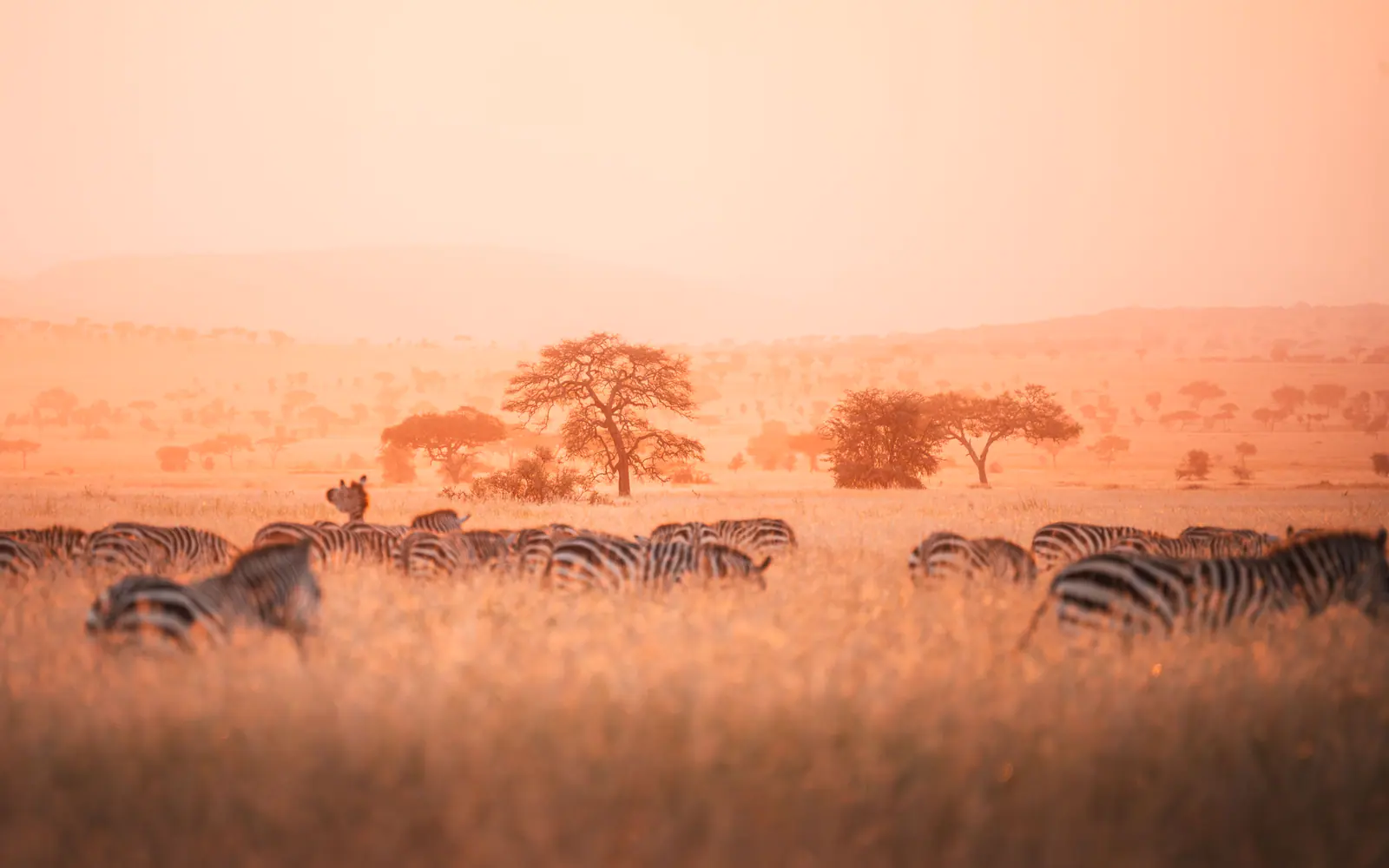 Zanzibar Safari and Beach How a safari and beach trip fits together: order, flight legs, transfer days and how many nights to give each half. Safari + Beach
Read the guide
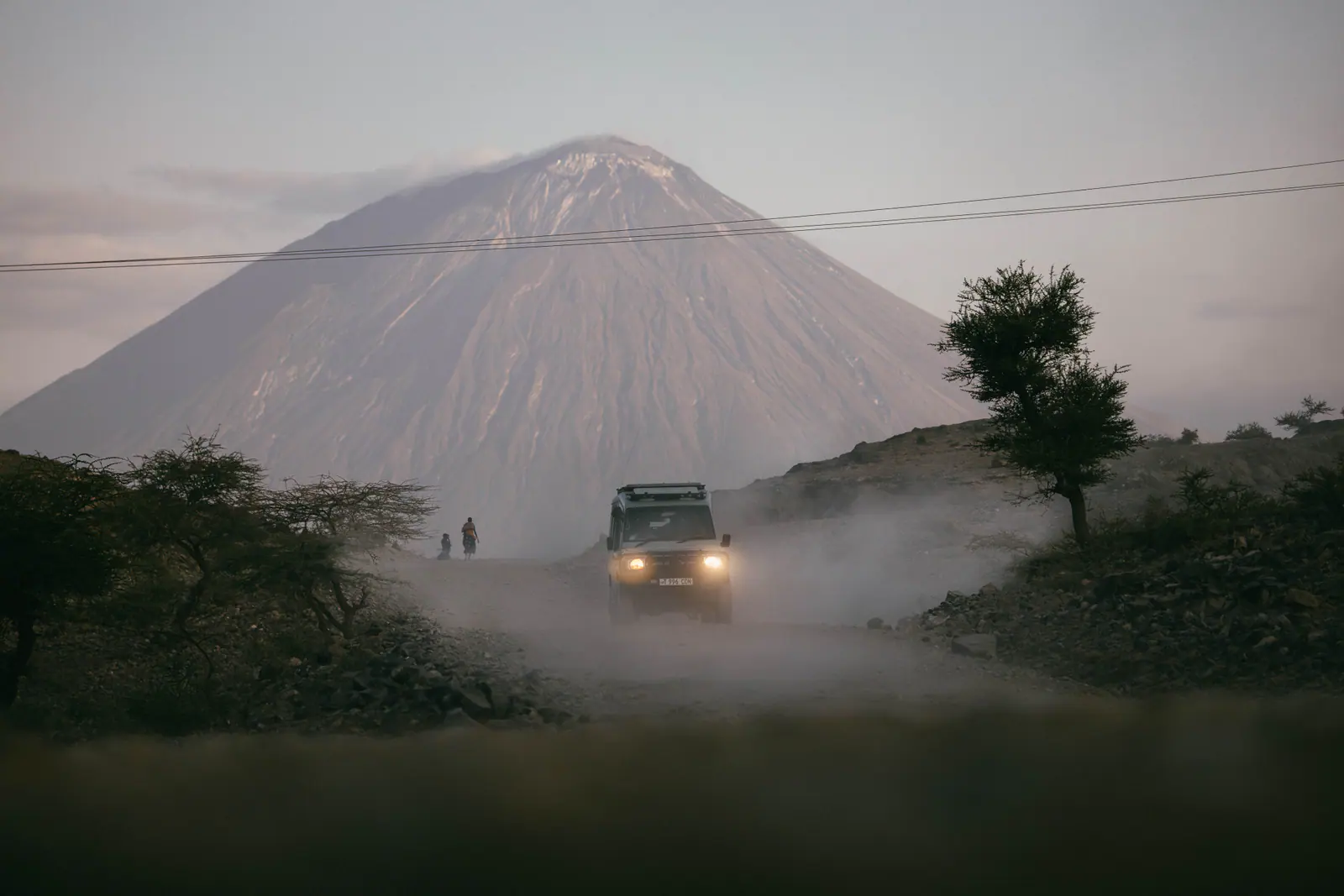 Tanzania Safari and Zanzibar Northern circuit safari followed by island days, with realistic routing between Arusha, the parks and Zanzibar. Safari + Beach
Read the guide
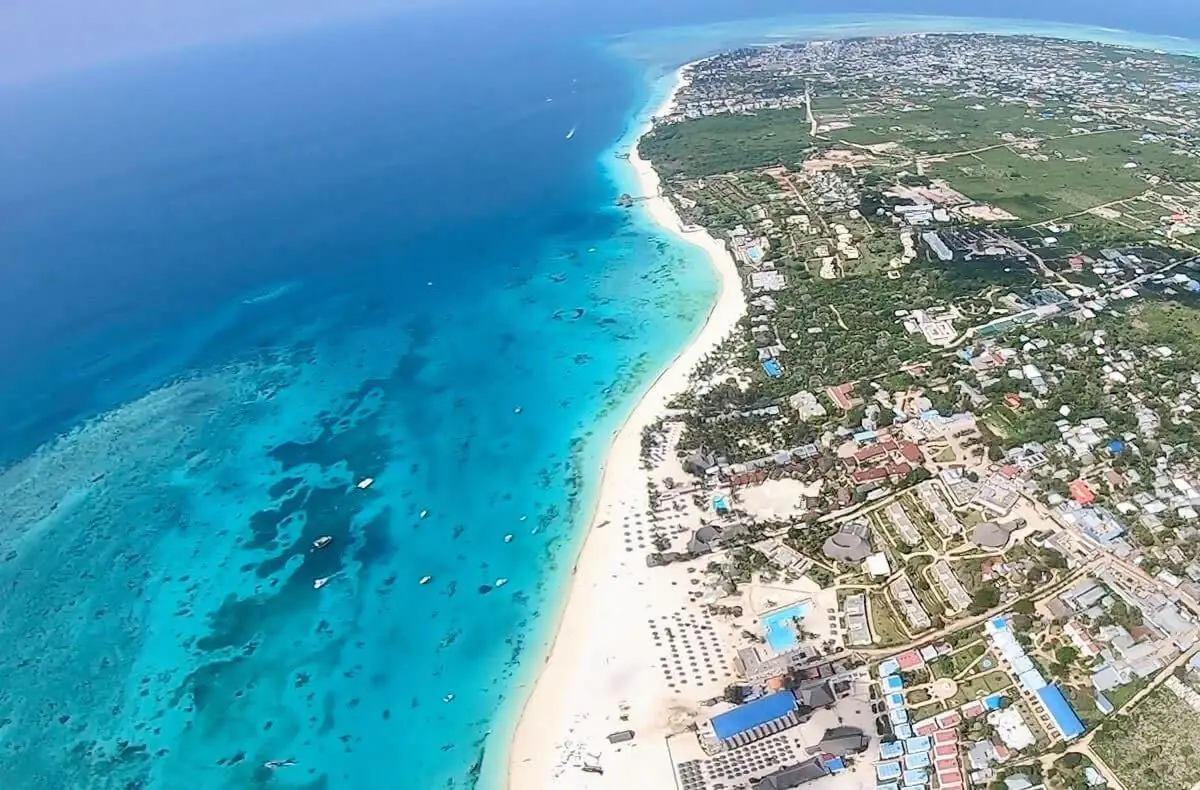 Best Beaches in Zanzibar A side-by-side look at the main coasts: tide behaviour, swimming, atmosphere and who each beach actually suits. Beaches
Read the guide
Frequently Asked Questions
-
Typically two to two and a half hours, though routing varies by airstrip, airline, season and operating day. Some services are direct and others make one or two stops. Allow the full day for the transition.
Plains, then ocean, planned as one
Send your travel month and we will place you in the right Serengeti region, book the flight east and choose an island base that suits how you want to swim.