


Kilimanjaro Climb Cost: What Drives the Price
Kilimanjaro quotes vary widely between operators, and it is not always obvious why. This guide explains what actually drives the cost of a climb (park fees, crew wages, logistics and comfort choices) so you can judge a quote properly rather than comparing headline numbers alone.
- Guide
- Cost
- Reading time
- 12minutes
- In this guide
- 10sections
- Route duration affects cost
- Private vs group matters
- Gear and crew quality count
- Cost estimator included
Local Tanzania team · Licensed mountain crew · Real Safari Soles itineraries
A Kilimanjaro climb price is driven mainly by fixed park, camping and rescue fees that apply per person per day, plus fair wages and equipment for a substantial support crew of guides, cooks and porters.
- Fixed park, camping and rescue fees apply per day and are a large, non-negotiable part of every quote.
- Group size and itinerary length affect price more than almost any other single factor.
- Very cheap quotes usually cut crew wages, porter numbers, days or safety provisions.
- Never cut acclimatisation days, guide ratios, crew welfare or emergency equipment to save money.
- Joining a group departure and renting rather than buying gear are genuine, safe ways to reduce cost.
- Budget separately for tips, insurance, visas and Moshi hotel nights beyond the headline climb quote.
01 / 10
What a Kilimanjaro price actually pays for
Where this fits: this guide is part of the Kilimanjaro climbing guides hub, which supports our main Kilimanjaro climbing page and our published Kilimanjaro climb prices.
Use it with the crew tipping guide, the porter welfare guide and the group climb guide, and remember that the conservation, camping and rescue components are set by TANAPA, the national park authority.
A Kilimanjaro climb involves far more infrastructure than most first-time climbers expect. Every day on the mountain incurs park entry fees, camping fees and rescue fees paid to Tanzania National Parks, which apply per person per day regardless of which operator you book with. These fees are a large, fixed part of any quote and scale directly with how many days you spend on the mountain.
Behind every climber is a substantial support crew: a lead guide, assistant guides, a cook and a team of porters carrying food, tents, cooking equipment and personal bags. Fair wages for that crew, their food, their own camping equipment and their insurance are a significant and legitimate cost driver, and one of the areas we think is least worth compromising on.
The remaining costs cover food for climbers, transfers between the airport, your hotel and the trailhead, group equipment such as tents and safety gear, and the administrative and logistics work of building and running the itinerary. Rescue fees also fund the broader emergency response infrastructure on the mountain, which every climber benefits from having access to, whether or not they ever need it.
Understanding this breakdown matters because it explains why Kilimanjaro is not priced like a simple day tour. The fixed costs per day are real, and they do not disappear just because an operator quotes a lower headline price.
02 / 10
The cost-factor table
We are deliberately not quoting figures here: costs shift with season, group size and operator. This table explains the direction and relative weight of each factor, and what we would advise.
Number of days
Larger: more days means more park fees, food and crew wages
- Our advice
- Never cut days purely to save money; the extra day is usually worth more than it costs
Group size
Smaller groups and private climbs cost more per person
- Our advice
- Joining a group departure is a genuine way to reduce cost without cutting safety
Route choice
Some routes cost slightly more due to logistics or crew ratios
- Our advice
- Choose the route that fits your acclimatisation needs first, budget second
Comfort upgrades
Adds cost for better tents, mess facilities or private toilet tents
- Our advice
- Worth it if budget allows, but not essential to a safe, successful climb
Gear rental vs owning
Renting adds cost per item; owning has upfront cost instead
- Our advice
- Rent items you will not use again; buy boots and anything worn against your skin
Season
Peak months tend to carry higher demand-driven pricing
- Our advice
- Shoulder season can reduce cost pressure with only a modest trade-off in weather
Add-on trips
Safari or Zanzibar extensions add a separate, substantial cost
- Our advice
- Budget for these as a distinct decision, not an afterthought bolted onto the climb
A lioness in profile in low golden light, gazing out over the grass.
03 / 10
Usually included vs usually excluded
Inclusions vary between operators, so treat this as a checklist to confirm in writing rather than a universal standard.
Usually included
- Park entry, camping and rescue fees for the days quoted
- Lead guide, assistant guides, cook and porter team
- Tents, dining tent and group cooking equipment
- Three meals a day and treated drinking water on the mountain
- Transfers between the airport or hotel and the trailhead
- Emergency oxygen and a pulse oximeter with the guide team
Usually excluded
- International flights and the Tanzanian visa
- Trekking and evacuation insurance
- Hotel nights before and after the climb unless specifically quoted
- Personal clothing, boots and sleeping bag
- Gear rental for anything you do not already own
- Crew tips at the end of the climb
04 / 10
Cost pressure estimator
A relative planning tool. It will not give you a number, but it will explain what is driving your particular plan's cost pressure.
Cost pressure estimator
This tool gives a relative sense of what will push your quote up or down, not a figure. Answer six questions about how you would like to climb and we will explain where the cost pressure in your plan is likely to sit.
0 of 6 answered
Answer all 6 questions and your result appears here.
05 / 10
Why very cheap climbs are risky
Because park fees are fixed per day and apply to every operator equally, there is a real floor beneath which a legitimate Kilimanjaro quote cannot realistically fall without cutting something else. When a quote looks unusually cheap compared with others for the same route and day count, the saving almost always comes from somewhere specific, and it is worth asking exactly where.
The most common places operators cut costs are crew wages, the number of porters per climber, the quality and condition of camping equipment, and the number of acclimatisation days actually built into the itinerary. Underpaying and overloading porters is a serious welfare concern as well as a safety one, since an under-resourced crew is a stressed, under-supported one.
Fewer days is the single biggest hidden cut. A '6-day Lemosho' at a very low price and a properly built 7 or 8-day Lemosho are not really the same product, even though they share a route name, and the missing day is exactly the one that gives your body time to acclimatise.
Thin safety cover is the least visible cut of all, because you generally will not notice it unless something goes wrong. Ask directly about guide-to-climber ratios, emergency equipment and evacuation planning on any quote that looks significantly cheaper than others you have seen.
06 / 10
What never to cut, whatever your budget
Keep these fixed regardless of price
- The number of acclimatisation days built into your itinerary.
- A guide-to-climber ratio that allows proper individual attention and monitoring.
- Fair porter wages, reasonable load limits and decent crew equipment.
- Emergency oxygen, a pulse oximeter and first-aid provision with the guide team.
- Trekking and evacuation insurance that actually covers Kilimanjaro's summit altitude.
- Properly maintained tents and equipment appropriate to mountain weather.
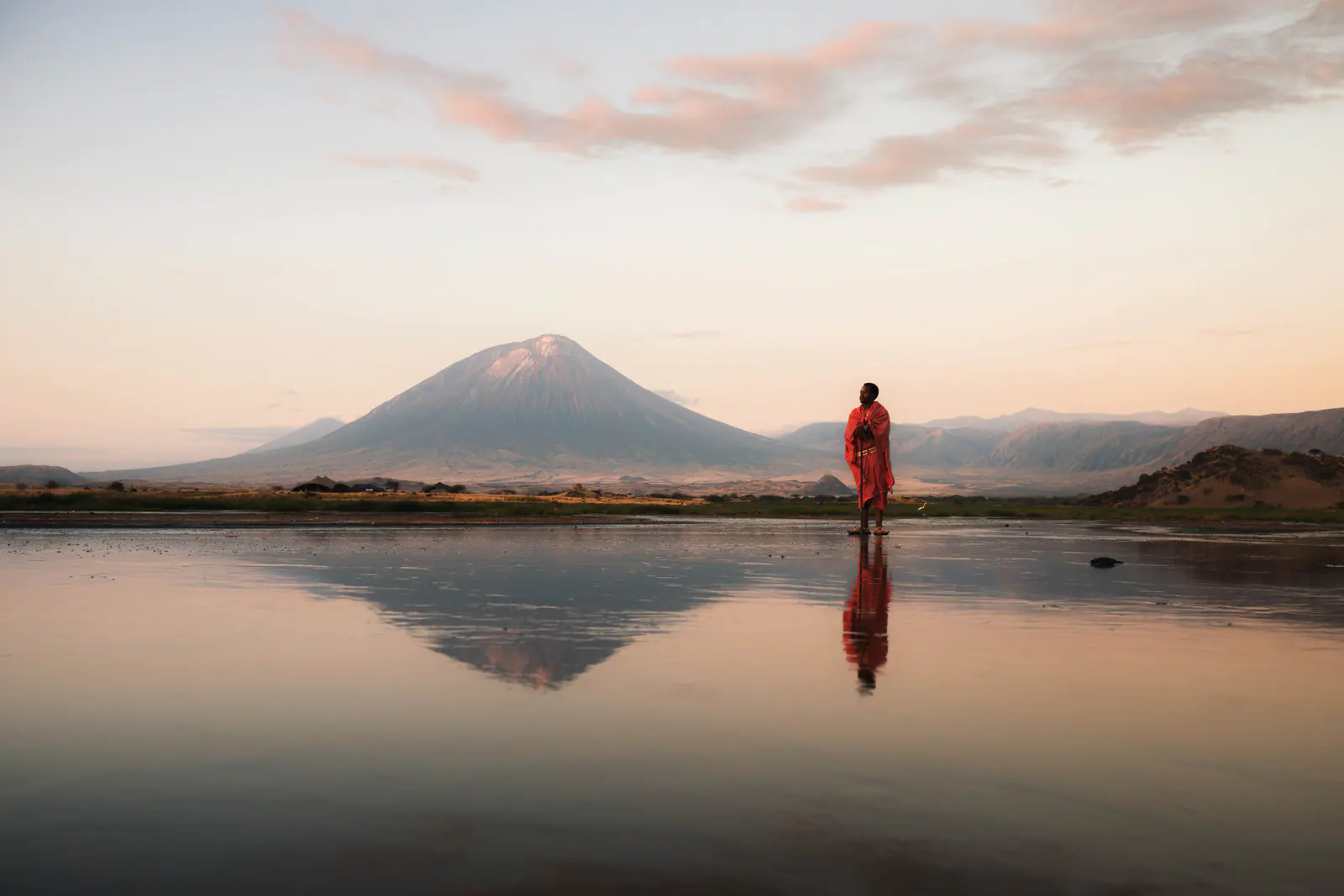
A Maasai man in red stands at the edge of a still lake in soft early light, with Ol Doinyo Lengai mirrored in the water.
07 / 10
Where you can genuinely save
There are real, sensible ways to manage cost pressure on a Kilimanjaro climb without touching anything on the list above. Joining a scheduled group departure rather than booking a private climb spreads guide and crew costs across more climbers, which is one of the most effective savings available with no impact on safety.
Renting gear you will not use again (such as a heavyweight down jacket, trekking poles or a four-season sleeping bag) is more sensible than buying items that will sit in a cupboard afterwards. Reserve your own budget for the items worth owning: boots that fit properly, and anything worn directly against your skin.
Travelling in shoulder season, just outside the busiest peak weeks, can also reduce overall cost pressure while keeping weather conditions reasonable on most routes. This is worth discussing with Safari Soles if your dates have any flexibility at all.
08 / 10
Budgeting for extras
Beyond your climb quote, several extras need their own line in your budget. Crew tips are a significant and expected part of the overall cost of the trip, usually collected in a ceremony at the end of the climb: ask Safari Soles for guidance on fair, transparent tipping ranges rather than guessing.
Gear you choose to buy rather than rent, appropriate trekking and evacuation insurance, your Tanzanian visa, and hotel nights in Moshi before and after the climb all sit outside a typical climb quote. None of these are usually large individually, but together they form a meaningful part of your total trip cost and are easy to underestimate if you only budget around the headline climb price.
If you are adding a safari or Zanzibar extension, treat it as a separate budgeting decision with its own logistics and costs, rather than assuming it slots in cheaply alongside the climb. Ask for a single itemised quote covering the whole trip if you want full visibility before booking.
Related planning guides
-
Kilimanjaro tipping guide
Fair, transparent tipping ranges for guides, cooks and porters.
Read tipping guide -
Kilimanjaro packing list
What to buy, what to rent, and what to bring from home.
Open packing checklist -
Kilimanjaro routes
Compare route length and acclimatisation profile before choosing.
Compare routes
09 / 10
Budget vs mid-range vs premium quotes
Three quotes for the same mountain rarely buy the same climb. This is what usually changes as the price moves.
The gap between budget and mid-range is where the meaningful differences sit: days on the mountain, guide ratio, crew treatment and emergency preparedness. The gap between mid-range and premium is mostly comfort.
If you are choosing where to spend, buy days and crew standards first, and comfort second.
10 / 10
How Safari Soles approaches this
We build itemised quotes so you can see exactly what you are paying for, and we will tell you plainly if a shorter or cheaper itinerary looks likely to compromise your safety or your crew's welfare.
If budget is a genuine constraint, tell us directly. There are sensible ways to manage cost pressure that do not involve cutting days, crew wages or safety provisions.
Common mistakes to avoid
Most unsuccessful climbs come from a handful of avoidable planning decisions, not from the mountain.
- Comparing headline prices between operators without checking what is actually included.
- Choosing the cheapest quote without asking how many acclimatisation days it contains.
- Assuming a low price has no impact on porter welfare or crew wages.
- Forgetting to budget separately for tips, insurance, visas and Moshi hotel nights.
- Buying gear you will only use once instead of renting it locally or from a specialist supplier.
- Not asking for a full itemised quote before comparing operators.
- Treating a safari or Zanzibar add-on as a minor extra rather than a separate budgeting decision.
- Assuming a private climb and a group departure should cost the same.
Get these right and the climb follows
Every one of these comes down to the same thing: matching the route and the day count to the climber before booking anything. Send us your dates and we will tell you honestly what is realistic.
Plan this climb with a local expertQuestions worth asking any operator
A price is only comparable once it is itemised. Ask these questions before comparing two quotes, because the cheaper number is usually the one with something removed.
- Can I see an itemised quote showing park entry, camping or hut fees, rescue fees and conservation fees separately?
- Which crew members are included at my group size: lead guide, assistant guides, cook and how many porters?
- Is crew pay in the quote at or above the recommended daily wage, and can you confirm that in writing?
- What safety equipment is included in the price rather than charged as an extra?
- Which hotel nights before and after the climb are included, and at what standard?
- Are airport and gate transfers included, and does that include the longer western gate drives?
- What is deliberately excluded: insurance, visas, personal gear rental, drinks, private toilet, tips?
- What is your recommended tipping range for my group size, and is it collected in cash at the end?
What Safari Soles puts in writing
Everything below is confirmed before you pay, so nothing about your climb is left to be discovered on the mountain.
-
Your route, day count and acclimatisation profile
Confirmed in writing before you pay, with our honest view on whether the number of days suits you.
-
How your health is monitored on the mountain
The daily check routine and who is responsible for it are explained at your pre-climb briefing.
-
First-aid and emergency response for your itinerary
You are told what travels with the climb and what happens at each camp if someone needs to descend.
-
Who is on your crew and what each person does
Lead guide, assistant guides, cook and porters are set out for your group size, not left vague.
-
Porter load handling for your climb
Duffel limits and how loads are weighed are confirmed before departure, so there are no gate surprises.
-
Tent, sleeping mat and dining arrangements
Camp comfort is described in the quote rather than discovered on the first night.
-
Meals, drinking water and hot drinks
How your food is cooked and your water treated is explained, including dietary requirements.
-
Gear rental list, sizes and prices
Shared before you shop, so you buy what matters at home and hire the rest on arrival.
-
An itemised quote with fees shown separately
Park and camping fees, crew, equipment, transfers and hotels appear as their own lines.
-
Tipping guidance for your group size
The customary range and how tips are collected are agreed before you fly, in writing.
Safety standards on a Safari Soles climb
What safety means in practice on the mountain, rather than as a promise on a page.
-
Mountain safety preparation
Safety planning starts long before the gate. Your route, day count and acclimatisation profile are chosen for how you actually travel, and every climb is briefed as a plan rather than an ambition.
-
Altitude monitoring
Your guides monitor how you are adjusting each day (how you are sleeping, eating, drinking and breathing) and record what they see so the pattern across the climb is visible, not guessed at.
-
Guide-led pacing
Pace is set by your guide, deliberately slower than most climbers expect. Walking slowly is the single most effective acclimatisation tool on the mountain, and our guides hold that pace even when a group feels strong.
-
First-aid readiness
A mountain first-aid kit travels with every climb and your guide team is briefed on how it is used and when a symptom stops being discomfort and becomes a reason to act.
-
Emergency planning
Each itinerary has a worked-out response for illness or injury at every camp (who escorts you, which way you go down and who is contacted) agreed before day one rather than improvised.
-
Summit-night support
Summit night is the hardest part of the climb, so it is guided most closely: assistant guides stay with slower climbers, layering and hydration are checked before departure, and turning back early is treated as a normal outcome, not a failure.
-
Clear descent decisions
Your lead guide has final authority on descent. The reasoning is explained to you and to your group in advance, so nobody is negotiating a health decision at 5,000m in the dark.
-
Client briefing before the climb
The day before you walk, we go through the itinerary, the daily routine, your gear, the health checks and the descent process, and answer every question while there is still time to act on the answers.
What your climb includes at camp
The parts of a climb you sleep in, eat from and depend on, described before you book rather than discovered on the first night.
-
Tents and sleeping setup
You are told before booking what tent you sleep in, how many climbers share it and what sleeping mat is provided, including where a thicker mat is worth adding.
-
Dining and camp meals
Climbs are planned around hot cooked meals prepared by your own mountain kitchen crew, eaten in a dining setup rather than hunched inside a sleeping tent.
-
Water and hot drinks
Drinking water is collected and treated by your crew each day, and hot drinks come with meals and on arrival at camp. You never need to buy water on the mountain.
-
Gear rental guidance
We tell you what can be rented in Moshi or Arusha, in which sizes, and share the current list and prices so you only buy at home what is genuinely worth owning.
-
Private toilet option
A private portable toilet can be added to a climb where you want it. We confirm availability and the cost for your dates in writing before you book.
-
What you bring yourself
Personal items (boots, layers, gloves, headlamp, sunglasses and a broken-in daypack) stay with you, and we check them with you at the pre-climb briefing.
How we work with our mountain crew
A climb runs on the people carrying it. This is how their loads, meals, pay and tips are handled.
-
Porter load guidance
Loads are managed to the national park limit and your personal duffel is weighed before the climb, so no porter starts the day carrying more than they should.
-
Responsible crew support
Crew wages, hot meals and sleeping arrangements are built into the price of a climb. A quote that undercuts everything else is usually taking it out of the people carrying your bag.
-
Tipping guidance
We explain the customary tipping range for your group size and crew before you travel, and how tips are collected and shared at the end of the climb, so nothing is improvised on the last morning.
-
Respect for guides, cooks and porters
Your crew are named colleagues, introduced to you at the start of the climb, not anonymous labour. That expectation is set with clients as well as crew.
-
Clear explanation of crew roles
Before you book you know who travels with you and why: lead guide, assistant guides, mountain cook and the porters carrying camp, food, water and personal kit.
-
Crew meals and sleeping arrangements
Guides, cooks and porters are supported with planned meals and sleeping arrangements on the mountain, because a safe climb depends on the whole crew being properly cared for, not only the climbers.
Local Kilimanjaro operators, licensed crew, honest guidance
Written and reviewed by the Safari Soles team in Arusha, who plan and run Kilimanjaro climbs from beside the mountain rather than brokering them from an overseas office.
- Reviewed by the Safari Soles Kilimanjaro planning team
- Updated for 2026 climbing seasons
- Route and day count matched to your fitness and altitude history
- Daily health monitoring and descent decisions agreed before you book
- Read Safari Soles reviews on TripAdvisor
- Read Safari Soles reviews on SafariBookings
- Read Safari Soles reviews on Google
Where these facts come from (6)
- UNESCO: Kilimanjaro National Park The World Heritage listing for Kilimanjaro National Park, which records Africa's highest point at 5,895m.
- TANAPA: Tanzania National Parks Official park authority information on regulations, park fees and permitted activities.
- Tanzania Tourist Board Government tourism information on travelling in Tanzania, seasons and destinations.
- Wikipedia: Mount Kilimanjaro Secondary background context on the mountain's geology, glaciers and climbing history.
- Tanzania Immigration: eVisa Official portal for visa requirements and online applications before you travel.
- Kilimanjaro Porters Assistance Project (KPAP) Industry context on porter wages, load limits, meals and equipment standards on Kilimanjaro. Linked as background reading, not as a membership claim.
Related Safari Soles guides
Continue with the guides travellers usually read next.
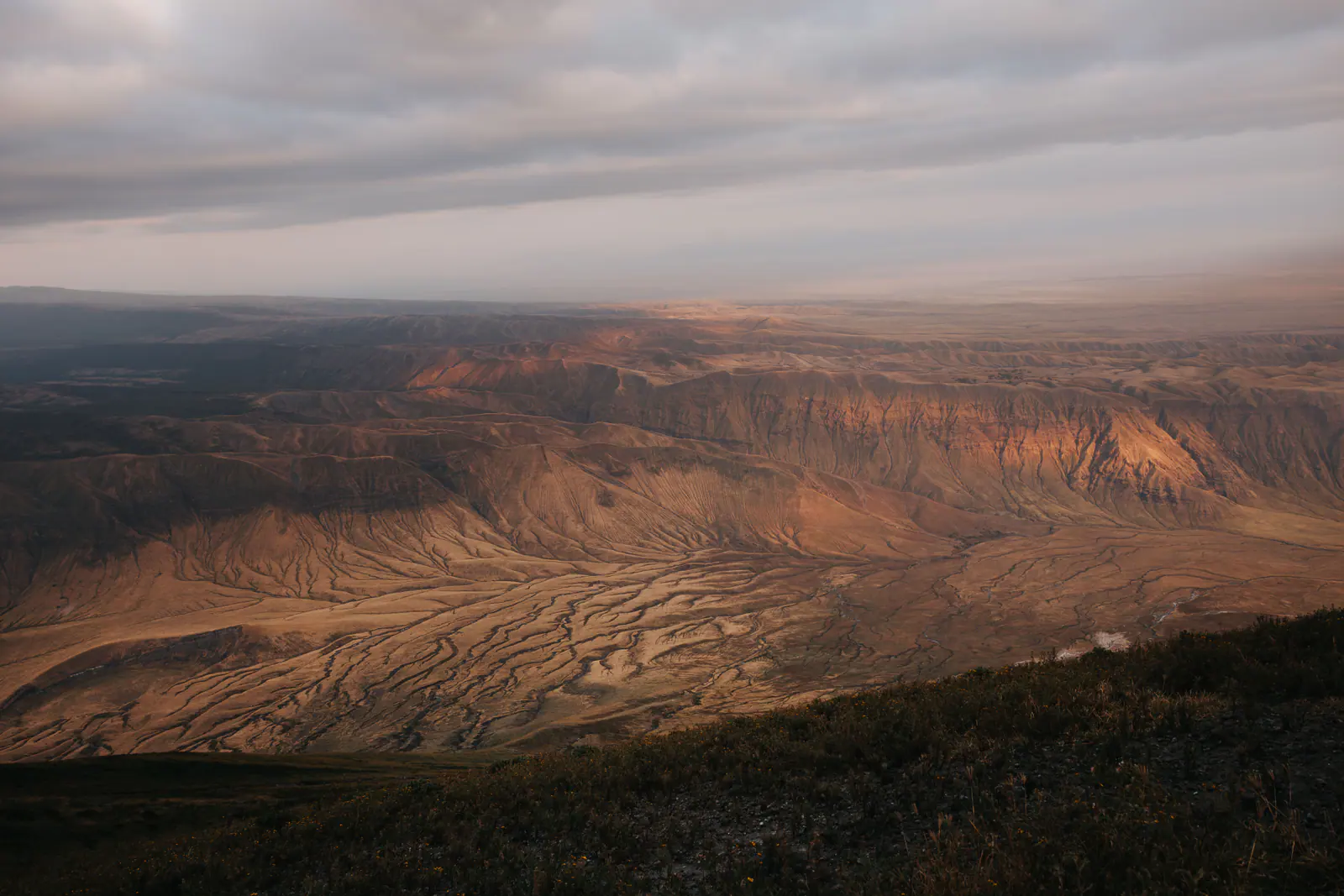 Kilimanjaro Routes Compare every Kilimanjaro route side by side: days on the mountain, acclimatisation profile, scenery and comfort. Routes
Read the guide
Kilimanjaro Routes Compare every Kilimanjaro route side by side: days on the mountain, acclimatisation profile, scenery and comfort. Routes
Read the guide
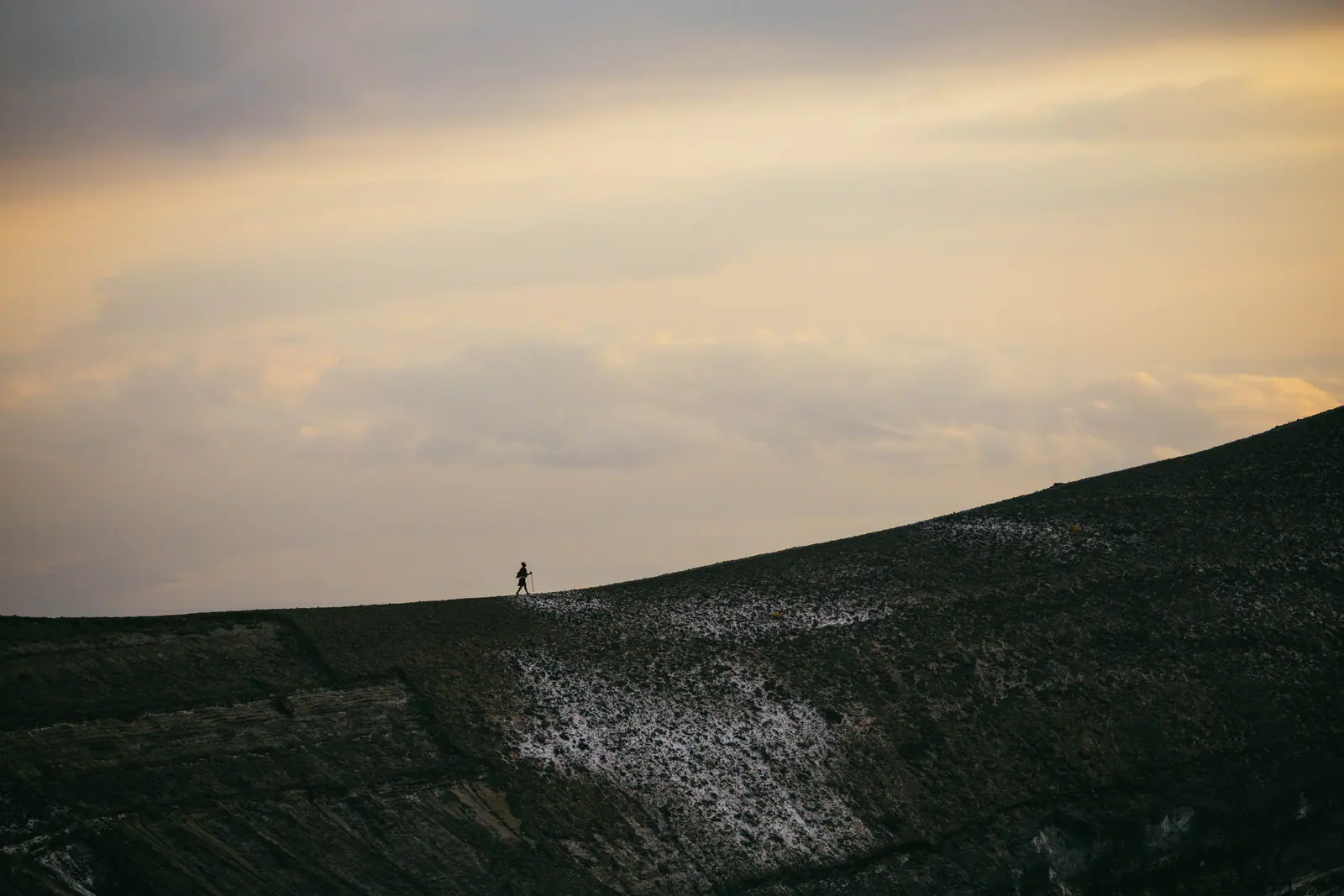 Kilimanjaro Tipping Guide Fair, transparent tipping ranges for guides, cooks and porters, and how the ceremony usually works. Cost
Read the guide
Kilimanjaro Tipping Guide Fair, transparent tipping ranges for guides, cooks and porters, and how the ceremony usually works. Cost
Read the guide
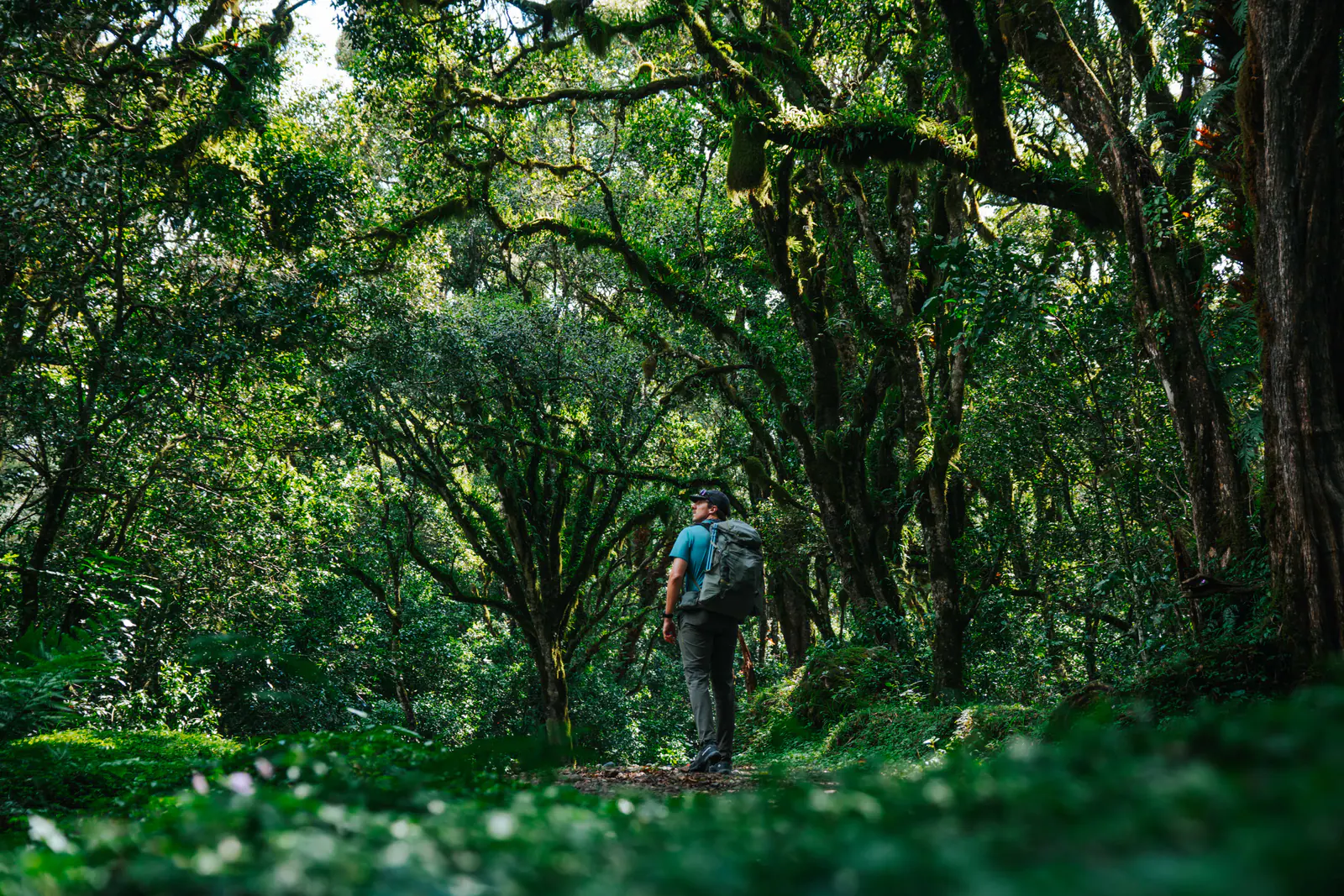 Porter Welfare Load limits, wages, meals, sleeping gear and why porter treatment is part of climbing responsibly. Crew & Equipment
Read the guide
Porter Welfare Load limits, wages, meals, sleeping gear and why porter treatment is part of climbing responsibly. Crew & Equipment
Read the guide
Frequently Asked Questions
-
Differences usually come down to itinerary length, group size, crew wages, equipment quality and comfort level rather than the route itself. A very low price almost always means one of these has been reduced somewhere in the package.
Want a clear, itemised Kilimanjaro quote?
Tell us your route, group size, comfort preferences and any add-on trips, and we will send an itemised quote that shows exactly what drives the cost, with no pressure to book more than you need.