Lake Naivasha and Lake Nakuru Compared: Wildlife, Activities & Which to Visit
30th March, 2026
1407
Kenya’s Rift Valley is home to two gorgeous lakes, Lake Nakuru and Lake Naivasha. Both offer unique experiences for visitors, but they cater to different interests. Deciding between them for your safari can be tricky if you only have time for one. This guide will help you understand the differences between Lake Naivasha and Lake Nakuru National Park, so you can pick the one that’s right for you.
Key Takeaways
Lake Nakuru National Park is famous for its rhinos and large flamingo populations, offering a classic national park experience.
Lake Naivasha is a freshwater lake ideal for boat trips, walking safaris on Crescent Island, and exploring the nearby Hell's Gate National Park.
For bird watching, both lakes are rewarding, but Nakuru’s flamingos are a major draw.
If you want to see a variety of big game, especially rhinos, Lake Nakuru National Park is a top choice.
Lake Naivasha offers a wider range of activities, such as boating and hiking, while Nakuru focuses on game drives within its fenced park boundaries.
Lake Nakuru and Lake Naivasha at a Glance
Kenya’s Great Rift Valley is home to two stunning lakes, Lake Nakuru and Lake Naivasha, each offering a distinct slice of African wilderness. Both are easily accessible from Nairobi and frequently appear on safari itineraries, but they deliver quite different experiences.
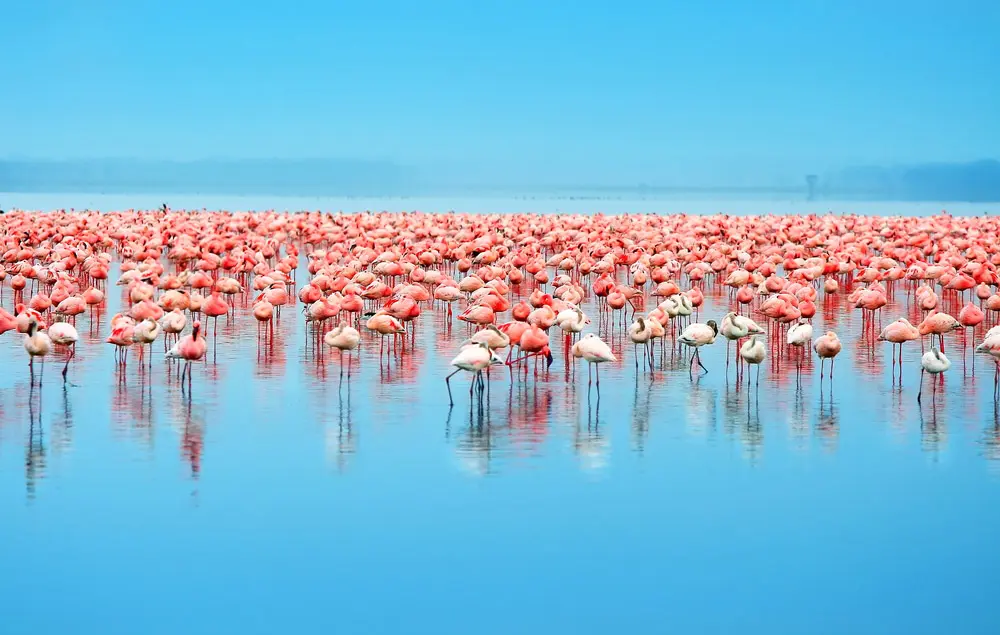
Lake Nakuru National Park is world-famous for one major spectacle: the hundreds of thousands of flamingos that transform its water’s bright pink. It’s also a critical sanctuary for rhinos, with one of the country’s best chances to see these magnificent animals in a secure, fenced environment. If flamingos aren’t your thing, the park delivers excellent game drives across acacia woodlands, grasslands, and rugged volcanic ridges where lions, leopards, and buffalo roam.
Lake Nakuru
Lake Naivasha
Water type
Soda/alkaline
Freshwater
Distance from Nairobi
~100 mi (160 km)
~65 mi (105 km)
Notable wildlife
Flamingos, rhinos, giraffes
Hippos, fish eagles, zebras
Key activities
Game drives, birdwatching
Boating, walking safaris, cycling
Park structure
Fully fenced national park
Open lake with separate sanctuaries
Best for
Traditional safaris
Varied activities and scenic views
Just a short drive away, Lake Naivasha is a beautiful freshwater lake perched at a higher elevation within the Rift Valley. Its calm, papyrus-fringed waters are perfect for boat trips and fishing, while the surrounding landscape offers walking safaris, cycling, and exploration of the dramatic terrain of nearby Hell’s Gate National Park. Choosing between Nakuru and Naivasha for wildlife viewing often comes down to a single question: what kind of experience do you want?
Lake Nakuru: The Pink Flamingo Paradise
Picture thousands of flamingos turning an entire shoreline pink — that is what awaits at Lake Nakuru National Park. This soda lake, nestled within the Great Rift Valley, is synonymous with one of nature’s most spectacular mass gatherings. Flamingo numbers fluctuate with the lake’s alkalinity and water levels, but even on a quiet day, the birdlife here is extraordinary.
Wildlife at Lake Nakuru
Beyond the flamingos, Lake Nakuru National Park is one of Kenya’s premier wildlife sanctuaries. Its perimeter fence makes it one of the safest places in East Africa to see both black and white rhinos, protected by dedicated rangers around the clock. Rothschild’s giraffes — a rarer subspecies — were successfully reintroduced here and are now a reliable sighting. The park’s mix of open grasslands, acacia woodlands, and rocky escarpments supports an impressively broad ecosystem.
Key wildlife:
Flamingos: Often numbering in the hundreds of thousands, they paint the shoreline pink.
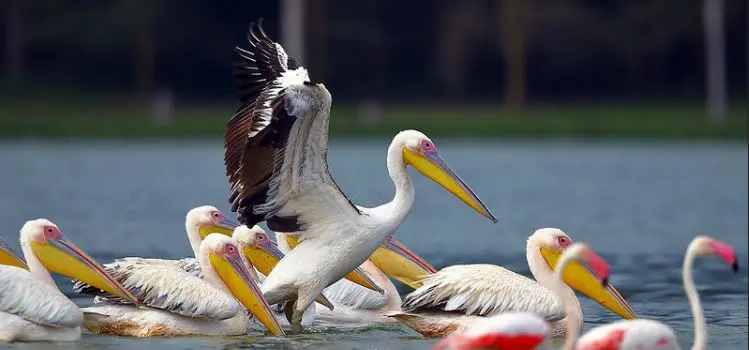
White pelicans: A striking contrast to the flamingos, gathering in large flocks along the shore.
Rhinos: Both black and white species, among the best-protected populations in Kenya.
Rothschild’s giraffes: A rare subspecies with an unusual coat pattern.
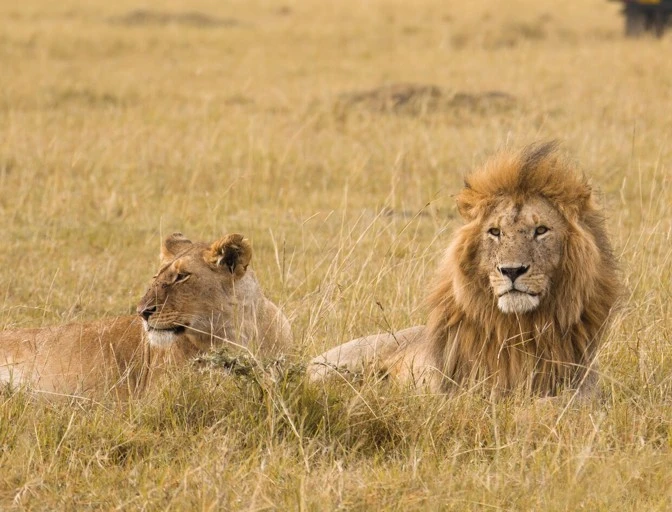
Other mammals: Buffalo, zebras, waterbuck, various antelopes, and occasional sightings of lions and leopards.
Activities at Lake Nakuru
Game drives are the park’s signature activity. Guides know the terrain well, and the park’s relatively compact size means you can cover a lot of ground in a half-day drive. Early morning and late afternoon are the best windows for predator sightings.
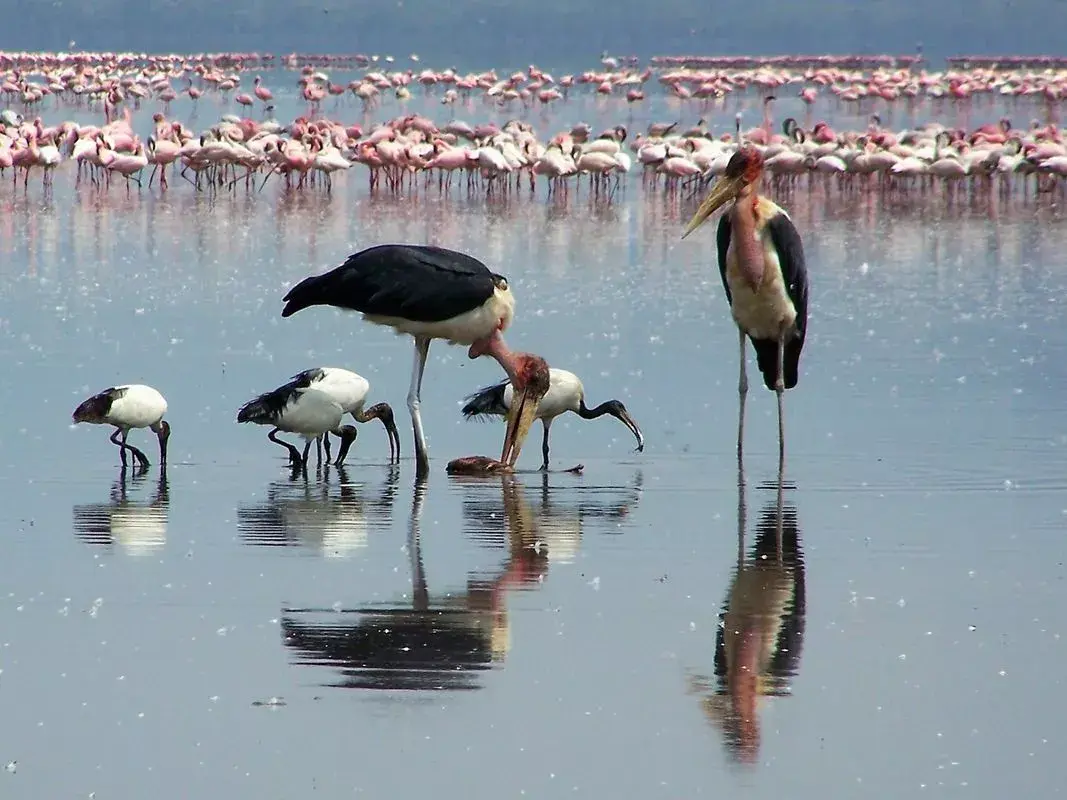
Birdwatching extends well beyond the famous flamingos. Over 450 bird species have been recorded in the park, including African fish eagles, hamerkops, and dozens of raptor species along the rocky escarpments.
Picnicking at designated spots within the park is a wonderful way to slow down and soak in the surroundings without a vehicle in sight.
Useful Visitor Information
Entry fees: Approximately $90 per adult (non-resident); confirm current rates with the Kenya Wildlife Service before your visit, as these prices can change.
Best time to visit: Year-round, but flamingo numbers tend to peak in the dry season (January - February or July - October) when the lake’s alkalinity is higher.
How long to spend: A single full day is sufficient for a thorough game drive, though an overnight stay lets you catch the golden-hour light that transforms the lake.
Distance from Nairobi: Approximately 100 mi (160 km); roughly a 2.5 to 3-hour drive.
Lake Naivasha: Home to Gentle Giants
Lake Naivasha is an enticing safari destination for different reasons. This ancient freshwater lake, fringed with papyrus reeds and yellow fever acacia trees, has an almost tropical feel that contrasts sharply with the stark alkaline shore of its neighbor. Its calm waters and varied surroundings make it a favorite for travelers who want their wildlife experience paired with a little more freedom.
Wildlife at Lake Naivasha
Hippos are the lake’s most iconic residents, with these gentle giants commonly seen basking in the shallows or grazing along the shore at dusk. The lake is a haven for over 400 recorded bird species, including African fish eagles, goliath herons, malachite kingfishers, and pink-backed pelicans, making it a genuine paradise for birdwatchers. On land, Rothschild’s giraffes, zebras, and various antelopes can be seen moving through the acacia woodland fringing the lake.
The nearby Crescent Island Game Sanctuary is a particular highlight: a peninsula that feels like an island, where you can walk among giraffes, zebras, wildebeest, and waterbuck with no fences or vehicles between you and the animals. It’s an intimate and unforgettable wildlife encounter.
Activities at Lake Naivasha
Boat safaris are the lake’s signature experience. Drifting quietly across the water puts you at eye level with hippos and within meters of roosting waterbirds — a completely different perspective from a game drive.
Walking safaris on Crescent Island offer close encounters with large mammals on foot, something that isn’t possible in most Kenyan national parks. The lack of predators on the island makes it safe for guided walks, and the setting, with views across the lake and the Rift Valley escarpment, is beautiful.
Hell’s Gate National Park is Lake Naivasha’s underrated neighbor. Named for a break in the cliffs once used by early explorers, the park is defined by towering red columns, a dramatic gorge carved by the Njorwa River, and active geothermal vents. Unlike most Kenyan parks, you can cycle or hike through it independently, making it feel more like an adventure than a conventional safari. A geothermal spa inside the park offers a genuinely unusual way to unwind after a day of exploration.
Birdwatching around the lake, the papyrus beds, and the acacia woodland is exceptional at almost any time of day. Notable bird species you might be lucky enough to spot include goliath herons, osprey, African fish-eagles, green wood-hoopoes, and great white pelicans.
Useful Visitor Information
Entry fees: Crescent Island charges around $30 per adult (non-resident). Hell’s Gate National Park charges approximately $50 per adult, but you should double-check current rates before visiting.
Best time to visit: Year-round; the green season (April–June) brings lush scenery and excellent birdwatching as migratory species pass through.
How long to spend: One to two days allows you to cover the boat trip, Crescent Island, and Hell’s Gate comfortably.
Distance from Nairobi: Approximately 65 mi (105 km); roughly a 1.5 to 2-hour drive.
Comparing Lake Nakuru and Lake Naivasha
Accessibility and Location
Both lakes are easily accessible from Nairobi on a paved road, making them a good fit for a Rift Valley itinerary. Lake Naivasha, at around 65 mi (105 km) from the capital, is the easier half-day trip. Lake Nakuru National Park, roughly 100 mi (160 km) away, warrants at least one overnight stay to truly see everything. Many visitors combine both lakes into a three or four-day loop through the Rift Valley.
Accommodation Options
Lake Naivasha has the widest range of accommodation in the area. Options run from simple lakeside campsites and self-catering cottages to mid-range lodges and upscale resorts with sweeping water views. Some recommended properties include Crater Lake Tented Camp, with its boutique, forested setting, and Enashipai Resort & Spa, which is more upscale and lakeside.
Lake Nakuru National Park has lodges both inside and just outside the park boundary. Staying within the park at properties such as Lake Nakuru Lodge or Sarova Lion Hill Game Lodge gives you early-morning access to the park before day visitors arrive, which is a significant advantage for wildlife viewing. Budget travelers will find options in Nakuru town, a short drive from the park gate.
Safari Soles Tip: We personally recommend Lake Nakuru’s Sopa Lodges or Lake Nakuru Lodges and include them in our Kenya safari itineraries, such as our 11-Day Kenya & Tanzania Wildlife Odyssey. For Lake Naivasha, we recommend the Lake Naivasha Sopa Lodges, which we stop at on our 14-Day Kenya & Tanzania Safari.
Which Lake is Better for You?
Neither lake is better than the other, but they do certain things better — it really depends on what you want to see and experience.
Choose Lake Nakuru if:
Witnessing the flamingo spectacle is high on your list.
Seeing rhinos in a secure, well-managed sanctuary is a must.
You prefer a focused game drive experience within a national park setting.
You want a broad cross-section of classic Kenyan wildlife in a single location.
Choose Lake Naivasha if:
You want a mix of wildlife and active outdoor experiences.
Boat safaris, walking safaris, and cycling appeal to you.
You’re interested in exploring Hell’s Gate’s dramatic gorges and geothermal features.
A more relaxed, open atmosphere suits your travel style.
If your itinerary allows it, visiting both lakes over three to four days gives you the best of the Rift Valley — the wildlife spectacles of Lake Nakuru National Park pair wonderfully with the varied, unhurried joys of Naivasha.
Making Your Choice: Lake Nakuru or Lake Naivasha?
Kenya’s Lake Nakuru National Park and Lake Naivasha are two of East Africa’s most rewarding destinations, and they complement each other perfectly. Nakuru delivers the thrill of a classic national park, with rhinos, flamingos, and wide-open game drive country within a protected sanctuary. Naivasha offers something rarer on the Kenyan safari circuit: the freedom to get out of the vehicle, walk among wildlife, paddle across a lake, and explore a gorge on a bicycle.
If concentrated wildlife and iconic birdlife are what you’re after, Lake Nakuru National Park is your answer. If you want a richer menu of experiences and a more laid-back atmosphere, Naivasha will deliver. And if time allows, always do both.
Ready to visit Kenya’s Lake Nakuru National Park or Lake Naivasha? Get in touch with our team to start planning your itinerary.
Frequently Asked Questions
What makes Lake Nakuru famous?
What kind of activities can one do at Lake Naivasha?
Which lake is better for seeing a wide variety of wildlife?
Is it possible to visit both lakes on a safari?
What is the best time of year to visit these lakes?
Are there accommodation options near both lakes?
What makes Lake Naivasha different from Lake Nakuru in terms of water type?
Which lake is more suitable for someone interested in hiking?
What is the elevation of Lake Naivasha and Lake Nakuru?