Planning the best Kenya safari possible means carefully choosing your timing. Whether you want to witness the Great Migration, spot the Big 5, or simply take in the landscape, what you want to see changes your itinerary. This guide covers the best times to visit Kenya month by month, so you can plan a trip that aligns with what matters most to you.
Key Takeaways
Peak safari season (June to October) is the best time to go to Kenya for wildlife and the Great Migration.
August and September are the standout months for Mara River crossings.
January and February have warm, dry conditions ideal for game viewing and birdwatching.
The rainy season in Kenya (April to May and November to December) brings lush scenery, fewer crowds, and lower prices.
The best month to visit Kenya depends more on your priorities and less on the weather: the Wildebeest Migration, birds, budget, fewer crowds, etc.
Kenya’s Seasons at a Glance
Kenya has two dry seasons and two wet seasons, each offering a distinct experience on the ground.
Dry Seasons (June to October and January to March): Thinning vegetation and shrinking water sources concentrate wildlife, making these the prime windows for game viewing. The June to October season also coincides with the Great Migration, one of Africa’s great natural spectacles.
Wet Seasons (April to May and November to December): The rainy season in Kenya turns the landscape green. Wildlife is harder to spot, but you’ll trade easy sightings for dramatic skies, exclusive encounters, and a quieter safari atmosphere. While November is generally wet, December is a shoulder month between seasons, with warmer but more unpredictable weather.
The Dry Seasons: Best for Wildlife Viewing
June to October: The Great Migration and Cooler Conditions
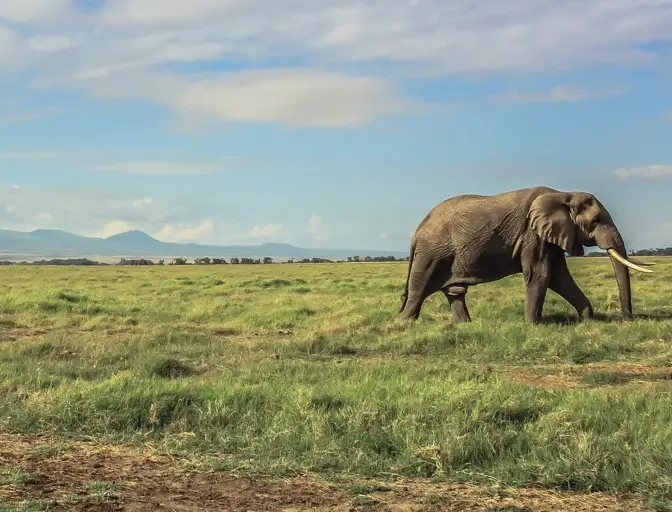
Kenya’s longest dry season is its most celebrated. As vegetation thins and rivers dry up, wildlife concentrates across Amboseli, Samburu, and the Maasai Mara, making game drives consistently a success.
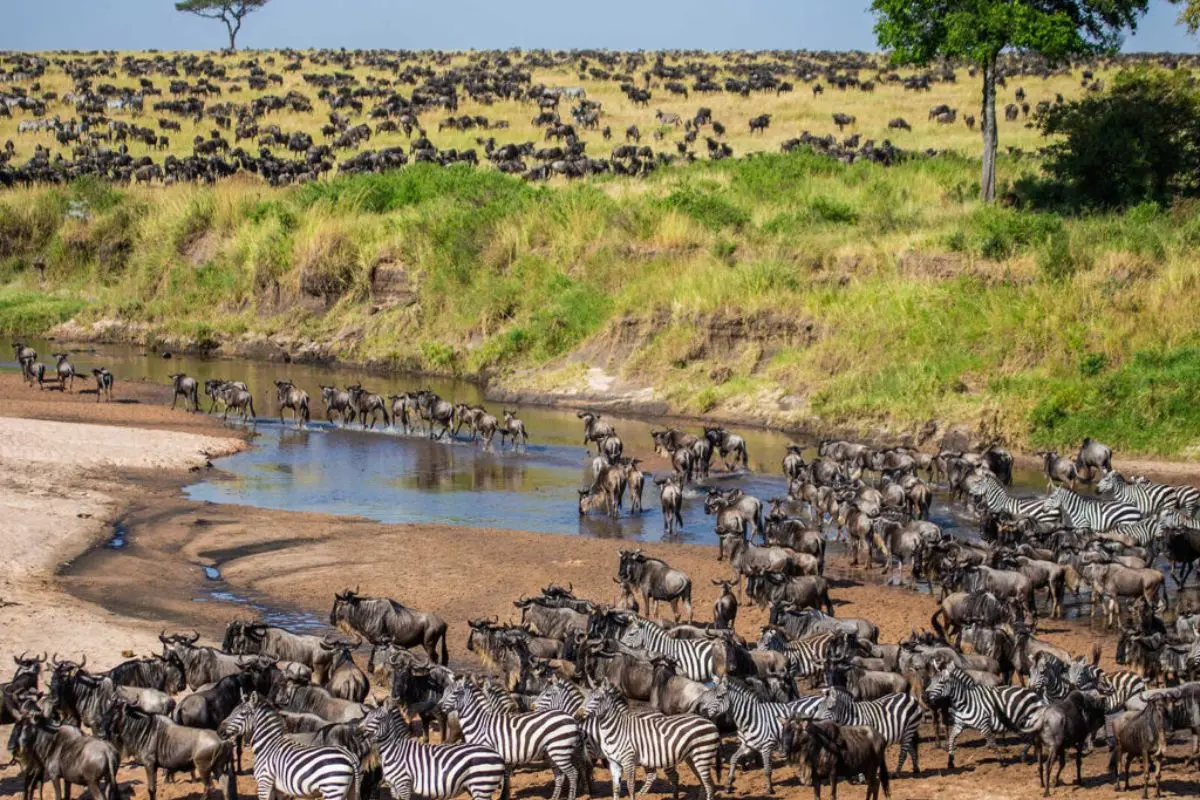
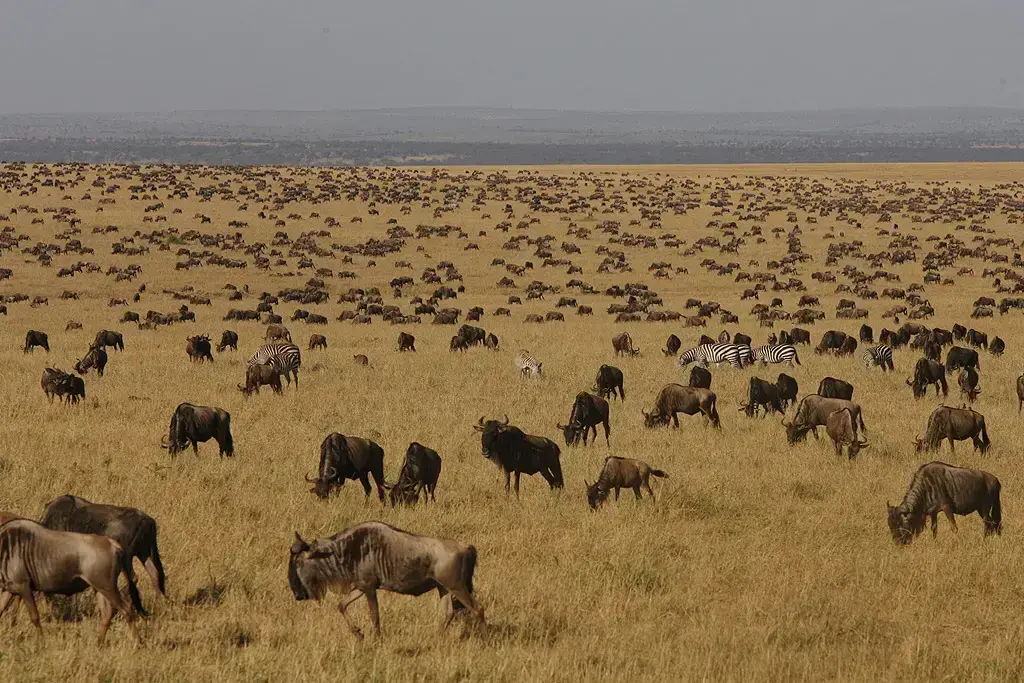
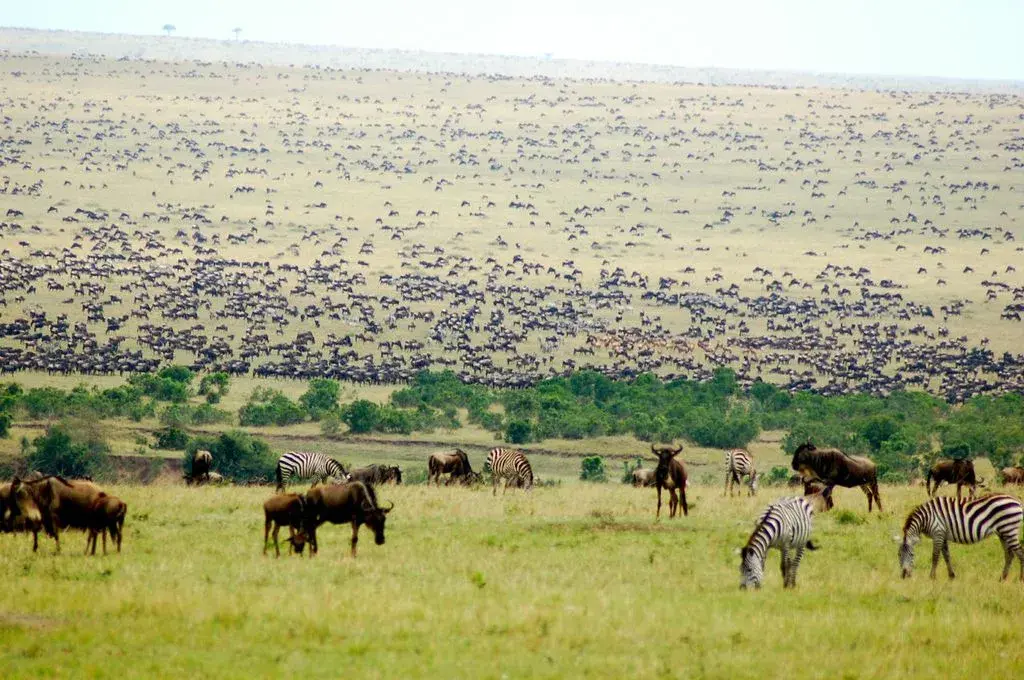
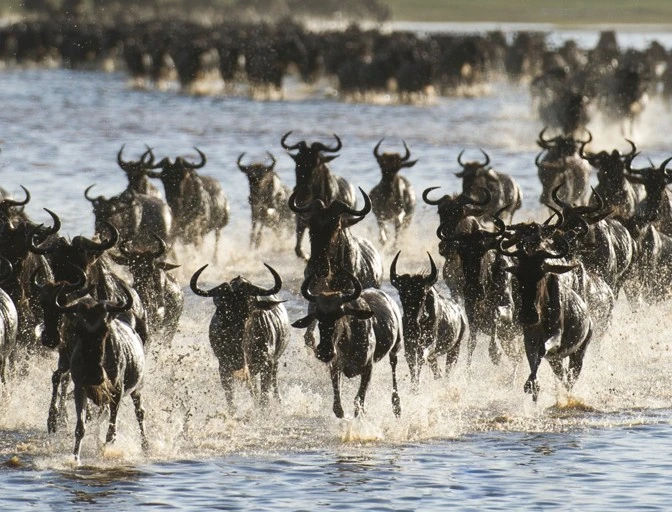
The headline event is the Great Migration, when over 2 million wildebeest, zebra, and gazelle travel up to 620 mi (1,000 km) in a circuit through Tanzania and Kenya. The migration’s Mara River crossing is one of the most extraordinary wildlife spectacles on earth. For the Maasai Mara, the best time to go is July through October, with August and September typically delivering the most frequent and dramatic crossings.
Highlights:
Exceptional wildlife visibility thanks to animals gathering at water sources and short vegetation
Great Migration river crossings in the Maasai Mara
Cooler, comfortable temperatures for day-long game drives
High demand, so book accommodation and tours 9 to 12 months in advance
January to March: Warm, Dry, and Great for Birding
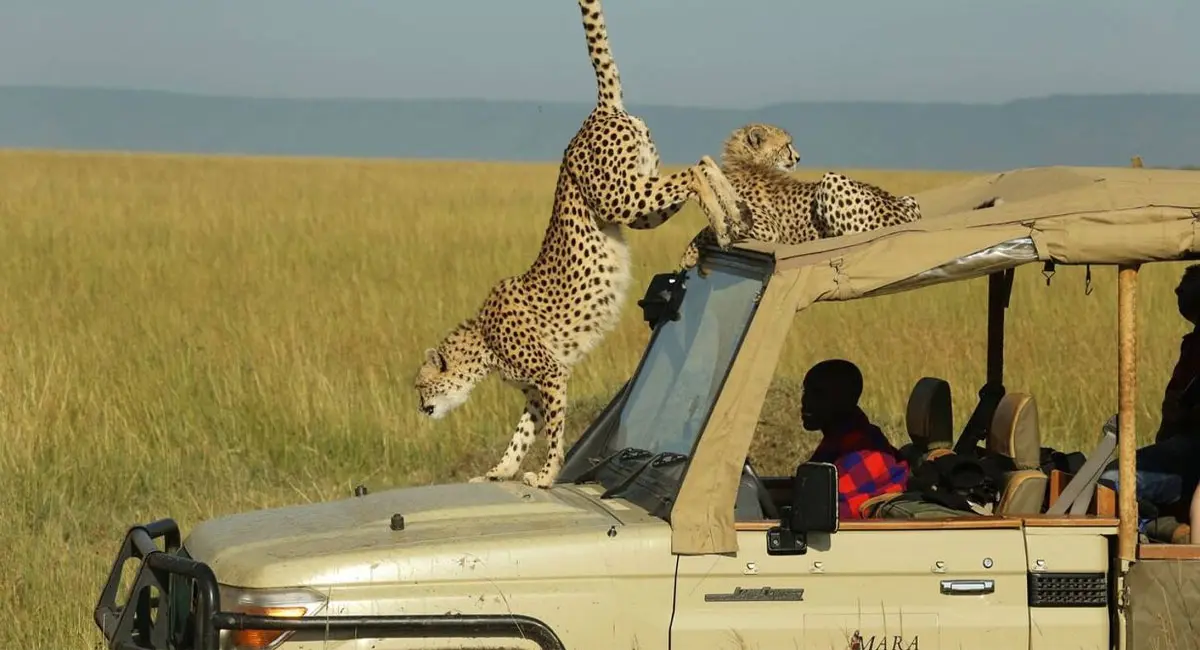
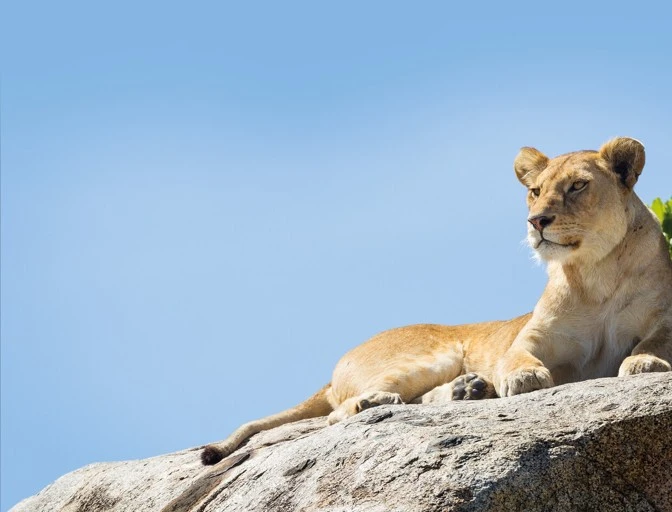
Kenya’s first dry season, from January to March, is warmer than the second and equally rewarding for wildlife. Light vegetation keeps the Big 5 visible, and water sources continue to draw them into the open.
This is the best time to travel to Kenya if birdwatching is a priority. Migratory species from Europe and Asia are present alongside resident birds in full breeding plumage. For example, you can spot as many as 500 bird species in the Masai Mara from January to March, making it a birding paradise. Crowds are lighter than peak season, and there’s a relaxed, unhurried energy to the parks.
Highlights:
Excellent game viewing and photography opportunities
Outstanding birdwatching with migratory and resident species
Warmer temperatures, especially heading into March
Fewer safari vehicles at sightings
The Wet Seasons: Lush Landscapes and Fewer Crowds
April to May: The Long Rains
The long rains bring a big shift to the landscape. Heavy rainfall, particularly in April, typically arrives as afternoon thunderstorms, leaving mornings clear for game drives. Some remote camps and lodges close during this period, and bush roads can become challenging, which is one of the main reasons why it's less popular.
But for the right traveler, this is a hidden gem. Prices drop significantly, visitors are few and far between, and the plains are lush. Birdwatching peaks, with large numbers of migratory species present and residents in breeding color. Newborns are found across bird and mammal species, providing a gentler wildlife-viewing experience.
November to December: The Short Rains
Kenya’s short rains are far more manageable than the long rains, with brief afternoon showers that refresh the landscape without derailing a full day in the bush. Wildlife viewing remains strong, and the dramatic light creates ideal conditions for snapping photos.
By mid-December, conditions often dry out considerably, and wildlife starts to return as the dry season approaches. The festive-season atmosphere adds its own energy to an already memorable destination, with the warm weather and savannas a departure from colder conditions back home for some visitors.
Choosing the Best Time for Your Kenya Safari
Each season in Kenya serves up something different, and understanding these nuances helps in planning the perfect trip, whether you're chasing the Great Migration or seeking out elusive bird species. Here’s a look at what you can expect from the best months for a Kenya safari.
Safari Soles Recommends: September and October
If we had to choose our best time to go to Kenya, it would be September and October. The Migration is still active in the Maasai Mara; you can see the river crossings, and the peak-dry-season crowds have shrunk, making for a more intimate vacation.
It's great for seeing the best of Kenya’s wildlife and landscape. Wildlife is concentrated around limited water sources, vegetation is at its lowest, and the light in October turns golden as the season shifts. You get all that Kenya has to offer, without quite so much hustle and bustle. Whether you’re a first-time visitor or a returning safari-goer, this is the window we recommend most.
January: Hot, Dry, and Excellent for Birding
January typically ushers in a period of hot and dry weather across much of Kenya. The landscapes are parched, which means wildlife tends to congregate around the remaining water sources, making for excellent game viewing opportunities. This is a fantastic time for spotting large mammals, as they are often more visible against the dry terrain. Birdwatchers will also find this month particularly rewarding, as resident birds are active and often in their breeding plumage. The skies are generally clear, offering great conditions for photography, though the heat can be intense, especially in the afternoons. It's wise to stay hydrated and plan strenuous activities for the cooler parts of the day.
July: Peak Great Migration and Cooler Temperatures
July falls squarely within Kenya's long dry season and is often considered a prime month for safaris. The weather is generally cool and dry, with comfortable daytime temperatures and chilly mornings and evenings. This is a peak time for witnessing the Great Migration in the Maasai Mara, as vast herds of wildebeest and zebras make their dramatic river crossings. The dry conditions mean that wildlife is concentrated around waterholes and rivers, leading to exceptional viewing. However, this is also a popular time, so expect more vehicles at popular sightings. Booking accommodations and safari activities well in advance is highly recommended.
December: Festive Season and Potential for Short Rains
December in Kenya presents a mixed bag of weather, often transitioning from the short rains towards drier conditions. Early December can still see scattered showers, particularly in the afternoons, which can bring a refreshing greenness to the landscape. By the latter half of the month, especially around the Christmas holidays, conditions often improve, becoming drier and warmer. Wildlife viewing can be good, with animals becoming more concentrated as the dry season approaches. This period is popular with families due to the holiday season, and while crowds can increase, the festive atmosphere adds a unique charm to the safari experience. It's a good idea to pack layers to accommodate the changing weather patterns.
Kenya Safari Month-by-Month Overview
Priority
Best Time to Visit
Highlights
Great Migration
July to October
Peak Mara River crossings in August and September
General wildlife viewing
June to October
Dry conditions concentrate animals at water sources
Birdwatching
January to March
Migratory birds present with over 450 species on display
Beach holidays
October to February
Warm, dry conditions along the Kenyan coast
Budget travel
April to May
Lowest prices and fewest crowds during the long rains
Fewer crowds
April to May, November
Quiet seasons with a more intimate safari feel
Photography
Wet seasons (Apr to May, Nov to Dec)
Dramatic skies, vibrant green landscapes, and rich light
Family travel
July to August, December to January
Reliable weather and peak wildlife activity
Keep in mind that migration timing can shift year to year depending on rainfall. A knowledgeable local operator and some flexibility in your schedule go a long way toward maximizing what you see.
Your Kenyan Adventure Awaits
The best time to visit Kenya really depends on what you want from the trip. Peak dry season delivers the spectacle of the Migration and the reliability of packed game drives. January and February offer warmth, birdlife, and room to breathe. Even the rainy season in Kenya has its own magic, with grassy plains, stormy skies, and safaris without the crowds.