Tarangire National Park: Why Visit, Where to Stay & What to Know

Ask safari veterans which park in Tanzania surprised them most, and Tarangire comes up pretty often. It doesn’t have the Serengeti’s name recognition, but it has more elephants than almost anywhere else in Africa, ancient baobabs that have stood for centuries, and a river that draws game from miles around during every dry season. If you’re putting together a Tanzania safari itinerary, here’s what to know about Tarangire before you book.

A herd of elephants in Tarangire National Park.

What’s Special About Tarangire National Park?

Elephants and baobabs are the two things people come away from Tarangire talking about the most.

Tarangire holds one of the largest elephant populations globally, and during the dry season, family herds numbering in the hundreds gather along the river to drink, bathe and squabble. It’s one of only a few places on the continent where you can watch elephant behavior close up for a whole morning without them ever wandering off. Individual herds can be massive in Tarangire, too, numbering up to 500 or more members.

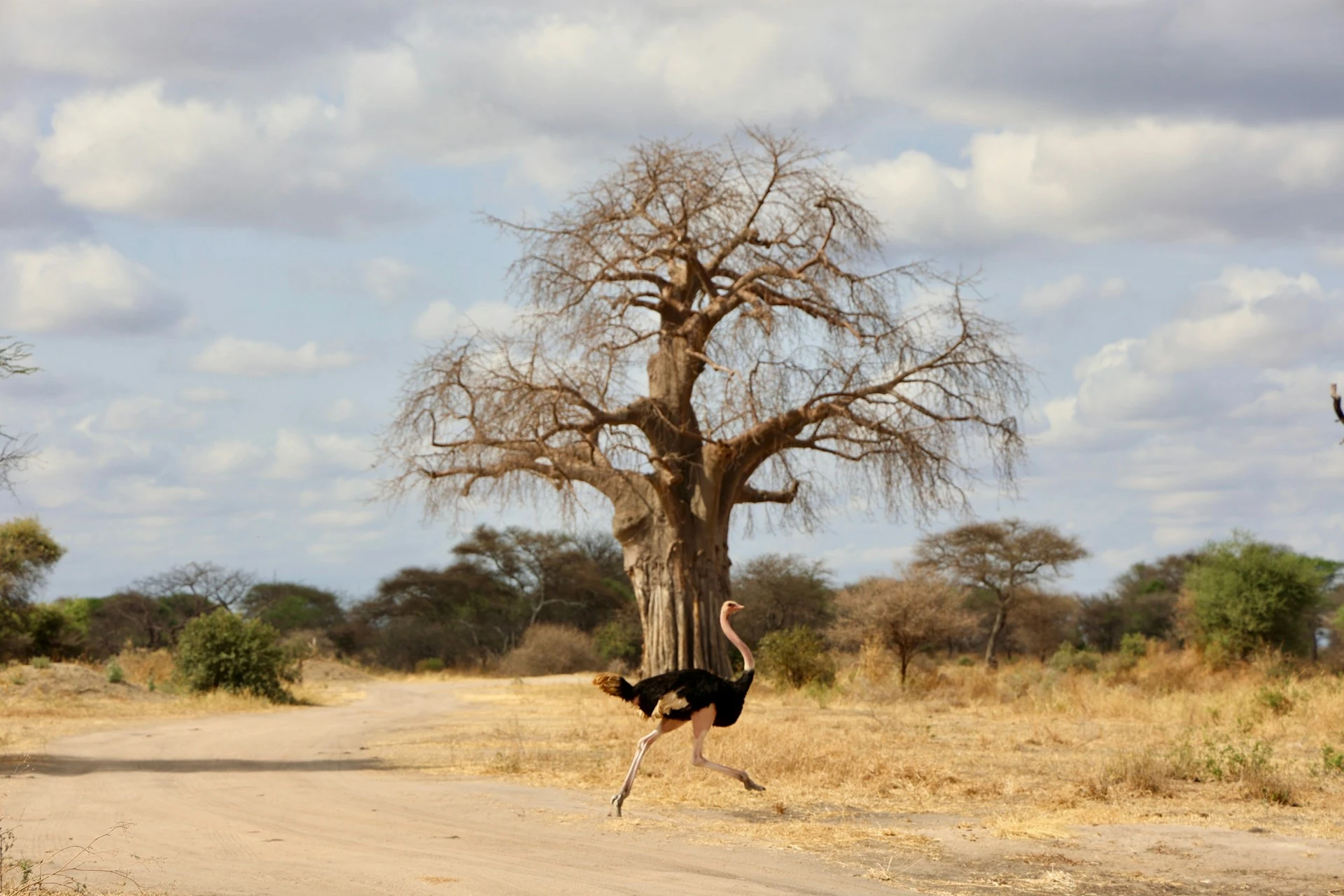
The baobabs are the other draw. Tarangire has more of them, and older ones, than anywhere else on the northern circuit. Some are thought to be centuries old, and their strange, swollen trunks give the park a look you won’t find at the Serengeti or Ngorongoro.

Throw in over 550 recorded bird species, a resident population of tree-climbing lions, and varied landscapes that range from open swamps to floodplain forests to rolling savannas, and it’s clear why people call Tarangire the “little Serengeti.” It’s smaller in scale, but not in what it delivers.

Tarangire vs Serengeti: Which to Visit

This comes up a lot when people are planning: is Tarangire worth the extra stop, or should you head straight for the Serengeti?

  • Size: the obvious difference. Tarangire covers around 1,100 mi² / 2,850 km², while the Serengeti sprawls across roughly 5,695 mi² / 14,750 km², nearly five times the area.
  • Crowds: Tarangire sees far fewer visitors than the Serengeti, making it feel wilder and more exclusive, especially away from the main gate. Tarangire feels intimate and a little wilder, with far fewer vehicles at each sighting, while the Serengeti is built for scale from endless plains to the Great Migration.
  • Wildlife focus: the Serengeti is built around the Great Migration and sheer volume of plains game, while Tarangire is built around elephants, baobabs and a more intimate, concentrated dry-season wildlife spectacle.
  • Best use in an itinerary: most northern circuit itineraries treat Tarangire as a shorter add-on (one to two nights) either before heading into the Serengeti or on the way back to Arusha, rather than a standalone destination.

Where is Tarangire National Park?

Tarangire is in northeastern Tanzania in the Manyara Region. It’s part of the northern safari circuit alongside Lake Manyara, Ngorongoro and the Serengeti.

  • Tarangire National Park coordinates: approximately 3°50′S, 36°00′E
  • Distance from Arusha: around 2 to 3 hours by road (roughly 70 to 85 mi / 110 to 140 km)
  • Nearest airports: Kilimanjaro International Airport and Arusha Airport, both connected to the park by road or by scheduled flights to Kuro airstrip

Look at a Tarangire National Park map, and you’ll see it sits south-east of Lake Manyara, forming the southern edge of the northern circuit. That makes it a convenient first or last stop on a Tanzania safari, depending on which direction you’re traveling.

Many travelers combine Tarangire with Ngorongoro and the Serengeti. Ngorongoro Crater is only a 70 mi / 110 km drive from the Tarangire National Park’s main entrance gate, while the Serengeti National Park is another 90 km in the same direction.

Safari Soles Recommends: pair a night or two at Tarangire with Ngorongoro and the Serengeti, and you’ve got one of the strongest northern circuit itineraries we build. Our 8-day Tarangire, Serengeti & Ngorongoro Crater safari combines all three must-see destinations into one neat package, giving you plenty of time to discover each landscape.

An ostrich running in front of a baobab tree in Tarangire National Park.

Tarangire National Park Animals

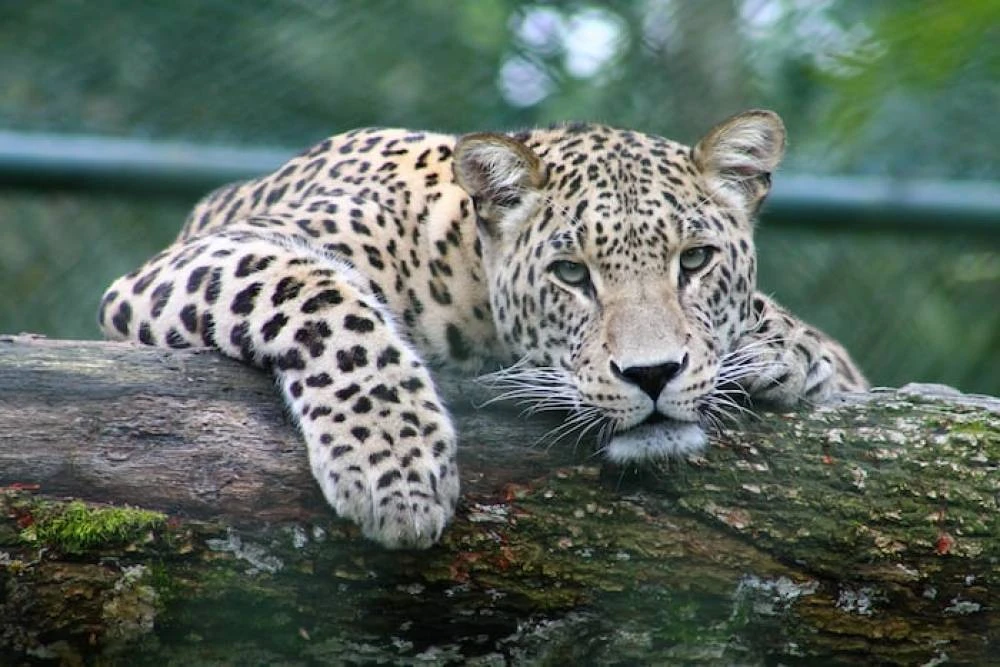
Game viewing peaks in the dry season, June to October, when animals from across the wider Tarangire ecosystem converge on the river to drink. Elephants are the headline act, with herds gathering along the banks in numbers you don’t see elsewhere. Lions are also residents, including Tarangire’s tree-climbers, along with leopards and the occasional cheetah.

Cape buffalo, zebra and wildebeest move through in large numbers, and the park’s drier terrain supports antelope you won’t find on the rest of the circuit — fringe-eared oryx, gerenuk, and lesser kudu among them. Giraffe, warthog, and waterbuck round out the plains game, and birdlife is prolific year-round, with more than 550 species recorded.

You can’t see the Big 5 in Tarangire, but you can spot 4 of the 5 (elephants, lions, leopards, and buffalo). Rhinos don’t reside in Tarangire — you’ll need to head to Ngorongoro Crater for the best chance to see these rare beasts.

A handful of camps just outside the park run night drives that bring out a different set of animals altogether, with porcupines, civets, and sometimes predators like spotted hyenas on the move.

Tarangire National Park Cost

TANAPA charges park entry per person, per 24-hour period. As of 2026, rates for foreign non-residents are $59 per adult per day, with reduced fees for children and East African citizens or residents. Adult East African citizens pay 11,800 TSh per day, which works out to around $4.50.  

Fees are paid electronically, via card (Visa and Mastercard are accepted) or TANAPA smart card, since cash isn’t accepted at the gates. Staying overnight inside the park adds a separate concession fee on top of the daily entry charge, which is between $40 and $60. Unlike some other parks, Tarangire’s rates don’t change with the season; only accommodation prices do.

Because of that extra cost for sleeping inside the boundary, most itineraries treat Tarangire as a full or half-day game drive paired with a night at one of the camps just outside.

Best Tarangire Safari Lodges and Camps

Tarangire’s accommodation runs from tiny bush camps deep inside the park to larger lodges perched just outside it. Here are a few worth checking out, from luxury lodges to budget-friendly camps:

Elephant Lodge is perched on the edge of Tarangire National Park and features its own on-site watering hole that attracts elephants, lions, cheetahs, monkeys, and more. It’s a 5-star lodge, with food-fired hot tubs, a swimming pool, bush sauna, and Michelin-star quality dining. It’s located just a 5-minute drive from Lake Burunge, a popular spot to see flamingos.

Oliver’s Camp is remotely located 3 hours south of Tarangire’s main gate, offering a secluded and exclusive 5-star camp complete with 15 tents, a lounge, dining room, cocktail bar, and pool deck. It’s perfect for honeymooners and families, and it’s right on the doorstep of one of Tarangire’s best viewing points, Silale Swamp.

Tarangire Sopa Lodge is set among kopjes and baobabs in the north-east, about 2.5 hours from Arusha. At 75 rooms, it’s larger than the other lodges listed, with a big pool, a bar, outdoor dining, and WiFi access across the camp. It’s a good fit for families, though you trade some of the intimacy the smaller camps offer.

Kuro Tarangire sits on the riverbank in the heart of the park, close to the Silale Swamp. It’s small with six rooms, built from thatch and canvas, and elephants regularly pass right through camp. It’s an intimate, no-fuss experience with the point being the wilderness is on your doorstep.

Nimali Tarangire occupies its own private space on the park’s eastern boundary, tucked among acacia and baobab along a dry riverbed. Its underground photographic hide, positioned at a waterhole, gives an eye-level view of animals coming to drink, which is a rare setup that photographers in particular will love. A small spa rounds it out, and it suits couples looking for something quieter and more indulgent.

Tarangire Simba Lodge overlooks Lake Burunge from the park’s north-western corner, near Sangaiwe Gate. Its sixteen tented rooms sit on raised wooden platforms with private verandas. Its amenities include a pool and sun deck, a dining room, a bar, a lounge, and a campfire area. It’s a solid, affordable, and comfortable base for exploring Tarangire’s quieter western side.
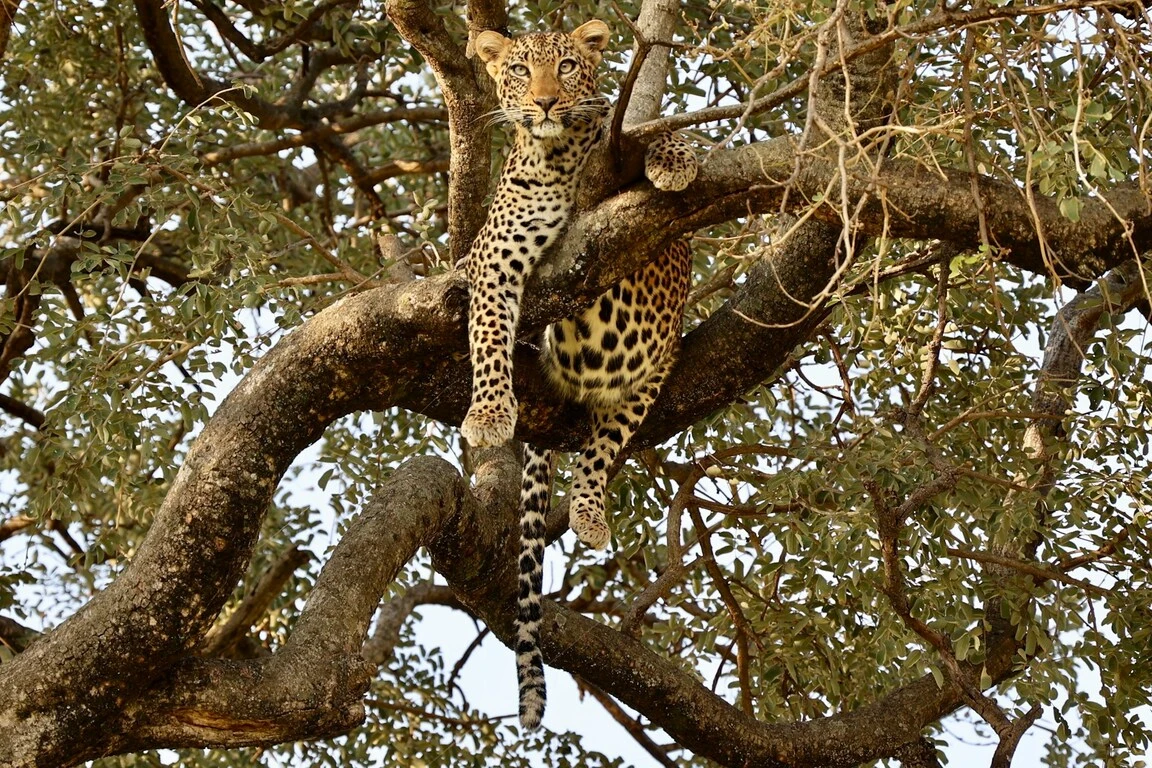
A leopard lying in a tree by the Tarangire River.

When to Visit Tarangire National Park

The dry season (June to October) is the best time to visit Tarangire. It’s the best time for wildlife viewing, as animals concentrate around the Tarangire River. This is also the busiest and most expensive period.

Wet season (November to May) is quieter, greener and excellent for birdwatching, though wildlife is more dispersed and some camps close during the heaviest rains.

Safari Soles Recommends: Consider visiting Tarangire in January or February. It’s a mini dry season with plenty of wildlife viewing opportunities, including plenty of elephants. One big reason we highly rate this time of year is that accommodation tends to be cheaper than in the main dry season.

Safari Experiences in Tarangire

Game drives - morning and afternoon drives are the classic way to explore the park, timed around when wildlife is most active. Morning drives head out at first light, before the heat sets in and while predators are often still on the move from the night before; afternoon drives run into early evening, catching herds returning to the river to drink. Most camps and lodges run both as standard, with private vehicles available for those wanting a more flexible pace or a specific wildlife focus.

Walking safaris - armed-guide-led walks focused on the smaller details of the ecosystem that a vehicle moves past too quickly to notice, like tracks, dung, termite mounds, insect life, and the smaller birds and mammals that don't tend to show up on a standard game drive. It's a slower, more grounded way to understand how the park actually functions, and a good complement to a driving-based itinerary rather than a replacement for one. Walking safaris are priced at around $50 per person for a 3- or 4-hour walk.

Night drives - available from select camps just outside the park boundary, since night driving isn't permitted inside Tarangire itself. Spotlights pick out nocturnal species rarely seen by day, including porcupines, civets, genets and bushbabies, with a reasonable chance of spotting a hunting leopard or lion. Because these drives run on private land bordering the park, availability depends on which camp you're staying at. Night drives are fairly reasonably priced and well worth it, costing around $100 per person.

Balloon safaris - sunrise flights over the baobab trees and Tarangire River, followed by a champagne bush breakfast. Flights typically lift off before dawn and drift for around an hour, giving an aerial view of elephant herds and the river system that's impossible to get from the ground, before landing for breakfast laid out in the bush. It's a pricier add-on and needs to be booked well in advance, since only a limited number of seats go out each morning. Balloon safaris are pricey but worth it, usually costing upwards of $450 per person.

Birdwatching - guided outings tailored to Tarangire's 550-plus recorded species, from raptors and hornbills to the yellow-collared lovebird found almost nowhere else. The mix of riverine forest, swamp and open grassland means a short walk or drive can move through several distinct habitats, each with its own species. Specialist birding guides are available at most camps for those wanting a more focused outing than a standard game drive allows. Tarangire birdwatching tour prices vary widely depending on your package, but generally range from $250 to $500 per person for a full day.

Cultural visits - trips to nearby Maasai communities to learn about local customs and culture, typically arranged as a half-day add-on around a game drive. Visits usually include a walk through a homestead (boma), a chance to see traditional dress, dance and jewelry-making, and time to talk with community members about daily life. It's a change of pace from wildlife-focused activities and a way to put the region's human history alongside its natural one. Cultural visits cost around $20 to $60.


Thinking about adding Tarangire to your safari itinerary? Get in contact with the Safari Soles team to plan your ideal Tanzania safari experience.


Frequently Asked Questions

How big is Tarangire National Park?

How do you pronounce Tarangire?

How many days do you need in Tarangire?