


Two-country planning guide
Rwanda and Kenya Safari: How to Combine Them
A planning framework for pairing Rwanda's gorilla trekking with Kenyan savannah safari: realistic Kenyan destinations, KWS vs county-managed reserves, route choices, flights and trip length.
Rwanda anchorGorilla trekking
Kenya anchorSavannah safari (Mara/Amboseli/Samburu)
Minimum length7 nights
ConnectionAir via Nairobi
Forest primates and savannah
Why travellers combine Rwanda and Kenya
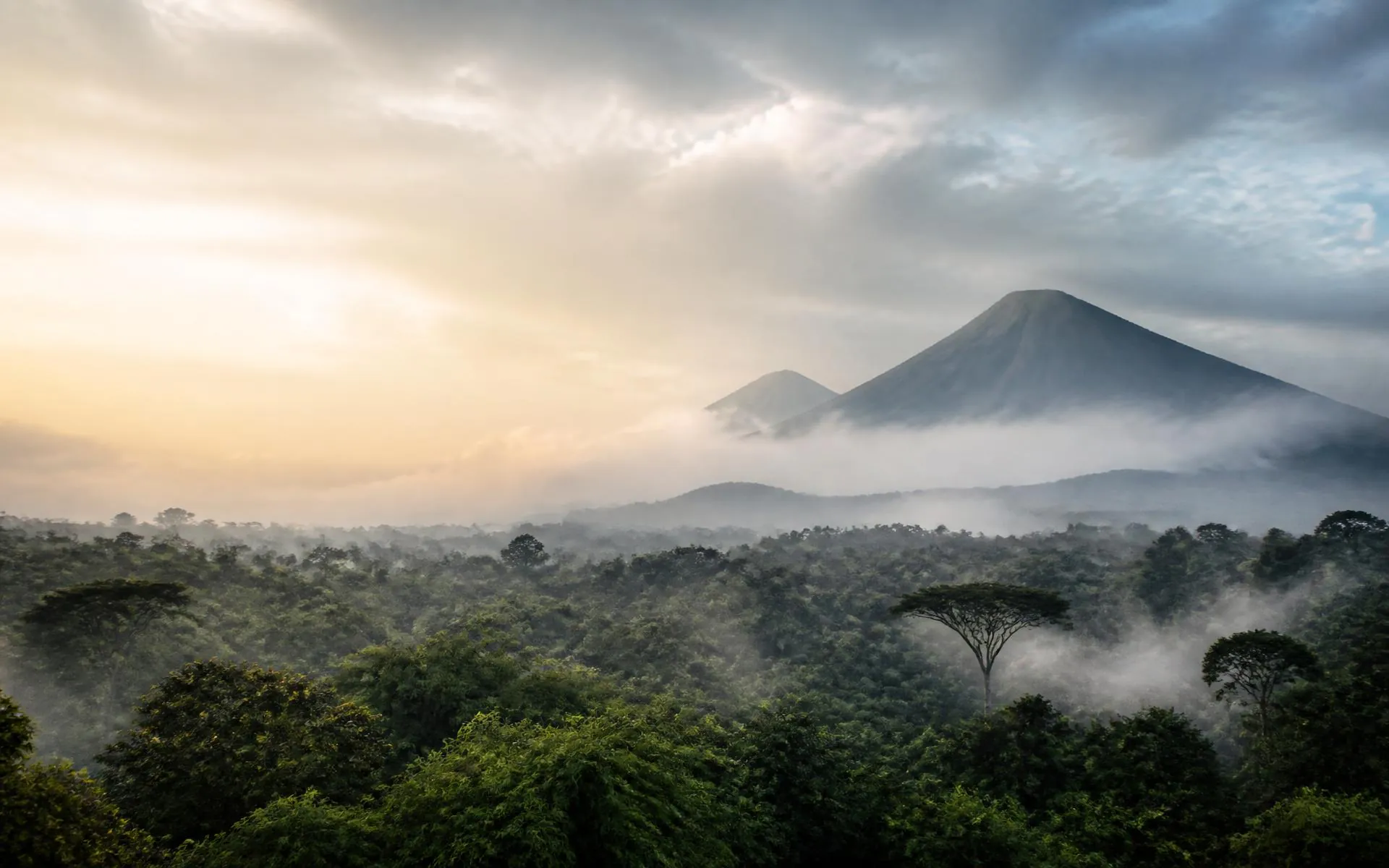
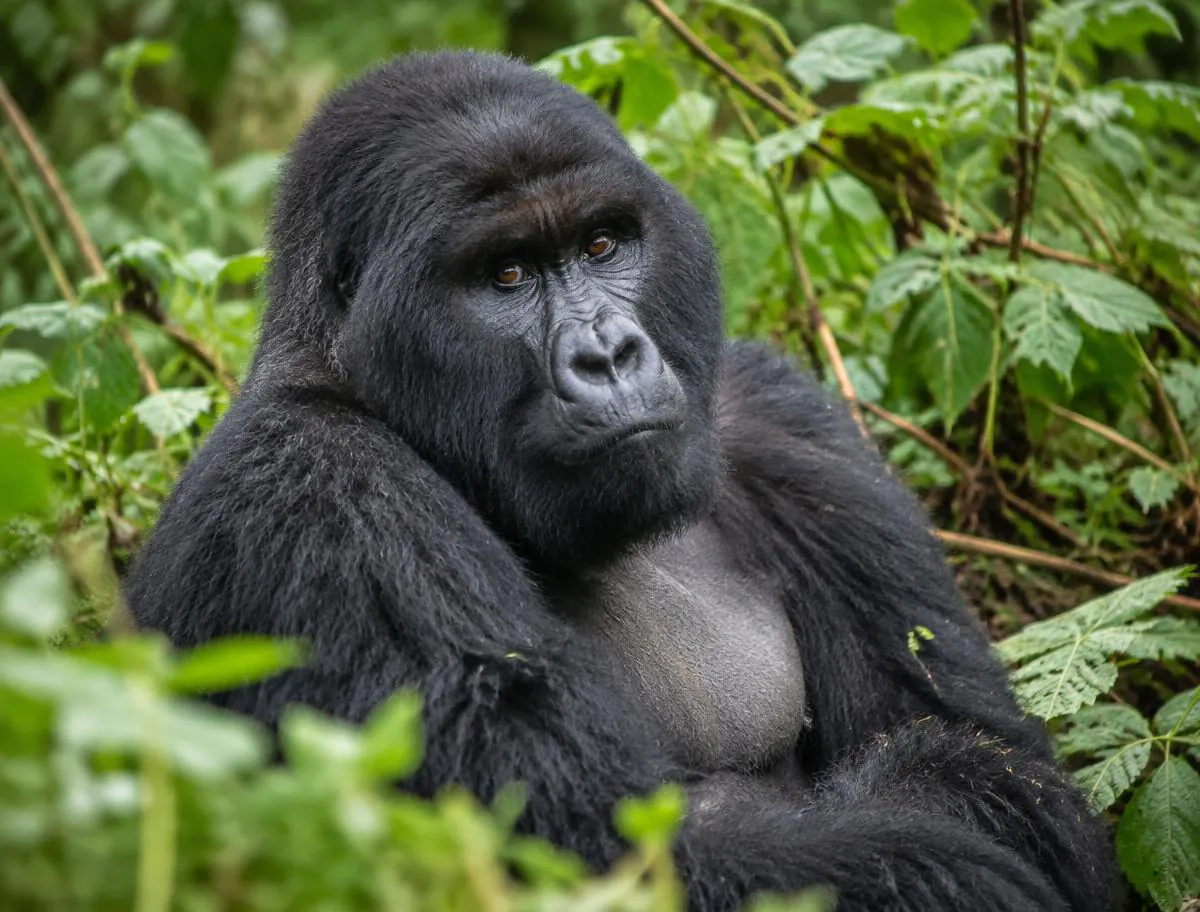
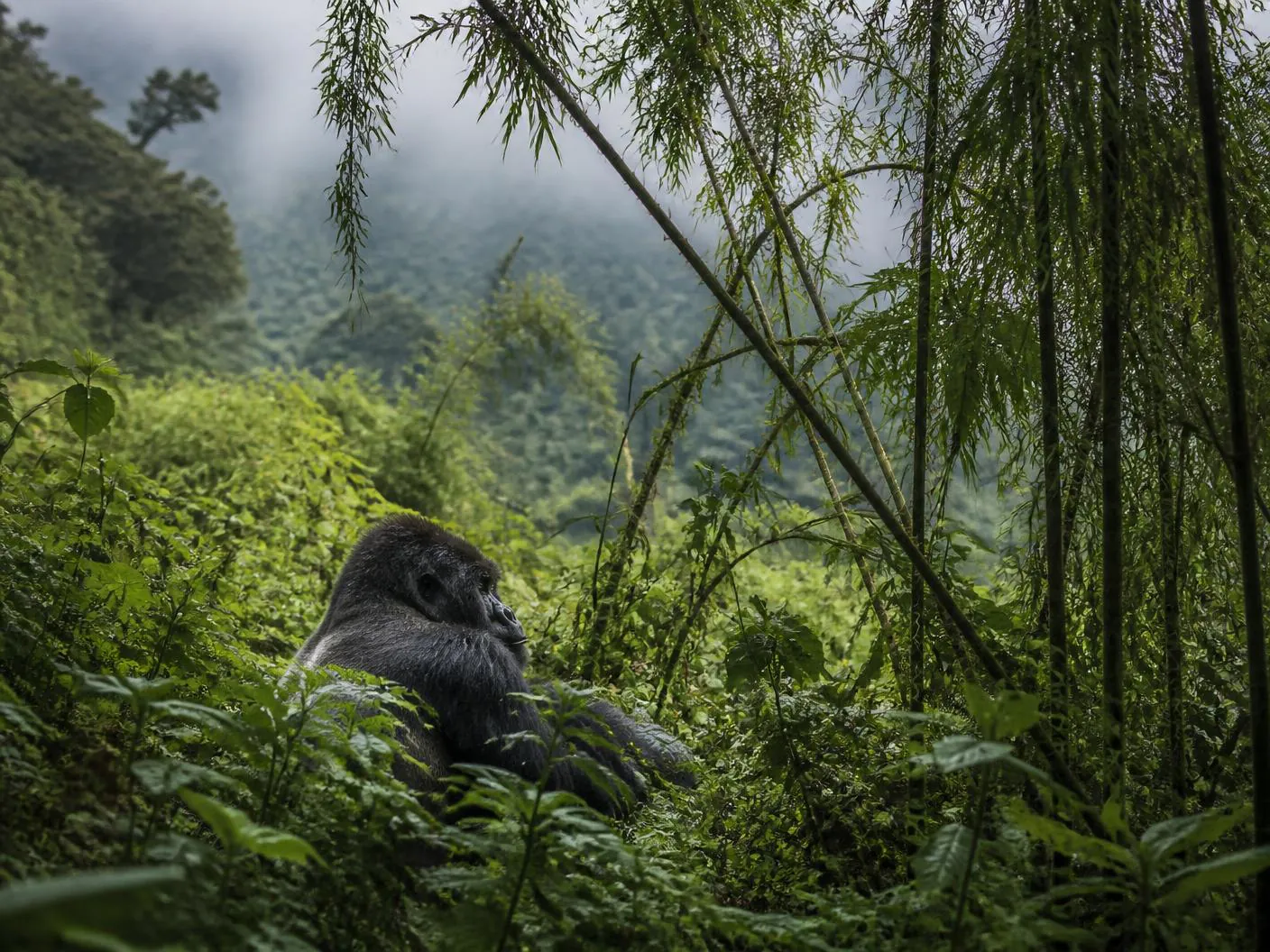
Rwanda and Kenya sit on opposite ends of the classic East African safari spectrum, and the Rwanda safari pillar covers the Rwandan half in full. Rwanda's product is compact and forest-based: mountain gorilla trekking as the anchor, with golden monkeys and Nyungwe chimpanzee trekking as realistic additions, all within a small, hilly country. Kenya's product is expansive and savannah-based: a long-established network of national parks and reserves, open plains, big-cat viewing and, in the Maasai Mara, one of the world's most recognised migration landscapes.
Combining the two gives a traveller a single, tightly time-boxed forest encounter with a gorilla family, followed by (or preceded by) several days of open-plains game driving across a much larger and more varied protected-area network than Rwanda has on its own. This guide owns that specific pairing: realistic Kenyan destinations, how routes and flights actually work between the two countries, how many days the combination needs, and the decision framework for choosing a Kenyan region to pair with Rwanda.
This guide does not repeat the general Rwanda-and-Tanzania combination logic or the fixed-date gorilla-and-Serengeti sequencing calendar; those are owned by dedicated guides on this site and use a different savannah country.
Who actually manages what
KWS parks vs county-managed reserves in Kenya
A detail many first-time Kenya travellers miss: not every famous protected area in Kenya is managed by the Kenya Wildlife Service (KWS). KWS (opens in a new tab) is the state corporation responsible for national parks such as Amboseli, Tsavo, Nairobi National Park and Aberdare, and it sets and collects entry fees for those parks directly.
The Maasai Mara National Reserve (opens in a new tab), Kenya's best-known safari destination, is not a KWS national park. It is a county-managed national reserve, administered by Narok County under its own management plan, with its own entry-fee schedule and rules set locally rather than by KWS. Samburu National Reserve is similarly county-managed rather than KWS-run. This matters practically because fee schedules, booking channels and rules can differ between a KWS park and a county-managed reserve, so check the correct authority for the specific place on the itinerary rather than assuming one national body sets every rate.
For trip planning, the useful takeaway is not the administrative label itself but the reminder to verify entry fees and rules directly with the correct authority — KWS for its national parks, the relevant county reserve authority for reserves like the Maasai Mara or Samburu — before finalising a budget.
| Area | Managed by | What to confirm |
|---|---|---|
| Amboseli National Park | Kenya Wildlife Service (KWS) | Current KWS entry fee schedule |
| Tsavo East / Tsavo West | Kenya Wildlife Service (KWS) | Current KWS entry fee schedule |
| Nairobi National Park | Kenya Wildlife Service (KWS) | Current KWS entry fee schedule |
| Maasai Mara National Reserve | Narok County (county-managed, not KWS) | Current Narok County reserve fee schedule |
| Samburu National Reserve | County-managed (not KWS) | Current reserve fee schedule with the relevant county authority |
Realistic Kenyan anchors
Kenyan destinations that realistically pair with Rwanda
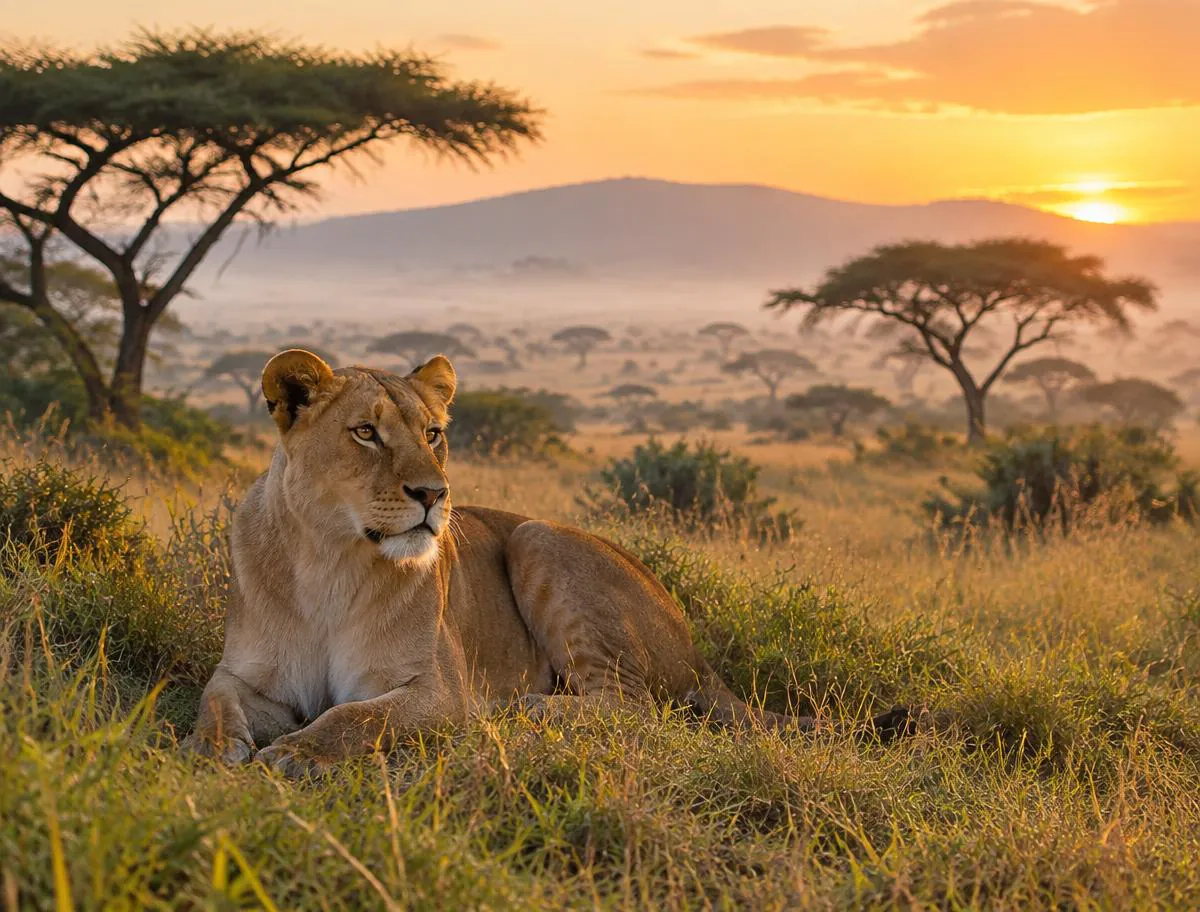
The Maasai Mara is one possible Kenyan pairing with Rwanda because it delivers the widely recognised savannah landscape, with strong big-cat viewing year-round and river-crossing migration activity in season. It can be reached by light-aircraft transfer or road from Nairobi, which keeps travel time contained inside a short trip.
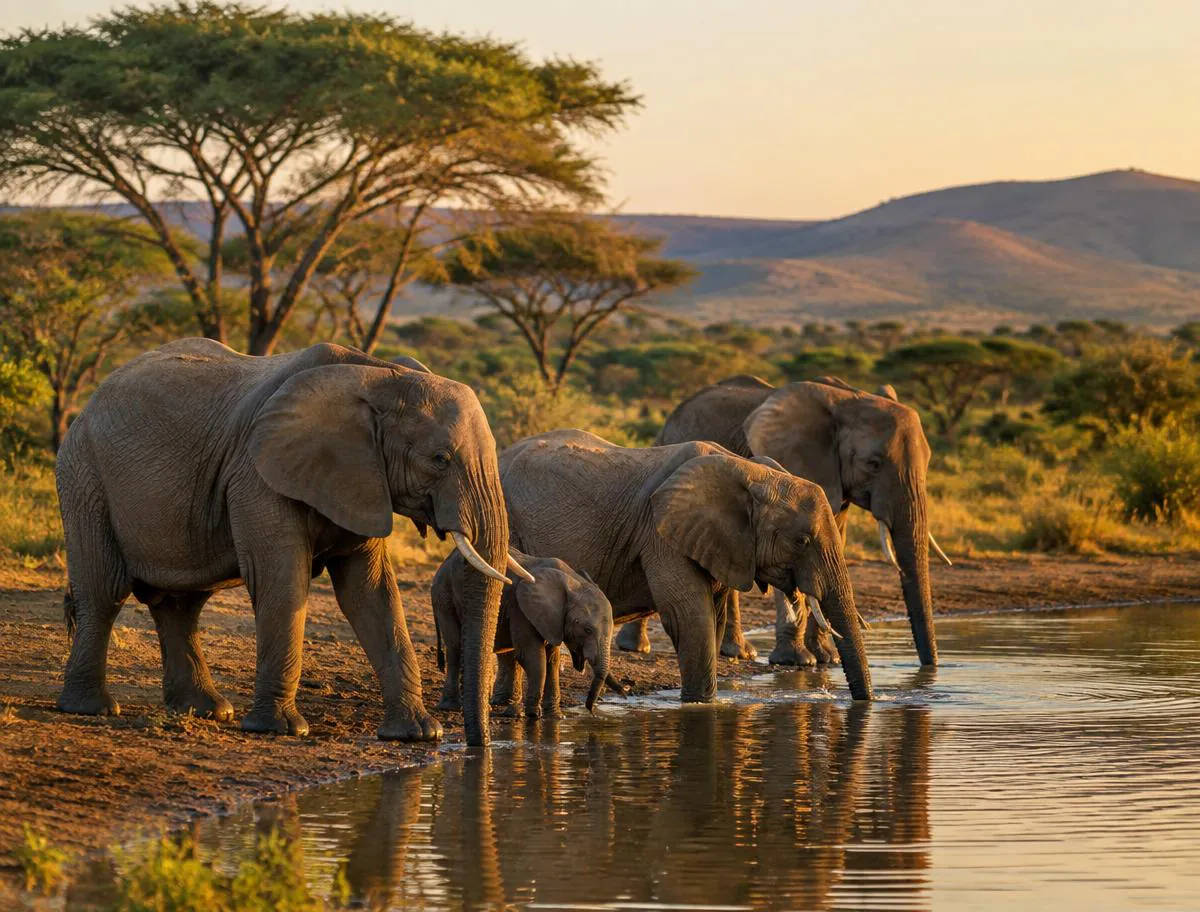
Amboseli suits travellers who want a calmer, shorter Kenya segment focused on large elephant herds and Kilimanjaro views, with fewer camp changes than a Mara-plus-extension circuit. Samburu suits repeat visitors or travellers who prefer a quieter reserve and arid-country species not seen further south. A multi-park circuit — for example Nairobi National Park as an arrival-day option plus the Mara or Amboseli — suits longer trips where Kenya, not Rwanda, is the primary safari destination and the gorilla trek is the shorter add-on.
Avoid assuming every Kenyan park is equally close to Nairobi or equally quick to reach; drive times and light-aircraft schedules vary by region, and some reserves are realistically reached only by air within a short itinerary.
Maasai Mara National Reserve
The best-known pairing; county-managed by Narok County, reached from Nairobi by light aircraft or a long road transfer.
Amboseli National Park
KWS-managed; a shorter, calmer Kenya segment known for elephant herds and Kilimanjaro views.
Samburu National Reserve
County-managed; a quieter, less-visited alternative with arid-country wildlife.
Nairobi National Park
KWS-managed; a same-day option near the airport, not a substitute for a multi-day reserve stay.
Signature planning tool
Choose a Kenya route to pair with Rwanda
Use this selector as a starting comparison, not a booking tool. Each option shows the kind of decision a traveller faces when picking which Kenyan region anchors the trip alongside Rwanda's gorilla trekking.
Kenya route option
Maasai Mara + Rwanda
- Kenya anchor
- Maasai Mara National Reserve, county-managed, not a KWS park
- Best known for
- Big cats, plains game, and river-crossing migration activity in season
- Typical gateway
- Nairobi (Jomo Kenyatta or Wilson) then a light-aircraft transfer to the Mara
- Fit
- First-time safari travellers who want the single most recognised savannah landscape
Illustrative comparison only. Confirm current park or reserve fees and flight routing directly before booking.
Comparing the shapes
Route comparison matrix
The matrix below sets the same four Kenyan pairings side by side against practical planning dimensions, to complement the selector above with a single scannable view.
| Route | Typical trip length added | Access from Nairobi | Best suited to |
|---|---|---|---|
| Maasai Mara + Rwanda | 3–4 Kenya nights | Light aircraft (short) or a long road transfer | First-time safari travellers wanting the classic Mara landscape |
| Amboseli + Rwanda | 2–3 Kenya nights | Road or a short flight | Shorter add-ons and travellers who dislike frequent camp changes |
| Samburu + Rwanda | 3 Kenya nights | Light aircraft | Repeat visitors seeking a quieter reserve |
| Multi-park Kenya + Rwanda | 5+ Kenya nights | Internal flights or a driven circuit | Longer trips where Kenya is the primary safari destination |
Order and direction
Route logic: which country first
As with any pairing of Rwanda's forest trekking against a savannah country, the gorilla permit date is the fixed point. One useful sequence puts Rwanda first so the more physically demanding forest walk happens while the traveller is fresh, and so the flexible Kenya days can be built around a locked Rwanda date rather than the reverse.
Some travellers prefer Kenya first, using several relatively low-intensity game-drive days as a gentle warm-up before the Rwanda forest trek, and treating Rwanda's calmer highland setting as a quieter close to the trip. Either order is workable; the planning discipline is the same as any two-country trip — lock the dated activity first, then arrange flights and the open-ended savannah segment around it, with a buffer day on each side of the international connection.
Getting between the two
Flights between Rwanda and Kenya
Overland travel via Uganda exists, while air can be more time-efficient for a short multi-country itinerary. Kigali and Nairobi are served by regional airlines, but schedules and routings change, so confirm current flights and connection times directly with the operating airline or a booking agent close to travel dates.
From Nairobi, onward movement can form a driven circuit, a fly-in safari, or a mix of both depending on time, budget and destination. Amboseli, for example, can be reached by road or air. Build sensible connection margin around the Kigali–Nairobi leg so a delay does not cascade into the reserve segment.
| Leg | Typical mode | What to confirm |
|---|---|---|
| Kigali to Musanze/Volcanoes | Road transfer | Departure timing relative to trekking report time |
| Kigali to Nairobi | Air, regional carrier | Current schedule and connection buffer |
| Nairobi to Mara/Amboseli/Samburu | Road, light aircraft, or a mix | Current park access and the most suitable route for the itinerary |
Trip length
How many days the combination needs
A workable minimum is around seven nights: enough for arrival, one gorilla trek, a flight day, and two to three full days in a single Kenyan reserve. Shorter than this compresses one or both segments into a single overnight stop that undersells the experience.
Ten nights allows a second Rwanda activity (golden monkeys or Nyungwe) alongside a fuller Kenya stay, or a two-reserve Kenya circuit. Thirteen or more nights suits travellers treating Kenya as the primary safari destination with a multi-park circuit, plus a slower Rwanda segment.
Count usable full days at each destination rather than total nights, since the Kigali–Nairobi flight day and any onward light-aircraft transfer consume time without delivering a wildlife activity.
7 nights
Minimum workable combination: one Rwanda activity, a flight day, and a short single-reserve Kenya stay.
10 nights
Balanced trip adding a second Rwanda activity or a two-reserve Kenya stay.
13+ nights
Room for a multi-park Kenya circuit with Rwanda as a shorter but full-featured segment.
Who this suits
A decision framework for choosing this combination
This pairing suits travellers who want the widely recognised savannah landscape (particularly the Maasai Mara) alongside Rwanda's forest primates. Kenya combinations can be structured as driven circuits, fly-in safaris, or a mix of both depending on time, budget and destination. It also suits travellers building a longer, multi-park Kenya safari who want to add Rwanda's gorillas as a distinctive secondary experience rather than the sole focus of the trip.
It suits it less well for travellers who want to minimise the number of flights and camp changes in a short trip, since a Kenya-plus-Rwanda itinerary typically involves at least three flight legs (into Kigali, Kigali to Nairobi, Nairobi to the reserve) before any return journey. Travellers who strongly prioritise migration river-crossing footage should also confirm current seasonal guidance for the specific Mara region, since crossing activity is weather- and herd-movement dependent rather than guaranteed on any fixed date.
As a simple filter: if the primary savannah goal is broad, well-established open-plains scale with the widest choice of reserves, Kenya suits that goal; if the priority is minimising internal flights while still adding a savannah dimension to a Rwanda trip, compare this guide against the separate Rwanda-and-Tanzania guide before committing to a country. A custom safari planner can help weigh that trade-off against a specific budget and timeframe.
Cost structure
How costs stack across two countries
A Rwanda-and-Kenya trip layers Rwanda's gorilla permit, Rwanda accommodation and transfers, a Kigali–Nairobi flight, Kenya park or reserve entry fees (KWS for its parks, the relevant county authority for reserves like the Mara or Samburu), camp accommodation, and any internal Kenya flights. Treat these as separate cost blocks rather than expecting one blended daily rate, since Rwanda's permit-driven pricing model and Kenya's park/reserve-fee-and-camp model work differently — and Kenya itself has at least two different fee-setting authorities depending on the specific park or reserve.
Do not rely on a stale total figure. See the Rwanda safari cost guide for the current gorilla permit reference, confirm the current KWS fee schedule for any KWS park on the itinerary, and confirm the current fee schedule directly with the relevant county authority for any reserve such as the Maasai Mara, before finalising a budget.
Avoid these
Common sequencing mistakes
The planning error to avoid is assuming the Maasai Mara is KWS-managed and checking the wrong authority for entry fees and rules; confirm with the correct body for the specific park or reserve on the itinerary.
A second mistake is underestimating how many flight legs a Kenya-plus-Rwanda trip involves and scheduling a same-day onward flight to a reserve straight off an international arrival into Nairobi, leaving no margin for a delayed connection.
A third is booking the gorilla permit date without checking realistic Kigali–Nairobi flight timing first, risking a mismatch between the fixed trek date and the Kenya segment's start.
Planning FAQ
Direct answers about combining Rwanda and Kenya
Can I combine Rwanda and Kenya in one trip?
Yes. The connection is by air via Nairobi; Overland travel via Uganda exists, but air is usually more practical for this short multi-country itinerary.
Is the Maasai Mara managed by KWS?
No. It is a national reserve managed by Narok County, not a Kenya Wildlife Service national park; KWS manages parks such as Amboseli and Tsavo.
Which country should I visit first?
One useful sequence starts with Rwanda because the gorilla permit date is fixed, but Kenya-first also works if flights and buffers are planned carefully.
How many days do I need for both?
A workable minimum is seven nights; ten or more gives a fuller, better-paced trip with a second activity in either country.
Is this the same as the Rwanda and Tanzania guide?
No. This guide owns Rwanda paired with Kenyan savannah destinations; the Tanzania guide covers Rwanda paired with the Serengeti and Ngorongoro.
How much does a two-country trip cost?
Costs stack across a Rwanda gorilla permit, Rwanda accommodation, flights, and Kenya park or reserve fees plus camps. Check current official rates before budgeting a total.
What is the biggest planning mistake?
Assuming every well-known Kenyan safari destination is KWS-managed, or booking a same-day flight straight into a Kenya reserve after international arrival.
Continue planning
Read the guide that owns your next question
Rwanda and Tanzania Safari
Compare this pairing against the Serengeti-based combination.
Sources & verification
Official information behind this guide
Kenya Wildlife Service is the authority for KWS-managed parks; the relevant county authority (illustrated here by Narok County for the Maasai Mara) governs county-managed reserves. RDB and Visit Rwanda are the authority for Rwanda permits and context. Unverified blended trip totals are omitted in favour of checking current official rates.
- Kenya Wildlife Service — Our Parks Official list of KWS-managed national parks
- Kenya Wildlife Service — official site Official Kenya national parks authority
- Maasai Mara National Reserve Management Plan (Narok County) Confirms county management of the Maasai Mara National Reserve
- Visit Rwanda — Gorilla tracking itinerary Official Rwanda trekking-day context
- RDB portal Current Rwanda permit booking process
- Visit Rwanda — Weather Official Rwanda season context
Plan the two-country trip
Combine Rwanda's primates with a Kenyan savannah safari.
Lock the gorilla permit date first, then build flights and the Kenya segment around it, checking the correct park or reserve authority for fees.