rivers lakes - Page 2

Lake Eyasi

Lake Eyasi

Tanzania

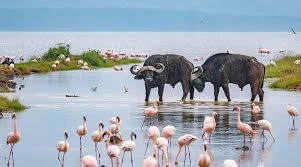
Lake Eyasi is a seasonal shallow endorheic Salt Lake on the floor of the Great Rift Valley at the base of the Serengeti Plateau, just south of the Serengeti National Park and immediately southwest of the Ngorongoro Crater in the Crater Highlands of Tanzania. The lake is elongated, orientated southwest to northeast, and lies in the Eyasi-Wembere branch of the Great Rift Valley.The Hadzabe bushmen live in this region, as do the Datoga and Mbulu tribes. A visit with the bushmen is worthwhile and they will graciously show you where and how they live and hunt. They subsist entirely off the bush and by bow hunting. Everything they use is made from local materials.Lake Eyasi’s water levels vary greatly between the rainy and dry seasons. During the dry season, the lake is virtually nonexistent and animals are forced to share what water is left, which makes for easier wildlife viewing. The lake can get quite deep during the rainy season and it attracts hippos who like to cool off in its brackish waters. Reasons why you should visit lake Eyasi:Visiting lake eyasi is a great detour from a northern circuit safari where the main attraction is the cultural exploration of the Hadzabe bushmen, the indigenous inhabitants are the last community of hunters and gatherers in Africa. Lake Eyasi has been their homeland for over 10,000 years. These tribe’s men are still holding to their traditional way of life, hunting and gathering different kinds of fruits and honey. With recent development activities towards the area endangering their communities, many are now forced to join civilization. A visit to their community is something you will most likely not want to miss.Migrating birds, this lake supports a mix of water birds including huge breeding-season (June to November) populations of flamingos and pelicans. Things you can do in lake eyasi:Walking safariCultural tour & activities with the Hadzabe Bushmen, Datoga PeopleBird safari Activities you can do with the Hadzabe bushmen:Discover plant species used by the Hadzabe for making poison arrows.Identify indigenous roots, tubers, fruits, herbs, leaves, and wild seeds that are used as food and medicine by the Hadzabe community.Participate in hunting, collecting fruits, and wild honey gathering.Practice the local skills of using a bow and arrow during hunting activities.Experience a bushman trekking adventure and visit bushmen cave paintings. Getting to lake eyasi:Going to lake eyasi from Arusha is about 4 hour’s drive, after getting past the town of karatu the road heading to lake eyasi is rough so it is recommended to do lake eyasi as a detour from our northern circuit safari and head there with our safari custom jeeps alternatively you can hire a private jeep from Arusha if you focus is just visit eyasi. 

  Rate : $600 to $3655

  Best time : June - October

  High season : no crowds year out

Lake Duluti

Lake Duluti

Tanzania

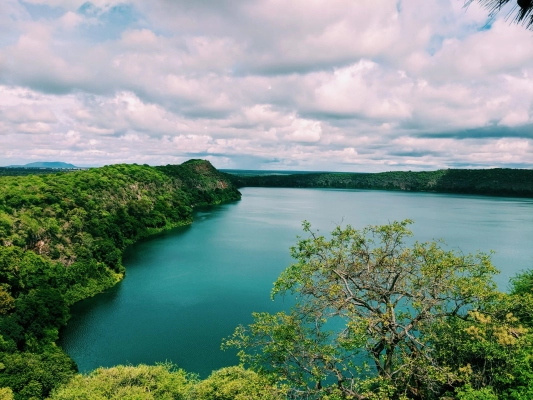
Is a volcanic crater lake in the Arusha region of Tanzania, on the eastern edge of the eastern branch of the Great Rift Valley. It is located in Meru District near the town of Tengeru and is 14 kilometres from the Arusha city centre and 1.4 kilometres from the Arusha-Moshi road.Lake Duluti covers about 63 hectares (160 acres), and the surrounding Duluti Forestry Reserve covers about 19 hectares (47 acres) of land. This lake is a great place to chill and enjoy your afternoon, getting you close to nature while enjoying the scenery. Things you can do at lake duluti.Canoeing.FishingCyclingWalking through the forest reserve with many birds and reptiles is one of the top things to do.Sightseeing and chilling at the lakes bar.You can also visit the nearby market town of Tengeru which is active on Wednesday and Saturday throughout the year. Lake Duluti Tips:Keep a look out for the impressive (but harmless) Monitor Lizards which live around the lake.Attend on a weekend or holiday if you want to eat at a small restaurant or mingle with other visitors.If you are after a very quiet walk and the place to yourself, visit on a weekday.Cash-only. You will not find an ATM nearby.The restaurant offers only chips/fries/BBQ chicken style fare, sodas and basic beers.If you bring your own food, they may charge you a ‘fee’ to eat at their tables or venue.We ate our picnic along the hiking trail, at a rest stop with benches and a pleasant view. There are also garbage cans along the hiking trail making a picnic so much easier. Getting to lake dulutiLake Duluti is approximately 30 minutes east of Arusha Town. Visitors can reach by local transport off the Nairobi-Moshi Highway and take a motorcycle taxi to the lakefront, or drive with a personal vehicle/taxi. The road is marked and well-known to locals.  

  Rate : $50 to $96

  Best time : June - October

  High season : June - October

Magoroto

Magoroto

Tanzania

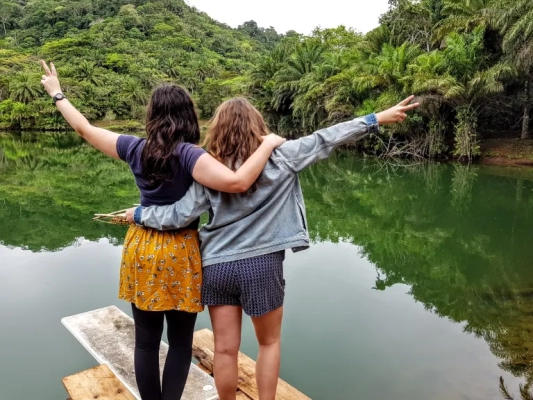
This is a tropical rainforest located remotely in the east mountains in northeast Tanzania. the estate is 850m above sea level where temperatures are pleasant all year long. The nature and vegetation of the area are amazingly beautiful blessed with its altitude, rare plants and bird species, a manmade lake, and waterfalls nearby this estate has plenty of interesting things to do making it a perfect getaway spot for outdoor adventures and camping.Magoroto ForestThings you can do at Magoroto Forest:Mountain Biking:Being situated in the east Usambara mountains there is a variety of biking trails passing through the rainforest and the access roads of what used to be palm plantations. You will have to choose a trail that you’re your fitness level.Mountain Hiking:The forest has eight documented hiking trails with different levels of difficulty you can choose from, this trails pass through a number of attractions all ending in picturesque viewing points.Swimming: Magoroto has a manmade 12 meters’ deep lake dug up in the year 1956 by the Swiss. With fresh waters being fed in by natural springs. this lake is a great swimming spot providing a great experience.Picnic at the lake:Having a meal on a great wooden bench overlooking the lake can be the peace you be longing for.Fishing: Fishing is a great experience but the possibility of catching and having a tilapia barbeque makes it much more satisfactory. Tilapia and catfish are present in the lake.Bird Watching:Magoroto Forest is designated as an IBA (Important Bird Area) and is populated by numerous bird species.Forest Walk:With the dense rainforest, you can walk through the forest and explore nature and its vegetationSpice Tour:Cardamom, Black Pepper, and Cloves are among the many spices that flourish in the Magoroto Estate. A spice tour gives you an opportunity to learn more about spices, and how they are grown and processed.Camping:This is the best way to truly connect with nature, you can either camp by the lakeside or camp by the main house garden either way you will have stunning morning viewsBBQ:Every Saturday is a BBQ night at Magoroto. With Beef, Mbuzi, Chicken, or Fish available on the menu you can order and enjoy your BBQ with a cold beer at the lakeside.Factory Tour:This tour gives you an opportunity to go back into history and learn about Magoroto. These 591 hectares of forest estate have a lot of history. It was opened up by German settlers in 1896 long before Tanzania got independence and a long way afterSwimming at Lake Magoroto Best time to visit Magoroto:Tanzania's dry season from June to October is the best time to visit, dry and sunny weather suits perfectly the activities and environment there, however, there are also dry spells from February to march. April to May is a period you should ignore as it is the rainy season.Magoroto Lake ViewGetting to Magoroto forest:You can get to the majority forest by hiring a private vehicle from Arusha, Dar es Salaam, Moshi, or Tanga to the estate however you can also take a bus to Muheza where you will then hire private transport to the estate.Getting to Magoroto Tip: The estate is in Tanga, a region that is between Arusha (safari hub), Moshi (Kilimanjaro hike hub), and Zanzibar. So you can fit a visit between a safari and a beach stay.

  Rate : $ to $

  Best time : June - October

  High season : no crowds year out

Lake Ngosi

Lake Ngosi

Tanzania

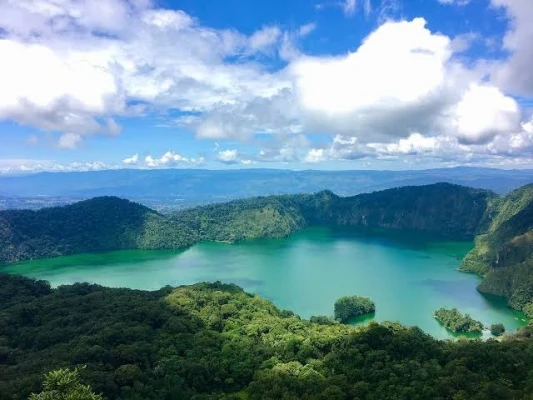
Standing as the second largest Crater Lake in Africa, Ngosi Lake is the top tourist attraction in the Rungwe district pulling hundreds of visitors each year. The lake is located about 38 kilometers south of Mbeya city, near the sprawling Tukuyu Township. It is located on Ngosi peak in the Uporoto Mountains which makes up part of the Eastern Arc ranges.It is located at an uplift of 2,600 meters above sea level in a thick, natural forest of the Uporoto nature reserve, covering some 9,332 hectares of land. It has a length of 2.5 kilometers and width of 1.5 kilometers and is 75 meters deep. This lake is one of the top places to get away and reconnect with nature if you are in Mbeya city, in southern Tanzania. Lake Ngosi  Things to do at lake Ngosi:Canoeing and boat safaris:If it is your pride to canoe in the second-largest crater lake in Africa. You will experience how it feels to do a catch-and-release on a speedboat. On your safari, you will be lucky to meet various aquatic animals like fish and large reptiles like snakes.Lake Ngosi CanoeingCultural visits:Ngosi crater is surrounded by the Safwa and Nyakyusa tribes. These communities are very charming to new visitors and would be happier to have you in their village. You will taste their sweet local food and try their dressings.Camping:Lake Ngosi is found in the deep African forest which surrounds it. If camping is your funny thing, the tourist companies are excellent at providing you with superb services at their mobile and permanent camps.Trekking:This crater lake is surrounded by a natural forest that covers about 9332 hectares. Apart from this forest, Ngosi crater is part of the Uporoto Mountains range which is a thrilling place for mountain trekking. The crater itself is found on the Ngosi peak which is about 2600 meters above sea level.Lake Ngosi TrekkingGetting to Lake NgoziYou can hire a private vehicle or Transfer from Mbeya to lake Ngosi.

  Rate : $ to $

  Best time : June - October

  High season : no crowds year out

Rufiji River

Rufiji River

Tanzania

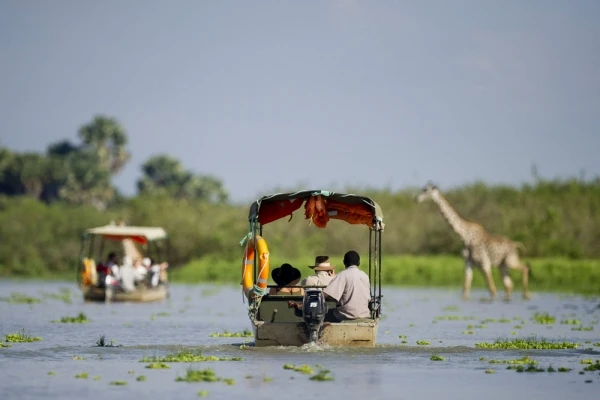
Rufiji river, the largest in Tanzania, East Africa, drains most of the southern part of the country and is navigable for about 60 mi (100 km). Formed by the confluence of the Kilombero and the Luwegu rivers, it flows for about 175 mi northeast and east to enter the Indian Ocean, opposite Mafia Island. The river has major potential for irrigation and hydroelectric power development.Boat Cruising at Rufiji River Rufiji River Activities;Walking safarisBoat trips on the Rufiji River and nearby lakes.Fly camping can also be arranged for guests wishing to sleep out in the bush.Walking safaris at Rufiji River Best Time to Visit Rufiji River;Wildlife viewing in Nyerere National Park (formerly Selous GR) is best from late June to October. It is the Dry season and wildlife is easier to spot since animals gather at water sources and vegetation is thinner. The scenery is lush and green in the Wet season, from October to May, but afternoons can be unbearably hot. Many lodges close from March through May.Boat Cruise at Rufiji River Getting to Rufiji River;Most safaris to Nyerere National Park (formerly Selous GR) are fly-in packages from Dar es Salaam. Julius Nyerere International Airport (DAR) just outside Dar es Salaam is the main international airport and entry to the country. In most cases, safari soles will pick you up and handle all further arrangements.Nyerere NP is often visited as a safari extension to a beach holiday on Zanzibar Island, or one of the beaches around Dar es Salaam. To accommodate this, there are daily scheduled flights from either departure point to both Nyerere and Ruaha. Flights from Arusha town, the base for the northern safari circuit, are also available.Another option is to drive to Nyerere NP from Dar es Salaam on a road safari, but the trip is bumpy and uncomfortable and will take a full day. Time permitting, there is the option of a stopover at Mikumi National Park to break up the trip. Nyerere National Park Airstrip Climate and Weather at Rufiji River;Tanzania is huge and its sheer size means that the climate varies considerably within it. However, generally the main rainy season, or the 'long rains', lasts from about March, to April and May. Afternoon tropical downpours are the norm – which are heavier and more predictable beside the coast and on the islands. The humidity is high and daily temperatures reach the low-mid 30°s.The long dry season lasts throughout June, July, August, September, and October when rainfall is unusual, even on the islands. Temperatures vary hugely with altitude and location, but it's usually a fine, clear sky and sunny weather – it's a great time to visit the Rufiji River. During November and December, there's another rainy season: the 'short rains. These are much lighter than the main rains and less reliable.If it has rained during the short rains, then it normally dries up for a few months, January and February, which is Tanzania's 'short dry season, before starting to rain again in earnest in March.Rufiji River Flora 

  Rate : $ to $

  Best time : June to October.

  High season : June to October.