Kilimanjaro NP

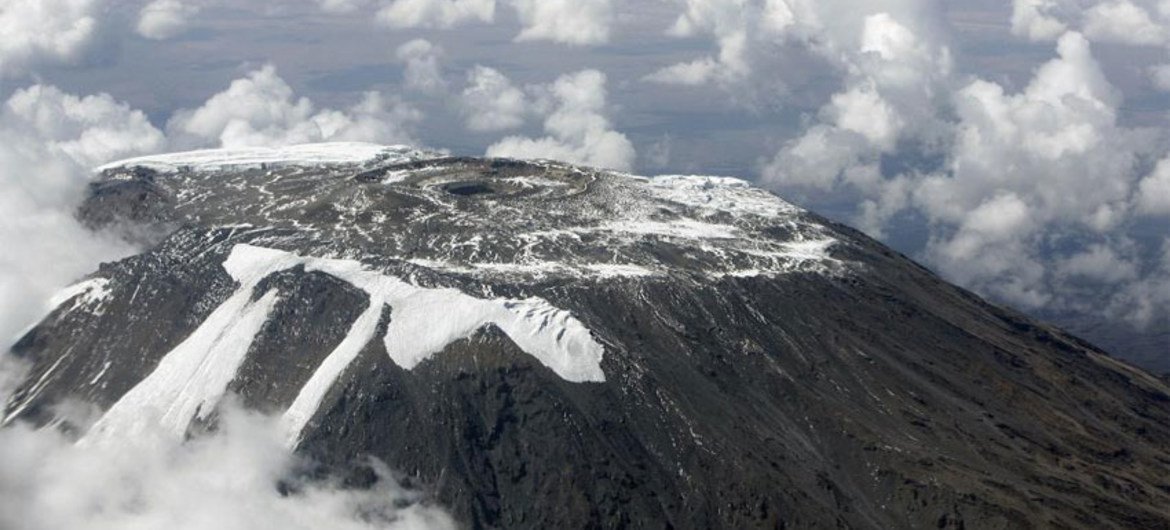
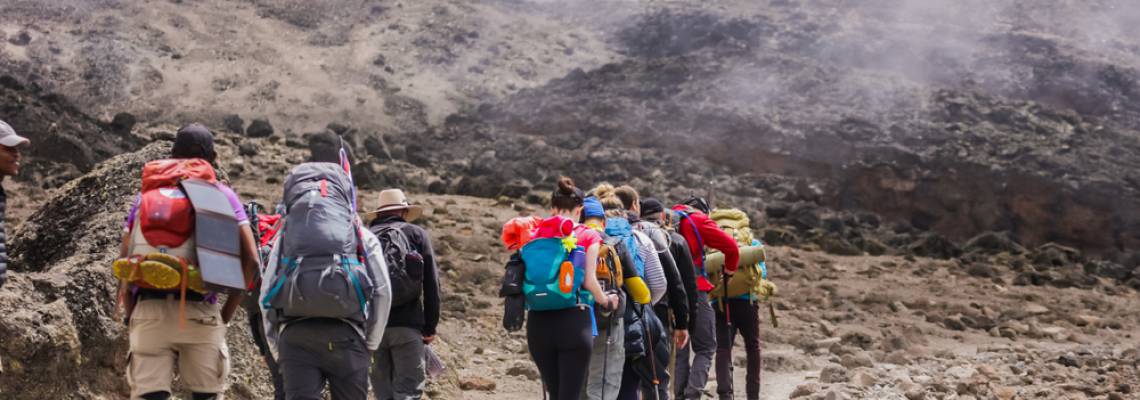
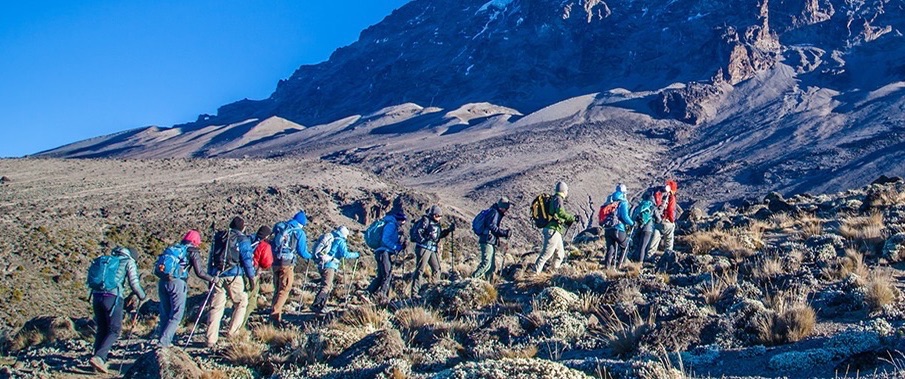
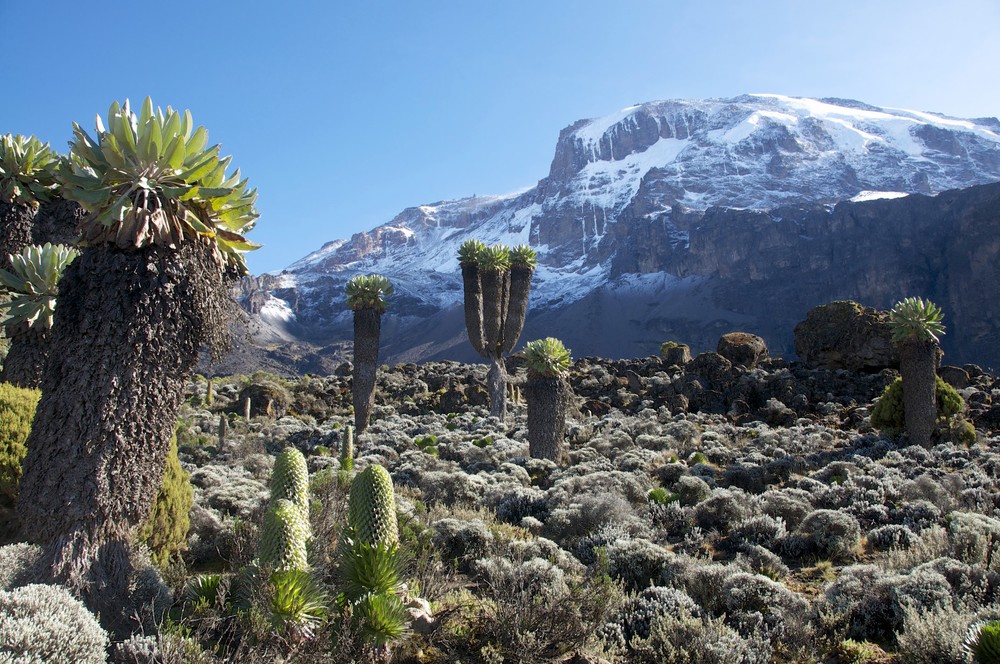
Der Kilimandscharo ist ein erloschener Vulkan im Norden Tansanias mit einer Gesamtfläche von 688 Quadratkilometern. Mit einer Höhe von 5896 m ist er der höchste Berg des gesamten afrikanischen Kontinents. Er ist auch der höchste freistehende Berg der Welt und einer der höchsten Vulkane der Welt. Der Berg besteht aus drei Vulkangipfeln, nämlich Kibo, Shira und Mawenzi. Der Park wurde 1977 als Nationalpark eingerichtet. Der Kilimandscharo-Nationalpark gehört zu den meistbesuchten Parks Tansanias. Im Gegensatz zu den anderen nördlichen Parks ist dies kein Ort, an dem man Wildtiere beobachten kann, obwohl es sie gibt. Vielmehr besuchen die Menschen das Gebiet, um den beeindruckenden schneebedeckten Berg am Äquator zu besteigen und den Gipfel Afrikas zu erklimmen.

Mount Kilimanjaro

Der Kilimandscharo ist ein erloschener Vulkan im Norden Tansanias mit einer Gesamtfläche von 688 Quadratkilometern. Mit einer Höhe von 5896 m ist er der höchste Berg des gesamten afrikanischen Kontinents. Er ist auch der höchste freistehende Berg der Welt und einer der höchsten Vulkane der Welt. Der Berg besteht aus drei Vulkangipfeln, nämlich Kibo, Shira und Mawenzi.

Der Park wurde 1977 als Nationalpark eingerichtet. Der Kilimandscharo-Nationalpark gehört zu den meistbesuchten Parks Tansanias. Im Gegensatz zu den anderen nördlichen Parks ist dies kein Ort, an dem man Wildtiere beobachten kann, obwohl es sie gibt. Vielmehr besuchen die Menschen das Gebiet, um den erstaunlichen schneebedeckten Berg am Äquator zu besteigen und den Gipfel Afrikas zu erklimmen.

Der Kilimandscharo ist beliebter als das Land, in dem er liegt (Tansania)

Auf dem Berg finden sich fast alle Arten von Ökosystemen: Kulturland, Regenwald, Heide, Moorland, alpine Wüste und ein arktischer Gipfel (Uhuru).

Der Kilimandscharo ist einer der wenigen Orte in Afrika mit permanentem Schnee.

Zum Ziel gelangen

Der beste Flughafen für Ihre Anreise ist der Kilimanjaro International Airport. Von dort holt Sie unser Team ab und bringt Sie zu Ihrem Hotel, wo Sie vor Ihrer Wanderung von Ihrem Guide empfangen werden.

Alternativ können Sie zum Dar es Salaam International Airport, zum Sansibar International Airport oder zum Nairobi International Airport fliegen. Von dort aus können Sie einen Inlandsflug zum Kilimanjaro Airport oder zum Flughafen Arusha nehmen, wo Sie unser Team abholt.

Wetter & Klima

loading...

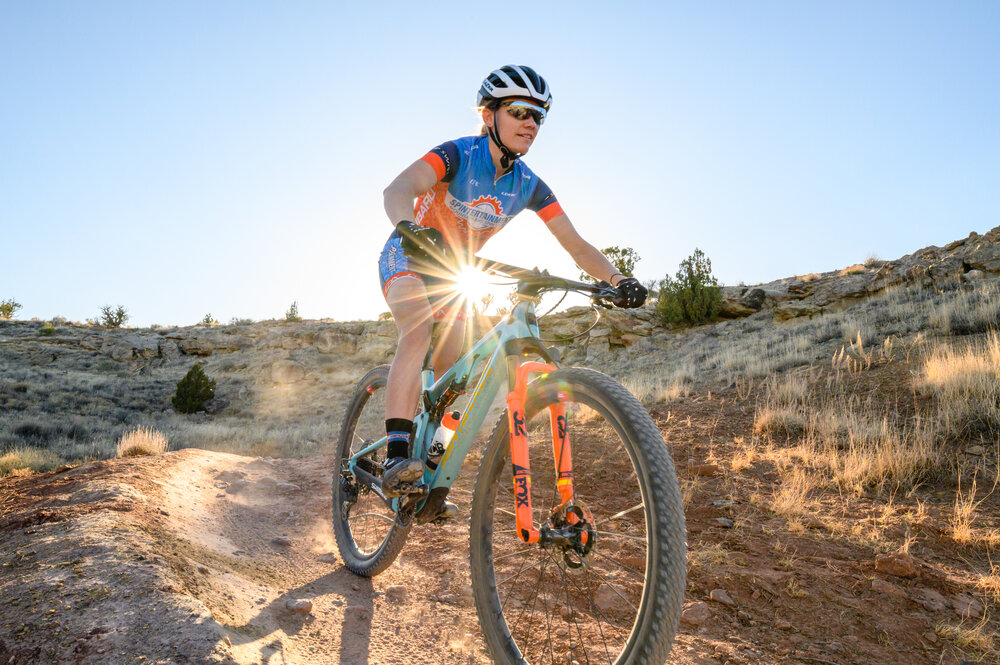
Biking In Kilimanjaro.

Eine der größten und anspruchsvollsten Herausforderungen bei der Besteigung des Kilimandscharo.

Dieses Abenteuer eignet sich für erfahrene Mountainbiker mit sehr guter Kondition. Die felsigen Hänge oberhalb von 4.572 Metern und die Gesamthöhe von 5.794 Metern stellen die Kraft jedes Fahrers und seines Fahrrads auf die Probe. Die Tour kann sowohl alleine als auch in der Gruppe unternommen werden.

Biking In Kilimanjaro.

Diese Tour ist ideal für alle, die den Kilimandscharo auf einzigartige Weise bezwingen möchten.

Ja! Sie erkunden und erreichen den 5898 Meter hohen Uhuru Peak mit dem Mountainbike – eine echte Herausforderung, nicht wahr? Die geplante Route führt vom Kilema Gate zum Kilema Camp mit einer Übernachtung im Zelt, dann zur Horombo-Hütte und von dort weiter auf die Marangu-Route zur Kibo-Hütte. Der Aufstieg zum Gipfel und die Fahrt vorbei an einigen Eisschollen sind aufgrund der Höhe anstrengend, aber die Mühe lohnt sich. Die 3658 Meter lange Abfahrt in anderthalb Tagen zählt zu den längsten der Welt.

Der Kilema-Mountainbike-Trail verläuft parallel zur Marangu-Route. Die Kilema-Route dient hauptsächlich als Zufahrtsstraße für Autos, um die Horombo-Hütte mit Vorräten zu versorgen und medizinische Notfälle von dort abzutransportieren. Die Strecke vom Kilema-Tor zur Horombo-Hütte ist eine Schotterstraße, die nur mit einem Geländewagen befahren werden kann und sich in der Regel in einem guten Zustand befindet.

Cost of climbing

Viele Abenteuerbegeisterte weltweit träumen davon, Afrikas höchsten Berg, den Kilimandscharo, zu bezwingen. Mit seinen 5895 Metern Höhe bietet er eines der besten Wanderziele und ist ein absolutes Muss für alle, die die Seven Seven besteigen wollen. Die Kilimandscharo-Besteigung ist relativ teuer; die Preise reichen von 1200 US-Dollar bis über 5000 US-Dollar. Daher achten Reisende weltweit besonders auf ein gutes Preis-Leistungs-Verhältnis und eine nachhaltige Lösung.

Cost of climbing Kilimajaro

Im Falle des Kilimandscharo ist ein nachhaltiges Angebot jedoch nicht allein die zwischen Reisendem und Agentur vereinbarte Summe. Manche Anbieter locken mit sehr niedrigen Preisen, was jedoch dazu führen kann, dass Träger ausgebeutet werden. Bedenken Sie, dass die Träger die Hauptlast tragen, um Ihre Reise zu ermöglichen, und dabei meist ausgebeutet werden (sie erhalten weniger als den gesetzlichen Mindestlohn und sind auf Trinkgelder angewiesen, die ihnen das Leben kosten). Zu Ihrem Vorteil bieten wir Reisenden daher eine detaillierte Kostenaufstellung für die Besteigung an, damit Sie wissen, wofür Ihr Geld ausgegeben wird und welche nachhaltigen Angebote es gibt.

Hinweis: Wer sich für Agenturen mit den günstigsten Angeboten entscheidet, sollte darauf achten, dass die Trinkgelder nicht nur die entstandene Lohnungerechtigkeit ausgleichen, sondern auch die am härtesten arbeitende Gruppe am Kilimandscharo belohnen. 

Cost of climbing Kilimanjaro


Kostenaufstellung der Kilimandscharo-Besteigung (direkte Kosten im Zusammenhang mit der Besteigung)

1. Parkgebühren-Hierbei handelt es sich um Gebühren, die direkt an die Parkbehörden gezahlt werden, damit der Kunde und die Crew in den Park gelangen können. Diese Gebühren sind nicht verhandelbar und können auch nicht vermieden werden. Reisende unter 16 Jahren erhalten jedoch eine Ermäßigung.

Parkgebühren

  • Rettungsgebühr: 20 $ pro Person und Trekkingtour
  • Eintrittsgebühr: 70 $ pro Person und Tag
  • Campinggebühr: 50 $ pro Person und Nacht (Hüttengebühr für die Marangu-Route: 60 $ pro Person und Nacht)
  • Begleitpersonengebühr: 2 $ pro Person und Trekkingtour

Hinweis: Die Parkgebühren zuzüglich 18 % Mehrwertsteuer können unter keinen Umständen reduziert, vermieden oder umgangen werden.

 Cost of climbing Kilimanjaro

2. Löhne – Die Besatzung (Träger, Führer, Koch, Hilfsführer) erhält einen Lohn. Diese Kosten sind jedoch variabel, da die Besatzung mit zunehmender Gruppengröße relativ niedriger ausfällt

Mindestlohn für die Kilimandscharo-Begleitung

  • Träger: 10 $ pro Tag
  • Guide: 20 $ pro Tag
  • Assistenzguide: 15 $ pro Tag
  • Koch: 15 $ pro Tag

3. Transport- Transfer zum und vom Wanderweg sowie zu Ihrem Hotel in Arusha oder Moshi. Die Kosten hierfür variieren (110 $ – 170 $).

Verpflegung - Die Gesamtkosten für Ihre Mahlzeiten und die der Gruppe beginnen bei 220 $

Mehrwertsteuer -Die Mehrwertsteuer beträgt 18 % auf alle Produkte und Dienstleistungen im Inland.

Zusätzliche Ausstattung – Ausrüstung wie z. B. eine private Toilette. Diese wird nicht als notwendig erachtet und ist gegen Aufpreis erhältlich. Solche Zusatzleistungen können die Kosten Ihrer Wanderung erhöhen, z. B. durch einen zusätzlichen Träger für die Toilette und die zusätzlichen Kosten für die Ausrüstung.

Cost of climbing Kilimanjaro

(Indirekte Kosten)

Dem Unternehmen entstehen Verwaltungskosten, die nicht direkt den Kosten zugeordnet werden können.

(Zusätzliche Kosten, die Ihnen entstehen können).

Trinkgeld– Nach Einsicht in den Mindestlohn und die detaillierte Kostenaufstellung ist klar, dass Trinkgeld für die Crew unerlässlich ist und daher für den Kunden praktisch obligatorisch ist. Es wird jedoch nicht erzwungen, ist aber sehr empfehlenswert (siehe die Trinkgeldrichtlinien für Kilimandscharo und deren Begründung).

Hinweis: Trinkgelder werden vom Kunden direkt an die Crew gegeben und sind nicht im Wanderpreis enthalten

Ausrüstungsverleih – Falls Sie nicht vollständig für die Wanderung ausgerüstet sind, sollten Sie mit dem Verleih von Ausrüstung rechnen

best time to climb

When to climb Mount Kilimanjaro is an important decision one that not only affects having a successful hike but your overall experience. To your benefit, we have created a list of things you should consider when you have to make the decision on when you should hike Africa’s highest mountain.

Factors you should consider when choosing when to hike Mount Kilimanjaro

Weather is the ultimate factor, the Kilimanjaro being near the equator we face only dry or wet(rainy) seasons, with the dry season favored as it makes the hike less challenging therefore having more success chances. The rainy season is less favorable as you will slog through very deep mud in the first days, at a higher altitude you fight your way through ice, snow, and fog with moisture in your clothes, and gear you will not only be facing a challenge to the summit but risking your health through the process 

Tip: bad weather on Kilimanjaro will ruin your overall experience, and your photos and will make the hike twice as hard 

See the table below to know more about the month-by-month temperature, precipitation, cloudiness, and crowds.

Month

Temperature

Precipitation

Cloudiness

Crowds

January

Warm

Medium

Low

High

February

Warm

Medium

Low

High

March

Moderate

High

Medium

Low

April

Moderate

High

High

Low

May

Moderate

High

High

Low

June

Cold

Medium

Medium

Medium

July

Cold

Medium

Low

High

August

Cold

Low

Low

High

September

Moderate

Low

Low

High

October

Moderate

Low

Medium

Medium

November

Moderate

High

Medium

Low

December

Moderate

Medium

Medium

Medium


Recommended

Good

OK

Not Recommended


Number of people on the mountain, many hike enthusiasts will be on the mountain in favorable weather so if you prefer a hike with fewer visitors you should opt for the low season and carefully choose a route 

Budget, on the peak season there are many group hikes that will slightly reduce the cost of the trek.

The views, if you prefer to have a certain experience like summiting on a full moon, a snowy summit, stunning sunrise and sunset views dates are to be considered as it will influence these aspects

  • Full moon dates, summiting on a full moon is possible within each month, but some months are less cloudy so you get an even better experience, peak dry season (August) is the best time for a clear full moon. we also have estimated full moon dates worth considering.
  • A snowy summit, some months Kilimanjaro can have less snow & other months it can be very snowy. You can favor a snowy summit (peak wet season) or a summit without snow again this will be down to the dates & your decision on when you should hike Kilimanjaro.
  • Sunset and sunrise views, during the dry season there it is less cloudy so you have an even better view of the sunrise and sunset.

routes

There are 6 hiking/trekking climbing routes you can use to successfully reach the Kilimanjaro summit, these routes differ in length, costs, scenery, difficulty levels, and succession rates

Selecting a Kilimanjaro climb route is one of the most important decisions you will have to make, with the routes being different, the question of which route you should take to climb Kilimanjaro depends on many factors.

Factors to consider before you choose your Mount Kilimanjaro climbing route

  • The time of the year
  • Budget available
  • Previous hiking/trekking experience
  • Fitness
  • Personal preference 

Tips to know about the routes

  • The Marangu route: is the only route offering hut accommodation
  • The Machame route: is the most popular Mount Kilimanjaro climbing route 
  • The Rongai route: is the easiest and driest route up the Kilimanjaro
  • The Shira route: is one you get serious altitude on the first day
  • The Lemosho route: the most beautiful route up the Kilimanjaro
  • The Umbwe route: the most demanding and challenging route

Other routes you should know about

  • The mweka route: is a descent route.
  • The kilema route: the only summit-bound Mount Kilimanjaro cycling route 
  • The northern circuit route: the longest and the only route going across the Kilimanjaro
  • Western breach: unsafe and risky, we don’t operate up this route


Trail Conditions

*Trail conditions*

·         The trails up the Kilimanjaro are well marked and maintained

·         Technical skills are not required with only a few spots requiring the use of hands and feet

·         The Barranco Wall, the Western Breach approach (now closed), and the optional Lava Tower climb are a few of the technical spots

·         Long drop public toilets (pit latrines), wooden structures built around a hole. Make sure you have toiletries, private portable toilets with the privacy of a tent come with extra costs and are carried up the mountain

·         No shower facilities on the mountain, wet wipes are essential (however you will also be provided with warm water

·         Bad weather can complicate matters (loose, dusty, muddy, wet, or snowy trail) be prepared to trek all types of weather (fog, rain, snow)

·         You will need to sign in once you arrive at each campsite at the big wooden building. In order to track the movements through the national park, all trekkers are required to sign their names in a book at each campsite upon arrival, one team member can sign in for the whole group, which can be helpful when there is a line for signing in. Passport numbers are not required.


Accommodation on the trail

·         Unless you hike through the Marangu, accommodation on the mountain will be tents brought up by your porters

·         Nighttime is going to be colder than you expect, bringing your own warm sleeping bag liner to complement the sleeping bag provided will go a long way towards helping you stay warm at night. It may also be a good idea to pack an aluminum bottle that can be filled with warm water before you sleep at night or even a hot water bottle. A warm balaclava that covers your face comfortably at night will also be a great help.

Meals and water on the Kilimanjaro

·         Breakfast, lunch, and dinner will be provided by a chef who will cater to diet restrictions and meals to help your climb. Breakfast and dinner will be served in the “mess tent”

·         Water is collected from mountain streams and purified with tablets, Water will get refilled after breakfast and dinner every night. Bring your empty water bottles and camelbacks to the mess tent for breakfast and dinner and an assistant guide will refill your bottles for you with clean water.

·         Our advice: stop drinking once you arrive at camp for the night and only have a cup of tea with dinner (hopefully with a rehydration salt as well). Then, wait about 30 minutes to one hour after dinner to use the bathroom before bed and this will hopefully allow you to not need to get up in the middle of the night to use the bathroom (which will seem like one of the most tedious things you can imagine in the middle of a cold night at high altitude). Drink more when you first wake up and start moving instead (1 liter before breakfast if you can). This is easier to manage for using the bathroom at more convenient times.

Tip: carry at least 3 liters while hiking, water is only provided at the campsites


Day pack

You are only to carry a few items that you can need to the next camp, everything else will be placed into your duffel bag and carried by the porters (maximum of 15kg). items you will need to carry in your day pack are waterproof gear, extra clothing, water, snacks, gloves, hat, Sunglasses, bug repellant, and sunscreen. Wipes etc.


Health Issues & Rescue

These are major health issues you may encounter while taking on the challenge to hike Mount Kilimanjaro

Acute Mountain Sickness (AMS)

Acute Mountain Sickness is also referred to as “Altitude Sickness” as the name indicates the illness is commonly encountered at exceptionally high altitudes, such as the summit area of Mount Kilimanjaro. This is a very common issue about 3 out of 4 hikers will suffer to some extent from altitude sickness, it is, therefore, important to familiarize yourself with this condition and preventive measures

The cause of altitude sickness “AMS”, as altitude increases the number of oxygen molecules per breath is reduced. At about 12000 feet (3600m) there are about 40% fewer oxygen molecules per breath so the failure of the body to adapt quickly to the reduced oxygen causes altitude sickness

The symptoms of altitude sickness “AMS” include the order normally experienced; headaches, nausea, anorexia, exhaustion, lassitude, rapid pulse, insomnia, swelling of the hands and feet, and reduced urine output.

What to do if you get altitude sickness “AMS”, the most effective treatment will be by immediately taking the affected person to a lower altitude. Often a drop as little as 500m will be sufficient.

Preventive measures to avoid altitude sickness “AMS”, Climbers can take precautions to at least minimize the severity of the illness

  • Maintaining a slow steady pace from day one gives enough time for your body to adapt to the altitude. “pole pole” is a common Swahili phrase translating to slowly, which is now a norm among hikers climbing Mount Kilimanjaro.
  • Including an extra day of acclimatization at a high altitude.
  • Drinking at least 3-4 liters of water every day.
  • Preventative medicine is also available and you should consult your physician for specialist advice.

Altitude sickness can be serious

Most hikers get minor effects of altitude sickness that they can hike through but to some, it can get the severe inability to walk, shortness of breath at rest, and fluid buildup in the lungs.

The fluid build-up may cause a condition known as edema, which can affect your lungs (High Altitude Pulmonary Edema) preventing effective oxygen exchange, or affect the brain (High Altitude Cerebral Edema) which will result in the swelling of the brain tissue. The latter can be lethal if not treated immediately.

Tip: it is essential you communicate any symptoms immediately to others, if symptoms persist or increase (severe headache, decreased coordination “ataxia”, weakness, fatigue, nausea, shortness of breath) means you will be suffering moderate AMS and you will be required to descend as at this stage only a descend or advanced medication can reverse the problem. It is important to descend before the ataxia reaches a point you can walk on your own.

Hypothermia

Hypothermia is the lowering of the body’s core temperature.

·         Cause, if your clothes get wet or perspiration meaning the cold will now be under your clothing layers and will lead to a falling off your body temperature

·         Prevention, correct equipment, and clothing are critical, proper layers of clothing (moisture-wicking fabric) will prevent hypothermia.

·         Treatment is by getting to a shelter, removing all wet clothing, and getting the victim warm (placing him/her inside two or three sleeping bags preferably with another person)

Sun related injuries

About 55% of the earth’s protective atmosphere is below an altitude of 5000m. Far less ultraviolet light is being filtered out, making the sun’s rays much more powerful, which could result in severe sunburning of the skin.

Preventives

  • It is strongly recommended to use a 20+ sun protection cream at lower altitudes,
  • Total block cream above an altitude of 3000m.
  • It is also important to wear dark sunglasses preferably with side panels above 4000m in the daytime and essential when walking through snow or ice. Snow blindness can be very painful, and will require your eyes to be bandaged for at least 24 hours.

Fitness

Any climber who suffers from any cardiac or pulmonary problems should be cautious and should not attempt to climb the mountain unless they have consulted their physician. It is strongly recommended that a physical fitness program is followed to prepare yourself physically for the mountain.

Foot problems

Causes

  • Poor-fitting, new or little-used boots will result in blistering feet. Even if boots are only slightly too small, your toes will get bruised, particularly on your descent.

Prevention

  • It is it therefore also important to keep your toenails short for the climb.
  • Developing blisters should be treated immediately as soon as the “hot spot” is felt. Remove the boot and cover the area with zinc oxide tape or something similar.


Kilimanjaro rescue

There is an emergency medical helicopter evacuation service on the mountain, this service is only provided by Kilimanjaro SAR. It is recommended to have insurance covering this service

The type of insurance you will need

For a successful helicopter evacuation on Mount Kilimanjaro and Mount Meru, one should acquire travel insurance that covers medical evacuation 6000 meters above sea level, it is very important to ask your travel insurance provider to include this type of coverage within the policy that you purchase. Ensure your policy is not on a reimbursement basis.

What if you won’t have an insurance

If the patient evacuated is not medically covered by his/her travel insurance, the charges are between $5,200 and $5,800. These charges include helicopter evacuation and clinic.


Final Checklist

Being properly equipped is one of the most important prerequisites of a successful summit attempt, to your aid we have prepared a checklist you can use as a guideline to be equipped for the trek

please remember to limit the weight of your duffel bag and its content to 15 kg (32 lbs.) as it’s the maximum a porter is required to carry, your sleeping bag will count towards the 15 kg, however sleeping mats, and tents will not count.

Note: for those who want to travel light equipment can be available for rental service or you can purchase them at stores once in Tanzania

Make sure you have everything you need to help you successfully summit Kilimanjaro.

Travel Documents

  • A valid passport and visa
  • Airline ticket
  • International health card with immunizations
  • Travel insurance
  • Medical insurance
  • US$ cash / Travelers Checks / Credit Card

Essential Items

  • Duffel bag – large enough for all climbing gear and clothing. To be carried by the porters. An extra bag to be left at the hotel with extra gear
  • Small luggage lock – to lock zippers
  • Day backpack –20 – 35 L capacity. Large enough to carry your water, camera, raincoat, lunch pack, snacks & warm clothing
  • Sleeping bag
  • Ski-pole / walking stick
  • Water bottles/containers
  • Water Bladder (Camelbak type, 3 liters)
  • Kilimanjaro map (Can be bought at Park gate)

Tip: duffel bag is preferred as porters bundle the bag with other items and carry the load on their heads

High Altitude Gear

  • Waterproof, breathable & windproof jacket (outerwear like Ventex or Gore-Tex)
  • Waterproof, breathable & windproof pants (outerwear)
  • Polar fleece (middle layer)
  • Thermal underwear (under layers)
  • Mittens or warm gloves
  • Glove liners (if necessary)
  • One pair of thermal socks
  • Balaclava
  • Gaiters
  • Thermal water flask

Hiking Gear

  • Shorts
  • Hiking pants
  • Regular underwear
  • T-shirts
  • Raincoat or Poncho

Tip: for the base layer clothing with moisture-wicking fabric (merino wool or Capilene) is recommended, staying dry is essential. Avoid cotton as they absorb moisture. 

Footwear

  • Water-resistant semi-stiff hiking boots – mid-weight boots work great
  • Shoes for overnight camps – i.e. sneakers, running shoes, etc.
  • Socks – several pairs for the climb
  • Liner socks – to keep your feet dry and limit the risk of blisters
  • Equipment
  • Sun hat or similar (with a brim)
  • Knit hat (for warmth)
  • Collapsible ski sticks (optional but highly recommended)
  • Water bottles – two or three (total capacity at least 4 liters)
  • Headlamp, a good strong one with spare batteries and an extra light bulb
  • Water purification tablets
  • Sunglasses, good quality dark lenses for the climb, with a securing strap
  • Flashlight (torch) with spare batteries
  • Backpack cover (optional)
  • Camp pillow

Personal Items

  • Toilet kit (soap, toothbrush, toilet articles, wet wipes, etc.)
  • Towel, lightweight, quick-dry (optional)
  • Sunscreen and lip protection, SPF 30+
  • Ziploc bags, to protect the camera, binoculars, etc. from dust
  • Toilet paper
  • Wet wipes (recommended)
  • Pee Bottle, to avoid leaving the tent at night (recommended)
  • Money belt for passport and valuables

Medical and First Aid Supplies

  • Headache tablets
  • Altitude Sickness-Diamox (if not allergic to sulpha)
  • Diarrhea – Imodium
  • Nausea – Valid
  • Malaria – Prophylaxis
  • Water purification tablets
  • Painkillers
  • Muscular sprains
  • Abrasions blisters and cuts – Plaster, bandages
  • Antiseptic cream – Betadine
  • Flu and colds
  • Eye drops
  • Insect repellent containing Deet

Optional Items

  • Camera, extra lenses, memory cards, and spare batteries
  • Binoculars
  • Powdered sports drinks for the climb (ex. Game or Isotonic drinks)
  • Pocket knife
  • Notebook & pencil
  • Plastic bags to keep clothing dry (masking tape)
  • Energy snacks and sweets
  • Video camera, tapes/memory cards, battery packs, and tripod

Tip: Checked luggage on airplanes can get lost or delayed on the way to Tanzania. You should prepare for this possibility by wearing or carrying on the items that are essential to your Kilimanjaro climb. While most clothing, gear, and equipment can be replaced in Tanzania prior to your climb, there are some things that you should not replace.

It is recommended that you wear one complete hiking outfit on the plane, including a long sleeve shirt, hiking pants, underwear, socks, and hiking boots. In your carry-on baggage, you should bring your backpack, waterproof jacket and pants, insulated jacket, fleece pants, snacks, toiletries, medications, camera, and all paperwork. Airline regulations do not allow you to carry trekking poles on the plane. Make sure you do wear/carry your hiking boots; wearing a different pair of boots on your climb will likely cause blistering.


Gear Rental

On all our packages we will camping equipment (tents, sleeping mats, camp chairs, camp table, mess tent, cutlery, cooking utensils, and gas stove), sleeping bags will be provided if requested with exception of the Marangu route which uses hut accommodation

All hikers are supposed to bring their hiking gear. It is possible to rent hike gear while in Tanzania however, items such as hiking boots, thermal underwear, etc. are better to buy than rent.


Mt Kilimanjaro gear rental from Tanzania – Prices quoted in US Dollars

Rental item

COST IN US DOLLARS

Sleeping bag (length 220 cm)
Please rent or supply your own liner

15

Summit jacket

10

Summit pants (Ski pants)

 7

Waterproof jacket

10

Waterproof trousers

10

Gaiters

 7

Pair of walking poles

 5

Headlamp (excl AAA batteries)

 5

Balaclavas

10

Warm Gloves

 7

Day Pack/rucksack

10

Duffle Bag

 7

Poncho

10

Fleece pants

 6

Raincoat

 6

Rain pants

 8

Sizes available: Small, Medium, Large & X-large.

Rental terms and conditions applicable in Tanzania:

  • All equipment rental is subject to demand and the availability of rental equipment or specific sizes cannot be guaranteed. 
  • Payment for gear in cash Tsh, US $ or Euro only – no credit card or traveler's check payments.

Important! Please note that NO equipment must be washed by the clients under any circumstances.


Mount Kilimanjaro crew

The mountain crew is an essential group of support staff that help you summit Mount Kilimanjaro. Your extensive team consists of hard-working Kilimanjaro porters, guides, and cooks. They provide specially trained support throughout the climb to assist you in reaching the summit.

  • Porters – carry all of your gear, all supplies, and all camping equipment.
  • Guides – guide you safely and efficiently up the mountain.
  • Cooks – provide all meals (breakfast/lunch/dinner).

Our Kilimanjaro guides are licensed by the Kilimanjaro National Park and speak fluent English. They are trained to deal with acute mountain sickness on Kilimanjaro (AMS, or altitude sickness) and mountain first aid. Importantly, they understand the network of shortcuts to escort climbers to safety if need be.

Size of the mountain crew 

The size of your Kilimanjaro crew depends on how many members are in your climbing group and how much your bags weigh. This ultimately affects how much you will need to tip. According to recommendations set by the Kilimanjaro National Park (KINIPA), each Kilimanjaro porter is allowed to carry a maximum of 20kg (including their own gear).

  • Porters – 3 per person
  • Lead guide – 1 per group
  • Assistant guide – 1 per 2-3 climbers
  • Cook – 1 per group
  • Assistant cook – 1 if a group is over 10

That seems like a lot of team members. Why so many?

Each and every member of the team is essential, our crew size is not only ethical to our crew (unlike some few companies we don’t overwork or overload our porters) but also adheres to the rules and regulations put in place by the authorities. 

Painting a picture of the roles of the crew provides you with the closure you need 

  • A guide -  the guide only leads the group, only carries his day pack & only occasionally will help clients with their day pack should a need arise
  • The cook – like the guide the cook only carries his day pack, to ensure his energy to carry his cooking chores once at the camp
  • Porters

          - Carries the client’s luggage

          - Carries food supplies

          - Carries clients' & crew’s equipment

          - Carries the gas stove 

With the gradual increase of group size, crew per client will relatively reduce as some things (tents, gas stove, etc.) will be shared

Note: a client can only carry a maximum of 5kg (a small day pack), and a porter only carries a maximum of 20kg as per park rules & regulations.

Climbing without a crew.

According to Tanzanian law, climbing Kilimanjaro without a guide or a porter is illegal. Climbing Kilimanjaro is a challenge and a serious commitment. In order to have a safe and enjoyable trip you need an experienced team of support staff around you.


Fitness Program

Hiking the highest mountain in Africa is a challenge that should not be underestimated. After gathering important information and preparing physically your chances of summiting have increased substantially. Stamina and mental determination to a great extent will determine if you are successful or unsuccessful. Physical preparations will greatly influence your perseverance and confidence making you more likely to successfully summit Mount Kilimanjaro. 

How fit do you have to be?

The type of fitness is more important than the degree of fitness. Climbing Mt. Kilimanjaro is a hike, therefore you have to be fit for a 6-day hike, the best preparation you can do is to hike, preferably under simulated conditions. Although jogging could be beneficial to your fitness level, it does not fully prepare your muscles for a strenuous 6-day hike. We, therefore, suggest that you spend some of your training merely hiking. In addition to regular gym workouts, make sure you also go for walks in order to stimulate relevant muscle development. Try to do one or two-day hiking trails in your area. This will not only be an excellent way for physical preparation, but also an enjoyable means to prepare yourself mentally.

We have furthermore developed a practical fitness preparation guideline to assist you in getting your body ready for the Mt. Kilimanjaro summit attempt. This guide contains a gym and a hiking program that should be followed simultaneously over an 8-week period.

Important points to remember – Before you start!!

Medical Check-up

Before starting the program, it is always best to seek the advice of a health expert. Feel free to share the program and your decision on taking the challenge to hike Mount Kilimanjaro. Getting a medical clearance on this is important.

Progressive Resistance

In essence, the gym section of our fitness program consists of regular and progressive resistance exercises with either free weights or free weight machines that are readily available in the gymnasiums. The idea behind progressive resistance is that your exercise program can be tailored to your age, physical condition, and strength, steadily progressing to a higher resistance level as you develop.

Safety Factor

Progressive resistance movements could be customized to individual strength and fitness levels; therefore, our fitness program is potentially safe. It is however essential that all of the exercises be performed correctly and that basic safety procedures are followed at all times. It is furthermore always a good idea to invest in reading material on physical fitness and to consult your local fitness instructor about performing each exercise correctly.

Tip 

This workout consists of repetitions (reps) and sets. A rep is a single count of an exercise. A set is known as a series of reps – an average set consists of 8 to 12 reps.

Warm-Up

It is important and highly recommended you warm up before starting with the routine, doing a variety of stretching movements relaxes and eases your body. This helps you avoid work out related injuries.

Gym program – eight weeks guideline

Exercise

Monday

Wednesday

Friday


Sets

Reps

Sets

Reps

Sets

Reps

Warm-up and stretch

5 minutes

5 minutes

5 minutes

Leg developing aerobics

Cycling

10 minutes

10 minutes

15 minutes

Leg combination

Squats

3

12


4

12

Leg presses


4

12


Thighs isolation

Leg extensions

3

10

3

10

4

10

Leg curls

3

10

3

10

4

10

Lower legs isolation

Calf raises

3

20

3

20

4

20

Toe pulls

3

20

3

20

4

20

Lower back combination

Hyperextensions

3

12


4

12

Good morning exercise


3

12


Abdominal

Crunches (upper)

2

20

2

20

3

20

Leg raises (lower)

2

20

2

20

3

20

Leg developing aerobics

Stairmaster / Climbing

10 minutes low resistance

10 minutes high resistance

10 minutes low resistance

Cool down and stretch

5 minutes

5 minutes

5 minutes

Total time

1 hour 15 minutes

1 hour 15 minutes

1 hour 15 minutes

More gym guidelines

  • The above represents a guideline and can be adapted to your time schedule and current fitness level, but it will give you a good idea of which muscles you should concentrate on.
  • Unfit people should utilize light weights during the first two weeks of this program.
  • To stimulate sufficient muscle growth and development, the weights should be increased progressively at least every two weeks.
  • For effective muscle development, every muscle or muscle group should be given a resting and recuperation period of at least 48 hours after every strenuous exercising session if weights were utilized.
  • It is important to execute the various exercises in the same order as listed above.
  • The above program can be adapted for home gymnasiums 
  • If time permits it is always a good idea to include some upper body development exercises in your program, in order to achieve a more balanced and overall body development.

Walking program

It is advisable to go for frequent walks which should include some uphill and downhill sections. Take your daypack with you and carry at least three liters of water or three kilograms with you. This will simulate the conditions you will encounter. As mentioned before, doing a one or two-day local hiking trail in your area is not only an excellent way of preparation but also the most enjoyable. We have developed an adequate hiking program of at least 8 weeks to ensure an adequate level of fitness.

If your local weather conditions do not always permit outdoor activities, you can do part of it on a treadmill and simulate the flat, uphill (inclined), and downhill (declined) sections. Terminate your hiking program at least 7 days before taking on the Kilimanjaro challenge. 

Walking program – eight weeks

Week 1


Tuesday

Thursday

Sunday

Warm-up and stretch

8 minutes

8 minutes

8 minutes

Walk

Flat terrain at 4,5km per hour

10 minutes

10 minutes

10 minutes

Walk – lower leg development

On heels, toes lifted

3 minutes

3 minutes

3 minutes

On toes, heels lifted

4 minutes

4 minutes

4 minutes

Walk

Flat terrain at 4,5km per hour

40 minutes

40 minutes

40 minutes

Cool down and stretch

5 minutes

5 minutes

5 minutes

Total time

1 hour 10 minutes

1 hour 10 minutes

1 hour 10 minutes

Week 2 to 3


Tuesday

Thursday

Sunday

Warm-up and stretch

8 minutes

8 minutes

8 minutes

Walk

Flat terrain at 4,5km per hour

10 minutes

10 minutes

10 minutes

Walk – lower leg development

On heels, toes lifted

3 minutes

3 minutes

3 minutes

On toes, heels lifted

4 minutes

4 minutes

4 minutes

Walk

Flat terrain at 4,5km per hour

40 minutes

40 minutes

30 minutes

Uphill at 2-3 km per hour

N/A

N/A

20 minutes

Downhill at 5-6 km per hour

N/A

N/A

10 minutes

Cool down and stretch

5 minutes

5 minutes

5 minutes

Total time

1 hour 10 minutes

1 hour 10 minutes

1 hour 30 minutes

Week 4 to 8


Tuesday

Thursday

Sunday

Warm-up and stretch

8 minutes

8 minutes

8 minutes

Walk

Flat terrain at 4,5km per hour

10 minutes

10 minutes

10 minutes

Walk – lower leg development

On heels, toes lifted

3 minutes

3 minutes

3 minutes

On toes, heels lifted

4 minutes

4 minutes

4 minutes

Walk

Flat terrain at 4,5km per hour

40 minutes

30 minutes

50 minutes

Uphill at 2-3 km per hour

N/A

20 minutes

40 minutes

Downhill at 5-6 km per hour

N/A

10 minutes

20 minutes

Cool down and stretch

5 minutes

5 minutes

5 minutes

Total time

1 hour 10 minutes

1 hour 30 minutes

2 hours 20 minutes

The above training program will prepare you physically for Kilimanjaro to the extent that you are capable of hiking 100 kilometers in a week. If you follow the guidelines for both the gym training as well as the walking routine, you are definitely ready for Kilimanjaro physically.

Frequently Asked Questions

Wann ist die beste Zeit für die Besteigung des Kilimandscharo?

Kann ich den Kilimandscharo ohne ein Reiseunternehmen besteigen?

Wie viel Zeit brauche ich für die Besteigung des Kilimandscharo?

Was passiert, wenn einige Mitglieder vor dem Gipfel umkehren müssen?

Welche Art von Hilfe gibt es im Notfall?

Muss ich mich vor meiner Abreise impfen lassen?

Wo werde ich während meiner Reise übernachten?