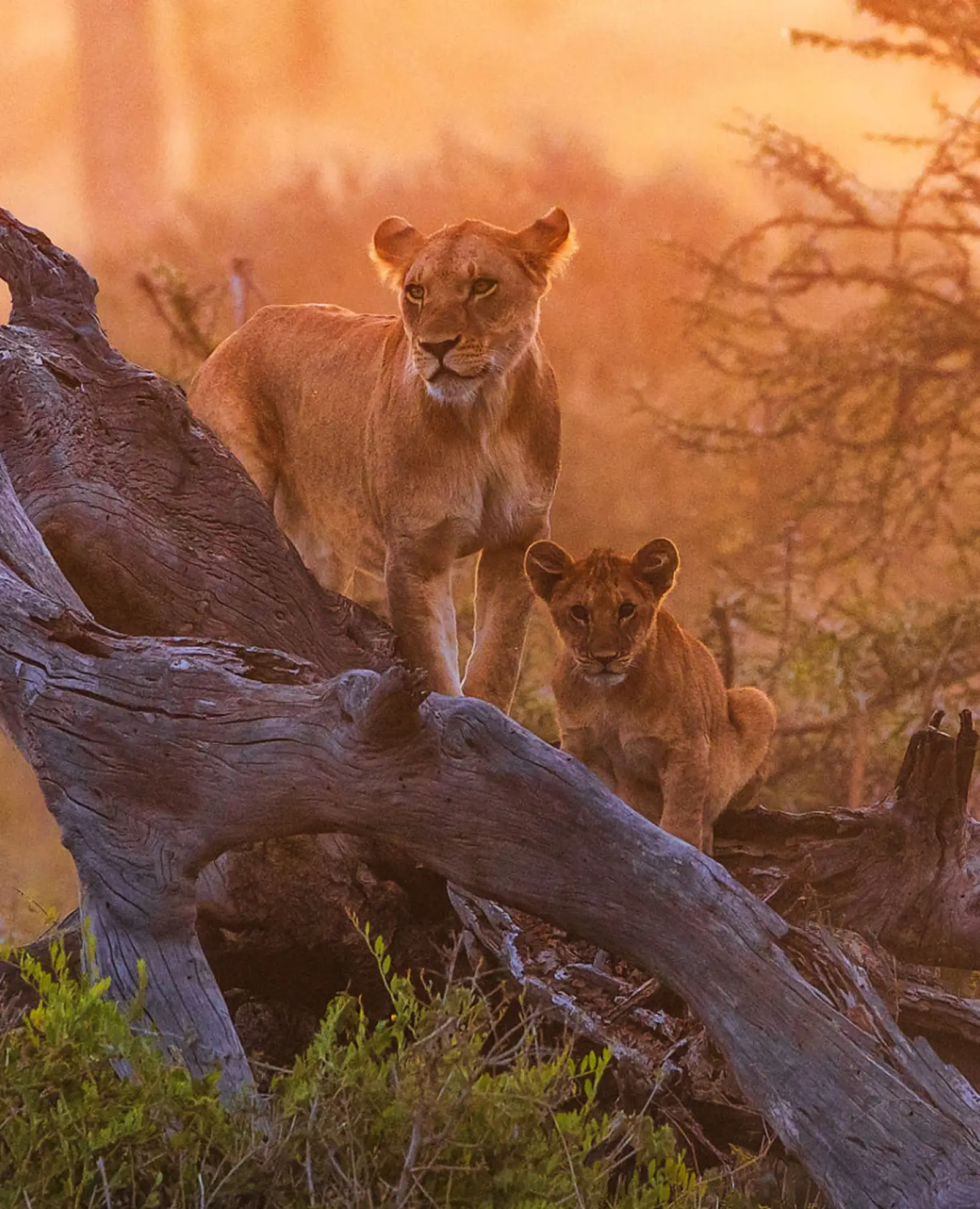
Start before sunrise
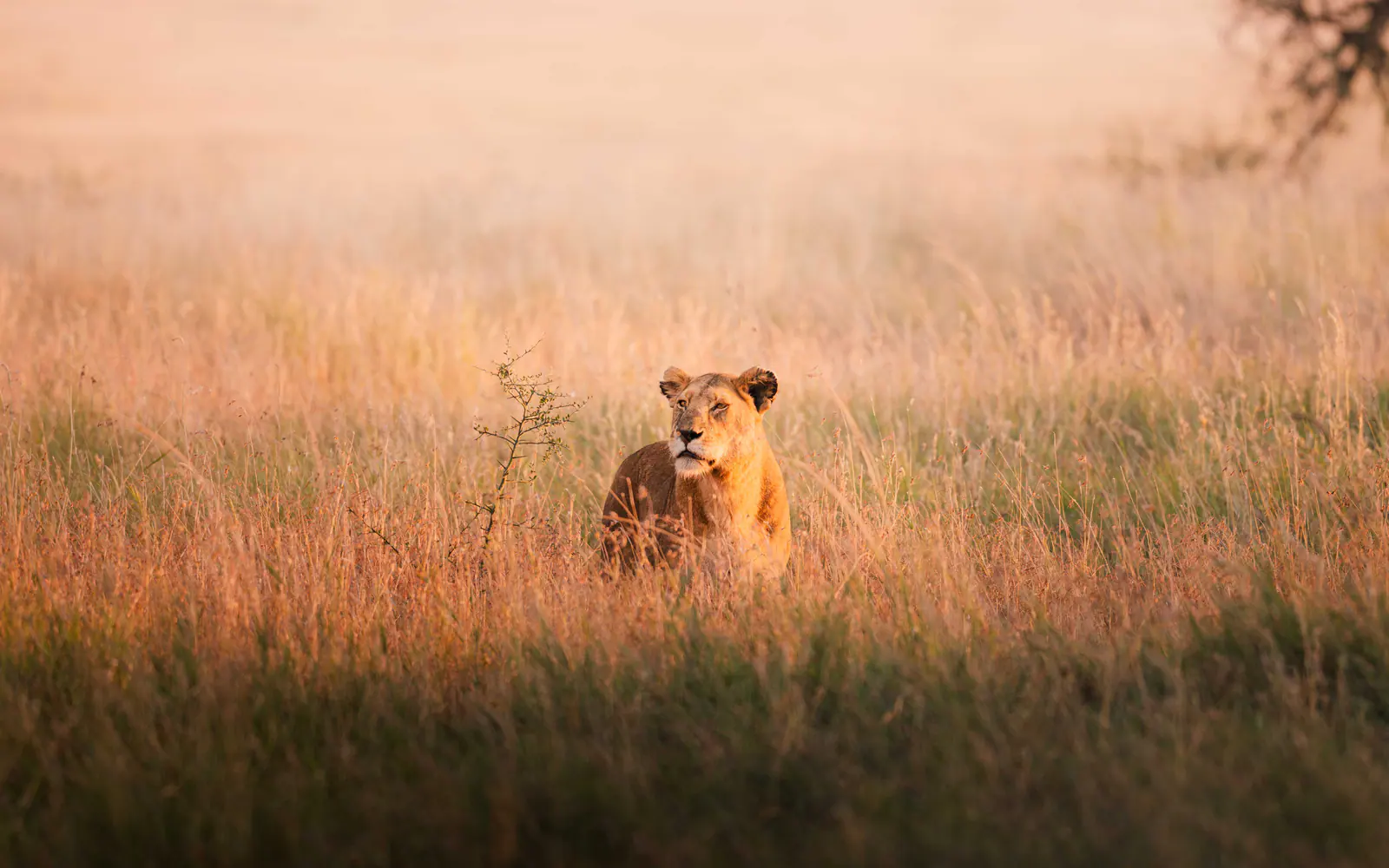
Morning drives begin early because predators and grazers are most active before the heat builds.
 English
 Deutsch
 Français
 Español
 Italiano
 Português
A premium first-time guide to Tanzania's parks, wildlife seasons, safari costs, route planning, and the travel decisions that shape an unforgettable journey.
Compare seasons, parks, comfort levels, transfers, visas, and packing before you request a tailored program.
01 / 16
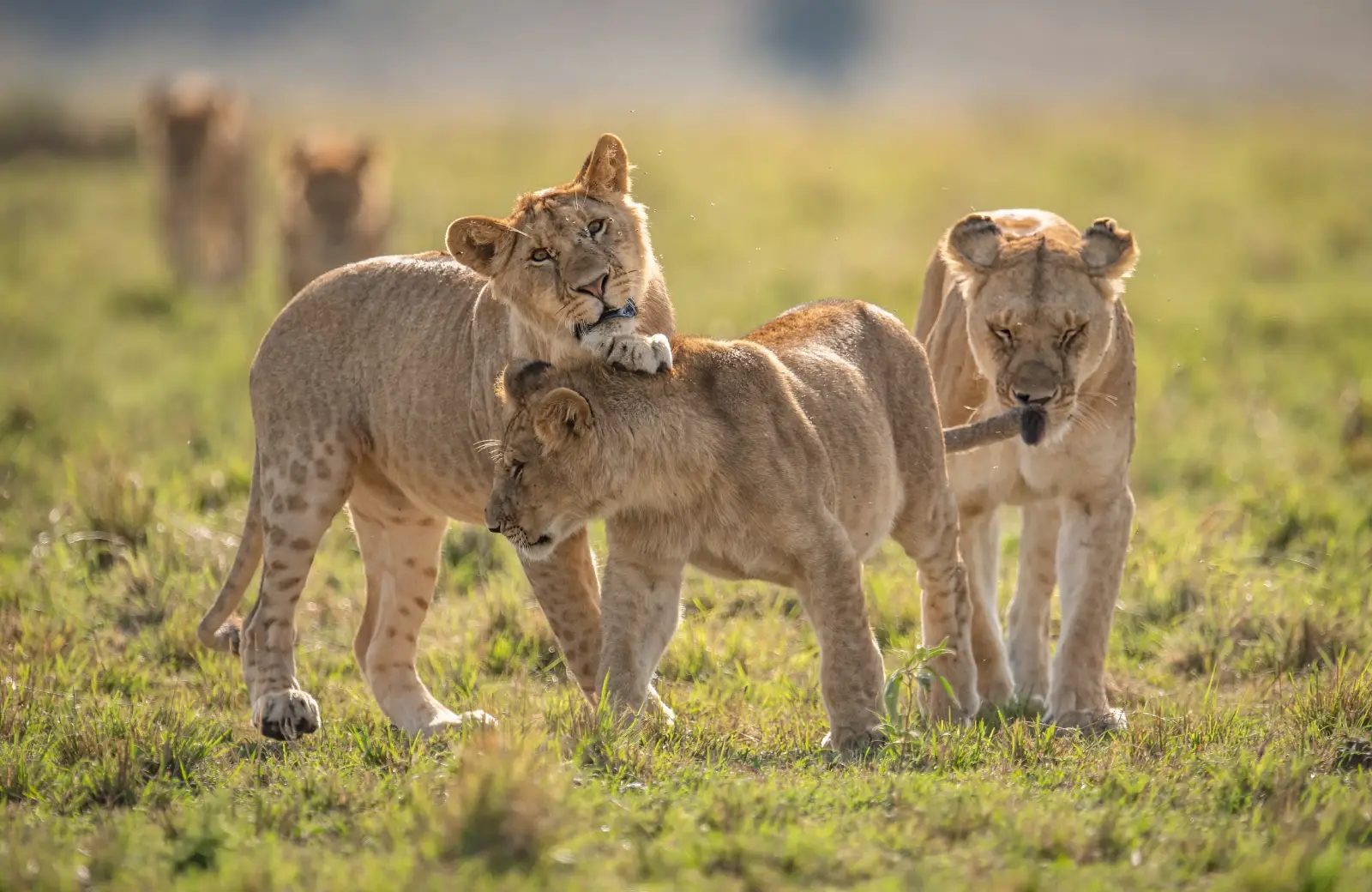
A Tanzania safari is a wildlife-focused journey through national parks and reserves where travelers watch lions, elephants, rhinos, buffalo, leopards, giraffes, cheetahs, and wildebeest in their natural habitat. The word safari means journey in Swahili, and the best African safari Tanzania experiences feel exactly like that: immersive, guided, and connected to the land.
Tanzania is popular because it combines huge wildlife populations, dramatic landscapes, expert local guiding, and once-in-a-lifetime events like the Great Migration in the Serengeti. It is one of the strongest safari destinations in Africa for both first-time travelers and returning wildlife lovers.
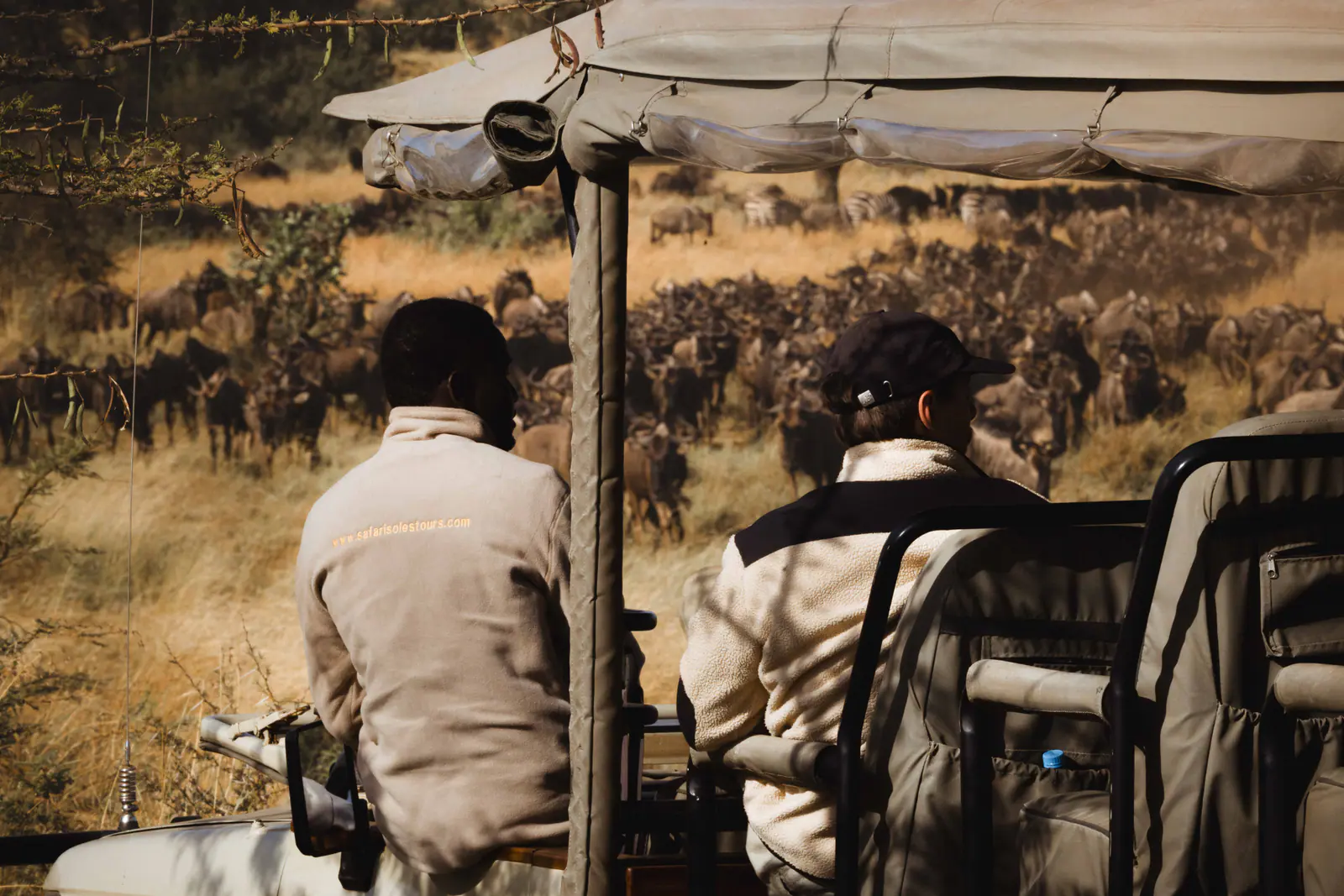
02 / 16
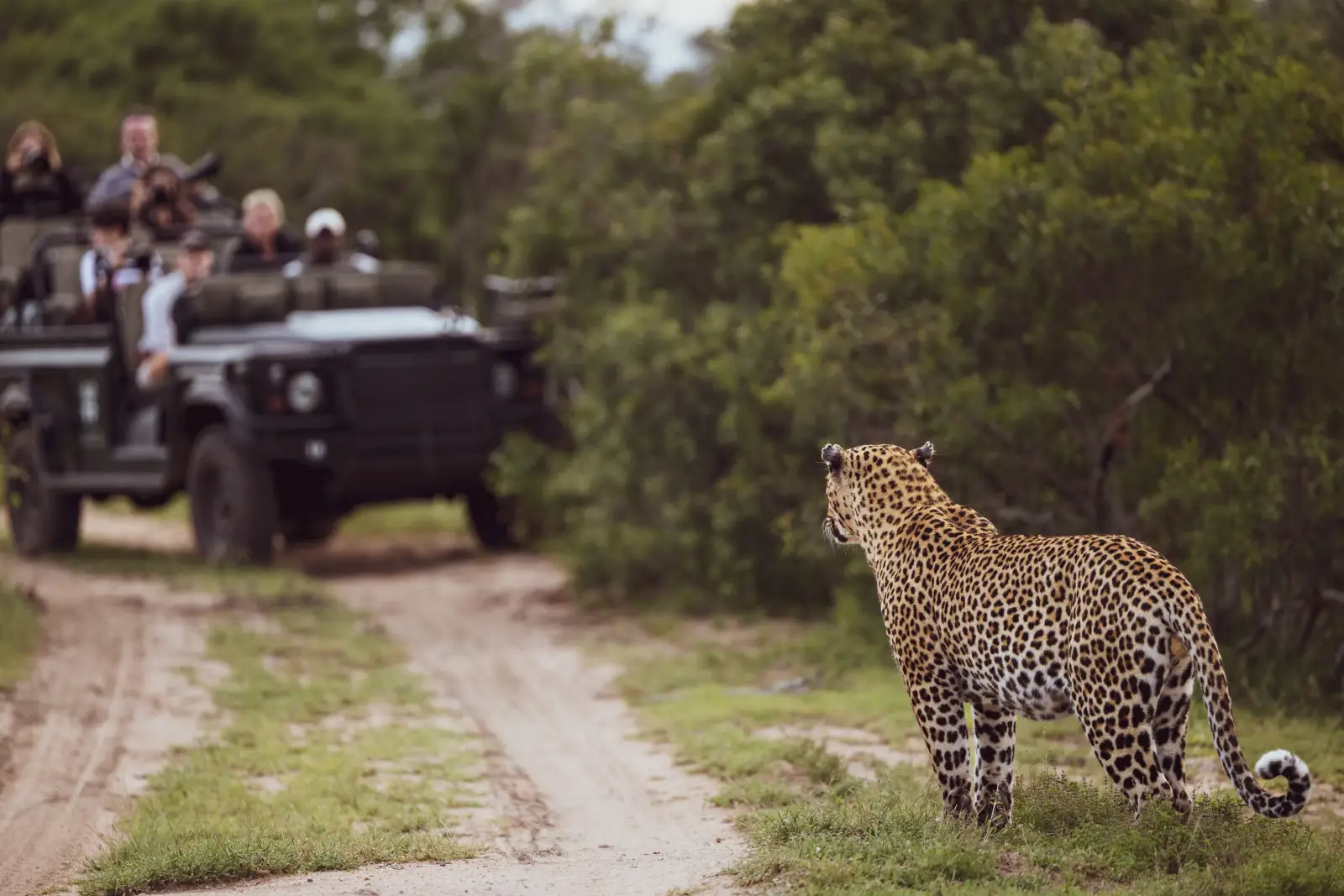
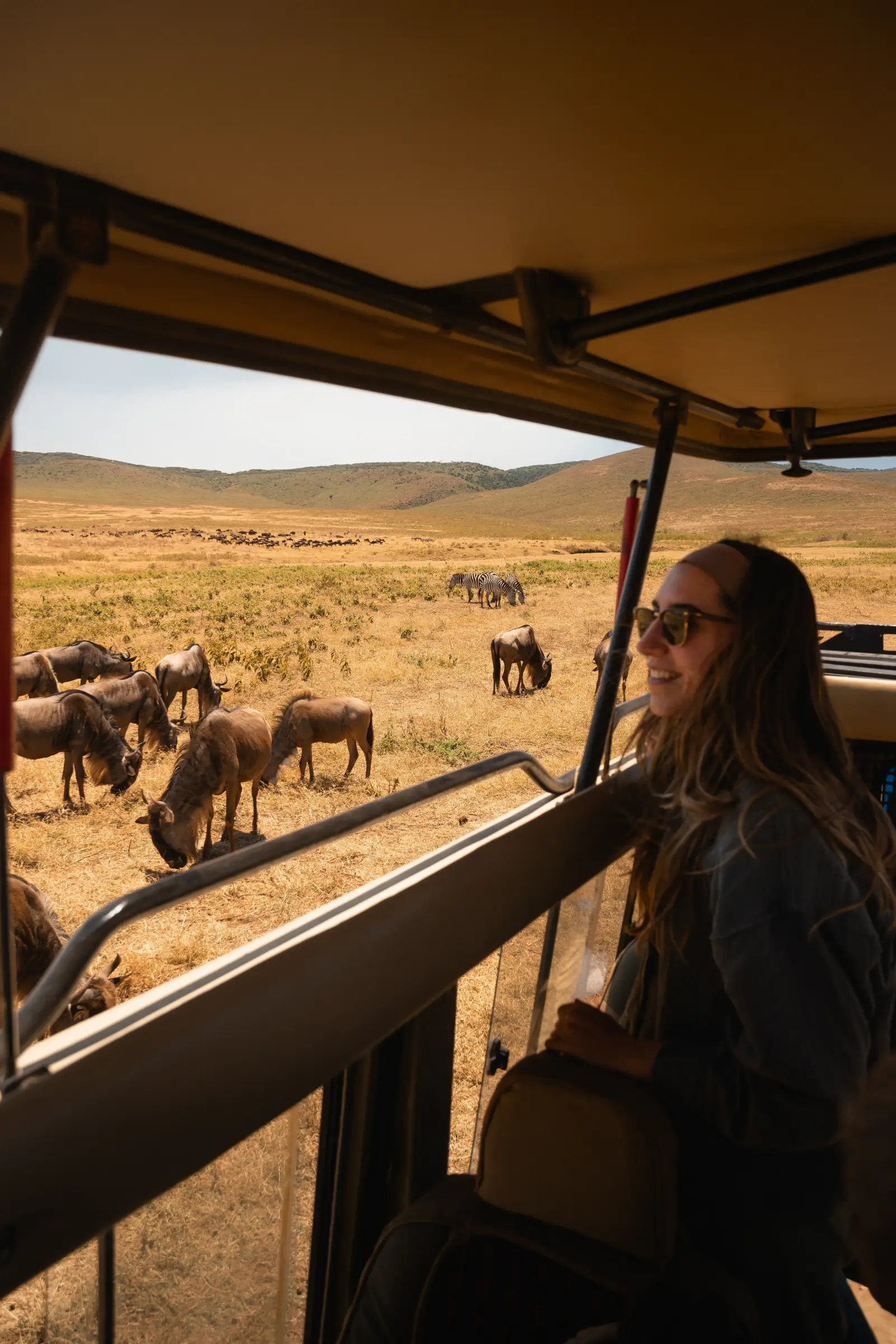
A safari day is built around wildlife behavior. You leave early when the air is cool, explore with a guide in a 4x4 vehicle, pause for meals or lodge time, then return to the bush when animals become active again.
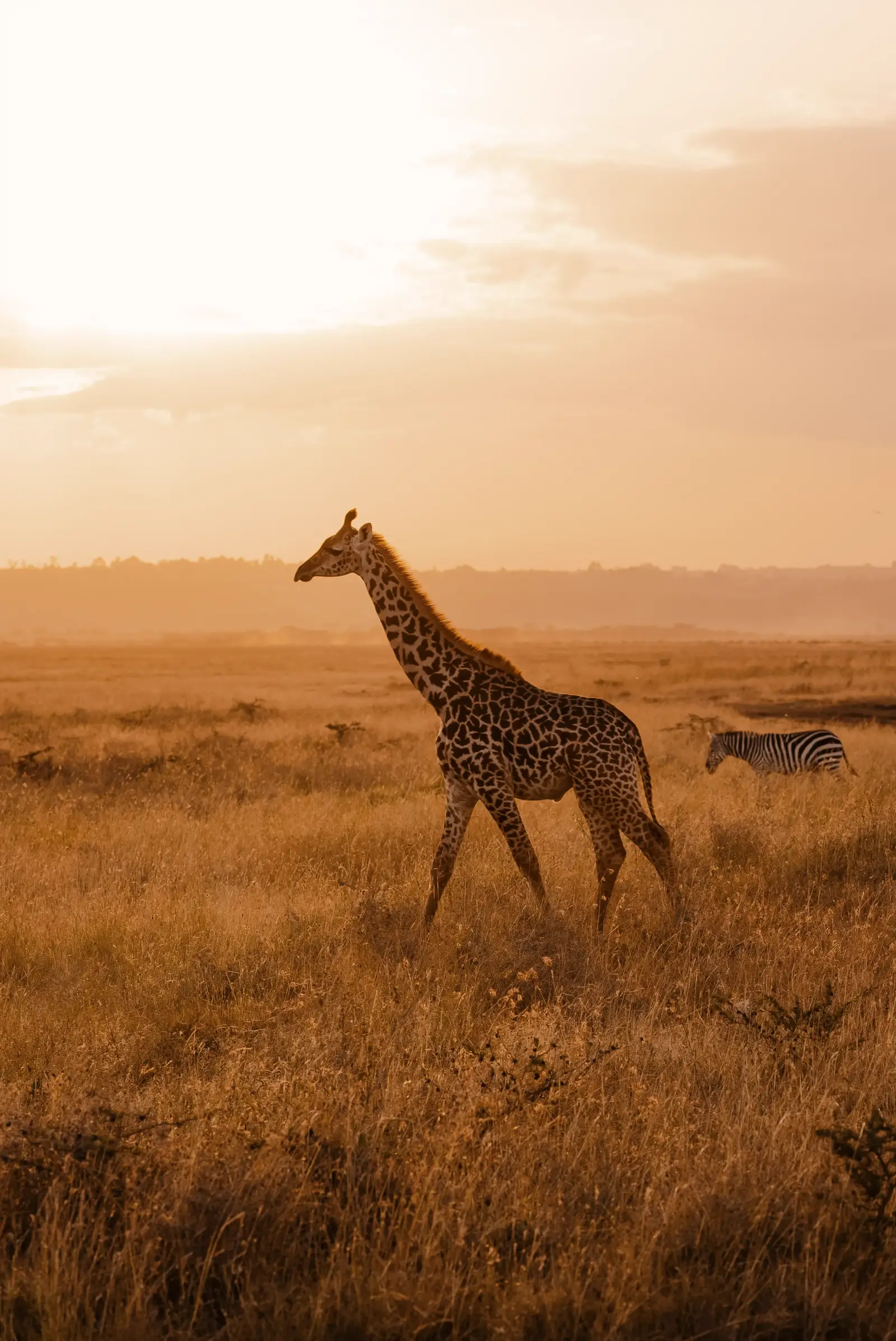
Morning drives begin early because predators and grazers are most active before the heat builds.
Your guide reads fresh tracks, animal calls, weather, and radio updates to shape the day in real time.
Midday is usually for lunch, a break, or a scenic transfer before the afternoon wildlife window.
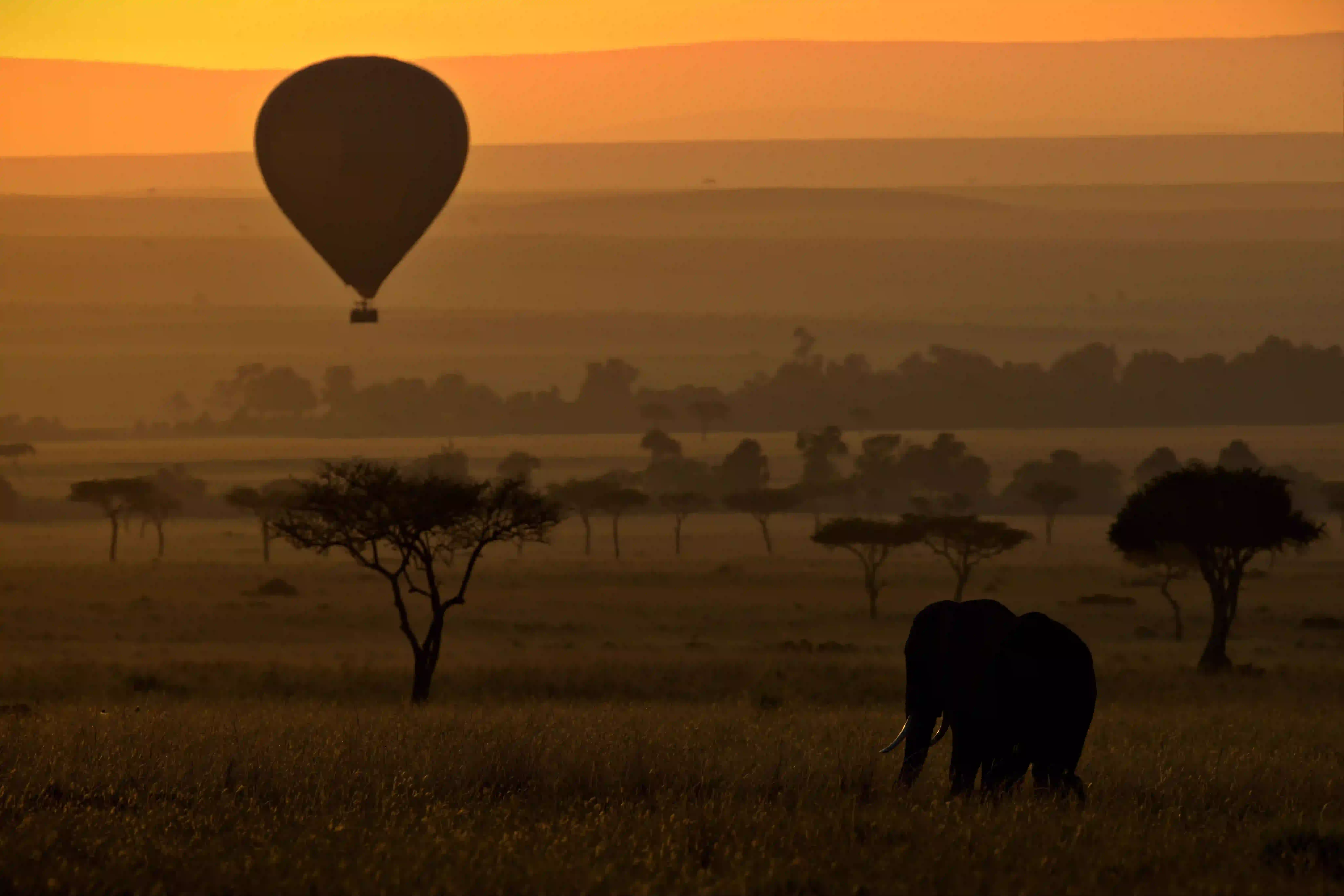
Balloon flights, walking safaris, cultural visits, and Zanzibar beach extensions can be layered into the route.
03 / 16
Tanzania has national parks across the northern safari circuit, southern wilderness, western chimpanzee forests, Lake Victoria islands, coastal habitats, and remote borderland reserves. This auto-scrolling guide includes the full national parks list so you can compare classic safari icons with quieter specialist parks.
Northern Circuit
The signature Serengeti safari Tanzania experience, famous for the Great Migration, big cats, and vast savannah.
Northern Circuit
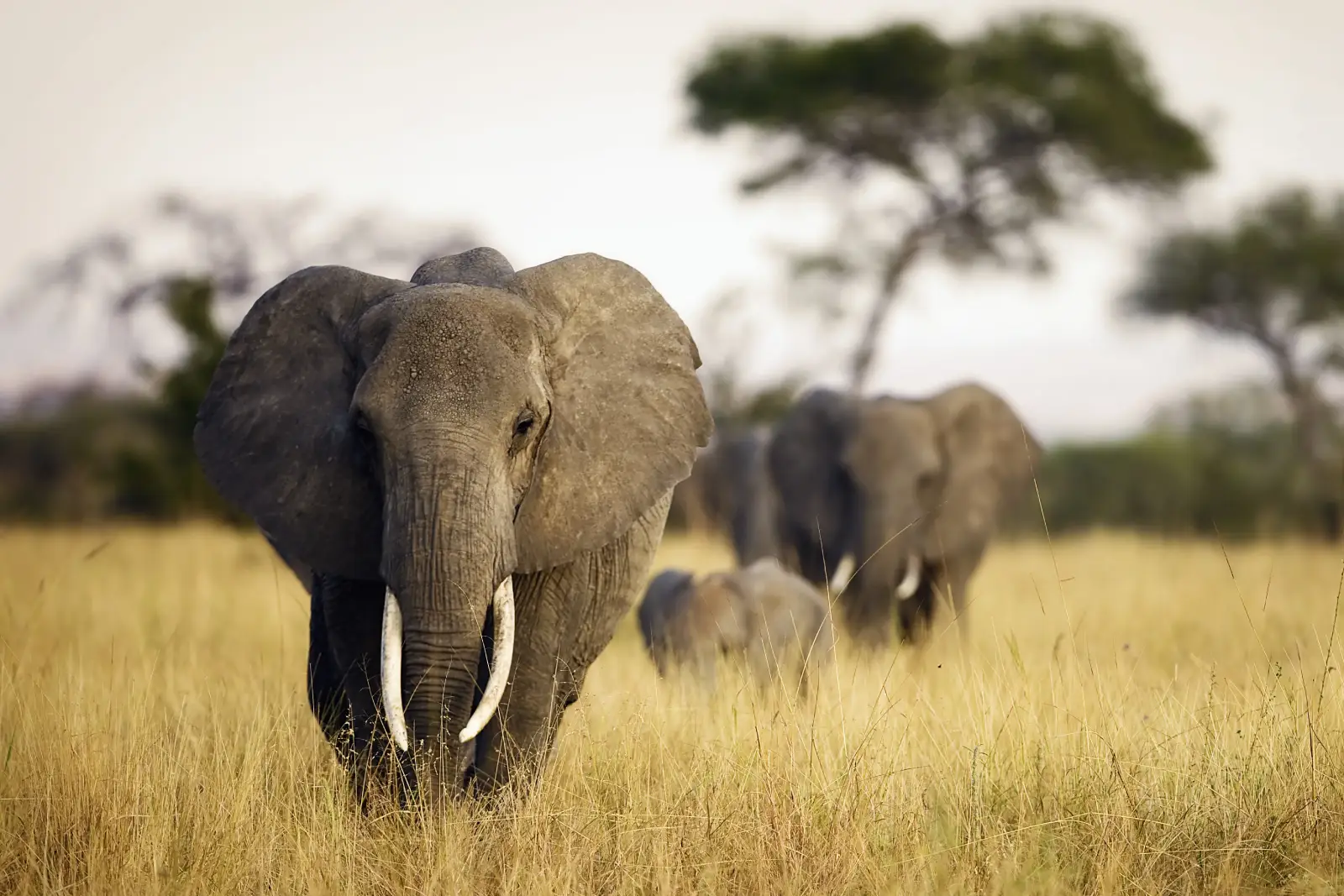
A compact park near Arusha with Mount Meru views, forest, lakes, giraffes, buffalo, and excellent day-trip potential.
Northern Circuit
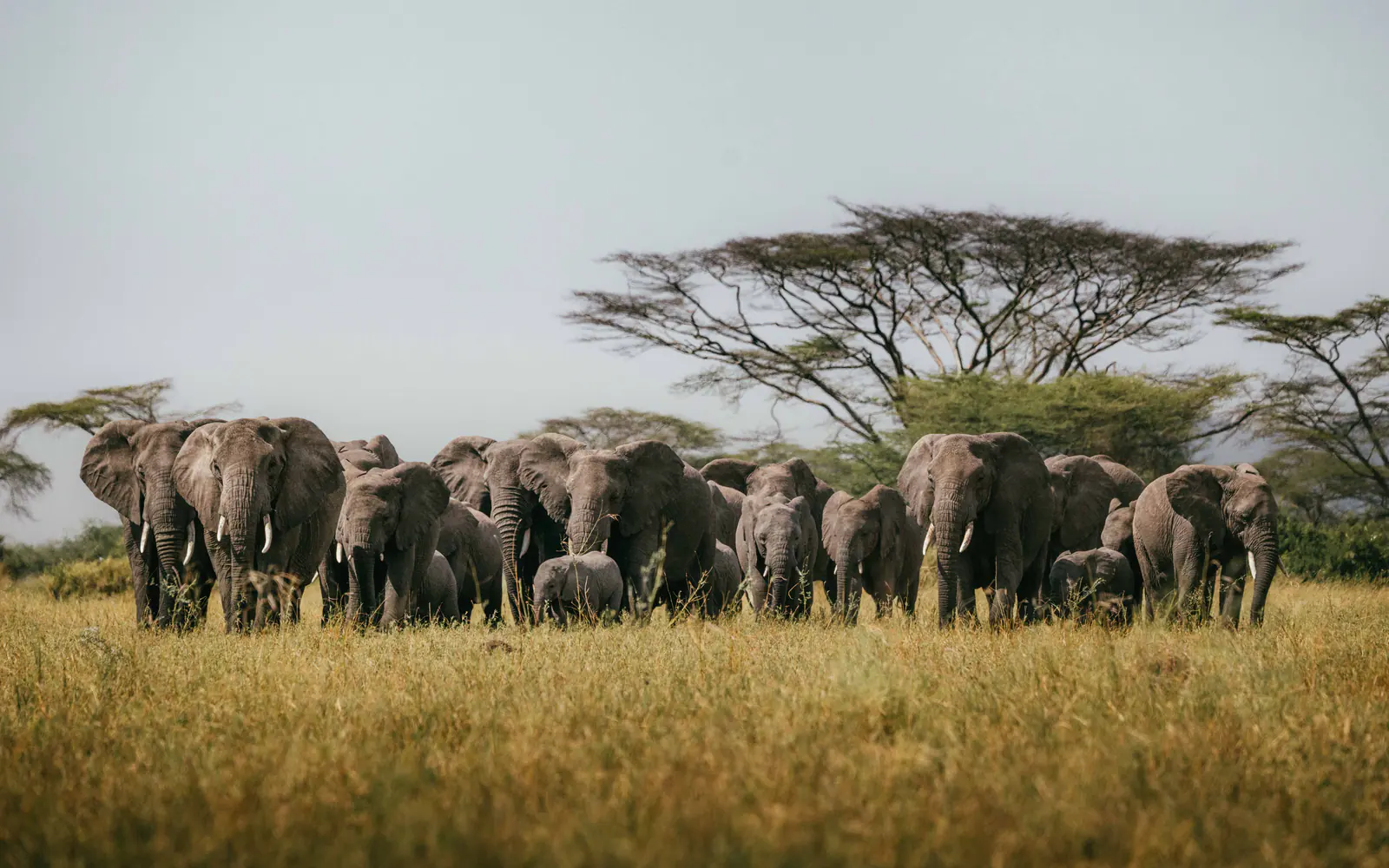
Known for baobab trees, large elephant herds, and excellent dry-season wildlife near the Tarangire River.
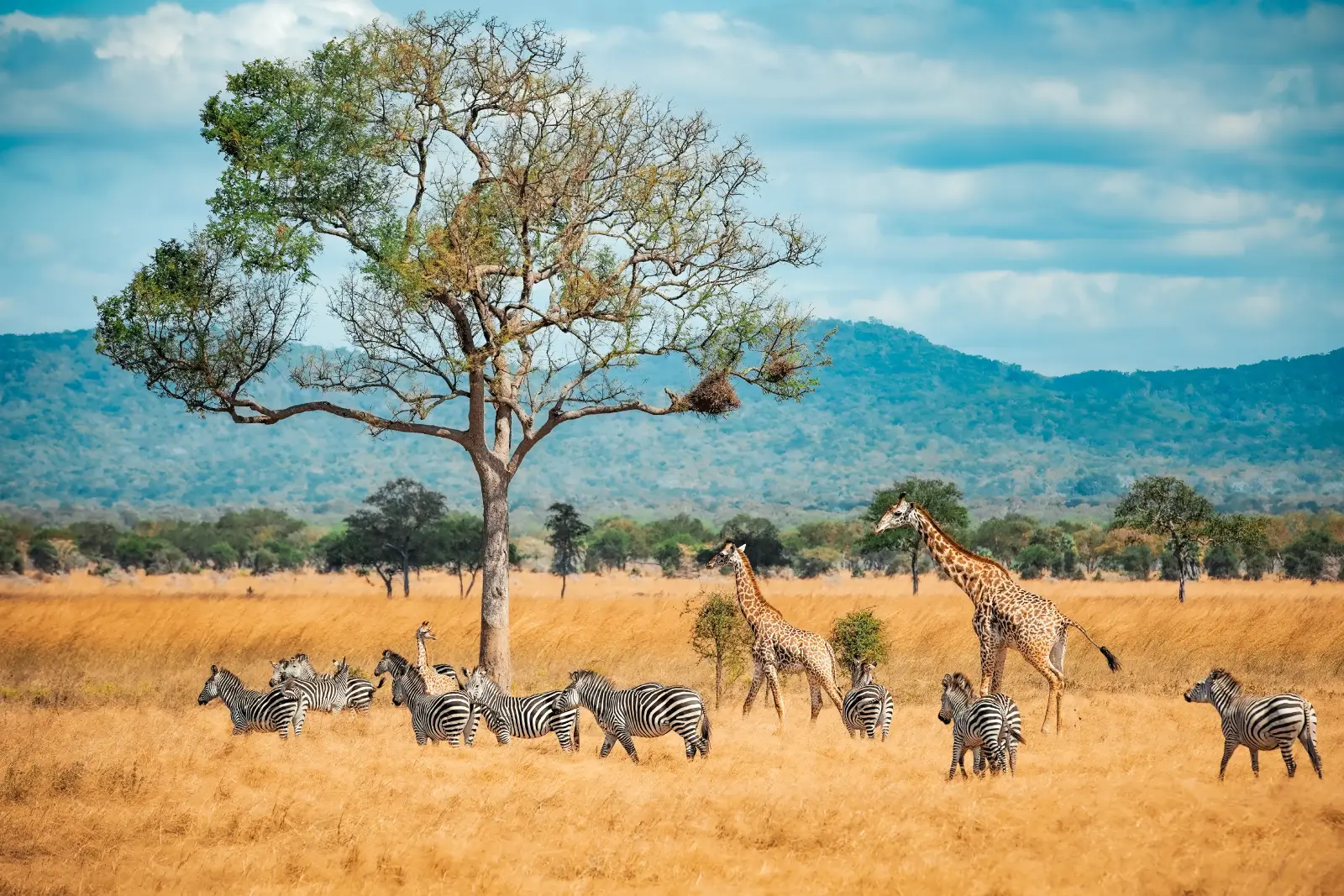
Northern Circuit
A compact park with forest, lake views, birdlife, hippos, and a softer start or finish to a Northern Circuit safari.
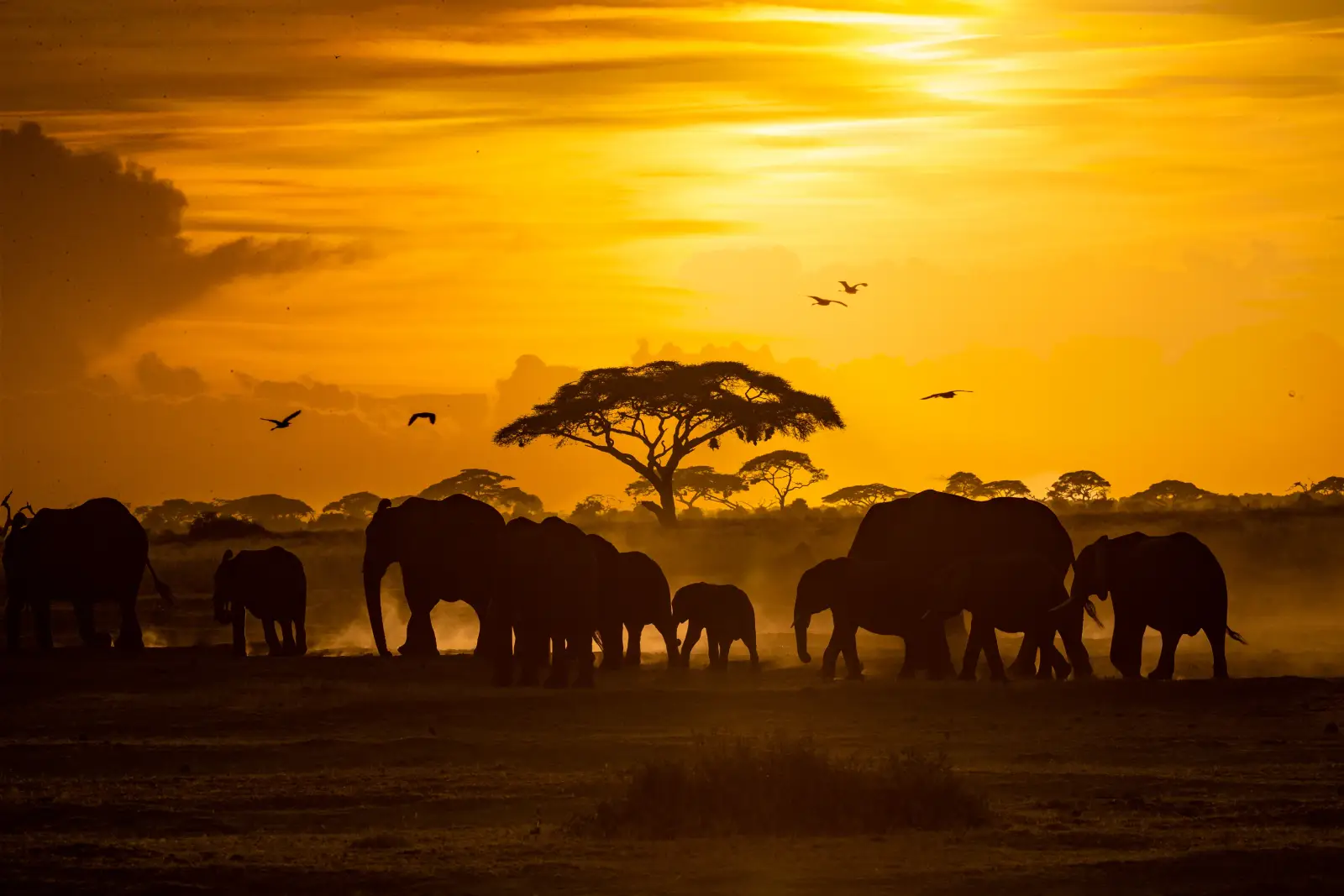
Northern Tanzania
Home to Africa highest mountain, rainforest trails, alpine zones, and climbing routes rather than classic game drives.
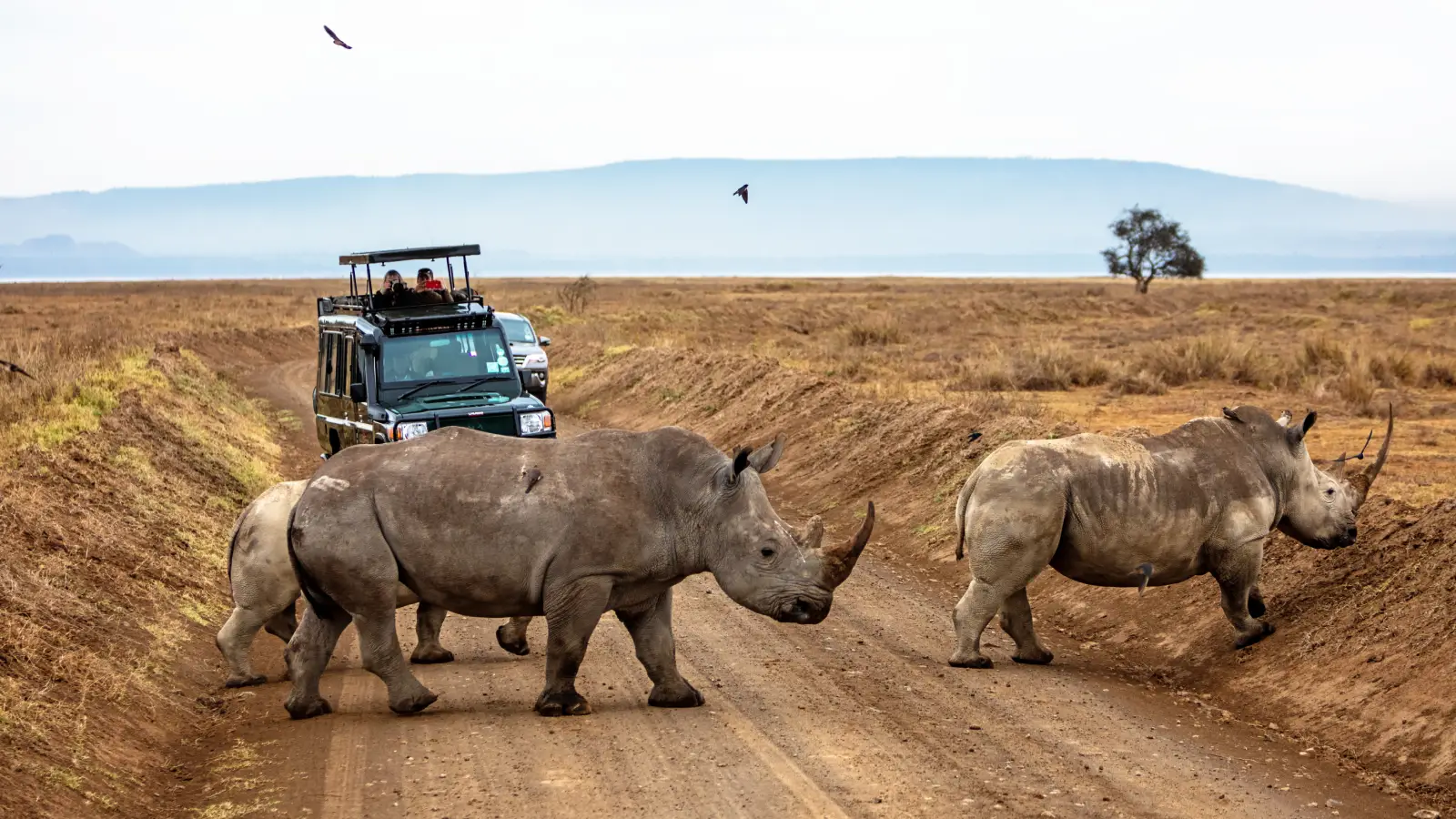
Northern Tanzania
A quieter dry-country park known for sweeping views, wild dogs, black rhino conservation, and fewer vehicles.
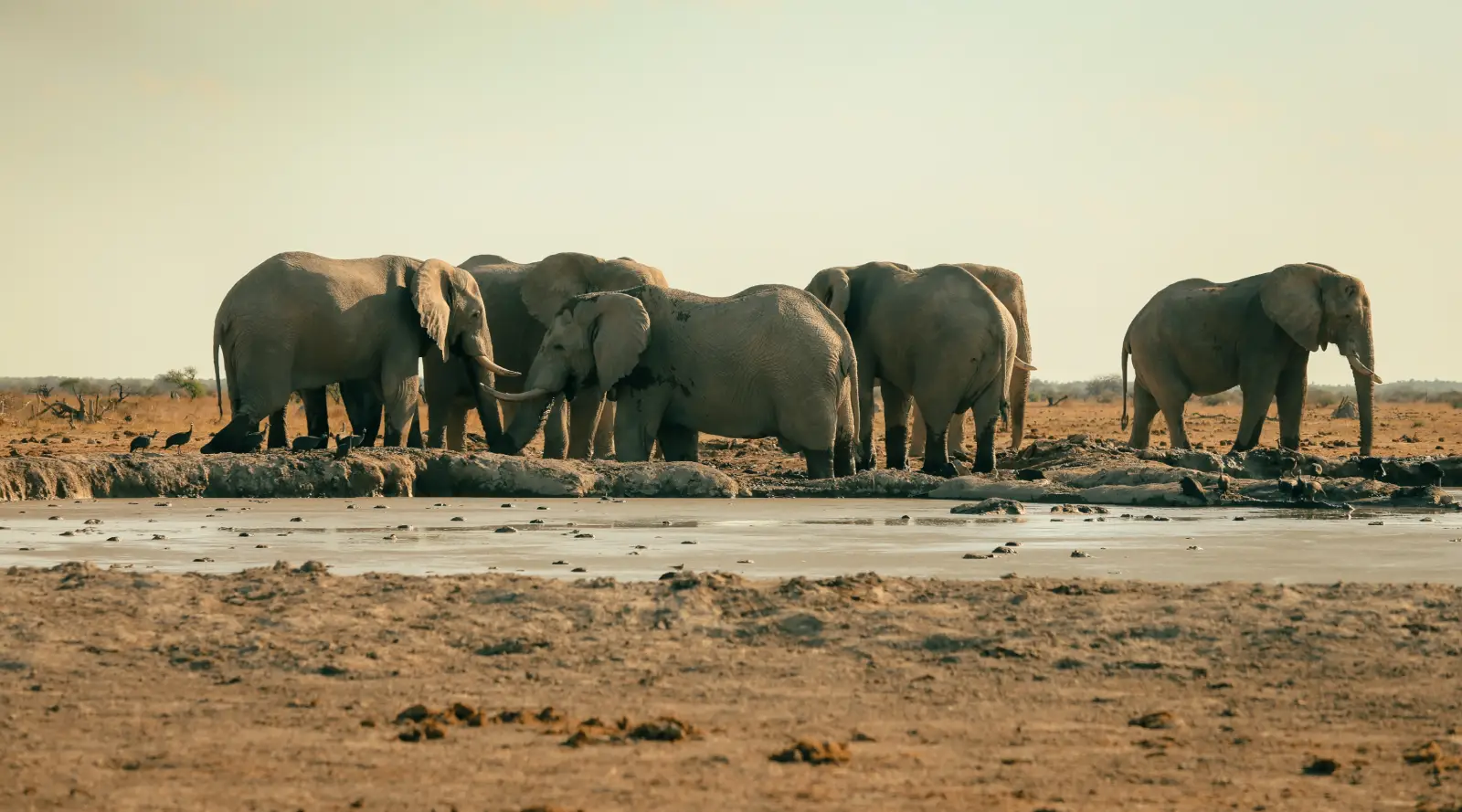
Southern Circuit
Tanzania largest national park, with river channels, boat safaris, elephants, lions, hippos, crocodiles, and wild dogs.
Southern Circuit
Remote and predator-rich, Ruaha is famous for big cat sightings, elephants, baobabs, and a wild, uncrowded feel.
Southern Circuit
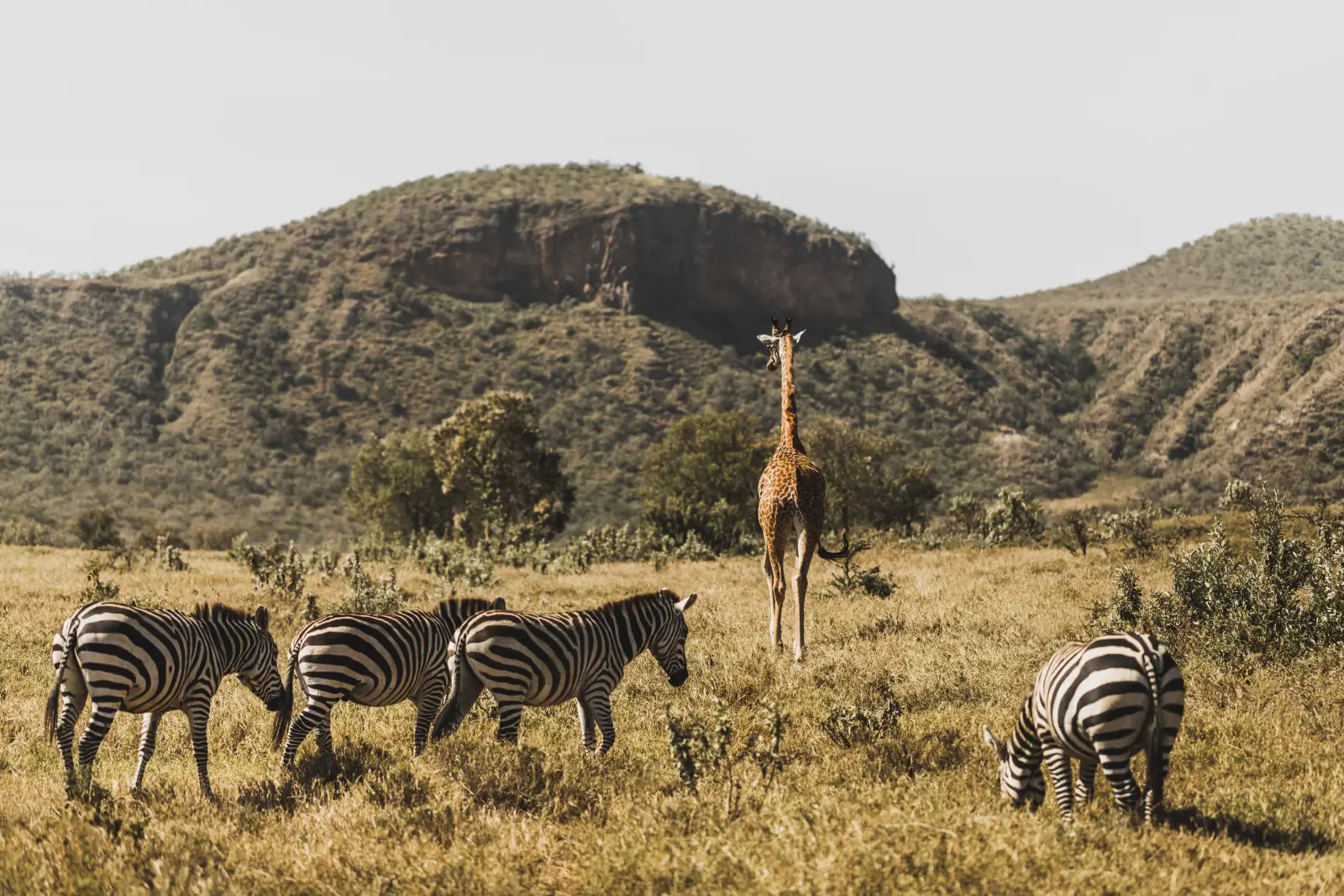
An accessible park from Dar es Salaam with open plains, giraffes, zebras, elephants, buffalo, and good short safari routes.
Southern Highlands
A hiking and biodiversity park with rainforest trails, waterfalls, rare primates, and outstanding endemic species.
Western Tanzania
A remote wilderness for adventurous travelers, known for huge buffalo herds, hippos, crocodiles, lions, and solitude.
Western Tanzania
A Lake Tanganyika park where forested mountains meet beaches, best known for chimpanzee trekking and remote beauty.
Western Tanzania
Tanzania smallest national park, globally known for chimpanzee research, forest walks, and Lake Tanganyika views.
Coastal Tanzania
A rare coast-and-bush park where beach, river, and savannah habitats combine with elephants, giraffes, and birdlife.
Lake Victoria
A forested island park on Lake Victoria with birds, sitatunga, hippos, crocodiles, and a peaceful off-grid atmosphere.
Southern Highlands
Known as the Garden of God, Kitulo protects highland grasslands, orchids, wildflowers, birds, and walking landscapes.
Lake Victoria
A small island park near Mwanza with walking routes, lake views, impala, rock hyrax, reptiles, and birdlife.
Northwest Tanzania
A large lake-and-woodland park near the Rwanda and Uganda borders, suited to birding and emerging safari routes.
Northwest Tanzania
A remote northwestern park with hills, valleys, wetlands, primates, antelope, birdlife, and low visitor numbers.
Northwest Tanzania
An emerging borderland park with savannah, riverine habitats, antelope, buffalo, hippos, and birding opportunities.
Western Tanzania
A vast wetland wilderness protecting miombo woodland, floodplains, antelope, birdlife, and remote safari terrain.
Western Tanzania
A remote riverine park with woodland, floodplains, hippos, crocodiles, antelope, and a rugged expedition feel.
Tanzania's safari geography is usually grouped into three broad arcs. The Northern Circuit is the classic first-trip arc: Serengeti, Ngorongoro Conservation Area, Tarangire, and Lake Manyara, reached via Kilimanjaro and Arusha. The Southern Circuit emphasizes vast wilderness with fewer vehicles: Nyerere (Selous), Ruaha, Mikumi, and the Udzungwa Mountains, with boating and walking where camps offer them. The Eastern Circuit pairs coastal bush with Indian Ocean access, think Saadani and the Tanga region, ideal for bush-to-beach combinations and extensions toward Zanzibar or Pemba.
Switch between the tabs below to view each route map and matching circuit notes.
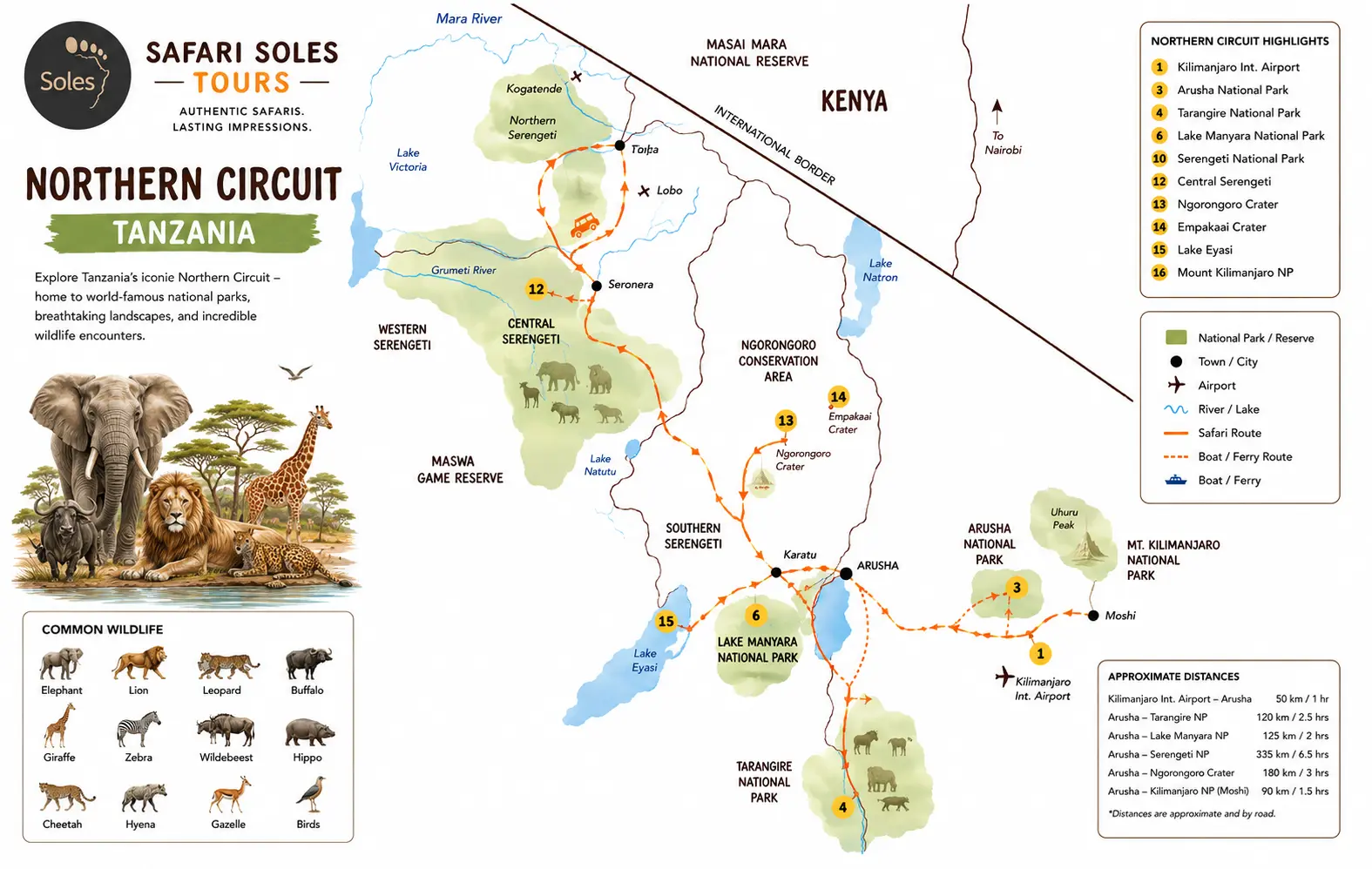
For most first-time travelers, the best route still begins with Serengeti, Tarangire, Lake Manyara, and nearby Ngorongoro Conservation Area. The map shows how northern parks cluster for efficient game drives and migration-focused planning. The Serengeti is the biggest single decision on this circuit, so it has its own Serengeti region, season and route guide.
Explore Tanzania national parksWestern parks such as Mahale and Gombe (chimpanzees) use different logistics again. Our team can blend northern, southern, eastern, and western wings when you have two weeks or more.
04 / 16
Tanzania safari tours range from budget camping and mobile camps to lodge, tented lodge, and ultra-luxury stays. The right choice depends on your budget, group style, privacy, and how much comfort you want between game drives.
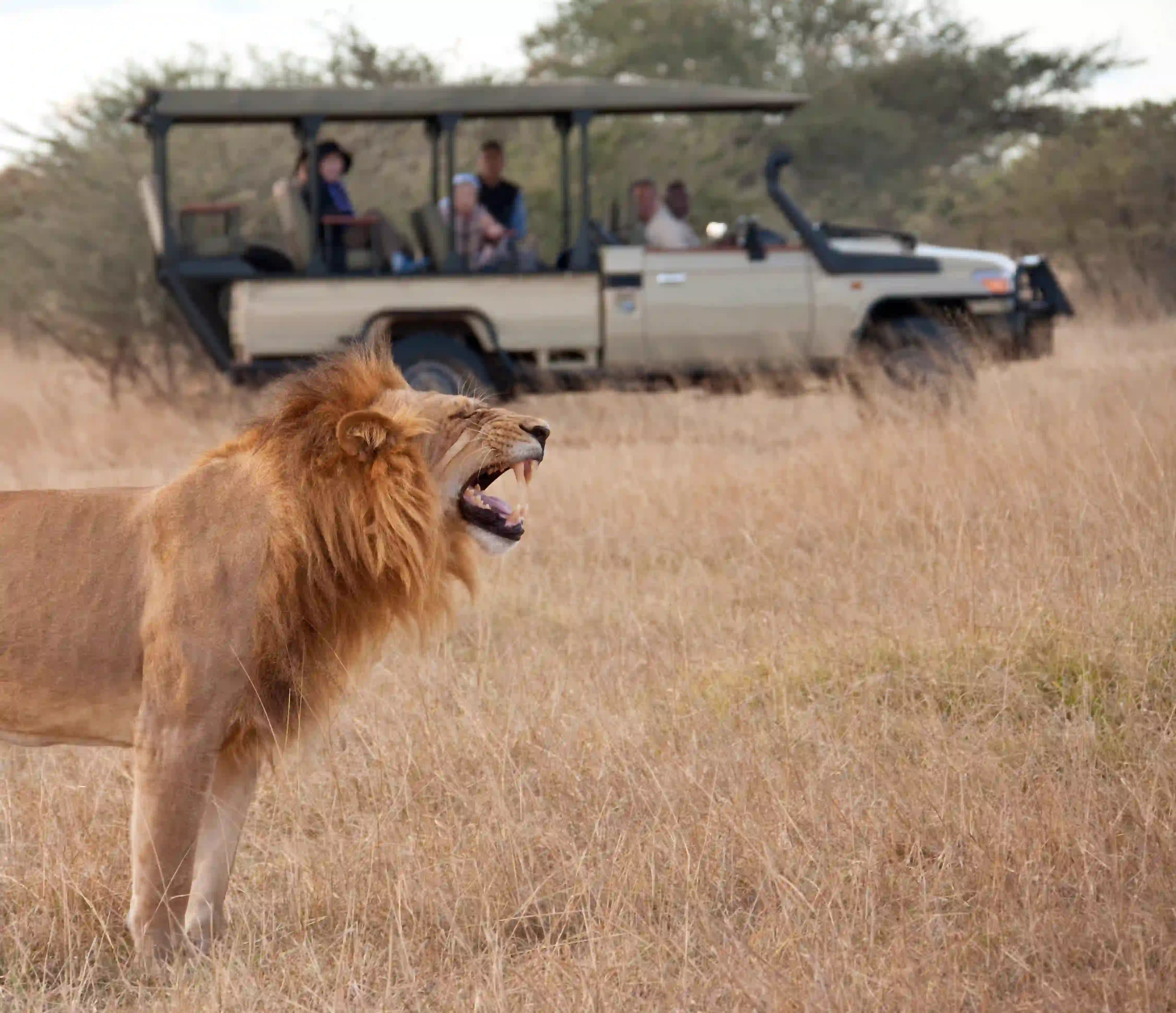
Your vehicle, guide, timing, and route are reserved for your group. Best for families, couples, photographers, and flexible pacing.
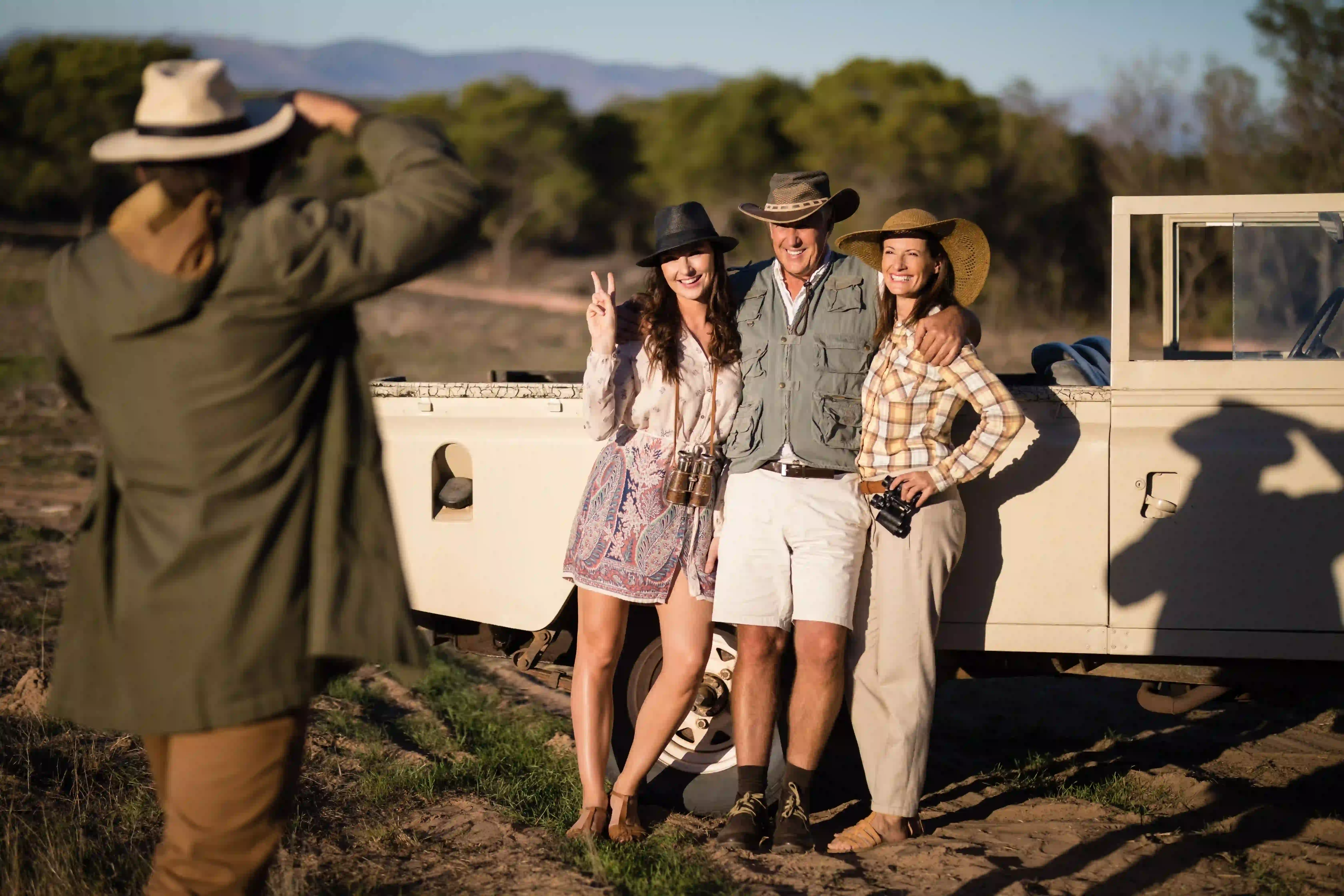
A shared vehicle and fixed departure help reduce cost while keeping the core game drive experience strong.
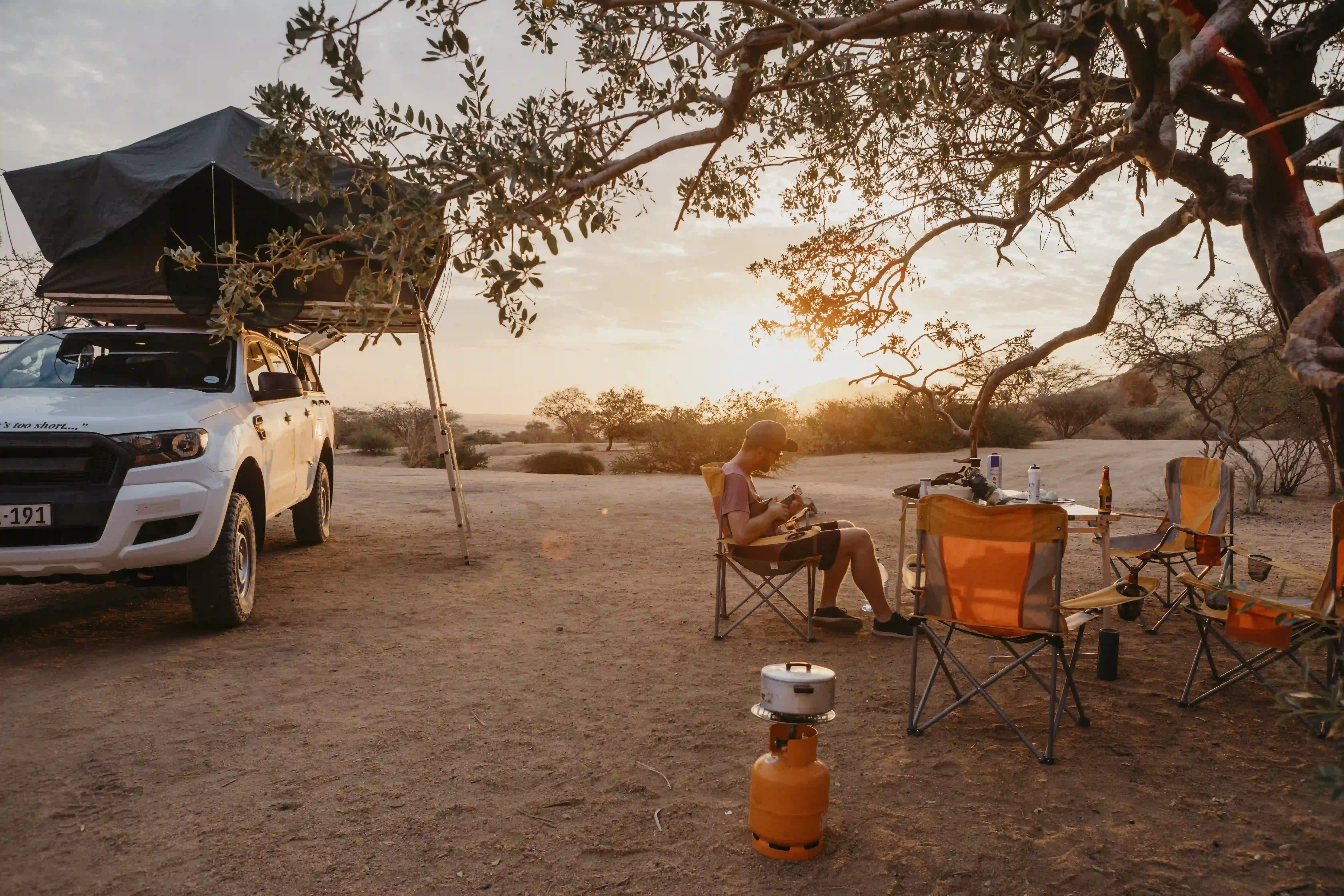
A budget safari Tanzania option using public or mobile camps, simple meals, and more time close to the bush.
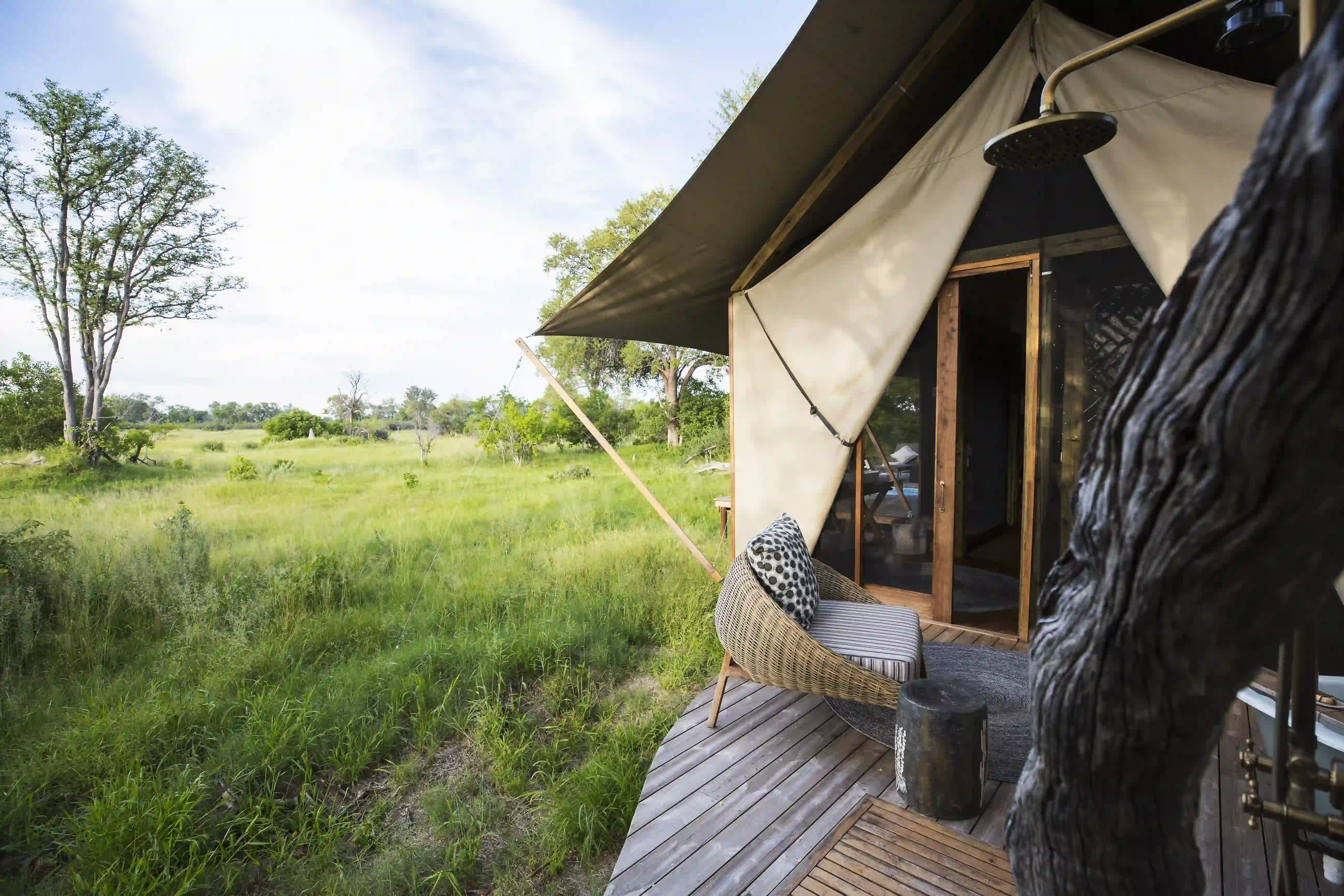
High-comfort camps and lodges with refined service, strong locations, private guiding options, and polished logistics.
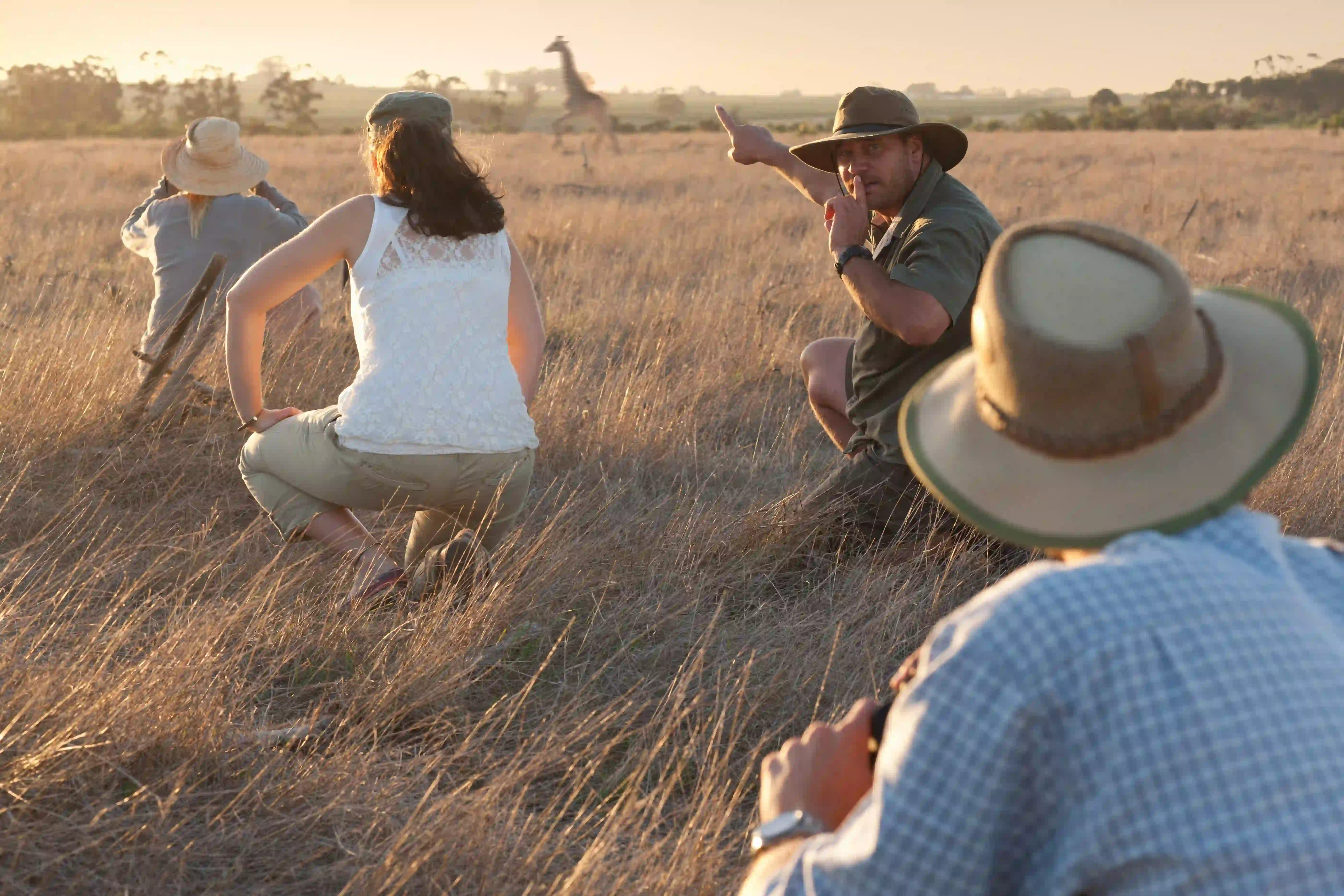
A slower, guide-led experience focused on tracks, plants, birds, and the smaller details you miss from a vehicle.
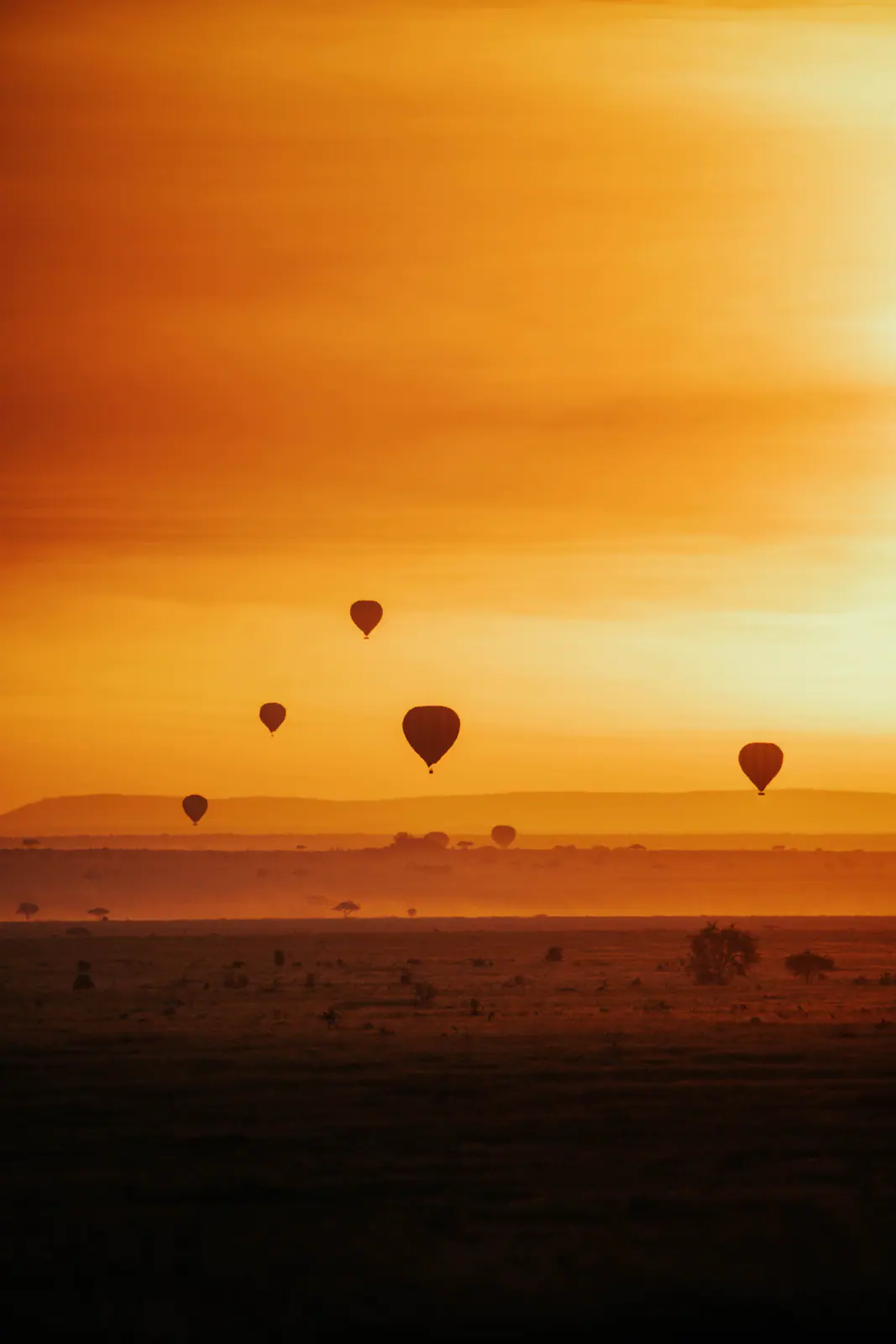
A sunrise flight over the Serengeti plains, usually paired with a bush breakfast after landing.
05 / 16
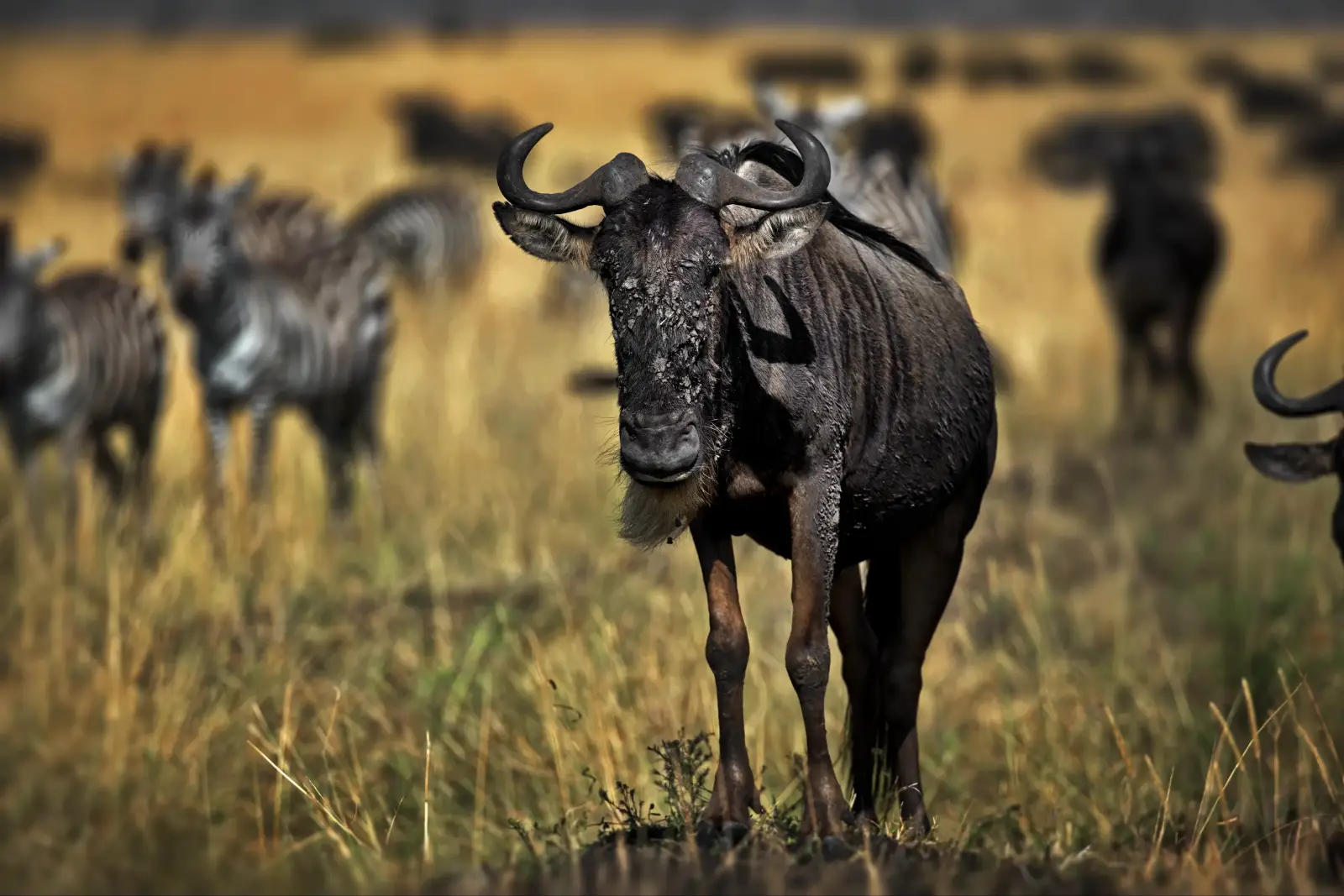
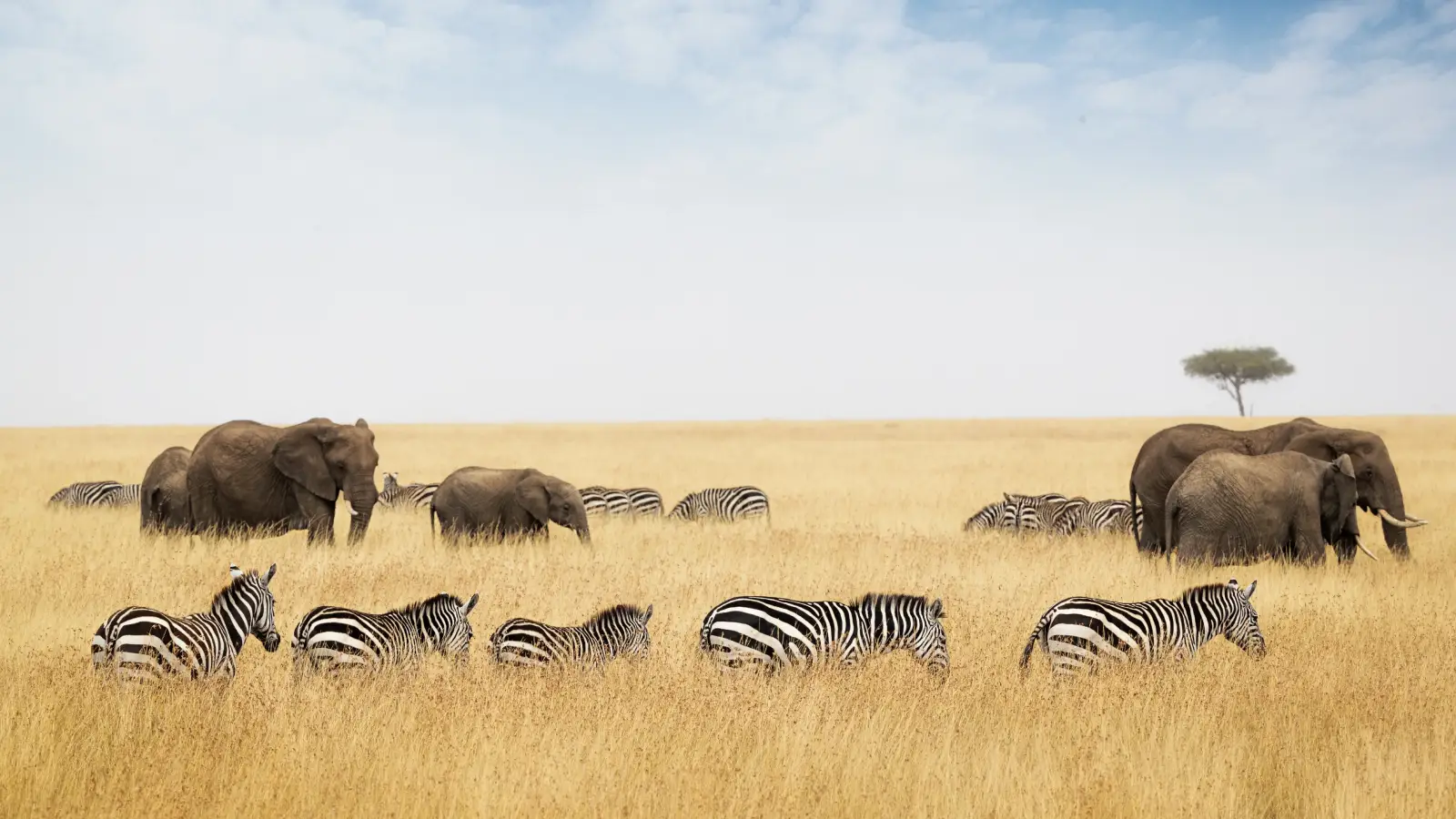
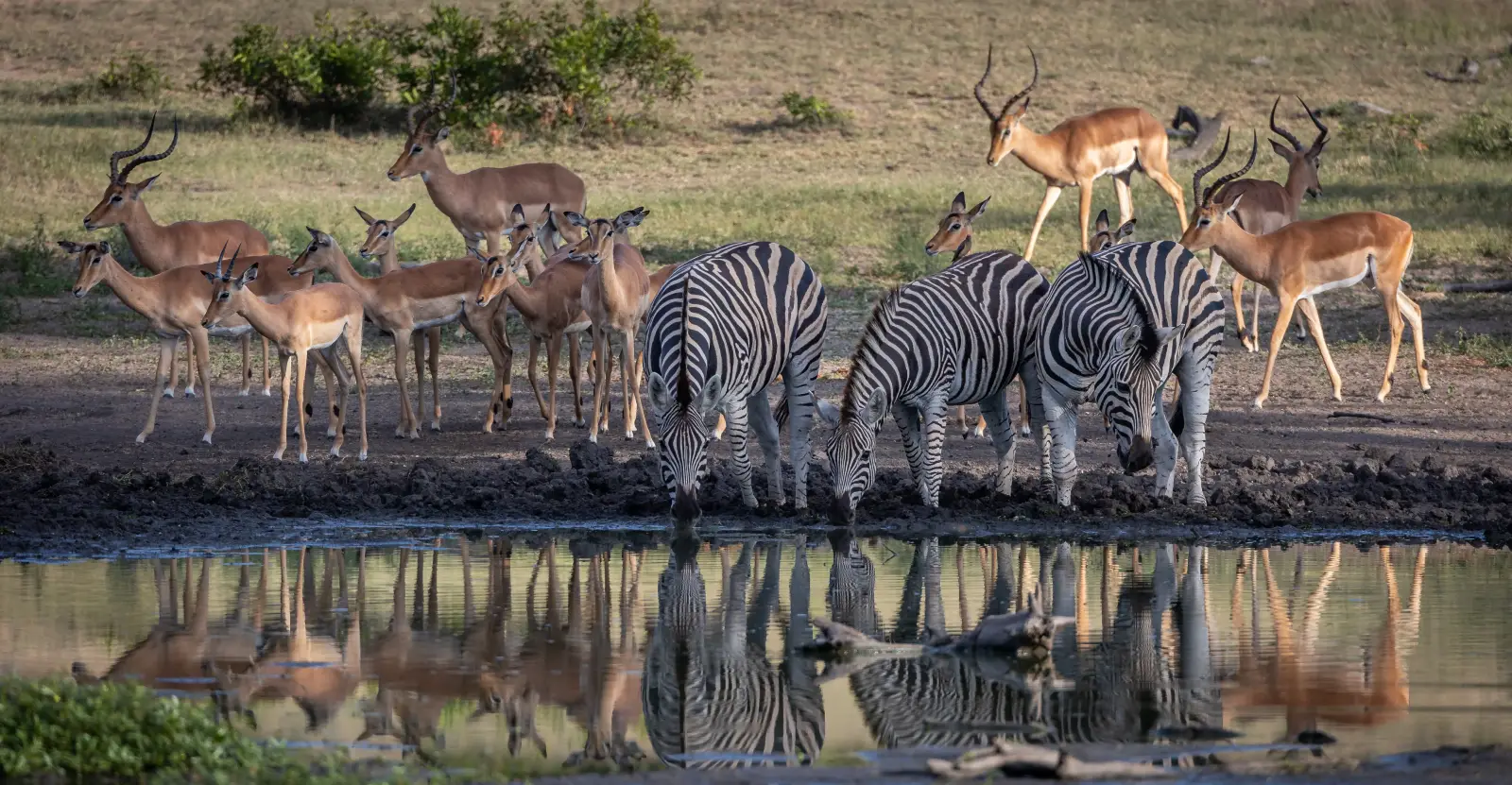
A Tanzania safari can include the Big Five: lion, elephant, rhino, buffalo, and leopard, plus cheetahs, giraffes, zebras, hippos, crocodiles, flamingos, and enormous wildebeest herds. The Serengeti is especially famous for the Great Migration and one of Africa's highest predator densities.
The experience is not staged. Sightings depend on weather, season, animal movement, and your guide's ability to read tracks, calls, and landscapes. That unpredictability is what makes each game drive feel alive.
06 / 16
Tanzania is a year-round safari destination, but the dry season from June to October is the easiest time for wildlife viewing because animals gather near permanent water and grass is lower.
Let us create a personalized itinerary based on your preferences. Get in touch, and we will suggest the best options for you.
07 / 16
Tanzania safari price depends on duration, park route, accommodation level, season, group size, and whether you choose a private or group safari. Most packages include transport, park fees, guide, accommodation, and meals.
| Accommodation Tier | 1-6 PAX (Per Person / Day) | 6+ PAX (Per Person / Day) |
|---|---|---|
Budget Camping Shared camps, basic amenities, backpacker-friendly | $200 - $300 | $150 - $250 |
Mobile Camps Seasonal tented camps, authentic bush experience | $280 - $400 | $220 - $340 |
Lodge Safari Permanent lodges, comfortable rooms, family-friendly | $350 - $550 | $300 - $450 |
Tented Lodge Safari Luxury tented camps, canvas safari suites | $550 - $900 | $480 - $750 |
High-End Luxury Safari Ultra luxury camps, fly-in safaris, VIP service | $1,000 - $2,500+ | $850 - $2,000+ |
Good to know before you book
Traveling with children? We confirm child rates when building your itinerary, as policies differ by camp, lodge, and room setup.
Final child pricing depends on accommodation tier, whether a child shares a room or tent, and vehicle seating. We will outline the best family-friendly setup for your budget.
Safari pricing is tailored, and final cost depends on how these factors combine on your route.
08 / 16
A practical PDF with essential information for traveling in Tanzania, covering what to wear, planning tips, lodge and hotel recommendations, safari rules, insurance, and more.
A detailed checklist of everything you will need for your journey into the savanna.
Download PDF09 / 16
Expect early starts, long scenic drives, quiet waiting, sudden bursts of action, and guides making decisions in real time. A game drive experience is patient and immersive, not a zoo visit or a staged performance.
Coffee, cool air, and the best chance to catch predators while they are active.
Your guide follows tracks, radio updates, and animal movement across open plains or woodland.
Lunch, lodge time, or the drive from park to park. On multi-park itineraries, these transfers are a core part of the broader experience, taking you through local villages and changing landscapes.
Soft light, active wildlife, and some of the most memorable photography moments of the day.
10 / 16
Planning a Tanzania safari starts with your travel season, number of days, comfort level, and the parks you most want to see. Most visitors choose 3 to 7 safari days, with the Northern Circuit offering the best balance for a first trip.
Pick dry season for classic wildlife viewing or green season for scenery, birdlife, fewer crowds, and value.
First-timers usually focus on Serengeti, Ngorongoro, Tarangire, and Lake Manyara before adding remote parks.
Three days can cover a short route; five to seven days gives better Serengeti time and a less rushed pace.
Choose from budget camping, mobile camps, lodge safari, tented lodge, or high-end luxury, then match private or group travel.
11 / 16
Most safari travelers arrive through Kilimanjaro International Airport, then transfer to Arusha, the main gateway for the Northern Circuit. Safari from Zanzibar is also common by domestic flight to Arusha, Kilimanjaro, or Serengeti airstrips.
Best airport for Arusha and the Northern Circuit. Many itineraries begin with an overnight near Arusha.
Fly from Zanzibar to Arusha, Kilimanjaro, or Serengeti airstrips for a safari-beach combination.
Useful for southern parks, international connections, or itineraries that combine city, coast, and safari.
12 / 16
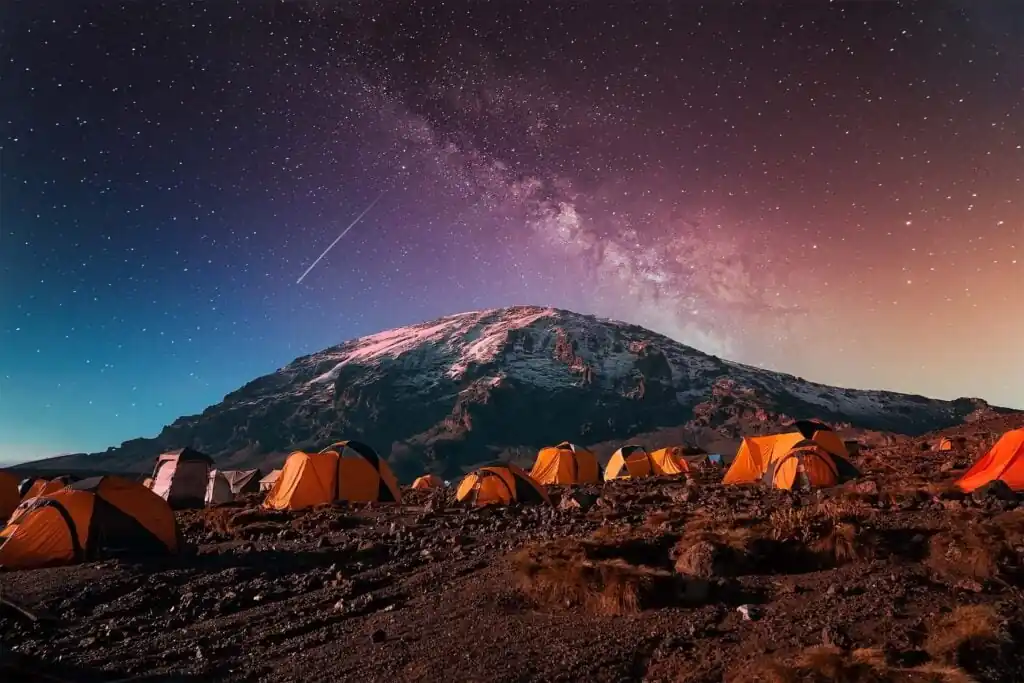
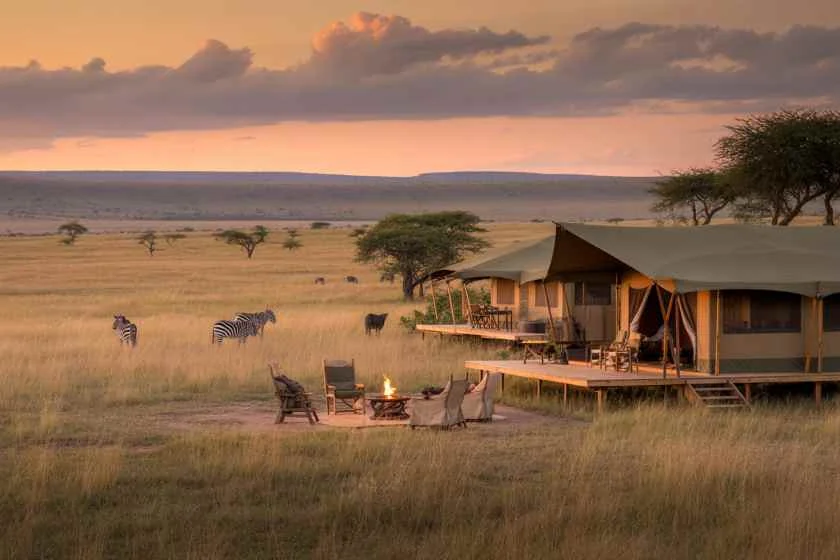
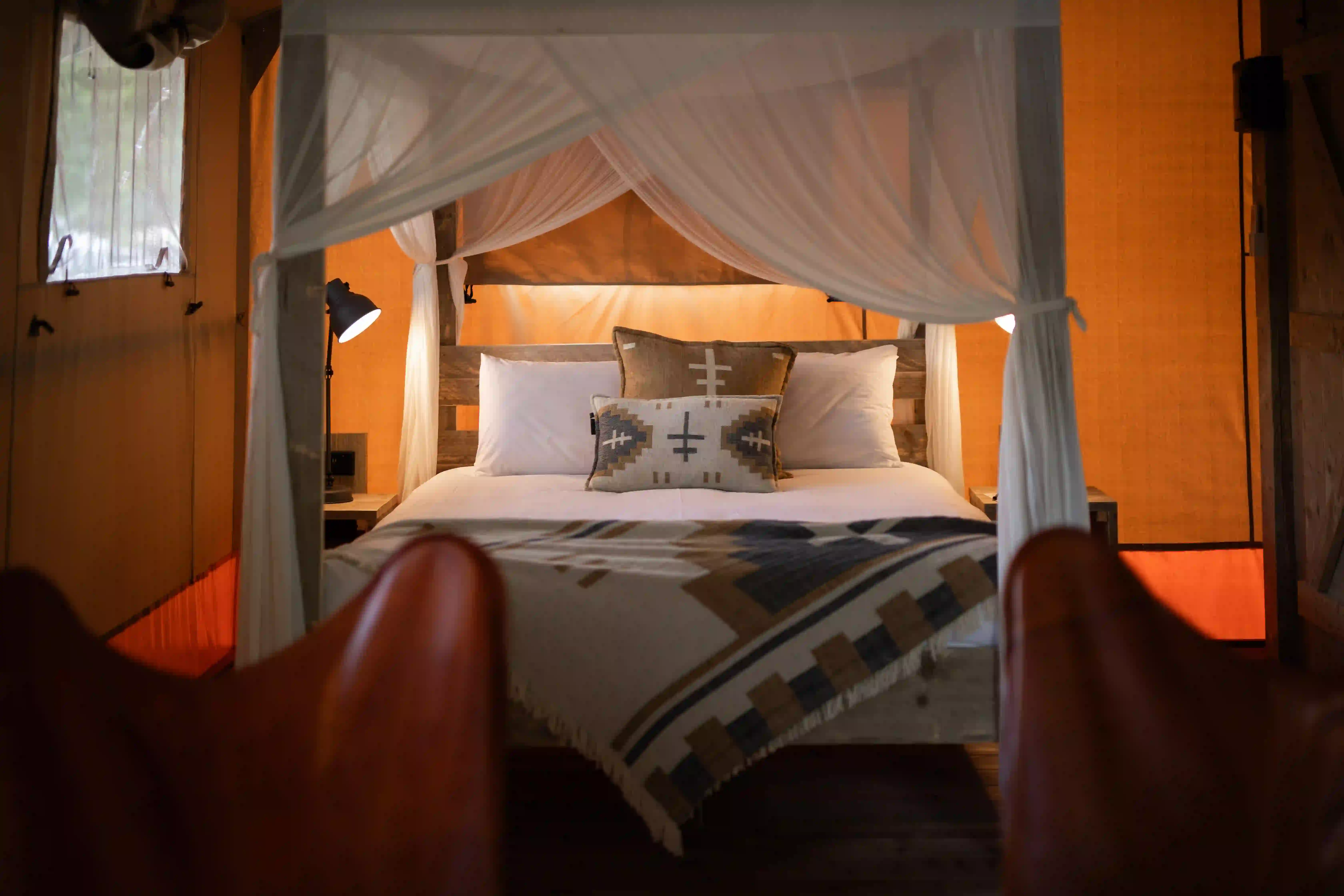
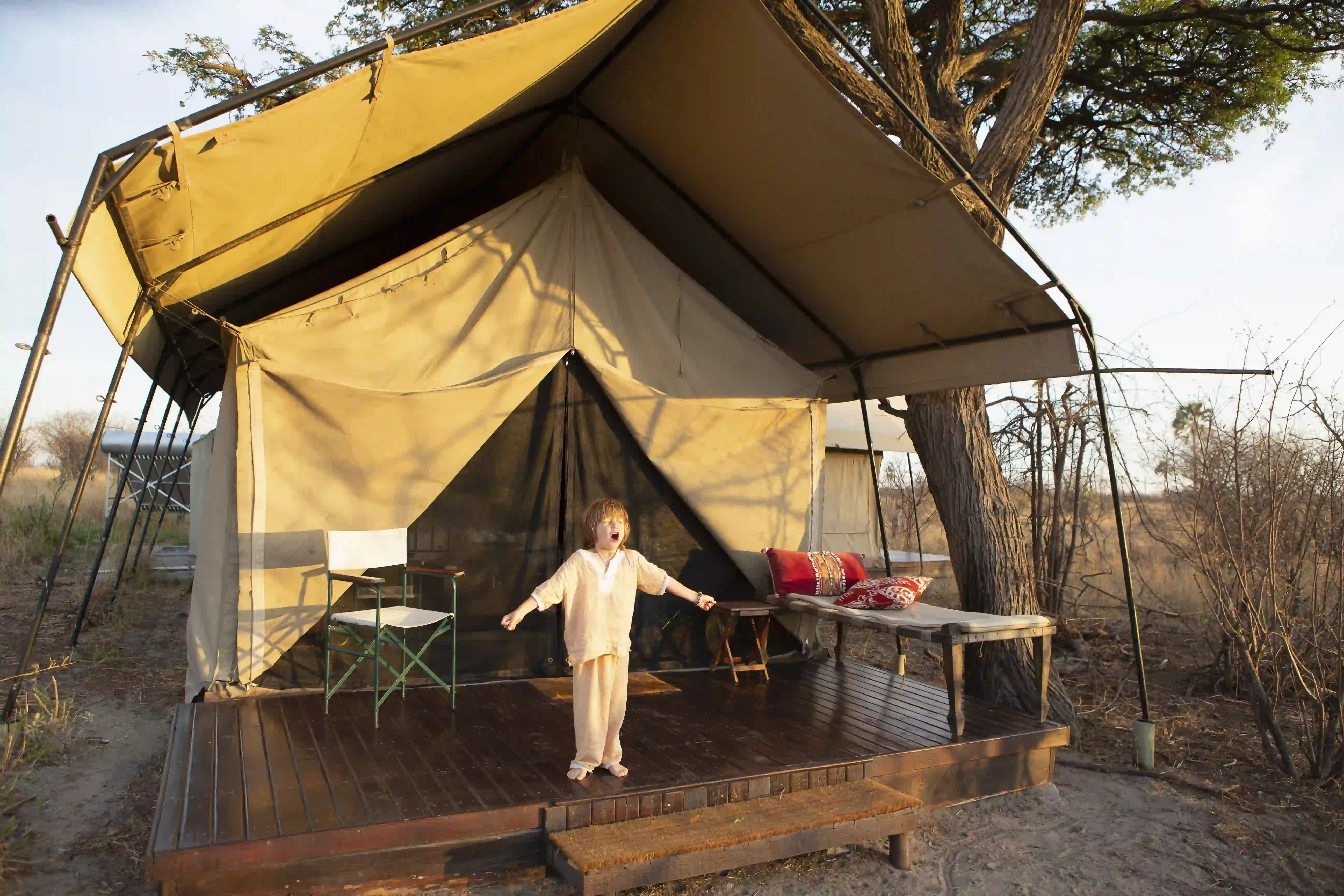
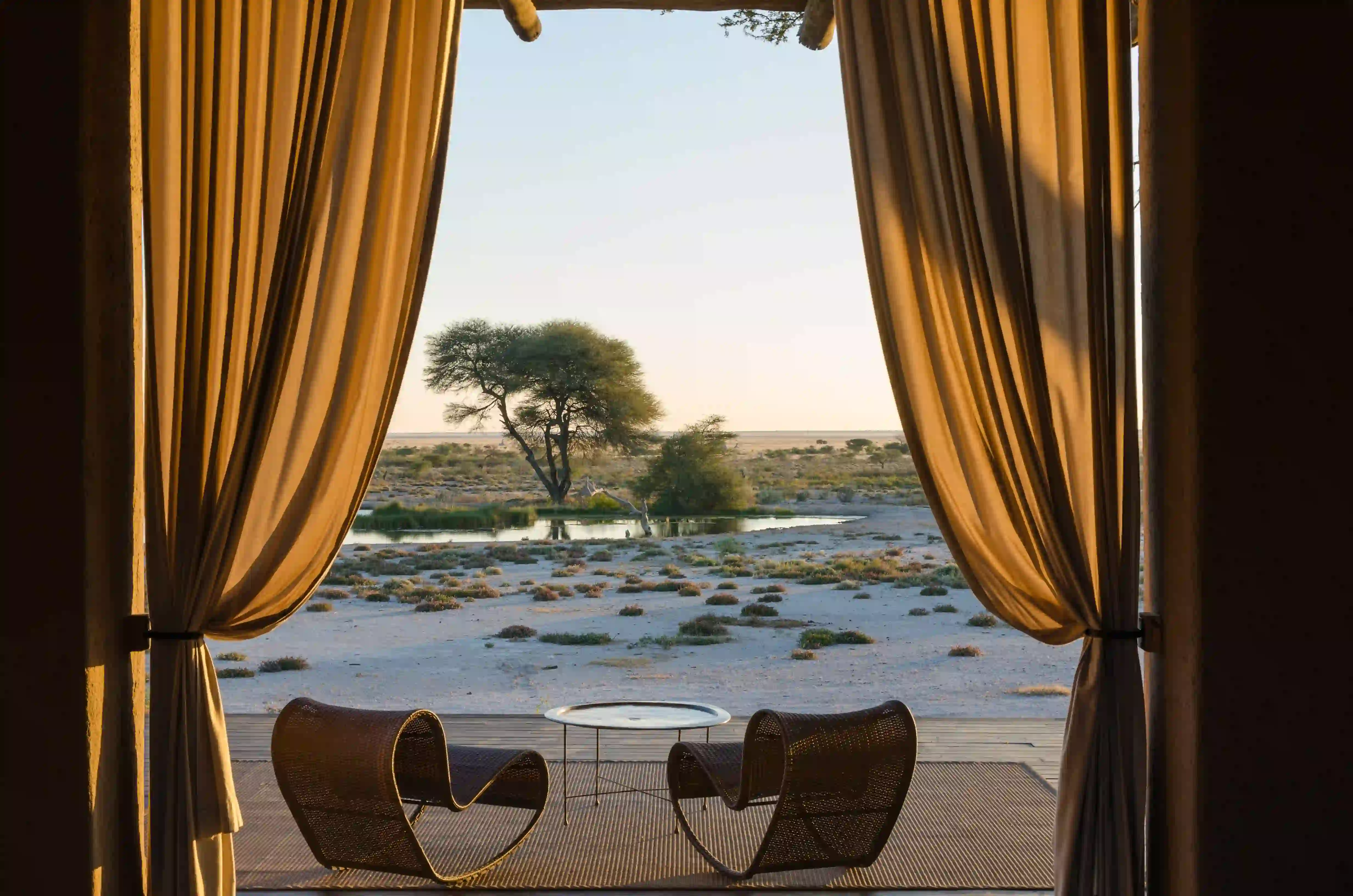
Accommodation sets the pace of your safari, from shared bush camps to fly-in luxury. These five industry-standard styles help you match comfort, atmosphere, and budget before you choose parks and dates.
13 / 16
A better Tanzania safari protects the landscapes that make the journey possible. Park fees, responsible lodge choices, ethical guiding, and local employment all help keep wildlife areas valuable to surrounding communities.
Good guiding keeps respectful distance, avoids crowding animals, and follows park rules even during rare sightings.
National park and conservation area fees help fund ranger work, roads, habitat protection, and anti-poaching operations.
Local guides, drivers, camp teams, and community visits make safari revenue matter beyond the vehicle.
Responsible itineraries reduce waste, avoid off-road damage, and choose lodges with better water and energy practices.
14 / 16
These are the practical questions travelers ask before booking a safari in Tanzania, from trip length to migration timing, clothing, drones, and internet coverage.
A strong first safari is usually 5 to 7 days if you want Serengeti, Ngorongoro Crater, and Tarangire without rushing. A 1 to 3 day safari can work for Arusha, Tarangire, Lake Manyara, or a short fly-in Serengeti trip.
June to October is the classic dry season for easy wildlife viewing. January to March is excellent for southern Serengeti calving. April, May, and November bring greener scenery, fewer travelers, and better lodge value.
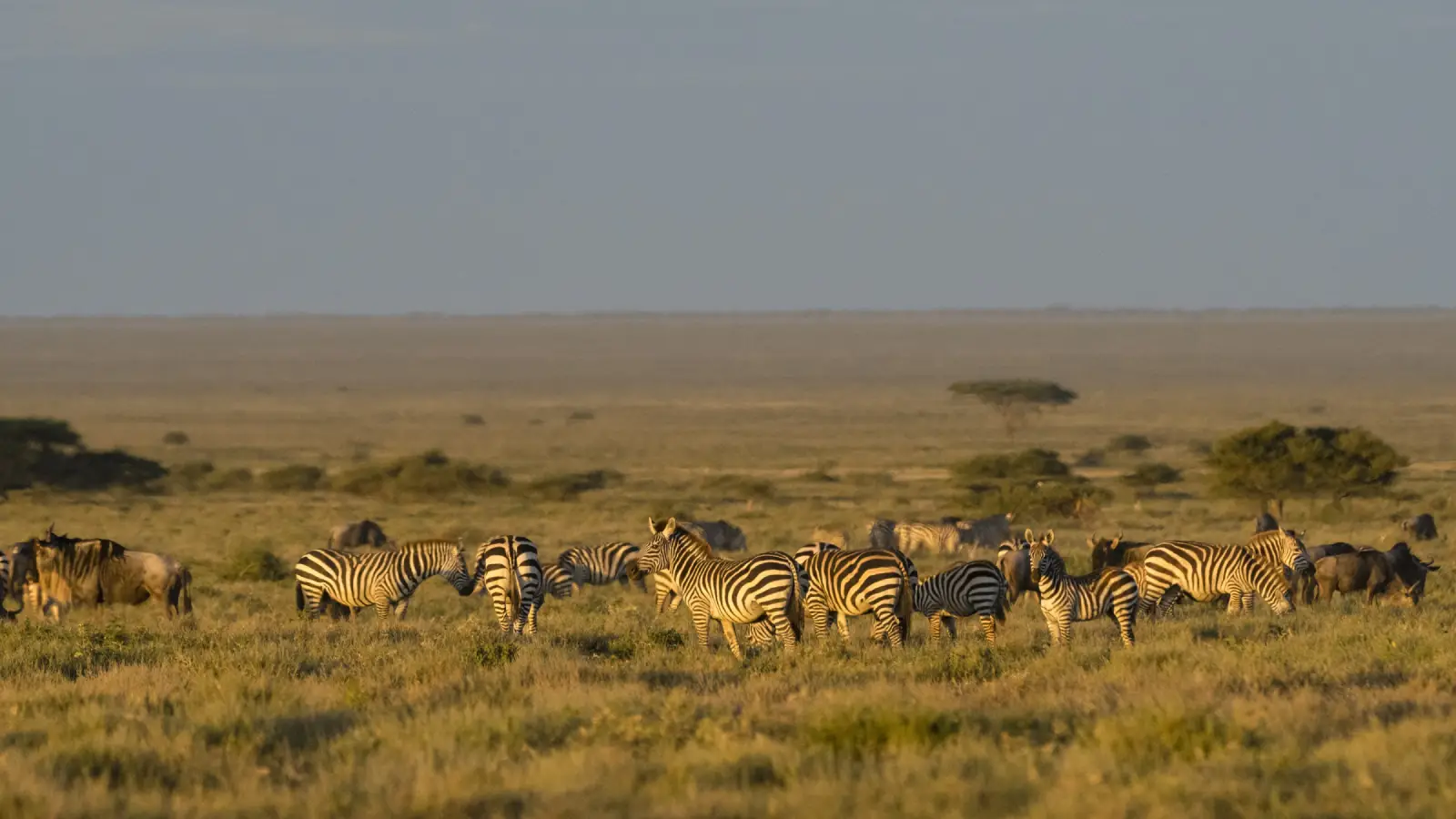
It is the year-round movement of wildebeest, zebra, and gazelle through the Serengeti-Mara ecosystem, following rain and fresh grass. Highlights include calving in the south and river crossings in the west or north.
Wear neutral colors like khaki, olive, tan, or grey. Pack breathable layers, closed shoes, a warm jacket for early mornings, sun protection, and avoid camouflage clothing or bright blue items.
Only in designated safe areas, picnic sites, camps, lodges, or when accompanied by an authorized guide for approved activities like walking safaris.
Drones are generally not allowed in Tanzania national parks without special permits. Travelers should avoid bringing one unless filming permissions have been arranged well in advance.
Some lodges and vehicles have Wi-Fi, but coverage can be limited inside remote parks. Treat internet as a useful bonus rather than a guarantee.
15 / 16
Expand each topic for practical detail on pricing, travel style, season, and budgeting, then follow the linked guides when you want to go further without leaving your planning flow.
Daily safari rates are rarely a single flat number. They reflect park fees, driving distances, accommodation tier, guiding model, and how many travelers share vehicle and camp costs.
A Northern Circuit route with Serengeti and Ngorongoro time will price differently from a southern parks itinerary with fewer lodges and longer transfers. Fly-in legs to remote camps add convenience and cost.
A private safari gives you your own vehicle and guide, so game drives follow your pace, interests, and energy. Ideal for families, photographers, and travelers who want control over stops and timing.
A group safari uses a shared vehicle on fixed departures. You trade some flexibility for a lower per-person cost and a social rhythm that suits solo travelers and budget-conscious first-timers.
Mid-range lodge safaris focus on reliable comfort: en-suite rooms, good locations, and consistent service without ultra-luxury extras. They work well for first trips and families who want a predictable standard.
Luxury and tented-lodge safaris add design-led camps, smaller guest counts, premium guiding, and often remote or exclusive settings. High-end fly-in circuits prioritize time in the bush over long road transfers.
June to October is the classic dry season: wildlife gathers near water, roads are easier, and skies are clear, especially strong for first-time Big Five-focused itineraries.
January to March highlights southern Serengeti calving and greener landscapes with fewer vehicles. April, May, and November can offer excellent lodge value with brief rain and lush scenery.
Start with per-person daily safari cost, then add international flights, visas, tips, travel insurance, and optional extras such as balloon flights or beach extensions.
A 5–7 day Northern Circuit safari is a sensible first budget frame. Shorter trips cost less overall but may feel rushed; longer trips spread fixed transfer costs across more wildlife days.
Pack neutral layers for cool mornings and warm middays, keep documents and medication in your day bag, and expect early starts. The best wildlife windows are often before breakfast.
Safari is patient by nature. Trust your guide’s pacing, keep voices low on sightings, and treat connectivity as a bonus rather than a guarantee inside remote parks.
Daily rates, park fees, and comfort tiers explained.
Read moreTravel style Private vs group safariCompare flexibility, privacy, and per-person value.
Read moreComfort Luxury vs mid-range safariChoose the accommodation style that fits your trip.
Read moreSeason Best time to visit TanzaniaDry season, green season, and migration windows.
Read moreBudget Tanzania safari budgetingFrame a realistic total trip cost before you book.
Read moreTips Safari travel tipsPacking, pacing, and practical on-trip advice.
Read moreTell us your dates, travel style, and dream sightings. Our local team will shape the route around you.